by Cameron Walker | May 15, 2017 | Buzz, May 2017
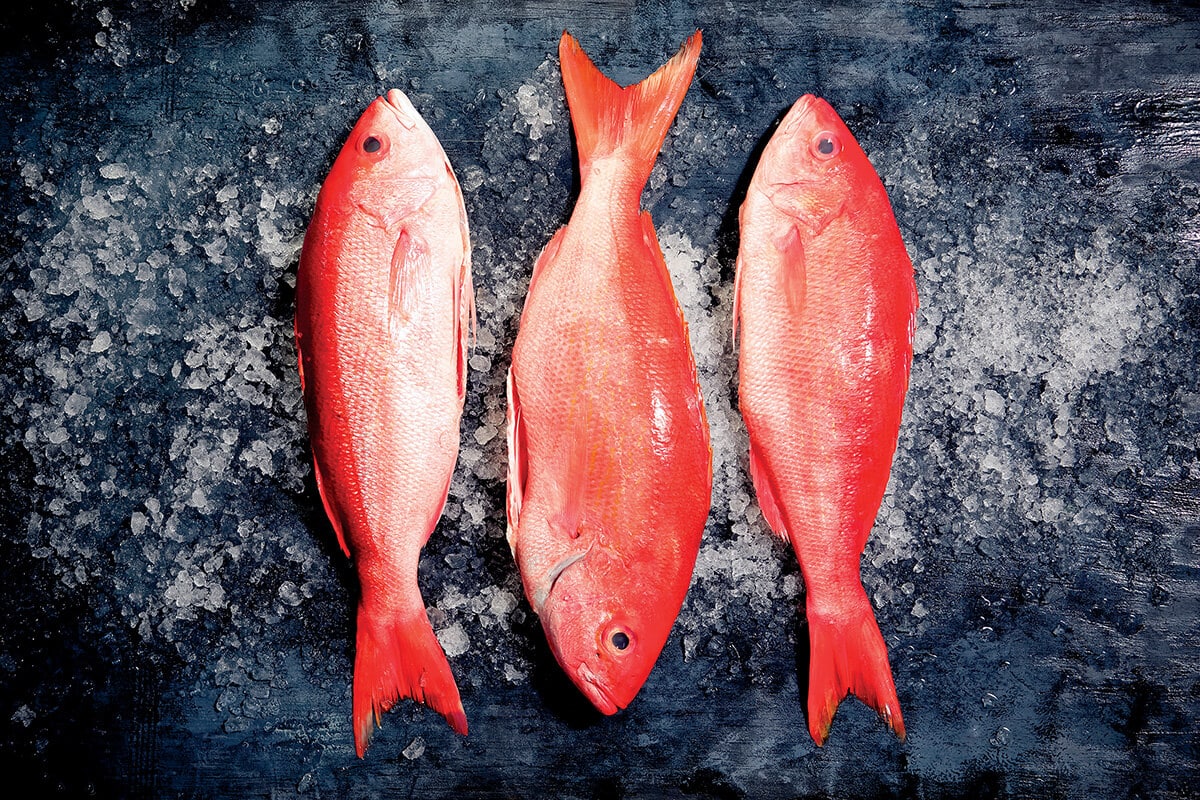
On one of her first photo shoots for a major brand, Felicia Perry-Trujillo stood in a refrigerated warehouse alone, facing racks of fresh caught fish she had no idea how to photograph. But in that cold room, under the light of a single bulb, she made magic with the simple beauty of a red snapper against a black background.
“I was so terrified that first shoot,” she says. “But at that moment…it was just life-changing for me. I felt like I grew up at that moment. I was like, ‘Just stop. You know what you’re doing.’”
 Perry-Trujillo, 39, grew up in Los Angeles as her family’s designated photographer. She attended Pepperdine University, majored in history, and enrolled at her alma mater for her MBA. Her now-husband Max gave her a camera as a gift, which she turned from a hobby to a career during her job hunt. During her yearlong job search she booked 40 weddings.
After 10 years photographing weddings and events in Los Angeles, she moved to the Triangle and shifted her lens to her true passion—food.
How did Food Seen, your food photography and visual branding company, come about?
When we moved out here to Raleigh three years ago, I was trying to figure out what I was going to do. In the meantime, the restaurant that Max was managing [Midtown Grille] had various needs: they needed photos of their dishes, they needed event photography, they needed a new website, they needed social media presence, and they needed some updated print ads. Once I started pushing out all these images…the food community noticed, and I started getting calls. I took that four-pronged model of photography, social media, website design and graphic design and created a business.
It seems like a great time to be doing such a visual thing for a living.
I’m a very visual person. My company is based upon visual content and personality building. There is such an appreciation for visual content now—more than ever—but so many businesses will rely on their iPhones and think it’s good enough. If you’re a chef in a restaurant and your phone is kind of greasy or you’re taking photos in a bad light and then pushing it out on social media…you never want to do that, no matter how good of a chef you are!
What would you say are the best parts of your job?
The flexibility, which I say loosely. I probably work like 60 hours a week, but in many respects I can dictate what those 60 hours are going to look like, and if I want to take a random Tuesday off. I love photography, and it’s so fulfilling, but I also love the networking aspect of, not only social media, but going out to events and meeting people. I love that it’s different every day. It’s not structured at all, so I rely on my kids’ schedule to keep me balanced…it’s everchanging, and I never know what my next project will be.
What does it take to be successful in your job?
The only thing that’s always going to set me apart no matter what is me, so it’s really important for me to be true to myself, to be a pleasant member of this community and to be authentic and personable. That’s really important to me.
There is so much information at our fingertips and you can Google anything you need… When presented with this list of a thousand people who do these services, how do you whittle it down?
It really comes down to picking up the phone and saying, ‘Who do you recommend?’ When you create these relationships and you’re on the forefront of a person’s mind, they’re going to recommend you because they trust you.
You mentioned that when you were a kid, you were really into art. Is that what you envisioned yourself doing when you were little?
I’m creative and artistic, but I’m also very, very practical. Like, methodical and there’s a side of me that likes math and science. So as much as I was always really artistic, I didn’t think it was practical to become an artist… so I wanted to be a businessperson. I didn’t know what that meant, really, I just knew that I wanted to be kind of bossy and in charge and so that’s why I got my MBA.
What are some of the challenges in your work?
Because I don’t shoot with studio lights and I shoot with natural lighting, timing is of the essence. I have a finite amount of time. It goes back to so many years of shooting weddings where the bride and groom kiss and that’s it. You can’t go, “Oh wait, can you go back and do that again?”
What is your favorite thing that you’ve photographed?
It changes all the time. I never thought I would love photographing a dead fish…but I really loved it. But when I have a dish prepared by a high-level chef, it’s so much art in itself. But when I have a dish prepared by a high-level chef, it’s so much art in itself. I have to capture somebody else’s art and that’s super cool. In addition to shooting a lot of food, I shoot a lot of tableware. I like [photographing] forks and knives—not so much the spoons. I hate spoons. They are this round, reflective, concave thing. If I’m standing over a table setting and photographing a spoon, it’s x-rated—I can’t wear shorts. It basically photographs everything in the entire room.
Would you say that you’re basically a modern-day still life painter?
Yeah, kind of! You have this bowl of fruit and then you add the dramatic lighting and use brushstrokes and you’re like, ‘Wow. That pear is super fancy.’ I never thought a knife and a fork could be so sexy. I like having this dramatic lighting or a napkin with all these smooth textures underneath to complement the pointy tines and the blade.
by Cameron Walker | May 8, 2017 | Eat, May 2017
An old fashioned sparked a fresh focus for the newly renamed Relish Craft Kitchen and Bourbon Bar. About a year ago at Bida Manda downtown, owner Sharon May ordered the classic cocktail for the first time in several decades and the well-mixed, citrus-scented drink made her an instant convert.
“Bourbon cocktails had been out for a long time,” says May, former partner in a restaurant group that included Village Drafthouse and Sawmill Taproom. “But when I worked at Angus Barn in the 1980s, it’s what everybody drank. The bigwigs all came in and ordered Old Fashioneds.”
The following weekend, she ordered the same drink at Relish—and was disappointed.
“What I found was every one of my bartenders were just doing their own thing and there wasn’t consistency,” she says. “It wasn’t what I thought it should be, so we went back to the drawing board.”
May felt responsible for the discrepancy, as she realized most of her bartenders were hired from beer and wine-centric spots and didn’t have much experience building classic cocktails. She invited a bartender from private Chapel Hill club The Crunkleton to tutor her staff in mixology essentials. They also upgraded the bar menu, switched to house-made syrups, fresh cherries and larger ice cubes and, somewhere along the way, they fell in love with bourbon.
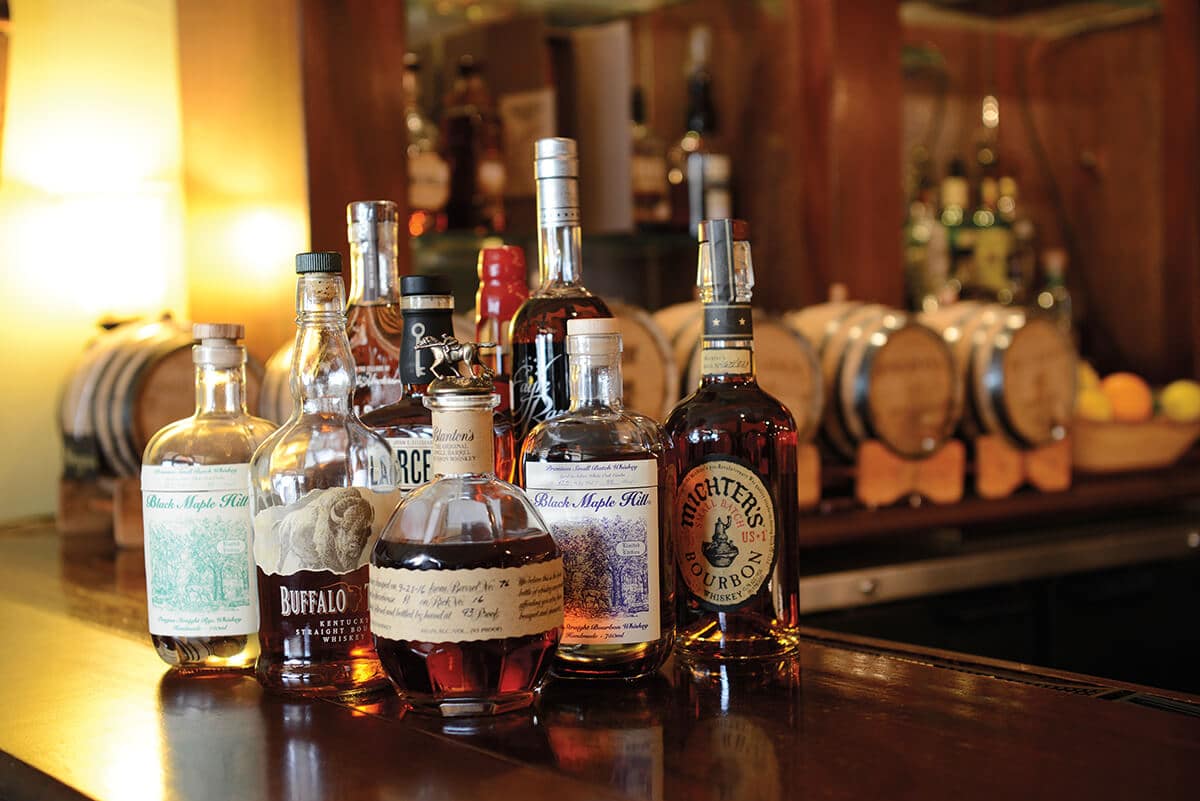
 Their new love affair with the Kentucky liquor inspired a nine-person leadership and bar staff trip to Louisville for a weeklong distillery tour. They piled into a passenger van and shuttled between distilleries, making the occasional detour down long gravel drives to hole-in-the-wall bars. On the tours, they were able to touch the grain, smell the sour mash, taste the yeast and feel the temperature gradations in the barrel-aging rickhouse; in the rural bars, they met devotees of the local liquor. This experiential learning added depth to the staff’s knowledge, and now they are fluent in bourbon.
It’s quite a feat, as the menu currently lists 47 bourbons and 36 whiskeys—and General Manager Crystal Murphy is always on the hunt for more. She sometimes partners with two local bars to special order unusual bottles.
“I’m looking for anything rare or hard to find, anything that we don’t already have or that sounds interesting,” she says. “It’s hard to get new things in North Carolina. All the restaurants compete to get to the liquor store first.”
This March, around its sixth anniversary, the restaurant changed its name from Relish Café and Bar to Relish Craft Kitchen and Bourbon Bar. The name switch was small, but it highlighted the subtle changes made over the past year. May hopes the change helps communicate the restaurant’s new devotion to bourbon, as well as clarify the food philosophy, which she says is simple Southern comfort food with a fresh, fun twist.
Dishes like fried black-eyed peas, pimento cheese fritters and the Nutty burger (with bacon and house-made peanut butter) play with favorite Southern ingredients but don’t take themselves too seriously. Most menu items are drawn from recipes May or Kim Berryann, the restaurant’s director of operations and an advanced home cook, have acquired over the years. The two experiment, and kitchen manager Miguel Balderas executes their vision.
The menu is ever-evolving, so they added a supplemental Test Kitchen menu to audition new dish ideas; recipes that make the cut each season are added to the permanent menu. The only tough part, according to May, is finding items to remove. This winter’s favorites included boiled peanut hummus with red pepper jelly sauce, bourbon bacon jam and a shrimp burger inspired by Berryann’s trip to Big Oak Drive-In and Bar-B-Q in Atlantic Beach. The kitchen has also been experimenting with cauliflower mac and cheese and will soon offer the gluten-free, paleo and Atkins diet-friendly dish in the restaurant and its new catering kitchen and pick-up location.
Guests kept asking for take-and-bake versions of Relish’s popular mac and cheese varieties, so the restaurant opened The Kitchen Table this spring. A few doors down from the restaurant, to the right of the Food Lion, customers can pick up pans of the mac and cheese, as well as dinner rolls and sweet potato biscuits, family-sized salads, whole pies and pantry items like local creamed honey, pepper relish, Yah’s jams and pickled okra. Expanded offerings are planned this summer as well as a rotating meal of the day to solve the “What’s for dinner?” conundrum.
by Cameron Walker | Apr 3, 2017 | April 2017, Eat
Changes in the weather, a farm truck breaking down or a fisherman’s luck can all influence what makes it onto the plate at Standard Foods. The combination eatery/butcher- shop/market in the Mordecai neighborhood is farm-to-table in the literal sense—upward of 90 percent of its ingredients are locally sourced, some from the farm just outside the back door.
“We built this concept around wanting to source from 80 miles around Raleigh,” says owner and real estate developer John Holmes. “What (we’re) doing in the kitchen and the market tells the story of the farmer and gets people accustomed to understanding the true seasonality of what we’re doing, and that the ways they choose to source and shop and eat really can have a positive effect.”
Head chef Eric Montagne, 28, sits with chef de cuisine Will Cisa each morning to create that evening’s menu, conjuring dishes from the meats and produce available from local growers. Dirty rice with shrimp, scallops, clams and Andouille sausage; sweet potato soup with local peanuts; coq au vin with Carolina gold rice; mushroom bread pudding. And Persian-spiced goat with farro and brussels sprouts have recently starred alongside menu regulars like Cedar Island oysters, whole fried fish and spoonbread made with locally-milled cornmeal and served with hot honey and cheddar cheese from a nearby dairy.

“There’s a lot of problem solving,” says Montagne, former executive chef at Vivian Howard-owned Boiler Room Oyster Bar in Kinston. “The way we communicate with our farmers isn’t like, ‘I need a hundred pounds of carrots.’ It’s ‘What do you have?’ If it’s five pounds of six different things, I’ll take all of them…We’re extremely lucky to be able to take a lot of things that people wouldn’t normally be able to get rid of and things that farmers are growing that are completely experimental.”
Relying on local growers for seasonal meat and produce is a challenge, but one Montagne and the rest of the Standard Foods staff embrace. For example, a farmer recently came with a surplus of early spring dandelion greens. With a little kitchen magic, Montagne transformed the bitter weeds into a savory side dish. And this winter, their poultry supplier stopped producing chicken for the season so he added rabbit and guinea hen to the menu instead.

For inspiration, Montagne flips through dozens of cookbooks he keeps in the restaurant kitchen and at home. Once his culinary experiments are perfected, he tests them out on kitchen staff, front-of-house managers and finally, the whole staff. He believes that involving everyone in creating and critiquing the menu gives them a sense of ownership and engagement.
“It’s a lot of experimentation—what works, what doesn’t, how can we elevate the flavor without over-manipulating the product,” he says. “You just have to be open and not see it as restraint; creativity lives within boundaries. The people who are raising and catching these things for us…it’s our job to responsibly showcase what they’re doing.”
New general manager Max Trujillo, formerly of Midtown Grille, agrees: “The restaurant, the butcher and grocery, the bar program and the farm outside all believe in the same vibe, and that is working together, promoting North Carolina products, being sustainable, creating minimal amounts of waste,” he says. “Walk through our farm, look to see what we’re doing, and you really can understand the whole concept of food as a whole from beginning to end.”
The farm is steps from the back door, beyond an outdoor oven constructed from salvaged bricks. Long rows of low plants grow where a house once stood, from nondescript herbs Montagne identifies as thyme, chervil, chickweed and henbit to lettuces, Pacific flowering broccoli and berries. A bay tree slowly grows in a corner of the plot, a lemon tree puts down roots, and a wall of apple trees is in the works.
Holmes wanted Standard Foods, located on east Franklin Street downtown, to reflect the neighborhood markets where he lived in New York and Aix en Provence, France. The restaurant’s adjacent market sells local and regional gourmet foods, fresh produce and specialties like house-made ice cream. Butcher Jeremy Hardcastle cuts ethical meats, makes in-house sausage, and advises customers how best to prepare the cut of meat they’ve purchased.

“In the neighborhood, we were missing the butcher, the grocer, the fishmonger,” says Holmes. “We [wanted to] maintain the ethos of those places, where it’s highly specialized and the people who are doing it are artisans, and you know that what you’re buying here has been vetted. If you care about sourcing and where your food comes from, that’s what we’re trying to deliver.”

by Cameron Walker | Mar 6, 2017 | Eat, March 2017
Surf meets turf and east meets west at Cowfish, proving opposites really do attract
Every evening, right around 6:30 p.m., the heady aroma of grilling burgers wafts across Six Forks Road. Drivers roll down their windows to inhale the scent, and The Cowfish Sushi Burger Bar braces for a busy night. Business is smoking, both figuratively and literally; co-founder Marcus Hall says due to the smoke generated by heavy dinner volume, the kitchen staff has been surprised more than once by firefighters showing up to put out nonexistent fires.
The key to The Cowfish’s success is the concept—a restaurant that caters to both sushi devotees and burger fans. “It’s a little bit of something for everybody,” says Hall. “I can’t tell you the number of times I hear, ‘But my significant other won’t go out to eat with me!’ We’ve solved the sushi ‘veto vote.’”
Enter “burgushi,” a portmanteau that Hall says describes the marriage of meat and sushi in three different forms: sushi rolls created from burger components like the All-American Bacon Double Cheeseburgooshi; pickup-style sandwiches made from sushi ingredients like the What’s Shakin’ Tuna Bacon Sandwich; and bento boxes, “combo meals” with a mini burger, sushi roll and house-favorite side items.
It’s easy to gauge the chain’s current success by its Saturday night wait times, but Hall says the concept didn’t always seem like a sure thing.
“We were stressed out beyond belief (before opening), because we thought we might have just stepped in the biggest pile ever,” he says. “We just had to put blinders on and trust in our ability to produce…if you’re putting a great product out there and you’re creating great value, then how can you fail?”
Luckily, early guests loved the burgushi concept—as well as the vibrant, fun atmosphere and zany decor. The Raleigh Cowfish, located on the ground floor of the Captrust Tower, is painted an enthusiastic red and hung with original artwork by Scott Partridge that cheekily mimics Lichtenstein, Japanese woodblock prints, Broadway posters and anime. Every location also houses a large saltwater aquarium with colorful fish but only a single cowfish per restaurant.
“It has horns and is quirky and is an underdog…it’s our perfect mascot,” says Hall. “But we’ve learned that you cannot have more than one! They’re very territorial and they emit a toxin if they get stressed out. This tank was built by Animal Planet for a show called “Tanked,” and they put 16 cowfish in there. It was a civil war—it was horrible. We realized what was happening and got them all out, but for the first two weeks we were open, this tank had no fish in it.”
He sees a parallel between the territorial little fish and the restaurant chain; their uniqueness is their edge, so they don’t want to saturate the market in a given area. As the chain grows, it plans to spread out to new locations that will embrace its hybrid concept.
Hall, 41, followed in his father’s footsteps to attend N.C. State, studying business management as he worked various restaurant jobs. Before his senior year, he spent a year in Europe, learning Scottish hospitality working in an American eatery in Edinburgh.
“I learned this international language—a smile is so important, as is just treating people the way you want to be treated,” he says. “I didn’t know it at the time, but those are the building blocks of hospitality.”
After graduation, he dabbled in a few different jobs, then started working for business partner Alan Springate at his string of CiCi’s Pizza franchises. The pair opened eeZ Fusion and Sushi in Charlotte in 2005 and launched The Cowfish in 2010. The North Hills location, which opened in 2013 at the invitation of developer John Kane, is their sophomore effort; they’ve gone on to open incarnations in Atlanta and at Universal Studios and are slated to open a fifth location in Birmingham, Alabama this summer.
“We encourage our staff to live by this idea that we’re very serious about our product, but we’re not serious about ourselves,” he says. “We have a mission statement that basically breaks down to ‘Don’t suck.’ It’s a very guest-centric list of principles—do whatever it takes to please the guest. You should feel that as a guest coming in, if we’re doing things right.”

by Cameron Walker | Feb 6, 2017 | Eat, February 2017
Cheetie Kumar is fueled by twin passions: food and music. In a three-story building on Martin Street downtown, her dreams are stacked like a layer cake—basement-level bar Neptune’s Parlour, third-floor music venue Kings and, sandwiched in the middle, Pan-Asian restaurant Garland. She co-owns the ventures with two friends and her husband Paul Siler, a fellow musician in their acclaimed rock band Birds of Avalon.
“Playing music and cooking are pretty similar in many ways—making ingredients and people working together in a harmonious way to create something unique, enjoyable [and] entertaining,” she says. “It’s the balance of many moving parts with one identity.”
Garland’s menu is like that too, a symphony of seemingly disparate flavors from India, Korea, Morocco and beyond. Lemongrass, ginger, cardamom and chili meet North Carolina sweet potatoes, Heritage Farms meat and freshly caught fish. Tandoori chicken and lamb curry share billing with rice bowls and corn cakes.
“Garland is a welcoming downtown neighborhood restaurant with a global perspective and homey-modern feel,” says Kumar. “The food has deep roots in Pan-Asian traditions and spices and a network of local farmers and purveyors to execute our menu…Right now I’m excited about our charred octopus with French lentil, pickled beets and baby carrots and preserved lemon. It’s a colorful dish with complex, yet bright flavors. I also have a soft spot for Chicken 65, which was the first dish we put on the menu when Garland was just a walk-up window.”
 Kumar was born in Pennsylvania shortly before her parents’ visa expired. Out of necessity, they moved back to the Northern Indian city of Chandigarh when she was 6 months old. The family returned to the United States eight years later, moving to a small apartment in The Bronx. Both parents worked full time, so she essentially became her mother’s sous chef, at first simply preparing the ingredients and starting dinner, and eventually progressing to full meals. She devoured cookbooks and culinary magazines.
After college in Amherst, Massachusetts, she moved to Raleigh to pursue a career in music. She started managing local bands, then founding The Cherry Valence and then Birds of Avalon with her now-husband. Food became a necessary counterpoint to her music.
“When I was in bands and touring the U.S. and Europe, I would try to relieve creative fatigue from music with inspiration from food and look forward to trying things on the road,” she says. “I couldn’t wait to cook when I got home!”
Kumar started catering and bartending for extra cash between gigs, fantasizing about owning her own restaurant. She opened Garland in 2013, initially as a single take-out window while working with her own hands to remodel the restaurant’s interior. She calls the experience a “baptism by fire” which included months of physical and mental labor that left her no time for music.
“For several months after Garland started, I didn’t even pick up a guitar,” she says. “When I came back to playing, I realized that the focus and discipline required to run a kitchen and create a menu had influenced my creative process. When you’re running a restaurant, you have to make many spontaneous, important decisions and there’s no time for second guessing and lack of confidence.”
But it’s not only music that influences her style of cooking. Kumar marries her Indian background, particularly the use of spices and complex flavors, with other Asian ingredients.
“It’s very important to me that if we aren’t being completely authentic with a recipe, we understand the history and the role that each ingredient plays so we can sensibly improvise with respect,” she says. “We are so fortunate to have an abundance of locally grown ingredients that are perfectly compatible with our culinary identity.”
Her devotion to area produce like wild mushrooms and local greens means that Garland’s menu adapts with the seasons.
“Things in season prepare us to be healthy,” she says. “Nature is much wiser than us and, as they say, ‘Things that grow together, go together.’”



