Your culinary guide to dodging the chains down I-40.
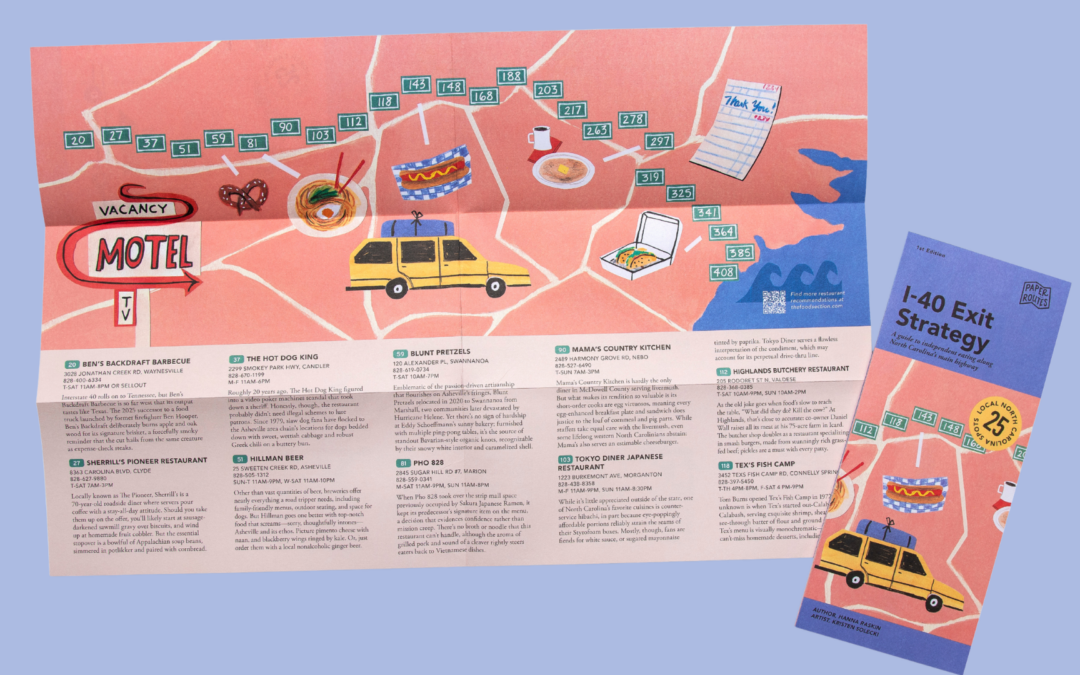
May your rest stop be your best stop. Just in time for summer road-tripping—and the inevitable “where to eat along the way” dilemma—a new mile-by-mile physical map rounds up 25 spots worth veering off the road for, none of them your average burger chain.
A collab between Southern newsletter The Food Section and Greenville, SC-based Good Printed Things, I-40 Exit Strategy points travelers toward dozens of independently owned eats, all within 3 miles of NC’s road most traveled—transforming the I-40 corridor into a culinary trail.
“We go to the beach every single year and have the same dilemma each time—we need food, but don’t want fast-food from a chain restaurant,” says Good Printed Things owner Lib Ramos. “This map meets a real need.”
Organized by exit number, the guide (also available digitally) acts as a culinary companion connecting the mountains to the coast, serving up what The Food Section Publisher Hanna Raskin calls “an edible portrait of North Carolina.” From pulled pork in the Piedmont to biscuits in the Blue Ridge Mountains and shrimp on the shore, it’s essentially a cross-section of Old North State authenticity along the way.
Part of Good Printed Things’ Paper Routes series of collaborative printed maps and inspired by The Food Section’s 2022 I-95 guide, I-40 Exit Strategy—illustrated by Durham artist Kristen Solecki—pairs road-trip convenience with distinctly local flavor.
Aside from aesthetics, each stop was intentionally chosen to rebuff routine chain dining while still reflecting the realities of road-tripping: speedy service, generous hours and takeout-friendly fare. If I-40 Exit Strategy proves anything, it’s that veering off for value is still long-haul certified.
“These restaurants were selected because none of them could exist anywhere else,” emphasizes Raskin. “Map users are bound to discover that every exit is an entry point to unique culinary histories and meaningful traditions.” So next time hunger strikes, you’ll know right where to put your fork in the road.
From navigating RDU and everything it’s got coming down the pipeline to being prepped before taking off, here’s your ultimate travel guide.
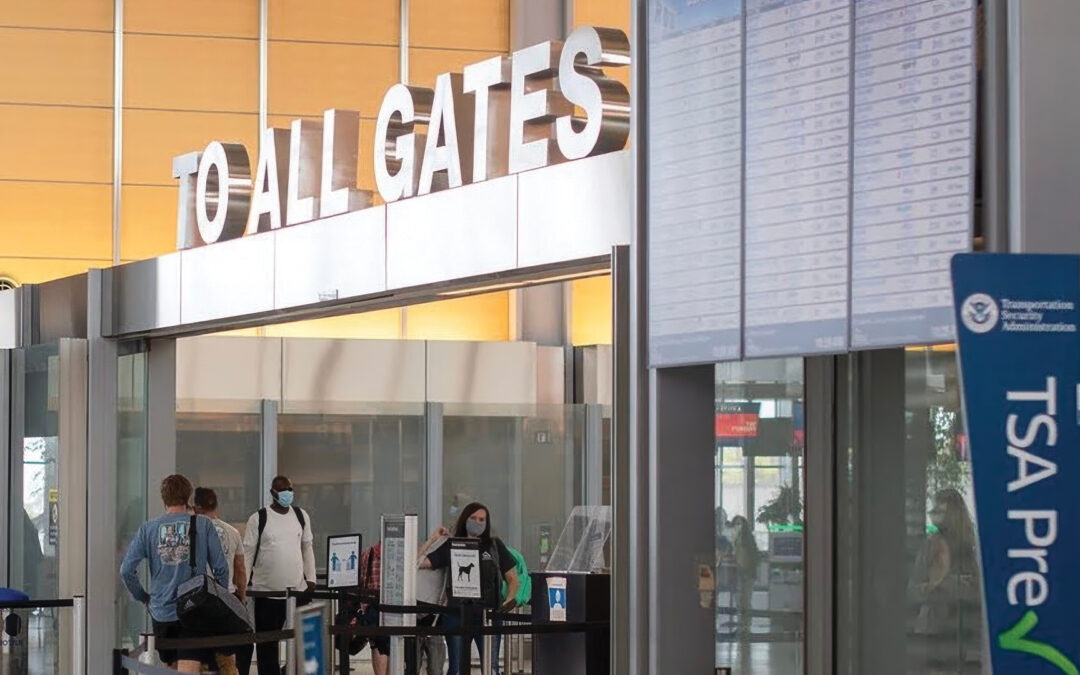
RDU is reaching new heights. Giving your future travel days a glow-up, the airport is investing $2.5 billion over the next 10 years to add new nonstop flights, fresh dining ops, smoother roadways and other upgrades—all resulting in a new and improved destination for local and visiting jetsetters.
“With the busy summer season just around the corner, it’s clear that many Triangle-area travelers are ready to embrace their next adventure—especially beyond our borders,” said Raleigh-Durham Airport Authority Board Chair Tammie Hall-Roberts. “RDU continues to rise to the moment.” Here’s what’s taking off.
Scan. Pay. Go.
No app download, no deck meltdown. RDU has rolled out Parking Mobile Pay for a smoother exit strategy from both lots and garages. Rather than risking a gate malfunction or missing ticket, simply scan the QR code on the ticket and use your credit card or Apple/Google Pay to make a digital getaway. Once paid, travelers have a 30-minute window to exit, with gates automatically recognizing payment. Of course, exit lanes and pay kiosks remain available. Consider your classic RDU parking headache sorted.
Low Spirits
Spirit has split—is Frontier next? Following months of turbulence, Spirit Airlines abruptly ceased operations at RDU in early May, canceling flights and leaving travelers scrambling for alternatives. The system-wide grounding came after seven years of service connecting budget-conscious travelers across the globe.
The shake-up also raises a bigger question: Are budget airlines on the way out? Travelers are keeping their eyes on Frontier—many noting a scaling back in local routes and paused bookings earlier this spring. That said, Frontier was quick to shut down the rumors, with CEO James Dempsey going so far as to say the airline can “fill the massive gap left behind by Spirit’s collapse.”
Still, whether or not Frontier can prove how sustainable the ultra-low-cost model actually is remains up in the air.
Sky’s the Limit
To keep up with RDU’s 15.5 million passengers per year—and counting—major enhancements are in store. Dubbed Transform RDU, the project includes runway replacement, additional eco-friendly parking, a John Brantley Boulevard extension, and a Terminal 2 expansion—all set for phased completion by 2032.
For its part, the Terminal 2 expansion—which broke ground in January and is taking place behind a barrier stretching through the north end of the ticketing hall—involves additional ticketing counters, a roomier international arrival area and new baggage carousels.
Catering to future parking demand, the Park Economy 3 Expansion project has already begun adding 7,000 new spots to the public surface lot near the intersection of Aviation Parkway and National Guard Drive—complete with some of the airport’s lowest daily parking rates and shuttle service to both terminals.
The parking expansion project also includes a new solar-powered amenities building—set to debut late summer—offering restrooms, vending machines, a lounge with monitors displaying flight info, and office space for staff/law enforcement.
Speedier customs reentry into the U.S. plus TSA PreCheck perks
$120/5 years
TSA PreCheck automatically included with membership
Approval can take months—and interviews are req’d.
REAL Talk
Still don’t have REAL ID? TSA’s ConfirmID program can help keep your trip from getting grounded. Travelers without a compliant ID may pay a $45 fee for temporary identity verification valid for a 10-day travel period to fly domestically—unless you have an acceptable alternative like a passport or Global Entry card. Pro tip: Complete the process online before you get to the airport to avoid the extra security-line chaos.
Travel Hacks
If you must check a bag, do it online or in the app before you get to the airport—kiosk fees can be higher.
Skip baggage and ship your luggage ahead of time via Stowic’s door-to-door service—the $40 flat-rate alone may be worth not lugging your bag.
Print your boarding pass—don’t leave all hope in your Apple Wallet (spotty Wi-Fi, dead batteries… sometimes the odds *aren’t* in your favor).
To fight off fraud, some airlines—especially international ones—require the physical credit card you booked with.
Double-check monitors before wandering too far. Your assigned gate at check-in can change on the fly—sometimes to the opposite end of the terminal.
With the Stage 1 restriction in full effect, here’s what homeowners can do to conserve water while keeping their landscapes healthy.
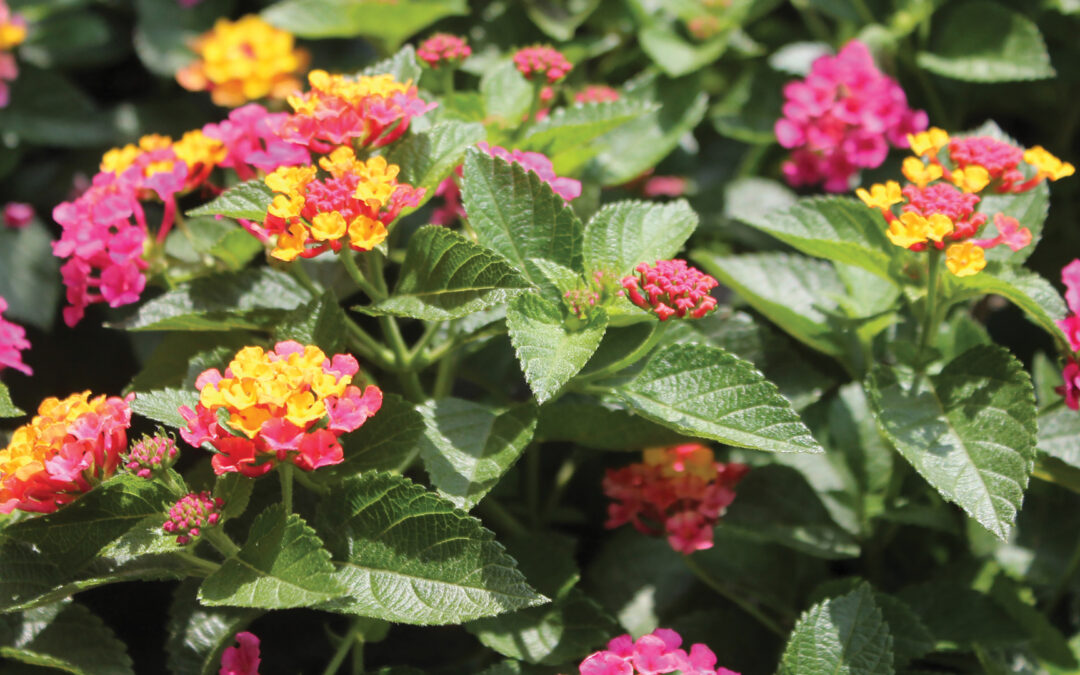
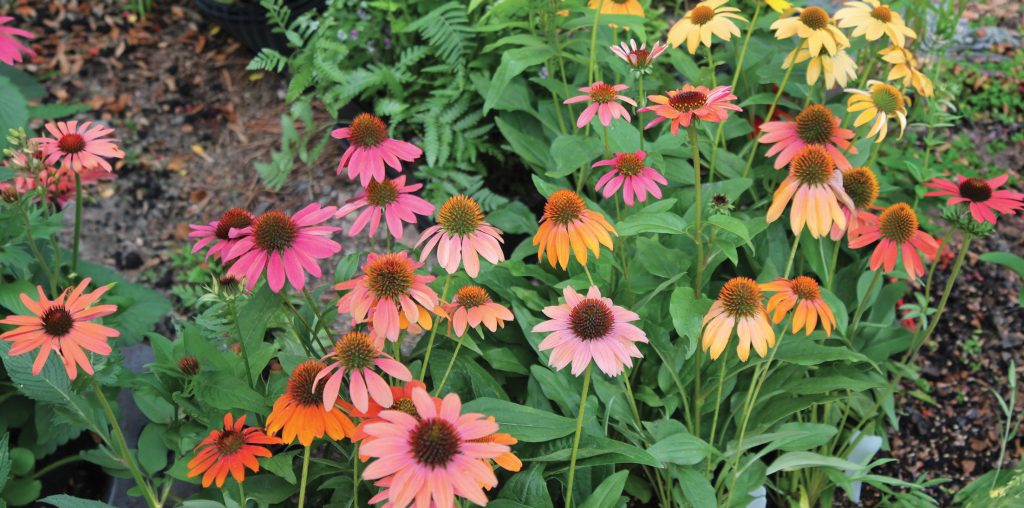
No drought about it—we need rain. But if you’re looking to build a yard that can weather Raleigh’s restricted-water era, these drought-tolerant standouts are a good place to start.
One caveat: “Low maintenance” doesn’t mean “no maintenance.” Newly planted perennials and shrubs need consistent watering during their first month in the ground, followed by regular hydration through their premiere growing season. Plants from four- or six-packs should be watered daily for two weeks, then twice weekly for the next two. Not sure when to ease up? Give the plant a gentle tug. If it feels firmly rooted, it’s ready to fly solo.
Mulch is your best friend. A 2- to 3-inch layer helps retain moisture, suppress weeds and keep roots cool. Opt for organic when possible, and avoid piling it against trunks or plant crowns.
When watering, think deep rather than frequent. Longer, less frequent watering encourages roots to grow deeper, where moisture lingers longer. Water early in the morning or late in the evening to minimize evaporation. Trees and shrubs established within the last two years may only need watering once or twice a month during extended drought.
Rain barrels may be small, but they can be linked together to catch more water. You can also install larger cisterns above or below ground to capture anywhere from hundreds to thousands of gallons.
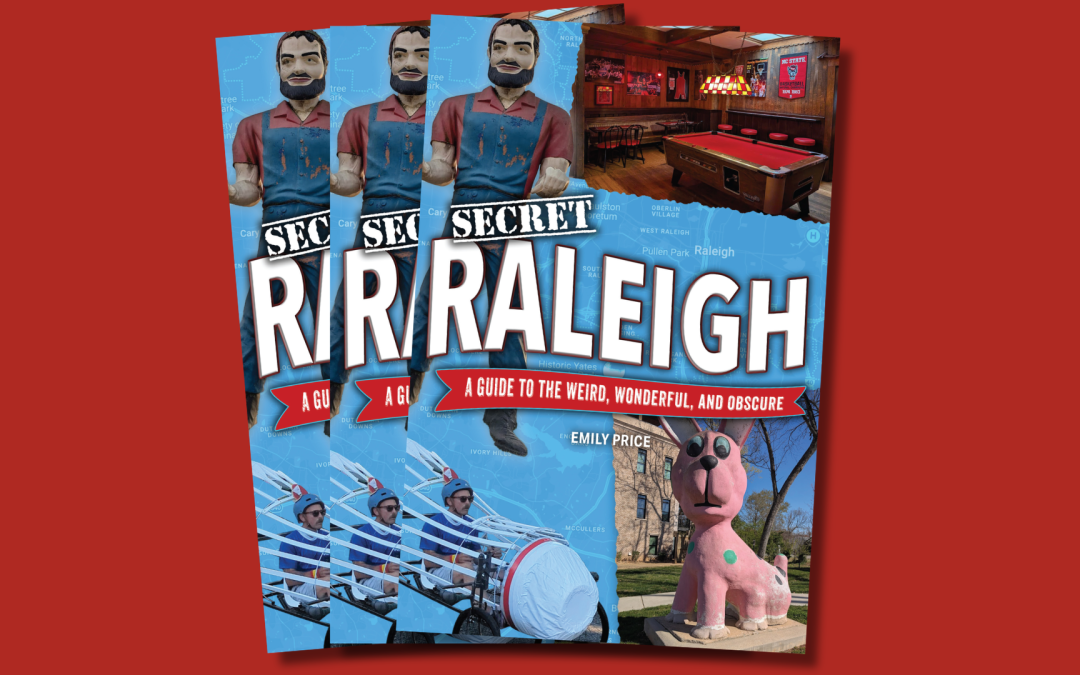
Think you know Raleigh? Think again. Longtime local and lover of all things quirky, Emily Price uncovers more than 80 of Oak City’s hidden treasures in Secret Raleigh: A Guide to the Weird, Wonderful, and Obscure—some of which even born-and-bred Raleighites may have never heard of.
Having witnessed the city’s transformation since moving to the area at age 6, Price has spent years digging into the local lore and overlooked history hiding in plain sight—from unusual homes and urban legends to the city’s strangest attractions.
“There are so many really fun stories and neat things to discover,” says Price. “I’m a sucker for [that]—I love anything interesting, weird or unusual.” Here, she shares her faves with RM—some shocking, some personal and all uniquely Raleigh.
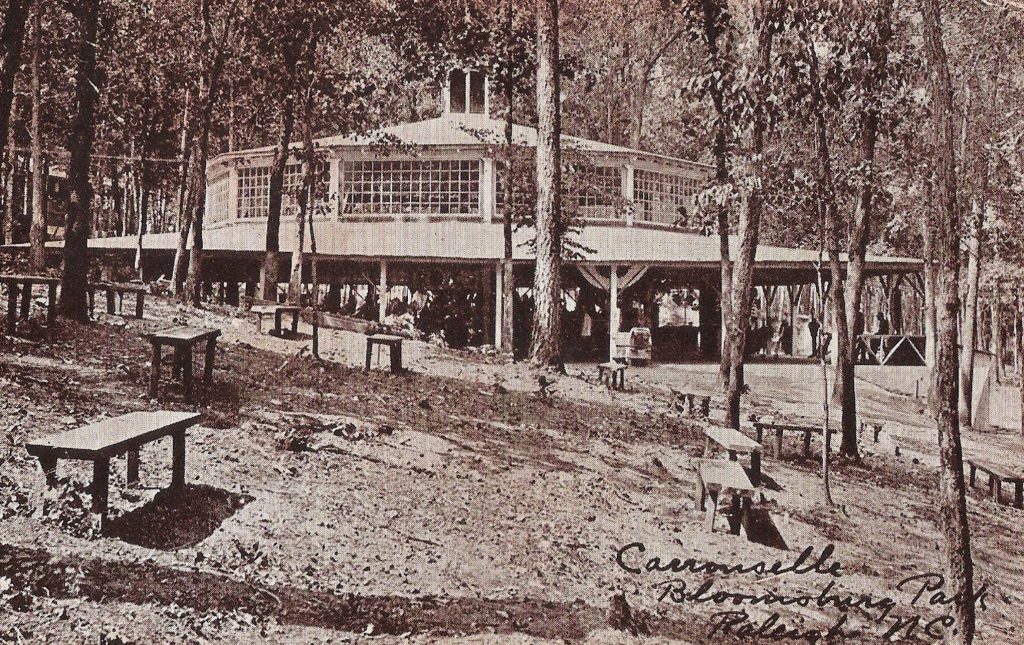
Bloomsbury Park | NC Archives
Bloomsbury Park
Step right up. Before Five Points was home to boutiques and restaurants, there stood a bustling theme park of roller coasters, live shows and all-out pizazz located on today’s Bloomsbury Park Drive. Built in 1912 by Carolina Power & Light, the park was like Raleigh’s version of Coney Island, and remnants of it are still scattered around Oak City.
Although short-lived before reportedly becoming a World War I drill site, the park’s legacy lives on in the handcarved—and still spinning—Pullen Park Carousel. Amusing, indeed.
William Sidney Wilson’s Electric Guitars
One of the first electric guitars was crafted in Raleigh—and that rocks. Deep in the archives at NC State—and far from the stage—lives one of the world’s earliest modern axes. Originally strung by engineering student William “Sid” Wilson in an era when patents weren’t exactly a priority, his name never reached household status. Instead, the invention spent years in a storage closet and was eventually credited to another creative. Talk about having an axe to grind.
Photo by Emily Price
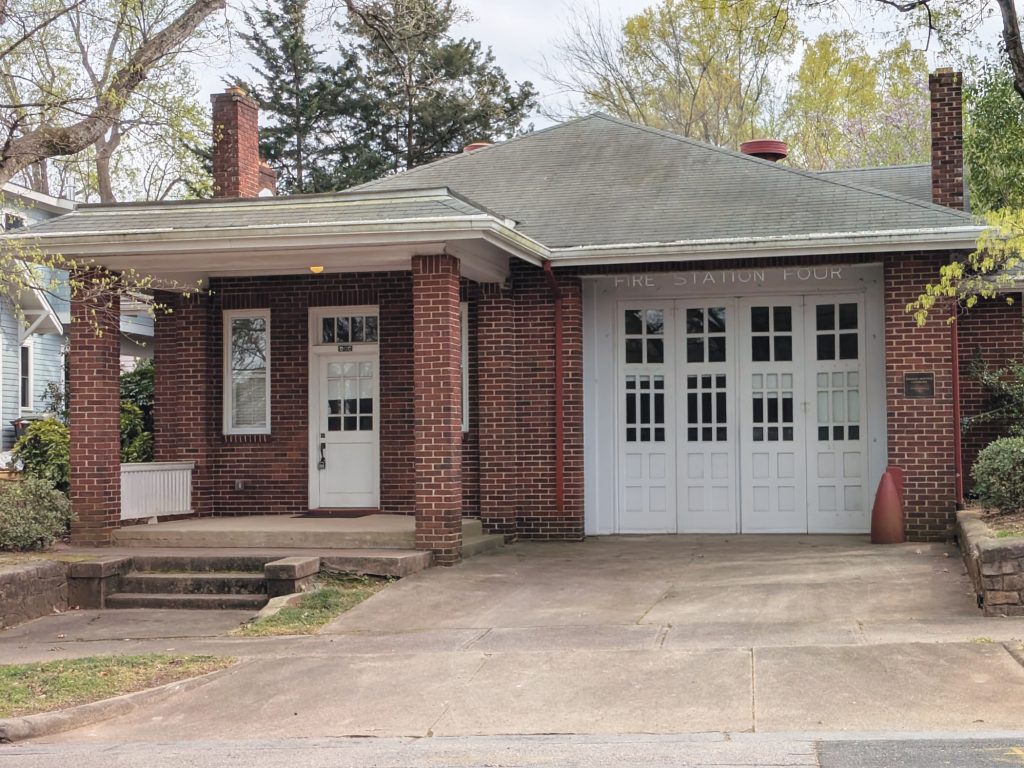
Glenwood Fire Station
Home is where the hose is. Jefferson Street’s best-kept secret is one of Raleigh’s earliest neighborhood fire stations. What looks like your average home is, upon closer inspection, the city’s former Engine Company No. 4—now a private home with almost the same exterior as the one from nearly a century ago.
“I’m mad that it’s presumably been there my entire life, and I had no idea that it existed,” emphasizes Price. Locals can get fired up and admire the slice of adaptive reuse with a drive-by of the residence—sans sirens blaring.
Six Forks Road
Fork over the history. In an era when “I live off Six Forks Road” was a breeding ground for cutlery-themed cracks, Price—who grew up near the old Tara Apartments—was all in on the laughs, while short-lived side streets boasting clever names like Six Spoons and Six Knives kept the town talking.
“I thought that was fantastic,” recalls Price. “I’ve heard that joke a million times.” Eventually, the apartment complex was wiped off the map, along with the two quirky roads—but for Price, the puns live on.
Photo by Emily Price
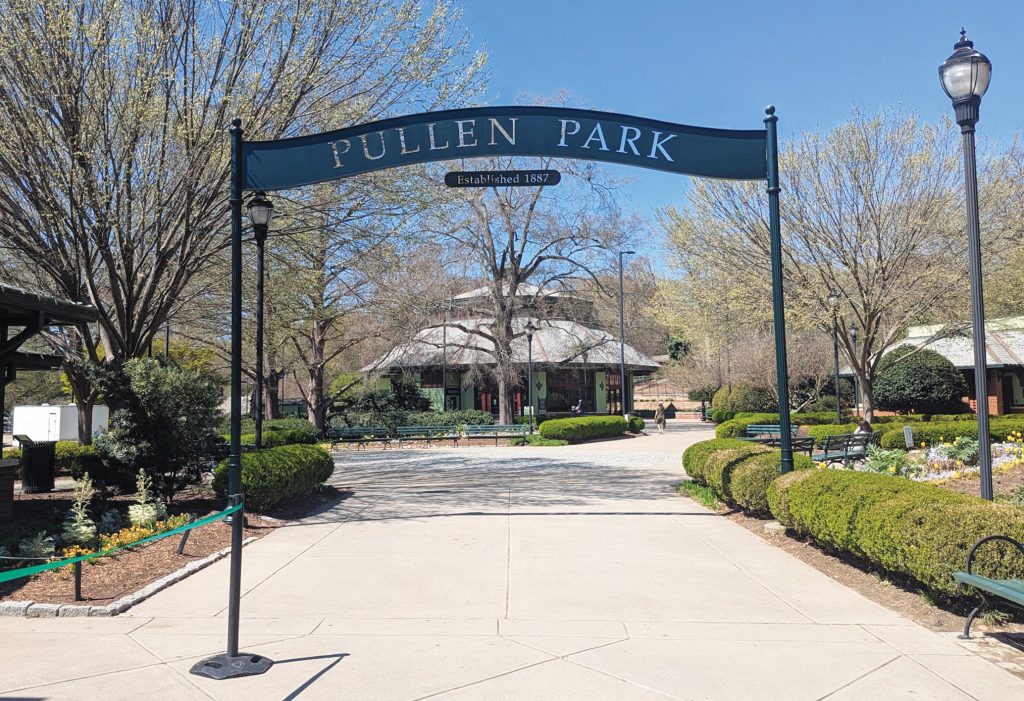
Pullen Park
Hold onto your horses. Pullen Park was a bit, well, wild in the late 1800s, with lions, minks and bears roaming the grounds as part of the state’s premiere zoological park. Although Price was, naturally, well aware of the age-old attraction, new discoveries spanned an old alligator pit now blooming with florals; Galapagos turtles donated by a U.S. Navy captain; and the park’s prized possession, Jim the buffalo—to name but a few.
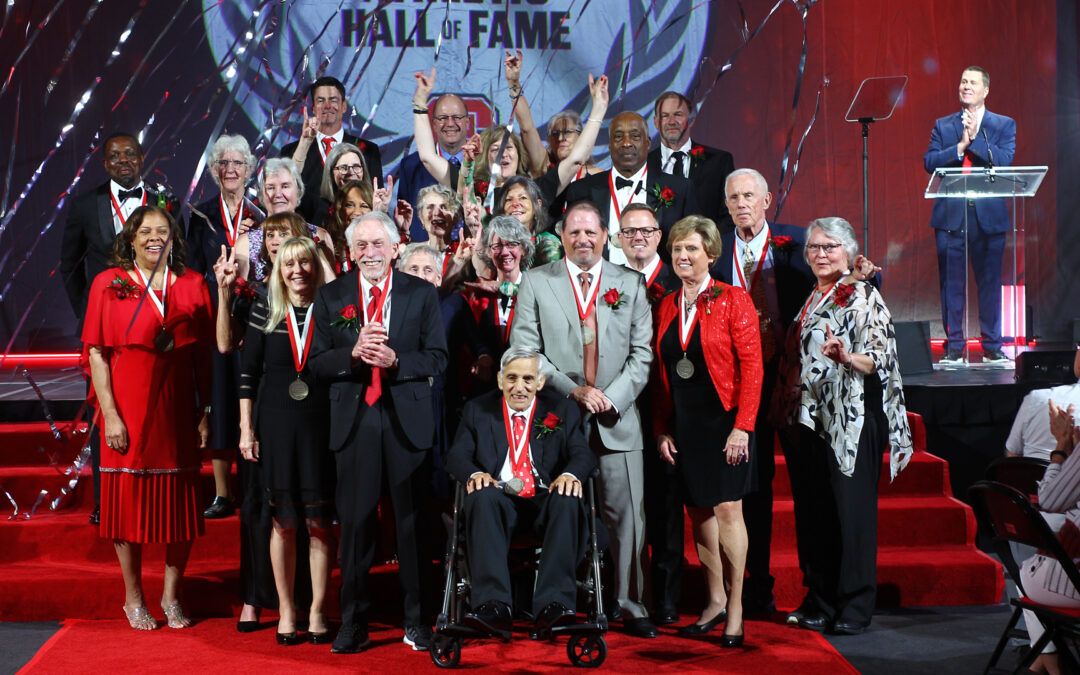
Raleigh knows ball. Proving the point, NCSU Athletics Director Boo Corrigan announced the 2026 Athletic Hall of Fame class, with Reynolds Coliseum welcoming the Pack’s latest legends April 25.
The eighth induction class spans athletes from seven sports, alongside coaches, contributors and a team of back-to-back national champs—all scoring a well-earned victory lap.
Among them: former women’s basketball assistant coach Nora Lynn Finch, enshrined for her longtime leadership and impact on the program, and All-American ACC football standout Marc Primanti, whose standout 1996 season cemented his Wolfpack legacy.
“I’m so blessed to receive this honor—it feels surreal,” says Primanti, echoing the pride felt by this year’s class. “It’s not just about the wins and losses or personal stats—it’s the memories, coaches, teammates, the long days of practice, both on and off the field. They all helped instill Wolfpack pride in me. To stand alongside all the NC State greats is the kind of honor you don’t even dream about. Grateful doesn’t even cover it—I’m just happy to be here still wearing my red and white!”
As the 10 inductees took in their red letter day, Pack pride echoed from Reynolds to Carter-Finley and beyond. They were raised by the wolves, and now they’re forever etched into Wolfpack history.