NC State’s aquaculture program raises fish for local restaurants.
Not all fish comes from the ocean. For Raleigh’s Locals Seafood and Locals Oyster Bar, some fish, including striped bass and hybrid striped bass, are grown in tanks at NC State’s Fish Barn and Pamlico Aquaculture Field Laboratory in Aurora, NC. Aquaculture is a burgeoning industry in North Carolina, one of the fastest-growing segments of agriculture in the state, and it helps take pressure off of the wild stock in our oceans while yielding more consistent and reliable-sized fish. This is hugely beneficial to people like Lin Peterson, the co-founder of Locals Seafood and an alum of NC State’s Fisheries, Wildlife and Conservation Biology program. Peterson buys NC State’s pure stripers at market size and then sells them to chefs at various local restaurants, including Locals Oyster Bar. “Chefs love [these fish]; our retail has been great,” Peterson says.
The ideal size of the fish is achieved through selective breeding, Peterson explains, not genetic modification. Commercial farmers raise hybrid striped bass at their own facilities on the coast that are spawned with adult fish from the university to produce the crop. Pure striped bass are produced at the Pamlico Field Laboratory, where the adults are held in indoor, temperature-controlled tanks with optimal water quality, diet and other factors until they spawn in the spring. The larvae that hatch from the eggs are then raised in farm ponds and, once the fish get large enough, they are moved into tanks where they live in water from the Castle Hayne aquifer and from the Pamlico Sound.
Hatchery Manager Robert Clark with a farmed striped bass.
Additionally, through a partnership with Raleigh-based Infinity Hundred Farms, three of the tanks holding hybrid striped bass at the Fish Barn are part of a greenhouse-based aquaponic gardening system. In the system, fish waste is oxygenated with water and run to a 9,000-gallon deep-bed hydroponics tank which grows lettuce, herbs and other produce sold to more than 20 restaurants around town. “Infinity Hundred is all about trying to do more with less—growing more food for more people using less resources,” says founder and principal farmer David McConnell.
Ben Reading, facility director at both aquaculture sites and an assistant professor in NC State’s Applied Ecology department, says that, while some people are wary of farm-raised seafood at first, the taste is indistinguishable from wild-caught seafood. You won’t be able to tell the difference in Locals Oyster Bar’s crudo, grilled fish sandwich or seared fish filet, because, whether farmed or wild, striped bass maintain the same mild, clean flavor. “There are lots of concerns about global aquaculture and there are lots of questions,” Peterson says. “But there are tons of regulations in place that produce great products in North Carolina. We’re going to educate people on why local aquaculture is good when it’s done right.”
Bust the Oyster Myth
Locals Oysters Bar; Photo by Owen Scott Jordan
There’s a persistent adage that you should only eat oysters in months with the letter “r” in the name—September through April. Locals Oyster Bar chef Eric Montagne and Locals Seafood owner Lin Peterson insist that it’s not true—at least, not anymore—thanks to modern oyster farming methods. Today’s oyster farmers have found a way to produce triploid oysters, which, unlike diploid oysters, don’t spawn in the summer months. This means they can be enjoyed all year long. Peterson explains that when an oyster spawns, its quality suffers; it becomes soft and watery as it expends all of its energy reproducing rather than getting nice and fat for consumption. Oyster farmers grow triploid oysters in the same natural habitat of wild diploid oysters, in North Carolina’s coastal sounds. The triploid oysters are grown either in floating bags on the surface of the water or in cages along the bottom of the sound. Locals Oyster Bar offers a rotating variety of raw oysters sourced from five different oyster farmers on the coast.
Midtown East is bustling with shops, restaurants and, of course, a large new grocery store from up north, but the newest addition to the shopping center evokes the natural world rather than the commercial one. A beautiful, handcrafted tree sculpture from local artist Meleah Gabhart adorns the exterior of Ashley Christensen’s Project Xtra Crispy at its location off of Wake Forest Road.
Gabhart, who uses reclaimed wood to craft her trees, was selected to create the piece by Simon Griffiths, a curator for Midtown East.
Meleah Gabhart
Gabhart says she has always considered herself an artist. She used to create trees within countertops and tile on floors but says she grew restless with the sharp, angular results. She turned to wood as a medium in order to produce smoother and more organic pieces.
Her work is mostly custom designed for private homes and she has a few commercial projects in Durham. Gabhart’s first public piece in Raleigh—seven trees with intertwined branches, leaves and roots—is suspended behind the bar at Mordecai Beverage Company in Gateway Plaza.
Gabhart says she feels that trees bring life into spaces, and that all people, no matter the age, gender or occupation, seem to respond affectionately to them. “It’s something that we all have in common, a love for trees,” Gabhart says.
Each of Gabhart’s tree sculptures are designed piece by piece, from the trunks to the leaves. The designs, she says, are often dictated by the grain of the wood she’s using. Along with beautifying Midtown East, the art, Gabhart hopes, will deliver a sense of calm, peace and joy to visitors as they wander from place to place. Regency, the development company behind Midtown East, is commissioning several public art installations created by local artists for the shopping center.
Benji Johnson creates handmade soaps with local ingredients.
Aromas of freshly brewed coffee from Counter Culture. A whiff of local honey from the State Farmers Market. Rich notes of chocolate from Videri. These are just a few of the delightfully familiar scents from Naked Body Skin Care, a handmade soap bar brand made here in Raleigh. Creator and owner Benji Johnson stumbled into the soap making business somewhat accidentally; the idea stemmed from his other business, Ball Player’s Balm, a handmade baseball and softball glove cleaner and conditioner product line. Through researching and developing balms in 2018, Johnson realized he had a passion for creating handmade products that led him to start making bar soaps as well. “The soap making surprised me; I never expected it to be as fun as it is, but I love it,” Johnson says. “It allows for so much creativity and serves as an expressive outlet for using different scents, designs, colors and naming the bars.”
Johnson recognized the health benefits for people using handmade soaps. They naturally contain glycerin, a sugar alcohol derived from animal products that Johnson has found can help skin cells mature properly while protecting and moisturizing skin. Many store-bought soaps have glycerin removed during manufacturing and can contain harmful ingredients.
Johnson’s unique soaps include “Icelandic Breeze,” a teal and gray bar made up of shea butter and Icelandic black sand for a gentle exfoliation; an Arizona-themed bar inspired by the landscapes of the West, and a collection containing Counter Culture-brewed coffee and coffee grounds in flavors such as Vanilla Latte and Mocha. Next, Johnson will make a collection of beer scented soaps using beers from local breweries. They’re sure to make you thirsty. instagram.com/nakedbody.skincare
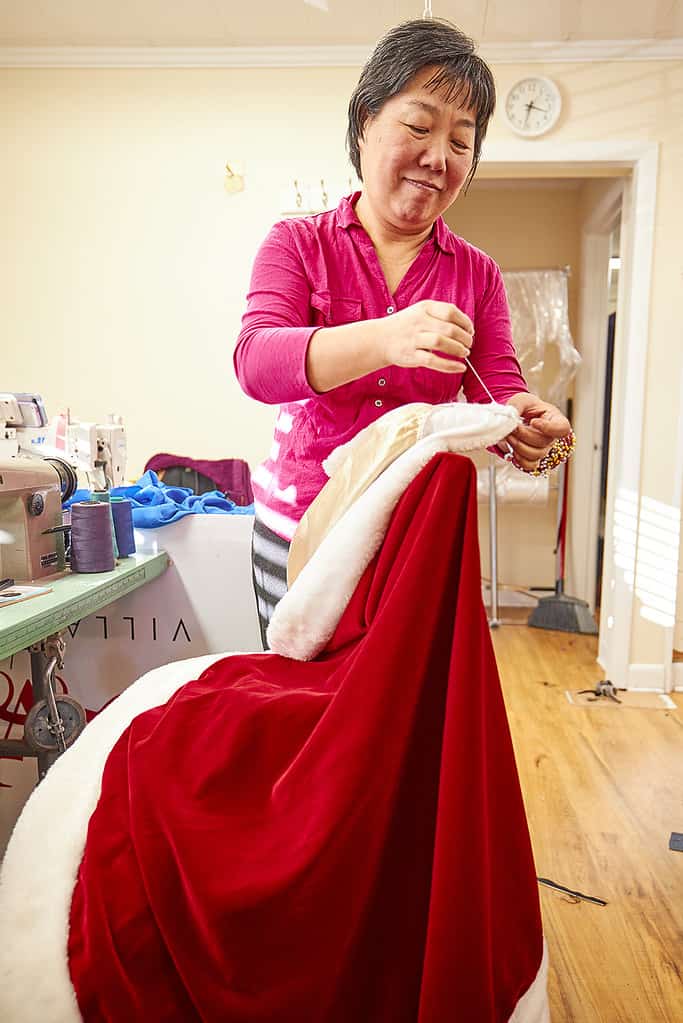
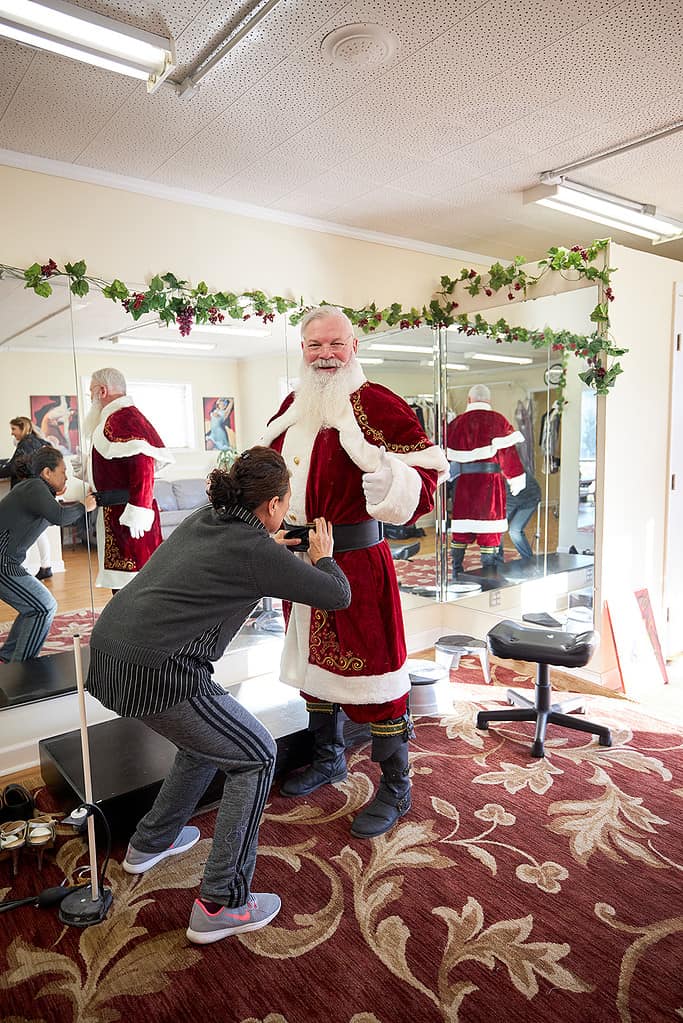
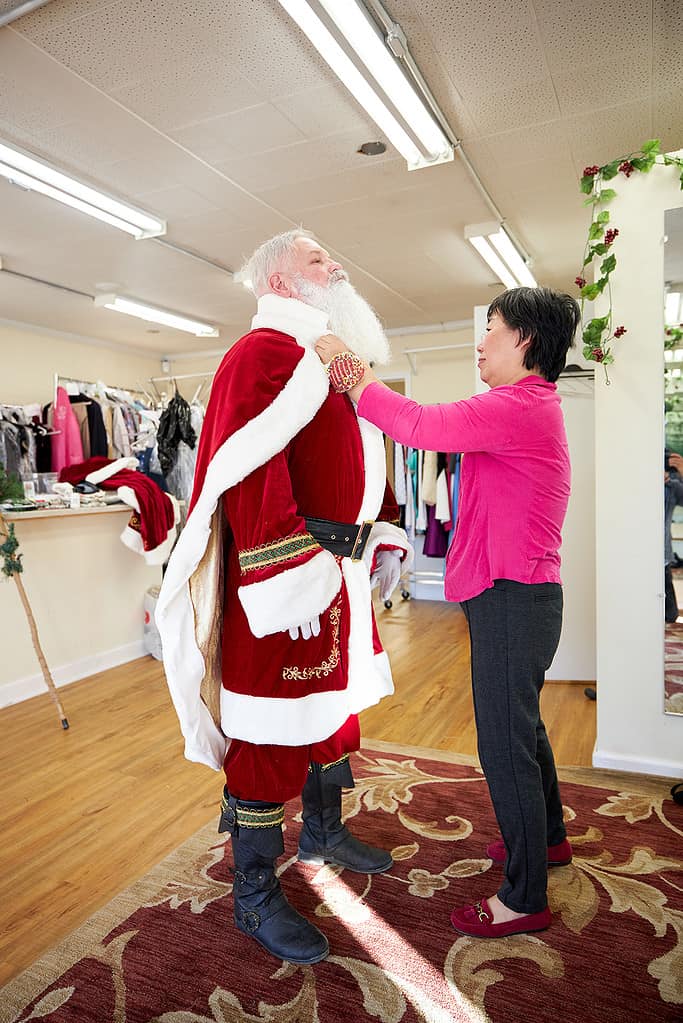
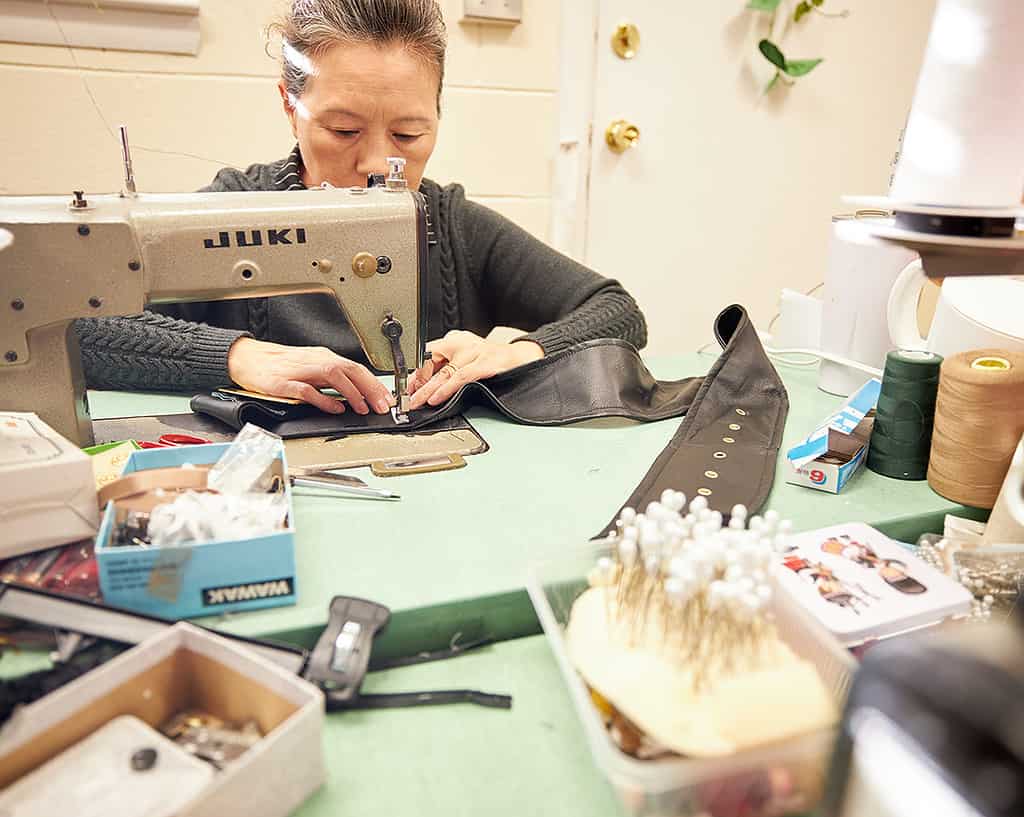
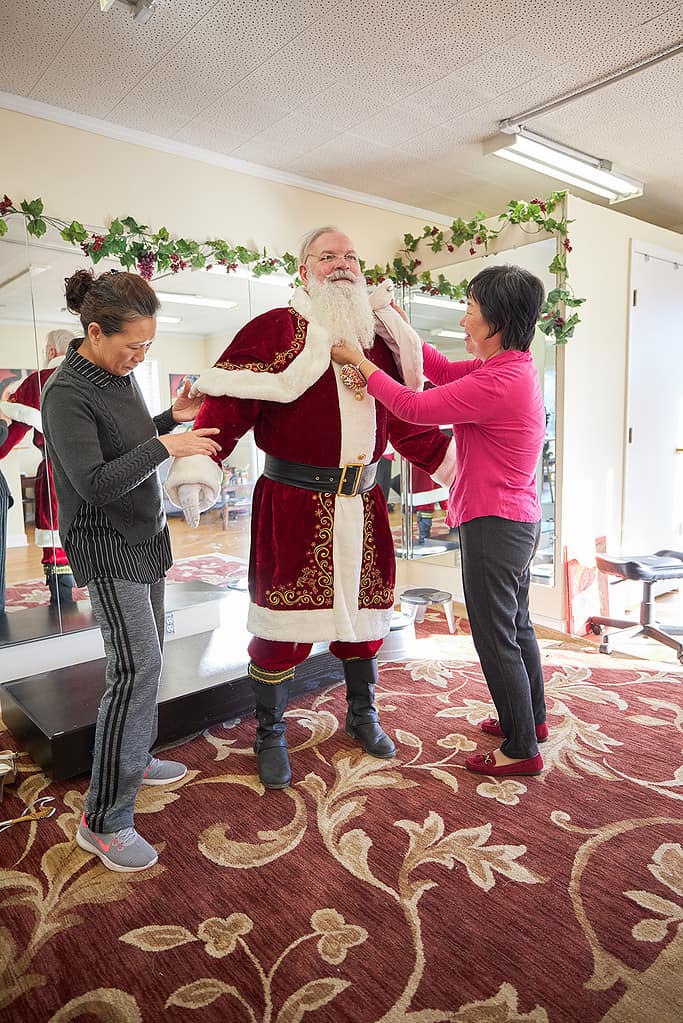
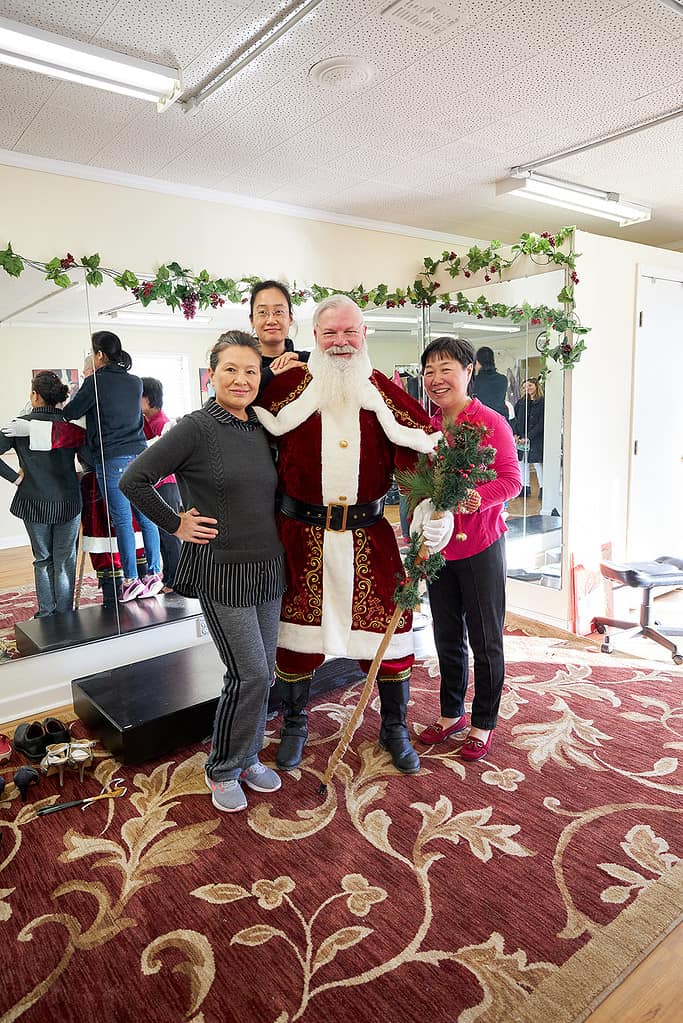
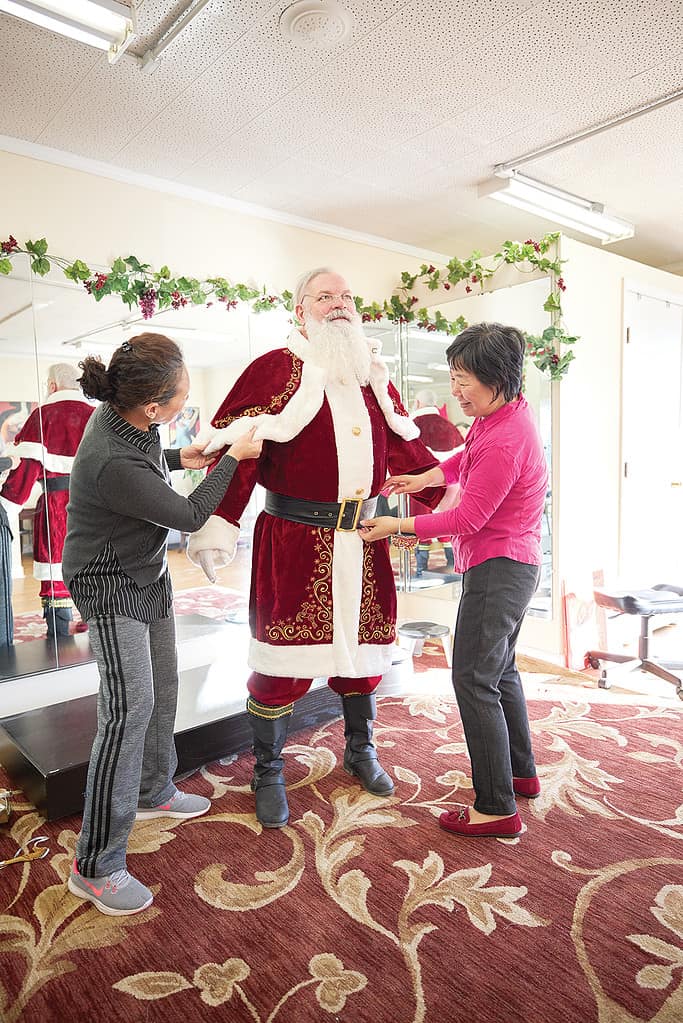
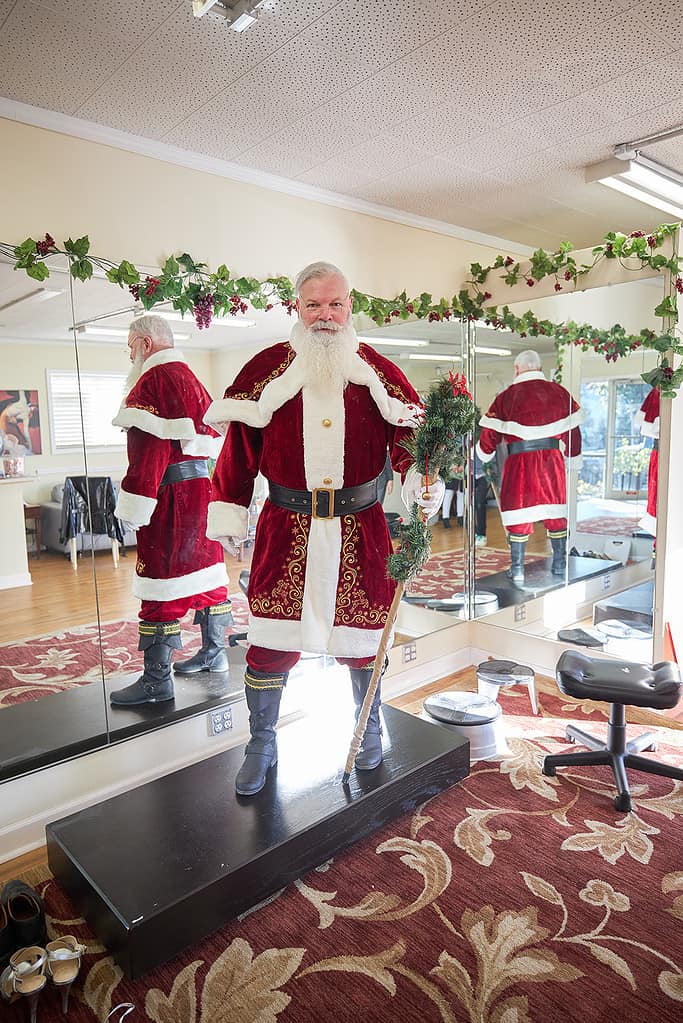
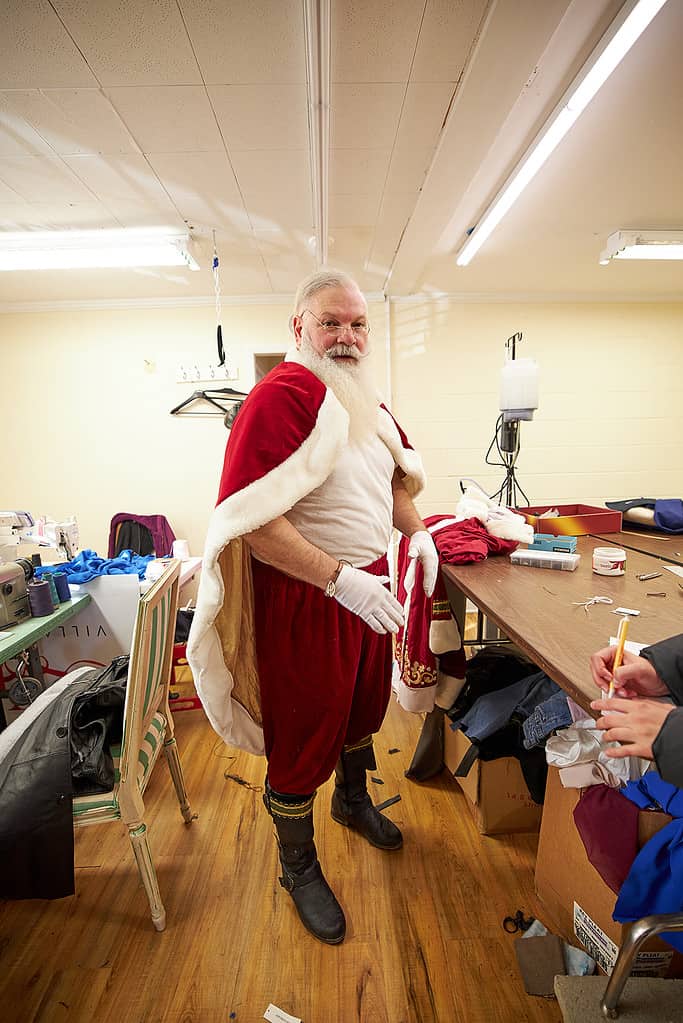
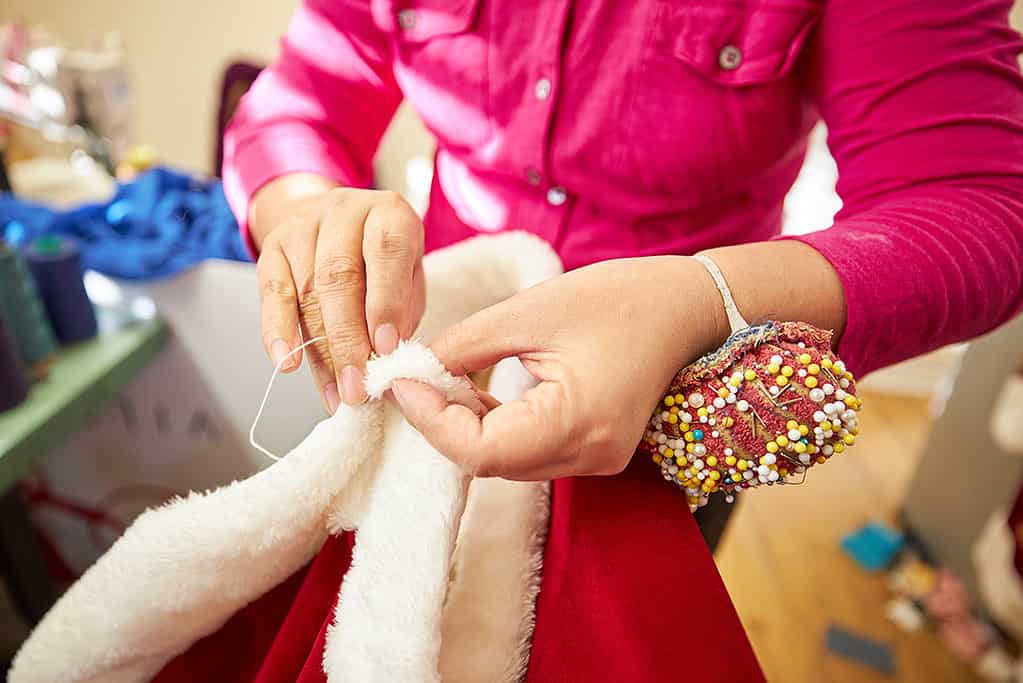
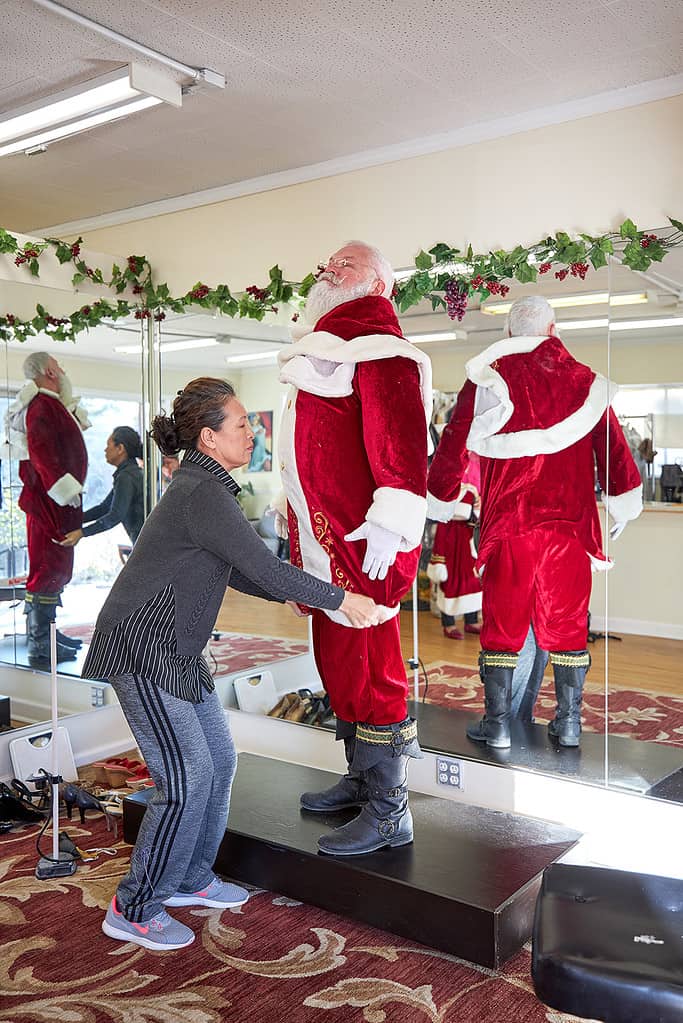
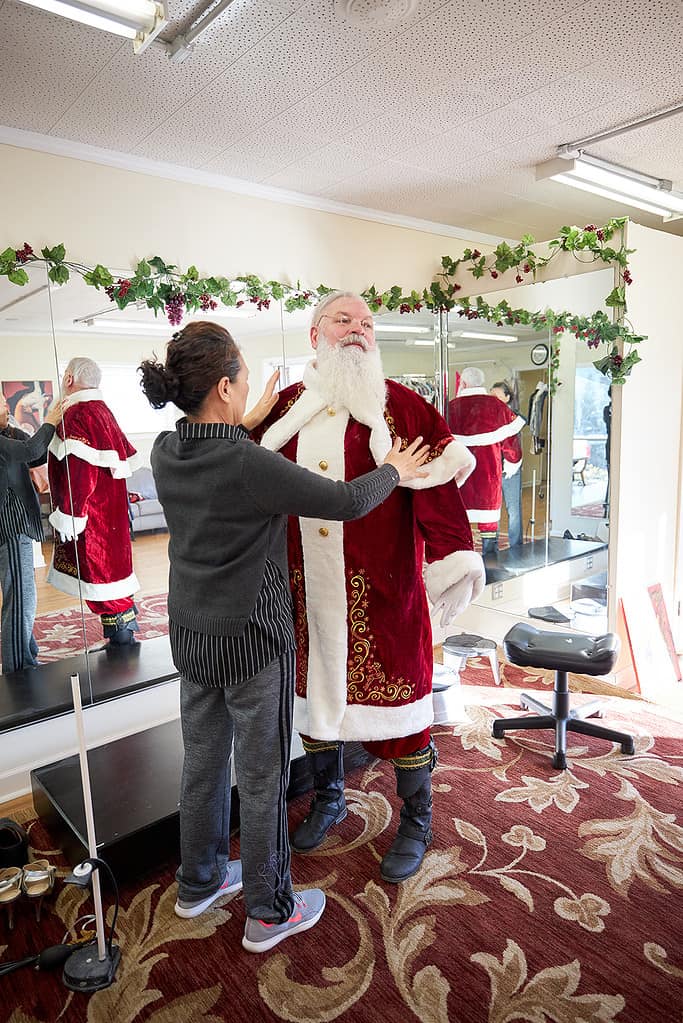
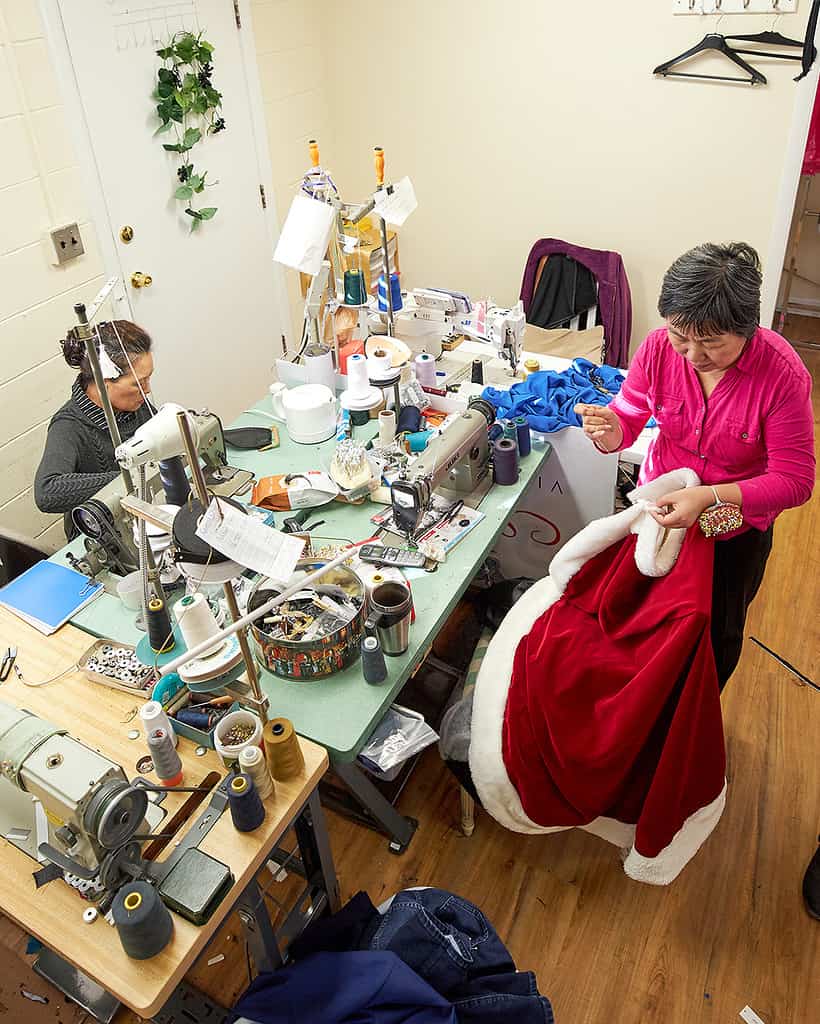
When Santa’s not delivering presents on Christmas Eve, he’s working as an engineer for Amtrak and as a bartender at Stir in North Hills; he goes by the name of JD Thomas. You’ll never find Santa’s alter ego out of “Santa-mode,” however, as Thomas is always cheery, spreading joy to everyone around him. Thomas says he was “born as Santa” but officially got into the business of wearing the big red suit five years ago, when another Mr. Claus couldn’t make it to Amtrak’s Santa Train; Thomas agreed to fill in. “Seeing those kids was so emotional,” Thomas says. “I wanted to keep doing it.” For the past three years as a way to get into character, Thomas has had his signature red suit tailored at Village Tailor on Peace Street. Owner Peggy Jin and her employees help fit Thomas into the suit, replacing buttons here and there or fabricating new accessories such as the black belt and gold inlay cape you’ll find Thomas wearing this year. Although Amtrak’s Santa Train is already sold out for the season, you can find Thomas—er, Santa—on the Great Raleigh Trolley’s Santa Express, at Stir’s Santa Brunch held every Sunday in December and at various events downtown throughout the holiday season.
Chef Blake Gotliffe’s farm-to-table café brings hyperlocal eats to Smithfield.
There’s a lot of work that goes into chef-owner Blake Gotliffe’s farm-to-table menu at Under the Oak Café in downtown Smithfield.
For one, there’s tending to the farm in his backyard in nearby Clayton, which provides much of the produce for the restaurant’s lunch sandwiches and salads, dinner entrees and his wife Megan’s desserts. In addition, 90 percent of the menu’s remaining ingredients are sourced from North Carolina farmers and producers, requiring trips to nearby towns to pick up products—including a run to Raleigh twice a week for seafood from Locals Seafood, meat from First Hand Foods and various items from the State Farmers Market. “I prefer the one-on-one interaction with farmers,” Blake says. “Really knowing the people and supporting them means a lot.”
Under the Oak Farm; Photo by Felicia Perry Photograpy
Then there’s the task of curating menu items and cooking them to order for hungry customers, a job that comes easily to Gotliffe thanks to five years in the restaurant industry under his belt, with two of those years spent working under chefs Scott Crawford, Eric Montagne and Steven Goff at Standard Foods. Gotliffe attributes much of his skill to his time working at the now-closed restaurant and grocery store that was located just outside downtown Raleigh. Although he went to culinary school at Wake Tech and ran his own catering business before he joined Standard, Gotliffe says he realized there were techniques and methods of cooking that he had yet to learn.
Crawford helped him develop his palette and balance flavors, Gotliffe says, and he was able to put his skills to the test in Standard Foods’ prepared meals section. It was Gotliffe’s job to use the restaurant’s vegetable scraps or items that weren’t selling in the grocery to make dishes people could heat up at home, a task that now influences much of his cooking at Under the Oak, which opened last February. Gotliffe’s menu is based off of sustainable practices such as preservation, full utilization of resources and zero waste. His specialties are homemade pickles and charcuterie, both of which feature on the restaurant’s signature charcuterie board and in many of its beloved sandwiches. Gotliffe makes his own bread for the sandwiches, too. “The sandwiches are very special in that regard,” he says. “It’s rare that you eat somewhere where they make the meat, they make the bread and they grow the lettuce and make their pickles. It’s a 98 percent scratch-made sandwich.” Condiments, including Lusty Monk Mustard and Duke’s mayo, both of which are North Carolina-sourced products, comprise the other two percent.
On the dinner menu—served Friday and Saturday nights—Gotliffe makes a special handmade pasta dish each week using a variety of freshly made pastas, which are also used in a mac and cheese prepared with Ashe County Cheese and local cream. These dishes are sides to meat and fish-focused entrees, while creative small plates change with what’s available and in season. “I like to say [the menus are] very versatile,” Gotliffe says. “It’s mainly just seasonal cooking. I let the product decide my menu.”
Blake and Megan Gotliffe; Photo by Stacey Sprenz Photography
Seasonal local produce also helps Megan decide on items for the restaurant’s dessert menu that includes rotating cakes, tarts and ice creams. Also a graduate of Wake Tech’s culinary program and a former pastry chef at Mandolin and The Umstead, Megan, too, practices preservation to save summer produce for winter desserts and vice versa. Megan also runs her own wedding cake business, I Do Cakes, and occasionally sells cakes and cupcakes through Under the Oak Catering.
But Smithfield isn’t Raleigh and Gotliffe says his menu needs to be more approachable for Johnston County residents than the adventurous menu at Standard Foods, though he says Smithfield diners appreciate Under the Oak’s local sourcing—the Gotliffes have a steady stream of regulars, some of whom dine at the café every single day.
“There is no other farm-to-table restaurant out here at all,” Gotliffe says. “It’s definitely opened people’s eyes.”
“I’ve enjoyed getting to know the locals and I’ve kind of fallen in love with this town,” adds Megan.
A 40-minute drive from Raleigh, Under the Oak gives you the perfect excuse to experience what the Gotliffes love about Smithfield for yourself. undertheoakfarm.com