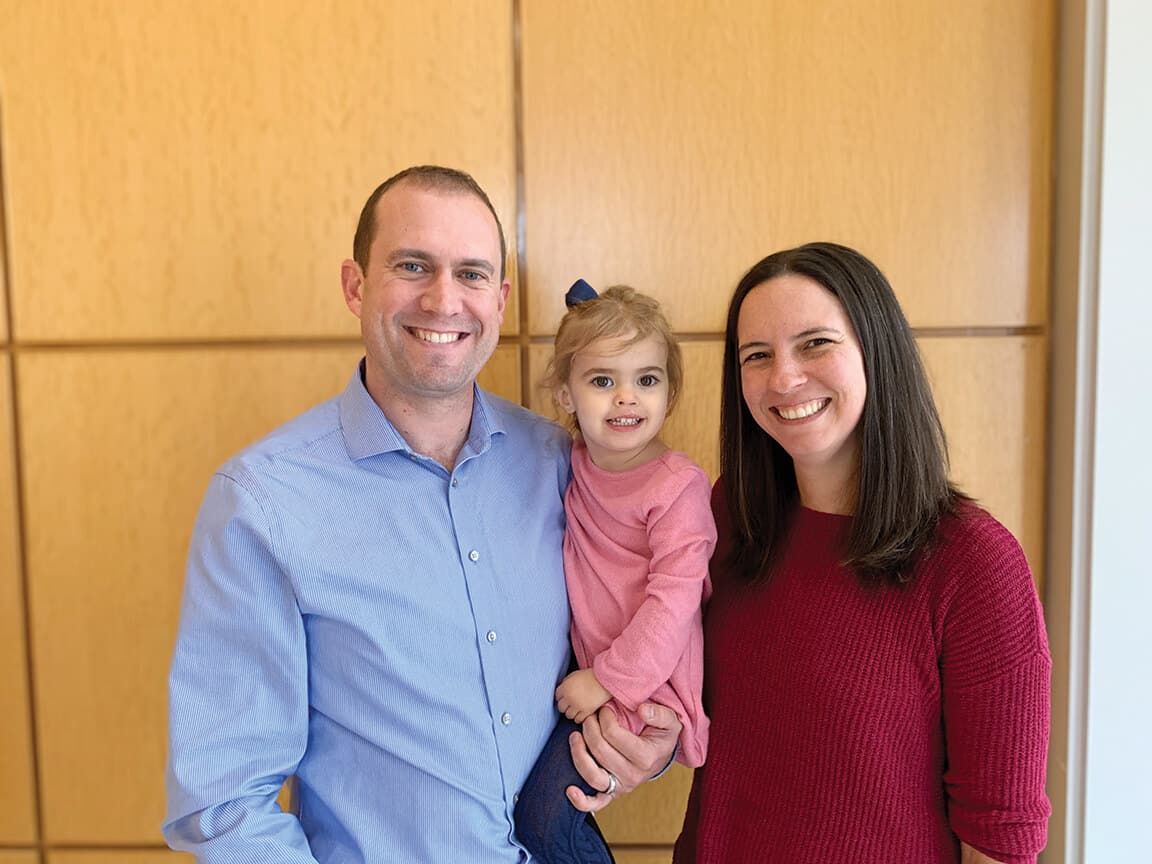
When it comes to child care, LM Restaurants has its workers covered.
At the Dorothy Babb Academy, located below the offices of LM Restaurants in west Raleigh, children play with blocks, practice their colors and interact with teachers. It looks like any other preschool, with cubbies for jackets, cots for naps and a playground. But the standout feature for the children of this school is who’s working upstairs: their parents, employees of LM Restaurants.
Founded four years ago, the school employs a staff of three teachers and currently enrolls eight students, all children of LM Restaurants workers. Use of the preschool is a perk available to LM staff as long as space for enrollment remains.
And, for the children, the benefits are clear. Along with having their parents just upstairs, the school offers water play days in the summer, scavenger hunts throughout the office and lunch brought in from the Carolina Ale House daily, including steamed vegetables and salmon.
Onsite childcare is far from the norm in the U.S. In fact, only 3 percent of companies offer it according to the 2017 Employees Benefit Report from the Society for Human Resource Management. Considering 80 percent of companies offer free coffee, it’s clear that some perks are easier to provide than others.
“It’s not easy but there are far more difficult things companies undertake than this and the benefits are so astounding,” says Dr. Cathy Crossland, a professor of special education and director of the Diagnostic Teaching Clinic at NC State University, who helped establish the school. “I don’t think any program like this can operate at a for-profit margin to provide the types of services to employees that you would want. We pay the teachers well, their benefit packages are good and that’s what employers need to understand. You can’t run it on the cheap if you want to run it in a first-rate way.”
While LM employees pay for enrollment, that cost is heavily subsidized by the company. Tuition is comparable to local five-star facilities, an LM Restaurants spokesperson says.
How It Began
Amber Moshakos grew up in the restaurant business. She made friends with bartenders sipping virgin daiquiris and chatting up employees. Now a mother herself, Moshakos wants the same experiences for her own family.
Working alongside her parents, Lou and Joy Moshakos, for the last 16 years, Moshakos is now the president of LM Restaurants, a family-run business her parents founded 40 years ago which encompasses seven brands, 26 locations and four new brands in development. In Raleigh, the LM portfolio includes Vidrio, Taverna Agora and Carolina Ale House.
Amber Moshakos with her father, Lou Moshakos, at Vidrio
“It’s hard being a working mom and constantly doing the balancing act between supporting the team in my leadership role, but also supporting the family in the mom role,” says Moshakos.
When Moshakos became pregnant approximately six years ago, it sparked a discussion about how difficult it is for parents to be separated from their children for so many years while they work, especially for mothers who want to nurse. When another LM employee, Tonya Towler, became pregnant at the same time as Moshakos, they realized they could find a way to bring the babies to work.
“We asked how we could extend nursery care into a preschool,” says NC State’s Crossland, a longtime friend of the Moshakos family. “On the back of some napkins, we started sketching out a safe place for employees to have their children and visit them any time they wanted. Out of that came a four-star preschool.”
Family and Education
Patriarch Lou is committed to supporting his employees’ education and makes donations to an NC State scholarship fund. Along with Joy, herself an NC State alumna, the family helps motivated students attend the College of Education.
It’s a value that has trickled down to his children.
“Culturally, it fits who we are as a family,” Amber Moshakos says. “Education is core to us. To provide an early foundation to these children and give our team members the ability to take advantage of it has been really exciting.”
When it came to naming the school, Moshakos thought of her grandmother.
“Dorothy Babb was the most incredible caretaker and she loved children dearly,” says Moshakos. “Her whole life revolved around taking care of others.”
Children from six weeks to age 5 learn manners, how to eat, clear their dishes and even academics like the fundamentals of algebra. Throughout the year, children go trick-or-treating or carry Easter baskets. During the day, parents can join their children, take a break or read a book. Santa comes annually.
All in all, it’s not just a school, but a community.
“We’ve created a safe environment for the parents and it has a calming and joyful effect on other employees,” says Crossland. “These little ones come up and visit and you see the smiles ripple across employees’ faces.”
For Crossland, the school has validated the premise that employers and corporations can create a work/life space in the professional environment that enhances employees’ working habits. Mothers and fathers who are secure about where their children are, are secure about where they work.
“Going through the process was really eye-opening,” says Moshakos. “It was important to lay a good foundation for our children so they could grow and prosper. If more companies could figure out a way to do it, it would help keep women in the workforce. I hope we find it easier to support working parents. Sometimes, it doesn’t fit the traditional model and we have to be open to things that are different to what we’ve been accustomed to.”
It’s official: Gay For Good has its first chapter in the South!
The nonprofit, which connects members of the LGBTQ community with various volunteer service projects, will cover Raleigh and Durham in its service area, joining 14 other chapters in cities including Los Angeles, New York City and Chicago. Its mission is to enhance visibility, promote goodwill and unite diverse communities through volunteerism. Here in the Triangle, Gay For Good is teaming up with ReachOUT NC, another local organization working to connect members of the LGBTQ community with the wider community through group service projects and volunteering.
ReachOUT NC just celebrated its fifth anniversary and has completed more than 150 service projects to date.
“When I moved back to Raleigh from San Francisco, I wanted to build a more constructive outlet as a way for people to get together and give back into the community,” says Michael Wilson, the founder of ReachOUT NC. Wilson, originally from North Carolina, says he saw a lot of ways people in the LGBTQ community could get involved in San Francisco and saw a lack of those kinds of opportunities in the Triangle.
ReachOUT NC focuses on projects where all people can come together and get to know each other while also doing good for the community. Volunteer opportunities could include working with young people, making meals for the homeless or building homes with Habitat for Humanity.
“Typically, we try to have two projects a month, sometimes three,” Wilson says. “We try to appeal to people who have different interests.”
Upcoming events include volunteering with the Miracle League of the Triangle—helping children with special needs in the outfield and assisting with base running—on May 11 and freshening up the pantry of Alliance of AIDS Services-Carolina on June 22.
“We’re providing awareness,” Wilson says. “Raleigh is getting more progressive, but it’s about changing the hearts and minds of people who may not know gay people, or may not interact with them. We work hand in hand with our neighbors. We want to go out and have a good time. We’re just like everybody else.”
It started with a love for America’s pastime but it’s grown into a national story. Is Raleigh ready for a Major League Baseball team? Many residents think so.
When MLB commissioner Rob Manfred went on the record about the league considering plans to expand from 30 to 32 teams, Raleigh resident Lou Pascucci and a group of friends asked themselves, “At what point could this happen in Raleigh?”
Since that initial conversation, Pascucci and other advocates compared statistics from other viable cities and found that Raleigh is holding its own in terms of population, television market and income.
“Once we had that data, a lot of us who work as designers and in tech decided to put together a website and show it to people and explain the numbers,” Pascucci says of mlbraleigh.com. “Every single person we brought this to said, ‘I love this, how can I be a part of this?’ We teamed up with a lot of the city and said, ‘Let’s do this completely grassroots.’ If someone with a ton of money wanted a baseball team here, we’d already have one.”
The Triangle’s population is in line with other markets that have MLB teams, such as Kansas City, Cincinnati and Pittsburgh, all of which have other professional sports teams as well. As for whether Raleigh can support professional hockey as well as baseball and, potentially, professional soccer, Pascucci says he’s not worried.
“If you look at some of the markets that we compare to, like Pittsburgh, they have three major league sports and they’re supporting all of them,” he says. “The Triangle fits right in.”
The Raleigh/Durham television market makes for another argument in the MLB advocates’ favor. It’s the largest market in the nation without a locally or regionally broadcasted MLB team. That, coupled with the fact that Raleigh is the richest metro area in the continental U.S. without an MLB team located within 100 miles, means there’s a strong market here for Major League Baseball to tap into.
MLB Raleigh has been gaining traction at an exponential rate since the website’s launch last month.
“We launched from zero and it’s been crazy,” Pascucci says. “It really spread nationally right off the bat. We thought we ordered enough merchandise to get us through a month or two and we sold out in the first 48 hours.”
And, so far, it has all been through the power of a grassroots campaign rather than a big-money backer.
“It’s about reaching out to people like Trophy and Videri and giving them the pennants to put up in their place,” says Jed Gant, an unofficial MLB Raleigh community advocate. “You get a piece of the movement while we’re building something. We’re going business to business and pounding the pavement and reaching out to people who are interested in it and starting a conversation.”
MLB Raleigh has partnered with the Boys & Girls Club of Raleigh and is donating a portion of its profits from merchandise and upcoming events. It’s a partnership the organizers hope will help revitalize the club’s baseball field in east Raleigh and grow its youth baseball program.
“This cannot be a profit grab for anyone,” Pascucci says. “Anything we make will go back to the Boys & Girls Club of Raleigh. If it fails and doesn’t happen, at least we fixed up our community.”
Support MLB Raleigh and the Boys and Girls Club on Saturday, April 13 from 1-4 p.m. at Trophy Maywood. For more information, visit mlbraleigh.com■
Potential Stadium Locations
• The Southern Gateway (bordered by MLK Boulevard, McDowell and Salisbury streets)
• The old Cargill Mill site (between S Wilmington Street and Hammond Road)
• The current Central Prison site (located off of Western Boulevard)
• The Penmarc land (at the I-40 junction off of South Saunders Street and Penmarc Drive)
“The stadium situation is fun to talk about, but the ideas are just conversation starters,” Pascucci says.
It’s hard to be left wanting for a good beer in Raleigh but with so much local variety, where do we start? In a saturated market, breweries are taking it upon themselves to raise the bar.
“Brewers are chasing the consumer,” says Richard Greene, the executive director of the North Carolina Craft Brewers Guild. “They’re creating flavors that consumers are demanding, really paying attention to what the consumer says.”
Given the level of competition, not making great beer is a deal-breaker, but what makes a successful brewery is its focus and its business plan. Raleigh is a relatively big city and there’s plenty of competition.
“Brewers will have to continue to up their game in terms of quality and creating an environment that everyone will enjoy,” Greene says. “Breweries in Raleigh have a lot of flavors. There’s something there for everybody and that is a wonderful thing.”
What The People Want
When Ian VanGundy, the brewmaster at R&D Brewing, started home brewing in Apex as a teenager, there was no local beer scene; now, there are 19 breweries with a Raleigh address.
“Raleigh is a bit unique, a little more down-to-earth in its beer palate,” VanGundy says. “I’ve been successful making beers for the Raleigh area, because I agree with Raleigh.”
VanGundy wanted to see what would happen if he asked locals what they really wanted. Are they seeing what they want to see? Are they choosing the next best thing?
“We’re trying to have an open conversation with our community,” VanGundy says. “We want to be a brewery that lasts for generations. We’re not necessarily shooting for a specific niche.”
R&D Brewing recently tried its hand at a low-calorie, low-carbohydrate craft beer, something of a rarity in the market. At 97 calories, LoCal Resolution is a craft-focused ale, centered around the cashmere hop, that drinks like a light beer but doesn’t taste like one.
“Craft beer doesn’t have to be heavier,” says VanGundy, a marathon runner with beer-loving friends who are cyclists and triathletes. “It doesn’t have to be a double cheeseburger in a glass.”
Crazy For Hazys
Approaching two decades of brewing professionally, Michael Morris has seen the industry’s ups and downs. Since opening Crank Arm in 2013, he’s won numerous awards with his brews and knows what it takes to stay competitive.
“The thing that’s going to set people apart more than anything is their branding,” Morris says. “Are they willing to keep up with the trends, whatever they might be?”
One trend Morris has come around to, for instance, is the hazy IPA.
“That’s something, as an old-school brewer, I resisted for a while,” Morris says. “I’ve been trying to make my beers as clear as I can for the last 15 years and now people want the muddiest beer they can get. The public has really embraced the haze.”
Demand for specific beer styles, and diversity as a whole, are what brewers are watching. When Crank Arm opened, it brewed around 25 styles per year. Now, it’s doing close to 50.
“We’ve been coming up with new things and it’s really hard,” Morris says, “because as a brewer and a brewery owner, instead of forecasting next quarter, we’re basically going, ‘Next month, these are the beers we’re going to brew.’”
Morris credits some of the demand to the rise of social media. People want to drink something no one else has tried and display it for all their friends to see.
“The trend is what’s new,” Morris says. “We intend to grab the bull by the horns and give the people what they want.”
Pop-Up Beer
Ancillary Fermentation, a new brew concept from the Bond Bros. team, thought about what unique offerings it could bring to the industry and decided to try and shift the beer experience through pop-up fermentation.
“Let’s get people out of their everyday breweries and gastropubs and into some place they’ve never been before,” co-founder Sean McKinney says. “Let’s drink beer in office parks and churches, with puppies and magicians and in thrift shop pop-ups. Let’s drink beer out of water bottles! It’s a means to shake things up for beer fans and a great excuse for those who may be intimidated by such a vast and constantly changing industry.”
Though Ancillary’s beer is delicious, McKinney says, it has, by no means, reinvented the wheel. Presentation is definitely the radical element in its equation.
“Once you’ve mastered your craft technically, creativity is key,” McKinney says. “You can’t be afraid to push the envelope or try to expand the consumers’ minds on what beer is or how they relate to it. Question everything.”
10 Years Strong
Lonerider Brewing Company knows the value in a good story—its Wild West theme has been going strong for a decade, and its original portfolio of Sweet Josie Brown Ale and Shotgun Betty Hefeweizen Ale has grown to include more than 20 beers.
“Every brewery is different because most craft brewers are individuals that came in with a passion for what they do,” says Sumit Vohra, Lonerider’s CEO. “We make sure we make classic styles really well and sprinkle in innovation, but stay true to our core. What works for us is to continue to make great core styles, and then make 22 styles that we have fun with. The thirst for variety is driving our evolution.”
Lonerider, too, is listening to its consumers. It recently made changes to its award-winning IPA, Hoppy Ki Yay, by adding more citrus flavors to the beer.
“Hoppy Ki Yay was designed as a beautiful, retro IPA with dank flavors,” Vohra says. “We love the old recipe, but you want to stay ahead and listen to people who want to drink a certain kind of style.”
In terms of what’s new for the brewery, Vohra teases that we’re all in for a treat.
“At the end of this year, we’re going to take out a beer category that nobody has been thinking of,” Vohra says. “We certainly can’t talk about it yet. But nobody has been thinking of it.”
Is his word as good as his beer? We’ll have to wait and see.
In an age of tiny houses, capsule wardrobes and consultant Marie Kondo, a lot of people have felt the urge to purge. And while developers are still building large homes all over Raleigh, there’s also no shortage of condo and apartment high rises coming on to the housing market; more and more of us are deciding to get rid of extra space, and extra stuff, and moving into something cozier.
For me, it was a maintenance issue.
When my husband, Jacob, and I moved to Cary from Florida more than five years ago, we were looking for a home we could grow into. While several factors were important to us in choosing our house, including having sidewalks, a nearby grocery store, and relatively short commutes to work, size was also a consideration. We were newlyweds, eager to start a family, and we wanted extra space for friends and relatives to stay while visiting.
Fast forward five years. We have grown our family and our property ownership by one each. Our adorable two-year-old’s energy and ability to trash any space means we tended to use only a few rooms in the house. Long gone were my evenings reading in my third-floor office or sewing quietly in the bonus room. We used our dining room so infrequently that it no longer had an actual dining table in it, and the only time we set foot in our front living room was to grab a bottle of wine from the wine cabinet my father built us as a wedding present.
We also naively bought a lake house 45 minutes outside of town. We’ll weekend there, we said. It won’t be much work to maintain, we thought. Upkeep of that property, along with our house, just became too much. It was time to downsize.
As many people who make life-altering decisions do, we waffled a bit. Did we want to sell the house and move to the lake for a while, cutting out one house payment? No, we’d miss city life. Did we want to move into a ranch-style home that would be easier to maintain? No, there’s still too much upkeep involved. Did we want to move into a townhouse and leave the exterior, at least, to an HOA? That sounded good, but then what about proximity and parking? Ultimately, we decided to take off some of the pressure and we’re currently renting an apartment in Cameron Village, an area we like, but didn’t previously live in, for the foreseeable future.
My next step was to binge watch “Tidying Up with Marie Kondo” on Netflix. I didn’t exactly thank every shirt I owned before I donated it to Goodwill, but I did try to get rid of the things that no longer brought me joy. My first iPhone from 2008? Gone. Those rollerblades that only caused injury? Donated. That scarf I bought as a gift for someone I don’t even speak to anymore? Re-gifted at the neighborhood Christmas party.
At the end of the process, my husband and I had given away, trashed or sold more than half of the items in our house, including an entire U-Haul full of baby furniture. Unfortunately, that still left us with much more than we could fit into our 1,100-square-foot apartment. So we did what a lot of people do with too much stuff: we rented a storage unit on Capital Boulevard.
Here’s the reality of downsizing, especially if, one, the move is temporary, and two, if you have children: there simply is no room to keep everything, unless you build in a ton of storage space. Yes, the goal is to get rid of a lot of, even most of your stuff, but here are some logistics. Where do you keep your bike if your entryway is dedicated to stroller parking? (The balcony is not an option; there are rules.) Do you keep your wine cabinet or dining room table, because there’s only room for one? (We kept the wine cabinet and opted for barstools.) What about that fancy barbecue grill you bought a couple of summers ago? That can’t go in storage or in the apartment, and we’re still figuring that one out. What about Christmas decorations?!
Now that the house is up for sale and we’re mostly settled into the apartment, the new question is, how do we like apartment living? I’m going to be honest: it has its good points and its challenges. I enjoy taking the stroller down to Chopt for lunch or walking to the grocery store for a bottle of wine or an ingredient I forgot to buy for dinner. The bank, post office and library are also all walkable, and Uber Eats delivers to us now, a service I couldn’t get out in the suburbs.
My apartment complex is new and full of amenities, including a swimming pool that I don’t have to maintain myself and a gym that is usually empty. There’s free coffee in the lobby and I’m writing this story from a comfortable common area chair. What are the challenges?
Neighbors.
I like being surrounded by people for the most part. I guess it’s the noise and presence of others when you least expect it that takes some getting used to. Pre-dawn music on a Monday floating in from somewhere outside is not my favorite. Footsteps above my bedroom while I’m trying to sleep aren’t fun. And that morning that my upstairs neighbor left a faucet on and flooded my apartment definitely sucked. But, as my husband reminded me, the damage is no longer our problem. The joy of renting is, we can sit back, relax and let other people fix things for us.
So, what’s the overall assessment?
For now, downsizing is working. Sure, we still have chores when we come home, like dishes and laundry, but my husband is no longer outside worrying about aerating the lawn or catching those pesky moles that never seem to disappear. He doesn’t have to put moth balls under our truck to keep away squirrels and mice, critters that previously caused significant damage to the engine and gas lines. I only have to clean a small space and don’t have to chase after my toddler constantly, as she’s basically always in sight. While I’m not jumping to live in a tiny house anytime soon, I have readjusted the idea of the amount of space I always thought I needed. Smaller really is better, although a mudroom would be nice.