
by Tracy Jones | Jun 30, 2017 | July 2017 / August 2017, Polish, Stuff
Jewelry is more than just shiny bobbles on display. It is wearable art. It is a repurposed heirloom. It is a symbol of love, loss, or something in between. In short, it is meaningful. In that spirit, we spotlight a few local designers who enjoy creating their own art as much as creating meaningful custom pieces for their clients.
Gabrielle Handmade Jewelry
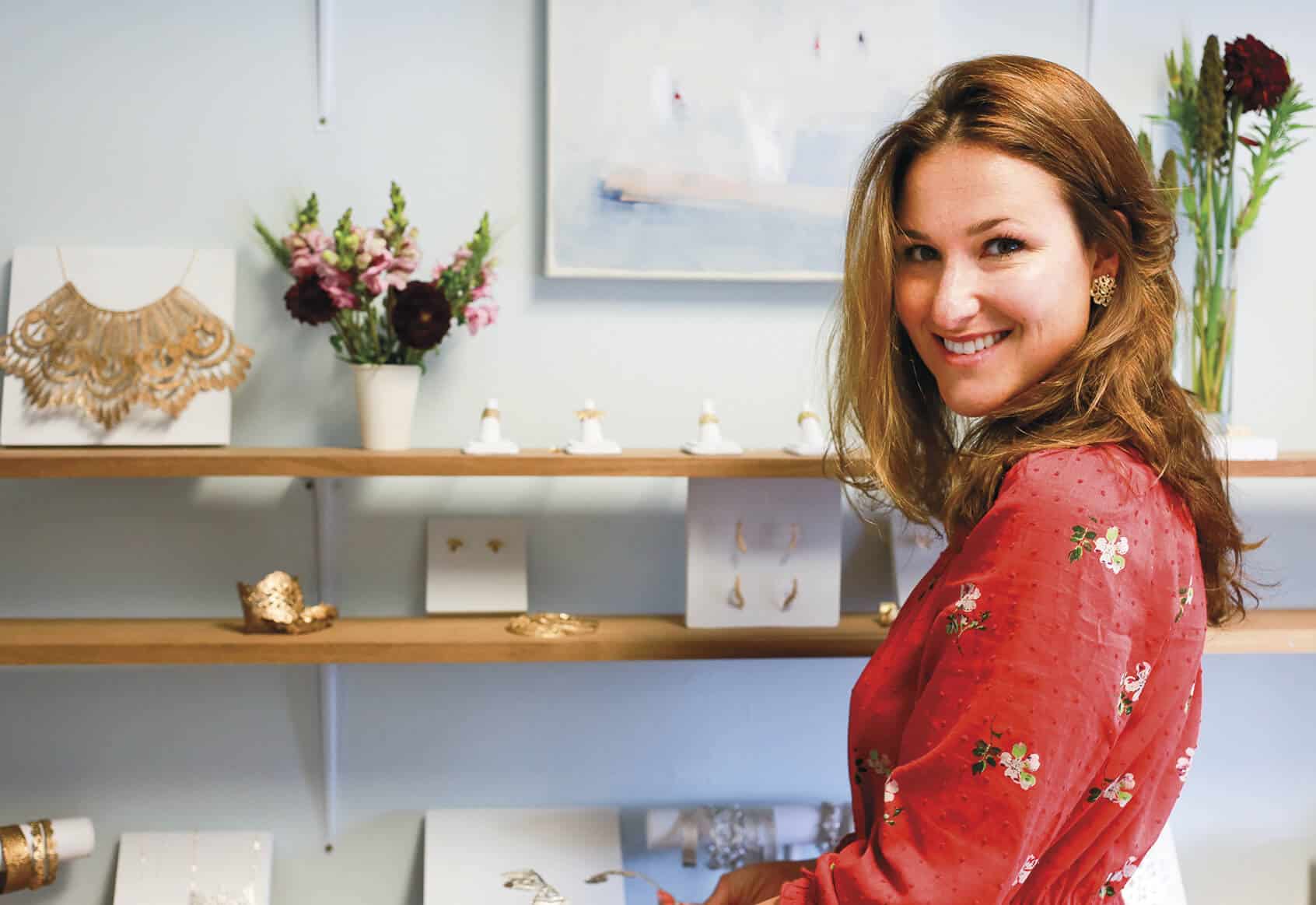
Gabe Bratton spends her time giving a second life to vintage fabrics in the form of luxurious metal jewelry. From earrings to necklaces to men’s cufflinks, she is able to turn the details of classic fabric into a piece that can last a lifetime.
“I am mostly inspired by the fabrics that I am working with,” says Bratton. “Antique lace, and the detail and intricacy that the fabric has, will often lead the way of my designs. I try to maintain the integrity of the original material, but give it a new, mod ern spin that makes it wearable for the contemporary woman.”
By creating a piece that can be worn every day and everywhere, Bratton is able to produce heirlooms from heirlooms, continuing the tradition of generational gifting.
“I really enjoy special custom projects,” says Bratton. “For instance, taking the veil from one generation of a family and using that lace to create a wedding piece for another generation. It creates an instant heirloom, and I’m always so honored and touched to be able to do that for people.”
Although Bratton is currently living in San Francisco, she still has a strong presence in her native Raleigh and comes back every chance she can for shows: “I am from Raleigh, so it was a logical place for me to really foster and grow my business. The art and design world is really exploding right now.”
Bratton has been working on a Collar Collection for a while now and is also very excited about her new spring/summer earrings, which she describes as big, dramatic pieces. With a demand that has been steadily growing every year, Bratton says she has a good system in place between her studio in San Francisco and her assistant in the Triangle to keep everything together, as well as ensuring retail and website items are stocked at all times.
As far as her time split between custom jewelry and her own line, Bratton says the balance shifts back and forth.
“There are definitely times when my focus is more on one than the other,” says Bratton. “For example, spring and fall are big for weddings so I’m often working more on custom wedding pieces during those periods. When I’m not working on custom, my favorite thing to do is have ‘playtime’ in the studio where I turn on some music, pull out some lace and my scissors and play around with new designs and ideas.”
HTY Jewelry
A native of Taiwan, Hsiang-Ting Yen grew up fascinated by jewelry. She played with it as a child, collected it through adulthood, and since 2013, has sold it from her store in Raleigh.
 Yen’s collections have grown from various influences including sculpture, geo
metric shapes, and bold colors. Looking at her portfolio, you can see her work shift as she is exposed to new muses, letting her “artistic gut” take over.
Imagine hand-crafted pieces made from sterling silver, electro-formed copper, enamel and 24k gold vermeil. Triangles cascade down her earrings, large ovals dangle from her necklaces, and her rings jump from traditional to her Black & Gold Armor Statement Ring, a warrior-like piece worthy of a superhero.
“I love earrings,” says Yen. “When I create a new collection, I start with earrings. They are my best sellers at shows. A lot of times I have to remind myself to make more than earrings to create a full collection.”
Her collection is both wearable and bold at the same time, designed for confident and unique women. For Yen, jewelry design has a dual purpose. There is her vision, and then there is her client’s. “For custom pieces, I help individualize the jewelry and help people create a piece that tells their own story,” says Yen.
Custom pieces range from wedding rings to men’s accessories, and sometimes even include heirlooms. A past client, for example, has hired Yen to make a ring repurposed from her great-grandmother’s pendant. In terms of custom pieces, Yen says that rings are her favorite to make.
Yen admits that her custom portfolio may seem “all over the place” because of the individual attention she must pay to each client. “My customer is my inspiration,” says Yen.
Yen started her business with a studio space and also attending craft shows all over the country. While Yen has had to cut down on her show attendance to focus on custom work, she still loves the shows and can be seen occasionally from San Francisco to Atlanta.
Quercus Studio
Lauren Ramirez is not attracted to trends, but instead believes that jewelry should be passed on from generation to generation. In its fourth year of business, her store at 201 S. Salisbury Street showcases Ramirez’s talent for encapsulating timeless events into wearable art.
“I’ve had a fascination with personal adornments since I was a child,” says Ramirez. “My mother had a few really beautiful gold pieces she wore every day. I continue to design and fabricate jewelry because I want to improve my skill. I’m also fixated on crea ting work that will far outlive myself and the original recipient.”
Ramirez learned the basics of jewelry making in Boston during her late teens, then focused on traditional goldsmithing and diamond setting in San Francisco.
“I was able to embed myself in a community rich with talented jewelers,” says Ramirez. “I slowly honed my skills working for various fine jewelry designers as well as established diamond wholesale businesses.”
Now in Raleigh, Ramirez says that about 75 percent of her work is custom engagement and wedding rings. She designs two small lines per year to be sold at Quercus Studio, her website, and a few handpicked shops across the United States. “I prefer working on custom designs with clients to celebrate union, accomplishments and milestones.” she says.
Of the remainder her work, her most popular design is her pair of Phoenix Earrings, an exquisite winged display of oxidized sterling silver, pierced by conflict-free white diamond centers, hung on 18k gold ear wires. They are also available with ruby centers or in 18k gold. Created as one of her first projects out of school, Ramirez says they still sell very well more than 10 years later.
Other jewelry pieces of interest at Quercus include her colorful Sliced Tourmaline Necklace, her sophisticated Diamond Empire Cuff in yellow gold, and her Black Diamond Mazza Ring, a heavily textured sterling silver ring with a 2mm black diamond.
Ramirez takes her inspiration from architecture, plants, vintage textiles, old wallpaper and lots and lots of coffee. She spends her days in her shop with her dog Alfred by her side.

by Tracy Jones | Jun 12, 2017 | Do, June 2017
Take two self-proclaimed “car nuts” and drop them off in a scrap yard and what do you get? An entertainment center made from the front of a 1955 pink Cadillac.
Four years ago spouses Mark “Bash” and Lola Hill met up with a gentleman who owned a junk yard that was closed down in the late 90s. Within its grounds sat a bunch of really old, really cool cars. They started pulling off pieces here and there, refurbishing and repurposing them, and soon a business was born.
“We started selling them at the flea market,” says Bash. “Then we just started cutting bigger and bigger chunks and making larger and larger pieces.”
Those larger pieces range from wine bars to couches, with the leftovers crafted into jewelry by Lola, a growing part of the business.
 “We made a couple of pieces to get our name out there when we were getting started, but now we have people contact us,” says Bash, who understands that there can be a lot of emotion in old cars.
If a car is too worn down, families often request the construction of a large furniture piece, with the rest of the car turned into jewelry keepsakes for other family members. Not all of Bash & Lola’s creations come from the junkyard or special requests, however. Sometimes inspiration appears from a simple road trip.
“We’ll just take off on a Saturday, drive through the country and ask, ‘Hey, is that old car with a tree growing through it for sale?’” says Bash, in what he calls a “knock and talk” approach. “The cars kind of let you know what they want to be. You see it and you know it is definitely going to be a bar, a couch, a table.”
Those pieces are only chopped from vehicles that cannot get back on the road, a big misconception that Bash & Lola want to be clear about, especially among classic car enthusiasts.
In spec pieces, Bash says they try to create original pieces and not repeat what they’ve done in the past. However, he admits that most people request bars because everyone wants a story while you are sitting around drinking.
“We love what we do because we are saving these beautiful relics from harm’s way,” says Lola. “As in from the crusher destined to become forks.”
While Bash & Lola have traveled as far as Texas and Boston to sell at antique shows, they will be featured locally at the Man Show, a brand new man cave expo on Father’s Day in Raleigh.
by Tracy Jones | May 15, 2017 | Do, May 2017
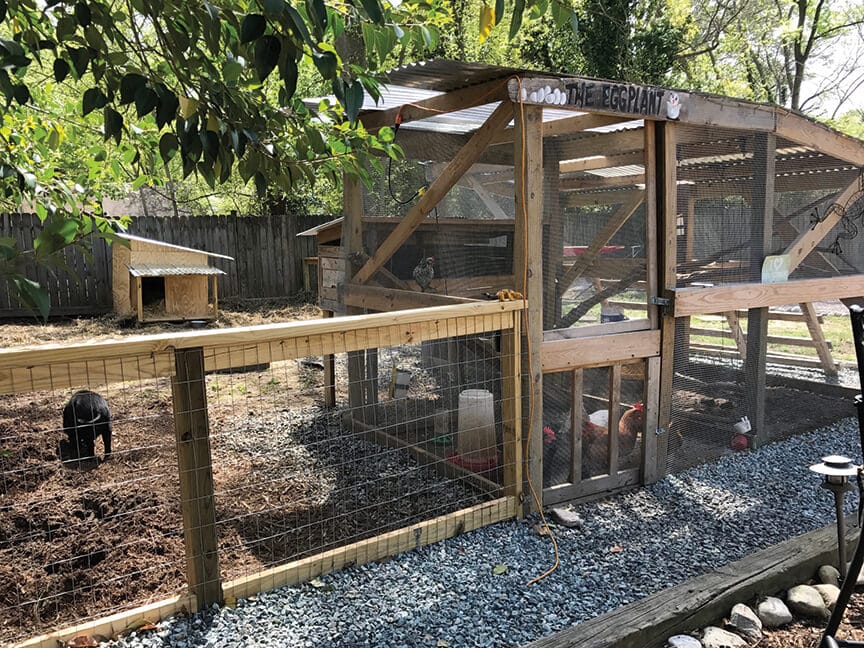
In the midst of Justin Miller’s backyard stands an elegant multi-level structure. A tin roof with skylights sits atop wooden beams, toys dangle about to prevent boredom and, down below, happy chickens squawk under a sign that reads: “I love my girls.” Miller introduces his chickens—Victoria, Mildred and Bathsheba Everdeen to name a few.
Miller discovered chicken-keeping in a 3-hour class at NC State. Thinking it would be an interesting hobby and a bit of a challenge, he made his way down to The Urban Chicken and purchased eight one-day-old chicks, raising them in his guest room for their first six weeks, holding and playing with them daily. Of the original eight, two ended up being roosters and were re-homed, though Miller does now have a daughter of one of the roosters and calls it his “grandchicken.”
 Nine chickens currently reside in “The Eggplant,” the coop made from the scrap material left behind when Miller tore down the house previously existing on his property and built a new one. He took pride in repurposing material and securing the coop in what he calls the chicken equivalent of Fort Knox, providing ample protection from predators.
Miller, who has become a vegetarian since he began keeping chickens, says he can see parallels between his birds and other domestic animals like dogs. They love treats and come when called, and each has their own personality, down to the squawk.
“This group of chickens is like a group of high school girls,” says Miller. “There is a definite ‘pecking order,’ and Victoria is on top.” He also recently added Theodore Pig Newton to the mix, who he says gets along well with the girls, occasionally sharing a watermelon.
Fed on spent grain from local breweries, vegetable scraps from the farmer’s market and other goodies that Miller provides like Cheerios and heads of iceberg lettuce, Victoria and her gang’s home is just one example of the kind of coop featured on Raleigh’s Tour D’Coop, the city’s annual chicken coop tour.
What started as fun idea over a couple of beers among neighbors has turned into a full-feathered event more than a decade later. Tour D’Coop has morphed from a few backyards into 20 to 30 sites, complete with a bike route, bonus animals like pigs and rabbits, food trucks, informational vendors and a Hive Hike for bee enthusiasts.
 “It’s impossible to see them all,” says M’Liss Koopman, Chair of Tour D’Coop. “Every year I try. We feature all different kinds of coops. Sometimes they stand out for the creativity, sometimes for features and sometimes beauty.” Because hosts come and go, each year offers up something new for visitors.
“People have multiple reasons for coming and for being on the tour,” says Koopman, who makes sure all new coop hosts on the tour maintain proper care of their chickens. “Some want to support Urban Ministries, some are looking for coop designs or want to raise chickens, some want to get out with their families, or they have sustainability interests like rain barrels, composting or bees.”
Profits from Tour D’Coop channel directly into Urban Ministries of Wake County, which serves more than 25,000 low-income Wake County residents each year.
For more information and to purchase tickets, visit tourdcoop.com.
by Tracy Jones | May 8, 2017 | Do, May 2017
This month the fruits of our roots come together at the Got to Be NC’s Homegrown Fare, where locals can sample products created right here in North Carolina. From wineries to candle companies, more than 100 vendors are expected to attend from all over the state, showing what North Carolina has to offer.
“We participate in the Got to Be NC festival to show how diverse products can be from our state,” says Adam Dillard, owner of Berry Brothers, a family-owned and operated specialty food company based in Raleigh. “There are so many ways to incorporate locally grown ingredients in a wide range of products. We are able to connect these products with the community while sharing our company’s story.”
Born and raised in Raleigh, Dillard decided to create and bottle sauces inspired from his childhood, along with two friends who were like brothers to him. When one of them unexpectedly and tragically passed away, Dillard continued on, tweaking his sauces until he felt they were worthy enough to sell. Now, Berry Brothers has really taken off. And to honor his lost “Berry Brother,” Dillard donates his portion to his favorite charities, including the Humane Society and ASPCA.
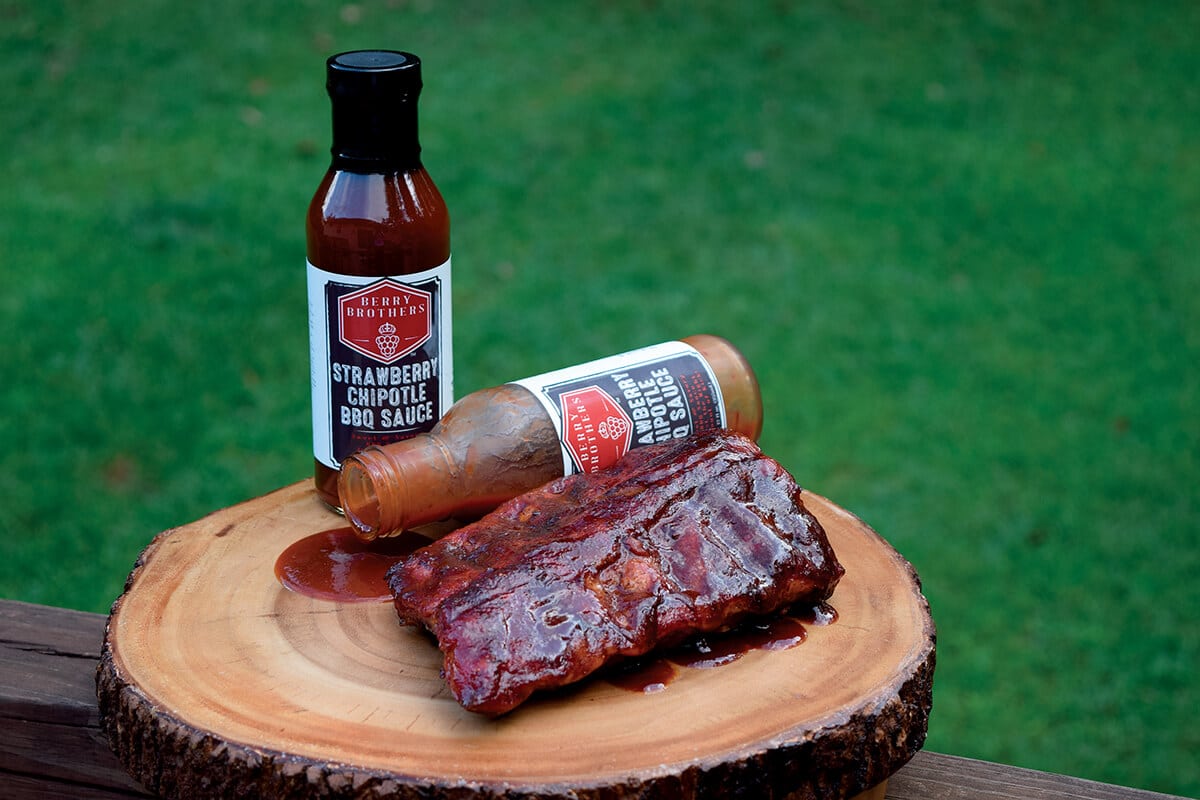
Our favorite product: Spicy Strawberry Chipotle BBQ Sauce (from $6.99, berrybrothers.biz). While you would not expect to find berries in barbecue sauce, the sweetness of sun-ripened strawberries pairs well with the kick of chipotle.
Check out these highlights
- 20 musical acts with North Carolina roots
- One of the largest displays of antique farm equipment in the Southeast
- Daily tractor parades
- Farm animals
- Carnival games and rides
- Barbecue competition

by Tracy Jones | Feb 1, 2017 | Buzz, February 2017
When 17-year-old flutist Kyrese Washington took the stage with Pink Martini and the N.C. Symphony, he could barely believe he had the opportunity to perform in front of such a large audience. The Millbrook High School student had submitted an audition tape with the help of the Community Music School (CMS) to perform a solo in front of a crowd of approximately 1,500 people, an important milestone in the young musician’s career.
For the past 23 years, CMS has provided students with multiple opportunities like the one Washington had with Pink Martini, all while teaching them to read and play music for only $1 per lesson, a token amount meant to symbolize a commitment to the program. With fewer public schools offering music programs, CMS has been one of the only affordable local programs for youth seeking to learn to play instruments. Unfortunately, this unique program that has inspired young musicians for the last 20 years may be on the verge of closing permanently.
Since 1994, the school has served the community through individual donations, corporations, foundations and public grants. That funding unfortunately ran out in October of last year, forcing CMS to temporarily close its doors until further notice. A final decision on the future of the organization will come this month.
“The board has been trying to build up a better fund development program, but we have only been able to go year to year,” says Rose Kenyon, a CMS board member. “The reserve was so thin this year that we felt we had no choice other than to suspend classes while we figured out how to raise some more money and that’s where we are right now.”
Approximately 2,000 low-income children have passed through the doors of CMS since its creation, playing in recitals, performing in the community, and joining ensembles as they get older. Several children have even gone on to study music in college, says Kenyon. It is for these children that the board is working diligently to try to re-open CMS.
“We launched a campaign to raise about $100,000 to have enough money to see us through the end of the school year,” said Kenyon. “The families were very disappointed. They are trying to raise money too.”
Inez Brewington, a grandmother of two CMS students, is one example of how involved CMS families are in supporting musical growth in the community. “I’ve been a volunteer and I’ve seen how it’s such a blessing to those kids,” she says. “They’re excited about coming, learning, and the recitals. It’s such a wonderful opportunity for children to get an appreciation for music.”
Brewington reiterated how much 30 minutes of one-on-one lessons matters, even if a half hour does not seem like a lot of time to most people. “It’s not just 30 minutes, but so much more that they get from being a part of that school,” she says. “I would hate to see people who have so much that they can give not know about the need for the school. I’ve told everyone I know and we’ve had small fundraisers, but we need big money right now.”
Brewington’s 18-year-old grandson Ari and 11-year-old grandson Caleb both cried when they heard the school was closing. Since enrolling, both boys have gained an appreciation for classical music; Caleb favors Chopin and Beethoven and Ari has joined the jazz ensemble, which continues to practice in Brewington’s basement.
“I don’t want to imagine where they would be, especially being black boys,” says Brewington. “The streets are out there waiting for them. To have a place where they can go and play music; they don’t hang out on the corner with their pants hanging down, but they come to my house and play music.”
Although CMS’s doors are closed for now, the students continue to play at home and hope the school will reopen soon. While Ari plays jazz in his grandmother’s basement, Washington continues to take lessons at the home of Kelly Roudabush, his teacher of four years.
“The backbone of the Community Music School has been a faculty of some of the best music teachers in Raleigh who have been dedicated to helping our kids,” said Kenyon of the almost 20 faculty members on staff who have not received a pay increase in more than 20 years. “We know the suspension of classes broke their hearts too.”
Temporary is the key word to this situation though, with both staff and students hoping enough money will be raised to continue musical education. “Kids have a faith that we don’t always have, and they know it’s just an amount of time for classes to start back,” says Brewington.
For more information on ways to help CMS, visit cmsraleigh.org.




 ern spin that makes it wearable for the contemporary woman.”
 Yen’s collections have grown from various influences including sculpture, geo
 For Yen, jewelry design has a dual purpose. There is her vision, and then there is her client’s. “For custom pieces, I help individualize the jewelry and help people create a piece that tells their own story,” says Yen.
 ting work that will far outlive myself and the original recipient.”