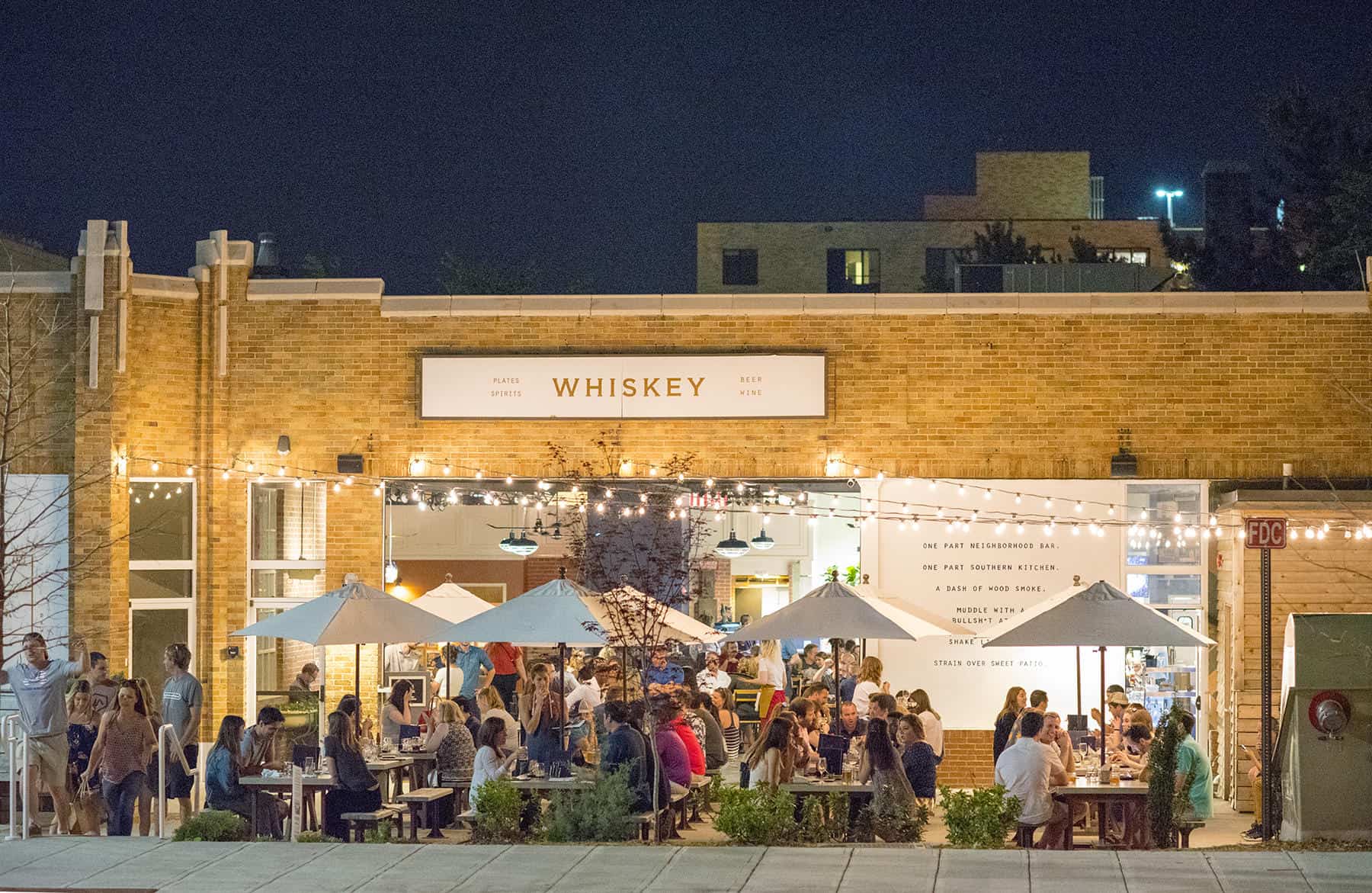
WEB EXCLUSIVE North Carolina is going (more) places—with more people—effective this Friday, March 26, at 5pm! In a press conference today, March 23, Gov. Roy Cooper announced he is easing restrictions in response to the state’s improving COVID-19 metrics (e.g., fewer hospitalizations and positive COVID cases) and the fast and fair distribution of vaccines (NC is currently in Group 4 of the vaccine rollout), even increasing the maximum occupancy in several areas.
“North Carolina has done the work to slow the spread of this virus and get people vaccinated, and I’m grateful for the efforts of people across the state,” Cooper said in a press conference held Tuesday, March 23. “We want to strengthen our economy while keeping people safe, and it’s on all of us to make that happen.” To wit, the mask mandate will remain in effect, and individuals are encouraged to continue social distancing.
Here, we take a look at some of the eased restrictions:
Museums, aquariums, retail businesses, shops, salons and personal care shops will be able to increase capacity up to 100% indoors and outdoors (with safety protocols in place).
Restaurants, breweries, wineries, amusement parks, gyms and pools, and other recreation establishments will be allowed to increase capacity up to 75% indoors and 100% outdoors.
Bars, conference centers and reception venues, sports arenas, and other venues for live performances will be able to increase capacity up to 50% both indoors and outdoors.
Starting Friday, the 11pm curfew for on-site alcohol sales will be fully lifted.
The mass gathering limit will be increased to 50 indoors and 100 outdoors.
Cooper maintains that these significant changes must be done safely in order to keep making progress. “This pandemic is not over yet,” Cooper said in the press conference. “We’re only able to keep this virus in check while we ease restrictions if people act responsibly and follow safety protocols. For us to truly turn the corner and leave this pandemic behind, we have to stay strong until the very end.” Let’s do this, NC! Rise up!
WEB EXCLUSIVE A self-employed IT consultant, Hugh* didn’t think he qualified for the first round of federal stimulus checks authorized by the CARES Act in March 2020, so when he received the $1,200 check, he didn’t necessarily anticipate spending it. Once living paycheck to paycheck due to the nature of his work, Hugh saved every penny and had a plan to go without income for a few months if work suddenly dried up (or, ya know, a pandemic happened).
And, so, Hugh donated the entirety of his stimulus check to St. Mary’s Food Bank, a local food bank near his home in Arizona, through Pledge My Check, which was founded by NC State graduate Kevin Miller and a group of his friends last spring. In so doing, Hugh joined the 456 people across 42 states who have pledged their stimulus checks to date, donating a total of $303,221 to community members in need, local businesses and nonprofit organizations.
“I know the sheer panic that comes with not having the means to pay all of your bills, and my heart goes out to those who find themselves in this position through no fault of their own,” Hugh said in an email to Pledge My Check after donating his stimulus money last year.
Miller and his friends came up with the idea for Pledge My Check after thinking about what they could do to help out during the pandemic. “We didn’t have any skills we could use to be helpful—we weren’t health care workers,” Miller reflects. A few of his friends decided to donate their stimulus checks and thought, maybe if they put up a website, other people would donate theirs too. “To our surprise, people actually did,” says Miller.
Through Pledge My Check’s website, anyone from anywhere in the world can pledge to donate their stimulus check(s) to a friend who maybe needs help paying their rent or bills, someone in the community who you know is having a hard time staying afloat, a struggling business in your city, or a local nonprofit. And it’s not just small change—a little goes a long way for those who have been hit hard this past year.
Now, another round of stimulus checks are on the way, thanks to a $1.9 trillion stimulus package passed by Congress last week. As early as this week, people will start to see the $1,400 hit their bank accounts. While Miller stresses that if you need the money, keep it—if you don’t, you can make a huge difference by pledging to donate it to someone in need through Pledge My Check.
“A lot of folks are doing some really cool stuff with their stimulus checks,” Miller says. “If you’re doing fine and this is extra money, then I would encourage you to think about who you know who maybe isn’t in that stable of a position. We all have something we can do if we sit down and think about it for a sec.”
The opening of bars (indoors) and other mandates provide a glimmer of light at the end of this very long tunnel.
WEB EXCLUSIVE North Carolina is at a turning point in the coronavirus pandemic. In a press conference held Wednesday, Feb. 24, Gov. Roy Cooper announced he is easing a number of restrictions and ending the modified stay-at-home order due to the state’s declining and stabilizing case count, hospitalization and death rates. “We have reasons for hope in North Carolina,” Cooper said in the press conference. “We’re making progress.”
Cooper’s new COVID-19 guidelines, which go into effect this Friday, Feb. 26, include the following:
The modified stay-at-home order has been lifted—North Carolinians are no longer restricted from leaving their homes between the hours of 10 p.m. and 5 a.m. and establishments are allowed to stay open during that time.
Alcohol can now be served on-site until 11pm.
Restaurants, breweries, wineries, retail stores, gyms, museums, aquariums, barbers (and other personal care establishments), pools and outdoor amusement parks remain at 50% operating capacity.
Bars and taverns, indoor amusement parks, movie theaters, and indoor sports arenas may open indoors at 30% capacity, with a cap of 250 people. Larger indoor venues with a capacity of over 5,000 people are allowed up to 15% capacity with no individual-person cap. This is the first time that most of these establishments have been able to open indoors since March.
Businesses that were operating at 30% capacity—outdoor sports fields and venues, outdoor bars, outdoor amusement parks, and other outdoor businesses—no longer have a 100-person cap.
Mass gatherings increased to 25 indoors and 50 outdoors.
Cocktails to-go are permitted through March 31.
The mask mandate and social-distancing guidelines remain in effect.
“Easing these restrictions will only work if we keep protecting ourselves and others,” said Cooper in the press conference. “Today’s action is a show of confidence and trust, but we must remain cautious. We’re depending on people to stay responsible; carelessness could lead to a backslide.”
Cooper warns that we are still far from the end of the pandemic, however. Millions of North Carolinians still need to get vaccinated, and the state is in short supply. So far, over 1 million people in NC have received the vaccine, and Cooper is working to get more from the federal government.
The fact that vaccinations are going up and case numbers are going down is a sign that North Carolina is headed in the right direction. “People deserve a pat on the back,” Cooper said. And a drink (inside of a bar! After 9pm!) if we do say so ourselves.
North Carolina begins rolling out the coronavirus vaccine to Groups 1 and 2.
The one thing we’ve all been waiting for since March has finally arrived in North Carolina—the coronavirus vaccine. North Carolina started receiving doses from the federal government in December, with health care workers fighting COVID-19 and long-term care staff slated to be vaccinated first under the state’s vaccination distribution plan—which has been consistently updated since it was first released in October.
North Carolina moved into the next phase of the vaccine distribution plan in early January, which includes adults 65 years and older, regardless of health status or living situation. Group 3 includes front-line essential workers, defined by the CDC as “workers who are in sectors essential to the functioning of society and who are at substantially higher risk for exposure to COVID-19.”
Adults 16 to 64 years old with high-risk medical conditions who are at increased risk of severe illness will be next to receive the vaccine, including those diagnosed with conditions like obesity, sickle cell disease, chronic kidney disease, Down syndrome and Type 2 diabetes. Also eligible in the vaccine plan’s Group 4 are incarcerated individuals, people living in shelters or other group-living settings, and anyone who is deemed an essential worker by the CDC—construction workers; public health workers; and those working in public safety, food service, finance, information technology and communications, energy, legal and media sectors.
Soon after Group 4 receives the vaccine, anyone who wants to be vaccinated will be eligible. NC Department of Health and Human Services Secretary Dr. Mandy Cohen says that supplies are still very limited, so it could be awhile before the average North Carolinian gets vaccinated—possibly as late as spring. However, Gov. Roy Cooper has mobilized the NC National Guard to “provide support to local health providers as we continue to increase the pace of vaccinations,” he said in a tweet on Jan. 5.
The Cardinal at North Hills, a luxury retirement community, was one of the first retirement communities in the state to get the Moderna vaccine. Executive Director Tom Ford says that they received the vaccine through CVS and distributed over 300 doses to their residents and employees on Jan. 5.
Unlike the Pfizer vaccine, which has to be stored at subzero temperatures (minus 70 degrees Celsius), the Moderna vaccine only has to be kept at negative 20 degrees Celsius, which is closer to the temperature of an average freezer. More hospitals and other facilities will have the capabilities of storing and distributing the Moderna vaccine.
Ford says that CVS will be holding two additional clinics at The Cardinal—one 30 days from Jan. 5 to distribute the second dose and to anybody who missed the first dose, and another one 30 days after to distribute the second dose to the second batch of residents and employees.
Additionally, NCDHHS announced the state partnered with Honeywell, Atrium Health, Panthers owner Tepper Sports & Entertainment, and the Charlotte Motor Speedway to hold mass vaccination events at large-scale venues such as the Panthers stadium, the speedway and possibly the Spectrum Center. They aim to administer at least 1 million vaccinations by July 4.
On Friday, Jan. 29, Johnson & Johnson announced that its COVID-19 vaccine (a single-dose shot) is 66% effective at preventing “moderate to severe courses of COVID-19” and keeping people from going to the hospital or dying. Cohen expects that the vaccine will receive emergency authorization by the end of February, a crucial step in accelerating North Carolina’s vaccination distribution.
NCDHHS also partnered with 14 health systems, health departments and community centers in 13 NC counties to roll out more than 45,000 vaccines. The state has already administered over 1 million doses, and expects to receive about 145,000 doses of the vaccine each week for the next three weeks. You can keep track of how many NC residents have received the vaccination on the NCDHHS COVID-19 dashboard.
While waiting to get the vaccine, Cooper and Cohen advise everyone to continue wearing masks, washing your hands, avoiding crowds and staying home if you can. “Our top priority is helping local health departments distribute vaccines as quickly and equitably as possible, but this virus is spreading rapidly,” Cooper tweeted on Jan. 12. “To save lives, we have to wear our masks, stay socially distant and follow the safety protocols in place.”
WEB EXCLUSIVE As expected, with people travelling for the holidays and/or getting together with their friends and families over the past couple of weeks, positive coronavirus numbers have significantly increased and hospitalizations are at a record high. Over just the last month, coronavirus-related hospitalizations have increased by 68 percent. The daily rate of positive cases is at 16.5 percent; NC DHHS secretary Dr. Mandy Cohen wants the state to be closer to 5 percent.
The numbers are concerning, and Governor Roy Cooper has expressed his concerns to the public many times already this year. On January 3, he tweeted: “The first two days of this year have broken case count records. These numbers need to be a wake up call.” Even though North Carolina has already started distributing the two approved vaccines (Pzifer and Moderna), it’s obvious that the virus is still very much a problem and we all need to continue doing our part to stop the spread.
Governor Roy Cooper on Twitter
Below, we share more information on the vaccine and how it will be distributed in North Carolina, as well as how COVID is continuing to affect people across the state.
VACCINE DISTRIBUTION
North Carolina moved into phase 1b of the vaccine distribution plan this week, however, because distribution varies by county, some places in the state are still in phase 1a. Phase 1a includes frontline healthcare workers and long-term care staff and residents, while phase 1b includes adults 75 years or older and frontline essential workers. Late last month, North Carolina amended its coronavirus vaccine distribution plan so that all adults over 75 would be prioritized under the first phase; previously only adults over the age of 75 were prioritized if they had underlying health conditions.
Phases 2 through 4 of the vaccine distribution plan can be seen below.
The Cardinal at North Hills, a luxury retirement community, is one of the first retirement communities in the state to get the Moderna vaccine. Executive director Tom Ford says that they received the vaccine through CVS and will be distributing over 300 doses today to their residents and employees. Unlike the Pfizer vaccine, which has to be stored at sub zero temperatures (minus 70 degrees Celsius), the Moderna vaccine only has to be kept at negative 20 degrees Celsius, which is closer to the temperature of an average freezer. More hospitals and other facilities will have the capabilities of storing and distributing the Moderna vaccine.
Ford says that CVS will be holding two additional clinics at The Cardinal—another one in 30 days to distribute the second dose and to anybody who missed the first dose, and another one 30 days after to distribute the second dose to the second batch of residents and employees.
Dr. Cohen says that supplies are still very limited, so it could be awhile before the average North Carolinian gets vaccinated—possibly as late as the spring. However, just today, Gov. Cooper has mobilized the NC National Guard to “provide support to local health providers as we continue to increase the pace of vaccinations.”
As of today, there have been 6,941 people that have died from coronavirus since March. So, who is dying? We’ve seen that older adults and older adults with underlying health conditions are at a greater risk of hospitalization—or death—if they’ve contracted COVID-19.
NC DHHS has updated their dashboard to give a better look at how COVID cases and deaths break down throughout the state in terms of ethnicity, age, gender and race. Below, you’ll see that adults over the age of 75 have the greatest death rate, which is why they are now one of the first to be vaccinated.
The dashboard also shows that—of the known data—white people have the greatest death rate, followed by African Americans. The death rate of males and females is more or less equal.