
by Lauren Kruchten | Apr 22, 2021 | April 2021, Web Exclusive
WEB EXCLUSIVE Gov. Roy Cooper is on a mission to #BringSummerBack, y’all. During a press conference on Wednesday, April 21, Cooper said that all mandatory social distancing, capacity and mass gathering restrictions are expected to be lifted by June, thanks to the increased rate of vaccinations in the state (cue live outdoor concerts, dancing in bars and sitting at restos less than six feet apart from your neighbor!).
This means that restrictions limiting capacity at indoor restaurants, bars, concert venues, museums, gyms, movie theaters and other businesses, as well as restrictions on indoor and outdoor social gatherings such as weddings and funerals, could be lifted as soon as June 1. The state anticipates lifting the mask mandate once two-thirds of adult North Carolinians are vaccinated as well.
Currently, almost 50% of NC adults have been at least partially vaccinated, and more than one-third are fully vaccinated (that’s about 6.5 million shots administered statewide). Additionally, President Biden said that, across America, 200 million people have received the COVID-19 vaccination, meeting a goal he set for his administration’s first 100 days.
Once at least two-thirds of adults are vaccinated, Cooper says public health experts believe “we will have enough protection across our communities to be able to live more safely with this virus and begin to put this pandemic behind us.”
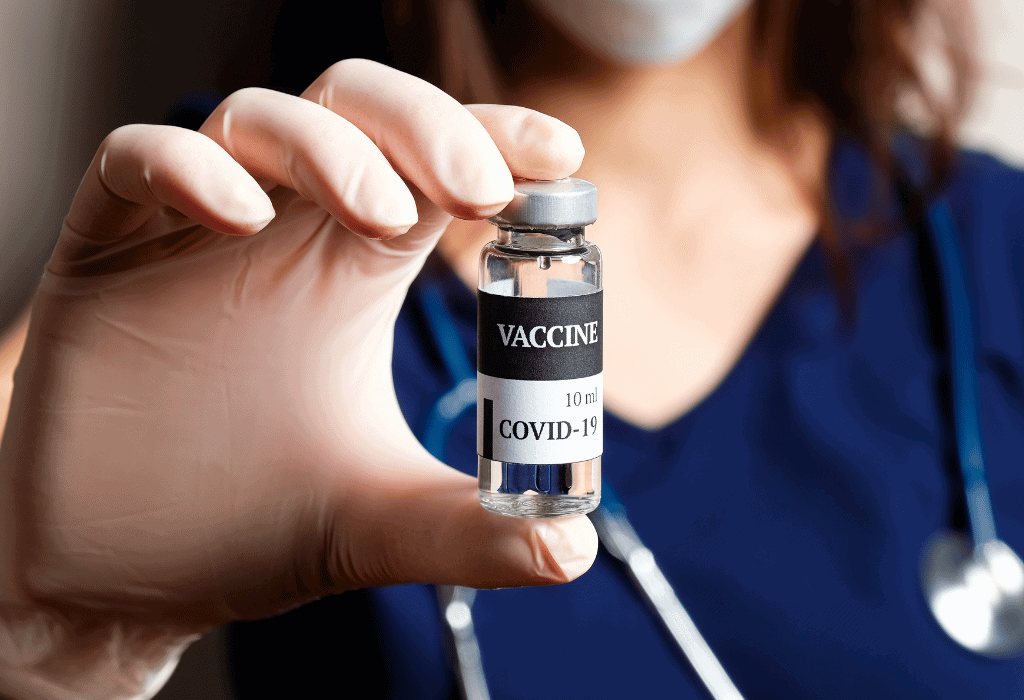
All adults ages 16 and up in NC are eligible to get the vaccine (effective as of April 7). Cooper maintains the vaccine is safe, effective and readily available to everyone, and it’s even easier to get the shot now that same-day appointments and walk-ins are allowed.
“Vaccines are the key to moving us forward,” Cooper said in a tweet on Wednesday. “To strengthening our economy. To making sure our children are on track for school now and in the fall. To hugging our loved ones safely. To saving lives.” (In short, do your part and roll up your sleeve if you haven’t already!)
The current phase of Cooper’s reopening plan (more info on that here) is set to expire on April 30; the governor is issuing a new executive order next week outlining restrictions for the month of May.
by Lauren Kruchten | Apr 13, 2021 | April 2021, Web Exclusive
WEB EXCLUSIVE It’s been nearly a week since everyone age 16 and older has been eligible to get the COVID vaccine in North Carolina—and vaccination numbers have already surged. On April 12, the News & Observer reported that 1 in 3 adults age 18 and over are now fully vaccinated; among the entire population, 23.6% have received both doses; and, as of April 11, 5,872,275 total doses have been administered.
These numbers—coupled with Gov. Roy Cooper’s recent executive orders easing restrictions on capacity limits for a multitude of businesses and venues throughout the state—are a sure sign that the state is on track to get things back to “normal” sooner than originally anticipated.
“Vaccines will help us put this pandemic in the rearview mirror,” Cooper tweeted April 12. “It’s your spot, take your shot!”
NC is currently offering three COVID vaccines: Pfizer (two doses), Moderna (two doses) and Johnson & Johnson (one dose), though the Johnson & Johnson vaccine was put on hold over the weekend (April 9-11) for an investigation by the CDC and the North Carolina Department of Health & Human Services (NCDHHS) after many people reported adverse reactions to it at PNC Arena last Thursday.
According to a tweet by the FDA, as of Monday, April 12, “6.8m+ doses of the J&J vaccine have been administered in the U.S.” Today (Tuesday, April 13), out of “an abundance of caution,” the FDA and CDC called for a national pause on using the Johnson & Johnson after six people (ages 18 to 48) reported a rare disorder causing blood clots.
While children are not yet eligible for the current COVID vaccines, on April 9, Pfizer formally asked the Food and Drug Administration for emergency use authorization that would allow kids ages 12 and older to get the shot. The FDA is still reviewing the use. In the meantime, Wake County Public Schools are offering a Virtual Academy program for children in grades K to 12 during the 2021–22 school year who are not yet comfortable returning to in-person instruction.
To further help those who are eligible receive the COVID vaccine, United Way of the Greater Triangle, Blue Cross Blue Shield of North Carolina and the NC Department of Transportation have partnered up with ride-share service Lyft to remove transportation barriers to scheduled vaccine appointments via Ride United NC. Their goal is to provide 100,000 free round-trip rides in 100 NC counties. You can help by donating to the program here.
The finish line is so close, y’all. If you haven’t already, get your COVID shot! Find a vaccine appointment at myspot.nc.gov.

by Lauren Kruchten | Mar 17, 2021 | Buzz, March 2021, Web Exclusive
WEB EXCLUSIVE With each day that passes, and the number of people getting the COVID vaccine rises, the more hopeful the future looks. As of March 16, 2,102,433 people have gotten their first COVID vaccine shot, and 3,455,805 people have received both shots in North Carolina. Compared to the number of people that have tested positive for coronavirus since last March (over a full year ago now)—889,310 people—it’s a sure sign that things are finally starting to look up.
Additionally, after a few hiccups at the beginning (and a lack of doses), the state seems to be moving swiftly through the planned vaccination rollout. Just this week, Gov. Cooper announced that certain individuals in Group 4 are now eligible to get the vaccine, specifically, those who are 16 to 64 years old with immunocompromising medical conditions or who live in close group settings. “This move to Group 4 is good news,” said Cooper. “I know there are many efforts across the state getting vaccines to people as quickly and fairly as possible, and I want our providers to know that their work is making all the difference.”
With all that said, there’s still a lot of uncertainty when it comes to the COVID vaccine. Who can get vaccinated now? When can the general public get vaccinated? What are the side effects? Below, we try to answers those frequently asked questions and more, with the hope that—soon enough—we’ll all be able to get the vaccine, and life can return to a semblance of normal.
Who can get vaccinated right now?
Groups 1, 2, 3 and part of Group 4 are currently able to get the COVID vaccine. Group 1 includes health care workers and long-term care staff and residents; Group 2 encompasses anyone 65 or older (regardless of health status or living situation); and Group 3 consists of frontline essential workers across various industries, including school and child care workers, government and community service workers, healthcare and public health workers, public safety workers, food and agriculture workers, and more. People in Group 4 who are now eligible to get the vaccine include those who are 16 to 64 years old with immunocompromising medical conditions or who live in close group settings.
When can the rest of Group 4 get the vaccine?
The remainder of people who fall in Group 4 will be able to get the vaccine on Wednesday, April 7. Essential workers who were not yet vaccinated will also be eligible, including those working in sectors such as energy, commercial facilities, financial services, hazardous materials, public works, residential facilities, water and wastewater, among others.
When can Group 5 get the vaccine?
A date for Group 5, which includes any adult who wants to get the vaccine, has yet to be determined, as supplies are currently limited. However, President Biden says that there should be enough product to vaccinate every adult in the U.S. by the end of May. Visit covid19.ncdhhs.gov/vaccines for updates.
How do I find out what group I’m in?
NC DHHS has an easy-to-use tool for finding your spot in the state’s vaccine rollout plan. Visit findmygroup.nc.gov to determine what group you’re in.
Which vaccines are currently available in North Carolina, and what is the difference between them?
North Carolina started the vaccine rollout in January with the Pfizer and Moderna vaccines. Both require two shots; the Pfizer vaccine, 21 days apart and the Moderna vaccine 28 days apart. The Pfizer vaccine, which is approved for those 16 and older, is 95% effective at preventing symptomatic infection, while the Moderna vaccine, which is approved for those 18 and older, is 94.1% effective.
Johnson & Johnson’s Janssen vaccine was authorized for emergency use by the FDA in late February. Doses arrived in North Carolina in early March, though only select locations are offering it so far. The Johnson & Johnson vaccine requires only one shot and has proven to be 66% protective against moderate to severe COVID infection and 85% effective in protecting against severe disease.
What are the side effects of the vaccine?
Both the Moderna and Pfizer vaccines include side effects such as injection-site pain, fatigue, headache, muscle pain, joint pain and fever, all of which are most common after the second dosage.
Those who have received the Johnson & Johnson vaccine reported side effects including injection-site pain, redness and swelling; headaches; fatigue; muscle aches; nausea; and fever.
How do I make a vaccine appointment in North Carolina?
After finding your group through the NC DHHS “find your spot to take your shot” tool, you’ll be directed to the NC DHHS Vaccine Finder. Simply type in your ZIP code, city or current location to find the closest vaccine providers to you.
Several local Walgreens and CVS locations are also offering the vaccine.
You can also call North Carolina’s COVID-19 Vaccine Help Center at 888.675.4567.
Additionally, the Wake County Division of Public Health is giving out the vaccine (to eligible groups) by appointment only. Make an appointment by calling the 24-hour vaccination hot line at 919.250.1515, or by filling out the online form at covid19.wakegov.com/vaccine.
Since there are only a small number of vaccines available, many locations are booked with appointments, are on a waitlist or don’t have anymore vaccines in stock. Keep checking vaccination sites regularly for updates, be patient, and remember to practice the 3 W’s while you wait to get the vaccine.
What are the post-vaccination guidelines?
The CDC says those who are fully vaccinated can gather safely with other people who have been fully vaccinated—without masks or physical distancing. Fully vaccinated people are also safe to visit with unvaccinated people, so long as those who are not yet vaccinated are at a low risk of severe COVID-19 and everyone is wearing a mask. However, those who are vaccinated should be cautious around those who are unvaccinated and are high-risk.
We’re almost at the finish line folks. We can’t wait to see you on the other side. Until then, be safe; be careful; and get the vaccine as soon as you are eligible!
by Lauren Kruchten | Jan 27, 2021 | Buzz, February 2021
North Carolina begins rolling out the coronavirus vaccine to Groups 1 and 2.
The one thing we’ve all been waiting for since March has finally arrived in North Carolina—the coronavirus vaccine. North Carolina started receiving doses from the federal government in December, with health care workers fighting COVID-19 and long-term care staff slated to be vaccinated first under the state’s vaccination distribution plan—which has been consistently updated since it was first released in October.
North Carolina moved into the next phase of the vaccine distribution plan in early January, which includes adults 65 years and older, regardless of health status or living situation. Group 3 includes front-line essential workers, defined by the CDC as “workers who are in sectors essential to the functioning of society and who are at substantially higher risk for exposure to COVID-19.”
Adults 16 to 64 years old with high-risk medical conditions who are at increased risk of severe illness will be next to receive the vaccine, including those diagnosed with conditions like obesity, sickle cell disease, chronic kidney disease, Down syndrome and Type 2 diabetes. Also eligible in the vaccine plan’s Group 4 are incarcerated individuals, people living in shelters or other group-living settings, and anyone who is deemed an essential worker by the CDC—construction workers; public health workers; and those working in public safety, food service, finance, information technology and communications, energy, legal and media sectors.
Soon after Group 4 receives the vaccine, anyone who wants to be vaccinated will be eligible. NC Department of Health and Human Services Secretary Dr. Mandy Cohen says that supplies are still very limited, so it could be awhile before the average North Carolinian gets vaccinated—possibly as late as spring. However, Gov. Roy Cooper has mobilized the NC National Guard to “provide support to local health providers as we continue to increase the pace of vaccinations,” he said in a tweet on Jan. 5.
The Cardinal at North Hills, a luxury retirement community, was one of the first retirement communities in the state to get the Moderna vaccine. Executive Director Tom Ford says that they received the vaccine through CVS and distributed over 300 doses to their residents and employees on Jan. 5.
Unlike the Pfizer vaccine, which has to be stored at subzero temperatures (minus 70 degrees Celsius), the Moderna vaccine only has to be kept at negative 20 degrees Celsius, which is closer to the temperature of an average freezer. More hospitals and other facilities will have the capabilities of storing and distributing the Moderna vaccine.
Ford says that CVS will be holding two additional clinics at The Cardinal—one 30 days from Jan. 5 to distribute the second dose and to anybody who missed the first dose, and another one 30 days after to distribute the second dose to the second batch of residents and employees.
Additionally, NCDHHS announced the state partnered with Honeywell, Atrium Health, Panthers owner Tepper Sports & Entertainment, and the Charlotte Motor Speedway to hold mass vaccination events at large-scale venues such as the Panthers stadium, the speedway and possibly the Spectrum Center. They aim to administer at least 1 million vaccinations by July 4.
On Friday, Jan. 29, Johnson & Johnson announced that its COVID-19 vaccine (a single-dose shot) is 66% effective at preventing “moderate to severe courses of COVID-19” and keeping people from going to the hospital or dying. Cohen expects that the vaccine will receive emergency authorization by the end of February, a crucial step in accelerating North Carolina’s vaccination distribution.
NCDHHS also partnered with 14 health systems, health departments and community centers in 13 NC counties to roll out more than 45,000 vaccines. The state has already administered over 1 million doses, and expects to receive about 145,000 doses of the vaccine each week for the next three weeks. You can keep track of how many NC residents have received the vaccination on the NCDHHS COVID-19 dashboard.
While waiting to get the vaccine, Cooper and Cohen advise everyone to continue wearing masks, washing your hands, avoiding crowds and staying home if you can. “Our top priority is helping local health departments distribute vaccines as quickly and equitably as possible, but this virus is spreading rapidly,” Cooper tweeted on Jan. 12. “To save lives, we have to wear our masks, stay socially distant and follow the safety protocols in place.”



