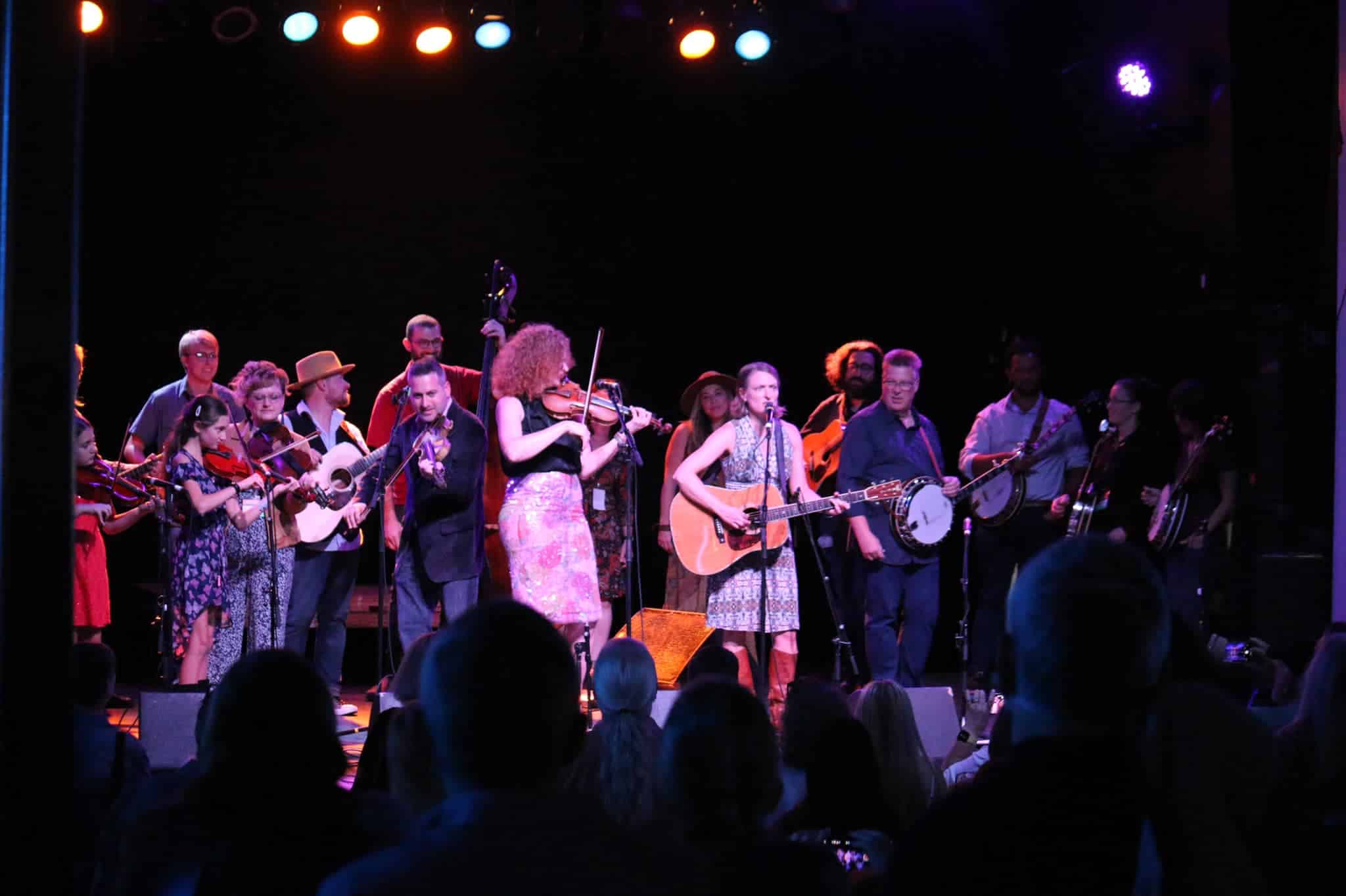
The Ballad of Raleigh’s Front Porch Festival
Ahead of Raleigh’s last IBMA World of Bluegrass fest (Sept. 24–28), Billy Warden—who helped launched the festival with former business partner Greg Behr—reflects on its transformative decade-long run.
Who would’ve thunk that one of the brightest chapters in Raleigh history would involve so many banjo jokes? Since the International Bluegrass Music Association’s annual festival first landed here in 2013, the good-natured jabs have flown as fast as the notes in an Earl Scruggs solo.
“We were worried we’d be late,” one band deadpanned onstage. “Our banjo player locked himself inside his car again.”
But the festival’s success here is no joke. It was that once-in-a-blue-moon party where everyone leaves their country club insignias and other status symbols at home and shows up with the sole purpose of gettin’ down. With the jamboree wrapping up its run in Raleigh before moving on to Chattanooga, it’s worth celebrating the music made and lessons learned.
As bluegrass lyrics make achingly clear, the world used to be considerably different. In 2013, Richard Florida’s bestseller The Rise of the Creative Class was still an economic development lodestar, with its accent on trailblazing tech workers and hipster hang outs. Every mid-size city in America pined for its own version of Austin’s South by Southwest (SXSW), a “signature event” at the crowded crossroads of music, media, tech, design and uber just-flew-in-from-the-coast coolness.
Meanwhile, Raleigh was primed to host a major happening of some kind. The city had recently constructed a gleaming convention center and an accompanying amphitheater—along with reviving Downtown’s main artery, Fayetteville Street.
When a team that included staff from the Greater Raleigh Convention and Visitors Bureau, the Raleigh Convention Center, PineCone (Piedmont Council of Traditional Music), and key sponsors notched a deal with IBMA, a group with a national profile, many cheered. Some, though, wondered if the appeal of bluegrass would be too narrow, or if other attractions—such as MerleFest—had already cornered the market.
But bluegrass proved the perfect centerpiece for a community love-in. The genre is familiar and easy going, though not easy to play—serving up both neighborliness and virtuosity.
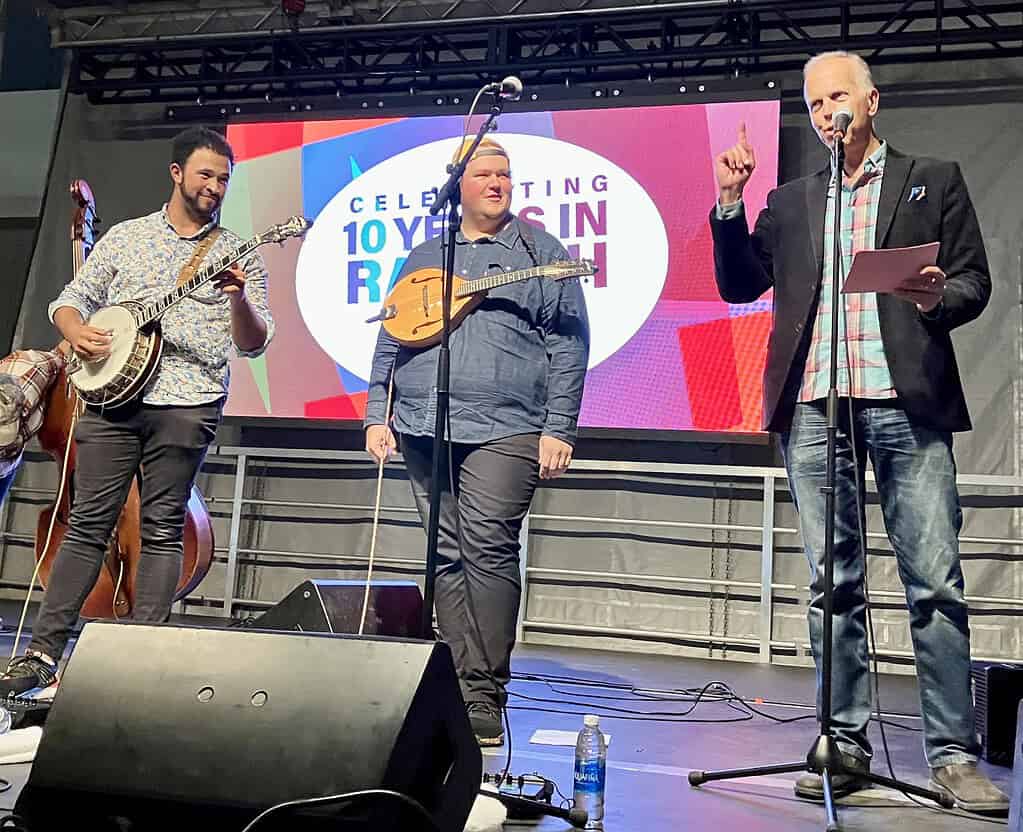
Sprinkling free music stages, crafts and dance tents over a generous swath of Downtown blocks, the festival immediately caught on with the lifeblood of Raleigh—not jet-setters, but young families. Here was an event that embraced a “take the kids” ethos as emphatically as that all-time-favorite funnel cake factory, the NC State Fair.
Everybody was welcome. At the festival, I bumped into buddies from high school and their teenage kids as well as the crowd of parents who chided me when I was a young’un. This also played out on the music stages, which often featured a picker as weathered as Grandfather Mountain jamming with a wet-behind-the-ears prodigy.
My own folks—steeped in ’60s pop, classic soul and the great balladeers (namely Barry Manilow)—had no stock in bluegrass to start, but came to cherish the festival scene.
In a marvelous moment of serendipity, the music that is as old as the hills proved oddly kismet with the latest and greatest in consumer tech. Because bluegrass relies on acoustic instruments, it’s relatively easy to set up and enjoy anywhere, including in hallways, hotel rooms, and sundry other corners and crannies. This led to innumerable impromptu jam sessions that awestruck fans captured on their mobile phone cameras and transmogrified into that Holy Grail of marketing, viral videos. Eat your heart out, SXSW!
Well over 100,000 revelers poured into the festival’s debut, with the numbers building in following years. The momentum was electrifying. The zeal fueled the spunk and smarts on display in 2015 when organizers moved the entire kit-and-caboodle inside the convention center after Hurricane Joaquin changed course and barrelled down on the city. The civic-minded heroics involved ought to be taught in Raleigh elementary schools; the logistics would make instructive reading for the U.S. nuclear submarine fleet.
This arm-in-arm, the-show-must-go-on spirit again took centerstage as another potential disaster loomed—COVID-19. No festival fared particularly well during the pandemic, but the most able pivoted to an online experience. Even stripped of its in-person bonhomie, the streaming-only version of the festival in 2020 was a tonic in scary times—a home remedy that went down smoothly and reassuringly.
A decade after the festival’s debut, Raleigh is in a different spot. Rather than seeking a shot at proving itself, Downtown is bouncing back from a few challenging years, mostly involving the post-pandemic depopulation of offices. But that rebound will no doubt come. We’ve shown we have what it takes—namely a heart as big as an all-welcoming front porch.