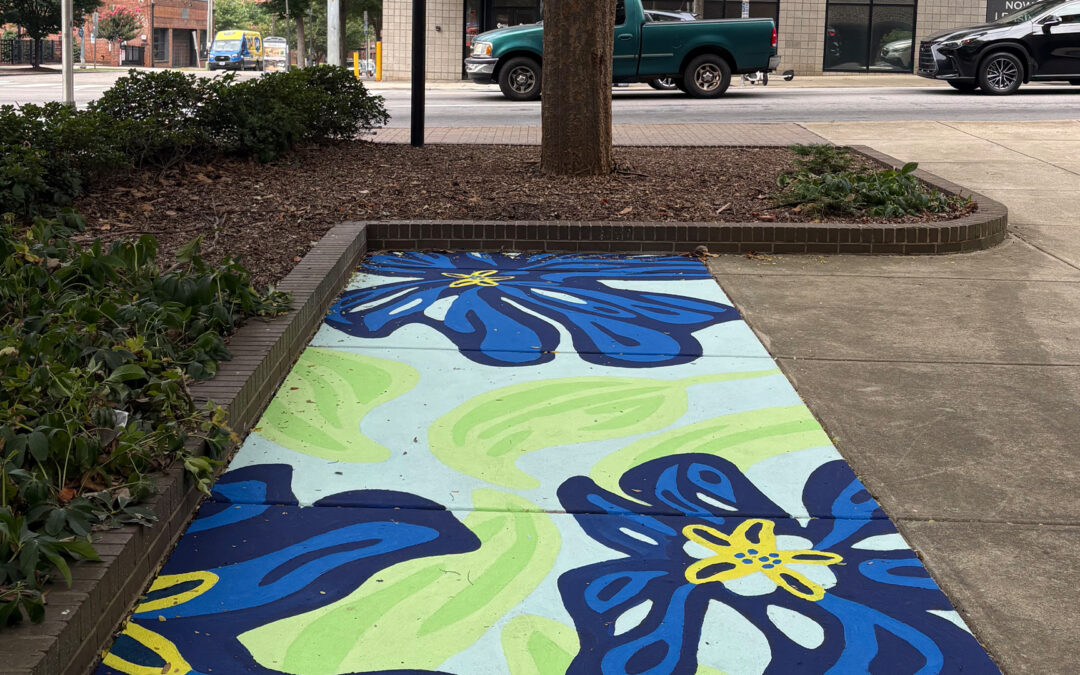
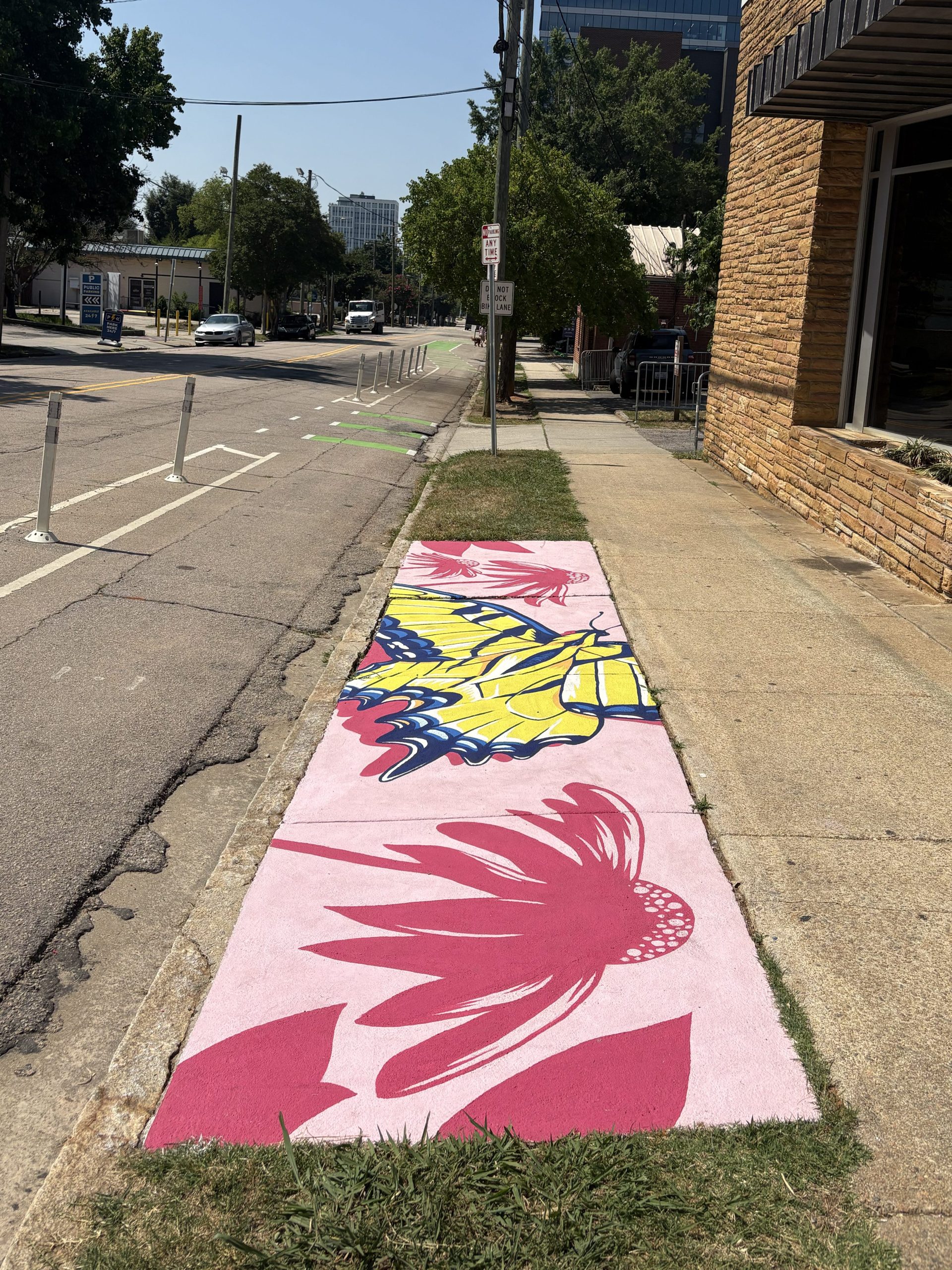
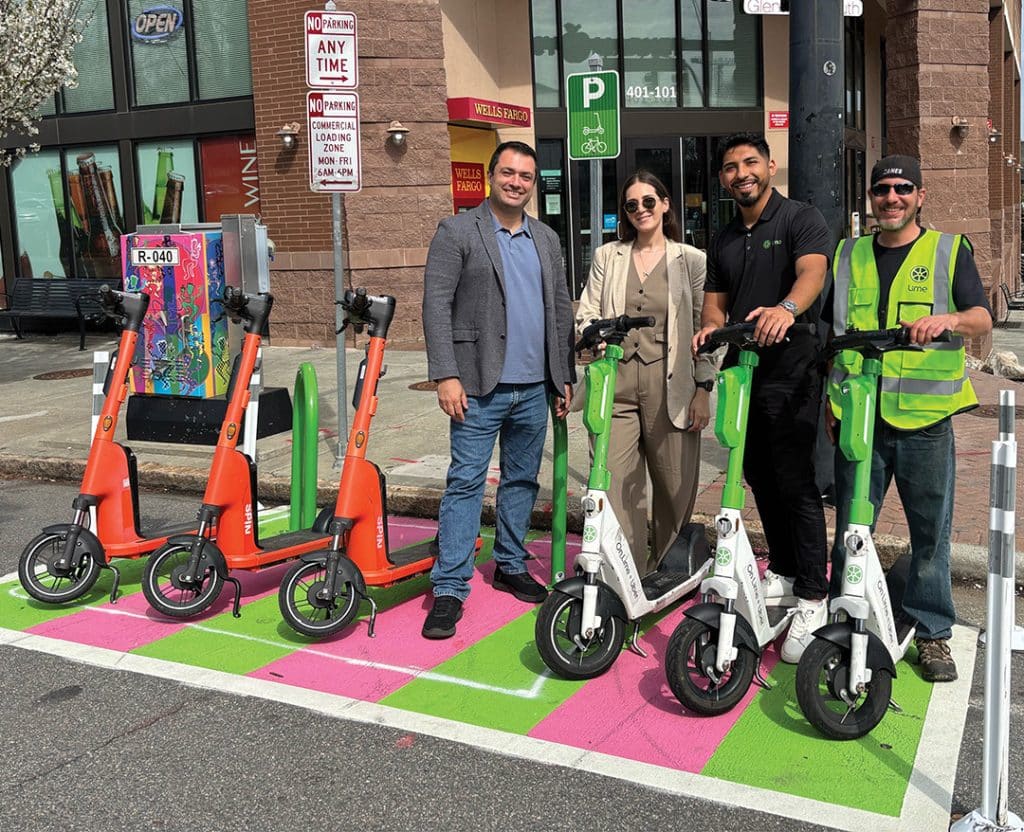
Art meets mobility in Downtown. Adding pops of color to city sidewalks while designating parking areas for e-scooters and e-bikes, eight local artists were tasked with transforming sidewalks into bold corrals across DTR. Depicting everything from wildlife and flowers to whimsical patterns and nods to local faves, each mural reflects the artists’ unique creative style—while still working within a shared color palette, more or less. “Murals are all about community to me,” says chosen artist Mayanthi Jayawardena, “so the community-building with fellow artists, as well as speaking to all of the wonderful people who cheer us on while we are painting, is something I am most grateful for.” Now popping up around Downtown, the colorful corrals pull double duty—blending functionality with creativity while turning everyday infrastructure into a celebration of Raleigh’s artistic spirit.
Landing like a viral trend, e-scooters rolled into Raleigh in 2018—with no warning to city officials—instantly becoming all the rage. The pitch was simple: then just a buck to unlock, pennies per minute (read: $0.15) and skipping the sidewalk trek sans surge pricing or waiting on a ride. It practically sold itself.
While scooters are still a go-to, that pennies-per-minute ride has since scooted out of reach—with both Lime and Spin now charging $0.41/minute. Lime’s Jacob Tugendrajch says their base rate hasn’t changed since officially inking a deal with the city—one that includes a $7,500 annual permit and a 15-cent per-ride fee that helps fund programming like those colorful DTR corrals. Spin’s Austin Spademan, on the other hand, points to rising operational costs, insurance, and tariffs driving up prices for parts and replacements.
Still, two Raleigh riders recently scooted from Publix to The Avenue on Glenwood South—one on Spin; the other, Lime—and Spin came out nearly half the cost for the same distance and time. That said, both companies now offer ride passes with upfront costs but better value—ideal for daily commuters (see “Pass Perks”)—with a bonus no $1 unlock fee for either.
“The most livable cities have a variety of modes of transportation for different types of trip needs,” says City of Raleigh Active Transportation Planner Hannah Dos Santos, who also leads the micromobility program. “And so the program works toward enhancing the livability of Raleigh by allowing people to be creative with how they can get around—all the while also supporting the city’s climate goals.”
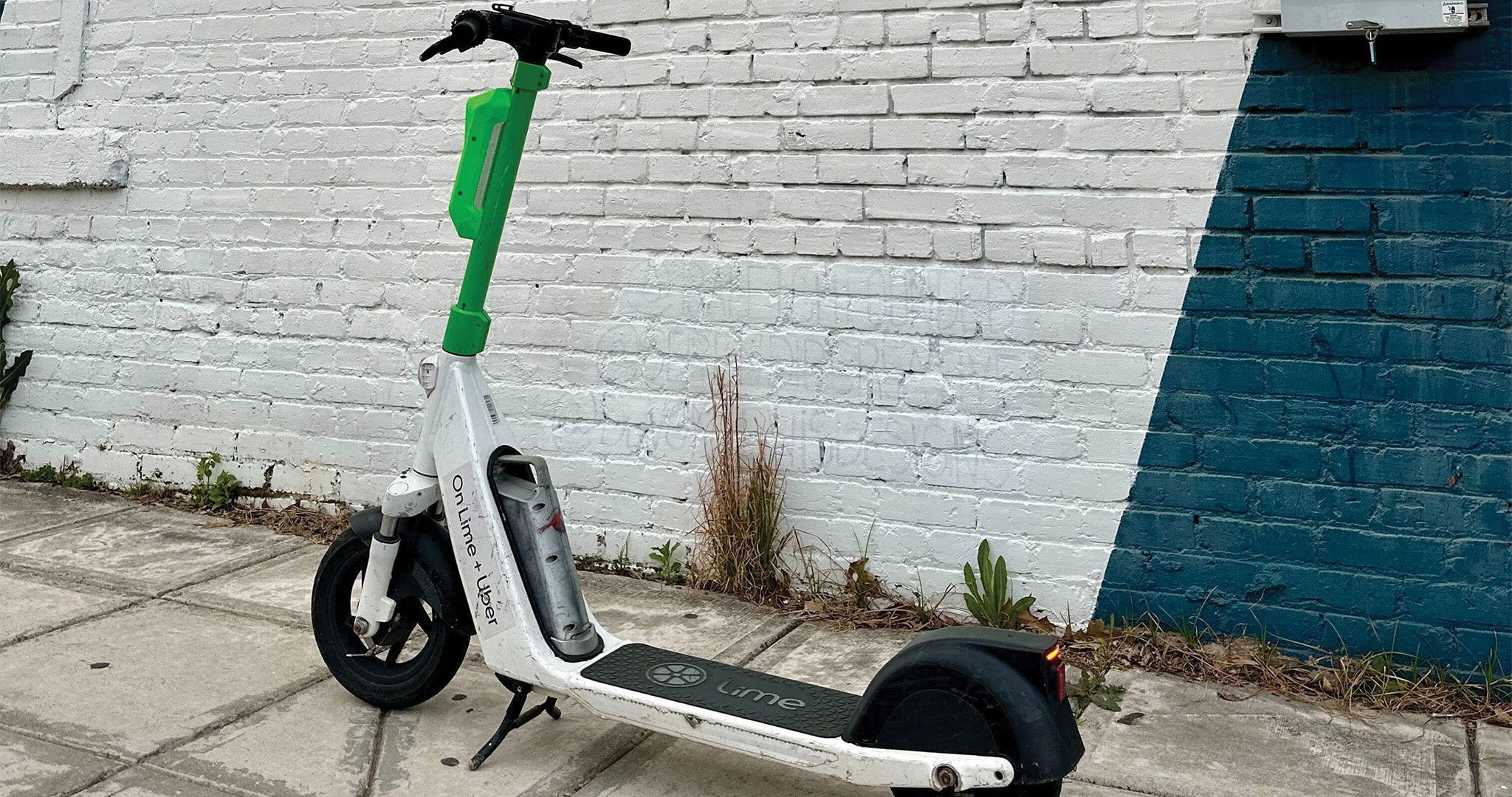
Photo courtesy of Lime
Raleigh’s micromobility gains are no small feat. In the past year alone, riders took nearly 362,000 scoots—and since the program launched, it’s helped cut an est. 100 metric tons of CO2 emissions, per Dos Santos. As micromobility evolves, new ops like seated scooters—recently launched in Durham—could hit Raleigh next. “That’s something we’re working with the city to figure out how to introduce into the ecosystem,” says Lime Senior Manager of Government Relations Carol Antunez.
Spademan hopes scooter companies can eventually pass city fees directly onto users to lower ride costs across the board, emphasizing: “To solve sustainability goals, we also need to reward people for following those right behaviors.” So, as Raleigh’s streets continue to shift, micromobility stands as a key player—offering flexibility, sustainability and a glimpse at how the city can move smarter, faster and greener.