Raleigh’s Freshest Finds
Feeling cyclospora paranoia? Go for farm-to-table.
As cyclospora cases keep climbing, even the least squeamish shoppers may be giving fresh produce the side-eye. In just two weeks since Wake County started tracking the numbers, the local case count has increased to 435—a difference that feels startling, especially while national case estimates inch upwards.*
But before you swear off summer berries, the cure for produce paranoia might be just around the corner—literally.
According to the NC Cooperative Extension, now’s a good time to turn to local produce—which often skips the longer supply chains that have been linked to large-scale outbreaks. Better yet, it usually comes with a friendly face who can answer questions about how it’s grown, giving you that extra peace of mind when you make your purchase.
So grab your reusable tote and reroute your Sunday grocery run via eight Raleigh spots where fresh, local produce is always in season.
State Farmers Market
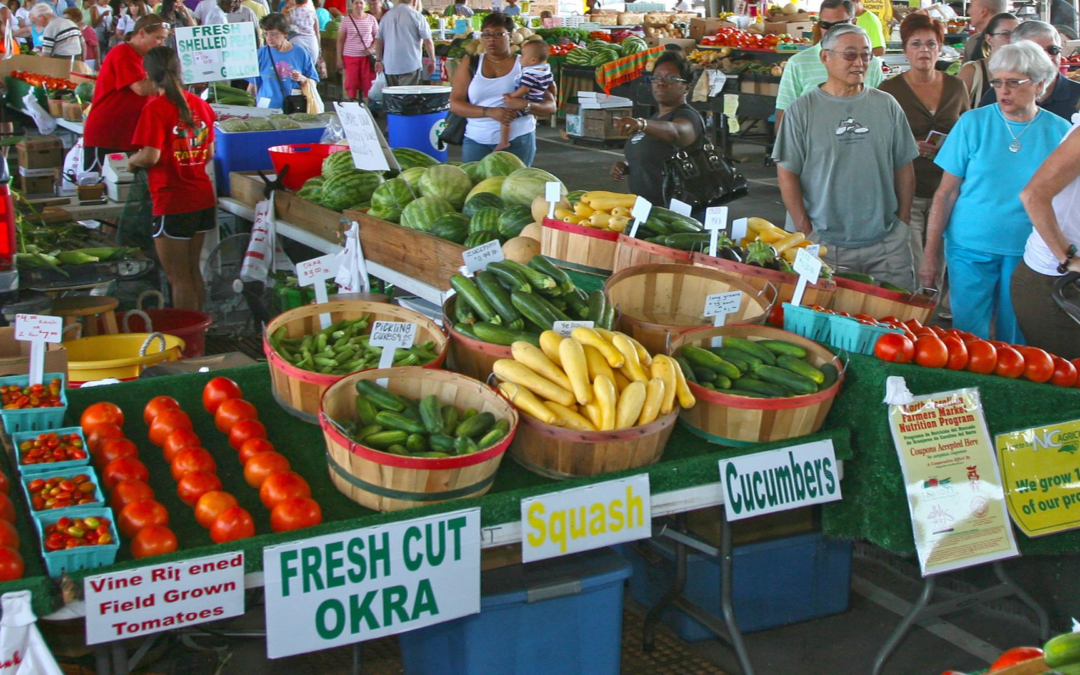
An oldie but a goodie, the State Farmers Market is a must-stop for everything from newly-picked fruits—think peaches, blueberries and blackberries—to just about any staple veggie. The best part: Vendors grow 50% to 100% of offerings themselves, but those who supplement their stands must source from approved local growers. With farms repping from across NC, it’s the classic spot for stocking up on fresh finds.
Where: 1201 Agriculture St.
When: Sundays, 8am–5pm; Mondays–Saturdays, 5am–7pm
Midtown Farmers’ Market
Midtowners and shopaholics, this one’s for you. The Midtown Farmers’ Market, held at the Commons in North Hills, brings together local farmers, makers and food producers for a convenient dose of seasonal produce close to home. With every vendor listed on its website, shoppers can put a face to the farm—and know, per the Market’s guidelines, that each pick is grown exclusively by its seller.
Where: 4160 Main at North Hills St.
When: Saturdays, 8am–12pm
Black Farmers’ Market
Championing Black farmers, growers and food entrepreneurs, the Black Farmers’ Market offers fresh local produce that directly supports a more equitable food system in the Triangle. While it rotates to Durham on 1st & 3rd Sundays, the Cap City plays host the other two weeks of the month. Rain or shine (and they mean it!), Raleighites can shop fruits, veggies and nuts produced directly by the farms selling them.
Where: 1436 Rock Quarry Road
When: 2nd and 4th Sundays, 1–4pm
Raleigh City Farm’s Farmstand
This urban stop proves produce doesn’t have to travel far. The “pay what you can” farmstand is located on the very same lot their produce is grown on. Not only does their harvest menu rotate weekly, but they’re very transparent about their growing practices—meaning the most even type A Raleighites can get an education and groceries in one stop.
Where: 800 N. Blount St.
When: Wednesdays, 4–7pm
Porter Farms and Nursery’s Farm Market
Farm-to-table doesn’t get much more literal than this. Family-owned Porter Farms & Nursery has been growing fruits, veggies and flowers south of Raleigh for decades—and thanks to its two roadside farm markets, you can shop straight from the source. From seasonal picks like corn, tomatoes and okra to you-pick options in the spring and fall, consider this stall your excuse to take the scenic route home.
Where: 7615 Ten-Ten Road
When: Sundays–Fridays, 9am–7pm; Saturdays, 8am–7pm
Weaver Street Market
Can’t squeeze a produce-only run into your week? Weaver Street Market has Downtown workaholics and residents covered. The community-owned co-op partners with NC farmers whenever possible, stocking fresh veg alongside your everyday grocery staples. While you won’t be chatting with the grower at the register, you can still look up the local farms behind what you’re buying—and keep your shopping cart close to home.
Where: 404 W. Hargett St.
When: Sundays–Saturdays, 8am–9pm
*As of press time