WEB EXCLUSIVE Wake County charity organization Note in the Pocket celebrates its move to a new (and more expansive) address.
Note in the Pocket, a Wake County-based nonprofit with a mission of providing quality clothing to homeless and impoverished kids and their families, kicked off the new year with its move to Crossroad Fellowship’s Millbrook Road Campus. This facility will provide extra space to store clothing donations and host more volunteers and community partnership gatherings. With 29,000 square feet in the new space—a capacity increase of 262%—the nonprofit looks forward to serving more children and families.
“Since 2013, Note in the Pocket has worked with more than 12,000 volunteers to provide over 35,000 children and families with clothing valued at more than $5 million in donated clothing,” says Executive Director Dallas Bonavita. “We look forward to continuing and expanding this important work through our beautiful new facility.”
Note in the Pocket held a ribbon-cutting ceremony and facility tour on Jan. 13 to celebrate the opening of the space. “This expansion will allow it [NITP] to continue its transformative work for decades to come,“ says Smedes York, chairman of York Properties. ”The children in school today are our community’s future leaders, and the dignity that comes with a new wardrobe will have an immeasurable positive impact on their future.”
Want to contribute? Help lift Note in the Pocket’s impact by dropping off your unwanted clothes at its new location—that dress that no longer fits, the sweater you never wear anymore… plus anything else that’s been gathering dust bunnies in the back of your closet. There’s never been a better reason to get a head start on your annual spring cleaning game. So let’s clean out our closets for a good cause!
Suzanne Tarry bags up self-care goodies for essential and community workers.
Suzanne Tarry’s mission is simple: care for those who care for us. After hearing about the long shifts nurses, doctors and other essential workers were pulling last year, she felt compelled to help while her flower business, Dragonfly Designs, was put on the backburner due to postponed or canceled weddings.
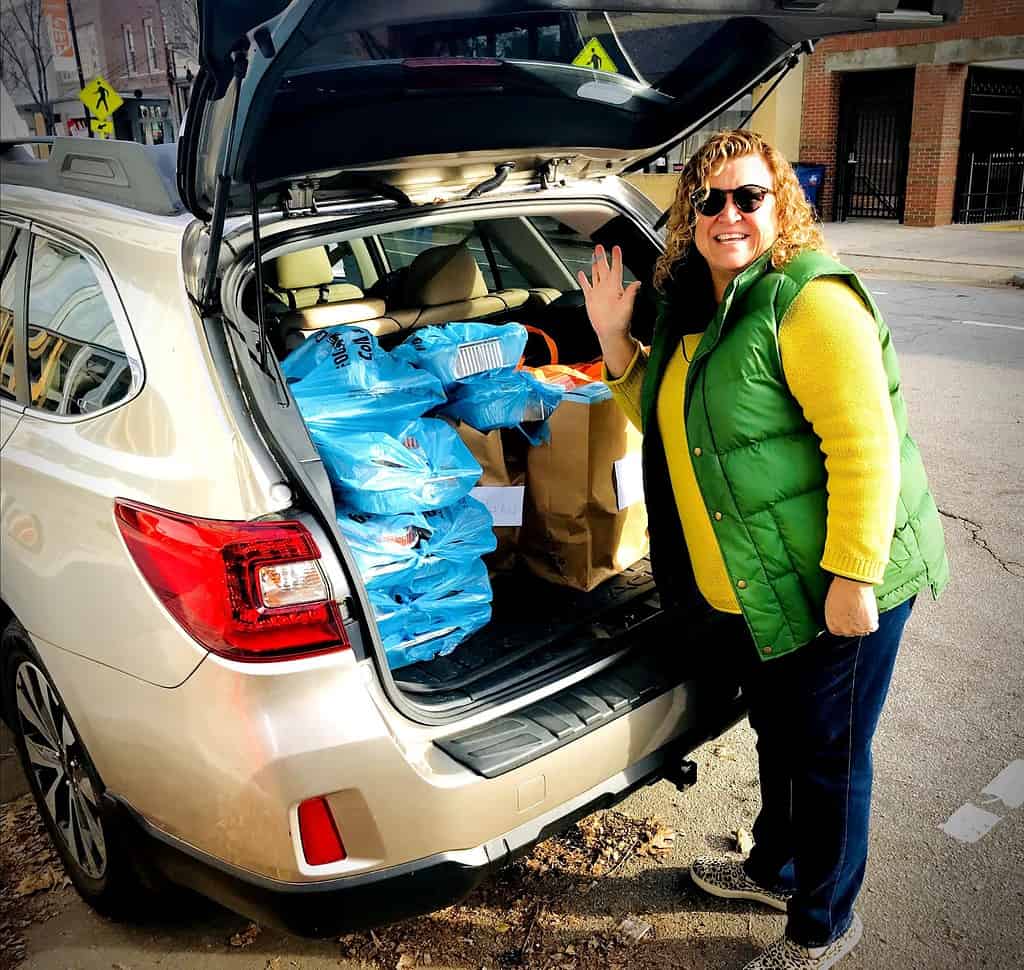
Knowing that a little #selfcare goes a long way (like many of us, after a long day she enjoys soaking in a bathtub), she created Olive Tree Blessing Bags, a nonprofit that delivers bags filled with luxury personal care items to essential and community workers. The bags, which are tailored to both gals and guys, contain a thank-you note and everything from bath bombs to chocolate to hand cream.
“… I don’t know how to feed 1,000 people,” says Tarry. “I don’t know how to find housing for somebody that is living under a bridge. I don’t know how to administer medicines and solve somebody’s issues, but I can sure as heck support the people that do.” And there’s almost nothing chocolate can’t fix if you ask us.
Suzanne Terry
The nonprofit has delivered over 3,000 bags and counting to WakeMed facilities’ COVID and ER nurses, the Boys and Girls Club of Wake County and Raleigh Rescue Mission, among other homeless shelters, food banks and more.
But Tarry couldn’t stay away from the flower-arranging business for long. Olive Tree Weddings, a flower event company with the tagline “Blooms With a Blessing,” will officially launch in July with 100% of the proceeds going toward Olive Tree Blessing Bags. To her knowledge, the nonprofit—which combines her love for flower arrangement and serving others—is the first of its kind in North Carolina.
Tarry, who assembles bags and flower arrangements in her dining room on top of an old piano (or while doing laps around her dining room table, which is often covered with flowers), didn’t originally set out to have a career in flower-arranging, however. After doctors found a tumor the size of her heart in her chest when she was 19, she took a hiatus from school and changed courses careerwise, earning a business degree and then working for a retail and a wholesale florist.
“I didn’t want to do anything that is going to be that stressful or cause that much stress or unhappiness,” Tarry reflects. “I just want to do flowers.”
She hopes Olive Tree Blessing Bags and Olive Tree Weddings will continue to bless—and pamper—essential and community workers once the pandemic has been long gone, touching the lives of those who give up so much for all of us each and every day.
“Heroes are not made out of COVID,” says Tarry. “Heroes are made from self-sacrifice.” Donate, sponsor or volunteer: olivetreeblessings.com
WEB EXCLUSIVEJoin Rise Against Hunger’s fight to end world hunger through its second annual virtual Garden Club.
Get ready to flex your green thumb and pot it like it’s hot—for a good cause to boot! Rise Against Hunger’s Garden Club is back in its second year—right in line with the start of spring and this gorgeous weather… just begging you to get outside.
Besides being a great excuse to play in the sun and get your hands dirty, the virtual Garden Club also lets you give back to those facing hunger. A minimum $50 donation to register supports Rise Against Hunger’s efforts to empower at-risk communities around the world through the continuation of sustainable agriculture programs, which have served as one of the nonprofit’s key response efforts during the pandemic, as part of its Empowering Communities pathway.
Rise Against Hunger’s Empowering Communities project in Senegal
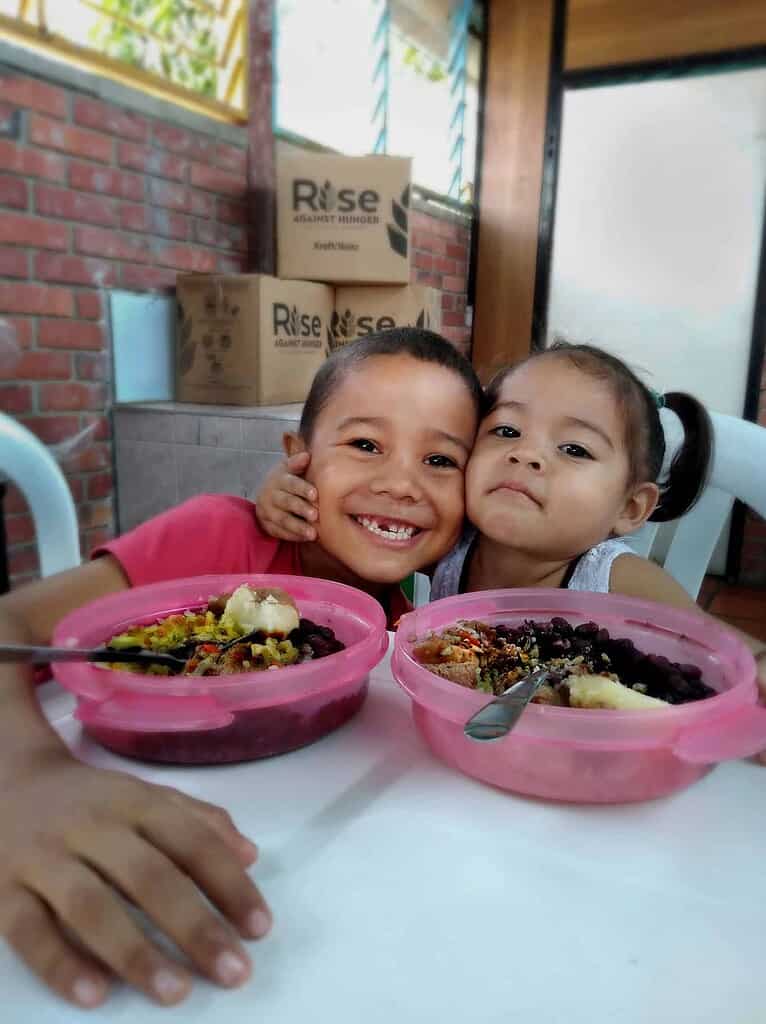
Kids receiving their meals in Venezuela
Rise Against Hunger has several other initiatives to end hunger throughout the world, but The Garden Club digs up an easy way to get meals to those who have suffered during the pandemic,so gardening gurus can plant seeds of hope across the community—literally and figuratively.
“I’m so excited to have this Garden Club be an opportunity for people—whether they’re experienced gardeners or beginners—to get involved with ending hunger for the second year in a row,” says Elizabeth Bradford, Rise Against Hunger’s garden club instructor. “No matter where you are, you can play a part in addressing this critical global issue.”
Once registering for the garden club, you’ll receive an exclusive gardening kit featuring gloves, seeds and more in the hopes of growing a wonderful vegetable garden you can relish all season long. You’ll also get access to tips and tutorial videos from Bradford herself. The club is open to anyone and everyone, no matter their gardening skill level… so you can bloom where you’re planted. Registration available now through April 30, act.riseagainsthunger.org/give/286878/#!/donation/checkout
WEB EXCLUSIVE Having struggled with food insecurity himself, Marcus Harris—a bestselling poet, author, playwright, filmmaker, volunteer, philanthropist, activist and founder of The Marcus Harris Foundation—knew that something had to be done to help the more than 35 million people struggling with food insecurity throughout the country, a number that only amplified when the COVID-19 pandemic hit.
One day last year, Harris had read about a free grocery story that country music singer Brad Paisley and his wife had started in Nashville, Tennessee. People who are struggling financially can shop at the store for free for up to a year while they get help to get back on track. Harris loved the idea and immediately set out to recreate something similar here in Raleigh.
After meeting with his board, Harris decided to slowly work his way up to the grocery store model by first doing a free food distribution service in Southeast Raleigh—which he dubbed Neighborfood Express—that would provide him with crucial experience and connections, and help those who had the most need first. “We went through a lot of research to find out where there weren’t free food distribution hubs and we kept being pointed to Southeast Raleigh, where they have a lot of food insecure people,” Harris says. The six low-income neighborhoods he’s focusing on in Southeast Raleigh are considered food deserts, meaning they reside a significant distance from the nearest supermarket or grocery store.
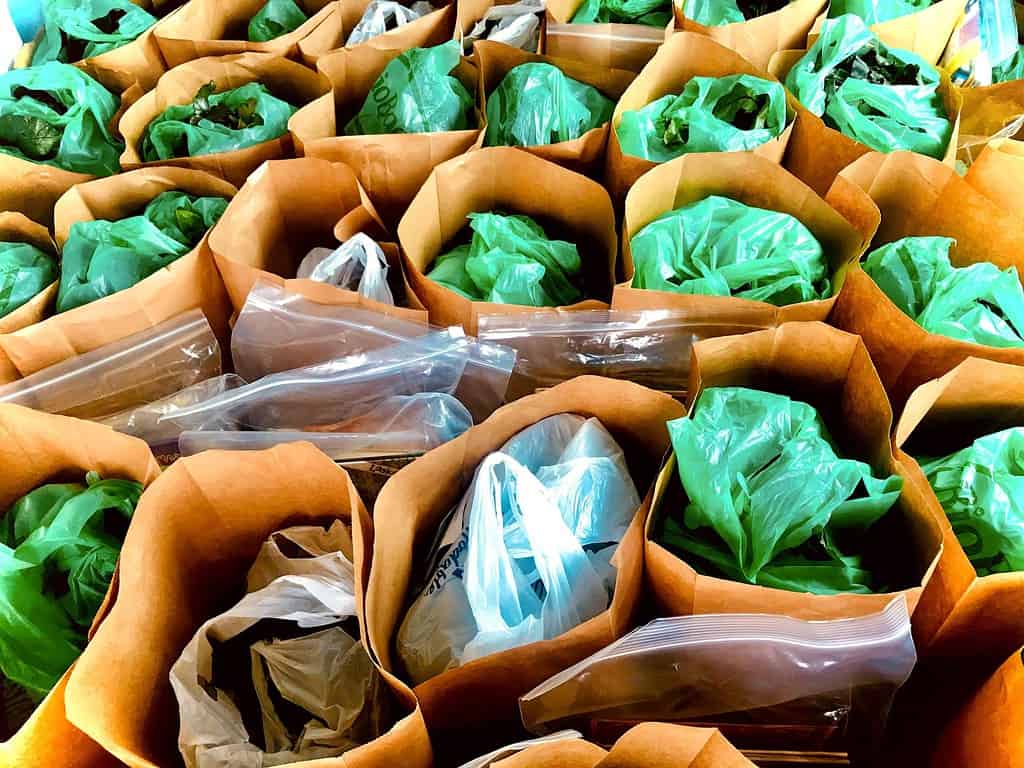
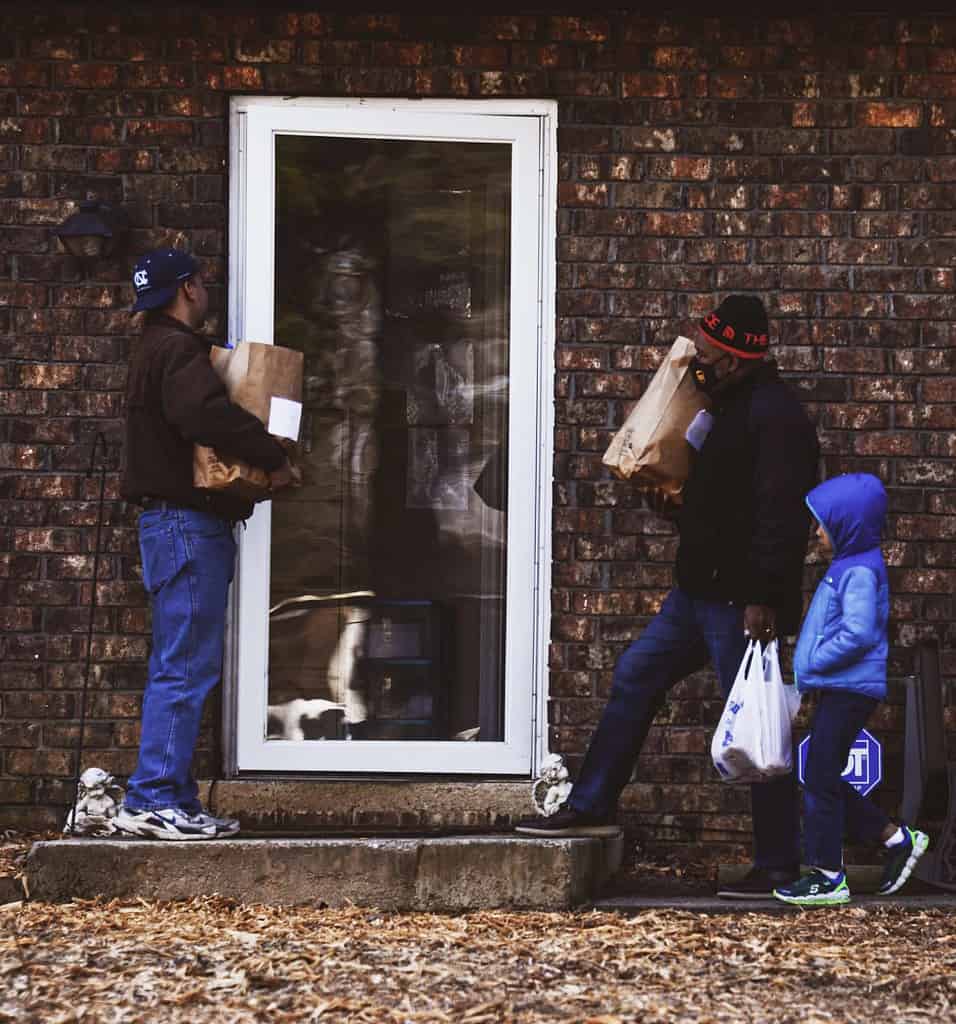
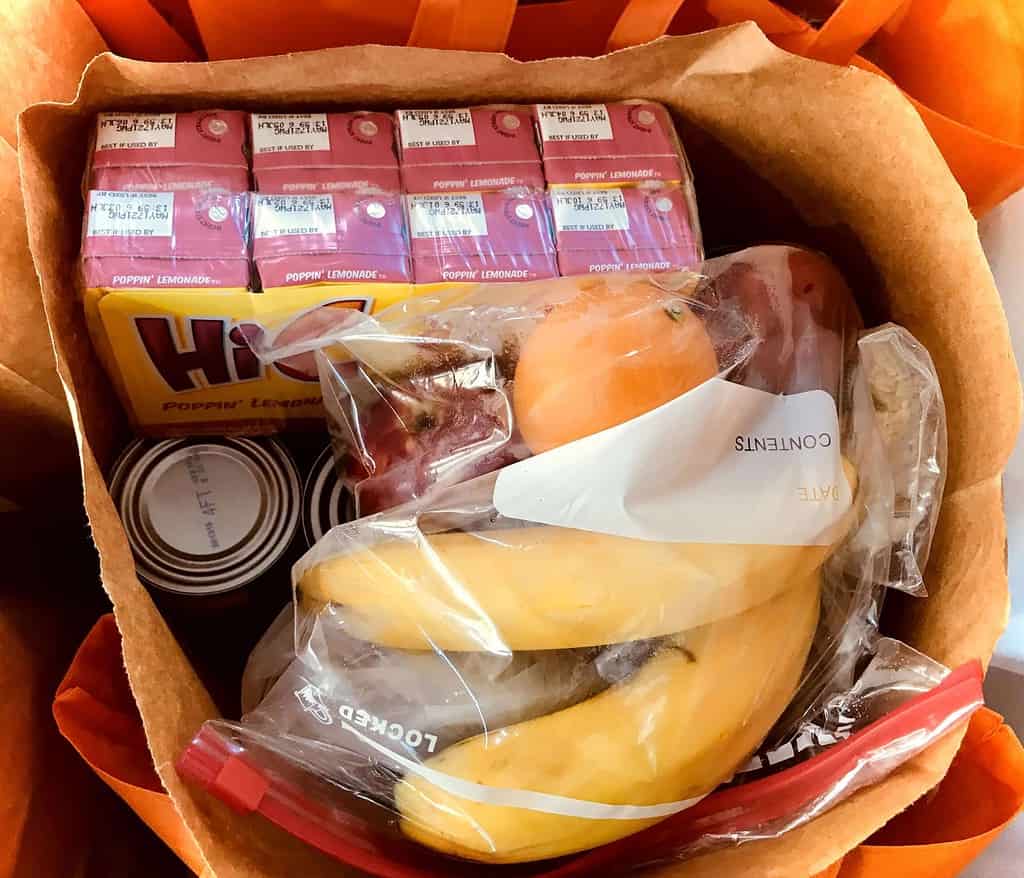
Each week, Harris sources 5 to 10 pounds of fresh produce from local farmers, 20 to 25 pounds of healthy groceries (including meats, fruits and non-perishable items), and 100 to 200 pounds of surplus food through a partnership with Olive Garden, as well as essential supplies like baby wipes and creams, for him and a group of volunteers to drop off to Southeast Raleigh families in need.
Since starting Neighborfood Express in November 2020—just before Thanksgiving—Harris has distributed over 2,500 meals, 11,148 pounds of free food and 1,005 kids’ books through a partnership with Wake Up and Read.
Harris’ first-year goal for Neighborfood Express is to distribute at least 50,000 pounds of free healthy groceries, as well as essential supplies, eliminating hunger for nearly 5,000 Southeast Raleigh residents. Additionally, he’s already started developing plans for the free grocery store, which he hopes to open by 2024 or 2025.
“Ever since launching our efforts in November, we’ve made tremendous progress in accomplishing our goal of ending hunger for thousands of food insecure kids and families,” Harris says.
Support Harris in helping to eliminate hunger in the lives of thousands of kids and families by donating by making a donation. Any amount helps!
How CORRAL Riding Academy is helping girls—and horses—reach their potential.
While most of us spent 2020 sheltering in place with the world on pause, 12-year-old Trinity was making an unlikely new friend: a horse named Cap. Both Trinity (whose name has been changed for purposes of anonymity) and Cap can relate on their rough start in life. Both come from unsafe environments, have had unstable living conditions and struggle with behavioral issues that have resulted in emotional turmoil. Both also never learned how to forge healthy relationships with humans.
While Cap was rescued and rehabilitated before coming to CORRAL (Centered on Riding, Rehabilitation and Learning), Trinity was referred to the equine therapy program by a school counselor and court social worker. The middle school student had been in an enduring cycle of risky behaviors, including fights at school and failing classes. With her future appearing bleak—and a family not equipped to effectively parent a wayward teen—CORRAL and Cap trotted into her life.
Founded in 2008 by Joy Currey after time spent in inner-city Philadelphia teaching and working with children, CORRAL was borne of her passion to help children who otherwise would not have opportunities to end negative trajectories—and thus effectively turn their lives around.With this vision of changing the lives of disadvantaged girls, Currey returned to her childhood home on Kildaire Farm Road in Cary (where her parents still reside) and opened the nonprofit equine therapy academy. There, under its “amplify their voices” mission, CORRAL seeks to pair girls in high-risk situations with rescued horses to show them that if a majestic horse can overcome hardships, perhaps they can too.
In the program, therapists and equine specialists work in unison to guide the girls and horses through therapy sessions to build a relationship of trust and patience. Teaching girls how to have a relationship with a horse when they have often been failed in their human relationships opens the door for dramatic change. “What we do here is transformative,” says Currey. “We are providing opportunities for girls who might not otherwise be given opportunities in life.”
But the galloping success of the program fell to a trot this year as the pandemic put a halt to fundraising events—and the nonprofit that relies solely on donations took a significant hit—both financially and for those it helps. While its budget and needs increased, funding decreased—at a time when it was needed the most. After the cancellation of the equine rehab center’s annual fundraising event, typically held on Kentucky Derby weekend (Derby Dinner), the nonprofit lost upward of $350,000 in donations.
In October 2019, a second farm located in North Raleigh, the Neuse River Campus, was opened to up the number of girls served in the community. But, with the decline in revenue, the growth of the campus has been dramatically limited.
CORRAL corporate strategist Camille Brown says the academy has had to pivot every step of the way during the pandemic. “All aspects of our mission have been affected during the COVID crisis. We had to change the way in which we have the girls, therapists and volunteers physically here on campus because of restrictions,” she says. “The families that we help now need more help due to increased food insecurities, housing concerns and job loss. The girls need a safe and consistent place to do virtual schooling. We’ve really had to think outside the box to make it all work.”
To combat the schooling crisis, CORRAL hired an education specialist to lead pod learning, where a group of girls attend online school together in a supportive environment. Transportation, technology, and educational and emotional support have been consistently provided through this turbulent time. “We provide the space, resources and horses,” says Brown. “The girls are doing the work.”
As for Trinity and her “mane” squeeze, Cap, the pair has continued to forge their bond, through which Trinity has learned to control her emotions and regulate her temper; that trust cannot be rushed, but can be earned; and, most importantly, that the people of CORRAL (and Cap) are devoted to her well-being.
“Cap shows me that I’m worthy of being loved and of having a true friend,” says Trinity. Clearly, there are no “neigh”-sayers that CORRAL is accomplishing Currey’s vision one girl and a horse at a time. corralriding.org