by Arianna Morrison | Aug 27, 2024 | Arts & Culture, September 2024
NC native & WSJ reporter debuts book covering Murdaugh case.
The case that gripped the nation is back. You know the one: Former Lowcountry lawyer Alex Murdaugh was found guilty of murdering his wife and younger grown son—revealing plenty of unexpected twists and dark family secrets along the way.
Having reported on the trial from the courthouse every day for three years—and from South Carolina—Raleigh-based award-winning The Wall Street Journal Southern correspondent Valerie Bauerlein has a story to tell. Just released, The Devil at His Elbow takes the reader through Murdaugh’s life, the murder case and the investigation.
“I really wanted to take a step back and tell the story from beginning to middle to end,” says Bauerlein, also a former N&O reporter, of her first book. “Some of the early readers have said they liked seeing the story a year after the verdict, and it being told like, ‘Once upon a time, there was a man named Murdaugh, and here’s how it all went down.’” … Here, we chat with Bauerlein on the Murdaugh saga.
What drew you to the case? I’ve covered the South my whole career and spent a lot of time in SC. One thing I found is there’s sort of this phenomenon of rural barons—one family in a small town really having this outsize influence, and I was very interested in that. Fast-forward after the homicides June 7, 2021, in Hampton County—I became interested in how the power dynamic worked [there].
How’d you prep? I first went to [SC] summer 2021 right after the homicides to do a story for The Wall Street Journal. I had a lot of interest in writing a book about it… and started it before Alex Murdaugh was even charged with any of the financial crimes. I spent the first year researching the history, talking to people who knew the family and spending time down there. I had a lot of time before he was charged with a homicide to try to really understand the story.
The book’s approach? I really tried to put Alex in the context that created him. He’s the fourth generation of a family that’s been very powerful in a very specific place for a very long time. I tried to go back to the beginning when they established this law practice in this very poor place—and how they became the prosecutors—and explain what that meant in the early 20th century.
Biggest challenge? I’d say it was a challenge to work on a book not knowing the ending, even during the trial… to keep your eyes on getting the research done, talking to people, but also keeping your mind open to the possible outcomes you might end up with.
*Responses have been lightly edited for length and clarity.

by Anna Beth Adcock | Aug 30, 2022 | September 2022, Stuff
Time to think outside the clock. … Worldwide bestselling fiction author A.G. Riddle’s newest novel, Lost in Time (dropping Sept. 1), presents a world in which time travel is possible… a place where instead of prison, murderers are sent back to the past.
After his daughter is accused of murdering his lover (talk about family drama!), Dr. Sam Anderson takes the fall for a crime he didn’t commit to protect his family. Before being sent back in time, he promises to clear his name, return to his family and find out who is responsible for killing the woman he loved. The only problem? The past is full of secrets and the present has problems of its own.
A native North Carolinian and UNC-Chapel Hill graduate, Riddle fell in love with books at a young age and eventually retired from his day job to start penning page-turners—including his previously published novels The Extinction Trials, Departure and The Atlantis Gene (some in development for the big screen!) that have sold over 4 million copies and been translated into 24 languages.
“I’ve always enjoyed reading, but I started to spend a lot more time reading after college,” says Riddle. “It was the thing I looked forward to every day after work.” Then, given the opportunity to spend a few years starting a new career, “I settled on writing,” he says, “because I wanted to see if I could spend my days working on something I enjoyed so much. It took me two-and-a-half years to write that first novel. I’ve been writing since.”
Riddle’s inspiration for Lost in Time was derived from real-world realities (partly due to the chaos of the pandemic, he says), so his book provides readers with the unique paradox of an escape to a science-fiction world—NTM an ability to relate to characters who have had their lives turned upside down—and, well, feel lost in time.
“The months couped up at home have left all of us with this sense that we’ve been separated from the life we knew, and we’re all sort of trying to put our world back together,” says Riddle. So, facts meet fiction. agriddle.com

by Anna Beth Adcock | May 23, 2022 | Eat, May 2022, Web Exclusive
Bite into North Carolina’s contemporary food movement with UNC food historian Marcie Ferris’ latest book, Edible North Carolina.
46 vibrant photos. 20 food phenoms. 20 recipes. ~300 pages—’tis the feast food historian Marcie Ferris dishes in her new book, Edible North Carolina, the first volume of its kind to ever extensively examine the power and reach of our state’s vital food movement.
“North Carolina is a place with really important voices in the American and Southern landscape,” says Ferris (of Matzoh Ball Gumbo and The Edible South fame). “I want readers to understand issues at the heart of our national food systems through the lens of one state.”
Accordingly, the beautifully produced tome takes us on a statewide culinary journey from seaside to hillside via full-color photos by Baxter Miller and insights from leading NC top toques and personas (think Garland’s Cheetie Kumar, Chef & the Farmer’s Vivian Howard, nationally recognized food personality Sandra Gutierrez, and food writer Victoria Bouloubasis), farmers, entrepreneurs and food equity activists documenting the edible excursion to dish up a 360-degree view of our longstanding and constantly evolving food movement.
Turn the pages for a firsthand look at the likes of our coastal seafood movement, indigenous and local Chinese food culture and more—and how our vital food system serves our state (and nation)—from attracting residents and building tourism to boosting the economy, supporting sustainable growth and upping our region’s reputation.
Beyond a feast for the eyes—and the senses (!)—the book, Ferris hopes, serves as a vehicle for us to understand our power as consumers—and eaters. “I think you need to read this book to be an informed, happy, healthy and joyful eater in North Carolina,” says Ferris, and to know “about issues that contribute to our quality of life and the economy of our state.” To wit, she says, if you have access to local food, you have a treasure (#truth). We’ll take a bite outta that!
by Cameron Rhinehardt | May 2, 2022 | May 2022, Stuff
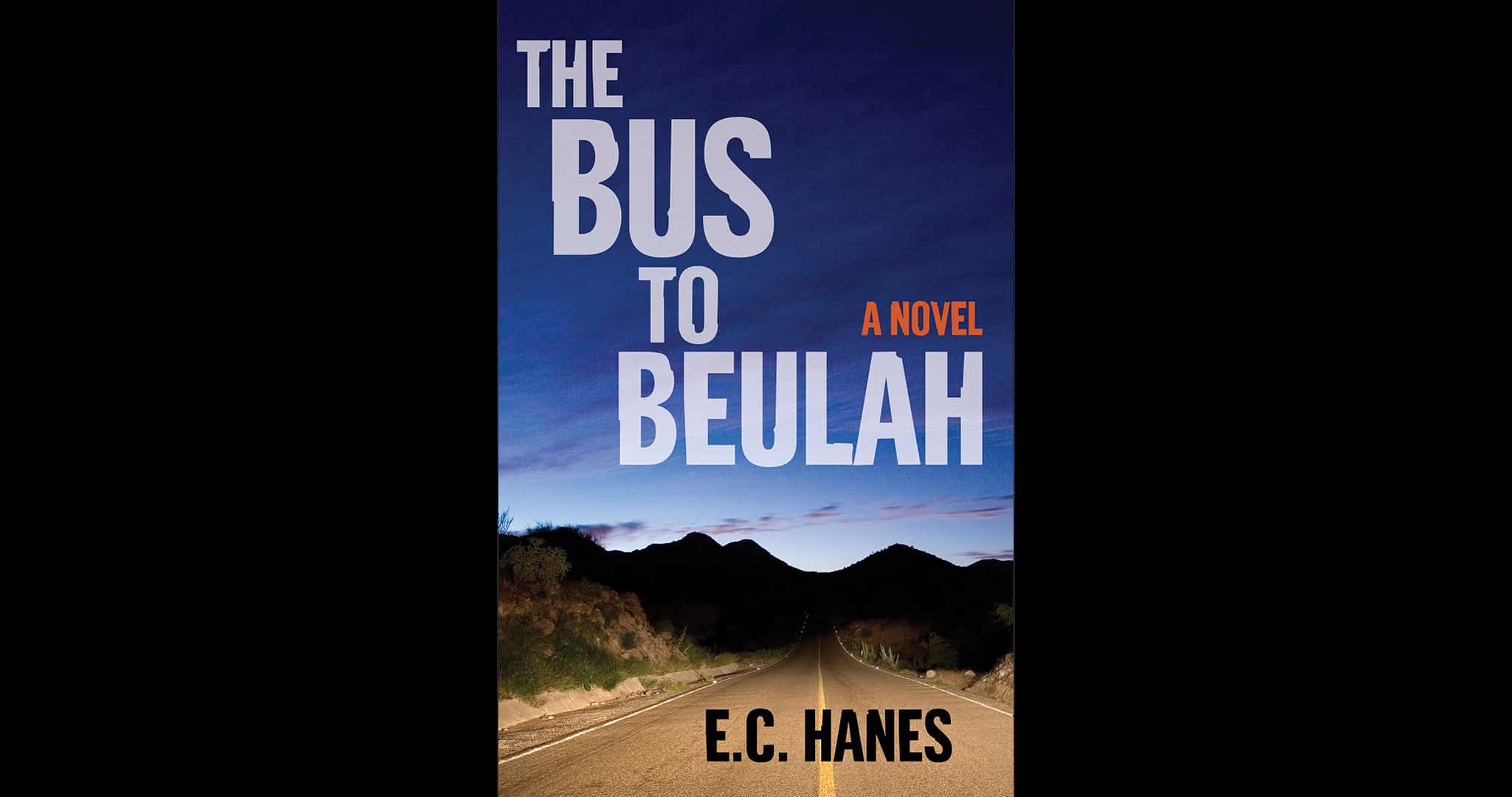
Immigration is a hot topic these days—especially following the Russian invasion of Ukraine earlier this year. Bringing to light this important social issue—along with topics like human trafficking, desperation and seeing life through a different lens—is NC native and author EC Hanes, who’s new book, The Bus to Beulah, drops May 10 (catch him at a book signing at Quail Ridge Books on May 14!).
A heart-wrenching story, The Bus to Beulah is dedicated to subjects of immigration and local politics in order to bring attention to the uncomfortable but significant matters that we sometimes don’t want to talk about.
“It’s a societal problem,” said Hanes in an exclusive interview with Raleigh Magazine. “Society wants to pretend it’s something that it isn’t, and I always find it compelling to set a story within that idea.”
That story, set in Eastern North Carolina, is organized in an hour-by-hour structure, making it a thrilling and fast-paced novel. It introduces Maria Puente, a fictional character who discovers a human-trafficking ring in the midst of starting a new job in America and, after stumbling into the knowledge of the ring, is kidnapped.
While locals work together to try to find her, the county sheriff discovers many conditions of human and drug trafficking that were overlooked by dishonest or indifferent state officials. Because this is a very timely issue in the U.S., Hanes made an attempt to fit the topic into a story that is entertaining yet educational and eye-opening… and he’s undoubtedly succeeded.
“In The Bus to Beulah, Hanes skillfully zeroes in on what happens when our byzantine immigration laws, the powerful farmers’ lobby and local politics collide in bucolic North Carolina,” says The New York Times former executive director Howell Raines.
According to Hanes, an estimated 160,000 to 200,000 seasonal immigrant workers come to the U.S. for the agricultural and tourism industry every year, with North Carolina being one of the top states involved. Through his new book, Hanes hopes to not only tell an exciting story, but to educate the public about immigration workers in NC and the corruption behind the scenes—through a story and character that appeals to the hearts of North Carolinians.
“This is a story that is based on a lot of research on immigration, which is essential in NC and one of the biggest parts of our economy,” said Hanes. “Yet, if you took a poll, many people would say ‘keep [immigrants] out,’ but then we would have no food, few buildings… and everyone seems to look past that. Hopefully, if this is read and paid attention to, everyone will understand the critical role that immigrants play in our lives.” Barnes & Noble, local bookstores and online; echanes.com



