Rideshares Are Surging
Rolling the dice on the way home
Promising a sleek new future and boosted safety, rideshares changed how cities move. But lately in Raleigh, booking an Uber or Lyft feels more like a high-stakes gamble—especially if you’re trying to get home from a busy concert, bar or game on a Saturday night. One minute, your ride costs $15; the next, it’s pushing $90.
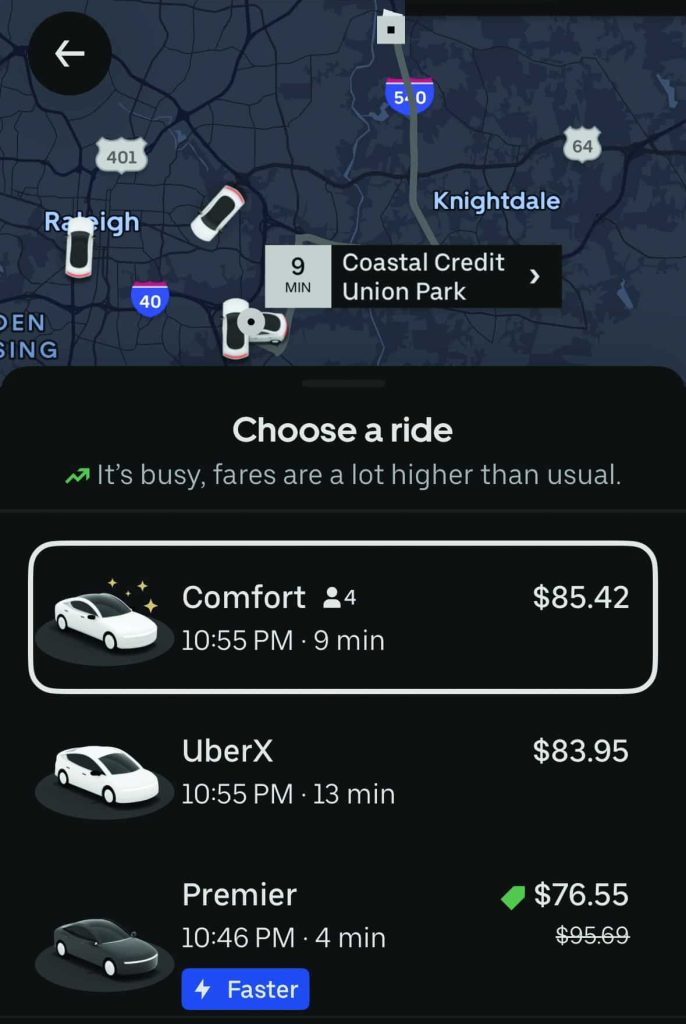
On one such Saturday in May, a Raleigh Magazine employee left a country music concert at Coastal Credit Union Music Park at Walnut Creek around 10pm. She pulled up both the Uber and Lyft apps to book a ride home to her house in Raleigh—a 14.3-mile trip.
For a standard-size car, Lyft quoted $13.98 for the ride. But Uber, for the same standard car, quoted $83.95—with a note that read: “It’s busy, fares are a lot higher than usual.”
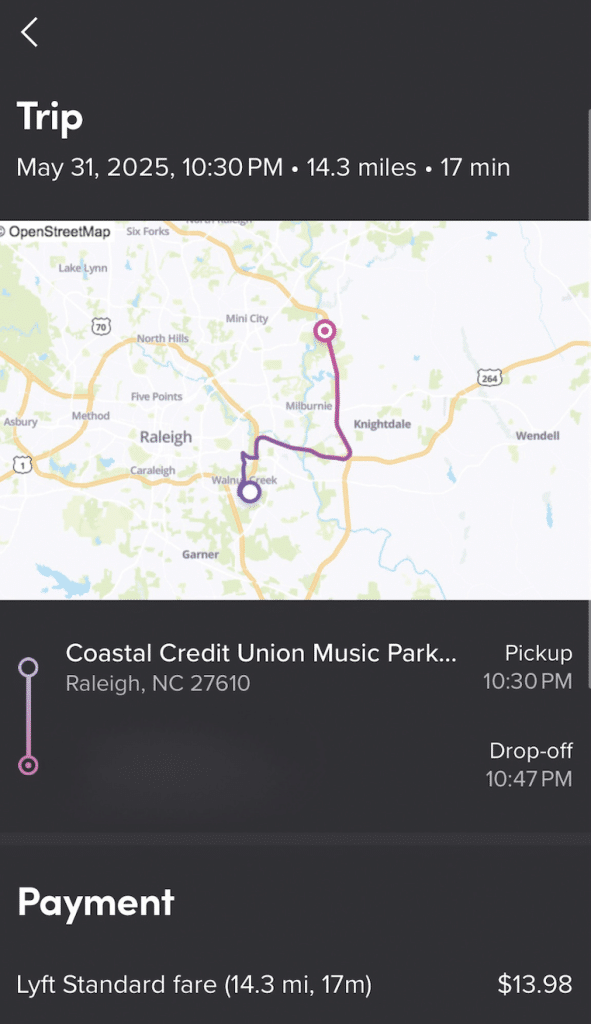
Naturally, she Lyfted. The driver, who asked to remain anonymous, said she drives for both Uber and Lyft, but prefers the latter. Despite riders paying 5 or 6 times the normal price during busy times, that money isn’t going to the driver, she said.
Known as “surge pricing,” the tactic is meant to match driver supply with rider demand during peak hours. But the giant jump in price is starting to feel less like a supply-and-demand solution and more like price gouging—or straight-up robbery.
At Lyft, surge pricing is referred to as Prime Time. In an earnings call last August, the company’s CEO David Risher said he’s “opening a can of whoop-ass on Prime Time” and referred to surge pricing as “rideshare’s most hated feature.”
During the second quarter of 2024, Lyft had worked to decrease the average surge amount added to each ride by 25% and, in turn, saw better conversion rates (read: more people choosing Lyft over Uber).
Uber hasn’t publicly rolled out the same surge-busting plans as its main competitor, but an Uber spokesperson did tell RM drivers are earning more than ever. “Driver earnings remain strong,” she said. “In times of high demand, drivers are able to earn more on the platform.” The spokesperson did not, however, clarify if that ability to earn more comes from Uber wages or an increase in tips from the riders due to higher ride costs.
But the bottom line tells the story: Q1 2024 saw Uber’s revenue up 15% year-over-year, Lyft’s up 28%—but Uber still hauled in 693% more overall. And, now, some Raleigh riders are opting for alternative rideshare companies like Wridz and Just Her Rideshare, a Charlotte-based company that prioritizes women’s safety for both drivers and riders that recently rolled out in Raleigh. Unlike Uber and Lyft, the latter does not implement traditional surge pricing.
“We understand how frustrating and unpredictable that can be for riders,” said CEO Kimberly Evans. “Our pricing model is intentionally designed to be fair and consistent, while still ensuring our women drivers are paid equitably for their time and service.”
So, fair warning: The next time you’re leaving a game at Lenovo Center or a night out on Glenwood South, check your options before settling with the first high-priced ride you see.
BTN
$54B
U.S. rideshare market size
↑$61B
Projected U.S. rideshare market size by 2029
Ridership 2024 Q2
Uber: 156M
Lyft: 23.7M
*Lyft’s North American-only, while Uber rides worldwide.