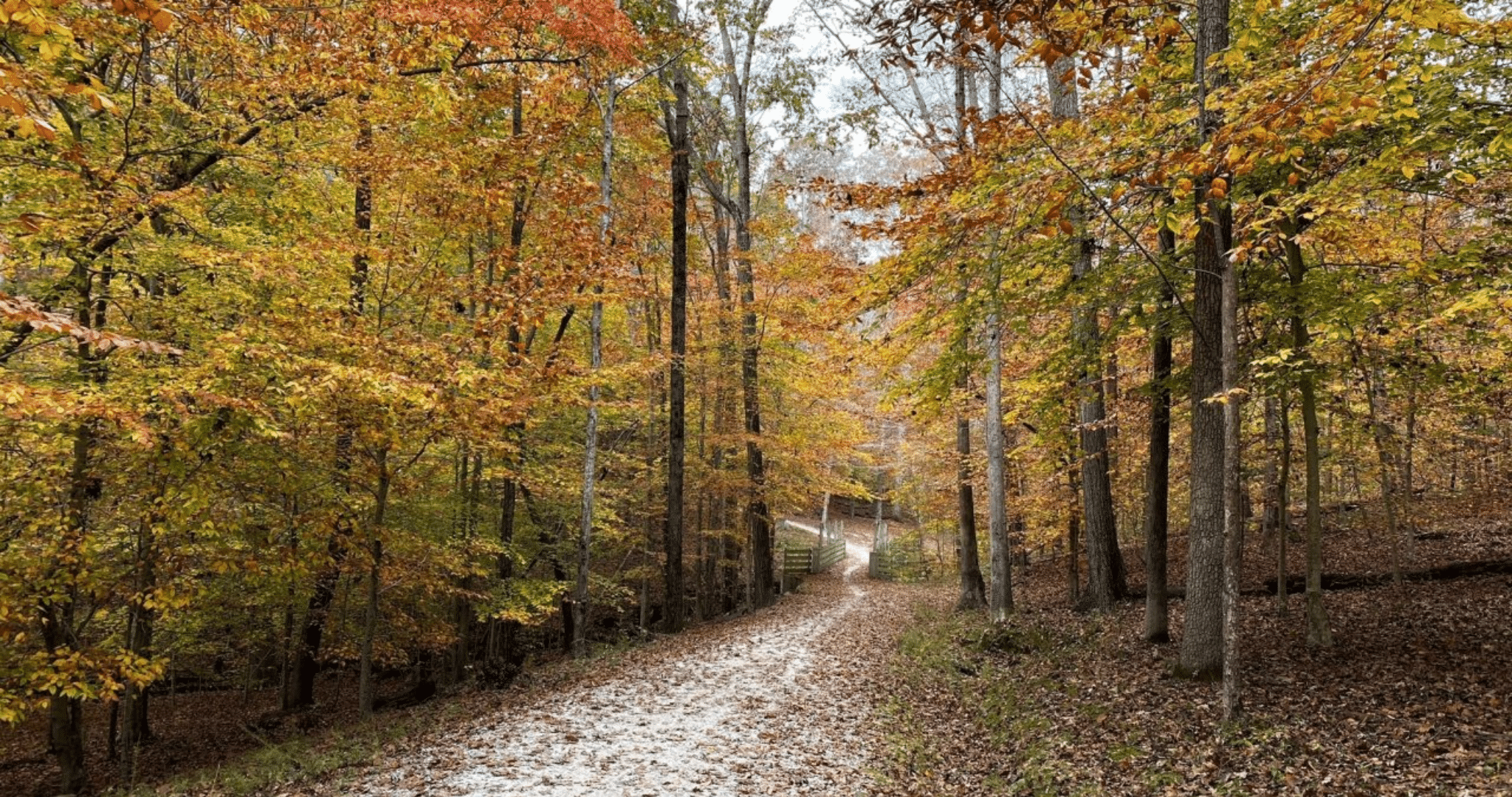
Plus, when the city phases out loose-leaf collection in the fall, yard waste pickup services will switch from biweekly to weekly, giving residents 26 additional collection days every year.
For longtime Downtowners, the change may come as a shock. Raleigh’s loose-leaf collection service has been around for decades—but not without ongoing debate. Assistant City Manager Evan Raleigh says multiple city councils have weighed its merits over the years.
The previous practice was for residents to pile their leaves at the curb, close enough for vacuum trucks to grab. But when leaves drift into bike lanes or wash into storm drains, they quickly become a safety hazard—to pedestrians, cyclists and drivers alike.
“I’ve borne witness to some of the issues when you have literally a mountain of leaves that are obstructing the travel lanes and creating difficulty for sight lines, and in different places, you can’t see who’s walking,” emphasizes Raleigh.
Add wind, rain and snow into the mix, and that’s even more of a delay in the City’s ability to collect the yard waste.
In June 2025, City Council approved the new service model—weekly yard waste pickup—to address these concerns. And over the next few months, the City is giving residents a choice: opt for the new collection method to prepare for the pivot next fall, or take advantage of the old process for the final season.
Not only does containerizing the leaves limit hazards, Raleigh says it also makes pickup much more predictable. “Just like with recycling and trash collection, it’s like clockwork,” he explains. “It comes on the day and time, and yard waste is no different.”
It’s a new era for Raleigh’s leaves, suggests the Assistant City Manager—one that keeps residents safe, neighborhoods clean and operations running smoothly.
Lace up for a race in the name of cystic fibrosis.
If you don’t know Raleigh philanthropist Pete Proimos personally, you definitely know someone who does—or someone who knows someone who does. That’s according to Lewis Lovell, a captain in the Raleigh Fire Department, and Nemanja Savic, former pro golfer turned teacher.
Come December, Lovell and Savic are showing up for Proimos in a big way, running 104.8 miles to raise awareness for cystic fibrosis, a disease Proimos both battles and raises awareness for.
Running four marathons in four days clearly isn’t for everyone, but the community can still support the cause by lacing up for the Lung Run, a fun run chasing a brighter future for CF patients Dec. 14 at Fenton.
Three years ago, Proimos took on a heartfelt venture and founded the Filotimo Foundation, a nonprofit raising awareness and providing resources for people with cystic fibrosis. Named after a kindness-forward Greek philosophy, the foundation revolves around an MO to do what is right, compassionate and generous—no strings attached. Proimos kept his CF diagnosis a secret for most of his life, but a few years into the project, he stopped hiding.
The day Proimos revealed his diagnosis, Savic said he knew something was up. “I don’t think he could have held it in any longer,” reminisces Savic. “We sat down and he said, ‘Okay, so, I’m sick.’”
Around the same time, Lovell and Savic were looking for their next physical challenge. They’d been running together for over a decade—first neighborhood jogs, then full-on marathons. With social media runners as their inspo, they landed on a bold idea: run 100 miles in marathon-sized chunks.
Enter the aforementioned Lung Run, the Filotimo Foundation’s second major event. From Dec. 10–14, Lovell and Savic will tackle a marathon a day, finishing strong with a fun run where locals can hop in for laps—and earn swag along the way. Afterward, the foundation is throwing down in Fenton, with food and drinks, vendors, and a meet-and-greet with Santa Claus and company.
While raising awareness remains top priority, Lovell has a more personal stake going into the Lung Run—to show support for his friend. “At the end of it, Proimos feels like we’re right behind him, that we’re fighting alongside him,” remarks Lovell. Even before race day, the Lung Run is making waves, as partners in Detroit and virtual teams across the country gear up for their own solidarity runs. So strap on your running shoes and gear up to take a lap for CF. filotimofoundation.org
Eating clean can feel like an uphill battle—even pantry staples like salt and seasonings can be suspect. Read: The average grocery store salts are laced with toxins and heavy metals, adding further challenge to the already-confusing pursuit of healthy habits.
It’s a problem Raleigh native Lydia Lange knows all too well. After being diagnosed with POTS—a blood circulation disorder that requires a high-sodium diet—she quickly discovered what a struggle it was to source clean, additive-free salt. So Lange and husband Denny decided to stop searching—and start making it themselves.
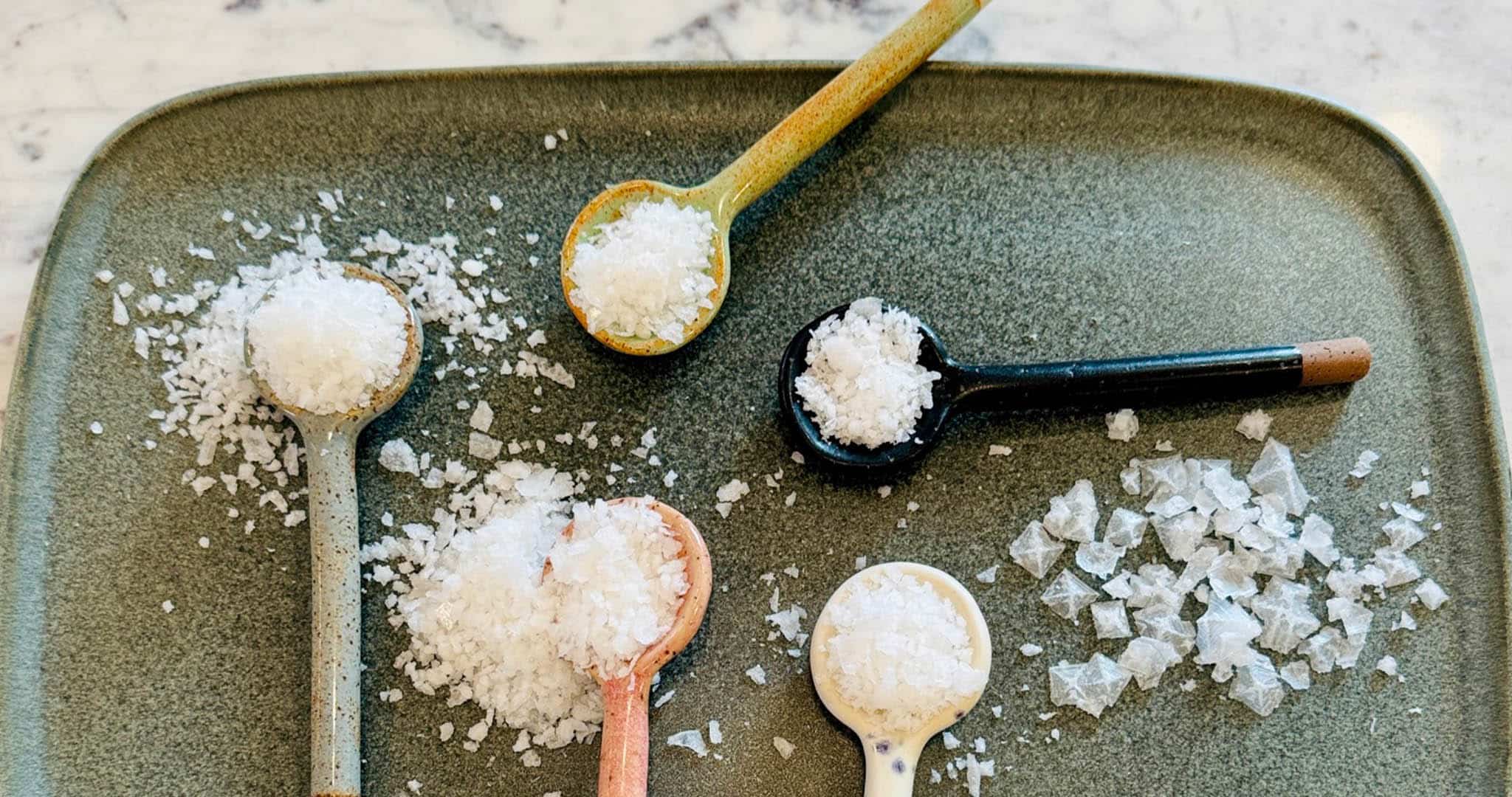
The result? Lange Salt Co., a newly launched biz serving up small-batch salts as pure as they are palatable. Off to a small but mighty start, the brand leveled up from the couple’s home kitchen into a production facility, where Denny—the sole saltmaker—preps every batch.
The process starts at a private spot on the Charleston coast, handpicked for its pristine water and easy access. From there, 700 gallons of seawater are hauled inland to Washington, GA, where Denny works through a five-step filtration process.
After countless seawater hauls, plenty of trial and error, and a breakthrough as briny as it is brilliant, Lange recalls the convo that followed: “‘OK, Denny, you’re not happy with your job, and this makes sense for my life.”
The payoff is already resonating with others on the hunt for additive-free salt. From local farmers-market foodies to big names like Ivy Odom and Bethenny Frankel, Lange Salt Co. is striking a chord.
Lange Salt Co.
“I think most people see sea salt and they automatically think, ‘Oh, you’re just buying the salt and blending it,’” says Denny. “But getting that in-person interaction and feedback of people being interested and excited to try the product… has been really incredible.”
That excitement has turned a kitchen experiment into a growing salt movement—one that’s quickly outpacing its humble beginnings. Lange Salt Co. is already seasoning tables nationwide—and the couple is just getting started. With quality as their North Star and new flavors on the horizon, Lydia and Denny are proving that salt can be clean, craveable—and anything but basic.langesalt.com
With last week’s ribbon-cutting for the Bioenergy Recovery Project, Raleigh joins a small but savvy group of cities turning waste into public transit fuel—and, yes, we mean human waste. The move has been years in the making, sparked back in 2019 when the city greenlit an ambitious goal of cutting community-wide greenhouse gas emissions by 80% by 2050.
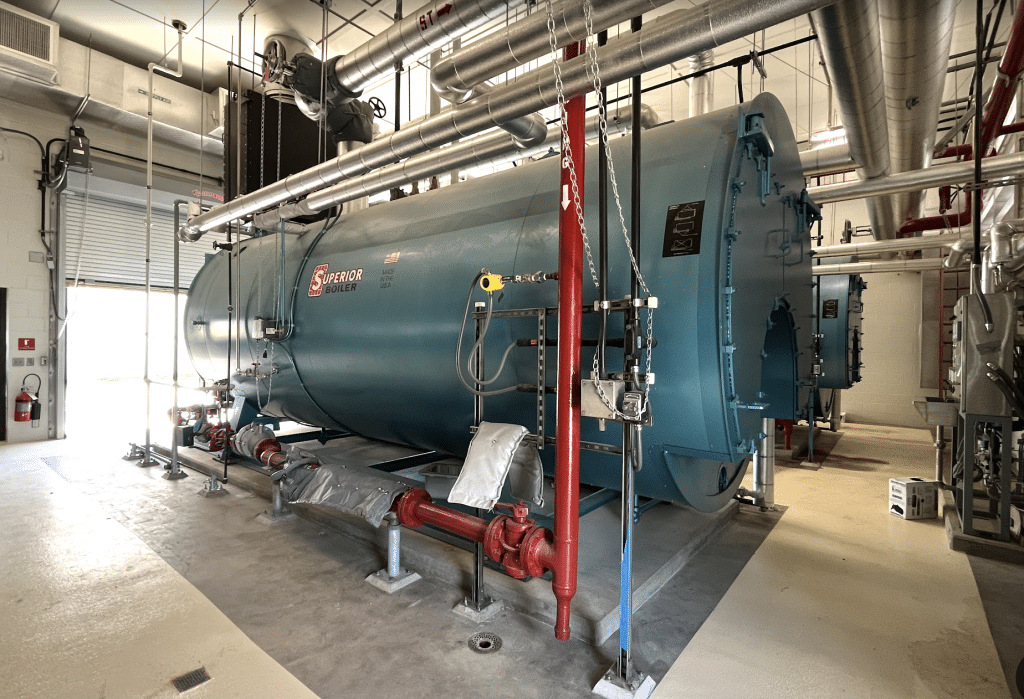
At the same time, the city was also staring down another challenge: The equipment treating biosolids at the Neuse River Resource Recovery Facility—where the Bioenergy Recovery Project now operates—was due for a facelift.
This got the city thinking bigger—and greener. Raleigh Water Assistant Director Erika Bailey recalls in a written statement how her department worked on identifying “not only a solution to effectively manage our biosolids for the long-term, but also one that would provide environmental resiliency, producing a high-quality product to support beneficial reuse of the biosolids.”
They found the solution in an advanced anaerobic digestion process—aka a process speeding along the bacterial breakdown of waste—and the driver behind the Bioenergy Recovery Project. From there, the biogas gets upgraded into renewable natural gas, which now fuels more than 70 GoRaleigh buses.
City of Raleigh Communications Department
Bailey said getting the system running took significant planning. The Neuse River treatment plant couldn’t just stop processing, meaning the city had to get creative with the install.
Not to mention producing renewable natural gas is pretty new to NC. “With this project, we have been charting new territory and working closely with our stakeholders to understand requirements associated with renewable natural gas production,” notes Bailey.
Over a decade later, though, and all their efforts have paid off. Per the city’s numbers, the Bioenergy Recovery Project is not just a step toward their sustainability goal, but a stride estimated to slash citywide greenhouse gas emissions by 11%.
And Raleighites are giving it two green thumbs up. “It… is very tangible in that you see the GoRaleigh buses around town as a regular reminder that we are taking our waste and turning it into a valuable resource that is fueling the GoRaleigh buses,” says Bailey. “It means the community is helping to contribute to fueling the buses with every flush!”
Chabad Young Professionals brings new life—and purpose—to Young Hearts Distilling’s former Downtown digs.
A Downtown legacy wrapped last year when Young Hearts Distilling, Trophy Brewing’s pourworthy concept, closed up shop on S. Wilmington Street. After 15 years and three iterations—including Busy Bee Cafe and Trophy Tap & Table—the brick-clad corner locale had earned its stripes as a Raleigh staple.
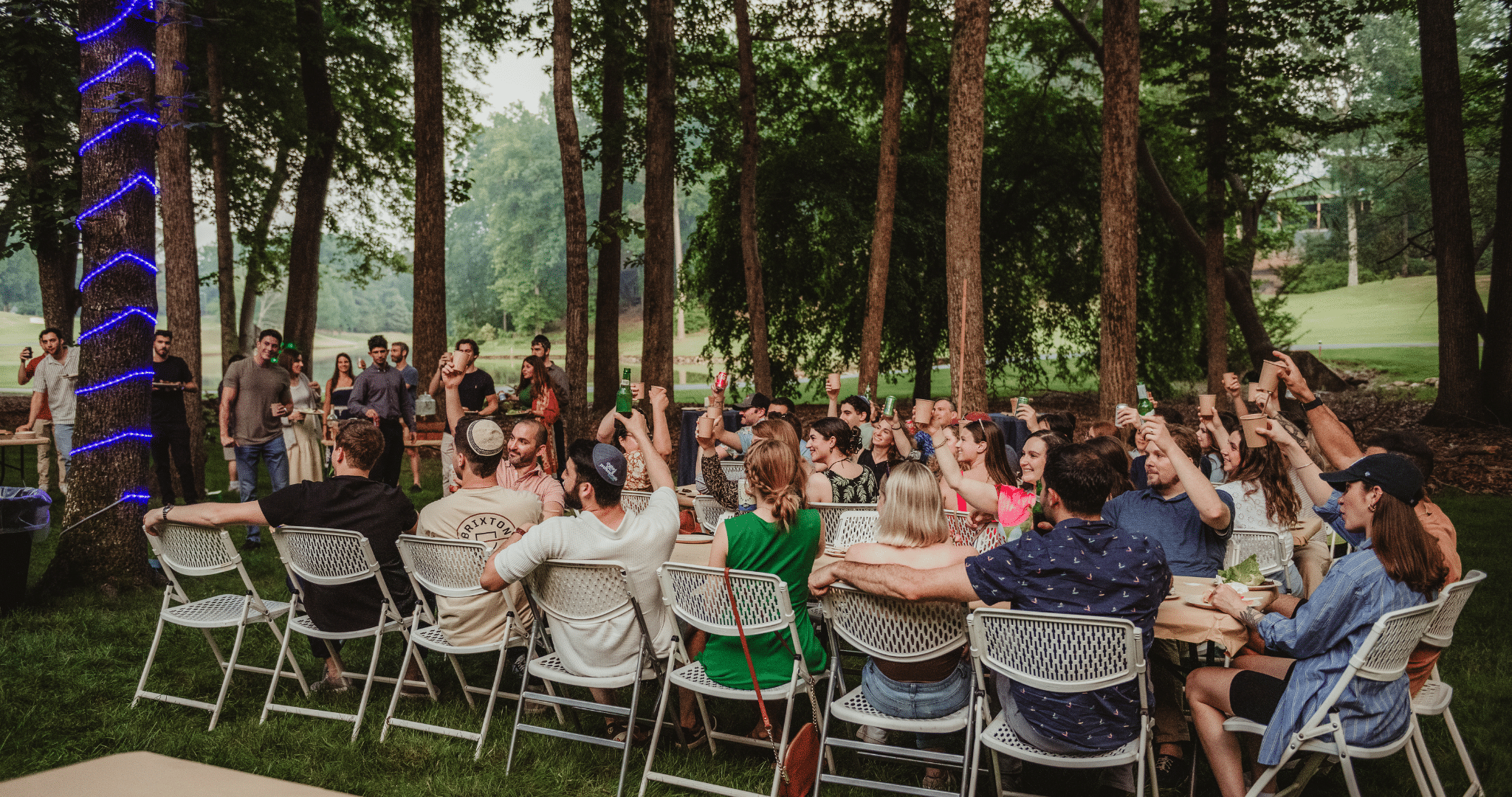
But the prime real estate spot didn’t stay quiet for long. In January, Chabad Young Professionals Raleigh took over the iconic space and transformed it into The Shul Downtown, a beacon of spiritual and social light for Raleigh’s next-gen Jewish community.
The spiritual community isn’t new to Raleigh—Rabbi Zalmy Dubinsky and his wife founded the Chabad group seven years ago. “My sister was living in Raleigh at the time, so we’d come to visit,” reminisces Dubinsky. “I remember coming Downtown for drinks with my wife and looking at the growth in the city, and we just looked at each other and said, ‘There’s got to be a need here to be filled.’”
Dubinsky says other Chabad spaces around the world take their cues from the communities they serve—and in Raleigh, he saw a chance to show up for the urban, early-career crowd.
The org started by hosting Shabbat dinners out of a townhouse Dubinsky rented—but within months, it was standing-room only. They relocated fast, but as their crowd kept growing, Dubinsky dreamed of a permanent place Downtown. When the former Young Hearts space hit the market, it felt kismet.
That is, thanks to a fated connection by Elm Partners’ VP Jeremy Deckelbaum—aka one part of the powerful duo singlehandedly saving Raleigh’s soul one building at a time. As his tireless agent, Deckelbaum connected Dubinsky with Trophy Brewing partner David Meeker, who then, alongside his team, helped make the handoff seamless, even letting CYP Raleigh host a fundraiser to support the space’s transformation.
“At every level of donation, people were so committed to see this happen,” Dubinsky recalls of the event. “That, to me, is the most telling because that’s what a healthy, thriving community is made out of.”
Eight months in, The Shul Downtown is thriving, and finding fresh ways to bring the community together—from Friday night Shabbat dinners to themed social mixers, classes and prayer services to “Work From Shul” days—with new opportunities like community outreach and volunteer work in the cards for the future as well As Dubinsky puts it, “the sky’s the limit” for what’s next for CYP Raleigh.