by Abigail Celoria | Sep 5, 2025 | Do, September 2025
Gear up for a day of activity, connection and remembrance.
Almost 24 years ago, Brooklyn firefighter Stephen Gerard Siller was headed to the golf course following a shift with Squad 1. But when his scanner announced a plane had hit the North Tower, those plans were pushed aside. Upon reaching the Brooklyn Battery Tunnel, Siller found it blocked off, so he strapped on his gear and ran on foot to the World Trade Center—where he gave his life to save others.
Over two decades later, his legacy is carried on by the Tunnel to Towers Foundation, an organization supporting America’s heroes and keeping 9/11 remembrance alive. This year, the org partnered with local event Raleigh Tower Climb uplifting the same mission.
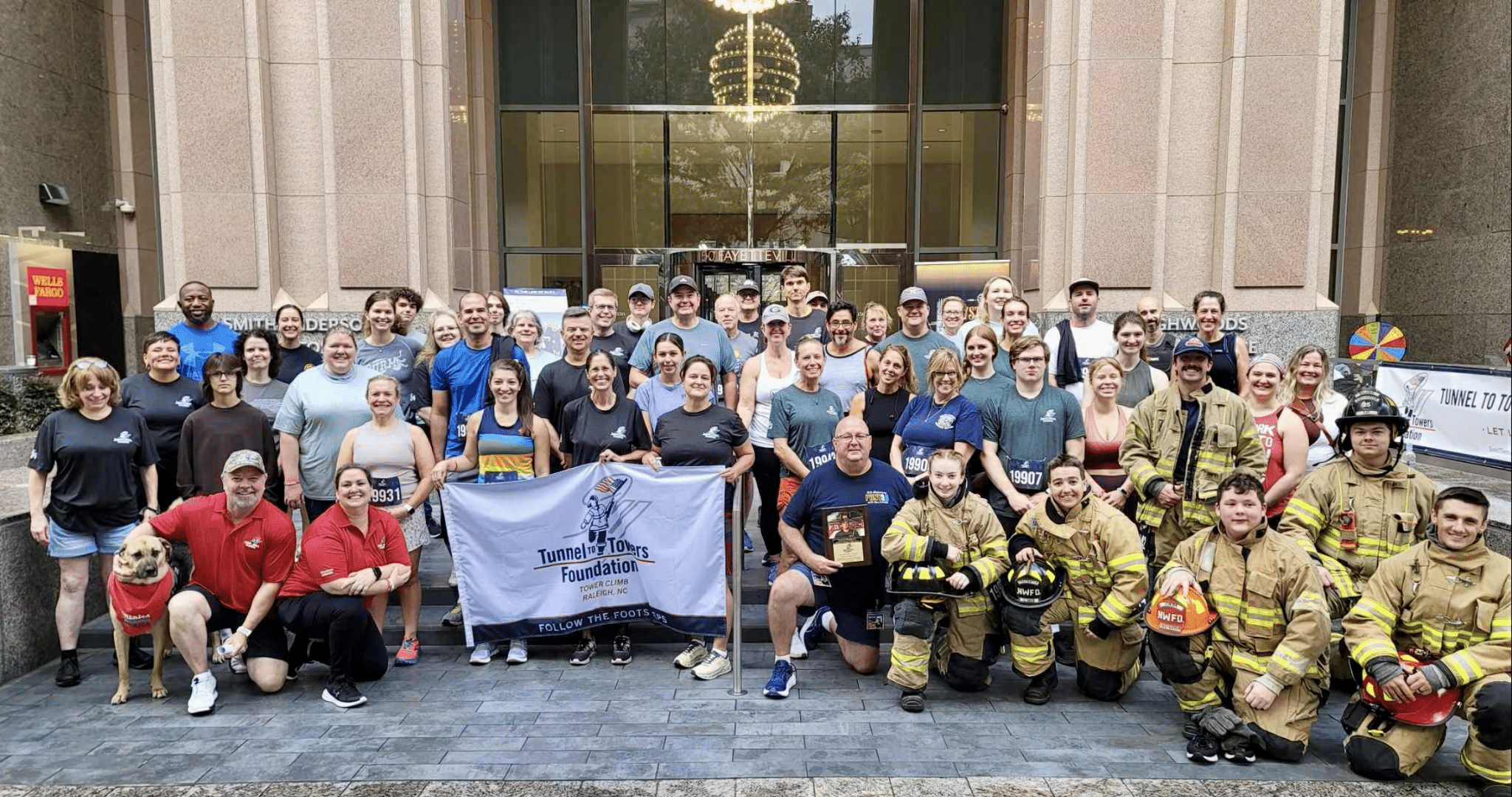
Started by Raleigh fitness coach Ian Butler five years ago, the climb blends movement with remembrance, challenging participants to climb 110 flights of stairs in honor of the 343 firefighters who lost their lives on 9/11.
The Tower Climb wasn’t always this big—in its first few years, the “tower” was a Downtown parking deck and the climbers a small circle of friends, vets and first responders. It leveled up—straight into 150 Fayetteville, one of Raleigh’s tallest buildings—when Butler connected with Tunnel to Towers ahead of its fourth year.
The visibility the partnership created was “wild,” reminisces Butler. Over 50 people attended—plus two fire departments that did the climb post-shift in full gear. And beyond the climb, many used the day to swap stories and pay their respects.
Participating teacher “had her second grade students write 20 thank-you letters to firefighters and police officers to hand out that day,” recalls Butler. “So that was really, like, ‘Wow, this thing could be way bigger than I imagined.’”
Even if climbing isn’t your forte, Butler ushers you to jump in and join anyway. “Don’t get caught up in the fitness or the athletic part of this,” he emphasizes. “The biggest part is the experience, the people, the stories that you’re going to hear, and the energy you’re going to get from it.” Ready to take on the tower? Sept. 13; 150 Fayetteville St.; climbraleigh.t2t.org
by Abigail Celoria | Sep 4, 2025 | Buzz, September 2025
Carnivores, brace yourselves—beef prices are spiking.
If your last grocery run gave you sticker shock, you’re not alone. Egg prices may have cooled down, but now a cookout classic is starting a similar climb in cost.
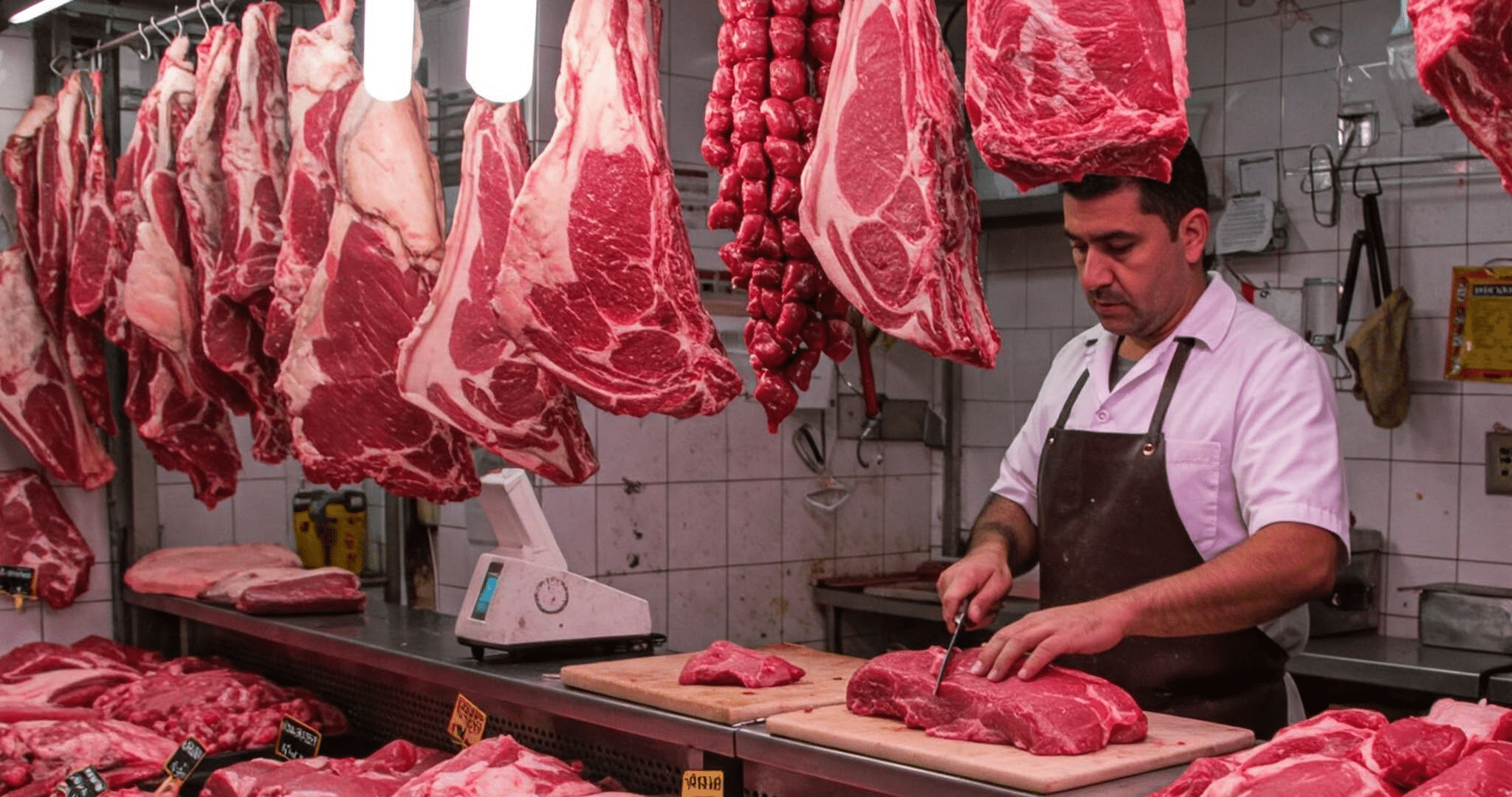
The U.S. Bureau of Labor Statistics is reporting record highs on the price of beef. The MVP of outdoor summer gathering and the upcoming soup season rang in at around $6.50 per pound last month—a 12.2% jump from the same time a year ago. And for the steak lovers? A USDA-choice sirloin costs $13.55 per pound on average. That’s an even bigger increase—15.6%—from last year.
Of course, this month’s numbers are still in the works, but things aren’t looking up (read: Prices aren’t going down). The USDA forecasts beef and veal prices could keep climbing this year and next. But what’s driving the spike?
The supply-and-demand squeeze isn’t new—the cattle market swings in price range normally. But since 2019, the industry has been stuck in shrink mode and herds are now the leanest they’ve been in decades. The USDA estimates currently only 28.7 million beef cattle on U.S. farms—the smallest headcount since the 1960s. Add in drought, pricey feed and fewer cows being bred, and it’s clear a rebound won’t come quick.
Even imports—the backup plan for America’s beefy tendencies—might not be enough to keep Raleigh’s grills sizzling. For one, tariffs could impact how much meat makes its way to local shelves. Per USDA, imported beef from Brazil fell around 100 million pounds month over month starting in May. And while they’ve been our go-to foreign supplier, a steep 76.4% tariff makes it tough for them to keep pace.
To make matters worse, the heifer’s version of avian flu, the New World screwworm, is quickly spreading to a degree of concern. An outbreak in Central America and Mexico has the livestock trade along the southern border on lockdown, with no sure end in sight.
It’s not the prettiest picture for carnivores. It’ll take some time—possibly until 2033—before the market expands again. It may take hunting out deals, phoning a few local butchers or even swapping out that burger for chicken—at least until prices cool off.

by Abigail Celoria | Aug 11, 2025 | Buzz, July/August 2025
Are the promises made actually delivered, or is it all just wellness marketing?
Need better sleep, more energy or a gut check? For many, lifestyle changes are now being swapped for a stop by the vitamin aisle, where the packaging is aesthetic, the tastes are sugary and the promised health benefits are too good to pass up.
From collagen to creatine and adaptogens to probiotics, the supplement scene is booming. With some 100K options on the market—and 55% of Americans buying in—there’s a gummy or pill for just about every ailment. But are they actually worth the hype—or are they essentially just really expensive candy?
Raleigh-based nutrition pros Anne Till and Christine Byrne agree: Supplements are named so for good reason. They’re meant to support a healthy diet, not replace it—which means the supplements you take should depend on your body’s needs and your doctor’s recs.
And not all supplements are created equal. Many go-to vitamins and minerals—think B12 and magnesium—are only helpful when there’s a deficiency to fix.
But even then, the choice isn’t clear. One brand’s supplement might have only 10% of the amount you need, and others could have 10 times the daily recommendation—which can be dangerous. “Some vitamins are fat soluble, which means you’ll actually store that extra in your body’s fat,” explains Byrne. “And sometimes that’s okay, but sometimes too much of that can become toxic.”
Aside from straight-up vitamins, there are also the trendy “blends,” marketed for uses like sleep, focus and immunity (see: Kourtney Kardashian’s Lemme gummies). Till and Byrne approach supplements of that nature with caution.
“When a supplement is making these vague, broad claims and targeting these symptoms that doctors have a hard time targeting because they’re difficult, that’s a huge red flag,” emphasizes Byrne, referring to wellness fixations like gut health, hormone harmony and weight loss.
So, if your body is in the market for a boost, how do you sort the effective supplements from the not-so-effective?
Till advises doing your homework. If you’re curious about a supplement, researching key ingredients can go a long way. Then, figure out how much you need to take, how much is safe (i.e. staying under that toxic upper limit), and whether there’s any science to back up benefits. But stick to the legit resources—Till recommends the National Institutes of Health.
Byrne says it’s also a good idea to look for a third-party testing label (like the National Science Foundation or U.S. Pharmacopeia) on the bottle. “Without testing, there’s no way to really know if what you see is what you get,” the nutrition expert notes.
Lastly, keep it simple. Buying supplements with just one vitamin helps you know what you’re getting every time. The bottom line? Less trend-chasing, more label-reading. Your body—and bank account—will thank you.
by Abigail Celoria | Jul 14, 2025 | Eat, July/August 2025
We chat with local influencer Ryan Keane about his most memorable sips around Raleigh.
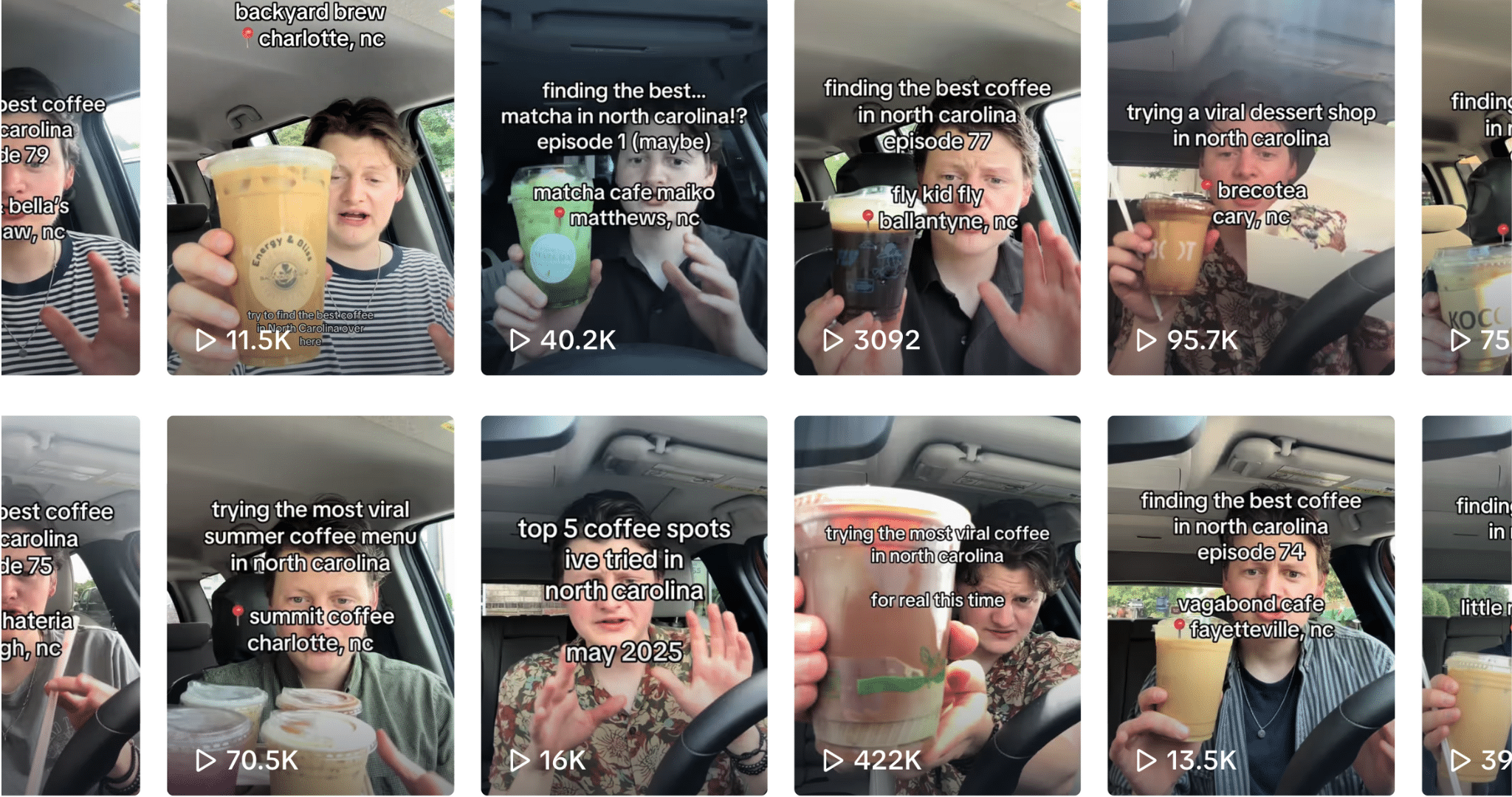
Find another creator more dedicated to discovering the best of North Carolina’s coffee scene—we’ll wait. Ryan Keane moved to the Southern state from NYC only a year ago—but he’s already cemented himself as a go-to guide for the best java around.
Since January, he’s been posting about his local coffee finds—from fan-faves to hidden gems—to a growing social audience, first catapulted by his review of Caffe Driade in Chapel Hill, which launched his 12.7K following on TikTok. Sans influencer mindset, Keane didn’t take making content too seriously—the video “just took off.”
“It got over 200K views, I think at this point,” reminisces Keane. “And all the comments were like ‘go here, go here, go here.’ … A lot of people wanted to see more, so I just ran with it.”
Now, Keane’s reviewed over 80 coffee shops across the state, including several in the Cap City. Here, we chat with Keane about his most memorable coffee moments from throughout Raleigh and beyond.
Your pick for a well-known spot? I would say one that really blew up before I even started making videos would be Paul & Jack. When they opened in Raleigh, I went and tried it, and I love that place so much. Jubala is also very popular, and I really liked them.
Go-to staple latte? The one that always comes to mind when people ask this, just because of how surprisingly good it was, is Boulted Bread. And they’re primarily a bakery, so you don’t really think of them as a coffee place, but their iced vanilla latte is unbelievable.
What about a more unique drink? The Vietnamese iced coffee from Idle Hour has been one of my favorites. And at La Horchateria, they have a horchata latte that you can make with oat milk, and they have a Spanish latte you can make with condensed milk. Those are so good, and they come out perfect every single time.
Perfect coffee pastry pairing? Boulted Bread and Paul & Jack. If you want a coffee and a pastry, go to both of them. The former is more staples, but the latter has way more fun, out there, crazy-delicious pastries.
Which coffee shop takes the crown so far? Joe Van Gogh, Boulted Bread, and Black & White. They all hit the same way for different reasons—just really high-quality coffee, very unique flavors. Those are the drinks that I was sipping on, and by the time I was done with the review I was like, ‘I’m drinking this whole thing right now.’
Any new spots you’re excited to try? Smooth Joe Coffee and MÂY Bakery and Café.
This Q&A has been lightly edited for length and clarity.
by Abigail Celoria | May 7, 2025 | 2025, Buzz, May 2025
As a measles outbreak flares across the nation, Wake County Public Health gives recs to stay healthy this summer.
As fears of a bird flu pandemic are dying down, concern over a newly prevalent illness is on the rise: Measles is taking center stage. While Wake County hasn’t seen any measles cases since 2016 (cue sigh of relief), the rest of the country—including many of our neighboring states—haven’t been so lucky.
Texas’ outbreak lays claim to sparking the first signs of nationwide fears, but it isn’t the only state dealing with more cases of the disease than usual. As of May 1, the CDC is reporting 935* confirmed cases across the U.S.—a huge spike from 2024’s total cases of 285, and the year is yet to be half over.
In good news, out of 50 states, 20*—including North Carolina—are currently measles-free. But with summer travel right around the corner, how can NCers continue to stay safe? The first step is knowing who’s at risk. Kids have a higher threat for measles, and the numbers back this up: 68% of cases in 2025 are affecting kids under age 19.
But, as Wake County’s Public Health Director Rebecca Kaufman warns, “Measles can be dangerous for people of all ages, especially babies, older adults and those with weakened immune systems.” Symptoms usually show a week or two after infection and start with things like a cough, runny nose or high fever. A few days later, you’ll see the tale-tell rash—often paired with a dangerous fever spike.
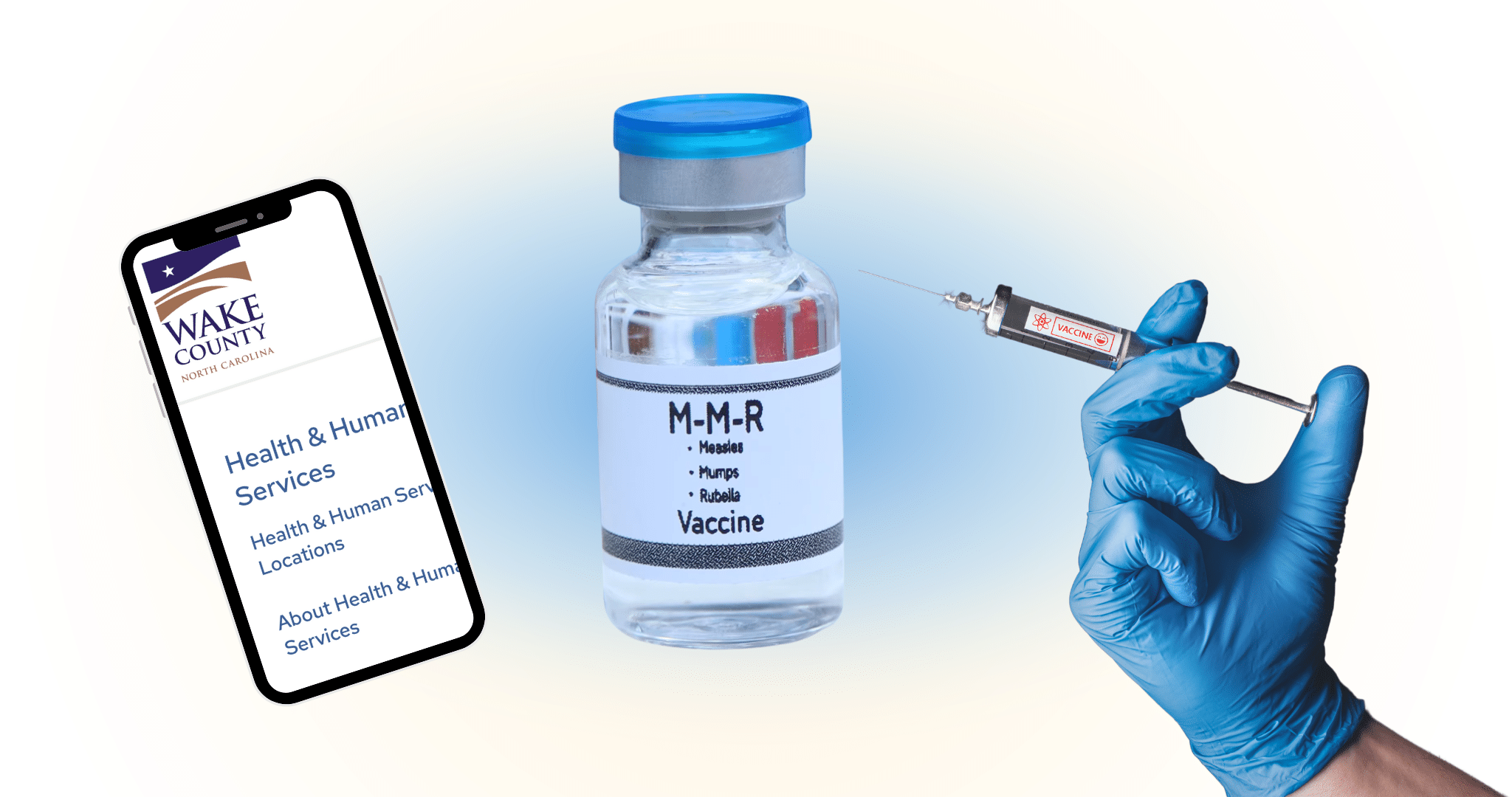
And in not-so-good news, it spreads fast. If someone with measles coughs or sneezes nearby, and you’re not immune, you’ve got a 90% chance of catching it. To reduce your risk, Wake County is recommending people stay on top of their vaccination game. The MMR vaccine is what brought measles under control in the U.S. in the late ’60s—NTM 96% of people contracting measles present day are either unvaccinated or unsure of their vaccination status.
Local health officials say kids should receive both doses—one between the ages of 12–15 months and the other between ages 4–6. Two doses are 97% effective at preventing measles, while one is 93% effective. And for any adult born after 1957 (aka the last year of presumed natural immunity) who never got vaccinated: The time is now.
As for summer vacation, if your crew is vaccinated, you’re in good shape—just remember to keep an eye out for symptoms up to three weeks after returning to help keep yourself and Wake County measles-free.
*As of press time



