
by Christa Gala | Oct 31, 2016 | October 2016, Polish, Stuff
 Four years ago, Jenny Ross woke up in the middle of the night with a business idea that just happened to fill a niche in the fashion industry. She applied for a patent, and Grateful Bags was born. Since then, Shark Tank has called the Apex-based company twice, and fashionistas like Stacy London, co-host of What Not to Wear, and actress Alexa Pena Vega are giving her shout-outs and social media cred. But there’s a steep learning curve in the fashion industry, as Ross tells Raleigh Magazine.
How did you start Grateful Bags?
I had an embroidery business and was always stitching monograms; I was also making and selling wreaths with metal initials on them. That Christmas, my nieces got designer purses with the big round logo on the outside [Tory Burch]. In January of 2012, I woke up my husband in the middle of the night and said, “Why can’t the purse logo be your monogram, or your brand?” So after much research, and a lot of trial and error, I patented the concept of these acrylic monograms attached to handbags and accessories. Because of how they snap on, they’re interchangeable. So you can get one monogram for several accessories or several monograms to change up the look of a single purse.
How do you come up with design ideas?
Customers play a role in what ends up on the factory’s production lines. I also have a mentor in NYC who helped advise Grateful for the past year or so. Our Izzy bag was designed to meet NFL stadium bag size restrictions put in place after the Boston Marathon bombing. They only allow clear bags or bags with the maximum size dimensions of 6.5” x 4.5”. Just this fall, several NCAA stadiums started implementing this same rule. The bag monogram color to match school or team colors has been a huge hit.
You’re launching bags in both plaid and velvet; what’s next?
We actually have brand new monogram patterns in leopard, tiger and plaid with new pattern ideas in the works. Velvet is on trend this fall and winter but is also a classic fabric I’ve wanted to use for a long time. This spring, I’ve designed a beach bag using a straw material that we’ve never done before. It’s a great-sized tote with a lot of pockets.
How have you promoted your bags?
We use social media, fabulous bloggers, and we have awesome retailers that carry Grateful. We’ve had some fun social media shout-outs by Lauren Scruggs Kennedy, Courtney Kerr, Stacy London and Rebecca Robertson. Word of mouth and people simply seeing the product on the street has been our best advertisement.
What advice would you give to other would-be entrepreneurs?
One of my favorite quotes is ‘You only get out of things what you put into them.’ This applies to just about everything in life. I have clearly seen where effort equals results, and the opposite is true as well. Which doesn’t mean work is constant, but it does mean when it’s meaningful and focused, the outcome is usually fulfilling.
Where did the name come from?
Even in dark moments and down days, we all have so much to be thankful for. It’s about appreciating the little things and being present in the moment. The verse Luke 12:48 has a lot of meaning for me, and for Grateful: “For those to whom much is given, much will be required.” Giving back is our ongoing responsibility and commitment. Grateful has the honor to be touched by and connected to the ZOE Ministry (zoehelps.com), a three-year program developed in Africa that empowers orphans and vulnerable children globally to overcome extreme poverty, become fully self-reliant and learn about God’s love for them. Active in seven countries, ZOE has approximately 28,000 children currently enrolled. This summer, we went to Rwanda to meet the children we help support.
Grateful Bags (from $64-$138) are available online at gratefulbags.com

by Christa Gala | Sep 6, 2016 | Buzz, September 2016
The debate around concussions in sports and the responsibility towards athletes has been raging for more than two decades. In 1994, it was Troy Aikman’s concussion that shocked super agent Leigh Steinberg (the inspiration for Jerry Maguire) into action, and since then sports leagues across America have issued suggestions and regulations to diminish trauma to the head. But regulations only can help those who want to be helped.
“I watched [athletes] completely fight with doctors at every time to get into the game,” Steinberg told PBS. “I watched players deceive coaches on the sidelines when they were injured and run back into a game.”
This scenario isn’t prevalent just in professional sports. Athletes—from youth leagues through college—often ignore symptoms to get back in the game.
“One of the hardest parts about diagnosing a concussion and actually returning someone to play is that the majority of the information that you get is subjective, and it really relies on the student athlete, ” says Robert Murphy, Director of Sports Medicine at N.C. State University.
At the professional level, it can mean a loss of income or long-term career standing. A study conducted by the NFL found underreporting of head injuries is one of the league’s greatest barriers to protecting athletes. At the high school and college level, says Murphy, players are often vying for scholarships or the prestige of playing in a “big” game.
If an athlete is diagnosed with a concussion or even suspected of having one, he or she is immediately suspended from participating in games or contact practice. In order to be cleared without restriction, the concussion must be deemed resolved entirely.
“Athletes understand this reality, and they also understand that concussions are often not readily visible like many injuries in sports medicine,” says Dr. Josh Bloom, the head medical physician for the Carolina Hurricanes and a physician at Carolina Family Practice & Sports Medicine, which founded the Carolina Sports Concussion Clinic in 2008. “There are times and situations when athletes are not entirely honest about their symptoms.”
Symptoms can take up to 48 hours to develop and, depending on the injury, recovery can take days, weeks or even longer. Bloom says educating the player and the parents is important. As the team physician for Cary High School and Apex Friendship High School, Bloom says trainers and coaches are getting better at observation and noticing what’s “normal” for each individual player.
NC State is doing the same thing. Trained professionals spend time with athletes on a regular basis—in the weight rooms, on the court and on the field—and get to know individual students, making it easier to spot when something’s not quite right.
NC State’s Athletic Director Debbie Yow made it possible, says Murphy. “My budget has pretty much doubled since the time I’ve been here—four years,” he says. “We’ve doubled our staff as far as full-time athletic trainers. We’ve added a mental health provider and a sports psychologist.”
But at the secondary education level, funding for additional positions isn’t always available. Deran Coe, Senior Administrator for Athletics with the Wake County Public School System, says coaches and trainers are simply extra vigilant and consider any head injury a potential concussion until cleared by a medical provider.
“We understand the severity of a head injury that could be a concussion, and we’re more cautious every year,” he says.
In fact, in 2013, Wake County was one of the first school systems in the nation to implement a head injury training program for football coaches after a pilot program in Fairfax County, VA showed good results.
“All of our coaches go through the USA Football Heads Up training which teaches best practices for tackling and blocking and trying to take the head out of the game to keep our kids as safe as possible,” says Coe, adding all 53 middle and high school coaches attend training every year.
“We are absolutely doing a better job treating concussion,” says Bloom, remembering when he played football at Dartmouth and not much was known about head injury in contact sports. “Looking back on it, I realize that many of my teammates and I played with concussions and often that was because we simply didn’t really know that we were concussed.”
Today, the acknowledgment of the issue, and how to diagnose and treat it, has made huge strides in the sports community.
“It takes a village,” Bloom says. “We’re very fortunate in Wake County to have excellent athletic trainers at all public high schools. The sideline examinations we now use are relatively sophisticated and are helpful in detecting abnormalities common in concussions—even when the athlete denies symptoms.” ν

by Christa Gala | Jul 18, 2016 | Eat, July 2016 / August 2016
There are more than 60 food trucks in Raleigh spinning their wheels daily each with their own signature food style—from Creole cooking to cupcakes, barbeque to beignets. And each truck’s identity is literally driven by the person inside. Who are they and what’s their story? We find out.
STUFT
Stephanie Ruggiro, 27, had always dreamed of working in the advertising industry in New York City. After graduating from UNC-Wilmington, she landed a job—and hated it.
“I soon realized that a 9-to-5 desk job was not for me,” says Ruggiro. “After almost a year, I got laid-off, and it was the best thing that could have happened.”
After moving back to North Carolina, she began researching the food truck industry and came across an idea that would take her back to her roots. Ruggiro’s parents had owned a baked potato business up north when they first married, selling food at a local flea market.
“My parents both helped me get the truck started. A lot of the recipes we use on the truck came from my mom,” says Ruggiro, who started her potato truck in 2014. “She keeps me sane on this crazy truck; my twin brother also helps.”
But there’s a silver lining to her brief stint in advertising. Ruggiro realizes the importance of good photos and promotion through social media to ensure the success of her business.

Arepa Culture
“When we first started, we thought we were going to do this part-time,” says co-owner Hannia Jara, a former teacher, who came to the U.S. in 2001 through a cultural exchange program. Her husband, Pedro Rodriguez, a marketing specialist, came in 1983 to attend college.
“We both ended up jumping into this adventure full time as we encountered amazing feedback,” says Jara. “We are bringing our Venezuelan and Costa Rican culture to our food and trying to make a difference by offering mostly organic, vegetarian, vegan and gluten-free menu.”
Arepa specializes in traditional handmade South American cornmeal patties that hold everything from chicken salad to “La Surena,” BBQ and pico de gallo. The cuisine is catching on, though Jara says people were a little hesitant to try the food at first.
The couple have three kids, a blended family, and the youngest son, Marcel, 19, and his girlfriend often help with the business. “Although they are full time students, they have become pretty much our right hand,” adds Jara.
 Baton Rouge Cuisine
For nine years Anthony Greenup, 36, played basketball with the Harlem Globetrotters. Now, instead of touring with the team, he tours Raleigh in his Cajun-inspired food truck.
“With the team, I was away from home about ten months out of the year,” says Greenup. “I love doing what I do on the food truck. I meet nice people, and I can make my own hours.”
Greenup moved to Raleigh from Baton Rouge to attend Shaw University. After graduation, he played for the Charlotte Bobcats before signing with the Globetrotters.
“After college, I just stayed here; I wasn’t thinking about going home,” he says.
But he’s brought a bit of home to Raleigh. He serves family recipes like Shrimp Creole and Jambalaya through his mobile eatery. The player formerly known as “Airport” because of the way he jumped, now juggles the truck and his family, wife LesLee and two kids, ages 5 and 1.
Mr. A’s Beignets
For 30 years, Arlton Cangelosi delivered the mail. When it was time to retire, he thought about doing something he’d been good at as a teenager—making beignets, a New Orleans fried dough specialty. Cangelosi launched Mr. A’s Beignets in December 2015 just a month after he retired.
“I could have done other things, but I thought that not too many people have made beignets successfully and I could,” he says.
Family and friends help him run the truck four days a week. And it was his daughter who advised him on the truck’s design with the bright yellow chef hats.
“She said, ‘Make your food truck fun!’ She also told me to do black shirts and to embrace the powdered sugar that gets everywhere,” he says.
Not everyone knows what a beignet is, and that’s part of the fun.
“Watching someone eat their first beignet is the highlight of my day,” says Cangelosi, who admits to eating three a day. “It makes what I do worth it.”

by Christa Gala | May 31, 2016 | Buzz, June 2016
As a platoon leader in Iraq, Jim Freeze used to meet with tribal elders in an effort to quell violence against his men. What he learned, often over sharing a meal, surprised him.
“They said, ‘Help us get jobs, and we can take care of the security,’” says Freeze. “It dawned on me that the local economy was why people were engaging in violence. They were desperate and being offered money to shoot at us.”
Freeze helped the village
re-establish businesses — restaurants, convenience stores and farms — and stability increased dramatically. Now back home, Freeze is partnering with a former restaurant owner Vicky Ismail to launch Carroll’s Kitchen, which will employ the same principle to help homeless women, offering them jobs, housing, counseling and other resources
It’s a restaurant with a social mission, patterned after similar non-profits in other cities, including The King’s Kitchen in Charlotte and Homeboy Industries in Los Angeles. A magazine article about King’s in Charlotte inspired Ismail.
“When my church put out a challenge to pitch ways to love Raleigh, I pitched my idea to run a non-profit restaurant with living quarters close by for homeless folks. The business part would eventually generate dollars to sustain itself,” she says. “They loved the idea, and Jim asked if I knew about a location next door that could work. He walked me through the space that day, and the dream began to take shape.”
Carroll’s Kitchen officially launched at the end of April with plans to open this summer in the old Square Rabbit space downtown. The grab-n-go location will offer fresh soups, salads and sandwiches. The lack of seating doesn’t bother Freeze.
“Startup costs are lower, the ongoing costs are lower, and it allows us to do a higher volume to get our name out there, ” says Freeze, who is working on the venture full-time as executive director. “If we can’t get the restaurant thing right, we can’t do the rest of it. What I love about Vicky’s background is that not only has she had four successful restaurants, she hasn’t had a failed restaurant.”
Ismail, board president of Carroll’s Kitchen, owned and operated The Cary Café for 18 years. Now she’s CEO of Highgrove Estate, a wedding venue in Fuquay-Varina that hosts about 90 weddings a year.
“I envision fresh, locally sourced produce, dairy, meats and condiments to create well-made accessible food,” she says. “We want to react to seasonal items; we have so many great sources to choose from and keep things exciting and comforting for our customers. We have a couple of surprises as well.”
Carroll’s will employ a general manager and head chef, as well as trainers to work with the women on life skills. The women will be referred by partnering agencies. Payment will be in the form of a stipend equal to between $10 and $15 an hour and will compensate the women for both work and building life skills.
“One week employees may spend 25 hours in the restaurant and 15 hours going through classes,” says Freeze. “There might be other times they’re 40 hours in the restaurant and doing a one-hour bible study. It’s not just handing somebody a dollar on the street or buying them a sandwich. We’re part of a job training curriculum.”
For more information, visit carrollskitchen.org.

by Christa Gala | May 31, 2016 | Buzz, June 2016
Every day, Wake County adds 63 people to its population count. Who are they? We find out.
Not only are we one of the best places to live in the nation, but more than five dozen people move to Wake County every day, including live births, according to U.S. Census Bureau population estimates.
The Carolina Population Center at UNC-Chapel Hill reports two-thirds of that number—42 of 63—is due to something called “net migration,” more people moving in than moving out.
People move here to study; consider expats and traditional students. And they also move here to work, whether to start a business, relocate with a company or simply to find a new career. Finally, people are expanding their families, citing the low cost of living, good schools, mild climate and Southern hospitality.
“For the past 200 years, Raleigh has approximately doubled every 20 years, and we have a kindergarten class being born here every day,” says Raleigh City Councilman Bonner Gaylord.
Of course there are challenges to consider, says Gaylord. Strains on resources, including schools, hospitals and roads, but the confidence behind the surge is palpable.
Here, meet six new Raleighites that show us what this statistic really looks like.

Amanda Gerber
The “Relo”
Amanda Gerber
When pharma giant Merz USA relocated to Raleigh from Greensboro, Amanda Gerber, 27, Senior Manager of Channel Marketing, moved with the company.
“I loved Greensboro, but there’s just so much more opportunity here,” says Gerber, whose husband needed a little convincing. “The main thing about Raleigh in general is that you’re close to the beach, and you’re close to the mountains.”
Gerber thought there was more opportunity in Raleigh and she was pleasantly surprised by the diverse demographics.
“I didn’t realize how much of a mix of people I’d find,” she says. “Everybody here is a transplant for the most part. It’s really nice to meet new people, and the types of things that are going on here—from an activities and a restaurant standpoint—are just phenomenal.”
Gerber moved to Raleigh in mid-October, but she’s planted roots quickly, playing soccer on Mondays, joining the Junior League, and going out with friends to explore city life. She and her husband Joel, a consultant who works from home, love sampling Raleigh restaurants. Their favorites: Bida Manda and Driftwood Kitchen.

Josh Trevino
The Entrepreneur
Josh Trevino
Two years ago, Josh Trevino, 40, and his wife visited Raleigh to give it a test run. At the time, Trevino, a pastor in Texas, was thinking of getting into the coffee business with his brother. Could the Raleigh economy support it?
“It just felt fertile,” says Trevino. “Where I came from, not so much; I came from a border town, and it was a little crazy. It just feels like there’s opportunity all over the place—from the new people you meet to things you can do. There’s a lot of hope.”
Trevino now owns Torch Coffee on Lumley Road near the Angus Barn and lives here with his wife and three kids. And that first weekend he visited, he got a dinner invitation from a man he met while attending a service at Vintage Church in Raleigh.
That man was Jim Freeze, now at the helm of Carroll’s Kitchen, opening soon in downtown; it’s a non-profit restaurant that will employ homeless women and work with other agencies to find them homes and resources. Trevino may help Freeze train baristas for the restaurant.
That’s the hope and opportunity Trevino is talking about.

Sung Wook & Jinny Park
The Expats
Sung Wook & Jinny Park
Every day is an adventure for Jinny Park, 44. Once her kids go to school and her husband, Sung, 45, goes to his position as a visiting scholar at NC State, she explores the city.
“I like walking and looking at all the houses and the trees around them,” Jinny says. “It’s quite different from what I see in South Korea. The people are usually very kind. When I ask something, they are eager to teach me. Sometimes I don’t understand even though I know the language; I don’t know the culture.”
Sung, who’s studying both computer and electrical engineering at the university, says his family loves Raleigh.
“We are somewhat different because we are trying to experience American life,” says Sung.
Jinny adds: “We want to understand how the people live and what the Americans like. We try to do many activities, as many as we can.”

Onte T. L. Johnson
The Job Seeker
Onte T. L. Johnson
Onte Johnson, 32, left his job in Connecticut at the National Sierra Club to work for a small environmental organization here.
It didn’t work out, but he’s not moving back.
“I was employed here in North Carolina for 10 months,” says Johnson. “Due to unforeseen budget constraints, (my) department was suddenly eliminated.”
But with a master’s degree in public policy and several years of experience, he’s job-hunting and wants to stay for the quality of life Raleigh provides.
“My son was born here,” says Johnson, married with two kids, ages 4 years and 6 months. “The cost of living is a lot lower than what I’m accustomed to. You really get the best bang for your buck here. I’ve doubled my living size for the same price I was paying back up north.”
Johnson’s been job-hunting now for two months and his expertise in a limited and highly competitive field has slowed down the process, but he’s not discouraged.
“I’ve decided to start driving with Uber until something comes along,” he says. “It’s made me have a deep appreciation of the city—always learning something new. Raleigh is my new home, and I love it.”

Carlee Schumacher
The Student
Carlee Schuhmacher
Basketball player Carlee Schuhmacher, 22, originally from Wisconsin, had never heard of NC State until she was offered a full scholarship to play for the women’s basketball team.
The 6-foot-1-inch starter who played forward and center for the lady Wolfpack came to Raleigh by way of an Iowa junior college in 2014. She’ll graduate in December 2016 with a major in social work after she finishes an internship at the Red Cross in Raleigh.
“I just got an agent last week,” says Schuhmacher, who hopes to play ball overseas in January. Being part of a team really helped her acclimate to Raleigh.
“It’s really cool to move to an area and actually have friends right away,” she says. “You’re living with them, going to class with them; you’re automatically family. “
Raleigh’s given Schuhmacher a degree and a team. But it messed up one thing: her Wisconsin accent.
“My ‘o’s’ were so strong when I got here, and now my accent has combined with a Southern accent,” she says.
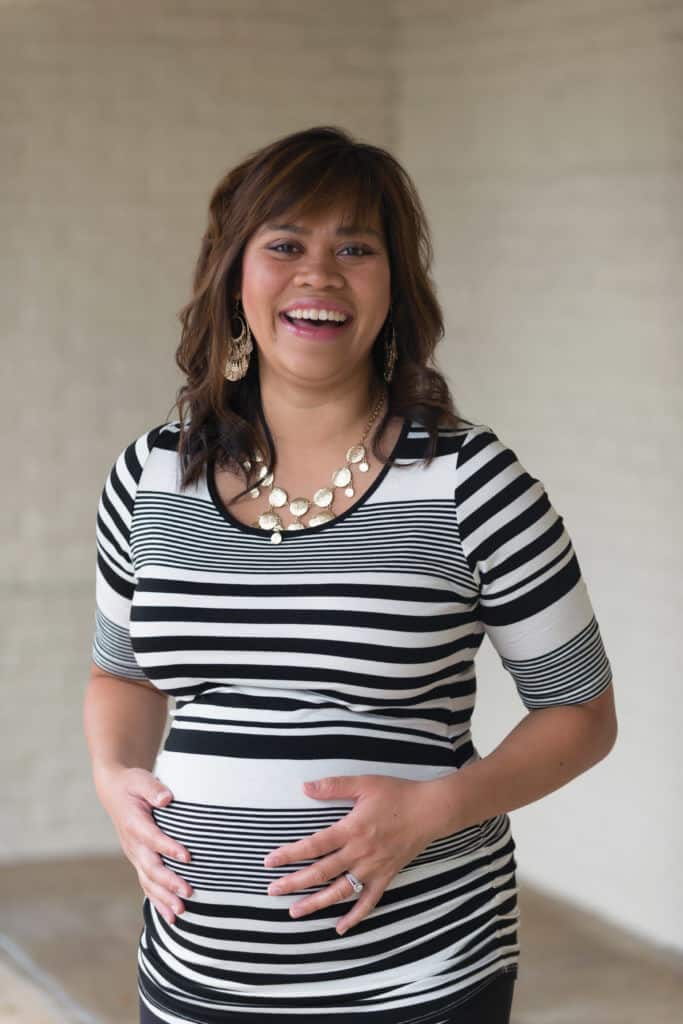
Laura Bonifacio Edmiston
The Growing Family
Laura Bonifacio Edmiston
Laura Bonifacio Edmiston, 34, is set to deliver her third child in July. But she still works three 12-hour shifts a week as a nursing supervisor at Rex Hospital. Edmiston is the first of her Filipino family to be born in the states.
“My dad’s job moved us to Raleigh in 1989; I’ve been here ever since,” she says.
Edmiston met her husband Bill, 50, a critical care nurse, working night shifts. Now they juggle two busy work schedules at Rex in an effort to have someone at home with their two active boys (ages 3 and 4). A move to Cary precipitated baby number three.
“This is the best area,” says Edmiston, who now lives in Cary’s Woods of Kildaire subdivision. “Even though you live in one town, you have access to everything with the same drive. We take advantage of Pullen Park, and we use the extensive park systems. We’re a moving family for sure.”



