Doing it all  (if you want to)

Doing it all (if you want to)

Editor’s note: Linda Formichelli was tired of the media telling women they couldn’t do it all. She decided she could and would—and wrote a book about it. “How to Do It All: The Revolutionary Plan to Create a Full, Meaningful Life — While Only Occasionally Wanting to Poke Your Eyes Out with a Sharpie (Renegade Writer Press)” publishes April 18. She gives RM readers a few tips if you want to do it all, too.

On New Year’s Eve 2015, I was journaling about the year and decided to make a list of everything I had done, seen and accomplished in the previous 12 months.

When I looked at the list, I couldn’t believe how much I had done—from traveling to five foreign countries with my family, to running two businesses and hosting three exchange students. There were over 40 items. And even weirder, we’re an average middle-class family…my husband and I both work, we have a young child, and we’re not rich.

Once I saw the list written out, I had the brainstorm to write a book detailing the process.

I especially wanted to address the cultural narrative that women are trying to do it all and burning themselves out in the process, and that they need to just relax and stop trying to be superwoman. The women’s media, especially, are always saying, “You poor woman, you’re so busy! Stop trying to do it all!”

My thought was, “I like doing it all!” And yes, at times I’m stressed out, but is that really such a bad thing? Is it better to lead a full, meaningful, creative life where you grow every year and you experience some stress or to lead a stress-free life but don’t do much of anything else? When you’re on your deathbed, which would you rather look back on? Which would make you feel prouder and more satisfied?

Create a Do-it-All plan

The book includes the most common “Do’s and Wants,” including traveling, writing, starting a business, volunteering and crossing a finish line. Here’s how to get started:

What did you do last year?

Make a list. You’ll be surprised at how much you accomplished, and it will give you the courage and desire to do more.

What do you really want to do this year?

Nix the shoulds. What would make your life rich, meaningful and happy? Think about it, and write it down.

Find your excuses.

Are you too tired? Don’t have enough money? Where is your time and money going? What can you divert? Maybe it’s the money from a Starbucks coffee every morning or the added cost of an upgraded cable package. Doing without frees up resources so you can do what you want.


On the “Do’s & Wants” list for 2016

“I’ve wanted to go to Alaska since I was 20 years old. I’ve been planning my trip for several months now, part of a milestone birthday celebration. We’re going fishing and flightseeing in Talkeetna. I can’t imagine anything better than landing on a glacier in Denali. And we’re spending time in Seward–cruising through the fjiords, kayaking and riding fat tire bikes. Traveling is a passion I try to find time for because getting away and having a different cultural experience is good for the body and the soul.”

— Mary-Ann Baldwin, Raleigh City Council Member

“I’ve always wanted to run a full marathon and decided the time was never right. I have run about two dozen half marathons since becoming a mother, but I always felt like the time to train for a marathon was never realistic in the midst of my chaotic schedule. So, this year is the year. I have a milestone birthday, and I plan to run my first full marathon in November!”

— Amanda Lamb, WRAL TV reporter, author
Boosting low “T”

Boosting low “T”

Low testosterone used to be a somewhat hush-hush conversation, but today one in four men over 30 experience low levels.

Although commonly linked with low sex drive or erectile dysfunction, low “T” levels are also associated with lethargy, muscle wasting, depression, trouble sleeping and even heart issues if levels go unchecked.

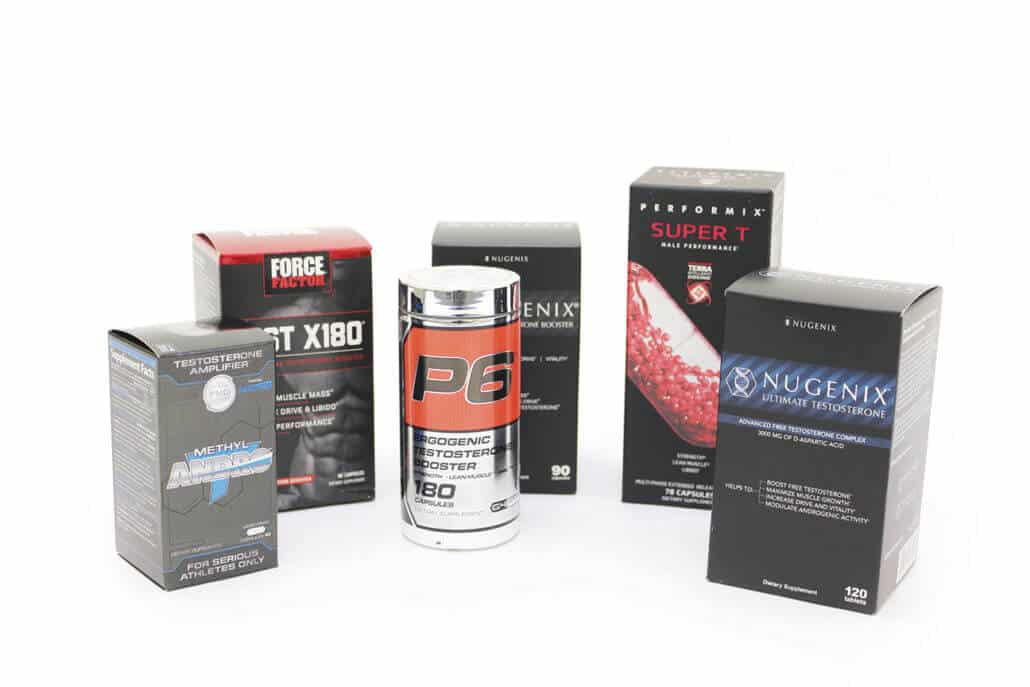
GNC North Hills is getting great feedback on its testosterone supplements, which boost levels naturally by encouraging the body to ramp up production.

“There are several different supplements that can help increase free testosterone levels,” says owner Laura Dalton. “Some of them work with your brain telling it to produce more, and some work directly with the testes. Look for names like Tribulus, Ashwaganda, d-aspartic acid, longjack, fenugreek and ZMA. Our most popular name-brand products are P6, Super T, Methyl Andro, TestX 180 and Nugenix/Nugenix Ultimate.”

Supplements are a good alternative to patches and injections, which are costly and can prevent even amateur athletes from competing because some sports, including cycling, test for it.

Testosterone is considered low if levels are below 300ng/dl, but testing isn’t necessary to see if supplements might improve how you feel.

“If customer’s test levels are low, they’ll feel the effects of the booster more than someone whose levels are normal,” says Dalton. “The supplements simply help your body increase its own levels of free testosterone so your body may utilize it; it is not actual testosterone taken from an outside source.”

Consumer anecdotes on the “pro” side include increased lean muscle mass, muscle stamina, better mood and increased libido. For the “cons,” some have experienced a slight increase in aggression, which can typically be handled by changing the dose.

Dalton suggests men prone to prostatitis (inflammation of the prostate) take milder blends like Nugenix or include a prostate health supplement like saw palmetto; many testosterone boosters have prostate health included.

Stop by GNC North Hills if you have questions or call 919-787-0462.

The Bourbon Revival

The Bourbon Revival

Bourbon is having a revival.

If Hali Haught hadn’t moved to Raleigh, the bourbon bar at the Oak, kitchen & bourbon bar on Lake Boone wouldn’t exist.

“We knew we wanted the Oak to have a great cocktail bar, but Hali convinced me and my partner and brother Justin that bourbon wasn’t just trendy,” says JMR Kitchens owner Ryan Riek.

Today, Haught is the general manager, and time is proving her right. Bourbon and Tennessee whiskeys have outsold all liquors, even vodka, for the last two years, making it a $3 billion business. In an age of wanting the newest, most improved version of everything, why is our go-to drink over 225 years old?

Haught believes bourbon drinkers like the taste and flavor of bourbon but says it’s more than that.

“It’s all about the story, and every bourbon has a story with real history.”

The birth of bourbon is a deliciously ironic tale of an inventor who was a Baptist minister by day and distiller by night—Elijah Craig. He is credited with inventing bourbon in 1789, but what he really invented was the process of aging corn whiskey in charred oak barrels. The result was a somewhat sweeter and smokier tasting alcohol.

Bourbon is nowhere near as complex as wine, or even scotch, but there are a few things you should know.

All bourbon is whiskey, but not all whiskey is bourbon. By law, for a whiskey to be bourbon it must be made from at least 51 percent corn and aged in new charred oak barrels. It must be made in the U.S. and bottled at 80 proof (40 percent alcohol by volume) or higher. It can be made anywhere, but 95 percent of the world’s bourbon is made in Kentucky.

Ordering bourbon can be intimidating for a newcomer. Eric Gregory, president of the Kentucky Distillers’ Association shared this advice.

“Ask the bartender to suggest a small-batch, low-proof bourbon… such as Basil Hayden or Four Roses,” says Gregory. He suggests working your way up to a single-barrel bourbon that’s a bit higher in proof such as Knob Creek and Blanton’s. “Then you’ll be ready to try a barrel-strength bourbon with 120 to 130 or more proof like Booker’s by Jim Beam or Stagg Jr.”

When ordering, be careful not to throw around cocktail terms like “neat” unless you know what they mean. You could end up with a drink you don’t want. For a bourbon without ice or mixer, order it “neat;” for water and ice, order it “on the rocks.”

Experiencing Bourbon

The Oak’s bourbon experience goes beyond its selection of 60 to 70 bottles.

• Adopt-a-Barrel Program. Offers bourbon drinkers the chance to re-age
bourbon in a 2-liter barrel in the restaurant for a fee. It’s so successful, there’s a long waiting list; it seems no one wants to give up their barrel.

• Bourbon Dinners. Intimate, four-course meal paired with unique bourbons.

• Bourbon & Bites. Tastings on select Saturday afternoons include a house-aged bourbon Old Fashioned, a tasting of select bourbons and chef-paired bites.

The Jargon:

Single Barrel Bourbon Whiskey: Bottled from one barrel only. They are entirely unique, meaning each barrel has its own temperature and character.

Small Batch Bourbon Whiskey: Bourbons made from a few select barrels married together for consistency.

Straight Bourbon Whiskey: Whiskey aged for at least 2 years in brand-new charred barrel – that means barrels can be used only once for bourbon. After that they’re shipped to Mexico for aging tequila or to Scotland for aging Scotch.

In the 50 Best Bars issue, RM readers Voted on the 5 Best Whiskey/Lounge Bars

Visit raleighmag.com/best-bars for the complete list.

Renting the American Dream

Renting the American Dream

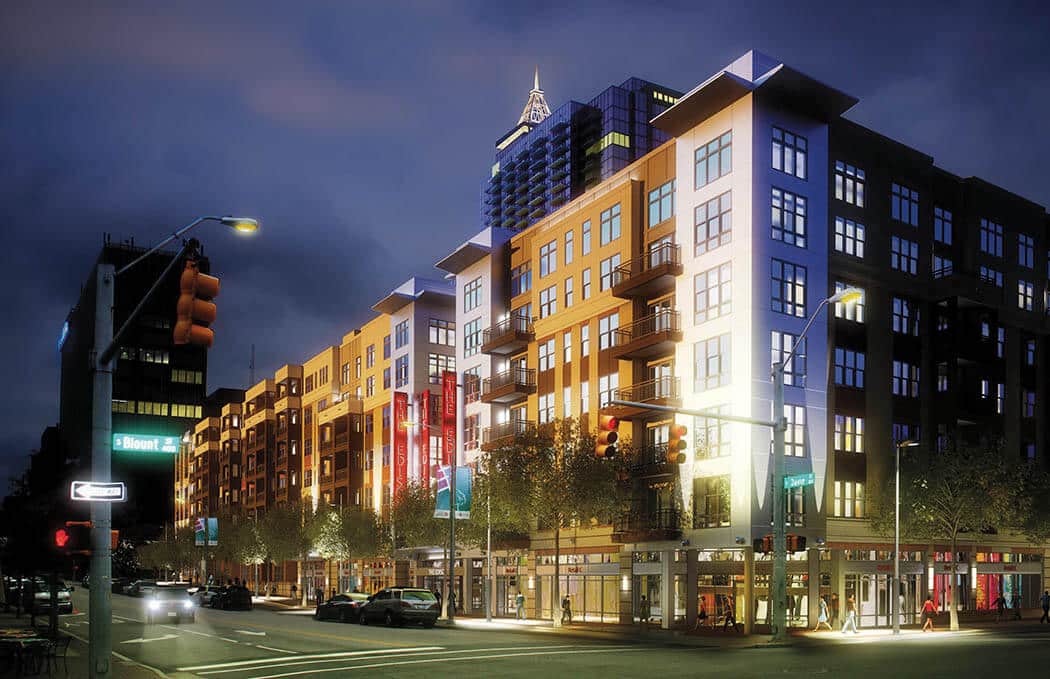
Apartment complexes are sprouting faster than spring across Raleigh, and rents are more than a mortgage.

Nothing against homebuying (that’s booming too), but an increasing number of us are opting to rent.

Trulia reports the share of U.S. households that rent increased from 36 percent in 2006 to 41 percent in 2014—that’s nearing half of us. Renting increased in all 50 of the cities Trulia looked at.

What’s behind the growth—from new complexes in Cameron Village and Midtown downtown.

There are three things, according to N.C. State economist Michael Walden: lack of building in years prior, Millennials, and Raleigh’s status as one of the nation’s darlings.

“The region has one of the best economies in the country,” says Walden. “Anchored by our universities and tech sector, Raleigh is on everyone’s list of fast growth for the decades ahead. Wake County is expected to double in population by 2050. Anticipation of this growth has sparked residential building, especially after the lack of new construction during the great recession.

“Raleigh is also a young city, pulling Millennials to the universities for an education and then staying for jobs,” Walden continues. “Millennials have largely shunned owing single family residences, due to remembering losses suffered by homeowners during the recession, not having children that need a single family dwelling and wanting to minimize upkeep associated with owning a home. The apartment/condo market has responded.”

Edison InteriorThese high end units—close to shopping and restaurants—aren’t cheap.

According to MPF Research, which studied apartment data in 100 U.S. metro markets, the average monthly rent in Raleigh increased between 4 and 5 percent from 2014 to 2015—moderate compared to Denver (10 percent), Austin (7 percent) and Charlotte (6 percent).

For perspective, the average annual rent in New York City increased 2.1 percent in the same period. So smaller cities nationwide are seeing higher rent increases, although average monthly rents remain low in comparison.

The median monthly rent during the 4th quarter of 2015 for attached housing listed and sold in Triangle MLS was $1,295, an 8 percent increase compared to the same time a year before and a 44 percent increase compared to the same period in 2006, says Stacey Anfindsen, an appraiser with Birch Appraisal Group and editor of the Triangle Area Residential Realty report.

But Walden says the rental boom won’t last forever.

“There are two warnings to developers,” he says. “One is the economy is still cyclical, and at some point there will likely be over-building and a drop in rents before the market stabilizes. This is unavoidable. Economies and markets go through booms and busts.

“The other warning is about the living preferences of Millennials,” Walden continues. “Now they want no-maintenance small units close to amenities, like restaurants, shops and entertainment. But what happens when they marry or partner and have children? Past experience suggests they will want more living space and will likely move to the suburbs. A recent CNBC article by Diana Olick says this is already occurring. So developers need to be cautious, even in optimistic times.”

Anecdotally, we know affluent professionals of all ages—especially empty-nesters—are migrating to rentals, too, wanting to shed the responsibilities of yard work, upkeep and longer commutes, preferring the trade what used to be the status symbol of homeownership for carefree living.

Cancer Detector

Cancer Detector

It’s the cancer no one’s talking about, but more than 48,000 Americans will be diagnosed this year with oral cancer, now the sixth leading (and fastest growing) cancer in the United States.

Triangle Dentistry recently started using a hand-held scanner called the Velscope during routine exams to help spot early signs of cancer in the mouth and on the tongue. If mouth cancers are caught early, the five-year survival rate increases from 50 to 83 percent. We asked Dr. N. Danielle Tart D.D.S. about the cancer check.

Dr. Tart

Dr. Tart

Q. The Velscope helps detect potential mouth cancers invisible to the human eye. When did your office start using the Velscope?

A. We recently switched to the Velscope technology. We have a strong commitment to our patients’ overall health, employing both visual exams as well as chemilumenescence. Now, we have a tool that is superior and more readily accepted by our patients. No pre-rinse is necessary, and the exam only takes a few seconds. It is easy, pain-free and a great adjunct to our visual exam.

Q. Have you ever treated or identified a mouth cancer in your practice before? Are they difficult to see with the naked eye?

A. Some of the oral cancers in our practice were apparent during the routine examination, including a 20-year-old female with squamous cell carcinoma. By the time a lesion is seen, it is typically stage II-IV, and the five-year prognosis is poor.

Q. Mouth cancers are often difficult to detect in the early stages. How does the Velscope work to help dentists identify suspicious areas?

A. The Velscope technology is a blue light system designed to better appreciate changes in the outer epithelial layers of the oral cavity. Areas of concern appear dark or grey/black compared with surrounding tissues which look green through the scope.

Q. Are there signs or symptoms early on?

A. Unfortunately, signs or symptoms are not always evident to patients. During visual examination, dentists look for the “ABCD’s” of oral cancer landmarks. These include asymmetry, borders, color and diameter.

Q. Will the velscope be used at regular appointments now or just on request?

A. The Velscope exam is recommended to our patients on an annual basis. It will also be offered complimentary to new patients at their initial exam appointment. The exam is $78, which many insurance companies cover.

oralcancer.org

triangledentistry.com