
by Cameron Walker | Sep 6, 2016 | Do, September 2016
The number one rule when locking oneself in a room with a zombie? Wear practical shoes.
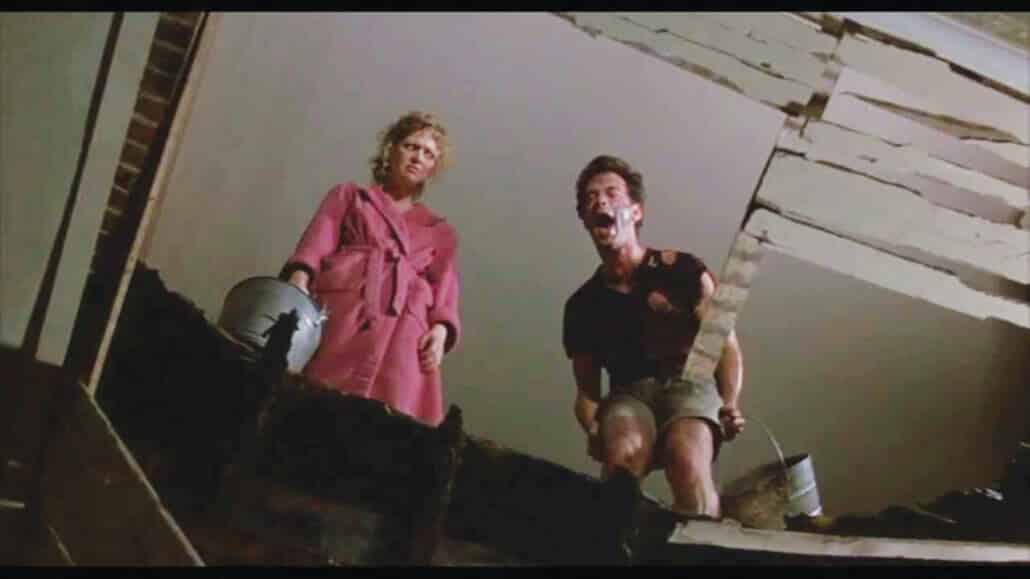
John Raines was playing one of the undead during a team-building event at Raleigh Room Escapes, which he runs with co-owner Rebekah Carmichael, when a woman in towering heels created a bit of a disturbance.
“As soon as I broached her personal bubble, she shrieked,” he says. “Dogs in Guilford County are still wailing.”
She panicked, plowing through the crowd in an attempt to get away, but her shoes proved her downfall. She tripped, taking out a coworker and tearing off a hunk of drywall in the process.
Although most people don’t get quite so excited, escape rooms are quickly becoming popular in Raleigh; players are flocking by the thousands for choose-your-own adventure fun. Conceived in Japan in 2007, escape rooms have spread to almost a thousand cities worldwide. The premise is simple: for $15-$30, players are trapped in a room and must hunt down and solve clues in a tight timeframe in order to be set free.
By their nature, escape rooms can be distressing to those with a fear of confined spaces. However, players are never really trapped—those who want to leave, can—but many games have a “No Re-entry” policy.
“People coming and going kills the suspension of disbelief necessary for our room’s immersive qualities,” says Raines. Players should check each venue for age restrictions and if game elements could trigger health concerns such as epilepsy.
Why are escape rooms trending?
Escape rooms aren’t just about breaking out of a locked room; they allow a player to escape reality.
“We call it experiential entertainment,” says Lynn Horan, who owns Cipher Escape with husband Mike. “This is kind of like jumping into the screen and participating. You’re actually experiencing it.”
“You get to be transported to another world,” adds Raines. “You get to survive outside yourself and work as a unit and have a blast.”
Horan has seen friendships form and families bond while trying to solve the puzzle.
“I’ve seen grandparents and grandkids high fiving each other, because they’ve done something together,” she says. “They had a common goal, and they learn things about each other.”
Fonville Morisey Vice President Amy Aldridge recently visited an escape room with her management team.
“We found that we look after each other and have each others’ backs,” she says.
Raleigh resident Lauren Arnett and her husband recently visited Cipher Escape with family and used the bonding experience to share a secret—they were expecting their first child. They surprised the family by having the ultrasound photo and a custom rhyme slipped into the final envelope.
“It took them a minute or two to realize what it meant, but they loved it!” says Arnett.
Horan was excited to help and is looking forward to the next reveal.
“You could even hide an engagement ring,” she says. “No one has done that yet, but I’m sure it’s going to happen.”
Great Escapes
Think inside the box at these Raleigh area escape rooms
Raleigh Room Escapes
Story-driven, sociologically-based experiences with live actors
Rooms: Trapped in a Room with a Zombie, Escape the Tramping Ground, The Formula of Escape
Cost: $20-$30 per player
raleighroomescapes.com
Cipher Escape
G-rated, puzzle-based experiences—average solve rate of 32%
Rooms: NC Photo Hunt Escape, Geek Room, Brewery Escape
Cost: $25 per player
cipherescape.com
Tic Toc Escapes
Interactive games in themed environments
Rooms: Green Room, Locker Room, Night at the Mausoleum
Cost: $15-$30 per player
tictocescapes.com

by Cameron Walker | Jul 11, 2016 | Do, July 2016 / August 2016
Although he wasn’t particularly worried about rappelling 400 feet from the glass facade of a downtown skyscraper, Phil Gruber says his mother was.
“My mom tried to talk me out of it,” says the local businessman and frequent participant in the Special Olympics North Carolina fundraising event, Over the Edge. “I’ve been six times and every time she tries to talk me out of it. But my wife thinks it’s cool, and my kids love it.”
This fall, for the seventh year in a row, participants who have raised a minimum of $1,000 will rappel 30 stories down the Wells Fargo Capitol Center building in downtown Raleigh. Proceeds will help provide year-round sports programming for our state’s nearly 40,000 Special Olympics athletes.
The annual event, with locations in both Raleigh and Charlotte, has raised about $1 million for the organization from 1,300 rappellers in the past six years. Around 200 people are expected to participate this year.
“Over the Edge is such a unique fundraiser,” says Rachel McQuiston, Vice President of Communications for Special Olympics North Carolina. “Participants get the once-in-a-lifetime experience of rappelling 30 stories down a Raleigh skyscraper.”
“The view is fabulous,” says Raleigh financial officer and repeat participant Geoffrey Griffin. Instead of looking down, he takes in the downtown panorama reflected in the building’s windows.
“It’s like sitting in a chair, walking down a building,” he says. For Gruber, any apprehension fades once he goes over the edge of the building and trusts the equipment.
“Once I start the rappel, the nerves go away and it’s a blast,” he says. “There are so many safety systems in place, there isn’t much to be scared of.”
Safety is paramount to the organization; participants are strapped into a full-body harness, hooked onto a backup line and use an industrial, self-braking descender to scale down the building.
“They triple check your gear. Once you are locked in, you can swing a bit from a heavy tripod on the roof before you step up to the ledge…then you get on your knees on the roof wall facing the building. Stand up, slowly lean back and start walking down. It’s obviously a bit weird at first, to lean back close to 90 degrees off a building. But once you do, you feel how much more control you have in that position. Then you start walking and it’s a blast!” says Gruber.
Griffin says his favorite part of the event is not the descent itself, but what happens next. After the participant has reached the ground, a Special Olympics athlete presents you with a medal.
“Raising money by doing something unique and exhilarating—what’s not to like about that?” says Gruber.
Are you willing to go Over the Edge?
When: Sept. 30 & Oct. 1
Where: Wells Fargo
Capitol Center
How: Visit sonc.net/help-to-fundraise/over-the-edge/. The organization will help you sign up and set up an online page. Note: Participants must be at least 14 years old and weigh between 110 and 300 lbs.

by Cameron Walker | May 31, 2016 | June 2016, Retreat, Stuff
Raleigh houses are selling faster than hot Krispy Kremes, well almost. According to the March 2016 Triangle Area Residential Realty Report, more than 50 percent of Wake County resale listings go under contract in less than 30 days. A balanced market has a six month supply of housing inventory; we have only two.
Our shortage of homes for sale makes this a true seller’s market, so why do some listings languish for months?
Not ready for their close-up
More than 92 percent of buyers search for their new homes online, according to the National Association of Realtors. But if a home doesn’t have virtual curb appeal, buyers will scroll on by.
“Buyers are visual,” says Carrie Schlegel, Realtor with Better Homes and Gardens Go Realty. “Those are the houses that are sitting the longest, houses that aren’t staged well and photographed well.”
In the age of HGTV and Pinterest, buyers expect a well-groomed, professionally-photographed listing. An underwhelming presentation suggests that the sellers put the same lack of effort into caring for the home.
Fixer upper
By putting the burden of updates and repairs on the purchaser, sellers greatly narrow the field of eligible buyers. After shelling out for due diligence and earnest money fees, inspections, appraisal, closing costs and a down payment, buyers may not have any cash left to install new floors or update the bathrooms. Many would rather take on a greater mortgage payment to purchase a home that doesn’t need a facelift.
“If a home needs a lot of work, buyers perceive it as a challenge,” says Schlegel. “Even if it’s priced for needing work, buyers need to have the cash. It’s not as easy to build that into a mortgage anymore.”
It can also be a challenge to sell an older home in areas like Holly Springs, Fuquay Varina and Wake Forest, which are booming with new construction.
Pushing the price limit
“Because the current buyer pool is tremendous, homes in prime locations are selling above list and often above appraisal price,” says Jessie Hrivnak, listing partner with the Rachel Kendall Team.
However, many sellers overvalue their home and end up sitting on a property that won’t move.
“Houses that are way overpriced—that are trying to play the market too much—are not selling as quickly,” says Schlegel. The home may not appraise, and buyers could be out of luck.
More expensive homes generally take longer to sell. If it’s not priced in the sweet spot below $350,000 or so, a property can stay on the market much longer than its less-expensive peers.
According to the Triangle MLS (as of April 2016), among 587 single-family resale homes that have been on the market in Wake County for more than 60 days, the average price is $609,186; 374 of those listings were priced at $400,000 and above.
Other factors that could cause a home to sit on the market: strange smells, poor location, proposed zoning changes or the addition of new roads, RDU aircraft noise, a long listing history, lack of comparable properties nearby and even stigma as a house where violence occurred.
by Cameron Walker | May 31, 2016 | June 2016, Retreat, Stuff
When local lending manager Andrea Easter was searching for her first home, she put in an offer on a fixer upper. She already knew it needed a lot of work, but the home inspector found a surprise, approximately $25,000 of water damage in addition to her budgeted improvements.
“The homeowner was convinced our inspector was wrong and would not budge on repairs, so we walked away,” she says. “We found another house we loved that needed far less work.”
To protect buyers, North Carolina allows for a period of “due diligence”—a negotiable window of time between offer acceptance and closing that gives the buyer the right to investigate the property and have the home inspected.
It’s like test-driving a car or Googling a blind date. For about $400, buyers get some peace of mind before making one of the biggest financial decisions of their lives. The inspector conducts a visual investigation from the crawlspace to the roof, examining the home and testing for functionality of systems, such as plumbing and electrical. With all the costs involved in buying a home, it can be tempting to skip the inspection, but that mistake could have serious repercussions after the sale.
“Unless you are purchasing a brand-new home, the buyer and seller can expect to see several line items for each category,” says Landin.
But some issues are more serious than others.
According to Garrett Daly, home inspector with HouseMaster, the most critical concerns are structural and foundation issues and water in all forms.
“A leak on the roof, rot and decay on the windows, or high moisture in the crawlspace,” he says. “Water can cause havoc to a home and cost the new homeowner a lot of money.”
“Moisture items can move from minor repair to a health concern,” agrees Dave Park of Advantage Inspection.
These issues can seem like insurmountable obstacles to buyers already paying for a down payment, lending fees and closing costs, among other expenses.
“Home inspection items that could potentially kill a deal are mold, termites and foundation damage,” says Dylan Hale, Realtor with Better Homes and Gardens Go Realty.
“Last year we walked away from a house after the inspection,” says local Bethany Leszczewski. “There was mold in the basement due to water drainage issues that would require changing the grade of the yard.”
The sellers refused to negotiate, and the house later sold for less than Leszczewski had offered.
The home inspection is just the first step. Termite and radon inspections are usually recommended in this area, and buyers may want other types of investigations depending on the property; for example, an older home may require testing for asbestos or lead, especially if buyers want to renovate, while a home outside city limits will likely need septic, well and water quality inspections.
Your realtor should be able to recommend several inspectors they trust. Ask your neighbors whom they used, and check for reviews online. Also, ask the inspector if you are allowed to attend the inspection. Many welcome this interaction, as they can explain their findings and answer any questions you have about the home.

by Cameron Walker | Apr 29, 2016 | Do, May 2016
At Krav Maga Raleigh, students are trained by the very teachers who instruct U.S. special forces, and they learn many of the same moves as the elite fighters. Owner Ken Richstad moved to Raleigh in 2008 and opened the studio that same year. Two years ago, he partnered with Fayetteville-based The Range Complex, a military contractor founded by former members of the Army’s Delta Force. Since then, Richstad says Krav Maga Raleigh has trained hundreds of special forces fighters in addition to their civilian clients.
According to Cassie Rhodes, Women’s Program Lead Instructor, the curriculum for public classes is very similar, although special forces training is packed into one intense week.
“That’s one of the things I love about Krav Maga,” says Rhodes. “It works and it works across the board. We use one technique, or one kind of approach to lots of different situations. We don’t want you to have to reprogram your brain entirely and we don’t want you to have to remember 50 different things.”
Krav Maga is Hebrew for “contact combat.” The hybrid fighting style, developed in the 1940s for the Israel Defense Forces, mixes techniques including martial arts, boxing and wrestling and teaches both defense and counter-attacks. But its the combination of self defense and fitness that has driven its appeal in the United States.
“It’s a great workout,” says Richstad. Your confidence will go up. Your decision-making will go up. Stress will go down.”
Students learn a variety of moves, including the “Krav Maga handshake,” a sharp kick to the groin, and train through scenarios like a choke from the front or a bear hug from behind.
Classes at the studio range from Level One basics to advanced Level Five, where students learn weapons defense and third party protection. They also teach a monthly, women-only self defense class, which covers how to react to the most common threats.
“I was nervous going in,” says Raleigh resident Caroline Leitschuh, who attended a workshop this spring. “I’ve never done any martial arts before, but I found the material really accessible. I left feeling confident and empowered.”
Krav Maga student Michelle Conner began taking classes after volunteering at a women’s crisis center.
“After hearing so many stories of violence and horror, I wanted to do something to feel safer,” she says. “I go now at least four times a week, and I keep getting stronger and better!”
The two-hour women’s self-defense workshop is held one Saturday a month; self-defense and fitness classes are offered daily in downtown Raleigh.
Visit kravmagaraleigh.com.



