by Cameron Walker | Apr 29, 2016 | May 2016, Retreat, Stuff
As Raleigh residents age, single-story homes become a hot commodity
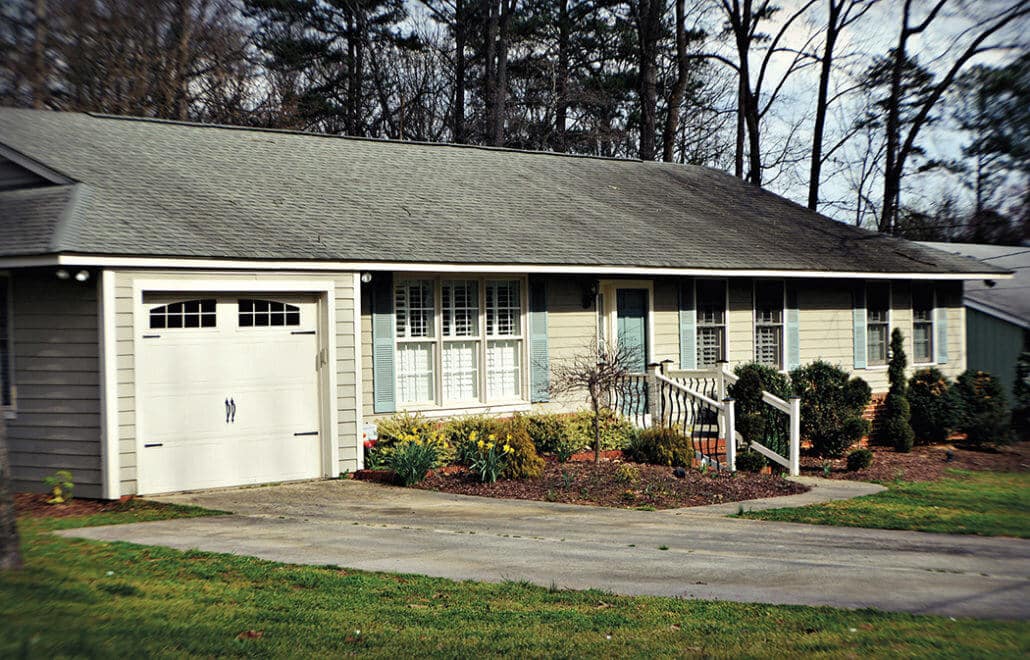
Quintessentially American, the single-story ranch is making a comeback. These low-profile homes colonized the suburbs in the post-war 1950s, but fell out of favor with the rise of the McMansion in the late 20th century. Today, homebuyers are seeking out the ranch for its one-level living, larger lots and solid craftsmanship.
“Our population is aging,” says Peggy MacKowski, who heads Quality Design and Construction with her husband Dave. “When you don’t have stairs to work around, it makes your home more valuable.”
In North Carolina, the aging population is expected to grow by 80 percent and in Wake County, the number of people over the age of 60 will increase from about 250,000 today to more than 600,000 in 2034.
“I often get buyers asking for ranch-style homes because they want or need main-level living for themselves or an aging parent,” says Molly Bonis, Realtor with Fathom Realty.
The convenience of larger lots in established neighborhoods with mature trees adds to their caché as new homes are built closer together. Once prevalent in many communities across Raleigh, including North Hills and Drewry Hills, the number of ranch houses is starting to dwindle.
“It’s simply supply and demand,” says Bonis. “They don’t want the cookie cutter houses that you can find every day on the market.”
Few new homebuilders are constructing ranches, choosing to save money on roof and foundation space by building upward. Many existing ranch-style homes in older neighborhoods are being torn down to make way for these larger homes.
Modernizing mid-century
Ranches are also popular with young families and lovers of mid-century modern style, who are willing to tackle projects that might be stuck in a different decade. The ranch is generally easy to modify due to its simple roofline and basic shape, according to Hank Wall of Wood Wise Design and Remodeling.
“They were built in the era when people had smaller rooms, so the three things [homeowners] typically ask to do is update kitchens, update bathrooms and take down walls,” he says. “Removing walls can shift an old-style home into how people want to live today.”
These modifications also make the home more appealing to homebuyers, who are increasingly embracing the concept of aging-in-place.
Free-range ranch
One-level living has advantages for young families; childproofing is much easier when you don’t have to worry about stairs. As homeowners age or care for older relatives, they are safer in a home without steps; in fact, Wall says most household accidents occur on stairs.
Some smart adaptations will help a home age gracefully alongside its owners. MacKowski recommends ample light both inside and outside the home. Keep the interior bright with energy-efficient windows and task lighting, and install touch or rocker-style switches. In the bathroom, she advocates for folding seats and curbless shower stalls with built-in antimicrobial protection.
Throughout the house, she suggests widening doorways, adding custom pullout storage, installing adjustable closet systems and changing to smooth, slip-resistant flooring. Add loop handles for easier grasping, lever handles instead of knobs, and easy-to-operate appliances like wall ovens and front-load washing machines. All simple updates that add value and modernize living spaces for many years to come.
Nest Thermostat:
This smart thermostat not only helps you save energy but multiple family accounts makes it easy to manage. Through its Farsight function, the device lights up the moment you walk into a room. Plus, it’s a great tool for those who travel or visit family for extended stays. Safety alerts notify you if temperatures drop or if your furnace is acting up. nest.com
Braava jet:
Housecleaning is chore for everyone but increasingly difficult as one ages. A range of cleaning robots can take the aches and pain out of it. This new mopping robot tackles up to 200 square feet at a time, leaving you with clean floors without the hassle. For larger spaces, try the slightly more expensive Braava 300 series. irobot.com
Skybell:
Ever wanted to see who’s at your door without getting up? Now, you can with the Skybell video doorbell. Whether you are at home or away, the doorbell allows you to see who’s knocking and communicate with them via your smart phone or tablet. A motion sensor triggers and alerts when someone stops by even if they don’t ring your bell. skybell.com

by Cameron Walker | Mar 31, 2016 | April 2016, Buzz
What if we’d been able to prevent the spread of the Ebola and the Zika viruses—using lemurs?
Duke is working on it.
Six in 10 infectious diseases are transmissible by animals, according to the CDC. Wildlife, pets, bugs and meat are responsible for diseases ranging from Zika to the Bubonic plague (yikes!).
But Duke University-led researchers are using lemurs to help identify these new diseases before they spread to humans.
Scientists with the Duke Lemur Center applied a cutting-edge technique to scan the blood of threatened lemur populations in the Madagascan rainforest. They compared the genetic material to a database of known DNA sequences and were left with several new diseases.
Also happening:
Will Eward, an orthopedic cancer surgeon at Duke Health and a practicing veterinarian was tired of watching his canine patients die of cancer, so he went to medical school to learn how to beat it.
Now, he and other scientists from the Duke Cancer Institute and the College of Veterinary Medicine at N.C. State University have formed the Consortium for Comparative Canine Oncology.
Researchers will use an approach called “comparative oncology,” studying dogs and human cancer patients simultaneously.
Dogs make ideal research animals; they are closer to human size than mice, their cancer grows quickly, and individual dog breeds share genetic markers like a family would. However, the dogs Eward studies are pets, not “lab rats.” Both his veterinary clinic and the NC State veterinary school offer clinical trials.
Duke’s been busy. Researchers are also honing in on ways to treat respiratory illnesses more effectively without over-prescribing antibiotics.
A team of researchers at Duke Health developed a blood test that looks at a patient’s genes to determine the cause of the infection. The test will work in as quickly as an hour.
Until now, it was difficult to tell whether a patient’s symptoms were caused by a virus or bacteria. As a result, about 75 percent of patients ended up on antibiotics; however, the majority likely had viral infections, which the medicine does not treat.
Over prescribing leads to antibiotic resistance, which the World Health Organization calls “one of the biggest threats to global health today.” Drug-resistant bacteria kill at least 23,000 U.S. citizens each year, says the Centers for Disease Control.
The research could also help create effective anti-viral treatments.

by Cameron Walker | Mar 31, 2016 | April 2016, Retreat, Stuff
Guilty of home neglect? It’ll bite you big time when you want to list your home.
“I see it over and over where families let life get in the way,” says Linda Trevor, Realtor at RE/MAX United. “When it comes time to sell, they are under added stress to bring the house up to speed for today’s market. Commit to doing at least one project a year; there will be less to do at the time of sale and then there is the added benefit…you get to enjoy the changes.”
But if you don’t have time or it’s too expensive, we’ve uncovered the top three things you can do to update your home now. And they don’t have to empty your wallet.
The Basics
Make sure you’re keeping up with regular maintenance so projects don’t pile up. Clean the gutters, fix squeaky hinges and repair weather stripping. Push up your sleeves and knock out a project every weekend for a while.
Got $35? Add a fresh coat of soft white or dove-gray paint and update fixtures with on-trend metallics and natural materials.
Improve efficiency; if you’re replacing a light fixture, go for the LED version. If you
need a new water heater, consider a tankless. These improvements drive down utility bills, keep you comfortable and pay off when it’s time to sell.
“They aren’t the most glamorous upgrades, but they will give you a big bang for your buck,” says Layne Taylor, Realtor with Century 21 Triangle Group.
The Biggest
According to the National Association of Realtors, buyers appreciate kitchen renovations over other home improvement projects. Even a minor kitchen remodel can recoup 87 percent of what you invest, according to Remodeling magazine’s 2016 Cost vs. Value Report.
“The best investment in a home is also typically the largest: the kitchen,” says Peggy Mackowski of Quality Design and Construction. She recommends starting with the cabinets, ensuring they’re strong, in good working order, and make the best use of space before adding new countertops.
Increase storage, add soft lighting and bring appliances into the 21st century.
“Updated appliances make a big difference in the kitchen,” says Trevor.
The newest trend in appliances? Black stainless steel. KitchenAid, LG, Samsung and GE have all recently debuted lines finished in a matte slate-gray that promise to hide smudges and resist fingerprints.
 The Best (Impression)
Don’t forget about the outside of your home—first impressions count.
“Hardscape improvements such as a patio, porch, outdoor kitchen and fireplace will add to value and appeal as we create an extension of the indoor living space into the outdoors,” says Ben Case of Down to Earth, a local landscape design company. He suggests adding irrigation and drainage systems if needed, privacy plantings and outdoor lighting systems. Mulch, plant flowers, and don’t neglect your mailbox.
You’ll enjoy more time outside and increase the value of your home through curb appeal.
“First impressions are so important,” says Taylor. “You don’t want a buyer to pull up to your home and be turned off before they even walk through the front door.”
Market Watch:
Updated appliances and hardscape improvements can make a huge difference in the value of your home.
“We have seen an explosion of bold brushed golds in home furnishings and accessories that add a pop to a room or an outfit! Gone are the creamy, buttery yellows. It’s all about the pop of gold in fabrics, metals and even metallic wood finishes. Gambol Gold is a go-to paint color for this look. This color is most exciting as the secondary color when paired with bold navy blues or deep shades of gray and, of course, fresh shades of whites.”
— Carole Hollowell, Designer/Owner Carole Hollowell Interiors

by Cameron Walker | Mar 2, 2016 | Buzz, March 2016
On the morning of September 11, 2001, as Raleigh native Nichole Scaraglino was getting ready for work in her Manhattan apartment, the news on her TV turned into a nightmare. She realized the city was under attack, so she threw some essentials into a bag and fled with her roommates—looking for some way, any way, off the island and out of New York.
Phone lines were down, transportation halted and the streets were thick with panicked people.
‘Hordes of people were just standing or wandering as though waiting for instruction that would never come,’ said Scaraglino.
Although we pray nothing like that ever happens here, North Hills staff and volunteers recently went through a seven-week training program that certifies them to assist in case of an emergency.
The Midtown CERT (Community Emergency Response Team) is the only one of its kind within Raleigh city limits. Want to get in on the action? Basic CERT training courses will be held
March 19 and 20 and are open to the public. To register, go to https://tinyurl.com/MidtownCERT
The CERT program was created under the Federal Emergency Management Agency (FEMA) to train security about disaster preparedness and respond until professionals arrive.
“In the event of a large scale disaster, emergency services will be overwhelmed and assistance rendered by these agencies will be limited,” Robert Batista, director of public safety at Kane Realty Corporation. “CERT volunteers will activate to assist people in the community with any needs regarding basic first aid, search and rescue and all aspects of disaster mitigation until help can be provided.”
Practicing…just in case.
As a general rule, even though we see scary and dangerous events all over the media, it’s easy to feel insulated.
“People don’t think things like this can happen to them, so it’s our job to think of the bad things that can happen and prepare for them,” says Derrick Remer, emergency management and special events manager for the city of Raleigh. “I’m the doomsdayer, if you will.”
Remer and his team are responsible for the safety of the city’s nearly half a million people. That means planning for emergencies of all kinds and then putting those plans into practice, often in conjunction with the county, the state and neighboring municipalities. Training exercises run the gamut from mock train derailment scenarios that take a year to coordinate to simply hauling out and practicing with little-used equipment.
“We can’t prepare for every single scenario, but we can practice the things we know are going to happen and then apply these same principles to whatever might happen,” says Remer.
Equally important is the public affairs department.
“People, especially in a time of crisis, want to know what’s going on,” says Remer. “There’s a process in place to ensure we’re providing this information.”
The city is also listening. In the event of an emergency, someone is always monitoring social media feeds. Citizens can act as the city’s “eyes on the street” by sharing photos and using shared hashtags.
“We’ll just put a filter on there to follow whatever that hashtag is and we can see everything that everybody’s posting. It really helps us to see what’s going on,” says Remer.
Have a personal plan.
Create an emergency plan for your family; decide where to meet and memorize phone numbers. Take a class on CPR and first aid, and store enough supplies to last each person—and pet—in your household for at least 72 hours. And when you’ve prepared your own house, help others.
“The bottom line is, look out for your neighbors,” says Remer. “While I pride the government, and I pride us on our resources, resources get strained… when a community can take care of itself and help one another and essentially buy time until the professionals can get there, it makes everything better in the end.”
Build a basic 72-hour kit.
An ice storm or hurricane could leave you without power for days.
Get the family involved in putting together an emergency kit, and rotate its contents regularly.
• Water: one gallon per person and pet per day
• Food: non-perishables you actually want to eat,
as well as a can opener
• Flashlight and extra batteries
• Radio (battery-powered or hand-cranked)
• First-aid kit and backups of medicines, glasses
• Baby wipes for sanitation, toothbrushes, diapers and feminine hygiene products if needed
• Documents: stash copies of important papers in case you have to leave home in a hurry
• Fire extinguisher
• Plastic sheeting and duct tape for shelter; masks
• Blankets and cold-weather clothes
• Extras: Books, games, instant coffee

by Cameron Walker | Mar 2, 2016 | March 2016, Retreat, Stuff
Raleigh’s influx of young professionals has led to an increased demand for rental properties, making real estate a tempting investment. But before you sign the contract on your new income property, read our advice to help you make that landlord leap.
1. Buy close to home
“Purchase something close by; you want to be able to keep an eye on it,” says Linda Trevor, RE/MAX United broker and past president of the Raleigh Regional Association of Realtors.
Being able to drive by occasionally and to get there quickly in case of emergency is important. And knowing the area is key to purchasing property that will make you a profit. For example, factors like nearby employers, schools and transportation will determine the vacancy rate and the amount of rent you can charge.
2. Don’t go it alone
Use a knowledgeable Realtor, preferably one with real estate investing experience.
“Many new investors I talk to complete their real estate investment education through HGTV and Google,” says Jim Ellis, instructor at Go School of Real Estate. “An experienced, investment-minded real estate agent is undeniably a valuable asset. A good one can help you with cash on cash analysis, gross rent multipliers and cap rate analysis, among other things.”
Trevor adds: “Consult a local Realtor who can advise with the purchase, provide local rental rates and a history of appreciation,” says Trevor. She also recommends using a local mortgage broker who works with investors and landlords, since financing an investment property can differ from traditional financing.
Should you sell your current home or rent it out? A Realtor can help you decide.
“I can work with a homeowner to evaluate their property as to whether it would make a good income property or would be better to sell it,” says Molly Bonis, broker at Fathom Realty.
3. Vet potential tenants
“The downside to being a landlord falls on the performance of the tenant. We’ve all heard the horror stories and, yes, they exist. If you own property long enough, you will encounter the nightmare tenant,” says Ellis. However, he adds, most investors have more positive experiences than not.
Conduct credit and background checks on potential tenants.
“Owning investment properties is a business and it’s critical to know who you are renting to and to be sure they can pay the rent,” says Trevor.
4. Consider hiring a property manager
Property managers can help with everything from advertising vacancies to changing the locks between tenants, but they can also eat into your profit.
“There is a lot of freedom in having a property manager to oversee most aspects of the screening, lease and repairs, and I see it as a cost of doing business,” says Trevor.
5. Know the law
“Use up-to-date, state-approved leasing documents and read up on fair-housing rules,” says Trevor. “Consult a local attorney for advice. When tenants get behind, and they will, don’t hesitate to start the eviction process.”
Many laws governing leases favor the tenant, so learn the rules before entering into your first contract.
6. Mind your money
“Keep detailed records of all expenses and income from day one,” says Trevor. “Set up a separate banking account and consider forming an LLC.”
Consult with an accountant regarding taxes on your investment property, and set aside monetary reserves for remodeling, repairs, missed lease payments and vacancies.
7. Be patient
“This is not about getting rich quick,” says Ellis. “Owning rental properties has always been and will always be a long term, slow growth investment vehicle.”
A property’s rental income will likely increase over time, as will the value of the property. Ellis says the average rate of appreciation is in the range of 3.5 percent to 5.5 percent.
“Rental properties are not about instant cash flow but the ability to have someone else paying down the mortgage while seeing appreciation over the years,” says Trevor.
8. Avoid this common mistake
If you make the decision to move and rent out your home, make sure you let your insurance company know.
According to State Farm insurance agent Carmen Ritz, if the insurance company is not informed of the household change, they may not extend coverage. The risk for loss increases with a rental property, so landlords should consult with their agent to ensure they have enough coverage.
Advise your tenants to carry their own renters insurance, as their personal property is not included in your policy.



