Raleigh’s long-awaited S-Line reshapes how the region moves.
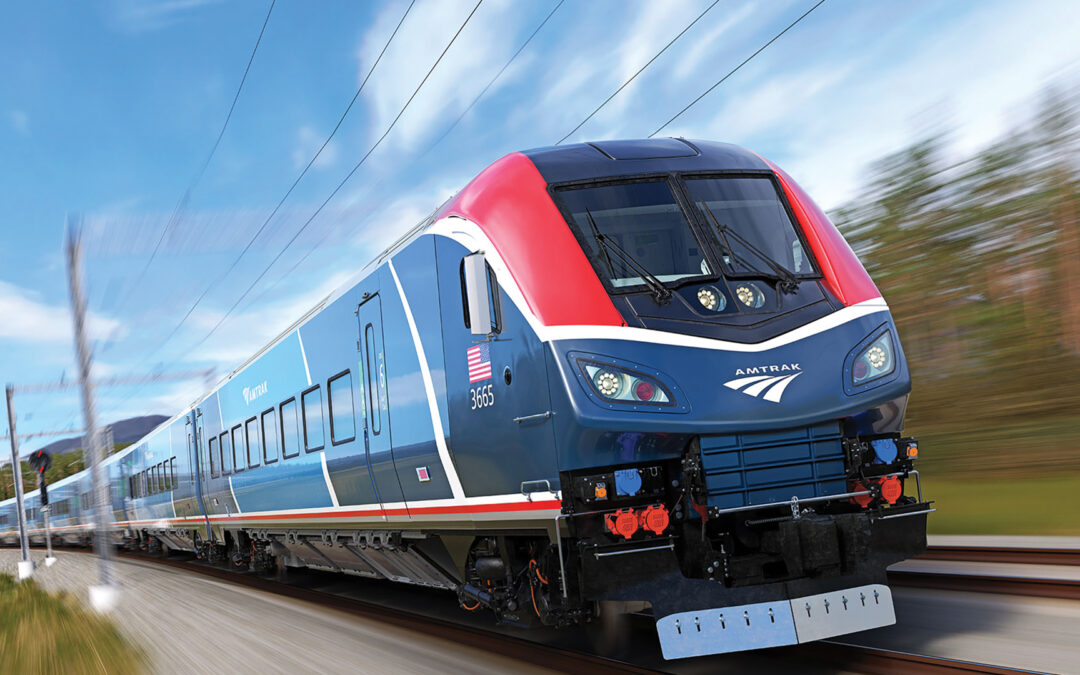
Move over, light rail—Raleigh is getting high-speed rail. Reaching speeds up to 110 mph, the incoming S-Line will deliver riders between Downtown Raleigh and Wake Forest in less than 20 minutes by 2031.
Across the board, one of Raleighites’ biggest complaints is transit—full stop. Already a highly car-dependent city, Raleigh is growing up and out quicker than our transit system and roadways can keep up, leaving residents with few modes to get around—and traffic to absorb the rest.
More than 20 years in the making, the S-Line ultimately promises to level up transit beyond Wake Forest, eventually connecting Raleigh to Richmond with future stops in Youngsville, Franklinton, Henderson, Norlina and Petersburg.
Pulling in from North Raleigh, the railway will run alongside Atlantic Avenue and Wake Forest Road before crossing over Capital Boulevard—over the Conlon Family Skatepark, says NCDOT Deputy Secretary for Multimodal Transportation Julie White—before chugging down West Street in the final stretch to Raleigh Union Station.
Existing rail already leads the train’s path through DTR via CSX freight lines that NCDOT is in the final stages of purchasing, but high-speed rail will require improved tracks and a larger buffer than slow-moving freight trains, along with new bridges and underpasses at multiple crossings.
In short, growth doesn’t come without compromise, and adjacent properties won’t be left untouched.
While the fate of the track-bordering buildings along West Street—think The Cardinal, Stella’s, Transtar Aftermarket Solutions, and FlowCorps, to name a few—isn’t certain, the question of impact is: The S-Line footprint expands beyond current tracks, putting properties in close proximity to a potential right-of-way zone.
In NC, railroad right-of-way varies anywhere from 30 to 200+ feet from the centerline of the track, but until the final railway design is nailed down, exactly how much space the S-Line will claim is unclear.
While local businesses will be affected—and possibly forced out—NCDOT tries not to cause turmoil without a plan—or without permission. The agency met with the mayor of every town and city bordering the S-Line in 2019, White tells RM, building on community engagement that launched in the early 2000s.
“Our rule is we don’t want to be doing something in a community that the community doesn’t want,” maintains White. “All the rails go through the middle of the downtowns, so we asked if it aligned with their goals.” The answer was overwhelmingly yes.
Impacted property owners were part of the conversation. “They’re aware of the project and the existing plans,” maintains White. Because land can turn over fast—especially over the course of a two decade-long project—NCDOT circles back to engage with new owners more frequently than law requires.
While multimodal transit naturally remains the focal point of the project, White doesn’t expect everyone to abandon their cars and hop on the rail. “It’s not the point,” she notes. “But if you can shift some folks over to take the train, even those who don’t take the train have more space to get where they want to go.”
The goal, she says, is to lessen traffic and maintain consistent commute times for riders and drivers alike—similar to our Northeastern counterparts.
The outcome? NCers can more easily live and work where they want to, whether that’s a rural town or city center. The corridor won’t just fill a missing link for Raleigh, but for the entire Southeast. Once fully complete, it will effectively slash travel times to DC and beyond, while upping convenience via more frequent trains and reliable service.
“The train time doesn’t change, so giving people the ability to live where they want to live and work where they want to work is a wonderful strategy that goes far past Raleigh,” says White. In a city where getting anywhere can feel like a gamble, that kind of mobility changes everything.
That trendy suffix is telling us to maximize everything.
Should we all be “funmaxxing?” asks Dazed magazine. No—“fibermaxxing,” argues The New York Times. Proteinmaxxing, says the health guru. Harvardmaxxing, insists the Ivy Leaguer.
Your dog isn’t eating dinner, he’s kibblemaxxing. And you aren’t having fun—you’re jestermaxxing.
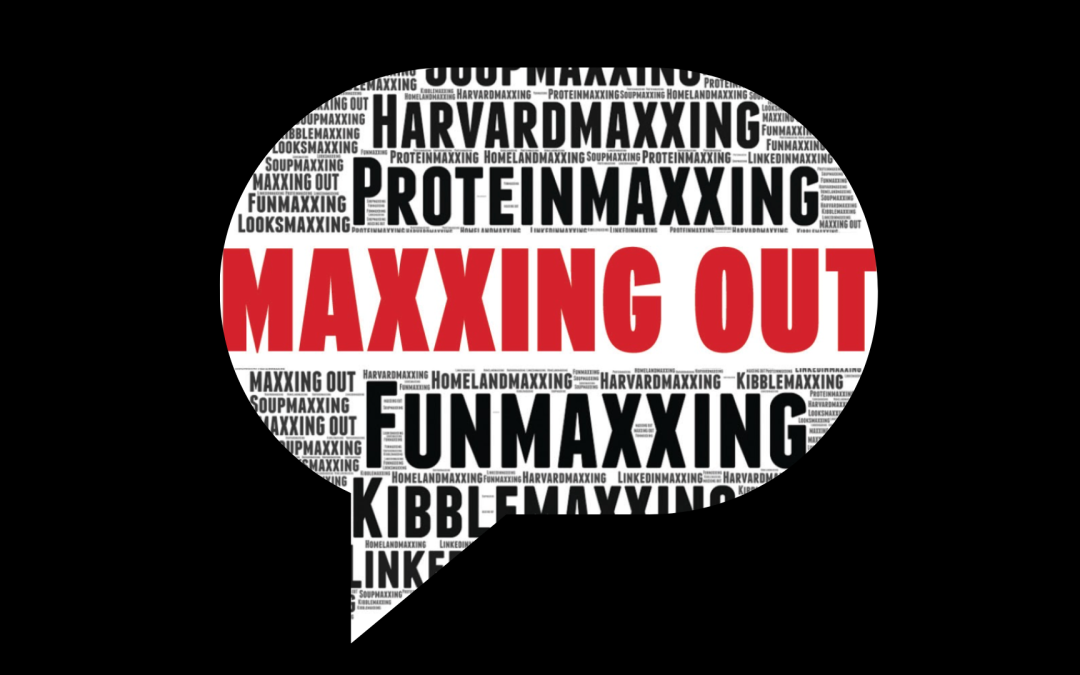
Enter the internet’s new fave suffix. “Maxxing”—tacked onto just about any noun—means optimizing a specific aspect of life to the extreme (hence, maxxing). Like much of Gen Z slang (see: NPC, sidequest), it’s loosely linked to gaming subculture, and more direct—though complicated—ties to the incel depths of the internet. But stripped down, it’s simple: Take something ordinary, push it to its theatrical limit.
Thought you were reading a magazine right now? Wrong—you’re RMaxxing.
The appeal is obvious. It makes habits feel tactical, intentional—even a little competitive. And it casts a wide net.
At its most harmless, it’s kitschy—soupmaxxing, LinkedInmaxxing, or whatever niche you’re obsessing over. At its most serious, it veers into real-world strategy with significant impact (the Pentagon recently announced they are “lethalitymaxxing” and “homelandmaxxing”).
Or, in more extreme online corners, “looksmaxxing,” where users chase physical “optimization” by literally—and regularly—hitting their cheekbones with hammers to change the shape of their faces.
Still, the reason it sticks is less sinister than it sounds. At its core, it’s unserious and easy to parody. Slap it onto any offline behavior, and suddenly it feels elevated—like you’re not just doing the thing, you’re doing it with purpose. Purposemaxxing, if you will.
Sure, getting your fill of fiber and protein isn’t exactly a bad idea. So if maxxing is what it takes to build better habits—or at least trick yourself into them—we’re not mad at it. Just maybe put the hammers down.
Save your wallet—and your style—with cost-per-wear calculations.
What’s the right price for fashion? Designer pieces have recently skyrocketed—from expensive to insanely eye-watering—often without the quality to match (hey, rayon and polyester).
On the other end of the style spectrum, fast-fashion giants like Shein, Temu and Fashion Nova keep prices suspiciously dirt cheap, raising ethical and environmental questions. While frugal fashion is not only wise but necessary in this economy, buying cheaper pieces can end up costing more. Read: A lot of cheaper clothing only gets 10 or so wears before falling apart or getting trashed. Either way, the wardrobe woes are real—and your closet pays for it.
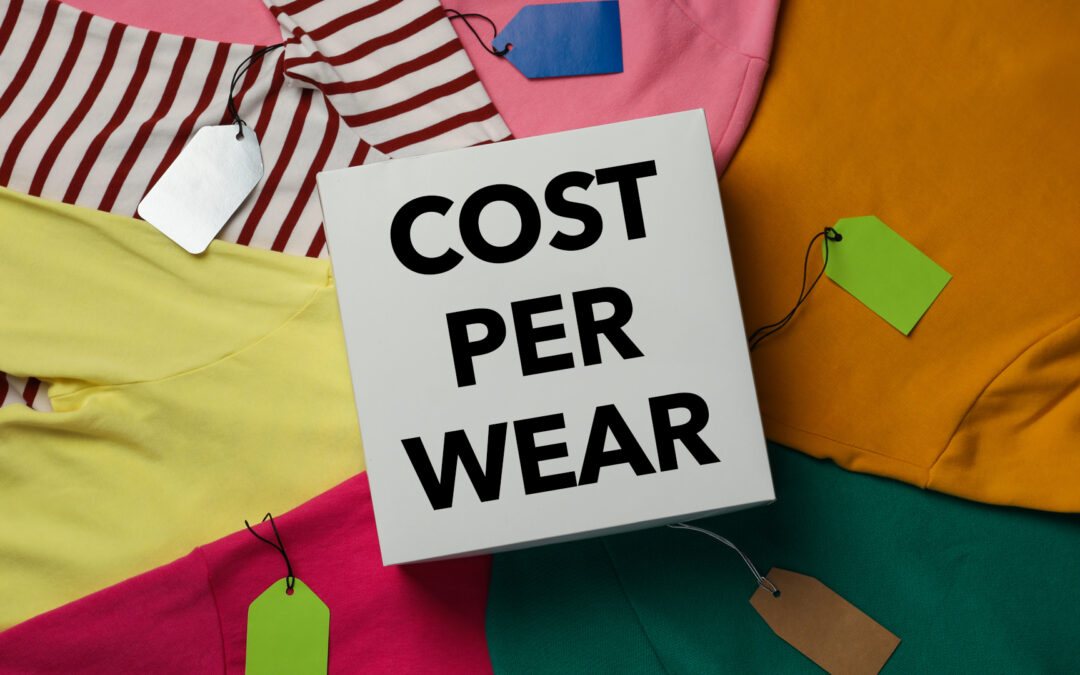
Enter cost per wear. The savviest shoppers have the ultimate style hack unlocked: The real measure of value isn’t the initial cost of clothing, but rather how much use you get out of it—the easiest way to determine the true worth of your clothing.
If you buy a $100 coat and wear it 50 times, the cost per wear is $2. On the other hand, if you buy a dress for $40 but only wear it twice, the CPW is $20. Despite the wide price margin, the jacket proves more valuable and practical. Stripped down, it’s straightforward: All pieces are investment pieces.
The only catch? Successfully lowering your closet’s overall cost means having to rewear what you already have instead of impulse buying.
Whenever you make a purchase, think about when and where you can wear it—and if you will actually wear it over and over. That perfect pair of jeans or black cocktail dress may see more use than a pair of trendy, overly painful platform heels or an unflattering bucket hat.
So, like Lizzie McGuire, be an outfit repeater. Creativity is nonnegotiable to keep your clothing fresh, and it may be the exact shot in the arm your personal style needs. When each item becomes a purposeful addition to your wardrobe instead of a fleeting purchase or quick serotonin boost, the frustration of having “nothing to wear” despite a full closet fades as fast as the threads on those Shein sweaters.
Naturally, occasional splurges are inevitable—you may not be able to wear the bridesmaid’s dress you bought for your best friend’s wedding 10 times, and your ski jacket may only see the light of day twice a year. Some purchases can be reserved for uncommon occasions, and that’s OK—as long as the rest of your closet gets its fair share of wear and tear.
Call it a recession indicator or a shameless plug for sustainable habits, but either way, CPW saves your cash and boosts your closet. And for your personal style, that’s good news.
The Coachella of soccer is almost here. Back for its fourth annual year, The Soccer Tournament is less of a textbook bracket tourney and more of a festival, competition and temporary village all rolled into one. Whether you’re a die-hard fútbol fanatic or don’t know what a corner kick is, there’s something here for you.
Dubbed the world’s premier 7v7 soccer fete, the tournament brings together star players and club teams from around the globe to go head-to-head at WakeMed Soccer Park May 27–June 1. The draw: a shot at three winner-takes-all prizes of $1M—decided across ~150 games over the course of six days.
And these aren’t your standard matches. Keeping things unpredictable—and fast—games start with two 19-minute halves, or “Target Score Time.” Once the clock runs out, the game shifts—the first team to reach the current leading team’s score plus one wins. Read: If it’s 3–2 at the buzzer, the first to 4 takes it.
The format guarantees every match ends on the hype of a goal—cue storm-the-field energy—and curbs the drag of a goalless game. Stirring the pot even more, one player is pulled from each side every three minutes after regulation. Upping the intensity, teams drop from 7-on-7 to 6-on-6, then 5-on-5—eventually down to 2-on-2.
Seven fields host three to five matches simultaneously, so the energy never dips. And instead of sitting 300 feet from the field, fans are encouraged to get close to the action.
“You have World Cup winners like Hope Solo, Heather O’Reilly and Carli Lloyd playing 10 yards in front of you,” emphasizes Public Relations Coordinator Freddy Stanley. “Sergio Agüero, who’s played in the World Cup for Argentina and won the Premier League with Manchester City, is out there playing—and you’re right next to the field.”
This year’s roster also includes standout stars Landon Donovan and Gerard Pique, with more global giants set to participate. Field footwork aside, select celebs will hold meet-and-greets, all included with your ticket.
Fueling the fun: Local and international F&B ops, live music, club stores and fan activations, plus kids’ clinics (with a potential trip to Italy on the line) dot the park to fill time between matches, or to just take the edge off of an intense game. So while the stakes may be high, the vibes promise to be even higher. May 27–June 1, WakeMed Soccer Park, tst7v7.com
After 86 years, glizzy glory still lives on at The Roast Grill.
If Merle Haggardrose from the grave to eat in Raleigh, you’d likely find him at The Roast Grill.
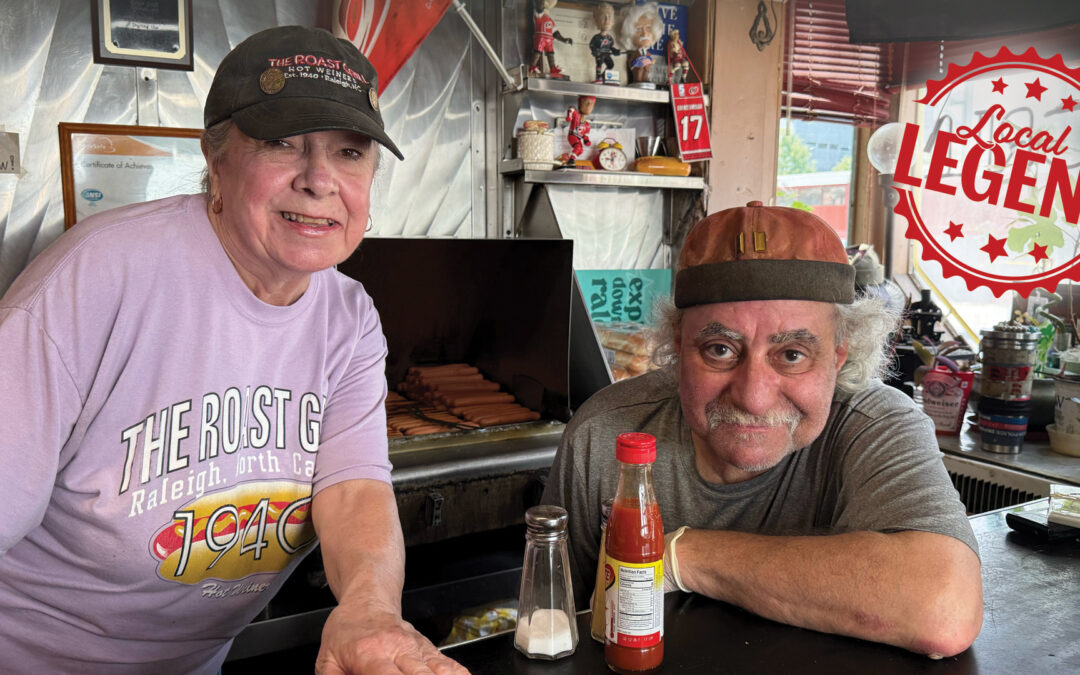
Nestled in a little white house on West Street, the hot dog joint has been holding its own for nearly a century—and in a city with a constant craving for what’s new and next, that’s no small feat. Raleighites love a hot dog—and this rite of passage holds fast.
Vines tangle up the sides of the aged facade, and a line of grillgoers typically wraps onto the street—thanks in equal measure to lore, novelty (George and his wife Kathy Poniros are known to open the grill sporadically, regardless of the hours listed in the window) and sparse seating.
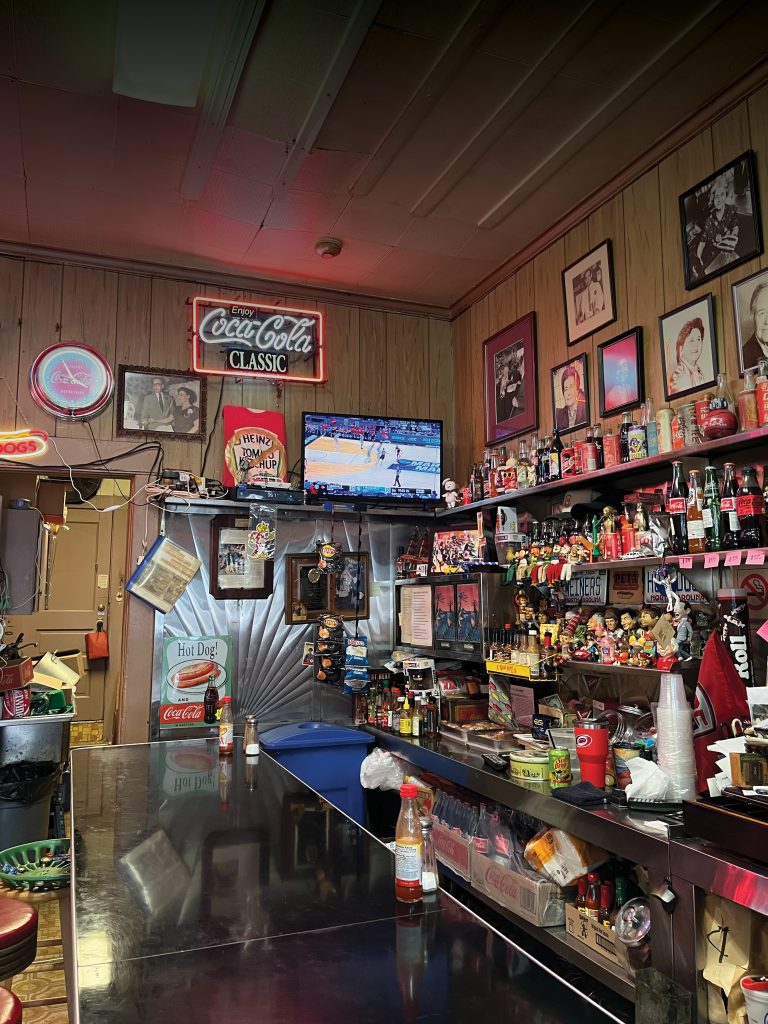
Inside, the narrow space is the opposite of curated—fluorescent lights flicker overhead, old neon signs touting domestic beers cast a red glow on the thin wooden walls, and a tiny TV hums a Canes or NC State game in the corner. From decades worth of sports memorabilia to vintage still-full soda bottles and hot dog-related trinkets cluttering the shelves, The Roast Grill is an endearingly divey memory box where nothing changes—period.
The unwavering menu is as straightforward as it gets: hot dogs with slaw (no mayo), mustard, onions and chili crafted from a 100-year-old recipe. Each dog is $4, no matter how you order it—and there’s only one rule of the Roast: Don’t you dare ask for ketchup.
Behind the barstools, snaps of star hot dog guzzlers gaze down, daring anyone to match their 17-dog feats. While double digits are reserved for the brave, you’ll likely find yourself two or three deep—washed down with a beer or soda. And on your way out? Kathy will make sure you leave with a Tootsie Roll in your pocket.
The joint is as American as they come, so don’t expect to linger. Seating is limited, and Hot Dog George isn’t shy about telling slow eaters to move it. For the glizzy king, it’s another day, another dollar—but thanks to his (and Raleigh’s) unwavering devotion to a hot dog and a cold one, The Roast Grill refuses to fade into the annals of time.
So when you see the neon Roast Grill sign glowing in the window, go get a dog—right then and there. No questions asked.