
by Heidi Reid | Oct 29, 2026 | Buzz, November 2026
Interest-free “buy now, pay later” programs are suddenly everywhere—is there a catch?
’Tis the season for shopping—and increasingly, splitting the bill. That $700 holiday haul? Just $175 today. From Klarna and Afterpay to Citi Flex Pay, buy now, pay later (BNPL) programs are popping up everywhere—making it easier than ever to spread out the cost of everything from gifts and groceries to vacations and everyday expenses.
With some promising zero interest, even financially savvy shoppers are getting in on the action. But before you congratulate yourself on a budgeting win, read the fine print. Because interest-free doesn’t always mean fee-free—and those manageable monthly payments can come with a price of their own.
But shoppers are buying in: Americans spent over $160 billion last year using BNPL plans, according to the Federal Reserve, and increasingly for everyday expenses—not just big-ticket splurges, but groceries, phone bills, shampoo and even rent.
Longtime Klarna user Gracie Owens tells RM she mainly uses it to purchase clothing. “Some people dislike [BNPL programs] because they believe if you don’t have the money to purchase the item in full, then you shouldn’t at all,” she says. “While I don’t completely disagree, it does allow me to treat myself on occasion without having to worry too much about spending a lot of money at once.”
Financial coach Amy Bajada cautions the convenience can come at a cost. So, if you dabble in BNPL programs, how can you make sure both your piggy bank and credit score stay safe? While BNPL can be a useful financial tool, she says it can also go sideways when consumers overlook “the responsibility that comes with the power of using it as a financial resource.” Her advice? Live within your means and don’t make installment plans your only financial strategy. And just because something is available doesn’t mean it’s a smart move.
The “treat yourself” sentiment is nothing new. Similar layaway programs have been around since the 1930s—originally gaining traction during the Great Depression—but unlike lenders of days past, today’s pay later programs will give you the goods right away.
No interest, and the purchase handed over immediately? Sounds almost too good to be true—and depending on the fine print, it can be. Of the $160B spent, about half of it was on “pay-in-four” plans, allowing consumers to pay off their purchases in four installments over six weeks.
Meanwhile, with credit card flex plans, you can choose your own pay adventure, spreading purchases over a set number of months for a fixed monthly plan fee. The catch? That flex fee isn’t a one-time charge—it’s tacked onto every monthly payment. Read: A $10 monthly fee on a 12-month plan adds $120 to your purchase, even if you never miss a payment.
Suddenly, that interest-free financing isn’t looking quite so free. For shoppers who pride themselves on avoiding credit-card interest, those fees can add up to a surprisingly expensive workaround. And the costs don’t necessarily stop there. Depending on the program, missed payments can trigger late fees or other penalties—another potential hit to your wallet.
To wit, a recent survey found nearly half of BNPL customers missed a payment in 2025, with late fees stacking up to an effective annual percentage rate of 100% or more. For perspective, the average APR on U.S. credit card accounts in 2024 was ~23%, meaning BNPL consumers who miss payments are often paying more, despite interest-free purchasing, not to mention potential credit-score hits.
But it’s not just what you pay—it’s what you’re paying for, as it can be particularly defeating to make payments on something that’s already long gone. After all, nothing’s more depressing than paying off a DoorDash burger weekly, emphasizes one consumer.
The bottom line? Breaking a purchase into smaller payments doesn’t make it cheaper. Before you click, calculate what you’ll actually pay—and whether the convenience is worth the cost.

by Heidi Reid | Oct 29, 2026 | Do, November 2026
Showbiz is booming.
Movie theaters have cheated death. Despite being able to watch *any* flick we want wherever and whenever we want, 2026 was the year we went back to the movies.
Yearly domestic grosses are expected to top $10 billion for the first time since 2019—NTM the summer box office alone wound up hitting an all-time domestic record with $4.76B, unseating the previous high of $4.756B in 2013.
Amid the pandemic, there was a growing concern movie theaters couldn’t compete with YouTube, Netflix and on-demand streaming. Fears that younger generations saw theaters as outdated were also on the rise. But turns out, the comeback began with the youth.
Gen Z is the most active moviegoing demographic—and they’re opting for nicer (and pricier!) formats like IMAX. The lure stems from hits new and old, from adaptations and nostalgic sequels like The Odyssey, Devil Wears Prada 2, Spider-Man: Brand New Day to new concepts from young filmmakers like Backrooms and Obsession.
Not only are the new movies better, says local film fanatic Trent Lose, but moviegoers are also showing out for old flicks. Local theaters and chains alike are more consistently screening classics from decades past.
“The Rialto is playing Steel Magnolias,” Lose tells RM, “and I’d rather go watch that movie in a room full of people who likely saw it in theaters when it first came out and want to relive that.”
Another local moviegoer maintains streaming services actually help bolster theater sales. “There are so many different services, you can’t share passwords outside of households, they are crazy expensive and some of them still have ads,” she tells RM. If she wants to see a movie, she’d rather just buy a ticket.
To wit, going to the theater is a cultural experience akin to going to a museum, says Lose, and being in the know—and maybe even logging it on Letterboxd—is chic. “Movies are more in the cultural zeitgeist,” he emphasizes. “Think about Barbenheimer.” It’s community, culture and entertainment—just for the price of a single ticket.

by Heidi Reid | Oct 29, 2026 | Buzz, November 2026
Imagine placing a big bet that you won’t go somewhere—then simply… not go and collect the winnings.
That’s essentially what former U.S. Rep. George Santos did when he wagered that he wouldn’t attend the State of the Union, then stayed home to rake in thousands of dollars. He even told followers he planned to attend, potentially influencing how others wagered.
Thanks to his eyebrow-raising bet, in August, Santos became the first person ever to be banned from betting platform Kalshi—for life. Welcome to the increasingly wild world of prediction markets, where the person placing the bet may have inside information—or even the power to prophesy.
Anyone over 18 can bet on essentially anything, from reality TV and Time’s Person of the Year to major events and the midterms unfolding as you read this. And that’s where things get darker: Markets have included everything from where forest fires will ignite to other actions bettors can conceivably cause themselves, like rushing the field at a pro sporting event. It’s insider trading meets Nightcrawler—you make the odds.
“It’s not just easy to start a fire, now there’s potentially a financial incentive,” says climate scientist Kaitlyn Trudeau. As the LA wildfires raged last January, bettors gambled on how many acres fires would consume, where they would reach and when they would be contained using Polymarket, a leading gambling app.
The potential for insider intel is just as thorny. A U.S. Special Forces soldier in NC was charged with using classified information to wager on the capture of former Venezuelan president Nicolás Maduro—a military operation prosecutors say he helped plan and execute. His alleged long-shot bet reportedly netted him more than $400K. And another service member reportedly raked in $1M after betting on military actions in Iran and Venezuela they were possibly involved in, raising serious questions about whether inside information or actions they themselves carried out were again at play.
Some are raising eyebrows at bets on whether neighbors’ homes will burn down or if a country will be invaded, but NCers—for the most part—continue to wager. Residents bet ~$8 billion on sports alone in fiscal year 2026, and NC became the first state to tax all prediction markets earlier this year.
While states like New York, Illinois and Kentucky have sued prediction platforms over what they allege is “unlicensed gambling,” North Carolina has taken a decidedly different route: taxing the markets and the revenue they generate.
So, as Dancing With the Stars, extreme weather and wars rage on, gamblers are staking their claim—whether they can sway the outcome or not.
by Heidi Reid | Oct 29, 2026 | Feature Stories, November 2026
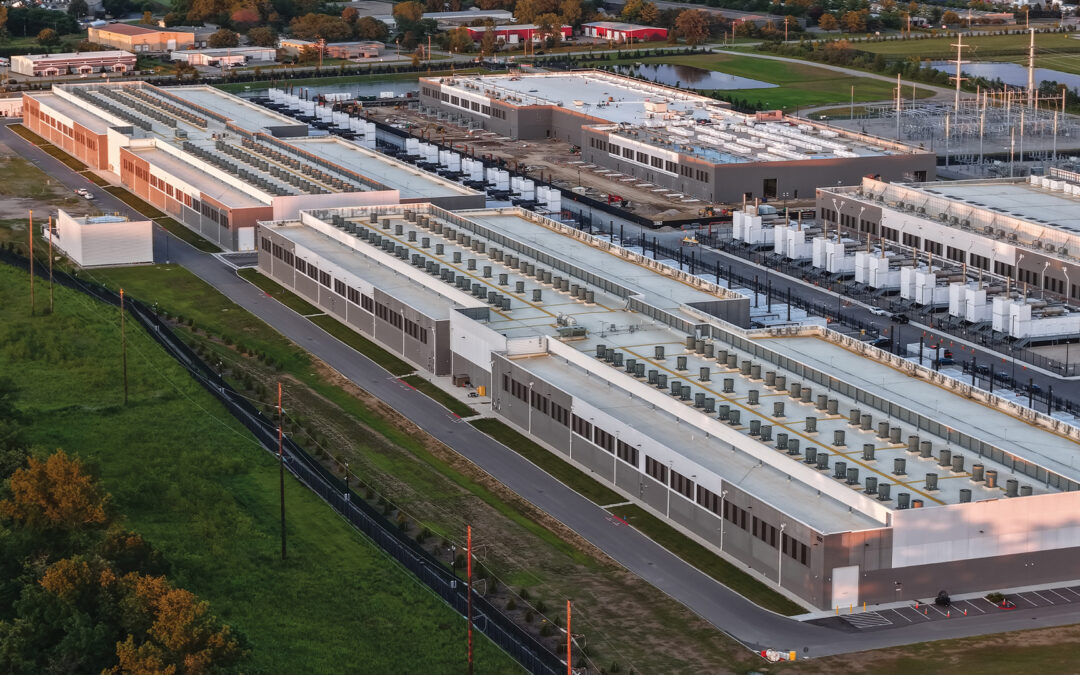
Americans are embracing AI tools with open arms—but revolting against the data centers powering them. What gives?
“Make this email sound smarter.” “Help me plan a trip to the Caribbean.” “Why am I getting ghosted?” More and more people are turning to chatbots and other artificial intelligence tools as built-in best friends, guidance counselors, financial consultants and teachers to assist with—or take over—everyday to-dos, tasks and blank spaces life doesn’t always provide the time or energy for.
And, apparently, everyone’s a graphic designer now too. Clogging Facebook feeds and telephone poles alike, AI-generated flyers are popping up for everything from Jesus Christ and food truck menus to painting nights at your local bar. Call it convenience, anti-creativity or straight-up slop—AI is everywhere.
But if you ask an average American for their take on the data centers powering the digital free-for-all, they’ll likely say they’re noisy, ugly, expensive, and devour water and electricity. Few seem eager to welcome one into their own backyard.
While 65% of people use artificial intelligence regularly, only 1 in 9 Americans support the construction of the data centers powering those tools in their community. But using AI doesn’t necessarily mean endorsing every piece of infrastructure behind it—so where does reasonable concern end and convenient hypocrisy begin?
That debate has already made its way to Raleigh, where City Council recently approved a six-month moratorium on larger-scale data centers in October—even as activists push for a longer pause. So why only six months? One City Council member told RM the timeframe was seen as a “reasonable amount of time” to minimize the risk of legal action from tech giants (as we’ve seen in Chatham County, Nashville and Michigan City). The city could also extend the moratorium if necessary.
Raleigh “is a tech center,” maintains Mayor Janet Cowell. “We are home to NC State University, which is a STEM university, [etc.]. We definitely want to protect those already operating and not disrupt existing research and development, and we want to have a very rational, careful approach that protects individuals who live in Raleigh and still be an… innovative city.”
Even before that pause, plans for a data center in Southeast Raleigh were withdrawn in August just two days before the annexation request was set to appear on the City Council agenda. The proposal sparked immediate widespread backlash, with more than 130 people signing up to speak about the project.
“My biggest concern is the environmental impact,” one Southeast Raleigh resident tells RM, “and I don’t think neighborhoods should have to bear the burden of these data centers. I’m not against AI, but I do think we need to slow down and think a little more about how we’re using it, what we actually need it for, and what we might be giving up in the process.”
While the controversy feels fresh, data centers are far from new. The sprawling Meta data center along U.S. 74 near NC’s Forest City broke ground in 2010, and the U.S. alone has over 3,000 operational centers right now. But the literal powerhouses fuel far more than just chatbots and your aunt’s generative Facebook posts (if you’re reading this article online right now, thank a data center). Though cloud storage, streaming and digital services have long driven demand, AI is the main catalyst pouring the fuel on the fire—requiring enormous computing power, energy and cooling capabilities to keep up.
Today, 1,500 more data centers are currently planned or in the works across the U.S.—and experts say that number will only continue to skyrocket in the coming years. Already, 38% of Americans live within 5 miles of at least one operational data center, and another 4% live near one that is either slated or under construction—meaning soon, almost half of all Americans will live in the vicinity of these giant tech lairs.
To be fair, data centers aren’t all bad news: They bring years of construction work, tax revenue and infrastructure smaller towns otherwise couldn’t fund on their own. “As NC communities consider moratoriums on data center development, there’s an economic opportunity worth exploring—how the state can keep the door open to responsible growth that benefits local workers, small businesses, and infrastructure,” emphasizes data center proponent Tom Simon.
But the true cost—and what’s fueling the backlash—lands elsewhere. Once they are up and running, data centers employ relatively few people and lean heavily on local resources.
Already, ~5% of all U.S. electricity is used by data centers, and in Virginia—the state with the most centers thanks to cheaper power and cooler weather—almost a quarter of all electricity is used to power them. Larger centers use enough power to rival a small city and strain the grid, which raises the question: Who should pay for power upgrades—the developer or residents?
Spoiler alert—in many cases, it ends up on the consumers’ tab. One estimate claimed customers in Maryland could pay around $216 more each year thanks to the AI factory boom. “Everyone pays those costs,” said Ari Peskoe, director of the Harvard Electricity Law Initiative. “They’re spread across the region to every business and resident that has an electricity meter.”
In addition to the grid headache, data centers use egregious amounts of clean water: Large centers can use up to 5 million gallons per day. As such, residents in Georgia are currently suing Meta, alleging the data center in Stanton Springs has contaminated water and created “poor living conditions.” The town is even reportedly on track for a total water deficit by 2030.
On top of resources, tax breaks for developers and noise (the loud hum that comes from the centers 24/7) add even more friction. As controversy continues to grow, local and state moratoriums are on the rise too—from just a few communities pausing or banning data centers in 2025 to almost 500 this year, including Raleigh, despite the federal government broadly supporting the data center boom.
“The only reason communities throughout the USA should not want data centers is if they want to end up being backward and poor,” President Trump said on Truth Social, after also notably including tax breaks for rural areas with data centers in the Big Beautiful Bill.
As bipartisan pushback grows, Congress is introducing legislation aimed at easing the financial and environmental burdens on communities without derailing data center development—but so far, it’s done little to quell concerns, and public sentiment continues to sour.
It’s hardly surprising that communities are rebelling against the looming threat of data centers. For neighborhoods already grappling with rising costs, the prospect of higher utility bills, strained resources and potential pollution is hardly an easy sell.
But while the backlash against data centers grows, so does the use of AI—specifically, large language models people are now putting to work every day to prop up their schedules, grocery lists and travel plans on the lik es of ChatGPT, Claude and Gemini. Studies show people are even starting to talk like ChatGPT, and 78% of orgs use AI in at least one business function.
“I don’t think using AI means you have to support every aspect of how it’s developed or operated,” a chatbot user tells RM. “And you can still recognize the benefits while wanting companies to be more responsible about where they build data centers.”
Overall, the industry touts benefits like a boosted economy and increased productivity, with the potential to spur enhanced health care and medical breakthroughs, customer service, and transportation in the near future. Already, AI has helped uncover triggers for Alzheimer’s, studied better treatments for tuberculosis and created more efficient breast cancer treatment plans.
But for all its advances, researchers also note chatbot use can cause a decline in cognitive engagement (read: it can make you dumber), cite biased sources, fabricate facts and deplete emotional connection. Despite the red flags, the growing demand for efficient generative
AI remains.
So, is there a middle ground? Tech giants could engage communities before breaking ground, notes NPR, and be more transparent about noise pollution, higher electric bills and water usage. Eventually—like China—U.S. data centers could even use seawater for cooling systems, and save potable water for *humans.*
And using renewable energy to power data centers is within reach—Apple, a notably slow but thoughtful player in the AI race, powers their eight centers using wind and solar farms, and some AI functions on newer iPhones can be processed directly on the device, reducing reliance on data centers.
But even with advances in renewable energy and on-device processing, data centers still consume substantial resources and have an undeniable impact on the surrounding environment. Americans have every reason to ask who bears the burden.
So, are you a hypocrite? Maybe. There’s a difference between demanding that other communities deal with the consequences of your digital habits and demanding that big tech and developers deal with the consequences of their own projects. You can use AI and still be an advocate of more responsible data centers—not just where they are built, but how. But here’s the inconvenient truth: You can’t keep asking AI to do more without acknowledging the cost of powering it. The cloud, as it turns out, has a very real footprint.
SAFETY FIRST?
Some former AI employees maintain the negative impact goes beyond bias, privacy issues, misinformation and slop—with many industry insiders speaking out that it could end humanity altogether. And not in some distant time period—if the technology continues to go unregulated, there’s a purported 10% chance it could annihilate us by 2030, says a former Anthropic researcher.
“They are racing straight to self-improving superintelligence and gambling with our lives,” said ex-Anthropic employee Jacob Coxon, who resigned in protest. Other technology safety groups and AI frontmen—including Anthropic CEO/co-founder Dario Amodei and OpenAI CEO Sam Altman—have demanded safeguard legislation, but have yet to prevail against Trump’s plan for tech companies to voluntarily “self-regulate.”
Many Americans agree that tech giants and the government should prioritize keeping humans in control of AI. But as with opposition to data centers, attitudes and habits don’t always align: While over half of adults think the technology is growing too rapidly, the majority still use AI willingly all the same.
THE ROI—OR LACK THEREOF
Despite myriad accolades and soaring everyday usage, it’s not all sunshine and rainbows for AI and those funding it. For starters, despite billions being dumped into large language models, most companies have yet to turn a large profit—or any profit at all. In 2025, a study found 95% of studied orgs got zero return on their investments in generative AI, and some experts liken the situation to the dot-com bubble: a financial disaster waiting to wring companies dry.
by Heidi Reid | Oct 29, 2026 | Eat, November 2026
Chainlets are just local restaurants covering all the bases.
Wining and dining at a “chain” restaurant doesn’t always mean ditching local eats for corporate monotony.
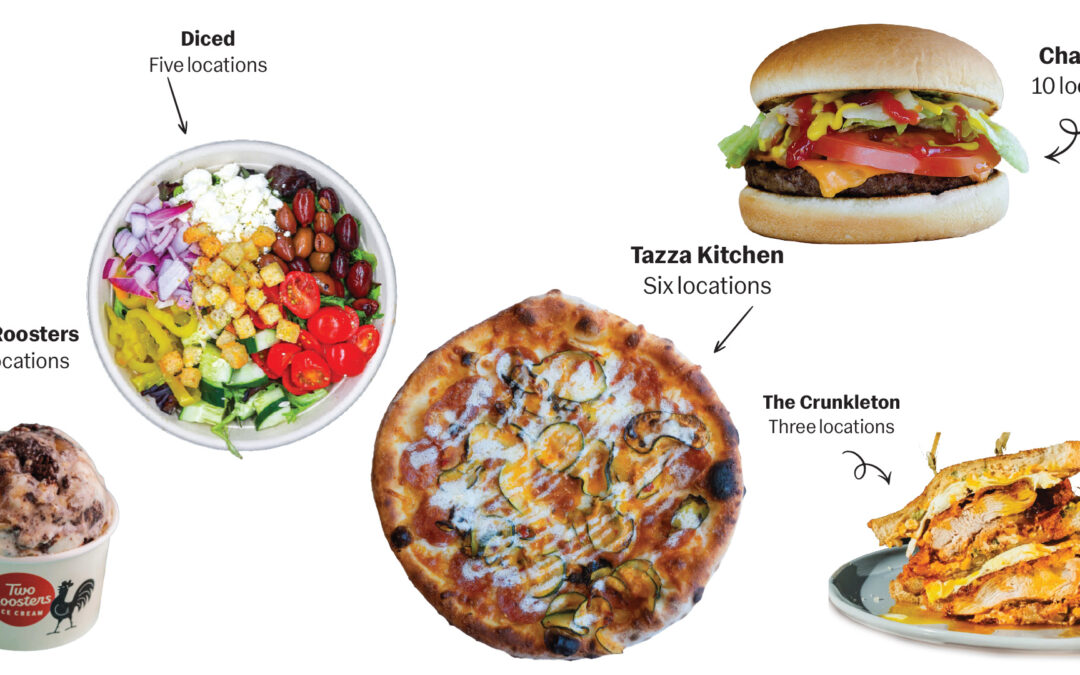
Enter the chainlet: a still-small local restaurant brand with a growing regional footprint. Coined by New York Magazine, chainlet essentially describes a local spot that got popular enough to multiply—but not enough to wind up off every highway exit with the essence (and smell) of an Applebee’s.
They transcend food fads and build brands that don’t just survive, but thrive—enough to establish several outposts and a footprint without fumbling flavor or the small-business feel. Think beloved neighborhood resto, now with siblings. But, there is a tipping point. Once these concepts balloon beyond a dozen-ish spots—or
open digs in the likes of LA, Vegas and NYC—they graduate to full-fledged chains.
The sweet spot: growing the footprint without losing the flavor, personality and small-biz appeal that got people hooked in the first place—by staying regional or sticking to smaller cities. Raleigh—and NC—has plenty that fit the bill. We scanned the scene for go-to homegrown mini empires.
3 locations:
Benchwarmers Bagels
The Cowfish
The Crunkleton
My Way Tavern
4 locations:
Come Back Shack
Jubala
Vic’s
Wong’s Tacos
5 locations:
Diced
6 locations:
Midwood Smokehouse
Tazza Kitchen
Two Roosters
7 locations:
K38 Baja Grill
8 locations:
Hibachi 88
10 locations:
Char-Grill
Timber Pizza



