by Heidi Reid | Dec 4, 2025 | Buzz, December/January 2025
This article is being updated as additional information is released.
UPDATE Nov. 28: Pro-immigrant group Siembra NC reported ICE is deploying 50 agents to Raleigh and the surrounding areas Dec. 1 for a monthlong operation.
***
“They went into the building where people were working, being productive members of society, pulled them out, put them in handcuffs and drove away,” says Cary resident Pamela Hoile. “It’s not giving anyone due process.”
Her account captures the fear that swept across Wake County Nov. 18 when Customs and Border Protection moved in with little warning—disrupting school days, shuttering businesses and grinding daily routines to a halt. The terror extended far beyond undocumented residents. With uncertain immigration policies and tactics perceived by many as racially targeted, entire communities shut their doors and stayed inside.
While the exact number of detainees from initial raids is unavailable,* locals witnessed agents making arrests. Hoile witnessed four men taken from a construction site. After spotting an all-black SUV with tinted windows and Texas plates, she followed it as a second vehicle joined, and both pulled into the site, where she says the men were detained. “I call them ‘kidnappings,’” she tells RM.
Across the county, sightings mounted—from Southeast Raleigh to a Cary Home Depot—and pro-immigrant group Siembra NC confirmed at least 20 sightings within the first 24 hours. While unofficial reports claimed the Raleigh raids wrapped up after a day, agent sightings continued, and the sudden appearance of an ICE HQ in Cary* further fueled anxiety as the city slowed across all major sectors.
“As immigrants, our reality is now masked vigilantes with no respect for human rights or the law,” Mala Pata owner Angela Salamanca tells RM. “What do you do with that? That is terrorism.”
Mala Pata quickly announced limited capacity for the week, with Salamanca saying they won’t fully reopen until their staff feel safe coming to work. The restaurateur stressed the importance of talking with impacted communities—not taking away their agency by assuming what they need.
The fear even touched workers with legal status. “I think it’s messed up that people come here, work and try to give their families a better life, and are then being taken,” says a local construction worker, noting many colleagues stayed home for days despite having documentation or DACA status. “I understand it for those with violent criminal backgrounds, but it’s messed up so many have to worry about even walking outside of their house.”
Nowhere was the disruption more visible than in Wake County Schools. A staggering 19,471 students—or 1 in 9—were marked absent the day after CBP operations began. At one local elementary school, an ESL teacher tells RM more than half of her students were out. Officials expect lower attendance to persist as long as CBP does.
Legally, public schools must remain accessible to all children regardless of immigration status under Plyler v. Doe, and Wake County Public School System says it doesn’t track student immigration status and will seek legal counsel before granting any law enforcement access to campuses.
“One thing we want to do is express to our parents that students have a right to be at school,” said Superintendent Robert Taylor in a statement.
The fear gripping the city—and the county—stands in stark contrast to statements from DHS, which maintained their focus is on removing “criminal aliens.” Gov. Josh Stein called on the agency to focus precisely on that: “Stop targeting people simply going about their lives because of the color of their skin,” he admonished. Meanwhile, Mayor Janet Cowell strongly urged Raleighites to remain peaceful amid the pandemonium.
Raleigh heeded her call—and showed up. Peaceful protests formed almost immediately, with a clear message: “We aren’t going anywhere,” as one activist says.
“We didn’t ask for this presence,” says Cowell. With DHS refusing to discuss future operations, uncertainty lingers—regardless of whether ICE returns to Raleigh. For now, fear remains the constant, and communities across the state—and nation—are bracing for what comes next.
*As of press time
by Heidi Reid | Dec 4, 2025 | December/January 2025, Eat
Big Ed’s is built to last.
Can you even call yourself a Raleighite if you haven’t indulged in a big breakfast at Big Ed’s Restaurant? The country-cooking mainstay has been holding down City Market since 1989 for good reason: hearty authentic plates, affordable prices and an atmosphere so homey it’s practically kinfolk—all refusing to let Big Ed’s fade into the annals of time.
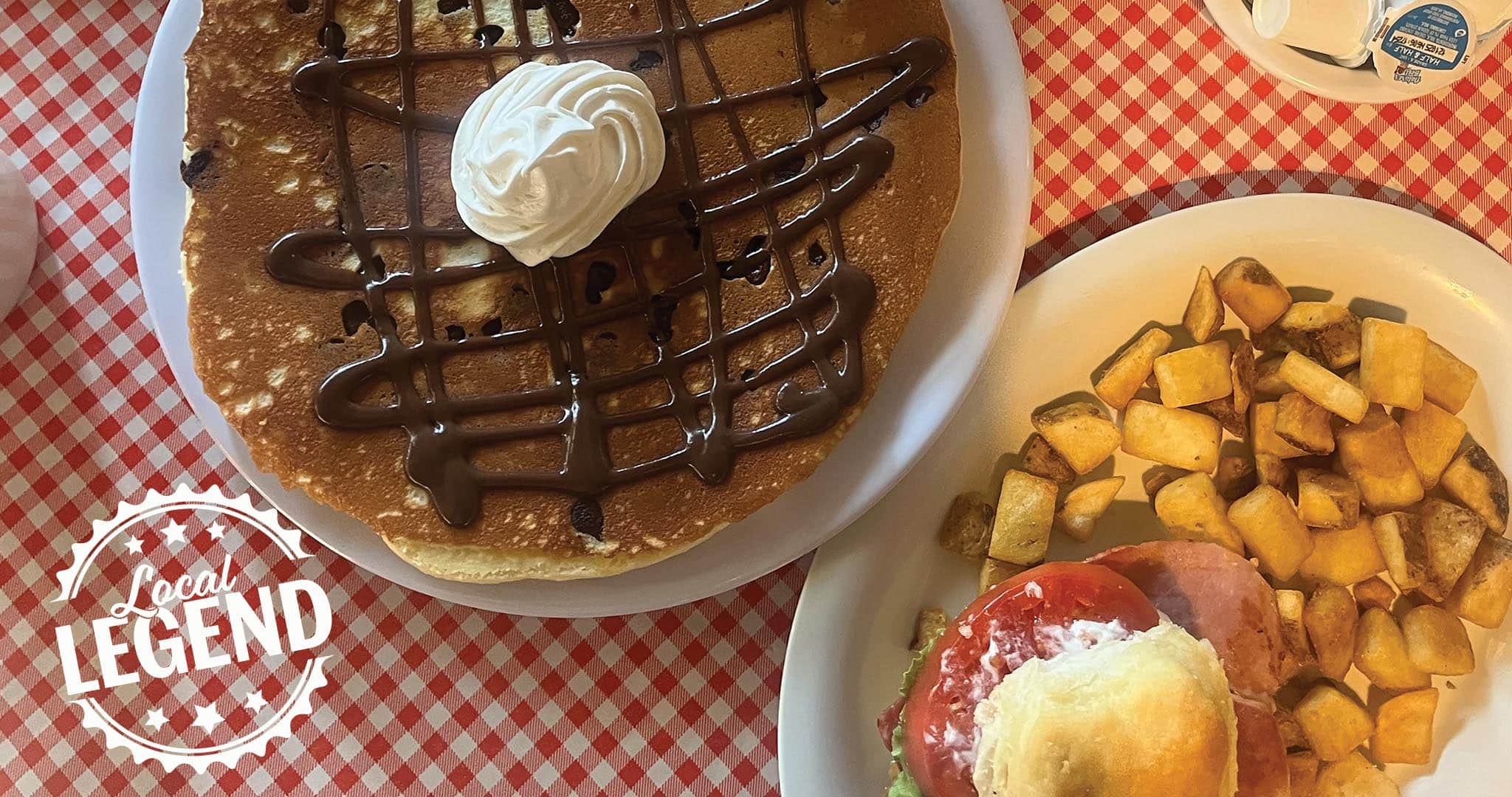
On my recent Saturday morning (post-barhopping) jaunt, the City Market mainstay was—as usual—abuzz with regulars and newbies alike. While I was able to waltz right in and be seated, a long but fast-moving line formed shortly after. Steamy cuppa black coffee later, the kitchen speedily churned out my choice of a farm-fresh country breakfast: scrambled eggs, cheese grits, a biscuit (buttered, natch) and bacon. No frills, just good comfort cooking—it’s one of the many down-home specialties that never miss. And, of course, I had to secure the hotcakes—thick, fluffy, fattening and the size of your head, they’re a staple on any visit to the longtime establishment.
The OG Big Ed who started the whole operation in 1958 retired in 2006—but his homestead-esque legacy lives on, not just through his recipes, but through the eatery’s ambiance. Big Ed’s is what Cracker Barrel wishes it was: the epitome of Southern Americana, right down to the rusted tools and antiques hanging from the ceiling, the red-checkered tablecloths and ever-wandering server with a fresh pot of coffee. That deep, generational legacy—the true heart of Big Ed’s—endures long after you’ve treaded past the uneven cobblestones of City Market.
Raleigh restaurants can often feel like trendy moments—coming in hot with what’s new while failing to feed lasting legacies. Surrounded by an ever-evolving skyline and the city’s constant craving for what’s next, Big Ed’s has held its ground. And while Raleigh is rightfully excited about the forward momentum of its bustling food scene (we see you, Michelin), lest we forget the OG restaurants like Big Ed’s that made us who we are. City Market, North Raleigh, Garner; bigedsnc.com

by Heidi Reid | Dec 4, 2025 | December/January 2025, Do
Rex, who? The NC Museum of Natural Sciences has announced definitive proof of a new tyrannosaur species: Nanotyrannus. Paleontologists at the museum’s SECU DinoLab have been studying the iconic 67-million-year-old Dueling Dinosaurs fossil—two dinos forever preserved midbattle in a believed predator-prey encounter between a Triceratops and what was initially thought to be a young T. rex.
Turns out, that “teenage T. rex” is actually a full-grown Nanotyrannus—marking one of the biggest paleontology shakeups in years. See the discovery up close at the museum’s ongoing Dueling Dinosaurs exhibit. naturalsciences.org
by Heidi Reid | Dec 4, 2025 | Arts & Culture, December/January 2025
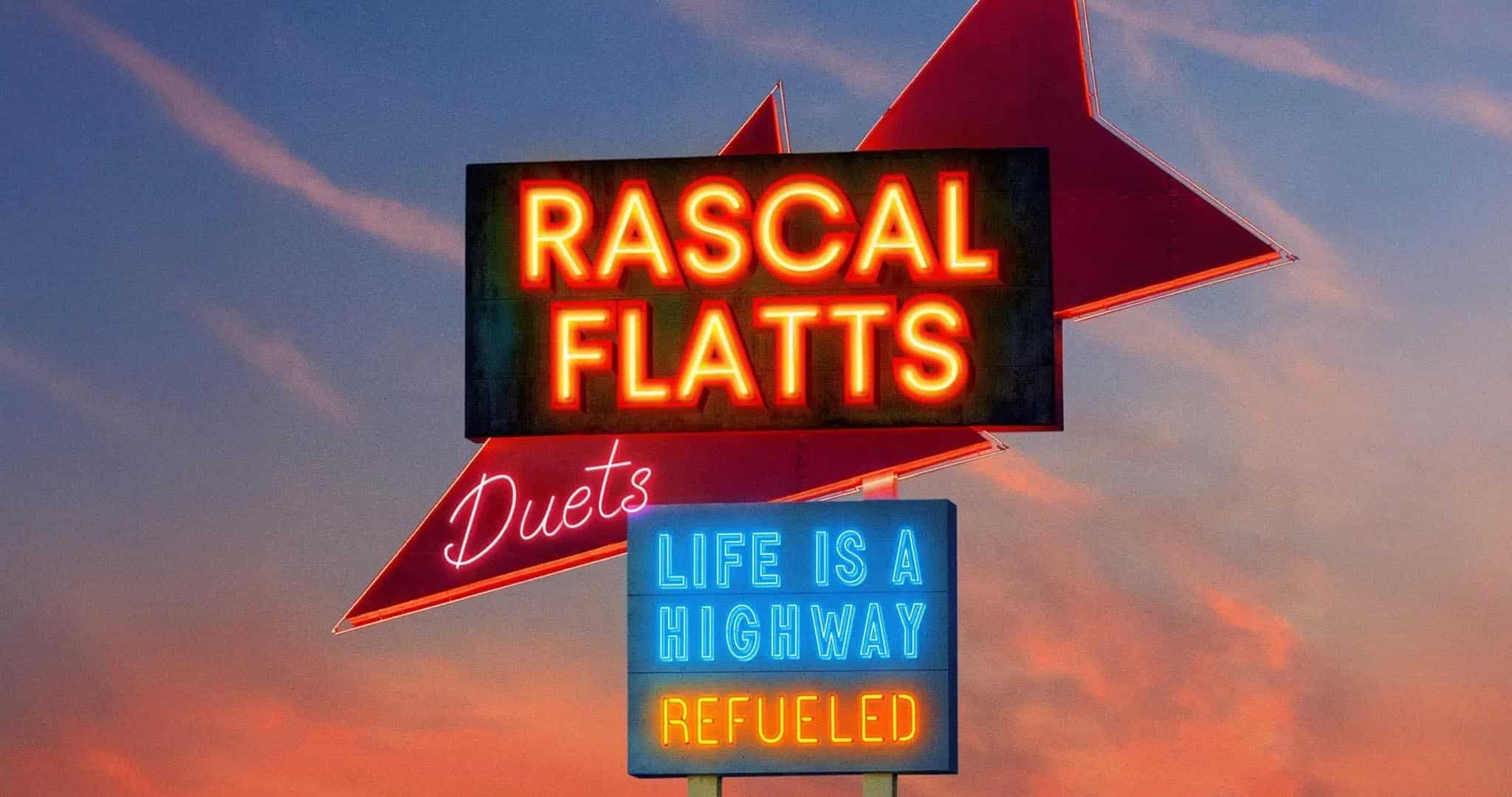
RM chats up modern country icons Rascal Flatts
If you think you don’t know Rascal Flatts—think again. From their forever-iconic Cars soundtrack anthem “Life Is a Highway” (aka one of Disney’s biggest bangers) to 17 No. 1 hits, over 23M albums sold, 35M+ more digital downloads and ~11M concert tickets sold, the Columbus-bred threesome has done it all.
After officially disbanding in 2021, the band is back together to finish some unfinished business: A North American 25th anniversary tour that rolls into Raleigh at the Lenny Jan. 15.
Across two decades of tracks radiating that signature twang, Rascal Flatts has defined the sound of mod country—though early albums dipped into a more pop-like sound, proving the band is anything but a one-trick pony. Thanks to immediate commercial success following their distinctly country debut, switching up the sound in later releases felt risky, bassist-vocalist Jay DeMarcus tells RM.
“I wasn’t sure about ‘What Hurts the Most’ at first,” remarks DeMarcus. “At the time, I felt like I was taking a chance because it was on the pop side, and it was a ballad right at the beginning of the year—so that one blindsided me a little bit.”
As for new music, DeMarcus says the main focus is on the road for now—but if any new songs fall in place while on tour, he can’t imagine they wouldn’t take advantage. And while fans might wonder if this is the final ride on the highway of life, the bassist isn’t ready to call it quits.
Regardless of what the future holds for the Flatts, DeMarcus says the next gen of rising country artists are proudly propping up country. “That’s one of the things I love about our genre,” he says. “There’s room for everybody. If you want to come over here and collaborate, we are so ready to accept you for who and what you are.”
So buckle up, fans—Rascal Flatts is back, “country is cool,” and Raleigh’s about to go full throttle.
by Heidi Reid | Dec 1, 2025 | Arts & Culture, December/January 2025
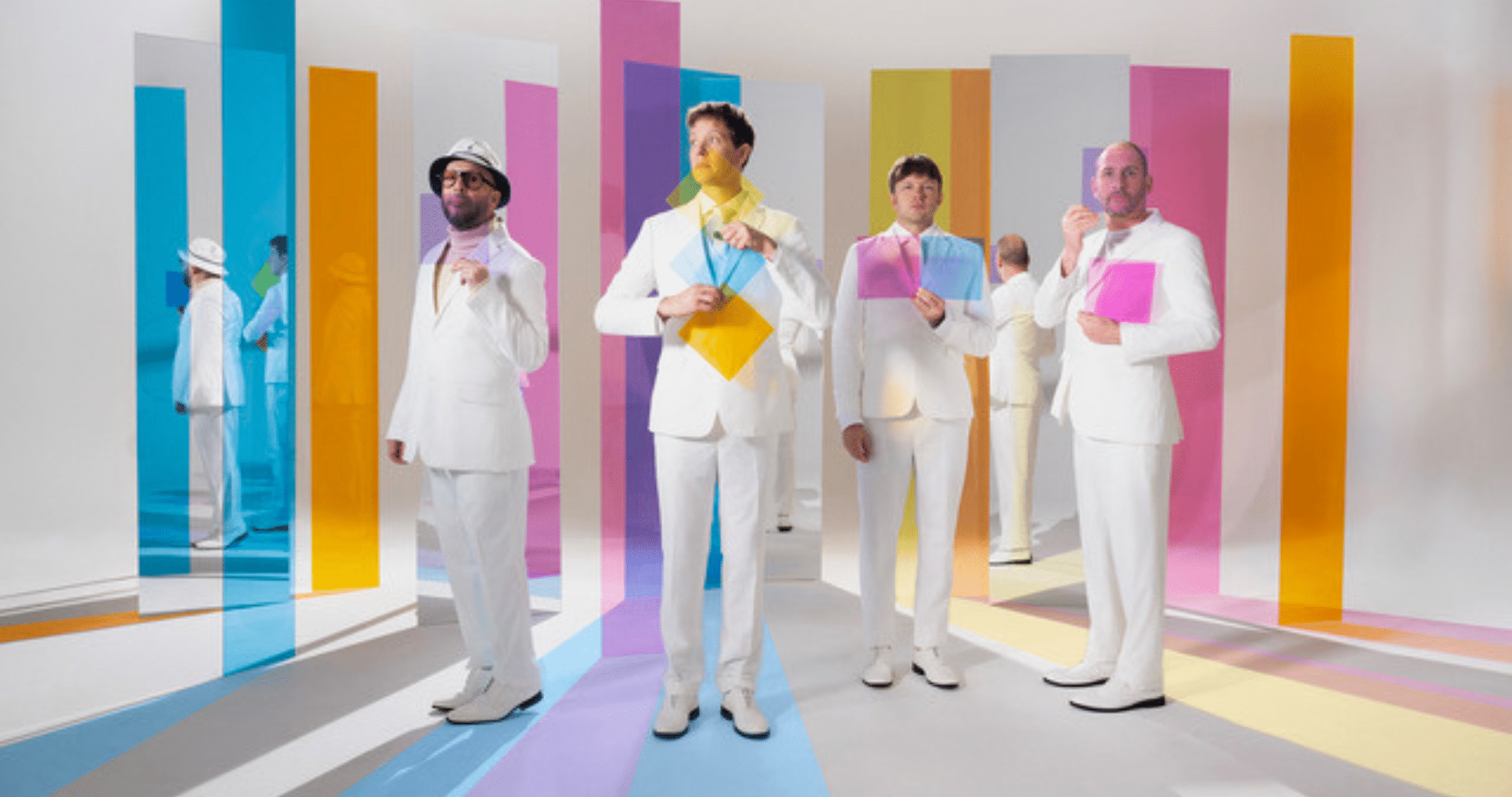
OK Go is going to The Ritz—and you should too.
OK Go is a millennial dream. More of an ongoing art project than a band, the group’s sleazy-meets-kitschy pop songs are reminiscent of Vampire Weekend with a touch of Passion Pit—and usually paired with one of their renowned music videos, leveling up production standards and haunting every music awards show you can think of.
Now, the band is carrying its indie-pop sound to a new era via their first album in 11 years, And the Adjacent Possible, along with a four-stop winter tour dotting the Southeast—including an Oak City show at The Ritz Dec. 6.
The ~decade-long hiatus wasn’t intentional, bassist Tim Nordwind told RM. Aside from the pandemic throwing a wrench in everyone’s plans, the band spent a few years caught up in individual sidequests: children were raised, movies were directed, music for a kids TV show was produced—and in between it all, the record was written bit by bit.
“We didn’t really get back together and in the studio again until towards the end of 2023, really,” remarks Nordwind. “It took most of 2024 to sit down, focus and pull what we had written the last couple of years together, plus write a few new things and get everything mixed.”
And the Adjacent Possible doesn’t pick up exactly where the band left their sound in 2014, but Nordwind says it’s not the time evolving their music, but rather their writing process. “We were not concerned at all with what was trending,” he notes. “And I hear us in the music more than I’ve ever heard it before, you know? Maybe that’s just a thing that comes with experience.”
Over the past decade, the ever-changing landscape of the industry majorly shifted the main sector that OK Go used to build their brand: music videos. The art form, which used to be considered as important as the music itself, is falling off as viewership plummets. But OK Go doesn’t care about the trend report.
“The videos were happy accidents in the first place,” reminisces Nordwind, noting he does feel attention spans are far shorter now. “We have decided we are going to stay our course. We like the results we get by the way we’ve done things.” Stay tuned for more artful whimsy music videos, and go (!) to The Ritz to see the artists live. okgo.net, ritzraleigh.com