Is a Michelin-star restaurant also a tourism cash cow?
Fun fact: North Carolina will pay more than $1 mill over three years—about $345,000 annually—to be included in the Michelin Guide American South. The prestigious price tag covers Michelin critics crisscrossing the state, largely funded by Visit NC, with the Raleigh, Durham, Charlotte and Asheville tourism bureaus footing the rest.
So what makes a Michelin star—nay, the chance of a star—worth such a wad of cash? In the culinary world, no accolades shine brighter. As the pinnacle of culinary prestige, a Michelin nod puts a city on the map. After all, a star-studded city calls to foodie tourists far louder than one without.
Research shows Michelin-acclaimed eateries tend to attract international tourism rather than local diners—aka visitors spend far beyond the dinner bill. And the impact doesn’t stop there: A Chicago study found that “an increase of one Michelin Guide restaurant leads to a 0.5% increase (or roughly $1,141) in the home value of the median home in a neighborhood.”
Bottom line? NC’s bet on Michelin is more than a bid for bragging rights—it’s an investment in the state’s culinary and cultural credibility.
“For many chefs in North Carolina, this is their dream. And, more importantly, it’s a dream they didn’t think would become a reality. … They are going to have a chance to shine.” —SCOTT PEACOCK, VISIT NC DIRECTOR OF MARKETING & COMMUNICATIONS
By the Numbers
2005 First Michelin Guide lands in the U.S.—in NYC only 57% say they’d extend a trip for a Michelin-starred experience 66% would choose a Michelin destination over a comparable option 71% are willing to up their spending for a Michelin-starred adventure
First, they went out of style—then they went viral.
Hear us out—chains are back. Replacing the greasy drive-thru bags and overblown prices of late, OG sit-down chains are making a serious comeback. After the alleged millennial backlash of ditching “uncool” fast-casual for hipper joints, the 2008 slump paved the way for fast food to reign as the go-to affordable option.
In part because, since the pandemic, sticker shock has set in beneath those golden arches. Read: A Quarter Pounder with cheese now sets you back 20% more than in 2019, and a 10-piece McNuggets meal clocks in 28% higher than 2020.
Now the age-old dictum of supply and demand: Full-service chain restaurants are officially having a moment. Chili’s Triple Dipper blew up on TikTok. The Melting Pot’s midlife glow-up spanned nearly 100 locations. Even Red Lobster—fresh off bankruptcy filing—is clawing its way back.
In a time when a fast-food meal easily runs $15, it’s no wonder patrons are changing course. Chili’s meal deals start at a $10.99 steal, and that viral Triple Dipper is just $16 for three selects plus sauces. “It’s cheap, delicious, you don’t have to dress up to eat there, and unlimited sauces seal the deal,” says a local Chili’s stan, who “had to get her hands on” a Triple Dipper after seeing it explode on her socials. “The internet is obsessed.”
And the proof is in the pudding—er, ranch (?). Olive Garden and Chili’s are clocking impressive sales rebounds and stock boosts, and Red Lobster expects to see positive net income in fiscal 2026—quickly turning around the endless shrimp catastrophe of 2024. So what’s got Americans sliding back into those overstuffed leather booths for unlimited meal deals and bottomless cocktails?
Price point aside, chain diners cite consistency as a selling point. Traits once seen as boring and hollow a decade ago are now hailed as nostalgic and reliable. Raleighite Mo Weiler notes her mainstay chain franchises Chili’s, Olive Garden and Texas Roadhouse turn their noses up at dining trends—and she’s here for it.
“I love chains, particularly when I don’t know what I want to eat,” she muses. “I can just go get a burger, a steak or a bowl of pasta, and know I’ll like it.” She also cites the casual dress code—“I can go in my sweatpants and no one bats an eye.”
To boot, many chains are leaning into these original strengths—tapping throwback marketing, retro aesthetics and menu revivals—and the masses are showing out for it. If the success of sit-down chains stays on beat, we may just be witnessing a classic American comeback story.
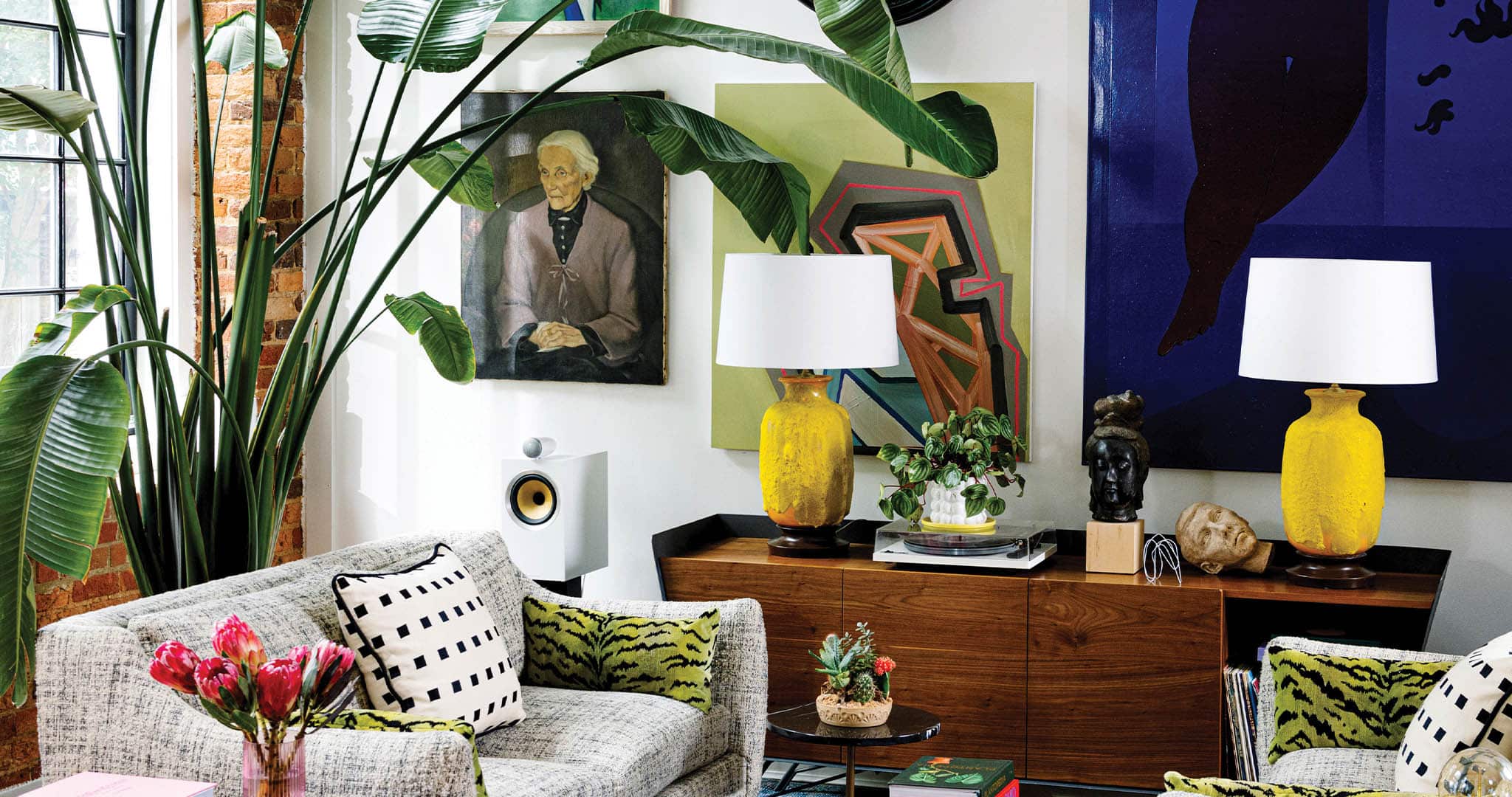
Sharing Raleigh’s creative flow with a national audience is Roux MacNeill Studio co-founder Robert MacNeill and his art-forward loft condo at Caraleigh Mills. Featured on The Design Network’s The Reveal—with a major cameo in Architectural Digest to boot—the former mill-turned-sanctuary gives the Cap City a front-row seat to “honest craftsmanship, layered materials and pieces that tell a story,” kissed with a healthy dose of color.
“Caraleigh Mills proves there is nothing better than an old building where honesty of materials and functionality of the architecture is the rule,” muses MacNeill. “I consider it a playground where I can experiment with design.” Clearly, revamping a historic home never goes out of style.
First look: Raleigh punches above its weight with the state’s largest, most tech-savvy convention center.
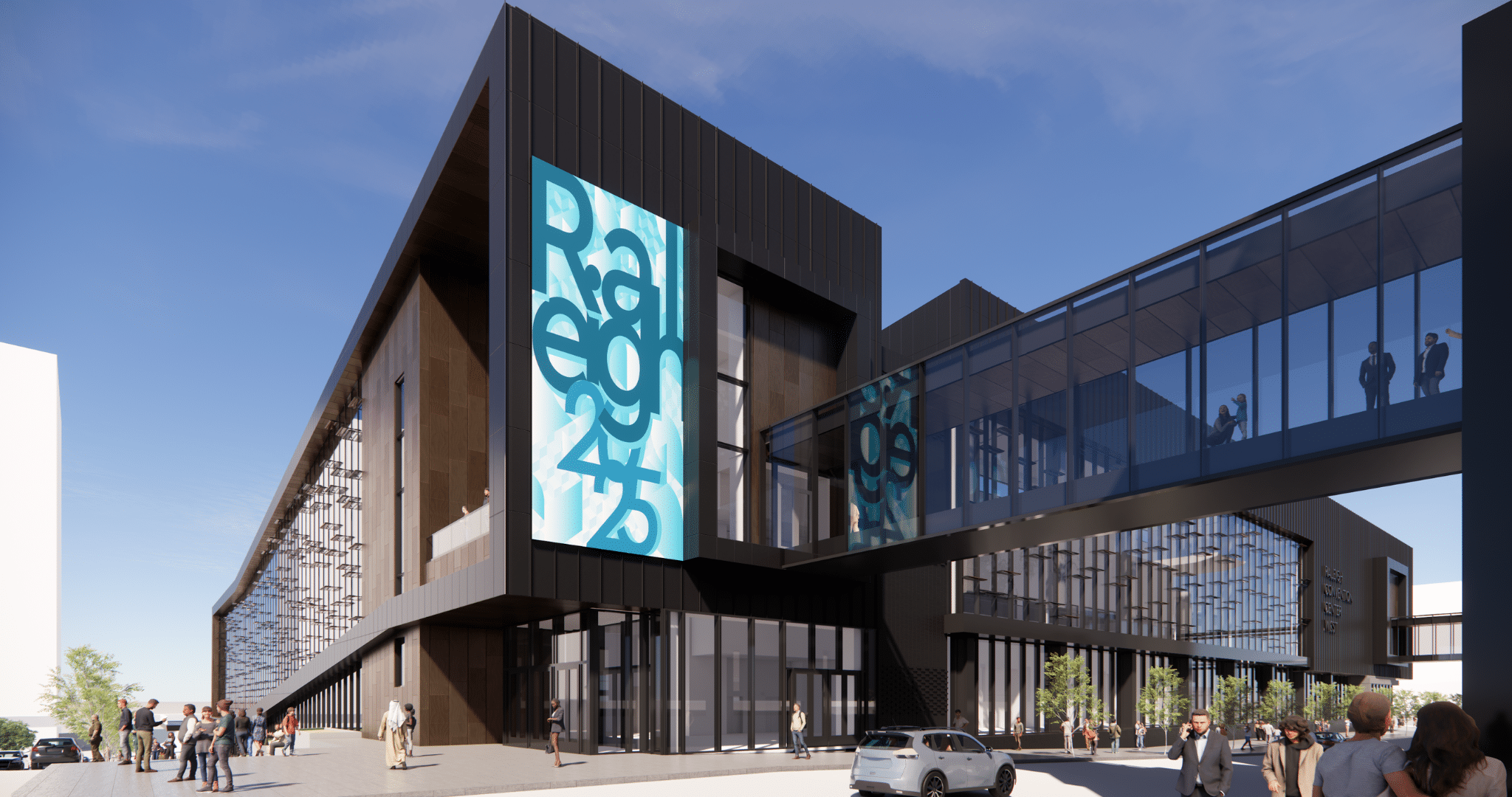
THE CITY’S long-term vision for a next-gen Raleigh Convention Center is finally taking shape. Once Red Hat Amphitheater relocates and expands in the coming year, the venue will gain nearly 300K square feet via a second building rising where the current amp sits at South McDowell and Lenoir.
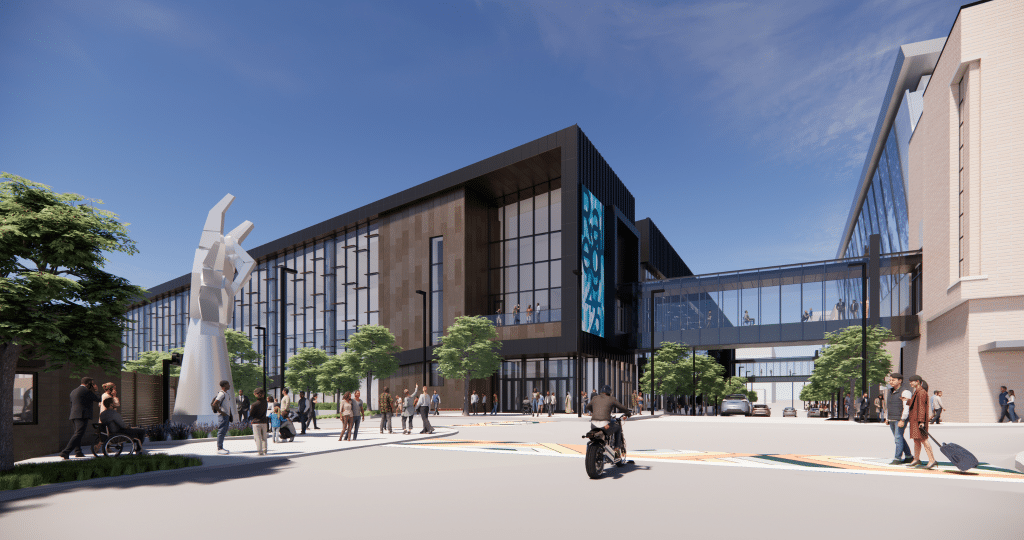
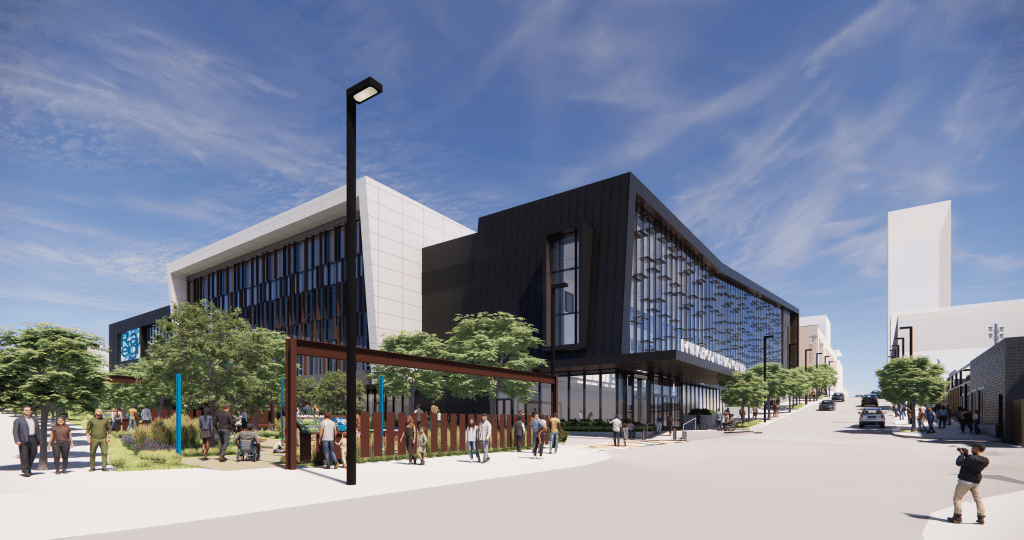
The new space’s mod exterior—inspired by community input to feel like a “cousin” rather than a “sister” to the original—pairs dark, sleek angular lines with expansive windows that flood the interior with natural light. Connecting the two structures are two second-floor glass walkways crossing over South McDowell—perpendicular to the iconic shimmer wall across the way.
Adding tech flair to the building’s Southeast and Northwest corners, two Times Square-esque LED screens will spotlight upcoming performances and events—adding a dose of urban energy to the DTR skyline. Across Lenoir, a striking LED hand sculpture will display artist names and showtimes on its wrist, first debuting at the current Red Hat Amp before moving to the new site.
Beneath the LED display at Dawson and Lenoir, native gardens repping NC’s coastal, piedmont and mountain regions will give guests a literal breath of fresh air between sessions. “It’s a chance for people to get to see more of North Carolina in an abbreviated little pocket,” muses Executive Director Kerry Painter. Even the loading dock will be cleverly tucked behind the gardens.
For those concerned about parking and traffic, don’t fret: The deck at South and McDowell will remain and traffic flow won’t change. And, surrounded by hotels, the space also keeps things walkable for out-of-towners.
Design Architect: TVS; Architect of Record: Ratio
Inside, the venue touts a 48,700-square-foot flex space—divisible for everything from luncheons to volleyball tournaments—plus an upscale 18,100-square-foot ballroom and 13 new meeting rooms, elevating Raleigh’s hosting abilities for larger expos.
Altogether, the expansion answers the call to draw new and larger marquee moments while giving returning summits room to grow. When completed in 2029, Raleigh will boast the largest convention center in the state—topping Charlotte at 798K square feet.
“We punch over our weight,” says Painter. “People love coming here to exchange knowledge from around the world. We have a lot of intellectual capacity: It lives here; it does business here; it builds here; and it makes people pay attention to us. Everyone in our industry is like, ‘Yep, there they go again.’” The market asked—and Raleigh is delivering.
Heeding President Trump’s call to secure more Republican seats across the nation, NC Republican legislative leaders announced plans Monday to introduce and vote on a redrawn congressional map next week, with the intention of shifting a U.S. House district seat from the Democrats to the Republicans.
“President Trump earned a clear mandate from the voters of North Carolina and the rest of the country, and we intend to defend it by drawing an additional Republican congressional seat,” says House Speaker Destin Hall (R) of Caldwell.
The current congressional map—drawn and passed in 2023—gave Republicans a significant majority in 10 out of 14 districts (with a chance at an 11th) and is facing gerrymandering allegations. Beforehand, the NC congressional delegation sat perfectly even, with seven Democrats and seven Republicans.
Providing more insight into the party’s motives, Republican state reps. Brenden Jones and Hugh Blackwell stated updated maps are necessary to thwart “California and the radical left” from “handpicking” who runs Congress. Senate Leader Phil Berger concurred, saying NC Republicans are “doing everything we can to protect President Trump’s agenda, which means safeguarding Republican control of Congress.”
NC Dems responded immediately. House Minority Leader Robert Reives of Chatham said Republicans are dodging accountability. “The party’s politicians are more focused on consolidating power than on lowering costs or funding the state’s Medicaid program,” he wrote in a statement.
Gov. Josh Stein wasn’t on board either: “The General Assembly works for North Carolina, not Donald Trump,” he wrote in a statement—but under the NC Constitution, governors don’t have veto power over congressional maps. (Fun fact: The Governor didn’t have veto power at all until 1996.) Furthermore, the U.S. Supreme Court ruled federal judges cannot overturn electoral maps on the basis of partisan gerrymandering.
Stay tuned for updates as NC lawmakers introduce the new map.