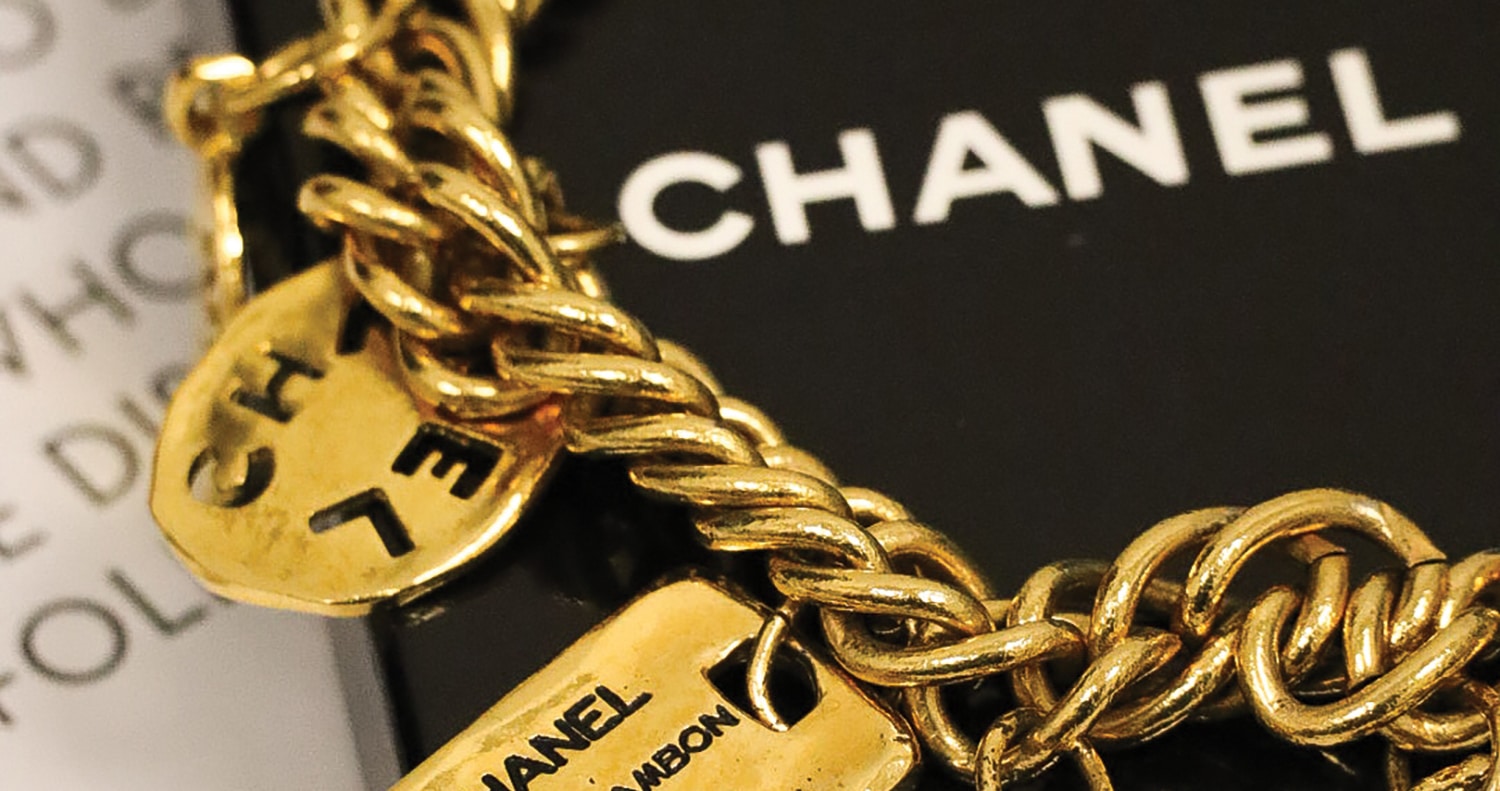
RH, Audemars Piguet, CHANEL Beauty. From the looks of these recently bowed and forthcoming brands, it’s clear the cap city is starting to dip its toes in the luxury market—meaning Raleigh is not simply growing in size, but in sophistication and grandeur.
As a city that often decries new development in lieu of landmarks (see: the all-out outrage about the infamous round Holiday Inn on Hillsborough Street), a question surrounding the up-and-coming luxury market arises: Is Raleigh really ready for it?
The barrage of incoming designer brands buying into the belief they’ll earn the attention—and paychecks—of Raleighites points to yes. “It says a great deal about their confidence in our market,” says Steve Brown, senior vice president and director of retail leasing at Kane Realty, regarding how notoriously selective brands such as RH are about storefront placement.
And Brown himself echoes the brand’s confidence, noting that even though the North Hills’ CHANEL Beauty will exclusively feature fragrance and beauty, the possibility it will consider expanding to a full apparel and accessories boutique is totally on the table.
Although she agrees Raleigh is ready to step into the affluent atmosphere, Artsuite founder Marjorie Hodges advises small businesses should not be left behind. “There is a demand for investment in quality items,” she emphasizes—“whether it’s art, fashion or interior design. It’s all about quality of investment.”
While a proponent of such grabs as North Hills’ 2023 Bal Harbour Shops Pop-Up, Hodges says Raleigh should aim to retain its swath of unique local brands and shops. “We shouldn’t try to be Fifth Avenue or Rodeo Drive,” she cautions. “There is something different about Raleigh—and it would be a shame if national brands took over.”
Bottom line, big-name storefronts aren’t the only places you can scratch the itch for luxury. Raleigh has long retailed designer brands—local businesses such as MODE Consignment, Uniquities and dress sell both new and secondhand designer products.
So as long as Raleigh works to ensure local businesses can still thrive among the bigger brands, the city appears poised to take the next opulent step toward manifesting a lap of luxury.
The future is now. This July, NC residents will have the option to go mobile via digital driver’s licenses thanks to a new law in effect approving the study and eventual use of mobile IDs.
Backed by nearly unanimous bipartisan support, the law dictates these mobile driver’s licenses will be the “legal equivalent” of the traditional, polycarbonate hard copy licenses. Translation: The digital card *should* allow you to make a run to the ABC store, exercise the right to vote and simply pull out a phone when flashing lights pull up behind you on the interstate.
Following the bill’s passage, the DMV was directed in the legislation to study and provide a plan for implementation—including anticipated rollout, additional costs, involvement of a third-party vendor, security and protection of privacy rights. All the details were due back to the General Assembly on the first of this year for the July rollout (the report’s findings have not been shared publicly as of press time).
Despite the futuristic notion of a digital ID, NC is nowhere near the first to take licenses online—at least 15 states have active mobile driver’s license programs, and 10+ more are considering legalizing them or developing apps.
In states such as New Mexico, residents can store their driver’s license in their Apple Wallet and/or Google Wallet, plus the technology also allows for immediate updates to license information and status changes. While it’s unclear whether NC residents will have this luxury, we can only cross our fingers this means less trips to the DMV regardless.
JUST THE FACTS The DMV report on the NC-specific details has yet to be released or reviewed by the General Assembly, so we took a look at how other states are operating.
Does it count as a real ID? Yes. The REAL ID Modernization Act states that the REAL ID Act applies to state-issued mobile driver’s licenses and mobile identification cards.
Will all states accept it? No. Not all states have digital IDs, and even ones that do use them don’t accept it everywhere—especially alcohol, tobacco and other age-restricted product vendors.
Can you use it to fly? Eventually, it’s likely—but, as of now, it’s unclear. Currently, only digital IDs issued by 12 states are accepted by ~25 participating airports—and RDU is not one of them. That said, NC-issued digital IDs and state airports may be added to the respective lists when mobile licenses are officially available.
How are privacy concerns being addressed? If you think giving a cop your unlocked phone is unsettling, don’t worry, you aren’t alone. We’ve all been told to never hand a cop your phone, and Riley v. Californiaruled that police generally need a warrant to go through a mobile device. But the court added that it didn’t necessarily apply to “all instances where a biometric is used to unlock an electronic device.” If you unlock your phone and pull up your ID in your mobile wallet, there may be a gray area that could lead to handing an officer your phone as giving consent to search. And this may not be the worst of the security concerns—it will be far easier to upload information to the internet, possibly giving the web more access to your personal info.
Will I need to download an app? Some states, including Louisiana, Maryland and Colorado, have distinct apps users must download; other states utilize the third-party Mobile ID app; and still others can verify your ID from your Apple or Google wallet.
BE FOR REAL After years of being delayed (the original law was passed in 2005), U.S. travelers will be required to use Real IDs by May 7—although TSA recently proposed a rule holding off full enforcement until 2027.
Our favorite cool coats to protect you from the cold
Jacket weather is upon us! Zip it, button it, wrap it—however you go about it, ’tis the season to don cold-weather coats. Not just an afterthought, this winter, the coat is an integral part of your ’fit.
Lean into fashion and function with these stylish frost-ready faves, including timeless staples refreshed via mod details for seriously chic looks, plus en vogue rugged-leaning styles like chore coats and denim jackets (best paired with jeans). Basically, stylish armor for the fashion warriors. Bundle up!
ICYMI, animal prints are the new neutral—they match everything. Take a walk on the wild side and clinch with a belt and pair with tall boots. Harper printed coat, $82, fabrikstyle.com
We aren’t saying the ’80s are back—but Canadian tuxedos (aka denim on denim) are trending. Hop on the sister trend of last summer’s Western chic fad with an easy-to-style dark-wash denim. Moto jacket, $525, raleighdenim.com
It’s gorpcore-meets-girly. Zip up this perfectly cropped puffer for the coldest Raleigh mornings. Frankie patchwork puffer jacket, $95, fabrikstyle.com
It’s leather weather, and faux-fur trims the edge on this sleek moto jacket. And who doesn’t love a little bit of extra swank? Apparis Jay bonded coat, $475, uniquities.com
This sweater weather-meets-snowy weather puffer is perfect for those who opt to skip the slopes to head straight to après-ski—while looking fabulous, natch. Reggie cable knit puffer,$228, uniquities.com
The mob wife era wasn’t a trend, it’s a lifestyle. Take this fur full Sopranos and pair with an LBD and heels, or lean into Alexa Chung-esque indie sleaze and dress down with boots. Zadig & Voltaire freeze coat, $498, genachandler.com
This versatile wool-blend zip is a perfect pick for the tricky warmer days Raleigh weather loves to deliver every few winter weeks. Rune jacket, $180, shophellbent.com
NC’s Hurricane Helene disaster response continues to raise eyebrows. From the start, how NC has handled—or mishandled—the peril in WNC has been fodder for state residents and media alike, with a bright spotlight on a highly controversial bill.
On Dec. 11, with the veto override of a single bill (SB 382), state lawmakers signed the bill into law.
Passed with a 72–46 margin, the law allocates $252 million to those in Western North Carolina who are still in dire need of disaster funding to bounce back from Hurricane Helene—with one caveat. The money can’t be accessed until it’s appropriated by the General Assembly.
The unallocated funding isn’t the only reason the legislation was unpopular from the jump. Cries of protests and chants of “shame” echoed throughout the GA chambers from nearly 100 demonstrators—many from WNC—in part due to hidden language within the law that has little to do with hurricane relief.
In short, the law enacts a series of changes unrelated to disaster relief that weakens the powers of multiple state positions, including governor, lieutenant governor, attorney general and superintendent of public instruction, all notably set to be held by Democrats this year.
“This bill is a power grab, not hurricane relief. It is despicable for the Republicans in the General Assembly to use folks’ incredible need for aid to cloak their political pettiness.” -Gov. Josh Stein
“The people of Western North Carolina are desperate for help from their state government,” said Gov. Josh Stein in an early-December statement. “Yet, this bill is a power grab, not hurricane relief. It is despicable for the Republicans in the General Assembly to use folks’ incredible need for aid to cloak their political pettiness.”
In the end, all three members flipped their votes. That party unity gave the lame-duck General Assembly the ability to override the veto in its final days, holding the exact number of seats necessary to do so. Suffice it to say, the law won’t just affect WNC—but the entire state.
ICYMI, TikTok may be on the way out. If the current law (aka H.R. 815) against the wildly popular Chinese internet company-owned social media platform is upheld, it will be banned in the U.S. Jan. 19* on the grounds of foreign privacy concerns. In short, the U.S. gov is potentially restricting access due to apprehension China is using the app to spy on Americans.
With that said, a ban wouldn’t simply delete TikTok off your phone or erase the site from the internet, but would rely on internet hosting companies and app stores like Apple and Google. If they distribute or update the app, they’ll face penalties.
The basis of the potential ban prohibits distributing, maintaining or updating any “foreign adversary-controlled application”—so, TikTok. The bill passed with flying colors thanks to bipartisan support and was signed into law by President Biden in April. Under this new legislation, TikTok’s parent company ByteDance has nine months from the law’s passage to find new ownership for the app (so by January).
Valued at a cool $100 bil, it remains unclear if ByteDance is willing to sell.* But, even if ByteDance does agree to sell and finds a buyer with $100 bil to spare, the path forward is hardly easy.
The new U.S. TikTok would have to cut all ties with ByteDance and, according to attorneys for the two companies, any sale of the platform without their coveted algorithm (which is unlikely to be transferred upon sale) will leave the U.S. disconnected from global content—and leave the app without a major key to success.
“You can’t beat an algorithm like that, you know?” emphasizes Lydia Santogade, local social media guru and director of digital marketing and operations at Food Seen. “TikTok’s been the catalyst for a lot of discovery and creativity, so I’m a little worried about how the vibes will change if/when it goes away.”
But the social media giant (and its fans) aren’t going down without a fight—and neither is the U.S. government. TikTok immediately sued the Administration for infringing upon “constitutional rights” and eight TikTok creators sued the U.S. government, while on the other side, several attorney generals are suing the app for harming children’s mental health and the Justice Department threw itself in the ring over children’s privacy laws.
TikTok is slated to be officially banned a day before Inauguration Day, but President-elect Trump has taken a recently vowed to “save TikTok,” regardless of a sale. Despite being behind the first to attempt to ban the platform in 2020, he has been vocal about his apparent change of heart.
To wit, on Dec. 27, Trump urged the Supreme Court to delay the ban while he works on a resolution. The Supreme Court is slated to hear and examine arguments against the law Jan. 10, nine days before the deadline to sell the platform.
Users of the app have also been vocal about their hopes of disbanding the ban. And the apparent privacy concerns don’t seem to faze TikTok users. “You can spy on me, I don’t care,” said user Reno Prezio. “I don’t feel it’s any different than an American app having our data.”
If the app does end up outlawed, Santogade predicts there will be a rush to “fill the void” and would like to see a newcomer app join in the fray. “I’m a millennial that lived through the devastation of losing Vine, and then was rewarded with TikTok some years later,” Santogade reminisces. “So I have hope.”