Oh, how the turntables… nostalgic tech trends are making a comeback.
Hipsters a la 2000s can no longer claim vintage technology as their own. News flash: Retro gadgets are mainstream again.
While old tech initially came full circle in the early 2010s with the revival of the record player (thanks, Tumblr!), it’s hit all the bases of late—from cameras to OG flip phones. And those indulging in the retro tech resurgence aren’t just ditching their “Apple ecosystems” for a cool-girl aesthetic—but for financial and health reasons too (bye, blue light addictions!).
So whether you’re simply looking for a hiatus or chasing the throwback vibe, turn to these nostalgic gadgets to stay hip, happening and healthy.
Dumb Phones • 2005 called—and it wants its phone back. Flip phones are quickly becoming a popular respite from endless notifications for emails, news, retweets and likes. Affectionately dubbed “dumb phones,” these flippers make staying connected simple. It’s giving off-the-grid—and we’re here for it.
Stereotypes •Video may have killed the radio star, but Spotify couldn’t defeat analog music. CDs, vinyl records and even cassette tapes are still spinning, sending better funding to artists and making music a more shareable experience overall. Rock on!
Tangled Affair • Apologies to everyone who invested in AirPods, but the cool crowd is wearing wired earbuds and reembracing clunky headphones. Translation—the bigger, the better. Pro tip: Added accessories such as colorful covers, bows and stickers make the statement even bolder.
Oh, Snap • When it comes to snapping a pic, quality is currently the lowest concern on the totem pole. To achieve the vintage look still dominating Insta feeds, turn back to digital cameras for a dewy Y2K snap or refill your old Polaroid or film camera for a casual too-cool-to-care look. Say cheese!
Bloomberg Philanthropies helping Raleigh advance green infrastructure—and leveling the playing field for all.
“Expensive” is a phrase often used around discussions regarding infrastructure, especially when it comes to overcoming the climate change crisis. But change is on the horizon.
Enter the Bloomberg American Sustainable Cities initiative. Launched in March to utilize local solutions so cities can build economically thriving communities with low-carbon emissions, the initiative is leveling the playing field for Raleighites and will ultimately help “close the racial wealth gap, address affordability and entrepreneurship, and build a more equitable and resilient community,” notes Mayor Mary-Ann Baldwin.
As one of only 25 cities selected to participate in the three-yearlong project funded by Bloomberg Philanthropies, Raleigh was selected based on “the city’s leadership and ambition to build resilient equitable communities,” per the charitable org.
As part of the funding, the city will receive an innovation team (dubbed an “i-team”) to provide knowledge and direction in terms of data analysis, insight development, human-centered design and project management. Read: Amping up our city’s capability to progress toward promoting equitable outcomes and climate mitigation. The i-team will also assist Raleigh with growing leadership piloting sustainable and efficient affordable housing, equitable access to electric vehicles, and infrastructure while accelerating the transition to clean energy.
To boot, the project includes an in-depth customized policy and technical assistance in collaboration with community-based organizations and local stakeholders, thus utilizing public and private investments to achieve its goals.
Thanks to the work the city has put in up to this point, Raleigh is already a leader in pioneering solutions to overcome racial wealth inequity and climate change, with more community advancement on the way thanks to the initiative.
“We are honored Raleigh has been selected for this program, recognizing the many innovative ways we are already tackling today’s biggest challenges,” adds Baldwin. Cheers to greener pastures and positive change for the city!
City Council members will now serve four-year terms.
The election process for Raleigh City Council will face another major change, affecting how its members are elected—and how long they will hold their seats. Council members will run for four-yearlong terms—and, plot twist, the topic will not appear on the ballot for voters this fall.
Council voted 5–2 May 7 to move from the current standard two-year terms to four-year stagger-elected terms, effective in 2026, while also leaning into a nonpartisan primary process that would narrow the field to two candidates per open seat.
Also starting in 2026, enter staggered terms, in which the mayor, one at-large seat and two district seats will be up for grabs in that year, and the remaining seats on the ballot in the ensuing 2028 election.
While adding three seats to the board was another hot-button topic during the most recent Council meeting—a motion initially pitched by council member Megan Patton—city leaders decided to table the expansion for now. Patton admitted “it isn’t the right time” and cited lack of support as reasons to take the motion off the table for the time being. Ultimately, looks like it all boils down to more reasons to rock the vote come November.
Not only are fans getting their bags, but the state government is grabbing its fair share of the winnings as well. NC law places an 18% tax on the gross wagering revenue generated by sportsbook activity from the eight currently licensed operators, which clocked in at $66,496,213 in March. Translation: The state government made just under $12 million in ~20 days.
In addition to taxing sports wagering earnings, the state also snags $1 million in fees for every interactive sports wagering license applicant, plus $50,000 from every service provider license. And all that moolah is slated to go toward efforts that improve our state—think funds for gambling addiction education and treatment programs, local youth and amateur sports programs, and public college athletic programs. Talk about a win-win!
Wagering aside, March was a big month for North Carolina sports (we’re looking at you, NC State basketball!), but it’s unclear whether the March Madness mayhem boosted the betting numbers. According to the NC Lottery Commission, no projections on sports wagering activities have been made for the first year, and numbers will likely vary from app to app. That said, the General Assembly’s fiscal report projects the sports wagering tax will hit $47.7 million during the 2024–25 fiscal year, based on trends in other states.
Regardless of the details, sport wagering is already bringing in tons of funds for good causes around the state.
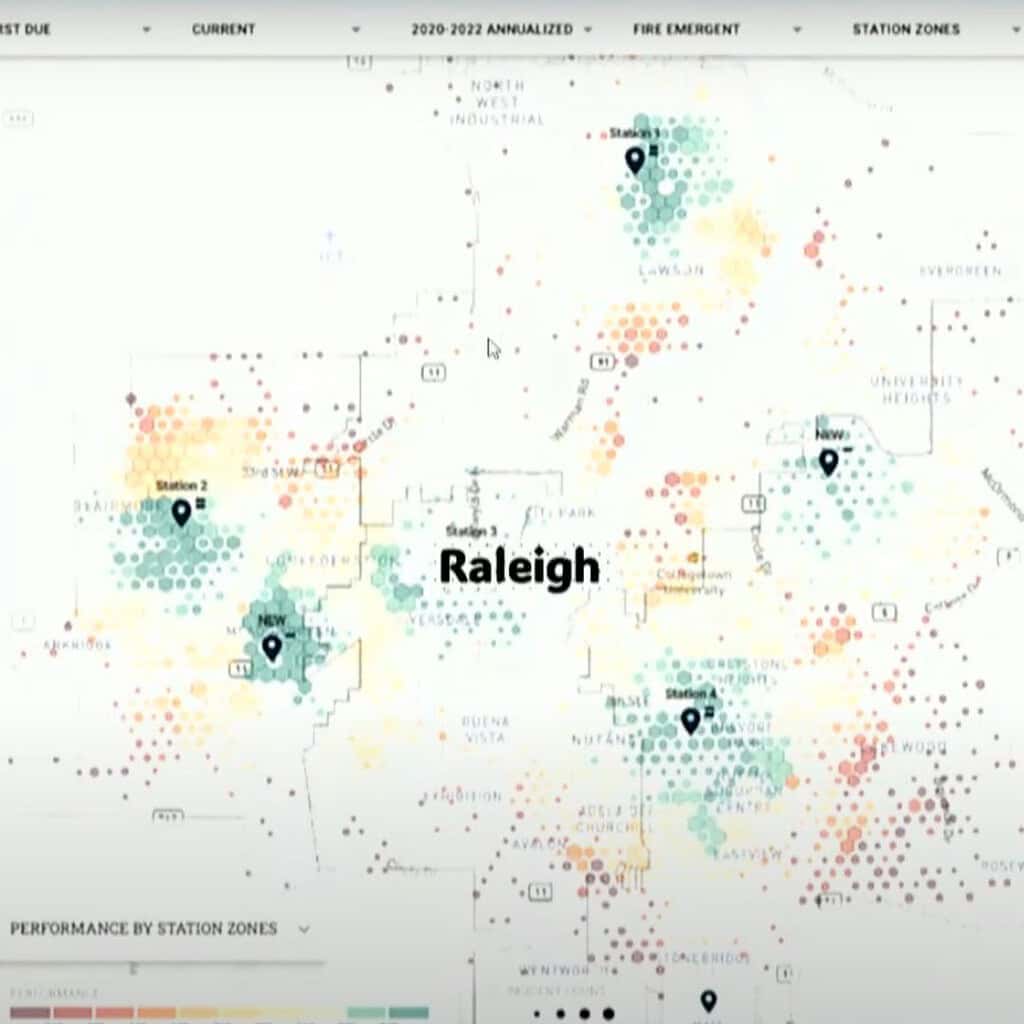
Through this contract, Darkhouse will conduct an analysis of the current state of the fire department, as well as develop a master plan to improve apparatus and response times, with the goal to forecast trends as the city expands—not only in terms of boundaries, but as the population density in certain areas increases.
“We want to have a third party come in and evaluate the fire department as it stands right now,” emphasizes RFD Division Chief Patrick Marks. “We want to make sure we are exercising the best practice on our deployment model—[with the] right fire stations and apparatus in the right places to do the best we can with what we have.”
Visualizing the fire safety situation, the city developed maps using analysis software to highlight areas on par with the minimum qualifications met in green, and areas lacking in apparatus and staffing marked in orange and red. (Note: Every district has at least one red area needing attention—namely Six Forks Road, along with Northwest and Southeast Raleigh).
Analysis is slated to wrap up within at least a year in hopes of having City Council approve the report before next year’s city budget is finalized to then implement those recommendations.