Meet a Leukemia & Lymphoma Society nomination for Woman of the Year.
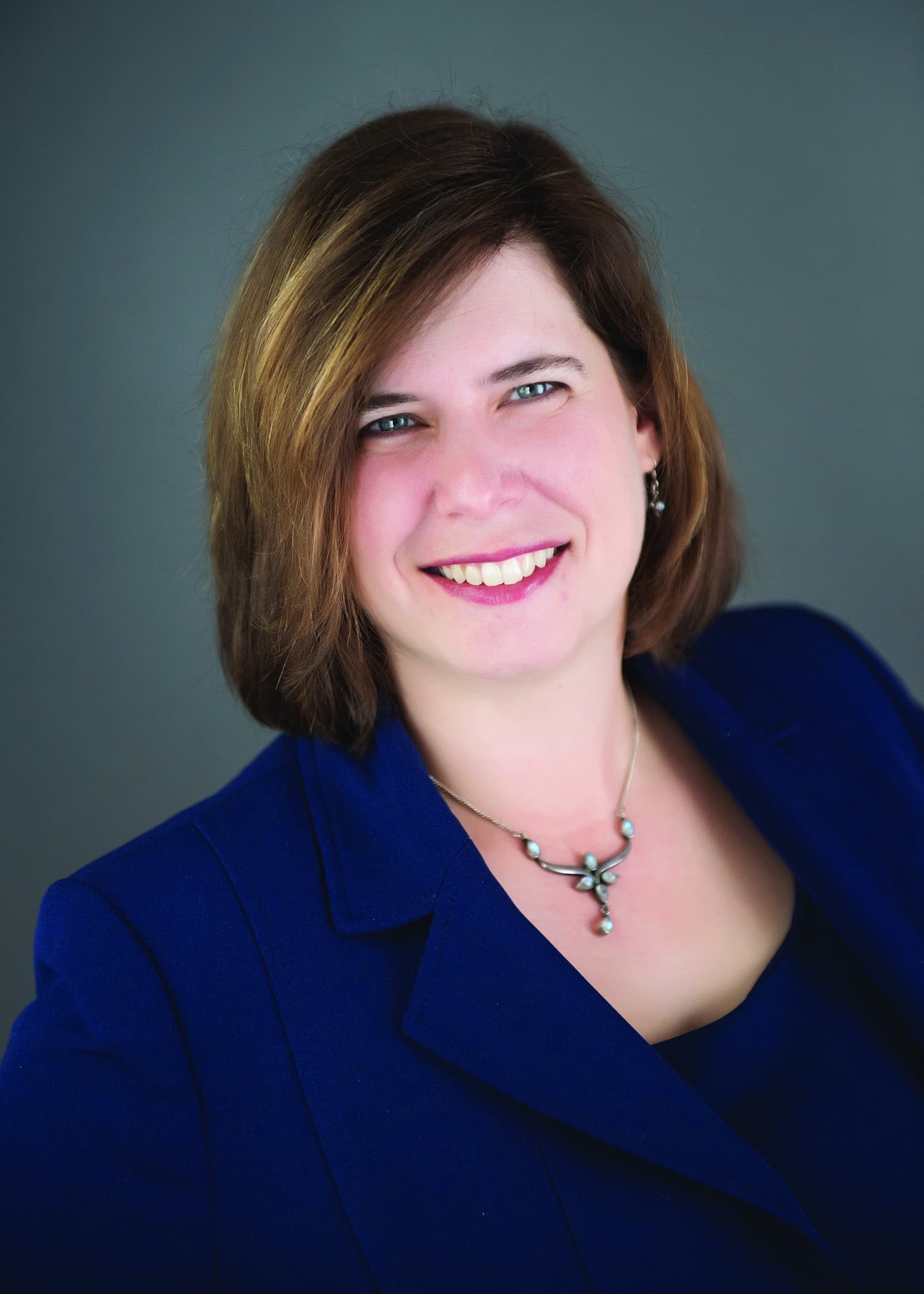
The Leukemia & Lymphoma Society (LLS) Woman of the Year is a pretty incredible title, but it’s one North State Bank senior VP and DTR market president Sharon Moe deserves.
Her career trajectory began after graduating from the College of William and Mary and moving back home to New Jersey, where via a role as assistant branch manager at a local bank, she found her calling. Enrollment at New York University’s Stern School of Business followed, along with a chance meeting of now husband Eric at a Vermont wedding.
From there, the pair would move to NoVa, where Moe served as branch manager, then credit risk analysis for Chevy Chase Bank, before welcoming first child Abby in 2006. Nine months later, an offer for Eric to manage the North Hills REI would land the pair in Raleigh.
A chance notary visit at North State Bank would put another profound stamp on Moe’s career trajectory. So impressed was she by the bank that she applied—and was hired as commercial banker in the North Hills office.
After welcoming a son a year later (and maternity leave), Moe assumed the role as the bank’s Downtown Raleigh market president. Never resting on her laurels, Moe attended every event and took advantage of every possible opportunity. Beyond the bank walls, the LLS nom is also an 11-year member of the Triangle Real Estate Women group (nicknamed Triangle Crew) and serves on many notable local boards, including the Centre for Homeownership & Economic Development and Downtown Raleigh Alliance.
Through it all, Moe no doubt has learned a thing or two about work-life balance. “Balance is a myth,” says Moe. “It’s not about having balance, it’s about respecting the seasons in your life and recognizing when [they] change. A season could be a day, or it could be much longer. If you try to balance everything at once, you will fail. It is all about prioritizing and aligning yourself with people and organizations that value the necessity to change priorities depending on the season in which you are living.”
In order to win The Leukemia & Lymphoma Society’s Women of the Year title, Moe will also have to fundraise for the nonprofit organization cancer-fighting mission. Given all she’s accomplished so far, we think she stands a pretty good chance.
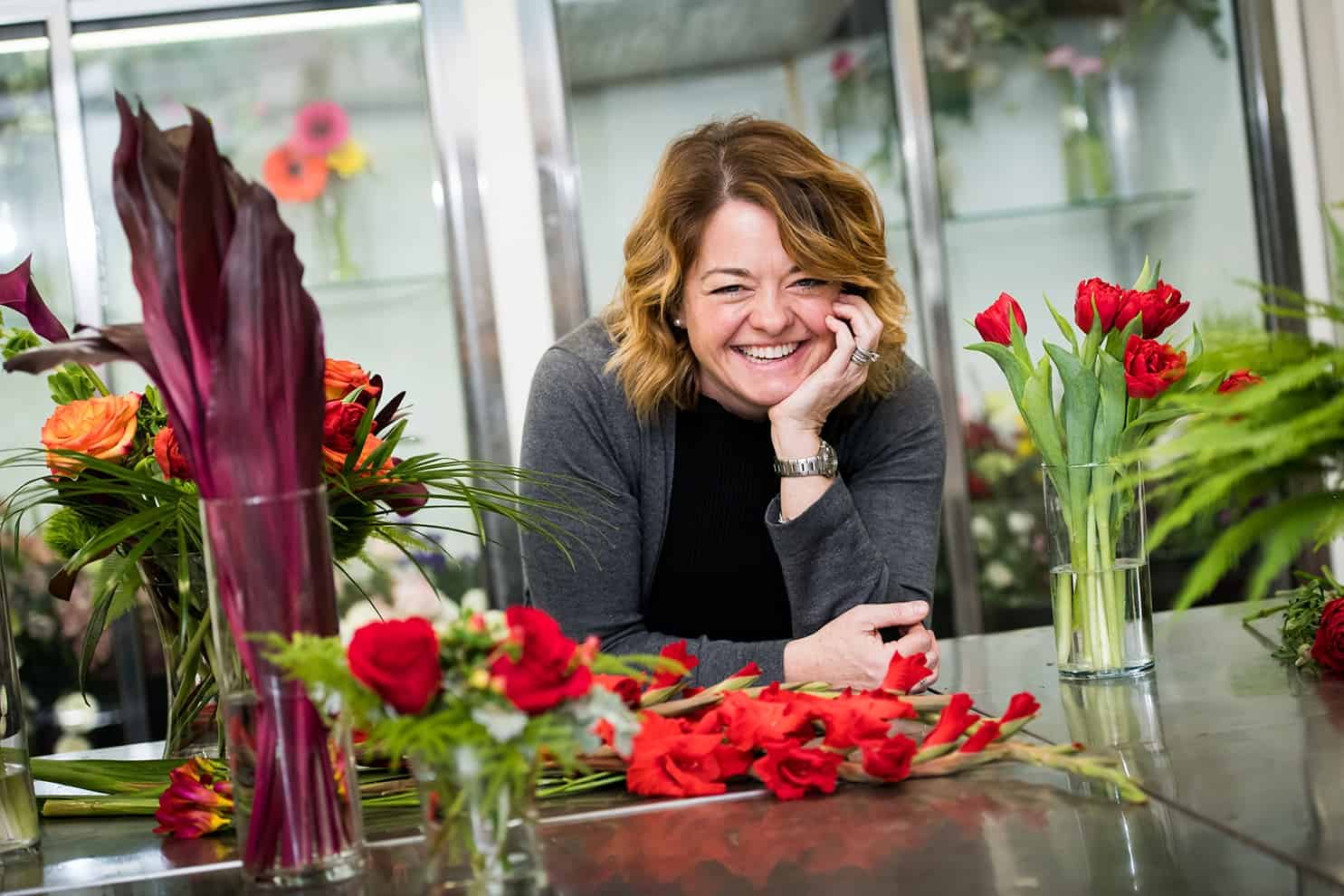
Although both Cydney Davis-English’s grandmother and father were florists, working in the flower shop business was never how she planned her life to bloom out. But, as it turns out, flowers are kind of her thing—perhaps it was a bud omen.
Davis-English’s grandmother opened a flower shop in the late ’40s. Her father would follow in his foster mom’s footsteps by opening up his own shop, a place NC native Davis-English spent a great deal of time after school during her formative years—doing her homework and helping with flower arrangements—never imagining she’d become a florist herself. To wit, she majored in business, later ending up studying music and theater at the American Academy of Dramatic Arts in New York City. But the skills she had acquired working for her father enabled her to work part time during college at a local florist.
Post-graduation, Davis-English found herself working in the theater and arts community, and happily married to husband Warren (now 27 years), who himself ironically is a third-generation florist. Not giving too much thought to her family’s floral legacy, Davis-English took a few years off from work to stay at home and raise their daughter, Vivienne, while also flipping houses with Warren.
And then the seed was finally sowed—and the couple decided to open up their own florist shop, English Garden Raleigh, allowing the legacy of both of their families to live on.
Now almost 15 years later, English Garden Raleigh is a burgeoning business—specializing in weddings and both large and small arrangements for almost every floral need—that has grown to offer delivery services and in-house classes teaching the art of floral arrangement.
And when the busy florist and mom isn’t running her businesses, helping Viv with homework or whipping up a gourmet meal, she enjoys hiking and running. To date, she’s hiked on five continents—and her goal is to do a half marathon in every state before she turns 50. So far, she has completed 10 states, with more than a half-dozen more planned for this year. Needless to say, Davis-English keeps herself busy.
But even with busy lives and a blooming floral shop, the couple wanted to pursue opening their own franchise. So they met with a franchise broker to see what industry would be the best fit—and a cleaning business kept showing up as a match.
Owning a cleaning service hadn’t been in their plans either, but they finally took a leap and bought into Two Maids and a Mop. The learning curve for the new cleaning business was more than Davis-English had initially imagined, but through Two Maids and a Mop, she was able to learn the importance of delegation and finding the right people to help run her businesses.
As a business owner—and boss—Davis-English has learned that if she’s “in the business,” she’s not working on the business. Creating gorgeous floral arrangements comes naturally to Davis-English—what isn’t so natural for her is learning to delegate.
“It was easier to clean up something and do it the way I wanted it done than it was to take the time to coach a team on how to do it,” she says. “For me, I’ve had to learn I have to put the time in to coach and set expectations up front so that we can all focus on the bigger picture and build our team and brand.”
Back when the pandemic hit, with two businesses under her management, Davis-English found that, more than ever, it’s OK to not beat yourself up when things don’t go as planned; it’s about how you handle things and move forward from it.
Her single biggest piece of advice to other entrepreneurs is to “really make your needs and intentions clear, and don’t apologize for it.”
“Running a small business, you find that you and your staff quickly become like a family unit,” Davis-English says. “I’ve had to learn that if someone leaves my family, it doesn’t matter if they were there six months or six years, our environment is better for having them there.”
And these lessons ring to something Davis-English’s grandmother always said: “It’s not what you get right that matters, it’s how you handle what you get wrong”—something that Davis-English tries to apply in her life all the time.
One woman, three companies and boundless charitable contributions
Michelle Congleton Smith, a Fayetteville native who has lived in Raleigh since she was 3 years old, is no stranger to hard work, multitasking and giving back. A third-generation graduate of East Carolina University, she holds her undergraduate degree in psychology and a master’s in substance abuse and mental health. Smith started her career as a therapist, “even though her parents always felt she should be a lawyer because she loved to argue,” she laughs.
Smith made that dream a reality by supplementing her day job with North Carolina Central University’s evening law school program. Reflecting back, Smith says working full time and attending law school taught her the importance of hard work and structuring her time; it was also where she discovered her true passion.
A crackerjack from the start, Smith was offered a position as legal assistant and paralegal while still in school. That experience gave her the skillset and chops she needed to start her own law firm, Impact Law, which focuses primarily on real estate, refinancing, closings and general brokerage. Having her own firm gave Smith the flexibility to succeed both as an attorney and as a single mom—a feat that would have proven more difficult had she remained a therapist.
At 32, Smith was working full time—a mother juggling it all while still wanting to do more and give back to the community. A lover of fashion and a former childhood model, Smith came up with a concept in which businesses could hire volunteer models for their time, and proceeds would be donated to select charities throughout the year. The concept, which Smith dubbed Models for Charity, was born in 2009. Models for Charity allowed Smith to combine two of her greatest passions—fashion and charity—into a family affair with her 3-year-old son walking the runway.
Through networking and Impact Law, Smith met her husband, Shaun Smith, a licensed real estate agent and land developer. He encouraged Smith to go back to school yet again to get a real estate license. Together, they founded Society Real Estate, which, much like Models for Charity, places a large focus on giving back to the community. “One percent of every commission on a home sale is given back to the local community in an effort to put an end to homelessness,” says Smith. The Society Real Estate team handpicked A Lotta Love and CASA to be charity partners, as each of these charity’s core mission is to be a part of solutions to combat homelessness in Triangle.
When she’s not working, Smith enjoys reading—fiction is her escape—along with listening to podcasts, meditation, yoga stretching, and focusing on the importance of sleep for mental health and productivity. “I believe in honoring my body’s circadian rhythm, and when I am tired, I go to bed, and when rested, I wake up,” Smith says.
Living with this balanced yet unstructured lifestyle has allowed Smith to do the things she personally enjoys while having a career that she loves. 2020 was a blessing in disguise for Smith—while her charity work became virtual, she found that taking time for family is now easier and more frequent. Smith encourages other women “to be kind to yourself. As women, we are so hard on ourselves, and we are our own worst critics. Know that you work really hard—and that that’s enough.”
For dance studio owner Chasta Hamilton, embracing change was a precursor to success.
Chasta Hamilton has been dancing on a stage since she was 2 years old. Now, she’s the founder and owner of Raleigh studio Stage Door Dance Productions, though she’s had to be flexible—in more ways than one—along the way.
A native of east Tennessee, Hamilton knew she wanted to go to college out of state. She visited UNC Chapel Hill to explore and thought, while she was in North Carolina, she might as well check out NC State, too. While visiting the campus, Hamilton picked up a brochure about NC State’s “Park Scholar” scholarship program. She decided to apply and was one of a handful of students to receive the scholarship, attending the university with a full ride for all four years.
During her time at State, Hamilton did an internship in then-state attorney general Roy Cooper’s office, thinking she wanted to be a lawyer. But, she says, she discovered law wasn’t her passion. After graduating with a degree in arts application and administration, with an emphasis in theater and a minor in film studies, Hamilton worked as a nanny and freelance dance teacher. She bought a condo in Brier Creek and every day on her commute to work, drove by an empty space that would soon become the home of Stage Door Dance, a studio that originally focused on competitive dance teaching.
Five years after opening her first studio, and still teaching classes at Carolina Country and North Hills Clubs, Hamilton realized she needed more space. Opening a location on Lake Boone Trail helped Hamilton see the importance of culture in her brand, she says, and that she no longer wanted her studios to be in the competitive dance arena.
“I wanted to focus on technique, performance, community and character,” says Hamilton. The new focus allowed the studio to create shows that gave back to the community, to use performances as fundraisers for charitable causes and to showcase that dance is more than just about winning a trophy.
Recently, Hamilton attended a dance seminar to speak about this shift in her studio’s mission. She describes another studio owner coming up to her in tears, telling her how her message resonated. Hamilton says she realized others needed to hear that they, too, could make a shift in their businesses and still be successful, so she decided to take her message broader.
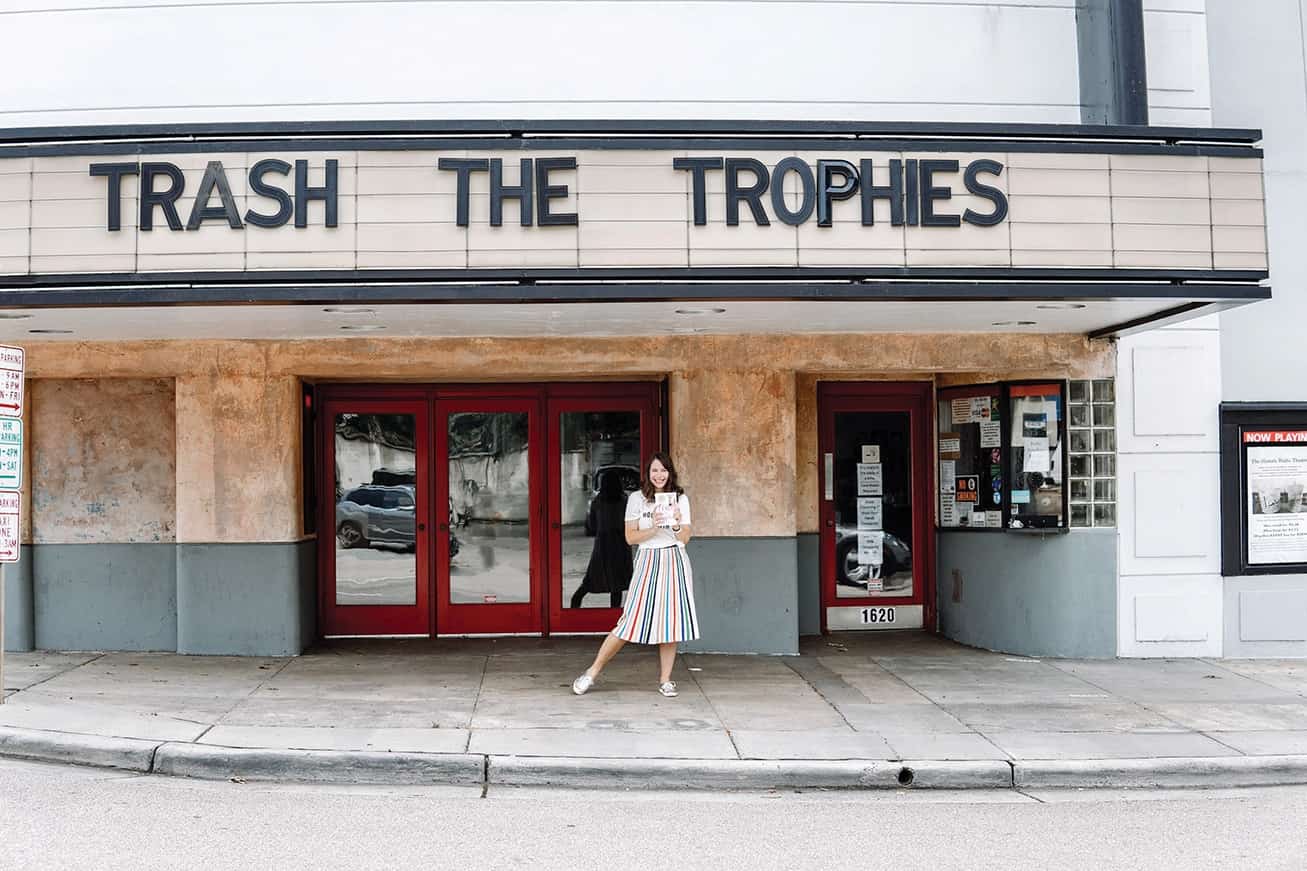
This August, Hamilton debuted a book entitled “Trash the Trophies: How to Win Without Losing Your Soul.” “The book is about personal and professional transformative leadership,” Hamilton says. “It applies to all of us, not just those in dance.”
Looking back, Hamilton says shifting focus several years ago allowed her the flexibility her business needed to face the challenges of 2020. “[It] taught me lessons that allowed our brand to pivot and shift with the pandemic,” she says. “We added online class, an academic enrichment program, a full and half-day academy for pre-K, all while creating our own curriculum to help students learn and find activities that stimulate. These programs not only helped serve the community but they also helped to provide hours for staff.”
Looking back over the last 12 years, Hamilton laughs remembering her grassroots marketing efforts. Every weekend she found herself setting up a table at Frankie’s Fun Park, the amusement park between Durham and Raleigh, handing out flyers and driving around putting business cards on mailboxes. Stage Door now teaches more than 700 students annually and employs a staff of 19. And, this year, Hamilton is expecting a baby boy, a little dancer of her own.
It’s never easy to take the leap from a corporate career to one focused on a higher purpose, but Melinda Taylor realized she could use the skills that made her successful in sales to help local women thrive.
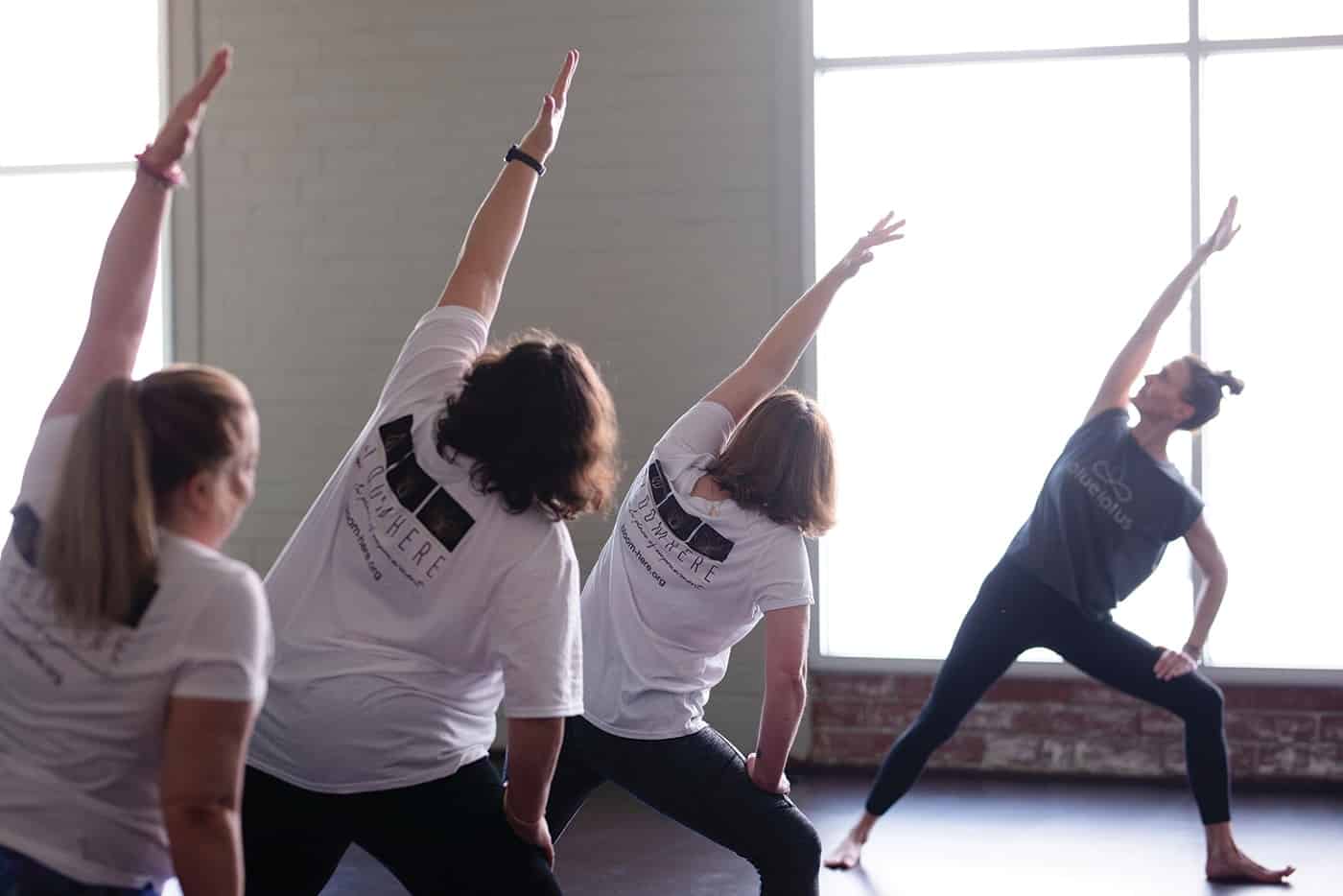
Born and raised in Hickory, Taylor lived all over North Carolina before settling in Raleigh, where she founded BLOOMHERE, a space for empowering women. The nonprofit, which just celebrated its one-year anniversary, provides a safe place to live and the space and resources for women who are survivors of abuse, addiction, prostitution and trafficking to heal.
Though Taylor, who serves as the director of BLOOMHERE, is new to the nonprofit world, she has years of experience in business and in working with women to help them feel better about themselves.
Taylor started her career working at a Clinique counter, where she says she received training that set her up for success, eventually becoming one of the top ten sales leaders in the country. Taylor then worked for a multi-million-dollar haircare company, building teams, traveling 90 percent of the time, setting more sales records and doing exactly what she thought she wanted to do: “wearing high heels and suits,” she says with a laugh, and doing it all without a college education.
Following a period of healing from a personal trauma, Taylor says she began thinking about women who couldn’t afford what she could, both luxuries like manicures and yoga classes, but also ways to heal and care for oneself that weren’t accessible to every woman. Taylor says she knew she loved to give back and wanted to find a way to do more of it. So, she gave up her hectic travel schedule, sold her home in Five Points, cashed out her 401K and set her sights on starting a nonprofit that would give women a place to lay their heads, heal, learn, feel safe and realize that they could change their lives for the better.
“Everyone has a story, and we don’t always know what’s going on,” Taylor says of what guides her vision for BLOOMHERE. “But we listen to others with compassion and encourage others to pursue their dreams.”
Taylor put her sales and business operations experience to work securing investors and she was able to rent a house for her nonprofit in August of last year. At the Bloom home in Raleigh, women survivors commit to a free, two-year stay. They experience recovery, including therapy and medical care, substance abuse rehab and physical health and wellness practice. They’re given employment and individual enhancement plans and skills training. Eventually, they can obtain leadership positions within the program, where they work to empower other women in need. After two years, the residents graduate, armed with the skills and means to be successful in the outside world.
“BLOOMHERE is helping women to heal from their past with dignity,” Taylor says. “I am continually so humbled by the process and found a gift of love and understanding and compassion. I thought living my purpose would be so easy, and it’s not. Having run a $25 million-dollar company doesn’t even compete with what I’m doing today.”
Looking to the future, Taylor says she’s working on a plan to buy more homes to assist, advocate for and empower women.
“Give a woman a bed, somewhere to sleep, and they will thrive,” Taylor says.