by Jane Porter | Jul 1, 2018 | July 2018 / August 2018, Stuff
In Raleigh, there’s so much new—new buildings, new businesses, new faces arriving every day—and so much to do that it can feel a little overwhelming at times. That’s why, when we decided to pull together an insider’s guide to life in our growing city, we tried to be selective about what we think you need to know, and discerning about what we think are the very best things to try and explore.
We considered, what is Raleigh best known for? It’s long been known as city in a park, so naturally, we have suggestions for outdoorsy exploits. It’s also got a vibrant, burgeoning food scene, but instead of rattling off a list of all our favorites—too many to count to truly be of service—we bring you the very best of the recently opened, and combine the culinary with the outdoorsy in a comprehensive list of rooftop bars.
As the newly minted “Smithsonian of the South,” we just had to share some of the best ways to enjoy Raleigh’s many cultural amenities, whether it’s taking in a concert or touring museum, watching a ballet or catching a show. And we hope to be useful in bringing you some inside information on what’s going on with all the construction, how much Raleigh and Wake County is growing, some facts on getting around and ways to stay informed.
Though we offer some suggestions for enhancing the hyper-local experience, there’s really no right or wrong way to be a Raleighite. Our hope is that you enjoy the city as much as we do, whether you’re here to stay, or just passing through.
Raleigh at a Glance
Population: 458,862
Median Age: 33.8
Median Household Income: $64,456
Poverty Rate: 12.1%
Median Property Value: $242,500
Source: datausa.io
Development in Raleigh
Two out of every three housing units in Wake County are single family homes. Over the past ten years, commercial development was valued at more than $7.55 billion.
Notable upcoming commercial developments include:
Midtown East: Wegmans, Cava, Maple Street Biscuit Company
Smokey Hollow at Peace/West Streets: Publix grocery store announced
One Glenwood: An office and retail tower, and boutique Origin Hotel
Gateway Plaza: Gateway Restaurant, Brew Coffee, Raleigh Roasting Company, Craft Habit, Mordecai Brewery
Recent Growth in Wake
October 1, 2017 – June 6, 2018
Total Added Jobs: 4,967
Total Investment: $51,000,000
New Companies: 17
Expanding Companies: 53
Source: raleigh-wake.org
Top 10 Employers in Wake County
Duke University and Health System: 36,004 | State of North Carolina: 24,083
Wake County Public School System: 18,554 | IBM Corporation: 10,000
North Carolina State University: 9,069 | WakeMed Health & Hospitals: 8,943
Rex Healthcare: 5,700 | SAS Institute, Inc.: 5,616 | GlaxoSmithKline: 4,950 | Lenovo: 4,200
Source: raleigh-wake.org
Transportation around Wake County
The GoRaleigh operating system runs most of the city’s public transit services. The GoTriangle system includes other municipalities in Wake County and beyond.
More than 11 million passengers boarded GoTriangle buses in 2015. Overall, drivers traveled 11.54 billion miles in Wake County in 2017.
The average commute time in Wake County is 25 minutes, while the daily average number of miles travelled per capita is nearly 30. The county has about 771,000 registered vehicles, or .74 per capita.
RDU connects you to 62 nonstop destinations on one of over 400 daily flights. Most recent non-stops added: San Diego; Montego Bay, Jamaica; and Punta Cana in the Dominican Republic.
1. Eat a burger at the P.R.
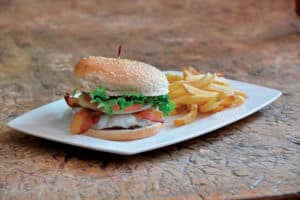
The P.R., or the Player’s Retreat on the corner of Oberlin and Hillsborough Streets, was once a dive bar where Broughton students congregated after class. With a Cheers-like feel—walls lined with steins and vintage beer cans—the PR has grown up with the clientele, offering great food and better service.
You’ve likely seen it in real estate listings by now. ITB, or Inside the Beltline, refers to property in Raleigh located within the I-440 beltline borders. The increased price tag for properties ITB reflects the value Raleighites place on a central location.
3. Choose your favorite hot dog
 Roast Grill, Snoopy’s or Char Grill.
Plus, know not to ask for ketchup at the Roast Grill! One of the last true lunch counter holdouts, the Roast Grill prides itself on hot dogs so delicious that the mere mention of ketchup is an insult.
4. Watch the planes take off at RDU Park
Free parking, a little park, a picnic area with seating and the best view in town of airplanes taking off and landing. It’s the perfect place to watch for Grandma’s plane to come to town or to simply spend a free afternoon dreaming about getting a pilot’s license.
5. Be able to identify Beach Lovers’ Bumper Stickers
Wander Through a Museum
Raleigh has rightfully merited the “Smithsonian of the South” moniker, a title earned through the diversity of its museums and exhibits, as well as the museums’ accessibility to all.
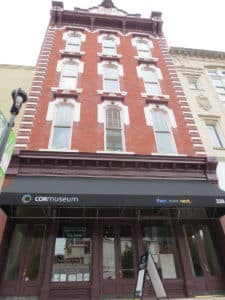
1. City of Raleigh Museum (COR): Founded in 1993, COR Museum is a welcoming center located on Fayetteville Street downtown. It offers history about, and insight into, the ever-growing City of Oaks.
2. North Carolina Museum of Art: Opened in 1956, the NCMA on Blue Ridge Road is home to several exhibition galleries, studios, gardens, an atrium, a library and learning center, a museum park and amphitheater, and an impressive permanent collection. The museum offers all kinds of tours and maintains a packed events schedule year-round. “Insider Magazine” recently ranked the NCMA 13th on its list of top 25 museums in the country.

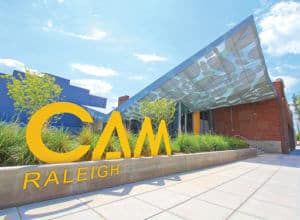
3. CAM Raleigh, downtown’s non-collecting contemporary art museum, has cultivated a reputation for showing memorable, one-of-a-kind exhibitions and pieces, and hosting engaging educational programs and cultural experiences. Less than a decade old, CAM’s goal is to spark new thinking by creating ever-changing experiences that explore what’s new and nearing.
4. NC Museum of Natural Sciences is the largest museum of its kind in the Southeast. The three-story, 200,000-square-foot facility features dozens of permanent and rotating exhibitions in its Nature Exploration and Nature Research Centers. Kids can meet animals including rabbits, snakes and hissing cockroaches, or see dinosaur replicas and a full-size whale skeleton.

5. Marbles Kids Museum near Moore Square Park in downtown Raleigh celebrates hands-on, minds-on learning for children and families, with exhibits and play spaces as well as an IMAX movie theatre.
Raleigh Outside
Rent a Boat
Lake Johnson:
Jon boats – $4/hour, $20/day
Pedal boats – $6/half hour
Canoes/kayaks – $5/hour
Sunfish sailboats – $10/hour
Or, launch your own boat! As long as it isn’t motorized and doesn’t require a trailer, you’re welcome to use your own after checking in at the park office ($2-$6 a day).
Pullen Park:
408 Ashe Avenue
Up to four people can cruise around Lake Howell in a pedal boat – $6/half hour.
Shelley Lake:

Shelley Lake view
Jon Boats – $3/hour, $15/day
Canoes – $4/hour
Pedal boats – $5/half hour, $7 an hour
Lake Wheeler:
Jon boats – $4/hour, $20/day
Rowboats – $4/hour, $20/day
Canoes – $5/hour
Kayaks (single and double) – $5/hour
Pedal boats – $6/half hour
Sunfish sailboats – $10/hour
Launch your own boat, trailered or not, after buying a launch pass. Motorized boats are allowed, as long as it isn’t a jet ski.
Umstead Park:
The park features three man-made lakes, all-accessible for fishing. Big Lake also offers canoe and rowboat rentals.
Lake Crabtree:
Visitors are welcome to catch-and-release fish, sail, boat, row and paddle on the lake, and adult canoeing instruction and standup paddleboarding is available.
Falls Lake:
The 12,000-square-foot reservoir serves as both a recreation area, with an array of water activities, and a wildlife habitat. Several swimming beaches, including Beaverdam, Rolling View and Sandling Beach, are open to the public, and the privately managed Rollingview Marina offers slips and mooring, kayak, paddleboard and canoe rentals.
Walk a Raleigh Greenway…
Lake Johnson (East or West Loop) – Located on either side of Avent Ferry Road, Lake Johnson provides visitors with two options, the paved 2.8 mile East Loop (3.5 miles if you venture off the main loop) or go off-road on the 2.1 mile West Loop, accessible by crossing Avent Ferry at the marked signs. While it is a dirt trail, it’s well kept and can easily be combined with the East Loop for a more robust 4.9-mile hike.
Shelley Lake Loop – For a casual and stress-free walk (or jog), explore the 2.1 mile trail in Shelley Lake Sertoma Park. Bring your kids, your dog, or just yourself. Shaded portions give you a break from the sun and benches offer spots to rest if needed.
House Creek Trail – Running parallel to the Beltline from Meredith College to the Crabtree Valley Mall, this trail at approximately 3 miles long has numerous connections and destinations along the way.
…Or Bike One
Neuse River Trail – Extremely popular, this 27.5-mile bike trail connects to Wake Forest, Falls Lake, Knightdale, into Johnston County into Clayton, and also to the Walnut Creek and Crabtree Creek trails. There are educational opportunities along the trail with interpretive signage highlighting the wildlife, including herons and beavers, as well as other ecological features unique to the area.
Crabtree Creek Trail – Begin at Anderson Point Park and head northwest toward Lindsey Drive to bike the full 14.6 miles. Take a break at one of the parks along the way, including Kiwanis Park and North Hills Park. Mine Creek Trail branches off to the north, House Creek Trail branches to the south, and the Neuse River Trail runs perpendicular at Anderson Point Park, allowing you to extend your ride, or switch it up for something different each time.
Cocktails with a View
• Level7 (North Hills)

10th & Terrace
• 10th & Terrace (Downtown Raleigh)
• Hibernian (Glenwood South)
• Raleigh Times (Downtown Raleigh)
• Trophy Tap and Table (Downtown Raleigh)
• Carolina Ale House (Glenwood South)
• Raleigh Beer Garden (Glenwood South)
• Taverna Agora (Downtown Raleigh)
New Restaurants & Bars
Get Informed
Raleigh Newspapers:
The News and Observer (daily)
INDY Week (weekly)
Triangle Business Journal (weekly)
The Carolinian (bi-weekly)
La Conexion (weekly)
Que Pasa (weekly)
Raleigh TV News Network Affiliate Stations:
WRAL-TV Channel 5 (WRAL)
WTVD-TV Channel 11 (ABC 11)
CBS 17 Channel 17 (WNCN)
Raleigh News Radio:
WPTF-680 FM
WUNC-91.5 FM
Get Carded
Wake County residents can get a library card for free. Just go to your nearest Wake County Library location with a photo ID and proof of address; a librarian will help you set up an account, which gives you access to check out material from all of Wake County’s 20-plus libraries, use computers and download books online.
Jam Outdoors
1. Red Hat Amphitheater
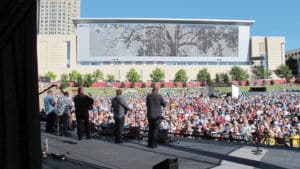
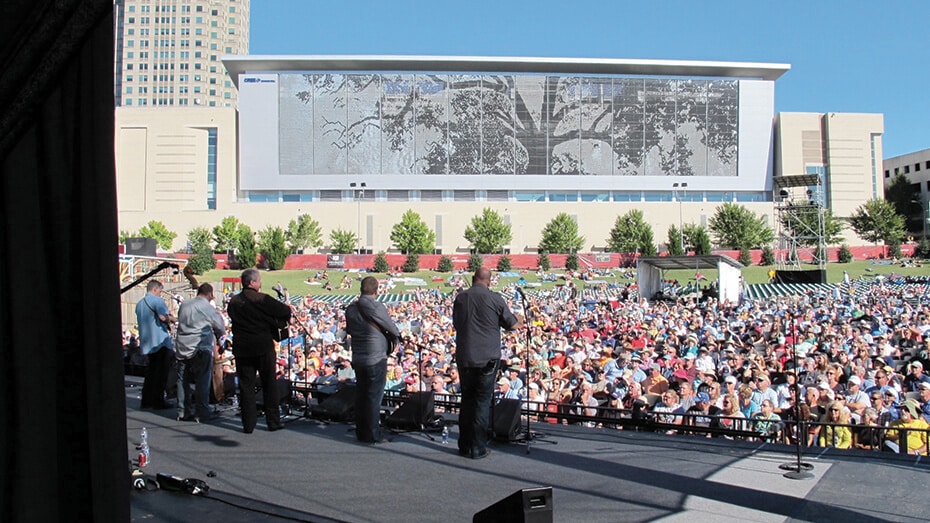
Raleigh’s Amphitheater is set in the heart of downtown so after your favorite artists say goodnight, you can continue your evening at any number of restaurants and bars. The 5,990-seat venue hosts a great mix of artists.
2. Walnut Creek
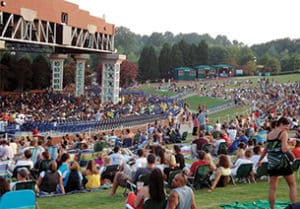
If your summer concert style is go big or go home, Walnut Creek Amphitheatre should be your first stop for outdoor rockin’, jammin’ and swayin’. The 20,000-seat venue draws notable names from May to August.
3. NC Museum of Art
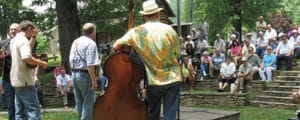
For almost 20 years, music artists have visited the Theater in the Museum Park from May to September. The venue offers limited reserved seating with ample lawn seats. Great spot for a picnic! You can purchase food and drinks from The Museum’s Iris restaurant.
4. North Hills
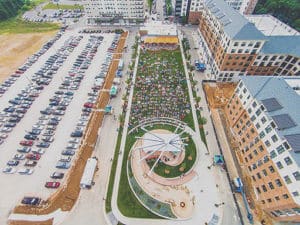
The 11th season of the Midtown Beach Music Series will host more than 125,000 guests at North Hills Commons during the 17-week season. The free series offers the best of beach music every Thursday from 6 p.m. – 9 p.m.
See a Show
Theatre in the Park
Located on the northern end of Pullen Park, catch a comedy, musical, Shakespearean or contemporary drama at this classic black box theatre.
Theatre Raleigh
Musical theatre, dramas, comedies, concerts and theatre opportunities for young people converge under one roof at the Kennedy Theatre. Look for family and summer series and special events.
North Carolina Theatre
Catch one of four mainstage shows each year in Memorial Auditorium at the Progress Energy Center for Performing Arts.
Carolina Ballet
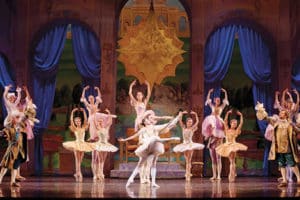
A world-class professional ballet company, performing primarily in Raleigh since 1997.
Other notable show runners:
North Carolina Symphony, North Carolina Opera, Burning Coal Theatre Company, Black Box Dance Theatre, Sonorous Road Repertory Company.

by Jane Porter | Jul 1, 2018 | July 2018 / August 2018, Retreat, Stuff
The Nolinthas’ historic home in downtown Raleigh is a sanctuary for joy and healing.
Inside Van and Vanvisa Nolintha’s red brick, American foursquare-style home in the Prince Hall Historic District, the walls are all painted white.
That was intentional, says Van, who, with his younger sister, owns and manages downtown’s celebrated Laotian restaurant Bida Manda, and Bhavana, the brewery-bookshop located next door. Van wanted the home’s plain walls to absorb the yellow-orange glow of sunrises, and the apricot-purple hues of sunsets, that flow in each morning and evening through the home’s assorted historic and contemporary windows.

Van and Vanvisa Nolintha’s historic home in downtown Raleigh. Photo by Keith Isaacs.
“One of the most important design principles to us is lighting,” Van says. “We really wanted to allow light to guide the experience of the place.”
The house, built in 1922, was once a home office to Dr. William F. R. Clark, a physician who served the historically African American neighborhood beginning in the 1950s. When the Nolinthas purchased the home at auction in 2015, it had fallen into disrepair.
In Situ Studio, a local architecture firm, came onboard to design and create an open, airy, modern space out of the crumbling mortar, rotting walls and oddly subdivided interior rooms that characterized the home’s prior condition. Van imagined a tranquil retreat that provided a respite from a busy work schedule, but one that could also function as a gathering space for friends, family and entertaining.
“The house has a remarkable history of healing,” he says. “That was important to us and aligned with our intention for it to be a healing place from a hectic public life.”
The experience of the home begins on the sidewalk lining the modest front yard, where, through a wide, glass-paneled front door, you’re struck by a piece of artwork hanging on a wall directly behind the entryway. The idea is for the wall to be a gallery-like display space for rotating pieces and visible to outdoor passersby. Now, a golden square—two painted wooden doors, superimposed with the photographic image of a woman’s face—adorns the space. It’s Raleigh artist Tim Lytvinenko’s portrait of his late mother, Nellie, a shimmering homage to her memory.

The open living space inside of the Nolinthas’ home.
To the left of the wall is a staircase, at the bottom of which coils the end of a long chain made up of thousands of bottle caps. To the right of the wall, an original brick fireplace, decorated with candles and a walking Buddha statue, runs up to the ceiling, an altar in the temple-like home.
White oak floors wind into an open living room, minimally decorated with blue and white sofas, a marble-slab coffee table and a vast wall of bookshelves laden with baskets and pottery, literature and cookbooks. Tall window-doors that lead out to a garden and covered porch, above which hovers a small upper-level addition, frame out the space in the back.
The Nolinthas spend most of their time in this contemporary-looking living room on the right side of their home but, despite its modern feel, relics of the past peek out at every turn. The home’s exterior brick walls were painstakingly restored under guidance from a city board, the Raleigh Historic District Commission (RHDC).
“The bricks on the outside were really sacred for [RHDC] because they used a particular, unique type of mortar,” Van explains. “So the walls are all original, that we salvaged, and we were really trying to honor what’s old and contrast it with what’s obviously new. We left the back of the fireplace raw and unfinished, and allowed it to be a sculpture. It’s this beautiful bone to the past.”
The spacious posterior kitchen, a natural gathering area for guests, is perfect for a pair of professional restaurateurs and avid entertainers. There’s a wide walkway between the cooktop, counter and window overlooking the garden, and a block-like island containing the sink and offering even more counter surface. China, artwork and textiles collected during the Nolinthas’ world travels draw the eye, while flowers and plants—including a 20-year-old Philodendron—proffer subtle touches of beauty and color.
“Plants and living things were really important as we were growing up. Mom always had flowers in the house and it impacted our emotions and feelings and psychology and how we lived each day,” Van says. “As Buddhists, whenever we put flowers out, it’s an offering to the space, so it’s our offering to the home and its memory.”

Van and his sister Vanvisa Nolintha
Following two decades of staying with relatives and in various apartments after they immigrated to North Carolina from Laos, this home is the first the Nolinthas have ever owned. Now, they have their own separate bedroom suites upstairs, as well as a guest room suite for visitors. It took two years to design and renovate, but the pair finally moved in in March of 2017, the same week that Brewery Bhavana—which also underwent an extensive renovation—opened its doors.
Van recalls the time as a pivotal one, the beginning of an intimate new relationship between his work and home lives. For Vanvisa, the home represents a sense of permanence.
“Six or seven years ago, I was supposed to move back to Laos,” she says. “I never had it in my head that we were going to buy a house or move into a house together. And when I first saw it, I could never imagine it would look like this. We came a very long way.”
Vanvisa delights in meeting neighbors who still have stories of visiting Dr. Clark at his medical practice in the home so many years ago. The siblings are thrilled, and humbled, they say, to have been welcomed warmly to the neighborhood.
“Our neighbors are really generous and I think they’re happy we’re building roots, really committing to the neighborhood and a community that has been fluid for so long,” he says. “I’ve always been attracted to things that have memories and a history. In our home, there is so much to discover about the past. Honoring that and instilling our own style and our interpretation of its future is fascinating. It’s been a really meaningful journey.”

by Jane Porter | Jul 1, 2018 | Eat, July 2018 / August 2018
Durham Distiller launches ready-to-drink cocktails
“Hassle-free” is not the phrase that comes to mind when you’re dreaming of enjoying a G&T on a North Carolina beach. This month, that all changes with Durham Distillery’s release of its line of canned cocktails, a truly first-to-market cocktail concept for our fair state.
The producers of Conniption Gin, Damn Fine Liqueurs and Cold Distilled Cucumber Vodka will launch 2,500, 12-ounce cans of Gin and Tonic—a mix of the distillery’s flagship American Dry Gin and house-made tonic water—and another 2,500 cans of Vodka Soda, all canned at the distillery’s home in a onetime auto body shop in downtown Durham. At around 8 percent ABV, each can packs two cocktail servings, and you can grab a 4-pack at participating ABC stores across the state for around $15.
“We want to bring a nod that it’s OK to experiment, not just with classic cocktails, but to push your horizons and have really good cocktails at home. It doesn’t always need to be in a bar,” says Melissa Katrincic, Durham Distillery’s CEO. “[Mixologists] bring an art to the form that you may not necessarily have the knowledge, or time, or desire to do at home, but [with the cans] we’re doing it for you. We put that care and premium-ization into a can, and that doesn’t really exist today.”

Bottles of Durham Distillery’s gin and vodka next to their new canned cocktails.
Though North Carolina’s ABC system, and Southern markets in general, have been slow to embrace ready-to-drink (RTD) cocktails, they’re already making a splash in other U.S. markets and internationally. San Diego-based Cutwater Spirits sells its line of 10 canned cocktails in 25 states, and RTD cocktails saw an uptick in sales of 5 percent between 2016 and 2017, according to Nielsen data. In a 2016 report, market research company Mintel predicted a 9 percent rise in sales volume for RTD spirits-based cocktails by 2021, with growth mirroring the craft beer movement as craft cocktails become more and more popular among Millennials. Wine in a can, too, has seen significant growth recently, with sales of $6.4 million in 2016 over $1.9 million in 2012.
“We just want to see success with these first two skews,” says Katrincic. She hopes the cans—which will also sell in Durham Distillery’s markets in five other states, including Georgia and South Carolina—will play well due to their their versatility, for easy home drinking as well as for tailgating, beach lounging and relaxing poolside where glass bottles aren’t allowed.
The three-year-old Durham Distillery’s gin distillation process is unique among local and even international distillers and its products are award-winning.
Lee Katrincic, Melissa’s husband and the company’s head distiller, is also a pharmaceutical chemist. After tasting more than 250 gins and spending a year developing two gin recipes—the subtle American Dry, and the savory, juniper-infused Navy Strength—Lee perfected a two-step manufacturing process that weds old-school distillation techniques with modern lab equipment, “the marriage of art and science,” as he describes it.
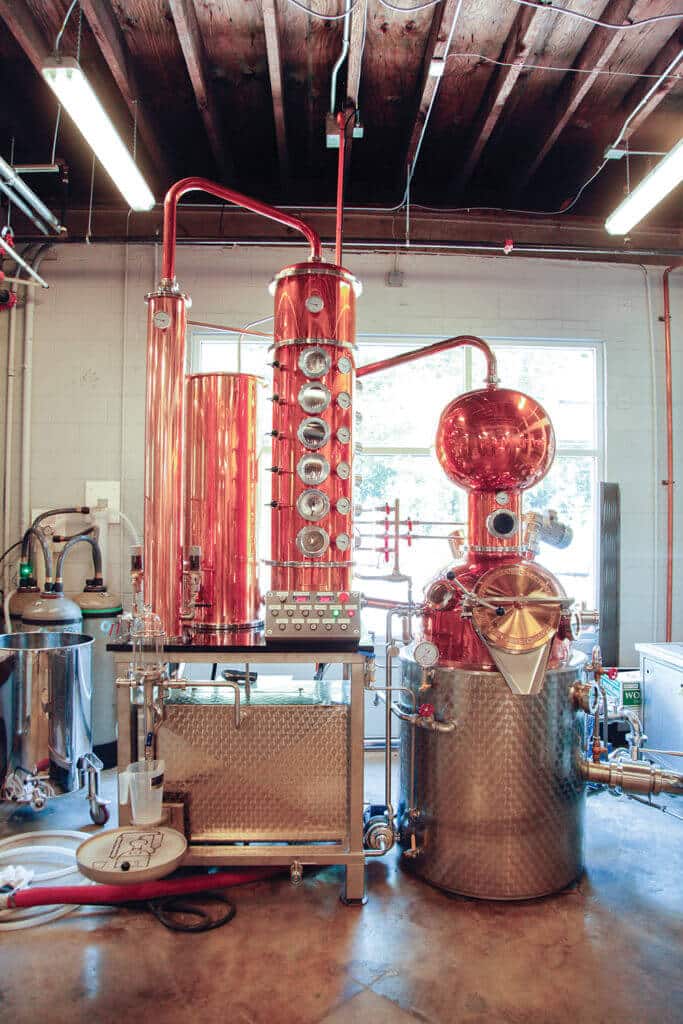
For each batch of American Dry Conniption, gin botanicals, including Indian coriander, angelica root and cardamon, infuse with juniper via a vapor tray in a sided copper pot still that was made specifically to order in Germany. Then, notes of cucumber, honeysuckle and citrus are distilled at room temperature using a rotary evaporator and blended into the gin base. The Navy Strength gin uses bolder botanicals, such as caraway, bay leaves and rosemary, to blend with juniper and cassia for a stronger flavor and mouth feel.

Durham Distillery
“The Navy Strength is more of a gin drinker’s gin while the American Dry is for the vodka drinker who has been intimidated to try gin,” Melissa explains. In fact, the only difference between gin and vodka is that gin has, by definition, been infused with juniper. If the initial launch is successful, Melissa says, they hope to start canning their popular mule, made with the company’s vodka and house-made ginger beer.
Since North Carolina law dictates that each county’s ABC board gets to decide what will be sold in all of that county’s ABC stores, bars and restaurants, Durham Distillery’s cocktails in a can may not be available in all 100 North Carolina counties. The best way to make sure they’re available in yours is to request them at your local ABC store, or reach out to your county’s ABC board members.
“If this is something you want to try, go into your local ABC store and ask for it,” Melissa says. “That would help. It will be in a Triangle store, so if you can’t find it, just ask.”

by Jane Porter | Jun 9, 2018 | June 2018, Polish, Stuff
In the sweltering months of summer, shorts and skorts and tanks and tees are the must-haves. These basics are the building blocks to plenty of versatile styles you can easily dress up or down. We rounded up eight looks in a variety of hues, patterns and styles to meet your every outfit need, for when it’s just too hot for complicated attire. Stay cool!

Lisette L tie-front top, $84; Lisette L Japanese Garden skort, $144; both from C.T. Weekends

Nally & Millie tank, $88, Liverpool Vickie short, $68; both from lori+lulu

Rails Ielie linen shirt, $148; The Mitchell chino short, $134; both from Uniquities

Leonie Blossom blouse, $198; Mother Bermuda Snippet short, $178; both from Uniquities

Monrow Camo tank, $94; Frame Platoon shorts, $175; both from Uniquities

Project Social T smocked hem knit tank, $48; Feathersby Tolani shorts, $74; both from South Moon Under

Michael Stars trapeze tank, $84; Lisette L Sakura skort, $150; both from C.T. Weekends

Beau Jours top, $108; Liverpool Vickie short, $68; both from lori+lulu

by Jane Porter | Jun 1, 2018 | Buzz, June 2018
Private and public partnerships to address affordable housing
There’s no getting around it: with 56,000 working families in Wake County that can’t currently afford a place to live, Wake and Raleigh are experiencing a full-blown affordable housing crisis.
But, though the current landscape is bleak, last month offered some glimmers of hope that the region could be finding its footing on a path to ensuring that number doesn’t balloon to 150,000 families in the next two decades; creative, collaborative initiatives from the public, private and nonprofit sectors are and will continue to be key.
“We are well beyond the point where one organization or developer can solve this problem, hence the critical need for partnerships between Wake County government, our municipalities and not-for-profit developers such as Habitat for Humanity, DHIC and CASA,” said Jessica Holmes, chair of the Wake County Board of Commissioners, in an email to Raleigh Magazine.
Some of those partnerships are already in the works. The City of Raleigh made a commitment in 2016 to add 5,700 units to its affordable housing stock. This spring, the city council approved millions in funding for affordable housing at Hampton Springs, Walnut Trace, Oak Forest Pointe and Sumner Pointe, as well as $4.6 million to build 120 units at Beacon Ridge in southeast Raleigh and $3 million for 158 new units for elderly residents at downtown’s Sir Walter. Collectively, these projects will add more than 1,000 units to the city’s existing stock.
Some of the partnerships Holmes mentions, on the other hand, are in the early planning stages. Also last month, Wake County manager David Ellis unveiled a budget proposal that, via a nearly 1 cent increase in the property tax rate, will raise $15 million in five years to build 2,500 affordable homes and apartments, and meet a goal of ending homelessness among veterans by 2021. Commissioners are expected to vote to adopt the budget early this month.
While Holmes described the affordable housing budget proposal as “epic,” she says there’s even more that can be done to ensure enough affordable units are built. “Additionally, we must strategically engage for-profit developers, landlords, the business community and community leaders,” Holmes said.
To this point, two local private sector initiatives—one from Capital Bank and the other from Cary-based building products manufacturer PlyGem—are aimed at helping local residents maintain the homes they already live in, meet their current rents, or save for future homeownership.
Last month, Ply Gem donated building materials and partnered with Habitat for Humanity to provide new exteriors and energy efficient windows to five local homeowners. The project, part of Ply Gem’s national Home for Good program, was aimed at raising awareness of the need for affordable housing in the area. Linda Williams, a southeast Raleigh resident and one of the recipients of the remodel, said she had worried about losing her home of 20 years as it was becoming too much for her to maintain on a fixed income.
“This is where I raised my kids, where my grandson opens his Christmas gifts, where my mother had her 75th birthday party,” Williams said. “This is the place we all call home and a place I want to continue to call home for 20 more years.”
On the other side of town, Capital Bank (which recently merged with First Tennessee Bank) launched Hope Inside, a financial counseling service at its North Ridge location on Falls of Neuse, aimed at helping anyone who dreams of being a homeowner some day.
“The Capital Bank Hope Inside center provides free financial information to anyone in the community, whether they’re a customer or not,” says Laura Bunn, Capital Bank’s Triangle Market President. “We know educating people about budgeting, paying off debts and credit rating awareness helps individuals and families become more financially competent and meet their rent or be able to buy homes or start their own businesses.”
Bunn says the center, the first to open in the North Carolina market, will work in the coming months to generate awareness of the program and refer participants.
“These are excellent examples of corporations stepping up to address the need [for work around affordable housing],” says Holmes of the Ply Gem and Capital Bank Hope Inside initiatives. “Everyone should be concerned about affordable housing as supply and demand has resulted in ‘less’ house for more money at all levels across the country. From church leaders to business leaders, we all have a role to play.”