Getting dirty in the garden has never felt so clean.
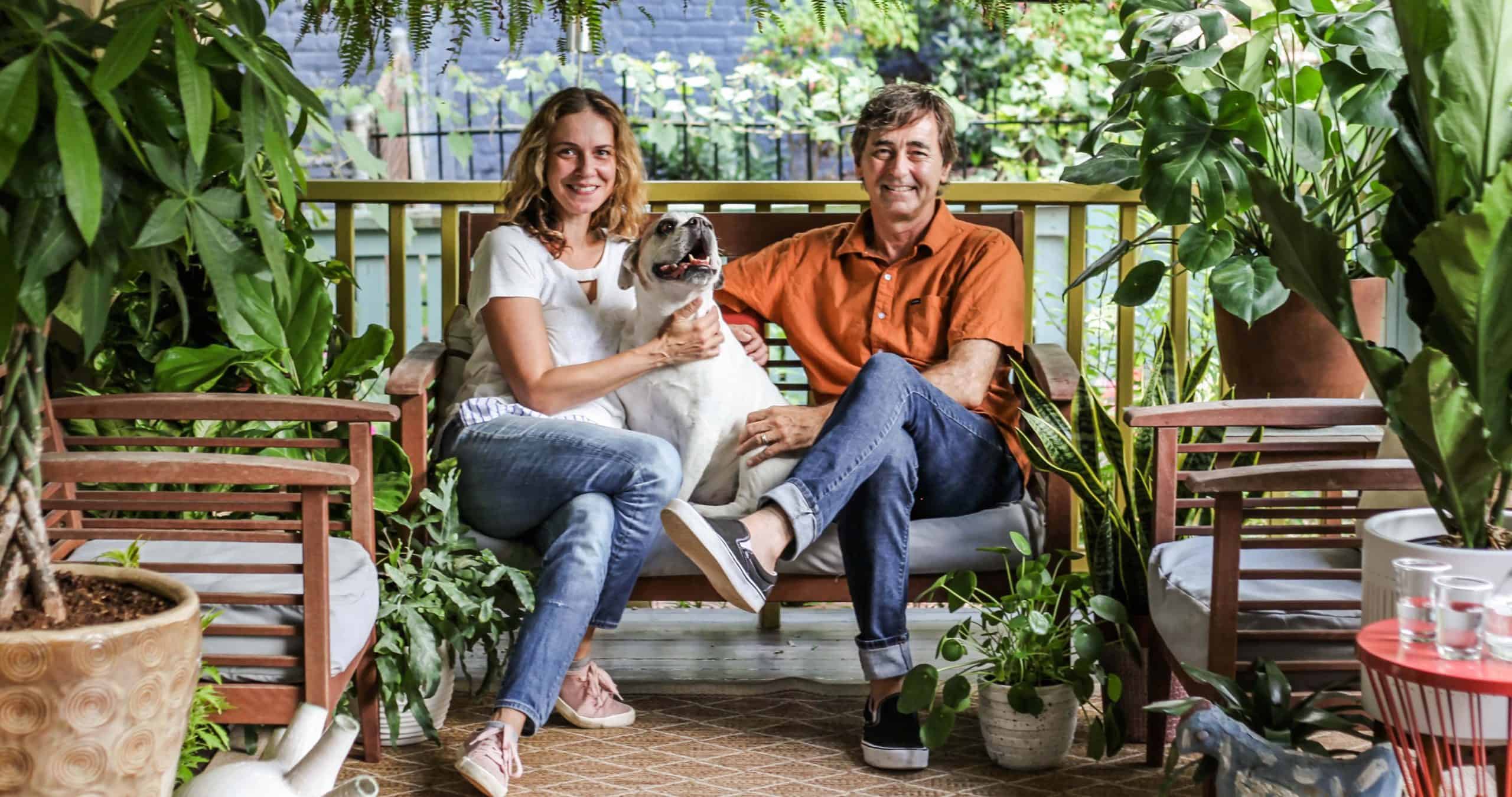
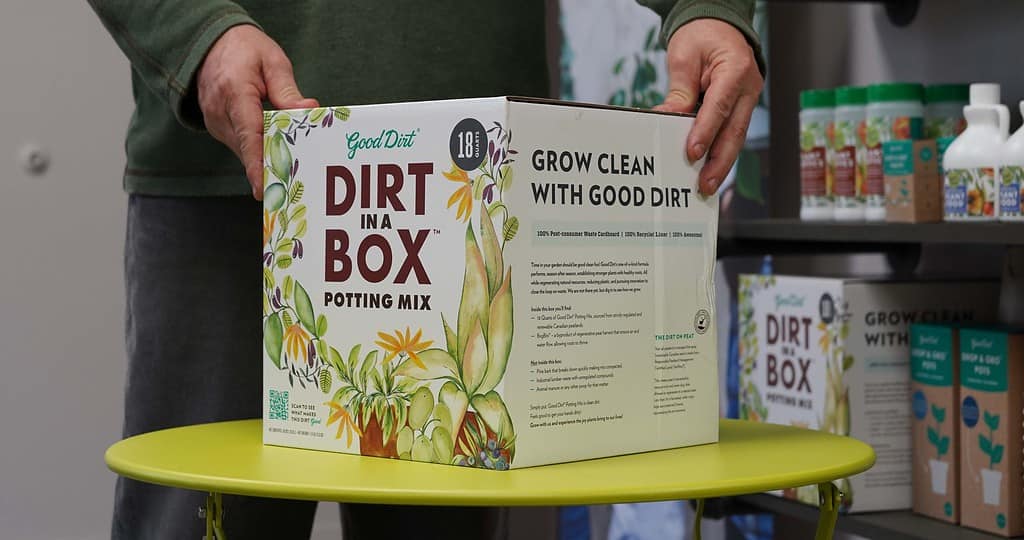
We’ve all grown up hearing the phrase “a little dirt never hurt” (thanks, Dad), and the words ring truer than ever with Good Dirt’s new Dirt in a Box. Just in time for spring planting, the Raleigh-based garden supplies biz has released its proprietary potting mix in sustainable (and totally chic) packaging made entirely from post-consumer waste materials.
In keeping with their mission of simple, successful and sustainable, founders Al and Suzy Newsom decided to say “see ya” to virgin plastic in their packaging and create an industry-disrupting alternative that would be as Earth-friendly as their one-of-a-kind potting mix.
“One of the things we were always talking about was that we’re working in a zero-waste manufacturing facility; we’re doing all the things we can for what’s in the product to be sustainable, chemical-free, and vegan- and nut-free—but then there’s the plastic,” says Suzy, whose marketing background complements her husband’s lifelong career in horticulture. “So, we did a ton of research and came up with what we kept calling Dirt in a Box. … But it had to be more than a box because anybody can ship dirt in cardboard. It had to be a box that was sustainable, a box that was a compostable, a box that you can use in your garden and would suppress weeds.”
In addition to constructing the box from 100% post-consumer waste, Al notes the company uses local resources whenever possible, driving a circular economy that ensures sustainable growth and keeps the company’s carbon footprint low. “We’re not perfect, but we strive to be,” he says.
Did we mention the box is also gorgeous? Featuring a lively watercolor print by Seattle artist Sarah Simon (@themintgardener), the elevated packaging speaks to the Newsoms’ own appreciation for art (they are avid collectors and heavily involved in Raleigh’s creative scene) and is a far cry from the industrial-looking garden products carried at most big-box stores. “We really wanted to bring the human element to all of our products,” Al shares.
In short, Dirt in a Box doesn’t harm the environment, looks fabulous on a shelf and can be renewed once empty (take Raleigh City Farm’s lead and lay out the corrugate as mulch). What’s not to love? And the good news is Good Dirt continues to innovate, thrive and grow, both here in Raleigh and beyond. “The collaboration with different people is a huge gratification for us,” says Al of the local community. Adds Suzy, “In general, I believe plant people are the best people.” Select Target stores, Grove Collaborative and getgooddirt.com
We asked six Raleigh socialites to weigh in on the dying art of the RSVP.
Modern etiquette has been a buzzy topic lately, thanks in part to the debate-sparking article recently published in The Cut, entitled, “Do You Know How to Behave?” As we all consider the do’s and don’ts of navigating polite society today [cue Carrie Bradshaw voice], we couldn’t help but wonder: What has become of the RSVP?
While the traditional courtesy of respondez s’il vous plait seems to have fallen out of fashion with the younger gen, many would argue that, in our digital world, it has not only become easier to confirm your attendance, but more important than ever before. So why is it so hard for invited guests to reply Y or N? Are people rude, lazy or simply too busy to respond? Here, we poll Raleigh insiders across the event, entertainment and F&B sectors to find out: Is the RSVP a dying art?
“I took three years of cotillion. … My generation was constantly told proper etiquette was very important—especially the written thank-you note and timely RSVP. Professionally and personally, I’ve watched as the RSVP has died a slow death! I think baby boomers still RSVP promptly, but younger generations have a tendency not to RSVP until right before the event—if at all. … The world is such a busy place, and we all tend to put more on our plates. Honestly, I think many people just forget!”
“Yes, but it shouldn’t be. It’s only dying because people have become poor communicators in general. Letting a host know if you will be attending their event is respectful and courteous—and that never goes out of style.”
“Yes! The RSVP is a dying art! In this digital age, people are inundated with events and engagements, and I think that has caused people to become less diligent with responses. It’s incredibly hard to put together a successful, curated and thoughtful event without a good idea of how many people to expect!”
“Just the opposite, actually. RSVP practice has become even easier to send—and receive—thanks to email and the proliferation of online event management services. For my wedding, I didn’t even depend on the mishap nature (and expense and environmental footprint) of snail mail. We exclusively used a website and email invitations to invite guests and keep track of guest status. … As guests, why leave our hosts worrying if we’ll be in attendance or not? I encourage everyone to confirm their participation by replying Y.”
—Lisa Jeffries Nobling, founder/principal, Raleighwood Media Group + Raleighwood Event Group, raleighwoodmedia.com
”I would say it’s a dying art that shouldn’t be dying. So much is at our fingertips now that I have found a lot of people (from different generations, mind you) hold off on RSVPing so they can ‘see where their schedule lands’—yet, often, their replies make it in the week of the event. Last-minute RSVPs aren’t fun—both because you feel like an afterthought and because you now need to plan for additional people. Circumstances exist where people do need time, and giving a specific reason for your delay in replying is completely acceptable because it shows your interest and intent to attend. Ironically, without directly RSVPing, people are RSVPing.”
”I’m all tickets, I’m all I need to know everything and where everybody’s coming from, so I’m very pro-RSVP. I don’t really like surprises. I don’t like people just showing up, like 10 more people to feed and you had no idea. That’s where I stand on it—and that’s how I’ve always been able to run a successful restaurant. I don’t want a blind date.”
A smokin’ new cookbook from famous North Carolina pitmaster Ed Mitchell and his son, Ryan, celebrates the storied tradition of whole-hog BBQ.
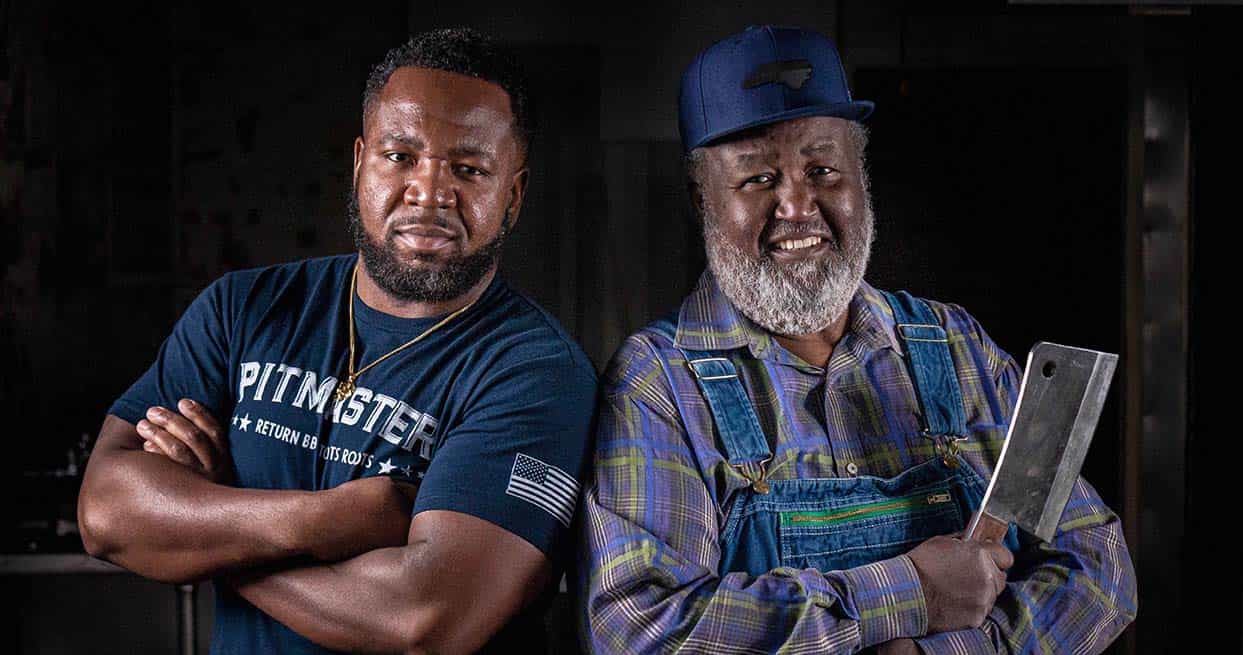
Here in the South, BBQ is a lifestyle—and no one has perfected it quite like Ed Mitchell. Raised in Wilson, NC, the culinary legend widely known as “The Pitmaster” has dedicated the past 35 years to the art of whole-hog barbecue, a cooking tradition passed down through his family for generations.
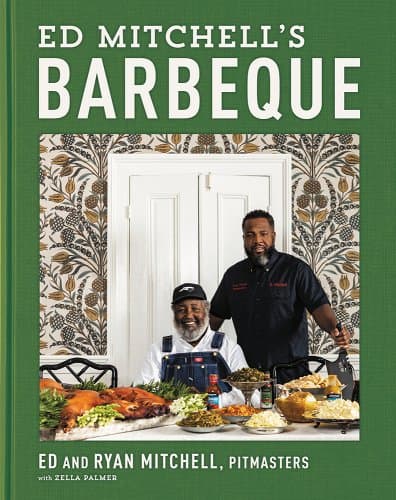
Now, Ed’s mouthwatering recipes and the rich history of his craft are being shared in Ed Mitchell’s Barbeque: Celebrating the Eastern North Carolina Whole Hog Barbeque of My African American Ancestors, a collab between the star pitmaster and his son, Ryan, and written with Zella Palmer. The stunning tome not only features a slew of delicious recipes honed over decades—think everything from baby back ribs and backyard brisket to hush puppies, fried green tomatoes and skillet cornbread—but also reveals Ed’s unique methods interspersed with stories from the Mitchell family.
“To see this all come together in this beautiful book means everything to us,” says Ryan, who has long served as the business brain behind his father’s brand. “This project provides the opportunity to give a voice to the generations of family and pitmasters who came before us. We cover four generations of the past, present and future of barbecue in this project. It’s an American dream come true.”
Indeed, the cookbook is bigger than just ’cue. “It’s moving our history for the world to see and understand the roots of BBQ and moving families back to the kitchen table,” Ryan explains. “The culinary influence, hospitality and history in the world of BBQ is often overlooked for our state. We wanted to share with the world a historical inside view from Eastern NC.” With that goal in mind, Ryan notes that he and his father became the first African American pitmasters to ink a literary deal in this space. “It was a unique opportunity to make history and write history simultaneously,” he says.
The cookbook hits shelves in June, just in time for Juneteenth, Father’s Day, and those long glorious summer days best spent with a cold bev and a plate of crispy pork crackling. The book’s release also comes ahead of the opening of local ’cue joint The Preserve this fall, a concept that will unite the Mitchells with another prominent culinary clan, the Moshakos family (stay tuned). “Permits are moving forward in a positive way with The Preserve project, so we’re excited to have an announcement soon,” Ryan reveals.
Until then, we’ll have Ed Mitchell’s Barbeque to sate our appetite. “My greatest hope is that readers will be inspired to bring families back to the dinner table through BBQ,” says Ryan. “The recipes are amazing, but we also hope to highlight the bond of family business for our culture. Nourishment comes in multiple ways.” thepitmasteredmitchell.com
Online sports betting may soon be legal in North Carolina—ushering in a thrilling new industry for our state.
NC MAY JUST CASH IN on the mobile sports betting windfall. Whether you’re a diehard fan or a casual “yay sports” viewer, this bill means serious business for all NCers.
After being defeated in the state House of Representatives last year by only one vote, House Bill 347 was filed in March for another shot at approval. Now, odds appear promising—and, if passed, mobile betting on college and professional sports could go live in our state as early as Jan. 1, aka in time for your Super Bowl wagers. (We’ll take the over/under on the National Anthem going long).
“We’d like to get it done this year,” says Rep. Jason Saine, who represents the 97th North Carolina House District and has been focused on the issue of legalizing online sports wagering for the better part of two years, and is working in tandem with three co-sponsors: House Majority Leader John Bell (R-Wayne), Dem. Zack Hawkins (D-Durham) and Ashton Clemmons (D-Greensboro).
“You really have members of both parties in support,” says Saine. “Of course there’s some opposition, but I think this time we should have enough votes.” To wit, even the governor has expressed optimism. “I think it’s going to pass from what I hear,” Gov. Roy Cooper shared at a recent Canes fan event, according to Bet Carolina. “We’re working to make sure we get good legislation that is fair to the taxpayers, but also recognizes something that’s going on anyway. We might as well get benefit for our schools and for our state out of it.”
The benefits of legalizing mobile sports betting are multifold. “One, it stops revenue we’re losing to other states,” Saine explains. “Virginia has sports betting. We see a lot of our folks in North Carolina traveling short distances across the border and placing bets. That’s revenue the state’s not realizing. It also means we’re helping to fund Virginia’s schools, Virginia’s roads and everything else Virginia pays for.” He notes that with a sports betting bill imminent in South Carolina as well, “we could essentially be surrounded by states with sports betting, and that really would be a loss of revenue for our state.”
Second, a portion of the money raised from online sports gambling will be used to bolster—what else?—North Carolina sports, primarily supporting the athletic departments at HBCUs, as well as shoring up youth athletic programs throughout the state. “In the spirit of sports, we want to make sure that we’re seeing a more active populace—getting people outside, getting people more engaged,” Saine says. “We think that’s important.”
$57.2B BET ON SPORTING IN THE UNITED STATES ↑ of 165% from 2020
Finally, although it may seem counterintuitive, the legalization of sports betting actually provides an opportunity to curb problem gambling and confront gambling addiction. “My counter to those who are opposed and worried about people who do gamble is, until we get it out in the open and understand exactly to what extent we do have people sports betting in North Carolina, we’re really not doing those people who have problems any favors whatsoever,” Saine shares. “We’re really doing them a disservice because we’re kind of keeping them underground and not getting them the help they need.”
Once HB 347 passes in the House, it will head to the Senate for a vote, which Saine anticipates may happen this month. Perhaps by late spring we’ll know the fate of the bill that has sports betting enthusiasts across the state hoping for a W.
Revenue Potential?
Saine predicts the mobile sports betting industry in NC could bring in anywhere from a whopping $30 to $60 million, but “that’s a conservative estimate,” he says. “It could be as much as $100 million. It’s hard to measure since we don’t have it yet and because it’s kind of an underground market at this point, but our hope is we start to capture that market.” Cha-ching!
How Would It Work?
If the Bill HB347 passes…
NC residents would be able to wager on professional and college sporting events.
It would allow for up to 10 to 12 licenses to be offered to online operators in NC, as managed by the state’s lottery commission.
Professional sports venues like PNC Arena and Bank of America Stadium would have guaranteed licenses.
Sports betting would be taxed at 14%.
Proceeds would be allocated to gambling addiction education, youth sports upgrades and HBCU athletic support.
21-and-up age requirement for online wagering
Mobile betting would be prohibited within the state’s protected tribal territories, with sportsbook apps relying on geolocation to regulate usage.
March is Colorectal Cancer Awareness Month, and a new locally available blood test makes it easier than ever to go get screened—no but(t)s about it.
Now that you’ve set your clocks forward for daylight saving time, donned your St. Patty’s Day green and had your March Madness bracket busted, there’s only one more item to check off this month’s to-do list: Get screened for colon cancer. That’s right—March is Colorectal Cancer Awareness Month, aka your annual reminder to schedule that colonoscopy starting at age 45 for those with average risk for the disease.
If reading that last sentence immediately filled you with dread (sorry!), we have some good news. Although a colonoscopy is still considered the most effective way to screen for colon cancer, there are several other options designed for people who may be inclined to skip this critical check due to fear, affordability or another reason—because the most important thing is to get screened, no matter which method you choose. When caught early, colon cancer remains one of the most treatable forms of cancer.
One of those options is the first-of-its-kind Colorectal Cancer Screening Blood Test, which is available exclusively at Any Lab Test Now, a leader in providing direct access to lab testing services with convenient locations in Raleigh, Cary and Durham. Fast, easy and, frankly, way less gross than a fecal-based exam, the groundbreaking test helps fill a void in the prevention and early detection of this deadly disease.
“Our Colorectal Cancer Screening Blood Test is a game changer,” says Glory Gallucci, the owner of Any Lab Test Now’s three Triangle-area locations. “It’s very effective with no nasty prep, no going under anesthesia; just a simple blood draw from the arm is all that’s needed.” And, at only $379, it’s practically a steal compared to many of the other commercially available noninvasive screening tests.
The test works by scanning for three protein markers in the blood that are highly associated with the presence of colorectal cancer. The entire process only takes about 15 minutes, and you can call and make an appointment online or simply walk in. “You get results back in 10 days, and we encourage you to share those results with a medical provider,” Gallucci explains.
As the rate of colorectal cancer in people younger than 50 continues to rise—take the late Black Panther actor Chadwick Boseman, who was diagnosed with stage 3 colon cancer at age 39 and tragically passed away at 43—the experts at Any Lab Test Now urge folks to take control of their health by getting screened.
“This test holds special meaning to our team since we lost a colleague a few years ago to colon cancer,” Gallucci shares. “She was only 46 years old when she was diagnosed. While a colonoscopy is still the gold standard, this test can provide answers that may confirm the need for further testing.” Go ahead, check that box before the month is over—it could save your life.