What Centro’s Day of the Dead 5K really means to event director Angela Salamanca
Photos by Michael Palko
While you might have caught a glimpse of the costumed runners scampering along Wilmington Street in years past for Centro’s annual Day of the Dead 5K, there’s more to the race than meets the eye.
Coming up on its 10-year anniversary this October, the race means something a little different to everyone involved. For some, it’s a great way to get fresh air and exercise while supporting the Brentwood Boys & Girls Club. For others, it’s the perfect fam-friendly outing combining running, face painting, dancing—and beer for those 21+. And yet for others, like Centro owner and event director Angela Salamanca, it serves a deeper purpose.
In 2003, Salamanca lost her younger sister Margarita to suicide.
“When she died, I was also really young. I think she was 25 and I was 26, and she was under my care,” say Salamanca. “And at the time… there weren’t the conversations in availability and normalization around mental health and help, so it was a tough, difficult, hard time for us.”
Salamanca was overcome with grief in the beginning, but after finding out she was pregnant soon thereafter, she pushed herself to think and feel differently.
“I just kind of turned on a switch somewhere inside of me, and said, ‘I really need to be happier; I really need to be good; this baby needs all the best of me.’ And I stopped grieving out of necessity, out of—I don’t know why—it was a thing that I felt I needed to do out of survival,” she says.
Fast-forward to 2009 when Centro was in its second year and Salamanca first learned about the Day of the Dead, when her kitchen staff, who were mostly Central American, asked if they could set up an altar in the restaurant. Altars are a key part of the holiday, as they are used to honor and celebrate the lives of deceased friends and family.
“I’ve been able to stop equating death with darkness or grief with darkness, and I think the altar really shifts that for you,” Salamanca reflects. “I saw it as an opportunity for healing, and because I experienced it myself, I really wanted to share that with others.”
And she has. Since 2000 (minus 2020 and 2021), Salamanca and her staff have worked to educate others about the Day of the Dead by holding the 5K during the last weekend in October each year. In addition to the race, they set up an altar in Oakwood Cemetery, where runners—or anyone in the community—can come and celebrate loved ones they’ve lost. To boot, proceeds from the event benefit the Brentwood Boy & Girls Club, and many children within the organization take part in the race.
2022 will be the last year that Salamanca and Centro host the 5K, as they are passing the reins to the Boys & Girls Club. But they are looking to go out with a bang. Their goal is to have 1,500 people register for the race—nearly double the number of participants they’ve had in the past.
The key thing to remember? As Salamanca says, “This race can be anything that you want.” A way to give back to the community. A way to get your heart pumping while spending time with family and friends. Or a way to honor the memory of those you love.
WRAL’s new podcast digs into cold cases and unidentified human remains.
Curious to find outhow tooth enamel can be used to determine where a person grew up or how a body farm (or human decomposition facility) in NC is gathering research that can aid in murder investigations? WRAL’s Amanda Lamb tackles these topics and more in her new podcast, What Remains.
Amanda Lamb (Photo Credit: Jennifer Robertson)
Launched in June 2022, What Remains explores how human remains are connected to missing and murdered people—hence the double entendre moniker… what remains of the remains.
“This has a really wide appeal for true crime junkies, but also science nerds,” says Lamb, “and I really think I’m becoming a science nerd because I get so excited when I talk to someone, and I’m like, ‘Wait a minute. Back up. Explain that to me.’ And I’m like, ‘No, really, that’s for real?’”
Appealing it is—as of July, What Remains ranked in the top 200 for all Apple Podcasts and in the top 10 for science podcasts. In fact, it became so popular so quickly that rather than ending season one when the 11th weekly episode dropped in mid-August, the station has continued to produce new episodes.
“We’re just going to keep on rolling and providing new content,” says Lamb. “It may not be weekly. It may be every 10 days. … We have a very small team, but we’re really excited by the interest.”
Throughout the series, listeners hear from forensic anthropologists, including Dr. Ann Ross from NC State University, investigators and families of the deceased.
After submerging herself in various topics surrounding cold cases and unidentified remains for the podcast, Lamb says there’s one important thing she’s learned.
“Everybody, whether you are a person living off the grid, whether you are a person who has fallen on hard times and is living on the street,” she says, “no matter who you are, everybody deserves to be identified and returned to their families.”
NC is in the running to host the 2027 Summer World University Games.
Get ready to break out your best college swag, Raleighites, because if everything goes according to plan, you could be one of the projected 600,000 spectators expected to assemble in central North Carolina for the 2027 Summer World University Games (!).
Held every other year in the odd year, this competition comes second only to the Olympic Games for largest global Olympic multisport event. And right now, two cities remain in contention to host the games: the Chungcheong region of South Korea and, drumroll, North Carolina’s University Hub region, spread across Raleigh, Durham, Cary, Chapel Hill, Elon and Greensboro.
“For purposes of the bid, this region has been branded as North Carolina’s University Hub,” says Hill Carrow, chairman and CEO of the North Carolina Bid Committee, a large group of individuals helping lead the initiative to host the games, “which is particularly appropriate when you consider the fact that the area is home to 19 colleges and universities.”
If chosen, the state will play host to more than 10,000 student-athletes, officials, coaches, administrators and support staff representing 150 countries for nearly two weeks that July. And when it comes to the types of sporting events, you can expect quite the roster, as each Summer World University Games includes 15 compulsory sports—think tennis, volleyball, judo, archery, basketball—and up to three optional sports chosen by the organizer (fun fact: If chosen, it’s been OK’d for us to hold four optional sports).
“This is the first time North Carolina has ever even made it to this level of international competition for a global event of this stature. It’s an opportunity to be much more significant on the world’s stage.”
— Hill Carrow
“This is the first time North Carolina has ever even made it to this level of international competition for a global event of this stature,” says Carrow. “It’s an opportunity to be much more significant on the world’s stage.”
So how’d little old Raleigh even get into the running? The summer games—along with the Winter World University Games and World University Championships—are governed by the International University Sports Federation, based in Lausanne, Switzerland. The U.S. arm of the FISU, the USIUSF, chooses a host city/state each time it wants to submit a bid to host an FISU event. New York’s Lake Placid was the pick to host the 1972 and 2023 winter games, and Buffalo, the 1993 summer games.
Back in 2018, when the world was debating Yanny vs. Laurel, the Triangle Sports Commission and the USIUSF started talking about the possibility of North Carolina hosting the games, with conversations focused on the Triangle, but “over time it became apparent that, to host an event of the magnitude of the games (which typically requires more than 50 venues), Greensboro needed to be added to the host region,” explains Carrow. “This was the same footprint used to host the highly successful U.S. Olympic Festival (North Carolina’s largest event to date) in 1987, so we have good experience with collaboration across the [University Hub] region.”
Fast-forward three years to February 2021 when the USIUSF officially chose North Carolina to be its partner and sent a letter of intent to the FISU. Roughly a year later, in early 2022, the FISU announced North Carolina as one of its two finalists.
“Part of the positive momentum for our bid comes from the fact that we’re trying to land this event the year prior to the Los Angeles [2028 Summer] Olympic Games, and that will be the year after the [2026 FIFA] World Cup in the U.S.,” says Carrow. “It’s really important to be the year prior to the LA games because that’ll ensure the best college athletes in the world come and compete in this event since each one will be trying to position themselves to be on their respective country’s Olympic teams the following year.”
Carrow says the NCBC continues to work “every day, all day” to land the games. The committee led FISU officials on their first site visit the first week of August and submitted their final bid later in the month. An additional site visit by FISU staff will take place the third week of September before a final decision is made in November (stay tuned!).
“I’m a real superstitious guy—I grew up in Eastern North Carolina—so we try not to jinx ourselves, but we feel good about our bid,” says Carrow. “We definitely feel like, with all the venues and athlete housing already in place, we have everything it takes structurally and operationally to do the games.”
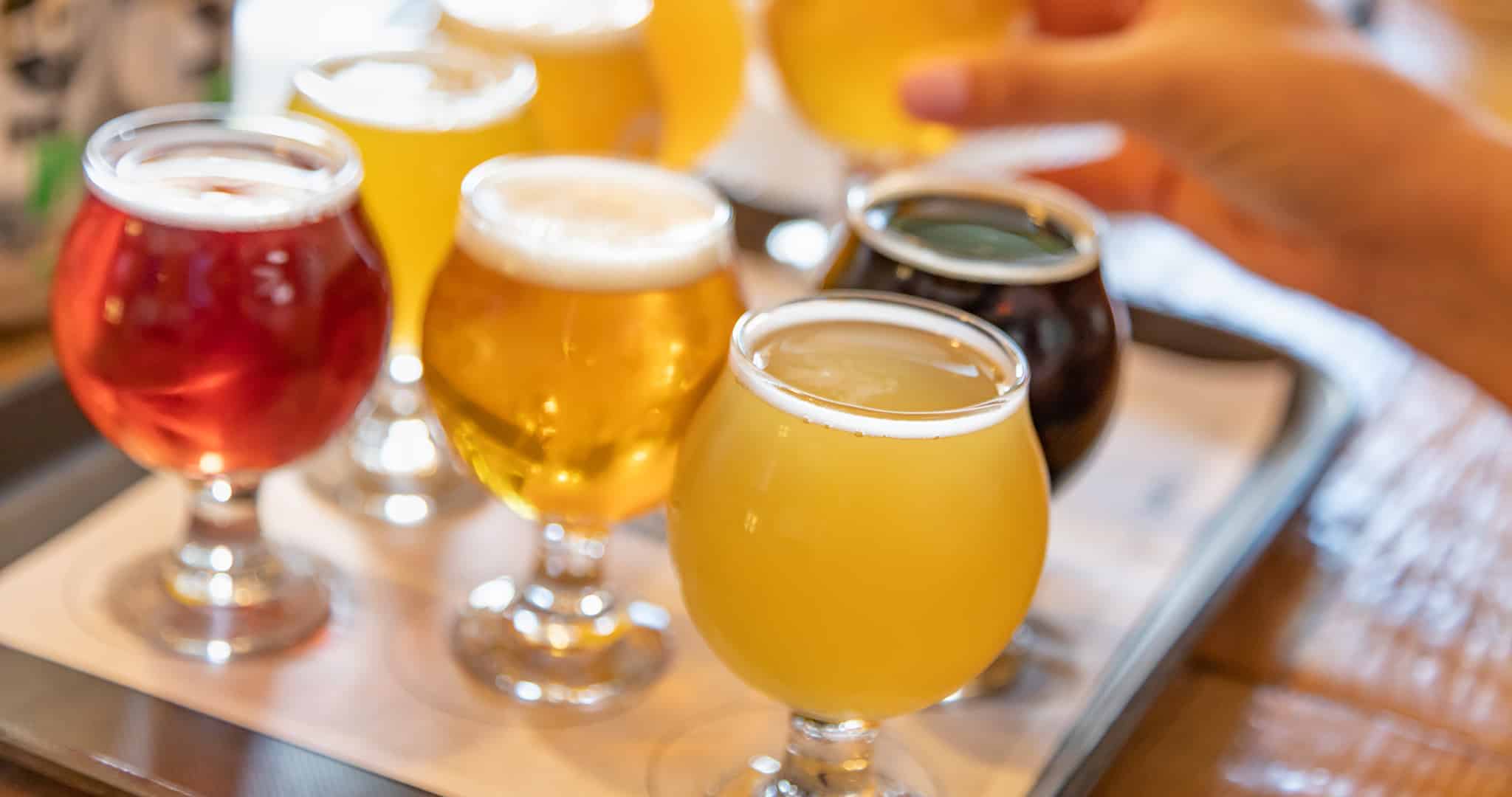
Slated to open its doors this month in North Raleigh’s Celebration at Six Forks Shopping Center, Sneaky Penguin is the brainchild of born-and-bred Connecticuter Christopher Nadeau, who has brewing in his blood. He learned the trade growing up from his father, who brewed as a hobby, but it wasn’t until about 15 years ago when his father bought him a homebrewing system upon moving to Raleigh that his knack for turning hops and malts into flavorful bevs really came through.
“From that point on, my passion for beer and brewing grew, and I got more into creating recipes and learning about all the ingredients and flavor profiles and how to make better beer,” says Nadeau.
While he’s loved sharing his liquid works of art with friends, family and neighbors over the years, the idea to open his own brewery always lingered in his mind. In 2019, driving home from Connecticut, he decided to take the plunge.
Now, his unique creations—like his milk stout (made without lactose!) or cream ale with notes of strawberry and melon—will be flowing from Sneaky Penguin’s 12 taps. Wines, ciders and gluten-free options will also be available.
“I’m going to let the consumers drive what beers stay on draft and what beers become rotating,” he adds. “My goal is to keep the beer on tap as fresh as possible and have something new for people that come in to always try.”
In addition to the drink selections, Nadeau has also put a lot of thought into the brewing company’s atmosphere. By knocking down a few walls and adding in a bar and taproom, he’s managed to create a modern warehouse feel in a neighborhood setting.
“It’s going to be a community place to hang out,” he maintains. “It’s very walkable. There’s a greenway trail not too far, so it connects a lot of people in North Raleigh to make it accessible—and, hopefully, people can meet new neighbors and build new friendships.”
Speaking of neighbors, Nadeau plans to partner with local businesses in the area to host community events. “There’s a gym next door to the brewery, so we’ll do beers and yoga or some type of running club associated with that as well,” he says.
Oh, and another cool thing to look out for? The bar will be a live-edge cedar slab made by his neighbor Stacy Lynn. “I have a lot of neighbors helping and friends coming over and helping get the place ready,” says Nadeau. “We’re going to have a lot of fun.” Now that’s how you brew community. Cheers! sneakypenguinbrewing.com
NC State partners with the NC State Bureau of Investigation to uncover cold cases.
On Tuesday, Oct. 18, 1994, 35-year-old Kathi Goff Kennedy was found dead in her Kernersville, NC, apartment by her mother. After not hearing from Kennedy that day and knocking on her door, her mother entered the unit—which Kennedy and her family had been living in for only three weeks—to find her beaten and stabbed. She was last seen alive the evening prior. Found inside were Kennedy’s two young daughters—4 years old and 18 months—who had been left unharmed. Kennedy’s husband, who was out of town at the time, was not considered a suspect.
Fast-forward nearly 28 years, and the truth behind this brutal murder, which left a family devastated, a community rocked and uneasy, and investigators flummoxed, has yet to be uncovered.
Like Kennedy’s story, trails have run cold for criminal cases across the U.S., from unsolved homicides and unidentified remains to missing persons investigations. And while it’s hard to stomach, these individuals become another dusty file or box of bones unless—or until—their case is cracked.
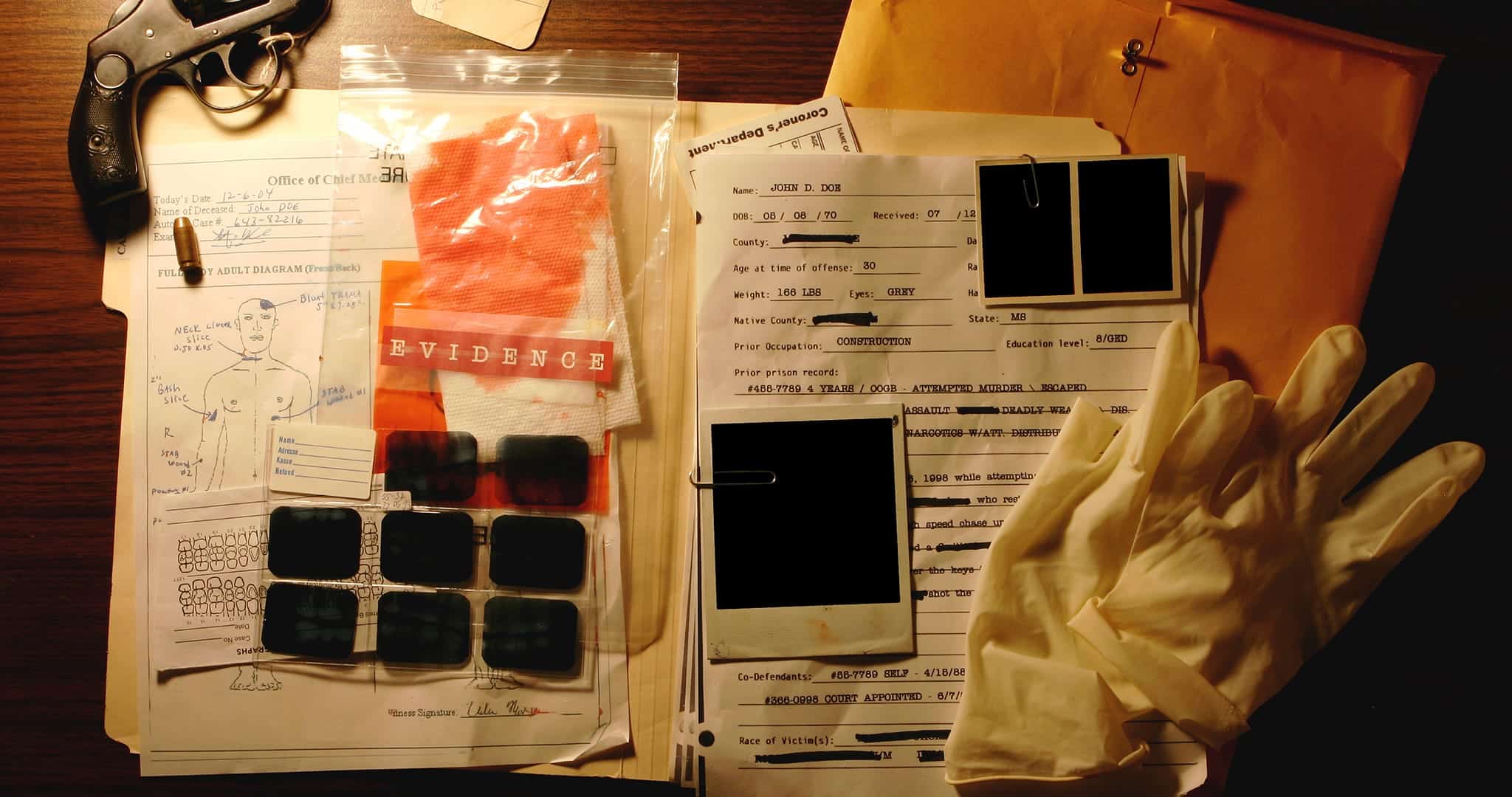
Today, the North Carolina State Bureau of Investigation’s Cold Case Investigation Team, launched in 2020, is reviewing more than 800 unsolved homicides and unidentified human remains cases that the SBI has worked on between its establishment in 1937 and 2018, according to Nathaniel Thompson, the assistant special agent in charge of the CCIT.
Statewide, the number of cold cases is actually much higher because, while the SBI is available to help local agencies, Thompson explains that larger police departments, like those in Charlotte-Mecklenburg, Raleigh and Durham, don’t call on the SBI when a homicide occurs, as they already have the necessary manpower and training. Therefore, those cases are not included in the SBI’s files.
Thompson notes that one reason cold cases stack up is because many of the agents working them often have to pause partway through to investigate recent homicides. In other words: The cases continue to run cold.
Forensic Anthropologist Dr. Ann Ross works in her lab on main campus. Photo by Marc Hall
On the Case
Enter Dr. Ann Ross, a forensic anthropologist and professor at NC State University. This fall, she’ll be teaching an undergraduate-level course called Cold Case Investigations, where students will review a cold case, like Kennedy’s, supplied by the SBI.
“The goal of this is to provide the SBI with new leads,” says Ross. “And to have some fresh eyes look at areas of potential, maybe new things that can be—if the evidence is available—resampled, or new leads, that type of thing.”
While the class is new, Ross is far from green when it comes to assisting with investigations. Her lab at the university holds a contract with the North Carolina Department of Health and Human Services to handle forensic anthropology casework for the state, and throughout her career, she’s assisted with the murder investigations of 19-month-old DeVarion Gross, 13-year-old Erica Parsons and 27-year-old Laura Ackerson, among many others.
“A big chunk of my casework is looking for trauma and trying to assess the type and class of tool that was used,” adds Ross.
It is here in Raleigh, however, from her nearly 1,000-square-foot university lab, where “the bone expert,” as she is often called, now spends most of her days among digital microscopes, incubators used to remove tissue, and a few tables large enough to lay out complete sets of remains in anatomical position. That is, when she isn’t training the next generation.
“I like opening [students’] minds and teaching them things they haven’t thought about, and engaging with young women and men who are so enthusiastic,” she says.
Schooling the Next Generation
Just 13 students—all of whom are required to sign a confidentiality agreement—will learn the ins and outs of cold case investigations from Ross this fall. Focusing on a 2005 case and utilizing the second edition of Cold Case Homicides: Practical Investigative Techniques, a textbook written by R.H. Walton, she’ll walk them through how to review reports, construct a crime event timeline, and provide new directions for subsequent investigations.
“[Students] are actually reviewing a real cold case and coming up with real leads and have full access to it—to the investigators, to the crime scene pictures,” says Thompson, who selected the case for the class. “[They] will have a list of what the evidence is and past examinations at the crime lab and that kind of stuff.”
One important thing students will determine is whether advances in technology might be able to provide new information in the case. For example, state crime labs can study palm prints now, rather than just fingerprints, and forensic genetic genealogy can be used to identify close genetic DNA profiles or matches of DNA found at a crime scene.
“You’re talking about a case that is over 15 years old… so if there’s a potential to do genealogy, or they say, ‘Hey, we need to resubmit this for touch DNA,’ then we will do it. It’s just their time to study it,” says Thompson.
At the end of the semester, students will write a report that notes their findings and suggestions, which will go into the SBI case file, as well as present their work to the local detective on the case and a member of the SBI’s CCIT.
A Resolution
While Ross will be leading the course, it was Thompson’s idea to start a class of this nature at NC State. As the CCIT’s assistant special agent in charge, part of his job is overseeing its college and university program, where he creates opportunities for higher education institutions to assist with cold case investigations.
In fact, NC State is the fourth college in the state to partner with the SBI and offer a cold case investigation course. East Carolina University held its first class in 2020, and when Thompson took over the CCIT in 2021, he expanded the program to Campbell and Saint Augustine’s universities. He hopes to eventually partner with eight schools in North Carolina.
“I see some really positive things coming out of [this program]. Now, has it solved a case yet? No. But obviously we just started this in 2020,” says Thompson. “I think [students] are getting a lot of benefits as far as exposure to this type of work. Especially, we’re targeting criminal justice students who may go into the field, so it’s a recruitment tool— and it’s a real case.”
In addition to the recruiting benefit, there is a reason Thompson feels a sense of urgency to have fresh eyes on old cases, whether it’s the 2005 case that Ross’ class will study or Kennedy’s case from 1994.
“We are trying to go through these cases where evidence still exists and where people that are in the case are still living,” says Thompson. “… Now we have the technology to have the evidence corroborate what [an eyewitness was] saying, and if that eyewitness dies and the evidence is gone, guess what? You can’t do anything with that case, and somebody got away with murder.”