A newly launched company has made owning a vacation home “plum easy.”
Ready to make one of your #lifegoals plum easy? Locally based Plum CoOwnership has created an “easy button” for owning your dream vacation home in NC. For real.
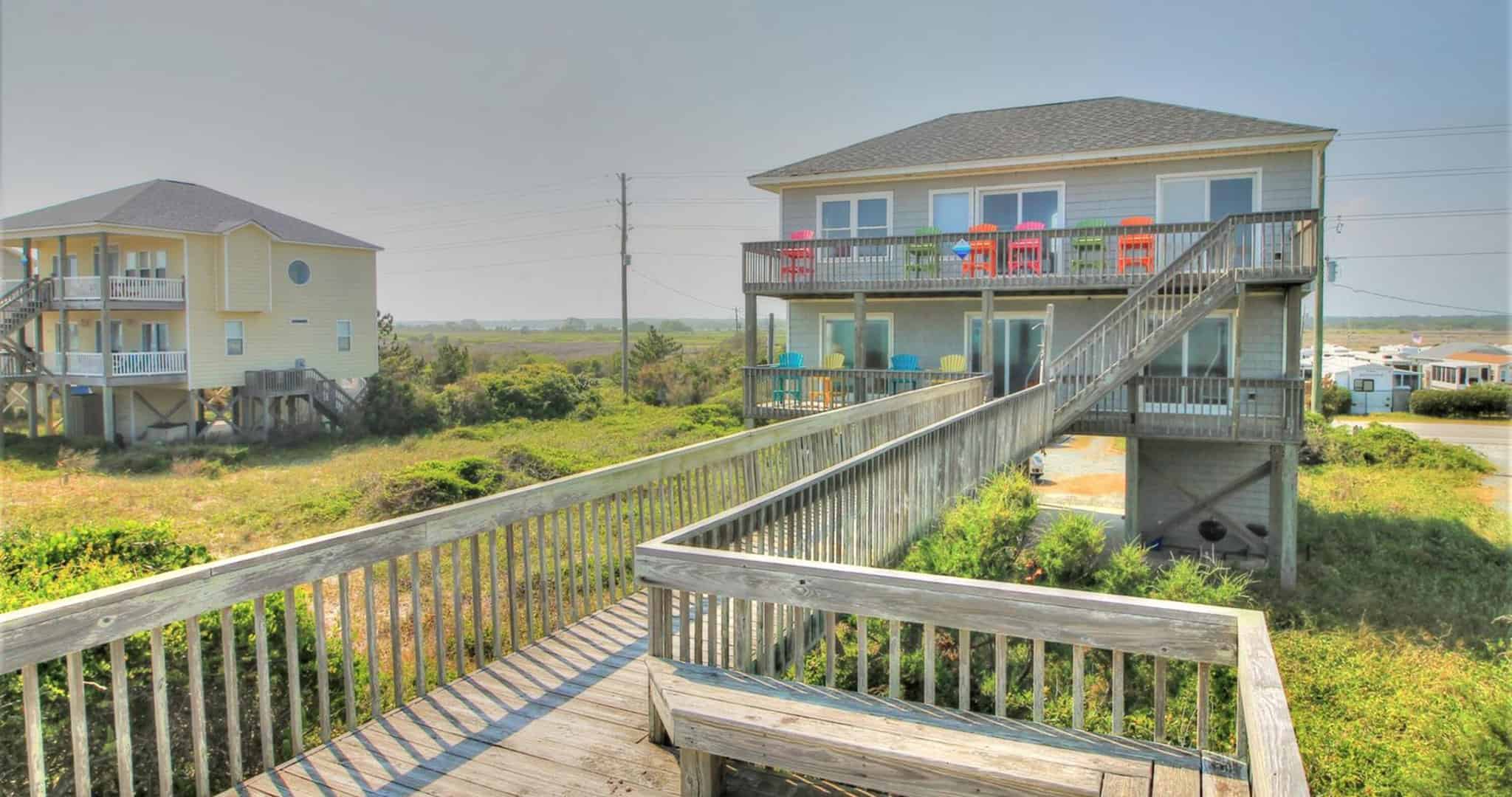
Founded by Matt Williamson earlier this year, Plum acts as a concierge, aggregator and facilitator to help groups of people find, prepare for and buy a home they deem their perfect getaway—from a gorgeous six-bedroom in the Outer Banks to a cozy mountain home in Boone to a cute city house in Asheville.
“There are 25 or 30 different decisions that have to be made [when co-owning a vacation home], so it’s really hard unless you know what they are, and then you can guide people to success,” says Williamson. “So that’s what we’re building the company around. We built up knowledge of how people do this well, and we’re positioning people to walk them through it.”
Swipe through existing Plums (aka preexisting co-ownership proposals) on the company’s website, or build your own with your preferred price, location, number of bedrooms, and other details like waterfront access and/or a hot tub (um—yes, please!). After finding or making a Plum, it’s time to gather a crew—get your friends or fam on board, or search through vetted “PlumCertified” co-owners with similar interests.
Once your group is all set, Plum helps you iron out the important stuff, like building the right legal agreements, forming house rules and setting up a budget. A Plum Certified Realtor specially trained to work with group co-ownership helps you wrap things up—and, voila, you have a vacation home (!). And one more “strength in numbers” perk—since you’ll only be paying a portion of the mortgage, maintenance and reserve fund, your wallet won’t groan in protest. It all sounds pretty juicy, doesn’t it? plumcoownership.com
NC native Victoria Vesce is a real-life Wonder Woman.
Daughter, friend, social media influencer, Juris Doctor holder, previous NBA dancer, Sports Illustrated Swim Search finalist, brain tumor survivor—these are just a few of the titles North Carolina native Victoria Vesce has amassed throughout her 29 years and, soon, she’ll add one more to that list. Come July 16, she’ll be honored at the fifth annual Wonder Woman Initiative at Miami Swim Week, an event that shines a light on truly strong women—like survivors of domestic violence and those who have overcome the odds.
Spend just a few minutes with Vesce and her undeniable grit to push through even the toughest of situations shines through, but coupled with that determination is a refreshing vulnerability, as she openly shares about the emotional tolls brought on by events she’s faced.
At 23, Vesce had recently graduated from NC State—living an active, full life and busy studying for the LSATs and dancing for the Charlotte Hornets.
“Everything was going amazing. Anything I wanted to do, I could do,” she says. “Everything felt like a breeze—I didn’t have any sickness more than just, like, the common cold. … Never had the flu, nothing crazy; I was super-healthy.”
While it happened slowly, Vesce’s life eventually took a sharp left turn. She began experiencing severe migraines, dizziness and nausea, and her hearing declined in her right ear. She was misdiagnosed multiple times with ear infections, and her symptoms eventually worsened to the point that she couldn’t get out of bed. Several doctor appointments and tests later, Vesce learned she had a brain-skull tumor and carotid body tumor.
“It’s like you just jump off a cliff immediately,” says Vesce. “There was no preparation. There was nothing to warn me. It was just a really dark place of isolation, just kind of preparing myself to die.”
In May of 2017, she had a major surgery to remove the carotid body tumor and part of the one in her brain—some of it remains today because of its location—then she began 30 rounds of radiation.
“[After my surgery], I was walking, almost jogging again, and I did that in a period of six weeks, which to my doctors was almost unheard of. It was just my mental stamina,” she says. “And I was like, if I can get through that, I can get through anything.”
And she has. Vesce earned her JD, obtained a job at Berman Law Group in South Florida, and was one of 13 people (among thousands) selected this March as a Sports Illustrated Swim Search finalist.
During these highs, however, Vesce faced another low. In October 2021, her mom passed away from COVID-19.
“My mom and I were super-tight, super-close, did everything together,” she says. “I’m better than I was when she first passed, and I know every day will get a little better, but it’s been tough.”
Through her grief, Vesce has managed to push forward again, balancing work and modeling, planning for the future and handling the everyday challenges life throws her way.
After all she has endured, Vesce has this piece of advice for others: “Stay true to who you are and just remember where you came from because things can kind of get a little crazy and a little hectic, and you get a lot of opinions and a lot of people telling you what to do, but at the end of the day, who you are and what makes you you is what is most important and most valuable.” Words to live by.
The owners of Pelagic Beer & Wine are opening a sister shop.
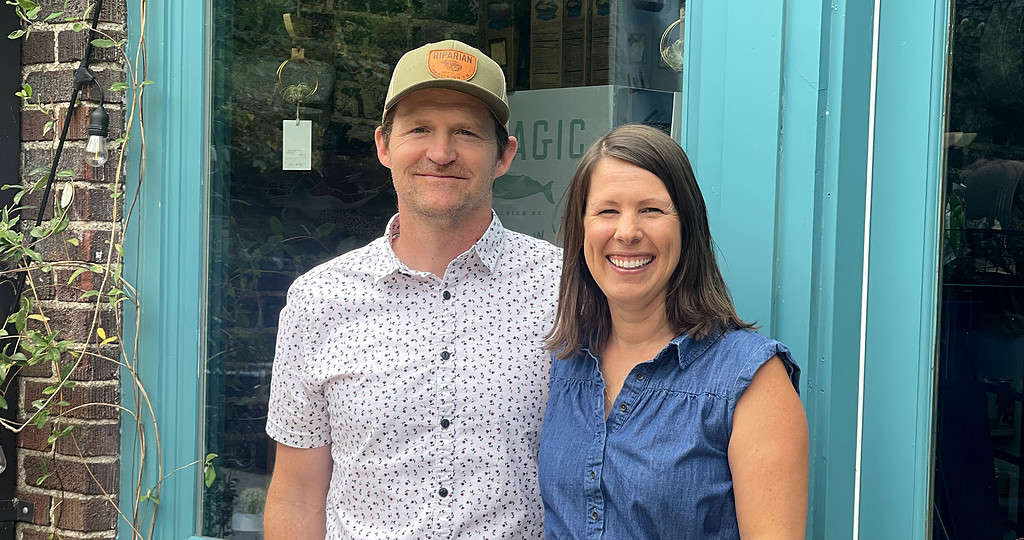
When husband-and-wife team Matt and Amanda Allen realized their vision to offer more at their independent craft beer, wine and cider shop Pelagic Beer & Wine was a little too large for its 800-square-foot space, instead of dashing the dream, the owners bought another building on South Saunders Street—offering them the opp to grow and serve more of what they love. And while similar in concept to Pelagic, this younger, spunkier sibling—anticipated to open mid-July—will take the duo’s locally loved offerings next-level.
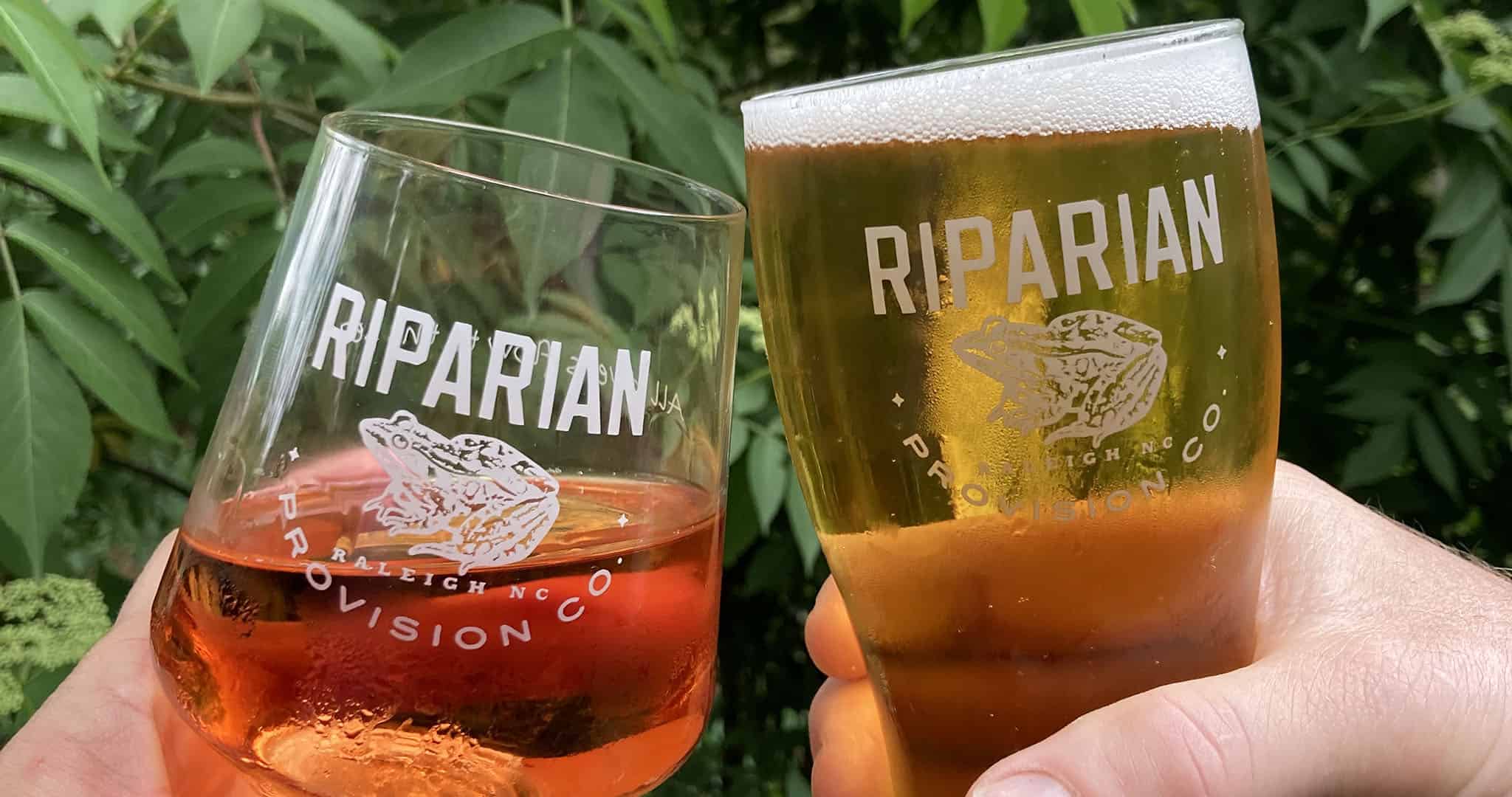
Beyond peddling local, artisanal snacks, Riparian Provision Co. will also have 14 taps aflowin’ with beer, cider, hard seltzer and, potentially, wine, kombucha and cold brew to sip on either inside or out on the patio—plus cider, wine and beer to purchase to prolong the sips once home.
Designed as a thoughtfully curated retail space with a tasting bar, the new “provisions co.” (hence the name), will also serve up locally produced selects—from daily needs (think coffee, milk, creamer, bacon and eggs) to plants to feed your growing additions (see the dedicated corner where folks can buy native and indoor tropicals in addition to potting supplies).
“We wanted it to be its own little spot, but also connect enough to Pelagic so that people recognized that it was us and what we’re all about,” explains Amanda. Plus, the new location’s 2,400 square feet provides the space to spread their creative plans.
As you might have guessed from the shops’ unique names—Pelagic (relating to the open sea) and Riparian (relating to or situated on the banks of a river)—the Allens are passionate about water and the environment. But they are also firm believers in supporting independent businesses.
And when it comes to other liquids—aka their beverage selection—they don’t make exception. While Amanda says that some craft beer brands you find in your traditional grocery store might seem to come from independent businesses, they’ve actually been purchased by larger beer companies.
“We choose to sell only independent brands—which sometimes means refusing some good beer—in order to best support the little guys in the craft beer industry and help the industry grow,” she adds. “We are the only store in Raleigh/the Triangle that does that, sometimes refusing good beer because it’s not independent.”
Beyond lifting up independent brewers, the Allens are also committed to community, and, leaning into that, they are hoping to grow and build a connection with the area around South Saunders Street once they open, says Matt—including leading regular cleanups of the locally adopted stream in the neighborhood.
“We just installed some words along the storefront to kind of advertise what we’re going to be doing and selling,” adds Amanda. “And so it’s beer, wine, plants, provisions and community—and community is kind of the last one over the two front doors, and I think that’s really important to us and what we pride ourselves on at Pelagic. … I think our customers would say this is a community spot, and people feel comfortable here, and people feel welcome here, and you don’t have to be from here to experience that.” @riparianprovisionco
Here, a survivor gives us a look inside our state’s dark world of sexual exploitation and forced labor.
“I thought at one point I was dead,and I went to hell. … I would wake up, and [my traffickers] would put an IV in me. I never, ever shot myself up. I didn’t know how to, so they would give me drugs, literally, and keep me inebriated… and then, of course, they would immediately start finding people to buy me. That was pretty normal,” says Kate*, who, at nearly 18 years old, was trafficked for 1.5 years.
Human trafficking is a broad term to define modern-day slavery, and victims can be used for sexual exploitation, forced labor, involuntary criminal acts and even the harvesting of their organs. It’s an underreported crime that often goes unnoticed, carries multiple misconceptions, and, when you dig deep, unearths corruption.
While every state reeks of cases, according to the National Human Trafficking Hotline (which released its annual report for 2020 in late 2021), 260 cases were reported in North Carolina in 2020 alone—ranking our state as 9th in the U.S. for human trafficking, with the majority of victims being adult women.
For Kate, life took a sharp turn her senior year of high school. She was raped, and as a coping mechanism, she turned to alcohol and marijuana. Soon thereafter, she dropped out of school and began living on her own.
A friend’s mom introduced her to the man who became her trafficker, who lured her into his car with the promise of drugs and safety from a storm that was wreaking havoc on the area. After being driven just three hours from home, Kate fell victim to sexual exploitation.
While it’s often thought that a person must be transported across a border for it to be considered trafficking, many victims are trafficked in or close to their hometowns, according to the North Carolina Department of Administration.
For Kate, when she wasn’t being sold, she was mostly locked and monitored in different traffickers’ homes—sometimes with other victims—and only given access to a toilet, water and drugs, including heroin and fentanyl, which her traffickers used as a form of control.
“I was probably 95 pounds when I got saved,” she says. “I would steal Snickers bars and drinks. They wouldn’t give you food. They would take all the money that you earned. … If I wanted underwear, I would have to go into Walmart or the thrift shop and steal it.”
Fear of being arrested for crimes committed is one of several reasons victims might not try to escape and report their trafficker, according to Nicole Bernard, chair of the North Carolina Coalition Against Human Trafficking. Additionally, the victim might fear retaliation, be in a relationship with their trafficker or have clients in law enforcement.
Kate, however, tried to escape.
“I was actually on one of the military bases, and I ran away—because one of my traffickers was in the military,” she says. “I remember sitting in a pool of water and then hiding in a garbage can beside a gas station. I hid there for, who knows, probably a day, and they ended up pulling me up and pointing a gun at me and telling me to get in the car.”
“I remember sitting in a pool of water and then hiding in a garbage can beside a gas station. I hid there for, who knows, probably a day, and they ended up pulling me up and pointing a gun at me and telling me to get in the car.”
Kate’s freedom came later, when her traffickers were pulled over by state troopers for having an expired license plate, and after asking if they could speak with her outside the car, she agreed.
“Some of the people that ended up raping me were police officers and military officials, so seeing him, and him asking me to get out of the car, I was like, ‘Oh, not this again,’ so I didn’t really know what to expect,” she says. “But when I got into his car, he just gave me the whole spiel. He was like, ‘We’re going to get you into rehab. We’re going to get you therapy. We’re going to get you back to your parents.’ And for some reason, I don’t know why—honestly, I like to think of it as God—I believed him.”
After being rescued, Kate spent approximately two years in recovery programs for those who’ve experienced human trafficking. For a time, she moved in with her parents, but after struggling with her addiction, she returned to therapy for six months.
As for her trafficker, Kate says he spent four years in and out of jail before their case went to trial, as he was released on a $1 million bond and later arrested for trafficking another victim. Once tried, however, he was sentenced to 40 years to life in prison—and he still has to go to trial for other victims he has trafficked as well.
“(For a week), I was there testifying from 6am to 6pm with him just brutally harassing me and saying things and threatening me,” says Kate. “It paid off, but that is not for everybody. … If I was someone else who didn’t have the courage, it would definitely be easy to not testify, to not press charges, and, therefore, that trafficker would be out on the street right again.”
In North Carolina, multiple laws have been passed to help prevent human trafficking, protect victims and penalize traffickers. The Safe Harbor Law, created in 2013, laid the foundation by creating a “safe harbor” for victims of human trafficking and prostituted minors.
“I think what advocates were really excited about was that this was going to make a significant dent in the crime, and it was a start, but if you go back and look at the data, there were very few prosecutions,” says Bernard. “I think that’s because if you don’t have the services for survivors, they’re not going to disclose, and they’re not going to want to prosecute and participate as a witness.”
The Safe Harbor Law, however, is responsible for modifying the membership of the North Carolina Human Trafficking Commission, which, among other things, makes recommendations to the General Assembly on ways to eradicate human trafficking and administers funds to organizations working to address the issue.
Plus, the NC Council for Women & Youth Involvement, an agency within the state’s Department of Administration, advises the governor, legislature and state departments on issues that impact women and youth, including human trafficking.
At the nonprofit level, Bernard says over 100 organizations across the state are working to help survivors and eradicate human trafficking. One example is Shield NC, founded by Bernard, which works to influence policy; support the restoration of victims; and educate groups, such as medical professionals and hotel staff, on ways to identify and appropriately respond to victims.
Today, Kate is working, going to school for pre-med; raising a child; and involved in several nonprofits aimed at combatting human trafficking, including the Survivors’ Network, a branch of the North Carolina Coalition Against Human Trafficking initiated in September 2021 that’s led by survivors. The network empowers survivors to use their lived experience to become leaders in the antitrafficking movement by providing them with opportunities for personal and professional development, as well as growing their advocacy skills.
After going through an application process, survivor-leaders take part in a peer support group launched in January that meets virtually once a month for 12 months. Taught by the network’s director and co-founder Latiana Appleberry, members focus on topics such as interpersonal skills, boundary- and goal-setting, finances, budgeting, anger management, self-care, and more. The New Dream Fellowship Fund, once up and running, will also allow members to take part in professional development classes, seminars and conferences not offered by the network.
Once involved with the support group and garnering five additional hours of required training, survivor-leaders are eligible to be part of the network’s Speakers’ Bureau, which connects them with agencies, such as law enforcement and allied health professionals, looking for survivors to advise, consult and speak on the subject.
To honor survivors and raise money for the New Dream Fellowship Fund, the Survivors’ Network is hosting its first annual gala called A Night in Bloom at the Raleigh Country Club on June 25. Proceeds will go toward advancing the Speakers’ Bureau and growing and sustaining the peer support group.
When asked to help name the event to best reflect their experiences, survivors chose A Night in Bloom. “They see themselves like wildflowers,” says Bernard. “They may have been scattered from the garden with its perfect rows, but they were able to thrive in the harshest of conditions, and there was beauty in that.”
Move over Fayetteville Street—Midtown could be Raleigh’s first social district.
In the words of Natasha Bedingfield, we’re “so close you can almost taste it.” … “It” being the refreshing mixed drink or beer you’ll be sipping as you mill around Raleigh’s first social district. The question yet to be answered though is: Where will that social district be?
ICYMI, back in September, Gov. Roy Cooper signed House Bill 890 into law, making it legal for cities and counties to create social districts as of Oct. 1. Now, the city attorney is working to hammer out the details of what one in Raleigh would require—and, once decided, the city will begin the process of choosing a location.
So far, several ideas have been raised. City Council, for example, is discussing the possibility of Fayetteville Street in its Economic Development & Innovation Committee.
“Other cities have their social districts up and running. I think the biggest one is Greensboro,” says Council Member Jonathan Melton, who chairs the committee. “It’s really just people walking around on a Saturday with a glass of wine or a beer, going into a store, sitting on a bench… and so that’s sort of the environment I hope that we’re able to cultivate—some vibrancy, some support for the small businesses along that corridor, and just an atmosphere of folks wanting to get together safely and enjoy the city.”
While Fayetteville Street could be a great start, it will be challenging to approve because several landlords will have to buy in on the idea, a reality that has given other districts with a single landlord—like Smoky Hollow and North Hills (owned by Kane Realty Corporation)—the inkling they could be the premiere social district. Glenwood South is also vying for that distinction.
And while we don’t have an (Ever)clear view of the future, rest assured, we will all soon be raising our booze-filled, appropriately marked to-go containers to the opening of Raleigh’s first social district. Cheers to that!