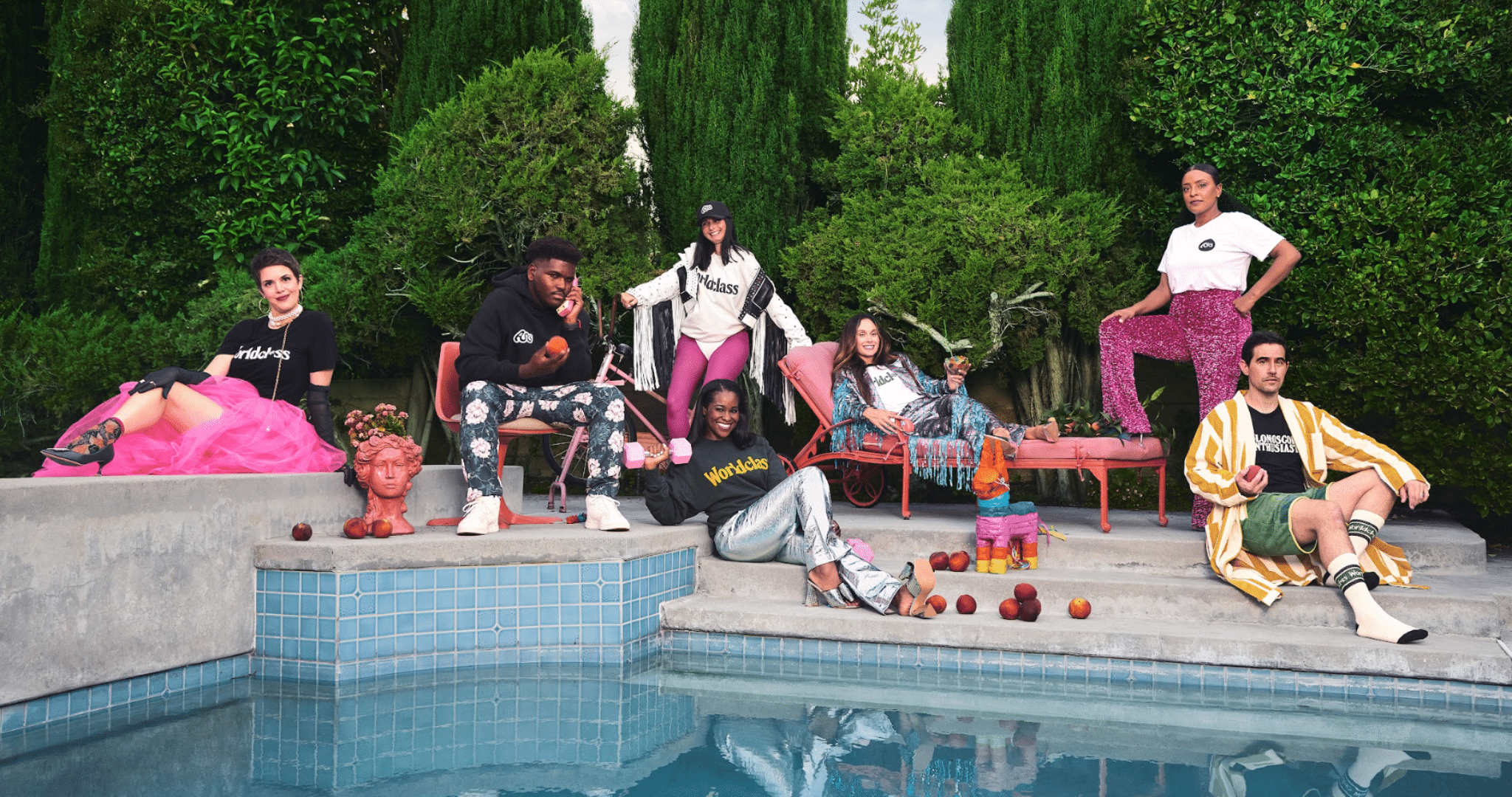
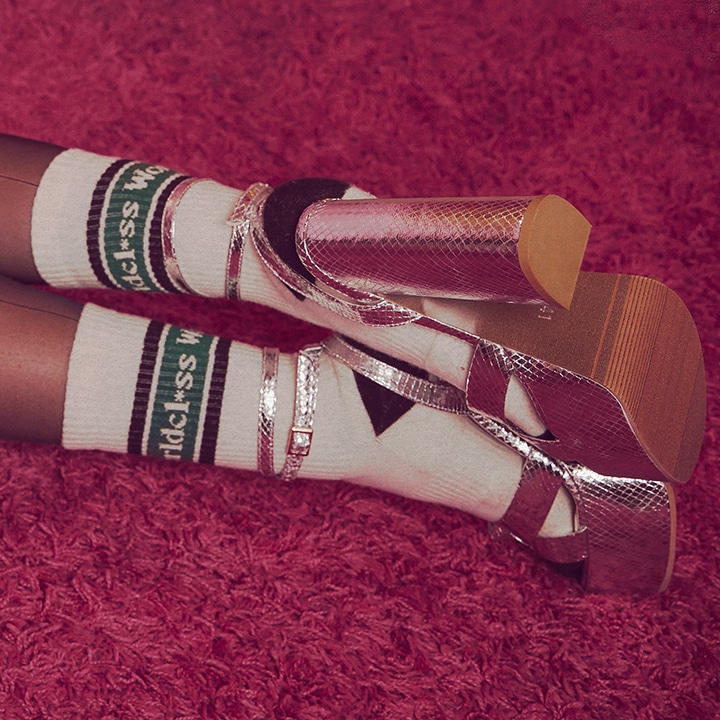
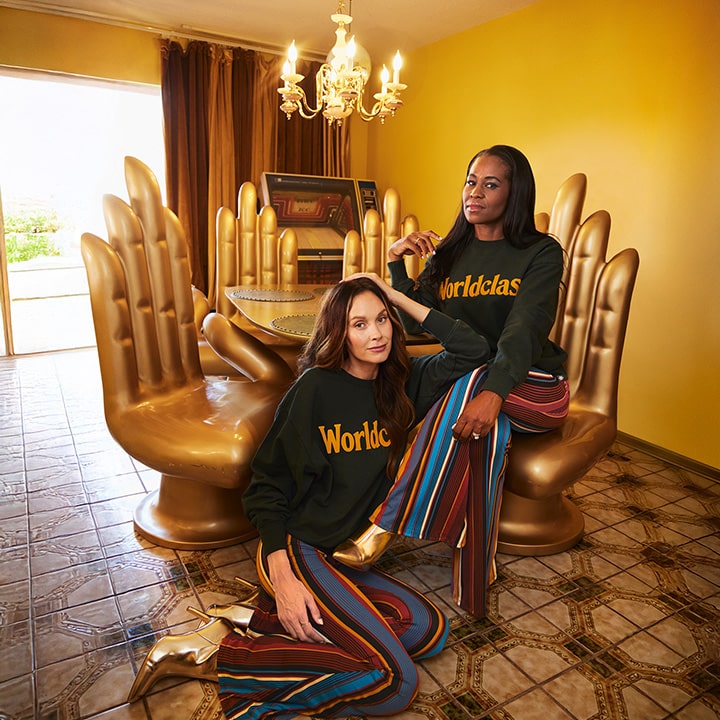
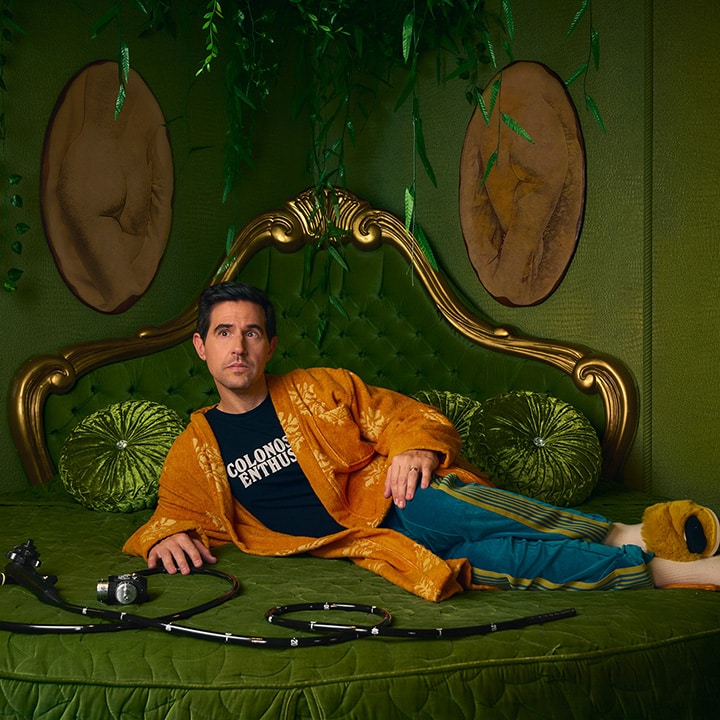
“A great ass is a terrible thing to waste.” So goes the MO for Worldclass Clothing, a fashion brand founded by local Brooks Bell and LA-based Sarah Beran that aims to get people talking about colon health through badass apparel. Think quirky “ass”-emblazoned hats and T-shirts.
Despite the fact that colon cancer is expected to be the deadliest cancer for people under 50 by 2030, when Beran and Bell went to their doctors with concerns, cancer wasn’t even on their radar. Though the pair hadn’t met yet, they shared strikingly similar experiences. Both women were in their 30s when symptoms started. Both women knew something was up, even if their doctors didn’t. And both trusted their instincts, pushed for a colonoscopy—and were right.
Fast-forward, and after overcoming late-stage colon cancer, both knew they wanted to change the status quo. “The stigma is ridiculous,” says Beran. “I want it to feel like just another part of your wellness routine.”
When Beran read about Bell’s iconic feat of spurring Ryan Reynolds to get a colonoscopy, she slid into her DMs. Their connection had a creative spark from the jump—and with Beran’s background in fashion and Bell’s in entrepreneurship, Worldclass was born.
From the signature sweatshirt to the “Colonoscopy Enthusiast” tote, the garb puts the “ass” in class—and has a swag that sets it apart from the typical cancer brand. Beyond plush and punchy, Worldclass partners with LA factories and North Carolina manufacturers to develop the finest 100% cotton sweatshirts. Buys also benefit the UNC Lineberger Comprehensive Cancer Center and help boost access to colonoscopies for the underinsured in Western NC.
But for this benevolent duo, the mission goes beyond raising funds—they want the conversation around colonoscopies to feel easy, like slipping on your favorite sweatshirt. Hence, every double-take or compliment is the chance to recruit a new colonoscopy enthusiast.
Which is precisely what Beran and Bell hoped—because most people don’t know colonoscopies prevent cancer by removing precancerous polyps. “It’s not just looking for precancer,” shares Bell. “It gets rid of it.” So, here’s to normalizing colonoscopies and celebrating your Worldclass ass (!). worldclassclothing.com
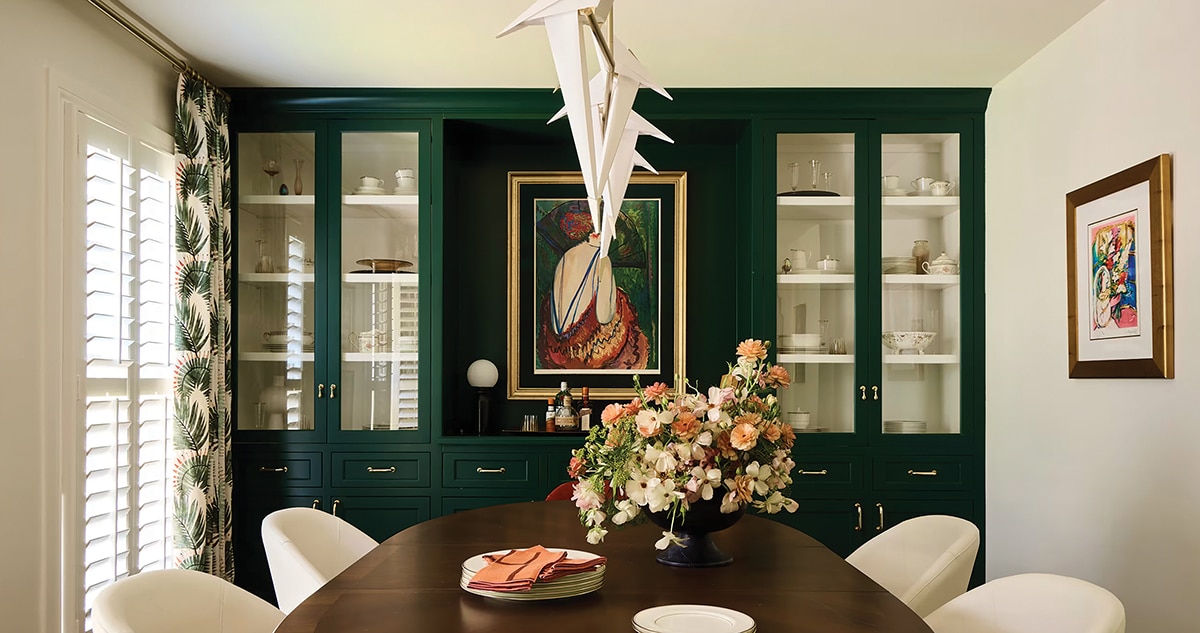
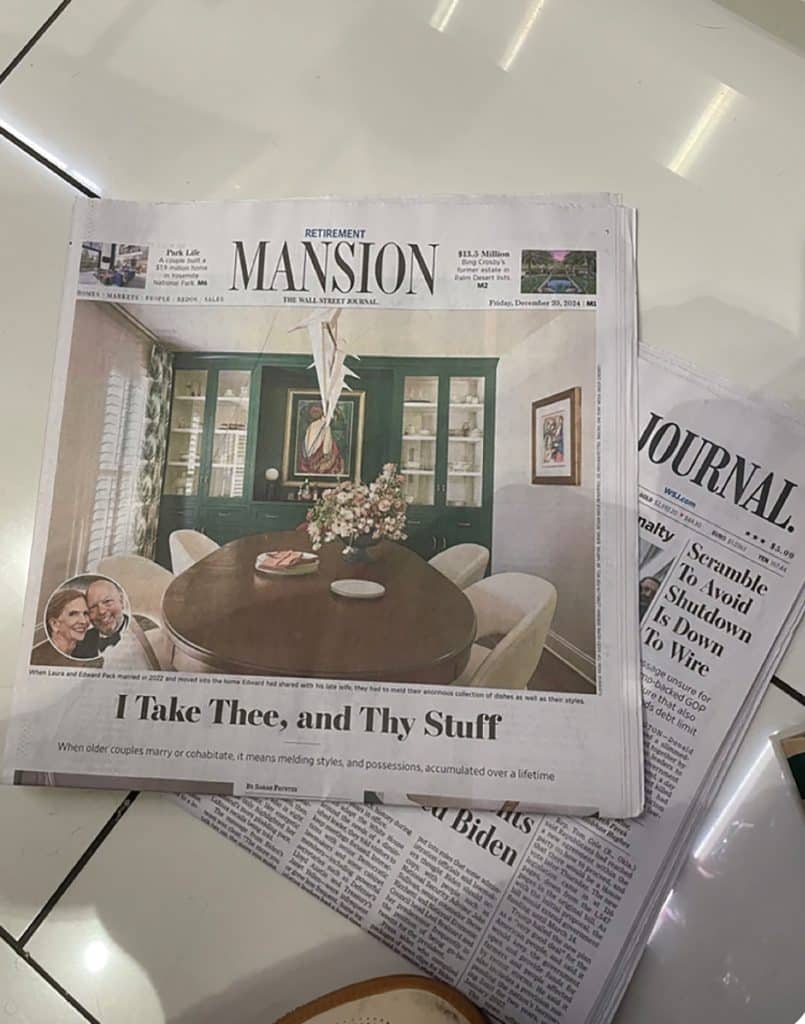
When Edward and Laura Pack called local designer Ayten Nadeau to renovate their home, they weren’t chasing a particular style—they were chasing a particular life. One that ultimately landed them on the cover of The Wall Street Journal.
Photo courtesy of I-TEN Designs
Having met online and found a connection in 2020 after losing their respective spouses in the 2010s, the couple quickly bonded over a shared vision: to make this next chapter rich with experiences. “My husband said early on, ‘I want somebody to make new memories with,’” recalls Laura. Upon tying the knot in 2022, Laura sold her home and moved into Edward’s—only to realize they needed a fresh space for their fresh start.
Designing a home with this goal may seem like a broad task, but Nadeau was up to the challenge. After all, she knows a thing or two about new chapters. Born in Turkey, raised in Germany and now in the U.S., she’s spent most of her career as a flight attendant, giving her creative eye a certain je ne sais quoi that comes from a life well-traveled.
Based in Raleigh now for about a decade, she established her firm, I-TEN Designs, in 2017 for both commercial and residential design. She initially crossed paths with Laura, a designer herself, at interior design school at UNCG in the early 2010s—and when Laura reached out with the project, Nadeau was ready to dive in.
First, the couple, now in their 60s, opened up the space, gutting the downstairs to create a welcome flow. To amplify natural light, they painted the walls a crisp white and installed additional windows. Even the molding was pared back, allowing the walls to stretch higher and make the space feel more expansive.
The biggest challenge, however, was merging the duo’s lives. Edward brought over 90 pieces of art from his previous marriage, while Laura had her own cherished mementos. Along the walls, you’ll find a black-and-white portrait of Laura’s grandmother from 1925 juxtaposed with the golds and blues of Chris Roberts-Antieau’s “The Dance.”
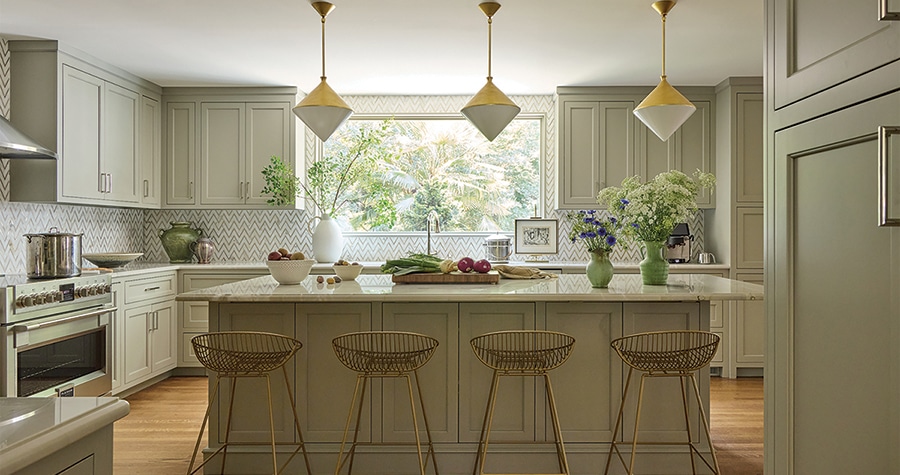
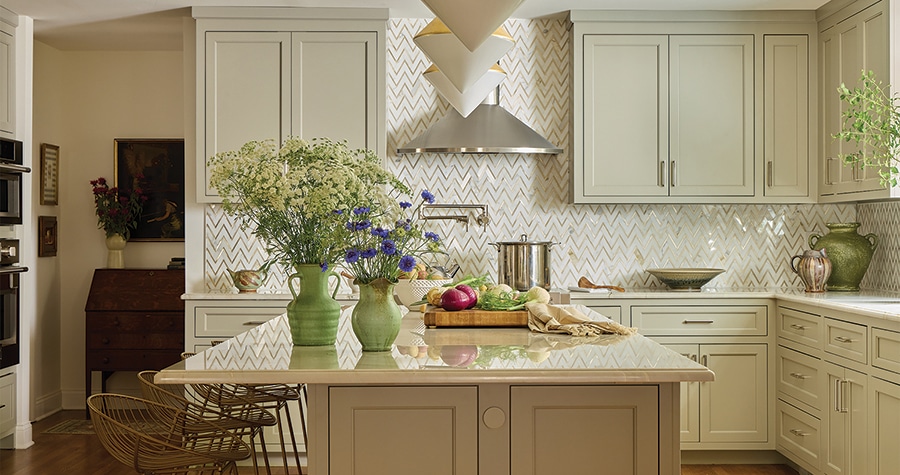
Fueled by their love of hosting, the pair prioritized removing barriers by opening up the downstairs and redesigning the kitchen. Styled for seamless celebrations, the new island seats six—ideal for the amateur chef, whether he’s cooking with the grandkids or mixing cocktails for a crowd.
Photo by Kacey Gilpin Photography; courtesy of I-TEN Designs
Photo by Kacey Gilpin Photography; courtesy of I-TEN Designs
But the finished home didn’t just give them an excuse to host more fetes—it also snagged a cover feature in WSJ. Though not explicitly on their bucket list, the spotlight certainly aligned with the kind of new experiences the couple crave in this next chapter.
“We both just want to enjoy life and life together as long as we can,” muses Laura. So while you might spot subtle nods to art deco or midcentury-mod influences, nothing about this house is conventional. It’s a reflection of two lives woven together, piece by piece.
Everyone has their go-to grub spot. Maybe it’s an old diner with sticky booths and a red-haired waitress who calls you “shug.” Or perhaps it’s a neighborhood brewery with string lights and bearded bartenders. At places like these, the staff takes care of you—but who takes care of the staff?
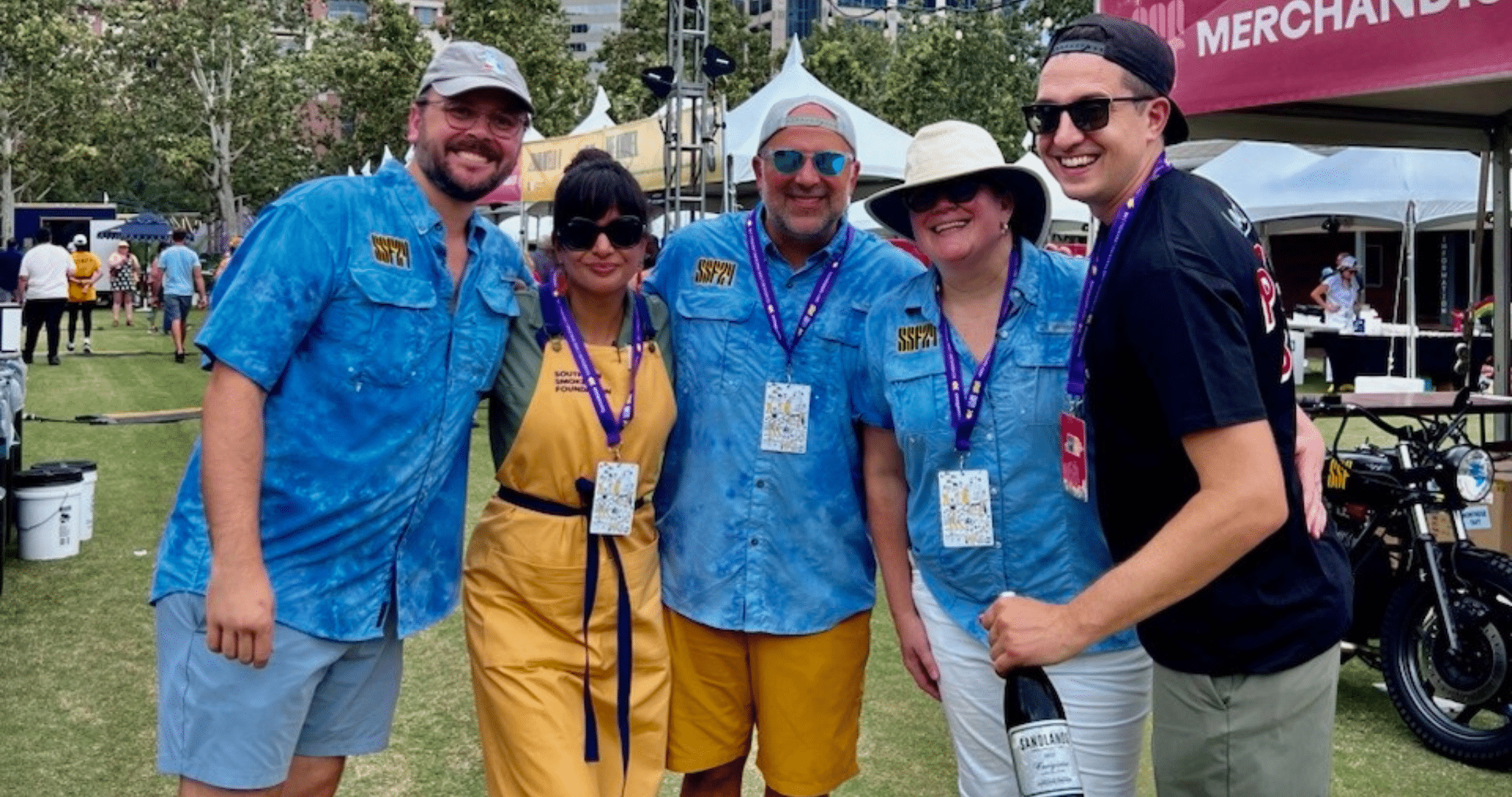
In 2015, Lindsey Brown and her husband James Beard Award-winning chef Chris Shepherd found themselves asking this same question. And, so, the Southern Smoke Foundation was born.
Almost 10 years later, Brown, now the executive director, finds the national foundation’s mission more important than ever. “[Restaurants are] the place where all of your life’s events take place, and it matters to take care of the people working there,” she says.
The org does this by putting money directly into the pockets of F&B workers, plus providing mental health services to qualifying applicants working 30+ hours per week for at least six months.
Most recently, the foundation provided $680,800 and counting in aid to workers affected by Hurricanes Helene and Milton, with $240K of that raised in the Triangle alone.
While recent years have brought a fair share of natural disasters, this aid isn’t just for weathering the storm. Brown wants applicants to know Southern Smoke is there for them in every capacity—eviction, health challenges and beyond.
“We always want to lead with empathy,” she emphasizes, “… to find ways to fund people.”
Looking to 2025, the foundation is turning up the heat in NC. Its program Behind You—named for the constantly uttered kitchen phrase—aims to partner with a state university system to connect F&B workers with PhD psychology candidates for counseling.
Having lived the grind themselves, Brown and Shepherd know all too well the toll of long hours and paycheck-to-paycheck living. They know the industry takes care of its own—and given the strong support from restaurants so far, Brown is excited about what’s next: “It feels like we’re just getting started.” southernsmoke.org
Find yourself in Smoky Hollow on Thursdays around 6pm and you’ll discover the modern version of speed dating—emphasis on speed. Raleighites of all backgrounds, from young professionals to working adults, participate in the recently launched run club before looping back to Neighborhood, where they can enjoy live music, a crisp drink and often a pizza pop-up. Wearing color? They’re off the market. But black? They might just be your new “running” partner.
The run club is a recent development by Tyler Helikson, co-owner of Neighborhood and Madre. After chatting with friends about the frustrations of online dating, Helikson, a fitness enthusiast, wanted to create the kind of experience he’d want to join himself. Inspired by similar clubs popping up nationwide, he decided to run with the idea. The first week there were 25 people—the next, there were triple.
The emergence of these clubs highlights a broader shift, both locally and nationally, as people swap going-out shoes for sneakers. Rather than relying on bars or apps, people in the 25–55 age range are opting for run clubs, book clubs, dinner clubs and more as a modern way to build relationships.
Helikson attributes much of this to connection. It takes time to match on an app, establish a good conversational flow and set up a date—only to realize in person that the spark is just not there. Run clubs—and other similar activity-based social get-togethers—allow you to meet like-minded folks organically. “You meet people in the flesh, in the wild, and see if you jive with them in person,” he explains. “I think that’s the only way you can really get to know somebody.”
And this isn’t just the case for people seeking romantic connections. Crank Arm Brewing co-owner/co-founder Adam Eckhardt sees this trend playing out platonically at the brewery’s weekly events, which include everything from bike rides and trivia to dog-walking nights. To him, today’s crowd wants more from their social life. “The current generation is drawn to experiential things,” he says. “People want to go do something.”
Eckhardt also notes that each night draws a lively mix of regulars and newbies, often including those just finding their footing in the area.
Across Raleigh, businesses like these bring people together in their own way. Stonewall Sports hosts LGBTQIA+ community-based sports leagues, while Tri Sports offers a popular kickball league (among other sports). Heights House organizes a Sunday Sauce dinner series along with other social experiences, and Copperline Plants has its own book club and regular plant-themed gatherings. Even vino haven Vita Vite joins in with a book club of its own.
While some still lean on their favorite bars and a right swipe on the apps, this new trend toward meeting IRL is giving a nostalgic nod to the good ole days of socializing. Our grandparents had (and still have) bridge, and the modern generation has pickleball leagues, run clubs and the like. Maybe it’s pandemic-fueled or collective screen fatigue, but today’s crowd is craving—and carving out—real-life relationships, and trading out scrolling for socializing. And Raleighites? They’re all in on the club scene.