WEB EXCLUSIVE Like in any community, food is an extremely significant part of African American culture. But while soul food may be the one thing that comes to mind, there’s way more to Black cuisine than just that (though soul food is certainly an important aspect of Black heritage), and chef-owner Ricky Moore of Saltbox Seafood Joint proves it.
In honor of African Heritage Month, Moore will be featuring a special dish that originated and was influenced by Black culture every Wednesday in February—specifically foods that speak to the global African influence on food culture in the Americas and not just the United States.
Saltbox Seafood Joint chef-owner Ricky Moore
“I chose dishes that I’ve eaten in the regions where they originated and experienced them prepared by someone’s native hands and that I’ve also made myself,” Moore says. “I’ve chosen seafood dishes specifically—Saltbox Seafood Joint celebrates the fish and seafood of the North Carolina coast, so I wanted to stay within those boundaries.”
The dinner series allows Moore to preserve these dishes that are so important and meaningful to him while educating the community on Black cuisine and introducing them to delicious cuisine throughout the month.
Yesterday, Moore’s featured dish was fried catfish and spaghetti, an unlikely soul food combination that originated in the Mississippi Delta and is now mostly predominant in the Deep South and Midwest.
Moore discovered the dish while he was living in Chicago; his take involves flavoring the spaghetti with similar ingredients to those found in dirty rice, using the “holy trinity” aromatic base of onion, green pepper and celery. Moore also notes that, traditionally, the spaghetti is overcooked, but his is cooked properly—of course.
Moore’s fried catfish and spaghetti
On Feb. 10, Moore will feature bake and shark, a popular Trinidadian pocket sandwich commonly found at beach shacks and street stalls. Moore’s will be stuffed with local North Carolina smooth dog shark or dogfish, lettuce, tomato, slices of starred pineapple, a spicy cilantro cilantro sauce and tangy tamarind.
Haitian legumes and shellfish, a stew-like dish made with braised vegetables and shellfish, will be available on Feb. 17. Moore will incorporate a variety of local seafood into the dish, including crab, local clams, whitefish bones, shrimp and other local fish, and serve it on Tidewater Grain rice, an heirloom Carolina gold rice that’s produced in Eastern North Carolina
Lastly, on Feb. 24, Moqueca Baiana, an aromatic Brazilian fish stew, takes center stage. The dish is influenced by cooking habits of the African culture in Brazil and is made flavorful with garlic, tomatoes, cilantro, onions, salt, olive oil, dendê oil (an ingredient indigenous to Africa that’s commonly used for frying and imparting a dark dark reddish color to dishes) and rich coconut.
With the announcement of each featured dish, Moore will share additional details about the history behind them on Saltbox’s social media channels (@saltboxseafoodjoint). We hope you’re hungry for some seafood this month!
Tips, tricks and recipes to make tortillas at home.
There’s nothing like a big, never-ending basket of warm tortilla chips and a bowl of freshly made salsa to start off a delicious Mexican-themed meal. Whether or not you overeat those chips and salsa and ruin your appetite is a matter of your own personal self-control—and something of which we’re all most likely guilty of.
For National Tortilla Chip Day, we encourage you to take matters into your own hands and make tortilla chips at home using these tips, tricks and recipes from some of Raleigh’s greatest tortilla chip-makers: Lola’s Beach Bar and Virgil’s Cocktails and Cocina. And don’t forget to save room for the main course!
Virgils Cocktails and Cocina
Virgil’s Cocktails and Cocina Baked Chip Recipe
Ingredients 9 Guerrero brand 6-inch corn tortillas 2 Tbsp. neutral oil (rice bran oil is preferred) Kosher salt Sugar
Directions Preheat your oven to 350 degrees. Lightly brush both sides of the tortillas with oil. Cut the tortillas into fourths and place them onto baking sheets lined with a rack. Season them with salt and sugar. Bake for 15 to 20 minutes, rotating the baking sheets every 5 minutes.
You are looking for a very slight pliability in the chips and for them to be a little lighter in color than you would expect from a fully cooked chip. Keep in mind that the chips will continue to cook for the first few minutes out of the oven.
Lola’s Beach Bar
Lola’s Beach Bar Chip Tips
Directions Use white corn tortillas and pure, clear frying oil. Fry tortillas at 325 degrees for 90 seconds. Season chips to taste with a mixture of 2/3 salt to 1/3 Tajin seasoning.
Hey, what doesn’t “tequila” (ta-kill-ya) makes you stronger, right? So whether toasting Margarita Monday or just feeling salty… pick up some margs to-go from one of these Raleigh bars or restaurants—and let the fiesta begin.
Local ghost kitchens are popping up on food delivery apps.
Most people don’t realize that when they order a fried chicken sandwich from Raleigh’s new FryBird concept, their meal is actually coming out of the kitchen at North Raleigh’s Driftwood Cantina restaurant. Customers aren’t really supposed to know that anyway, says Driftwood and FryBird owner Nunzio Scordo—hence the term “ghost kitchen.”
Ghost kitchens are nothing new, but have gained quite a bit of popularity since the coronavirus pandemic forced restaurants to shut down and turn to a curbside pickup and/or delivery model. Galley Solutions (a software company that helps restaurants, caterers and other types of food-related businesses collect and understand data behind their operations) describes a ghost kitchen—aka a virtual brand—as a delivery-only restaurant. Orders are made online and are delivered to be enjoyed off-premise; there is no physical restaurant at which customers can eat or pick up food.
Scordo says that operating a ghost kitchen out of Driftwood Cantina made sense given the substantial size of the kitchen and the resources they have available. The No. 1 seller out of Driftwood Southern Kitchen (Scordo’s previous concept that was replaced by Driftwood Cantina) was fried chicken, so he knew that it would sell. Additionally, Scordo already sources raw chicken for the Cantina menu, so there’s only a few additional ingredients he has to order for the FryBird sandwiches.
Scordo’s rent hasn’t gone up either, and his labor costs are the same. “We’re widening our appeal and everything else stays the same—it’s a huge win-win for anyone that can do it,” Scordo says. “We’re filling in a little market gap. Even if we only do $2,000 a week, it’s $2,000 more than what we were doing last week, and it’s not costing us any more money.”
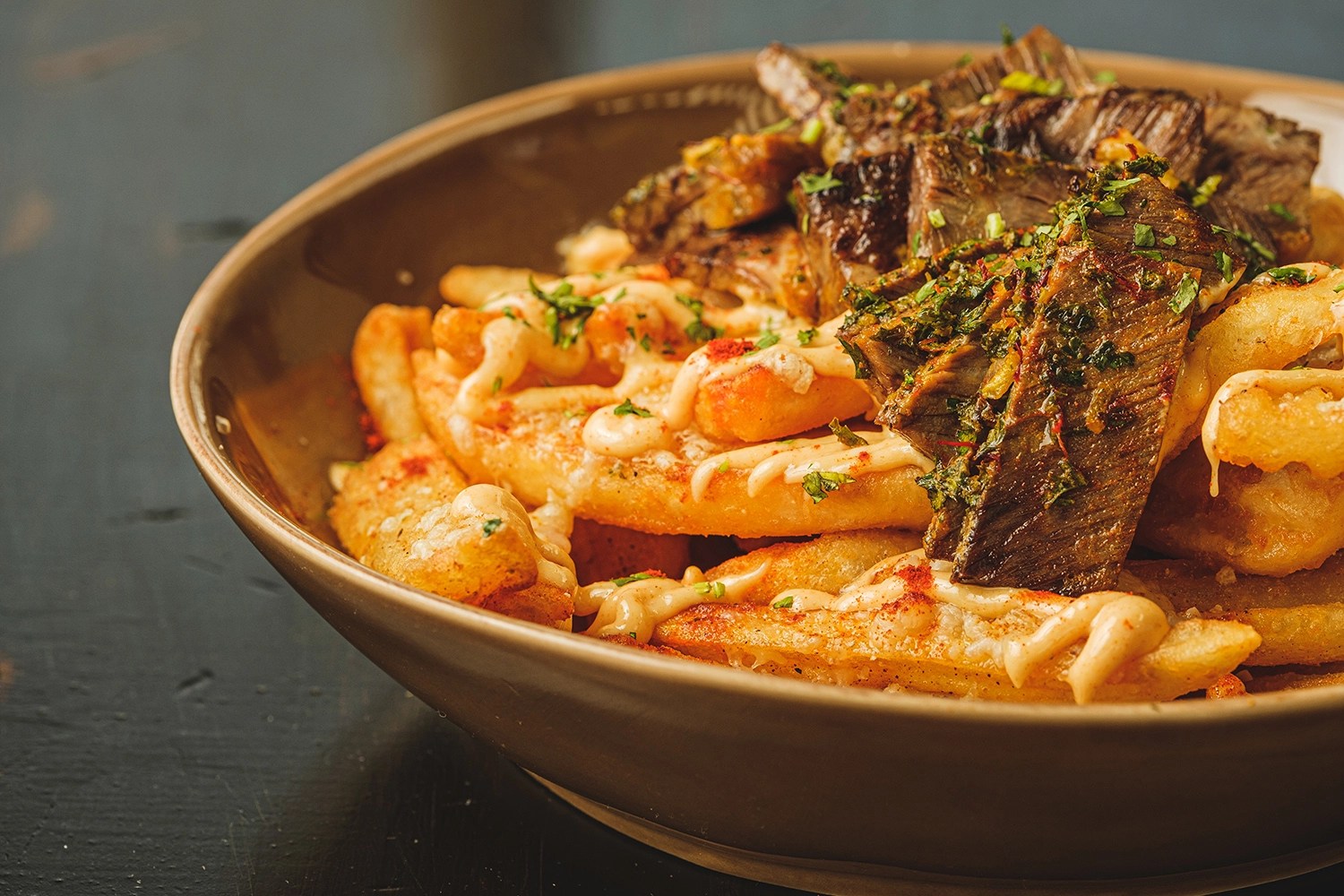
Raleigh-based catering company Catering Works is currently running two ghost kitchen concepts out of their large catering kitchen—though you’d never know the food came from the same place. One of the concepts, Frites and Taters, specializes in cheese and meat loaded pub fries; baked, split, fried and topped russet potatoes and sweet potatoes; and totchos, a nacho/Tater Tot combination featuring your choice of Buffalo chicken or barbecue pork.
Jill Santa-Lucia, Catering Works president and culinary director, says cheesy fries and loaded baked potatoes were just the type of comfort food everyone was craving when they officially started the ghost kitchen concept in September 2020—six months into the pandemic with no signs of it going away anytime soon. Catering Works’ other concept, Midtown Eats, which started just a month later in October, features some of Santa-Lucia’s favorite signature Catering Works recipes, specifically fresh salads, soups, sandwiches and hand pies.
Like Scordo’s FryBird concept, Santa-Lucia uses some of the most popular delivery apps, including Uber Eats, DoorDash, ChowNow and Grubhub, to deliver food from both Frites and Taters and Midtown Eats to eager, hungry customers. However, Santa-Lucia says that the delivery side of the business is the most problematic given that the delivery apps and its workers are out of her control. She says they’ve had instances where a driver canceled and their chef has had to go out and make the delivery.
Over in Chapel Hill, The Catering Company of Chapel Hill—also known now as Ghost Kitchen Eats since August—has mitigated this delivery issue by reemploying catering staff (out of work due to the pandemic) as drivers. They deliver food from their two ghost kitchen concepts—Bistro 501, which serves traditional American food, and The BBQ Company of Chapel Hill—within a 6-mile radius of their large industrial kitchen.
Becca Nelson, an event planner-turned-marketing person for The Catering Company of Chapel Hill and Ghost Kitchen Eats, says that the main advantage of pivoting to this particular concept during COVID is that by not having a storefront or restaurant, they’re able to keep their operations safe and secure—they don’t have to worry about a customer coming in and exposing the staff to coronavirus. “It’s a way for us, in these really uncertain times, to keep a sustainable business going without the risk of getting shut down,” Nelson adds.
Nelson, Santa-Lucia and Scordo all agree that their ghost kitchen concepts are sustainable and that they will be continuing them post-COVID in some form or another. While the inevitable reopening of restaurants will come soon enough, there’s always going to be a market for food delivery, and FryBird, Frites and Taters, Midtown Eats, Bistro 501 and The BBQ Company of Chapel Hill are all hauntingly delicious choices. So, when hunger strikes… who you gonna call?
Venture outside of Raleigh (while practicing social distancing!) this month.
Kipos Greek Taverna
CHAPEL HILL Giorgios Bakatsias’ Greek restaurant Kipos recently reopened in a renovated location in the Eastgate Crossing Shopping Center with Greek born-and-raised chef George Delidimos returning to the helm of the kitchen after assisting with the taverna’s original opening in 2013. The beautiful new open-air space lends a quintessential Greek atmosphere, complete with a large outdoor garden—kipos is Greek for garden—and a double-sided bar with seating both indoors and out. The open kitchen with a wood-fired grill and rotisserie sits center stage, serving some of Kipos’ beloved classic dishes, such as avgolemono, a Greek lemon chicken soup; pastitsio, Greek lasagna; and grilled whole fish—along with a large Greek wine selection. kiposchapelhill.com
Kipos
GoJo
DURHAM Get caffeinated at Ethiopian restaurant Goorsha’s new cafe and coffee shop, GoJo, located just behind Goorsha. The cafe specializes in Ethiopian tea and coffee made with coffee beans from Yirgacheffe Organic Fair Trade Coffee from Ethiopia, along with lattes, chai, cappuccinos, smoothies and more. Owner Fasil Tesfaye says that the town of Yirgacheffe is known to be where coffee originated—the beans produce an exotic taste and heavy body. Pair your beverage with a delicious bowl, salad or panini—the GoJo with chicken, roasted red pepper, provolone and Awaze pesto sauce is a popular option; in the evening, walk over to Goorsha for a divine Ethiopian dinner. Seating is aplenty via a cozy, light-filled interior and spacious outdoor patio with comfortable chairs. instagram.com/gojobygoorsha
Gojo
Parts & Labor at Motorco
DURHAM Motorco Music Hall’s restaurant and bar, Parts & Labor, is a bona fide Durham establishment. On any given night, you’ll find a plethora of Durhamites sipping and snacking on its outdoor patio under the eatery’s ambient string lights. The beverage menu features everything from draft beer (both local and national) to classic cocktails like margaritas, cucumber Collins and bloody marys—one of the best bloodys in the Triangle—to wine, seltzer and cider, making it a great spot to go when enjoying a round or two with a group of friends who all have differing beverage preferences. Elevated bar food—including a few unique Asian dishes—rectifies any hunger pangs. Try the bratwurst, bulgogi taco, cheeseburger sliders or scallion pancakes. partsnlabor.com
Parts & Labor
Luna
Cary Take time to indulge in some much-needed self-care at Luna, a lash and skincare studio specializing in high-quality vegan lashes and organic skincare. The studio’s signature service is the chakra-balancing gemstone facial, which uses a combination of both ancient and modern massage techniques to drain your lymphatic system and get rid of puffy eyes. The service also includes calming and healing aromatherapy, deep exfoliation and two masks that help balance your skin’s PH levels. All products used at Luna are ethically sourced and biodynamic, as part of its commitment to care for both the body and the Earth. The studio also partners with One Tree Planted, which plants one tree for every service. lunalashesandskincare.com
Luna
Lumpy’s Ice Cream
Wake Forest We’re not the types to stray away from ice cream, no matter how cold it is outside. If you’re in the same boat, check out Lumpy’s Ice Cream in Wake Forest. A staple of the town since 2001, Lumpy’s uses hormone-free milk and cream from family farms within 30 miles of its production lab, then mixes them with sugar or honey to create a perfect ice cream base that leaves out any artificial colors and flavors or corn syrup. And its flavor selections are anything but basic. There’s Bennie’s Bacon and Bourbon, Denise’s Chocolate Brownie Addiction and Wired Hippie (coffee ice cream with trail mix), among many more. Grab a fresh scoop for dessert or take home a whole pint. lumpysicecream.com