The beat on a rare women’s heart condition that could save your life.
The night after Shirley Polk’s C-section at WakeMed, Nov. 7, 2017, she started having trouble breathing due to what she thought was a panic attack. Within 30 minutes of paging a nurse, Polk’s lungs had collapsed twice and her ejection fraction (EF)—the measurement of the percentage of blood leaving your heart each time it contracts (55% is normal)—had dropped to just 3%. She was immediately rushed to Duke University Hospital.
At Duke, Polk—an avid cyclist and the marketing manager of CORE Fitness Studio (founded by husband JoJo, who also teaches there)—was diagnosed with postpartum cardiomyopathy (PPCM), an uncommon form of heart failure that typically occurs during the last trimester of pregnancy or post giving birth. After placement of a pump to help Polk’s heart beat and seven days of a medically induced coma, her doctors went back in to remove the pump that was now causing her kidneys to fail—and realized her heart was starting to work on its own.
By Thanksgiving Eve, Polk was cleared to return home with meds, a heart-healthy diet and a cardiac rehab regimen. And by February 2018, her heart was functioning like normal. Polk says that if her doctor had allowed her to go home after giving birth to son Joseph, she most likely would’ve died. “She saved my life,” Polk affirms.
PPCM is commonly misdiagnosed or goes undiagnosed because its symptoms are similar to those experienced during pregnancy—weight gain, trouble breathing, high blood pressure—and, thus, many women’s symptoms are often dismissed. “The biggest complaint of a lot of pregnant women is that their doctors overlook them,” says Polk. To combat that tendency, she urges that “especially when pregnant, women need to take charge of their health. If you don’t think something is right, insist on being checked out and finding a doctor that listens to you.”
Shirley Polk and friend, Lindsey Thomas
Now, Polk and her friend Lindsay Thomas—who was diagnosed with PPCM two years prior to Polk—are on a mission to raise awareness of PPCM and heart disease in women. The pair founded the Instagram support group Cardiac Moms (@cardiacmoms) after Polk’s diagnosis and have organized a virtual walk, run and cycle race for Feb. 5 through 15. Through their efforts, the duo has been nominated for the American Heart Association’s Women of Impact 2021 Go Red for Women Campaign. All funds from the race benefit the AHA.
Polk hopes that the Cardiac Moms Race inspires women who have suffered from PPCM to get back out there and do what they love again. “I want to tell people that [your life] isn’t over and [PPCM] doesn’t define who you are,” Polk says. “You just have to live your life with different rules.” runsignup.com/race/nc/raleigh/cardiacmoms
Local musicians at Bold Music teach in-home and virtual lessons with live gig nights and in-studio camps.
You’re never too old or too young to learn how to play an instrument. Jordan Raniszeski, a 40-year-old financial adviser located in Charlotte, has always wanted to learn how to play the guitar, but with a full-time job and catering to four children, he never had the time to progress much past the basics. That is, until he discovered Bold Music.
Bold Music, which was founded by George Ramsay and Dean Williams in 2013, is an in-home music provider based in Charlotte and Raleigh. The pair started Bold Music while they were both teaching at a Charlotte studio at the same time they attended Davidson College—Ramsay eventually earned a music degree—and thought there was a better way to provide music lessons to students.
“We knew we could provide a much better service if we went to families rather than having them drive,” Ramsay explains. “As musicians ourselves, we also thought that there was a much better, less stressful and more consistent way to work as teachers.”
Kids from as young as 3 to adults as old as 80 take music lessons from Bold Music. They receive lessons at their own home once a week from a local teacher (most of Bold Music’s teachers are musicians themselves). Bold Music currently has four teachers based in Raleigh; the company officially came into the Raleigh market in August. Ramsay says, besides bringing quality music education to people, his team also hopes to have a positive impact on the culture of each city in which they reside, which includes putting on events with local businesses.
Raniszeski’s two daughters—ages 9 and 10—started taking lessons from Bold Music first; Raniszeski followed soon after and has now been taking lessons through the company for three years. He says that having a teacher tell him what to practice made for a more efficient use of his time and gave him structure and leverage for learning how to play the guitar. “I look forward [to the lessons],” Raniszeski says. “It’s a nice break in the week.” Back in February, Bold Music started implementing virtual makeup lessons in order to save teachers from the hassle of driving around the city. The pivot came just in time before COVID-19 hit in March, when they were forced to make all lessons virtual.
Ramsay says their teachers were already trained on virtual lessons and families knew that it was coming—with the infrastructure already in place it was easy for them to make a smooth transition to virtual music lessons. “That was just lucky,” Ramsay says. Bold Music recently started going back to in-home lessons, but, due to the recent increase in positive coronavirus case rates, the company started doing more virtual lessons again.
Raniszeski says he likes the virtual lessons and sees the advantages in working with a teacher over live video conferencing, including being able to zoom in on himself playing the guitar and being able to roll right into a lesson from whatever he’s working on at home. He expects to continue with lessons for the foreseeable future, whether they take place virtually or in-person again. “George and his team have been very creative through the whole pandemic,” says Raniszeski. “They’ve done a really good job staying engaged and connected; I’ve been impressed with how they’ve handled it. I’d recommend them to anybody.”
If you love doughnuts a “hole” bunch—wait for pączki. Pronounced POONCH-key (we know, you’ll never get it right on the first try), the hole-less and sweet-jelly-filled fried doughnuts are a Polish dessert traditionally eaten on Fat Tuesday (hence the holiday’s name). The Catholic tradition dates back to the Middle Ages—though, in those days, pączki were usually savory—but really gained popularity in the U.S. in the 20th century.
Created for Fat Tuesday as a way to use up all the sugar, eggs, butter, lard and other sweet stuff before Lent (you know, when Catholics give up an indulgence—like sweets—for 40 days), pączki is basically the pastry icon of the final cheat day before the long diet.
“Growing up Catholic in the Midwest—outside of Chicago—I have many fond memories of enjoying pączki every February from local mom-and-pop bakeries before Lent began on Ash Wednesday,” says John Kelly, co-owner of Raleigh’s Burney’s Sweets and More.
“What King Cakes are to New Orleans on Fat Tuesday, pączki are to Chicago and many other Midwest cities with Eastern European ancestry.”
–John Kelly
Although pączki today are most popular in the Midwest, the historic sweet treats are slowly making their way down South. Here are a couple spots around town where you should head to get your pączki fix for Fat Tuesday.
Burney’s Sweets and More burneyssweetsandmore.com/raleigh-nc Burney’s has a variety of unique fruit- and creme-filled pączki available this year, each topped with a sweet glaze or powdered sugar.
Golden Hex(Cary) goldenhex.com Golden Hex will have a variety of flavors available including berry, custard, poppyseed, plum, rose and more. They will be available beginning February 4.
Polonez Polish & Euro Grocery NC polishmarketnc.com Polonez is closed on Tuesdays but will have frozen, traditional pączki available for pickup on Thursday, Feb. 11.
You can also check your neighborhood bakery or grocery store for pączki.
Venture outside of Raleigh (while practicing social distancing!) this month.
Kipos Greek Taverna
CHAPEL HILL Giorgios Bakatsias’ Greek restaurant Kipos recently reopened in a renovated location in the Eastgate Crossing Shopping Center with Greek born-and-raised chef George Delidimos returning to the helm of the kitchen after assisting with the taverna’s original opening in 2013. The beautiful new open-air space lends a quintessential Greek atmosphere, complete with a large outdoor garden—kipos is Greek for garden—and a double-sided bar with seating both indoors and out. The open kitchen with a wood-fired grill and rotisserie sits center stage, serving some of Kipos’ beloved classic dishes, such as avgolemono, a Greek lemon chicken soup; pastitsio, Greek lasagna; and grilled whole fish—along with a large Greek wine selection. kiposchapelhill.com
Kipos
GoJo
DURHAM Get caffeinated at Ethiopian restaurant Goorsha’s new cafe and coffee shop, GoJo, located just behind Goorsha. The cafe specializes in Ethiopian tea and coffee made with coffee beans from Yirgacheffe Organic Fair Trade Coffee from Ethiopia, along with lattes, chai, cappuccinos, smoothies and more. Owner Fasil Tesfaye says that the town of Yirgacheffe is known to be where coffee originated—the beans produce an exotic taste and heavy body. Pair your beverage with a delicious bowl, salad or panini—the GoJo with chicken, roasted red pepper, provolone and Awaze pesto sauce is a popular option; in the evening, walk over to Goorsha for a divine Ethiopian dinner. Seating is aplenty via a cozy, light-filled interior and spacious outdoor patio with comfortable chairs. instagram.com/gojobygoorsha
Gojo
Parts & Labor at Motorco
DURHAM Motorco Music Hall’s restaurant and bar, Parts & Labor, is a bona fide Durham establishment. On any given night, you’ll find a plethora of Durhamites sipping and snacking on its outdoor patio under the eatery’s ambient string lights. The beverage menu features everything from draft beer (both local and national) to classic cocktails like margaritas, cucumber Collins and bloody marys—one of the best bloodys in the Triangle—to wine, seltzer and cider, making it a great spot to go when enjoying a round or two with a group of friends who all have differing beverage preferences. Elevated bar food—including a few unique Asian dishes—rectifies any hunger pangs. Try the bratwurst, bulgogi taco, cheeseburger sliders or scallion pancakes. partsnlabor.com
Parts & Labor
Luna
Cary Take time to indulge in some much-needed self-care at Luna, a lash and skincare studio specializing in high-quality vegan lashes and organic skincare. The studio’s signature service is the chakra-balancing gemstone facial, which uses a combination of both ancient and modern massage techniques to drain your lymphatic system and get rid of puffy eyes. The service also includes calming and healing aromatherapy, deep exfoliation and two masks that help balance your skin’s PH levels. All products used at Luna are ethically sourced and biodynamic, as part of its commitment to care for both the body and the Earth. The studio also partners with One Tree Planted, which plants one tree for every service. lunalashesandskincare.com
Luna
Lumpy’s Ice Cream
Wake Forest We’re not the types to stray away from ice cream, no matter how cold it is outside. If you’re in the same boat, check out Lumpy’s Ice Cream in Wake Forest. A staple of the town since 2001, Lumpy’s uses hormone-free milk and cream from family farms within 30 miles of its production lab, then mixes them with sugar or honey to create a perfect ice cream base that leaves out any artificial colors and flavors or corn syrup. And its flavor selections are anything but basic. There’s Bennie’s Bacon and Bourbon, Denise’s Chocolate Brownie Addiction and Wired Hippie (coffee ice cream with trail mix), among many more. Grab a fresh scoop for dessert or take home a whole pint. lumpysicecream.com
Local ghost kitchens are popping up on food delivery apps.
Most people don’t realize that when they order a fried chicken sandwich from Raleigh’s new FryBird concept, their meal is actually coming out of the kitchen at North Raleigh’s Driftwood Cantina restaurant. Customers aren’t really supposed to know that anyway, says Driftwood and FryBird owner Nunzio Scordo—hence the term “ghost kitchen.”
Ghost kitchens are nothing new, but have gained quite a bit of popularity since the coronavirus pandemic forced restaurants to shut down and turn to a curbside pickup and/or delivery model. Galley Solutions (a software company that helps restaurants, caterers and other types of food-related businesses collect and understand data behind their operations) describes a ghost kitchen—aka a virtual brand—as a delivery-only restaurant. Orders are made online and are delivered to be enjoyed off-premise; there is no physical restaurant at which customers can eat or pick up food.
Scordo says that operating a ghost kitchen out of Driftwood Cantina made sense given the substantial size of the kitchen and the resources they have available. The No. 1 seller out of Driftwood Southern Kitchen (Scordo’s previous concept that was replaced by Driftwood Cantina) was fried chicken, so he knew that it would sell. Additionally, Scordo already sources raw chicken for the Cantina menu, so there’s only a few additional ingredients he has to order for the FryBird sandwiches.
Scordo’s rent hasn’t gone up either, and his labor costs are the same. “We’re widening our appeal and everything else stays the same—it’s a huge win-win for anyone that can do it,” Scordo says. “We’re filling in a little market gap. Even if we only do $2,000 a week, it’s $2,000 more than what we were doing last week, and it’s not costing us any more money.”
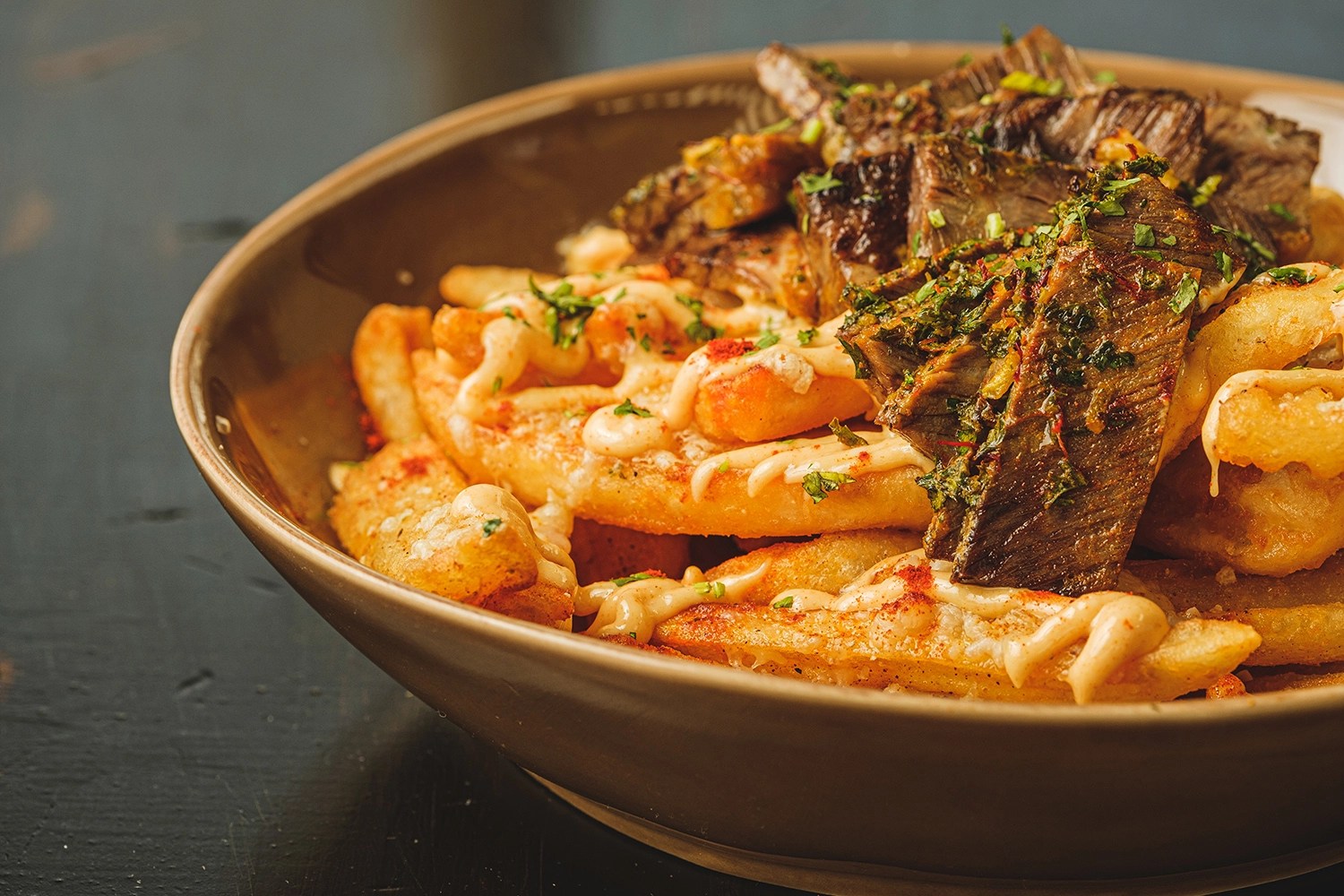
Raleigh-based catering company Catering Works is currently running two ghost kitchen concepts out of their large catering kitchen—though you’d never know the food came from the same place. One of the concepts, Frites and Taters, specializes in cheese and meat loaded pub fries; baked, split, fried and topped russet potatoes and sweet potatoes; and totchos, a nacho/Tater Tot combination featuring your choice of Buffalo chicken or barbecue pork.
Jill Santa-Lucia, Catering Works president and culinary director, says cheesy fries and loaded baked potatoes were just the type of comfort food everyone was craving when they officially started the ghost kitchen concept in September 2020—six months into the pandemic with no signs of it going away anytime soon. Catering Works’ other concept, Midtown Eats, which started just a month later in October, features some of Santa-Lucia’s favorite signature Catering Works recipes, specifically fresh salads, soups, sandwiches and hand pies.
Like Scordo’s FryBird concept, Santa-Lucia uses some of the most popular delivery apps, including Uber Eats, DoorDash, ChowNow and Grubhub, to deliver food from both Frites and Taters and Midtown Eats to eager, hungry customers. However, Santa-Lucia says that the delivery side of the business is the most problematic given that the delivery apps and its workers are out of her control. She says they’ve had instances where a driver canceled and their chef has had to go out and make the delivery.
Over in Chapel Hill, The Catering Company of Chapel Hill—also known now as Ghost Kitchen Eats since August—has mitigated this delivery issue by reemploying catering staff (out of work due to the pandemic) as drivers. They deliver food from their two ghost kitchen concepts—Bistro 501, which serves traditional American food, and The BBQ Company of Chapel Hill—within a 6-mile radius of their large industrial kitchen.
Becca Nelson, an event planner-turned-marketing person for The Catering Company of Chapel Hill and Ghost Kitchen Eats, says that the main advantage of pivoting to this particular concept during COVID is that by not having a storefront or restaurant, they’re able to keep their operations safe and secure—they don’t have to worry about a customer coming in and exposing the staff to coronavirus. “It’s a way for us, in these really uncertain times, to keep a sustainable business going without the risk of getting shut down,” Nelson adds.
Nelson, Santa-Lucia and Scordo all agree that their ghost kitchen concepts are sustainable and that they will be continuing them post-COVID in some form or another. While the inevitable reopening of restaurants will come soon enough, there’s always going to be a market for food delivery, and FryBird, Frites and Taters, Midtown Eats, Bistro 501 and The BBQ Company of Chapel Hill are all hauntingly delicious choices. So, when hunger strikes… who you gonna call?