Some call them the best years of their lives. Some call them the hardest. Some, especially more recently, call them the most expensive and they come out with a hefty pile of debts. No matter what you call them, for those who attend, the college years are memorable. College is an experience that can lead to a lifelong career, not to mention lifelong friendships, and now, despite the climbing costs of higher education, more and more people are going to college.
NC State is one of those universities that students from all over the United States—and other countries—really want to get into. In 2017, NC State was ranked by Money Magazine as the best college for your money in North Carolina and No. 8 in value among public universities by U.S. News & World Report; the Wolfpack has many reasons to be proud. We talked to NC State alumni from decades past about their college experiences, as well as incoming freshmen, to see how the celebrated university, and college life in general, have changed.
Climbing Cost
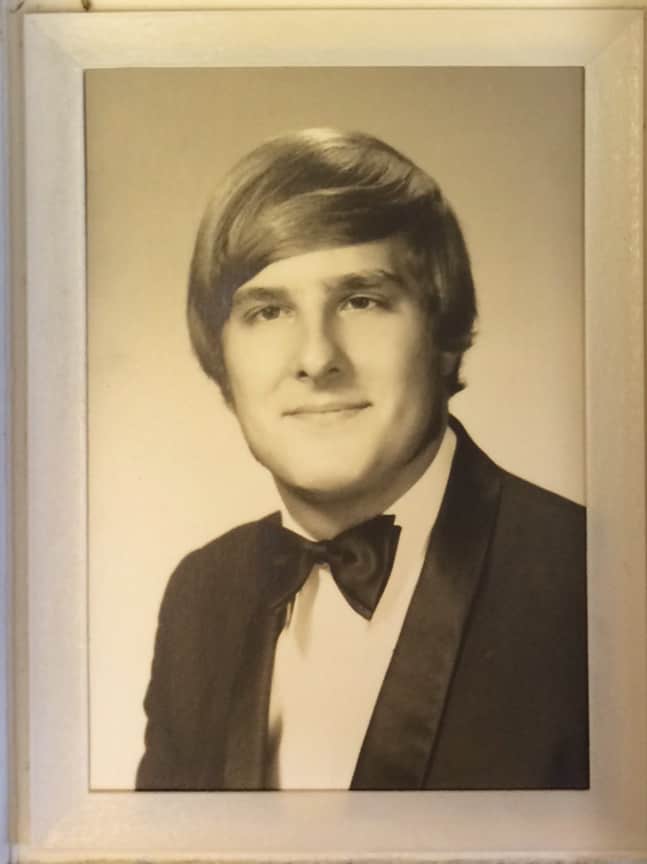
When Michael Lowder enrolled at NC State in the 1970s, his tuition cost, roughly, a mere $250 per semester—a staggeringly low fee compared to the tuition rates for this year’s freshmen, which ranged from $4,550 for full-time, in-state undergraduates to $14,609 for those from out of state. “The price of going to school [now] is just outrageous,” Lowder, now Executive Director of Artspolsure, says. Presumably, the increased cost of tuition boils down to higher demand for degrees and the competition that comes with it. This year, more than 30,000 students applied to NC State, while fewer than half were admitted. Freshman Cole Stewart was one of the lucky few to be accepted. An in-state student who’s lived in Raleigh for 18 years, Stewart says he estimates his bill this year, all told, is in the neighborhood of $25,000, including tuition, room and board and an on-campus meal plan.
Freshman Cole Stewart in his dorm room in Sullivan Residence Hall
While tuition rates and other fees continue to skyrocket, it’s possible that textbook costs have actually decreased thanks to online resources we have available to us now that our predecessors lacked. Whereas before, students could only buy textbooks from the campus store at whatever prices it charged, now, students can rent books, buy used copies on Amazon or find e-book versions for significantly less money.
Michael Lowder, Class of 1977
College Life
While technology can certainly have its downsides, it’s also a vital asset to today’s college students. Stewart relies on his iPhone to navigate campus and utilizes several NC State-provided apps—including TransLoc for taking the bus to Centennial Campus, where most of his engineering classes are held—and to buy food. “All my classes [on Centennial] are pretty early in the morning, so I can just order something from the main campus and by the time I’m over there, I can walk in, pick it up and go to class. It’s really nice,” he says. Meanwhile, Christine Johnson, who graduated from NC State in 1997, remembers the FedEx-Kinkos on Hillsborough Street as being the only place you could go to use the computer in the middle of the night (dorms didn’t have their own computers and the computer labs closed in the evenings; now, D.H. Hill library is open 24/7). Technology has also impacted classes and curriculums. Nowadays, students can take many of their classes online and courses for subjects like design, engineering and architecture have changed due to enhanced programming and resources. Nonetheless, class sizes remain pretty much the same, with introductory courses taking place in massive lecture halls with anywhere from 100 to 300 students, while major-focused classes count between 10 and 30 students. Outside of class, joining clubs and extracurriculars, including the Greek system, are as popular as ever, though there are now even more fraternities and sororities than there once were.
Dorm Living
One thing nearly all of the alumni we spoke to say they missed out on the most was having air conditioning in their dorm rooms. Johnson, who lived in Bowen Hall during her freshman year and Welch Hall during her sophomore year, recalls putting a fan blowing indoors in one window and another blowing outdoors in a second window to keep her room cool. “I don’t know how we survived,” she says. Both Bowen and Welch were women-only dorms; Welch is now the only all-female residence hall on campus. When Tom Stafford was working towards his master’s degree at NC State from 1964 to 1966, he says the campus was largely all male. Aside from air conditioning, many of NC State’s dorms have been renovated in past years to include suite-style living, lounges with TVs and markets. “The living conditions for students today are extraordinary,” Stafford, the university’s former Vice Chancellor of Student Affairs for 30 years, says. “I would say that they’re very lucky and very spoiled.”
Banks Talley and Tom Stafford
Eating on campus has also become something of a luxury, with three dining halls available, plus a food court, various restaurants, cafes and convenience stores. In the past, NC State offered only one dining hall for students to purchase meals. Both Stewart and fellow freshman Nixon Kramer say they opted for the Everyday Plan—at $2,095 per semester, it’s the most popular student dining option, consisting of unlimited dining hall swipes and 12 meal credits per week. So far, Stewart has yet to use all 12 meal credits in one week. “It sounds like it wouldn’t be that much, but I find it pretty hard to use all the meal credits,” he says. While Stewart says the food at the dining hall is pretty good, smoothies are his go-to option, along with Chick-fil-A from the Atrium food court beside D.H. Hill Library. For Johnson, her freshman year consisted of a lot of cereal for dinner, along with Taco Bell, which once had a location in the Talley Student Union. “I don’t remember anything outstanding,” she says of campus dining. “Everything is much nicer now than it used to be.”
Annika Pratt and Nixon Kramer pose in the Free Expression Tunnel
Campus Changes
NC State’s campus has also seen big changes over the years, especially with the development of Centennial. Before it was established in 1984, the Centennial property consisted of woods where Lowder and his friends would go hiking. During Johnson’s time at NC State in the mid-’90s, Centennial campus consisted only of the College of Textiles. Now, Centennial also houses the College of Engineering as well as student apartments, research centers, corporate buildings, dining facilities and the world-class Hunt Library. “I still get lost over there,” Lowder says. The Main Campus has undergone several changes of its own. Talley Student Union underwent renovations beginning in the summer of 2011 and is now the central hub for student life, with the additions of a campus bookstore, market, lounge areas and several offices, cafes and eateries. During Lowder’s college days, the student union was located in a wing off of D.H. Hill Library. Another significant improvement to Main Campus is Reynolds Coliseum, which reopened in 2016 with a renovated exterior, basketball court and the new NC State Athletic Hall of Fame. The Wolfpack men’s basketball team returned to the stadium in the spring of 2016, although most of this year’s games will continue to be played at PNC Arena.
Christine Johnson, Class of 1997
Both Johnson and Laura Bunn, who also graduated from NC State in 1997 and is now the Triangle market president at Capital Bank, say they have fond memories of attending basketball games at Reynolds in the mid-’90s. Johnson recalls camping in tents overnight in order to secure tickets to games the next morning. “Basketball games at Reynolds were awesome,” she says.
The Social Side
For many, the social aspect of college is equally as important as the academics. While NC State’s and Raleigh’s social scene has definitely changed, students, then and now, find fun ways to spend time with their friends outside of class. For Lowder, in the mid-’70s, it was all about hitting up the bars on Hillsborough Street, the main drag for students venturing off of campus. Lowder says he frequented Players’ Retreat—still a popular spot among students and alums for grabbing drinks today—the now-shuttered Western Lanes bowling alley and Sadlacks, a hangout formerly located in the Aloft space that was known for its live music and outdoor patio. During Marc Primanti’s time at State in the mid-’90s, he frequented local spots including The Cantina, a bar called Five-O, Colorado’s and The Big Bad Wolf—one of his favorite bars on Hillsborough Street—all of which are now closed. Attending sporting events in the past was as popular a pastime as it is today and students are still instilled with the same levels of Wolfpack pride. Stewart attended his first Wolfpack football game earlier this season and says he enjoyed soaking up all the school spirit in the student section.
Marc Primanti with girlfriend (now wife) Julie (Sherrill) Primanti
Despite lacking luxurious dorm rooms, state-of-the-art facilities and diverse dining options, the NC State alumni we spoke to looked back at their college days with fondness. Several still keep in touch with their college friends, watch football games at Carter Finley, drop by campus or grab beers at their old stomping grounds. They attribute their time at NC State to where they are in their lives and careers today. “I like to say, I spent seven of the best years of my life at NC State,” says Lowder, who taught on campus after he graduated. And while costs have risen in recent years with all the new campus amenities, and the fierce admissions competition, there’s a lot that this year’s freshmen have to be excited about. Both Kramer and Stewart are looking forward to joining clubs, supporting the Wolfpack at football games and ultimately earning degrees. Stewart says he already knows his way around both Centennial and Main Campuses and intends to keep his air conditioning bottomed out until summer is over.
kō•än opens this month in the old ãn location in Cary
At owner Sean Degnan’s and chef Andrew Smith’s new Southeast Asian restaurant, kō•än, we’d encourage you not to sit at a cozy two-top off to the side. Instead, take a seat at one of the five long communal tables situated throughout the vast, 350-seat space.
At first they may seem intimidating, but the point of the tables is to bring people from all over the Triangle together while building a sense of community over great food and drink; nothing bonds a group of strangers better than a good meal. kō•än, which translates from Japanese to “public table,” will, in Smith’s words, “bring people back to the table” and create a dialogue among guests—and the restaurant’s staff—through an exceptional dining experience.
“I see the tables as ancient and contemporary, and hopefully, future intersections of time, space and people and their stories gathered around, filling in a beautiful space,” Degnan adds. “We as humans are drawn to public spaces because of a shared desire for good food and water, and sometimes wine, and even more so, the vital need for community.”
Cary’s ãn, which shuttered in 2017 after a decade in business, was seen by some as unapproachable for its ambitious menu in a food scene that wasn’t yet fully realized, and for its cavernous location in Cary’s outlying Arboretum shopping center off of I-40. But Smith and Degnan agree, ãn was a special space and an amazing restaurant.
The team behind so•ca in Cameron Village and downtown Raleigh’s now closed bu•ku paid tribute to ãn not only in the new restaurant’s name but also through the renovations they did to the building. Many of ãn’s tables will be reused to seat new diners. Original chairs were refurbished with gray and brown details to coordinate with the rest of the space and the “spirit” of the culture ãn celebrated is preserved in various decorations, including a wooden canoe from Vietnam hanging over the communal tables—themselves constructed by Raleigh-based Tactile Workshop—in the bar area. The bar also features an exquisite live plant wall from the local Atlantic Gardening Company. Past the bar, the expansive space is home to a main dining room and an omakase room. Though large, both spaces are enveloped in natural light from a fleet of windows lining the walls and ceiling and feel open and inviting. Fresh eucalyptus plants adorn each table; the communal table, a beacon in the center of the room, features three of the plants while glossy wooden walls envelop the entire interior.
As at other concepts the kō•än team has piloted over the years, Smith encourages diners to order several small plates to share, whether it’s with the people they came with or with those they’ve only just met at the communal table. The main dining menu is inspired by foods Smith experienced while living in Vietnam and Thailand, as well as by dishes from other Southeast Asian culinary traditions.
Guests can expect unique items like charred octopus, shoyu glazed pork cheek yakitori—a favorite at kō•än’s summer pop-up series at sister restaurant so•ca—and tonkatsu ramen, a dish that prompted Smith’s initial foray into cooking at bu•ku in 2011. “Some of the stuff is going to be weird,” Smith admits. “There’s certain things we’ll have that nobody else is doing around here.”
Meanwhile, in the omakase room—complete with its own communal table, soapstone bar top and comfortable booths—chef Jeremy Beck will experiment with more technically difficult dishes for a locally driven menu that changes weekly. A separate bartender will sling cocktails curated by kō•än’s beverage director Tolson Kenny.
Although ãn wasn’t well served by what was once seen as a remote location, Smith sees the burgeoning area now as an “ideal sweet spot” between Raleigh, Cary and Durham. He says he expects that kō•än’s communal, zen-like atmosphere and unique offerings will attract patrons from all over the Triangle.
“Cary is growing rapidly and Durham and Raleigh are becoming saturated with so many restaurants,” Smith says. “As the area continues to grow, I think we’ll find ourselves right in the middle of everything. If we are considered outlying, it won’t be for long.”
They say confidence comes from within, but Lisette Limoges of Lisette L, a Canadian-based clothing brand, believes that it helps to feel good on the outside, too. That’s why Limoges is donating 300 items to InterAct of Wake County, a nonprofit that provides services to survivors of domestic violence and sexual assault, for a boutique shopping experience during InterAct’s annual Holiday Bazaar. “Confidence can help [people] achieve things that they might not do if they don’t feel good,” says Limoges. Women who participate in InterAct’s residential domestic violence program have been through a lot, so the event gives them the chance to treat themselves with stylish clothes. Allison Strickland, InterAct’s chief development officer, says many of the women who come to them are starting from scratch, sometimes with only a small suitcase and the clothes on their backs. “We’re working with them to meet their goals, whatever they might be; employment, going back to school,” says Strickland. “We want to make them feel on the outside how we hope they feel on the inside.”
Lisette Limoges
Limoges will donate a variety of sizes, styles and colors of her jeans, as well as blouses and tops, so women of all shapes and ages can find something they like and will feel confident in. The fashion designer has a reputation for incorporating a charitable component into many of the events she participates in all over the world through her brand. “I’m lucky to have a successful company, and for me, the way to give back is to give to women because women are the ones buying my pants,” says Limoges. “I find that it’s always good to give.” InterAct is particularly close to her heart, she says, and she has long supported its mission as the main provider of services for victims and survivors of domestic violence and sexual assault in Wake County. The nonprofit offers three 24-hour crisis lines, counseling, case management, professional training and a violence prevention curriculum for grades 3-12 in Wake County Public Schools.
Strickland says the Holiday Bazaar event on December 14 is one of the “joyous occasions” at InterAct. Not only do women get to pick out a designer-label outfit, they also get to shop for donated holiday toys and gifts for their children. “It feels incredible to be able to support these families during [the holidays],” says Strickland. “A time where our community rallies around the families that InterAct serves—that is a wonderful thing to see.”
View InterAct’s 2019 Holiday Bazaar gift suggestion guide and make a donation at interactofwake.org.
Cool fall weather provides the perfect excuse to take your work outside. Where better to do it than at Union Station Plaza’s Outdoor Office in the heart of downtown’s Warehouse District? The Downtown Raleigh Alliance is bringing back the co-working pop-up office this month, with even better accommodations and amenities such as comfy furniture from Alfred Williams, free Wi-Fi, shade umbrellas, fun programming and more. Grab your daily to-dos and head to Union Station Plaza from September 30 to October 4 and October 7 to October 11 from 9 a.m. to 5 p.m. Be your most efficient self while enjoying some fresh workspace scenery.
A Wake Tech course prepares students to navigate the shifting landscape of social media marketing.
Social media isn’t just for teens posting selfies; it’s how we keep up with friends and family, get our news and, increasingly, seek out goods and services. That’s why, whether it’s on Instagram, Facebook, Twitter or Snapchat, it’s especially important for modern businesses to maintain a social media presence.
This summer, Raleigh-based digital marketing agency Walk West partnered with Wake Tech to offer a new, 16-week course in social media strategy and management. The goal of the course is to introduce students to social media management with lessons around analytics, paid media, influencer marketing, writing marketing strategies and more.
“Social media is going to be a part of the customer journey,” says Ann Marie Taepke, director of digital media at Walk West who helped teach the course. Taepke has personally led digital marketing campaigns for well-known brands including Velcro and AstraZeneca at Walk West, shaping social media strategies through video production, influencer outreach, paid medium and other initiatives. “You want it to be part of what’s pushing someone down the funnel to convert into a purchase or a sign-up. People don’t realize that there’s a lot of fundamental marketing you need to learn about, even when you’re just applying it to social media marketing.”
Ann Marie Taepke of Walk West
During the Wake Tech course, students worked with real-life clients—all startup companies—to find out what the businesses’ goals were and to create and present social media plans for them. Benjie Davis, founder of personal styling business Wirl, served as one of the students’ clients; Davis says he had his own goals in participating in the course and learning about how to get the word out about his company.
“They gave me a different perspective on how other people view us,” Davis says of the students’ proposal. “I’ve been more mindful of that and how [people] might view us if they came across us on social media.”
While courses like the one Wake Tech partnered with Walk West on are relatively new, businesses have been using social media in their marketing for nearly two decades now. But, of course, social media has evolved since Facebook launched in 2004, with Twitter following in 2006 and Instagram in 2010. Taepke, who previously worked at Cary-based Ignite Social Media—the first solely social media marketing agency in the nation—says social media used to consist largely of professional, picture-perfect feeds that felt very impersonal.
And while that strategy is still relevant in some markets, Taepke says she’s noticed that most businesses on social media are leaning towards more authentic, less curated presences, which helps brands connect to their customers on a personal level and feel more relatable rather than as if they’re just trying to sell something.
“The whole reason why social media was big when it came out and is still relevant is because it is a two-way conversation with the brand and with the consumer,” says Taepke. “We need to be talking with these people, not at them.”
Brand Cam—an open-air digital photo booth which aims to create unique, intriguing content for its customers—is a case study in how brands can co-create content and maintain an authenticity that attracts more potential consumers, explains Raleigh-based entrepreneur and founder Cam Lilly. Brand Cam records GIFs, boomerangs photos and videos of people at events, conferences or simply within a business’s normal operating hours that are instantly uploaded to a gallery and texted to users.
Cam Lilly, founder of Brand Cam
This allows both the brand and consumers to upload live content in the moment and share it with their followers. It’s an exciting, approachable way to promote a brand and a way to stand out among competitors on social media.
“If these are your customers and they’re posting something on your behalf, it’s authentic,” Lilly says. “When folks see that social content from a person they know, they say ‘that’s a cool place, I should go there.’ So it’s more of a friendly, native way of advertising. And it’s also kind of fun.”
In the future, Taepke says she sees social media as lending itself to more micro-niches and intimate, private groups within the larger social media platforms that we see now, with even more emphasis on those aspects of authenticity and connectivity.
“It’s going to be interesting to see how we penetrate into that as brands and engage with users in a meaningful way, and in a way that they don’t feel encroached upon,” Taepke says. Whatever the future of social media marketing for businesses holds, one thing’s for sure — you’re not going to be putting your phone down anytime soon.
Wake Tech will offer the course in Social Media Strategy and Management again in the fall semester. Find out more at waketech.edu.