Entrepreneur Hannah Weisberg is on a mission to inspire, empower and connect females from all backgrounds and walks of life.
“It’s a new dawn. It’s a new day. And I’m feeling…” inspired. 2021 is the year the glass ceiling shattered into a million pieces at our feet. 2021 is the year that a woman of color began serving as the vice president of the United States for the first time ever. 2021 is also the year a woman took the football field in a referee role (Sarah Thomas)—a role held previously exclusively by men—on the world’s biggest football stage: the Super Bowl (!). And countless other females rose up this year and stuck it to the man, proving that women are indeed capable of truly great things.
Including Raleigh entrepreneur Hannah Weisberg. When her budding brick-and-mortar Dove & Olive Mercantile (a women-supporting-women event space where Weisberg would host workshops and private events) was forced to shutter due to the pandemic, instead of throwing in the towel, “nevertheless, she persisted”—as women do best—and used that setback as fuel to not only open a new business, but to create something bigger and better that empowers other women to do the same.
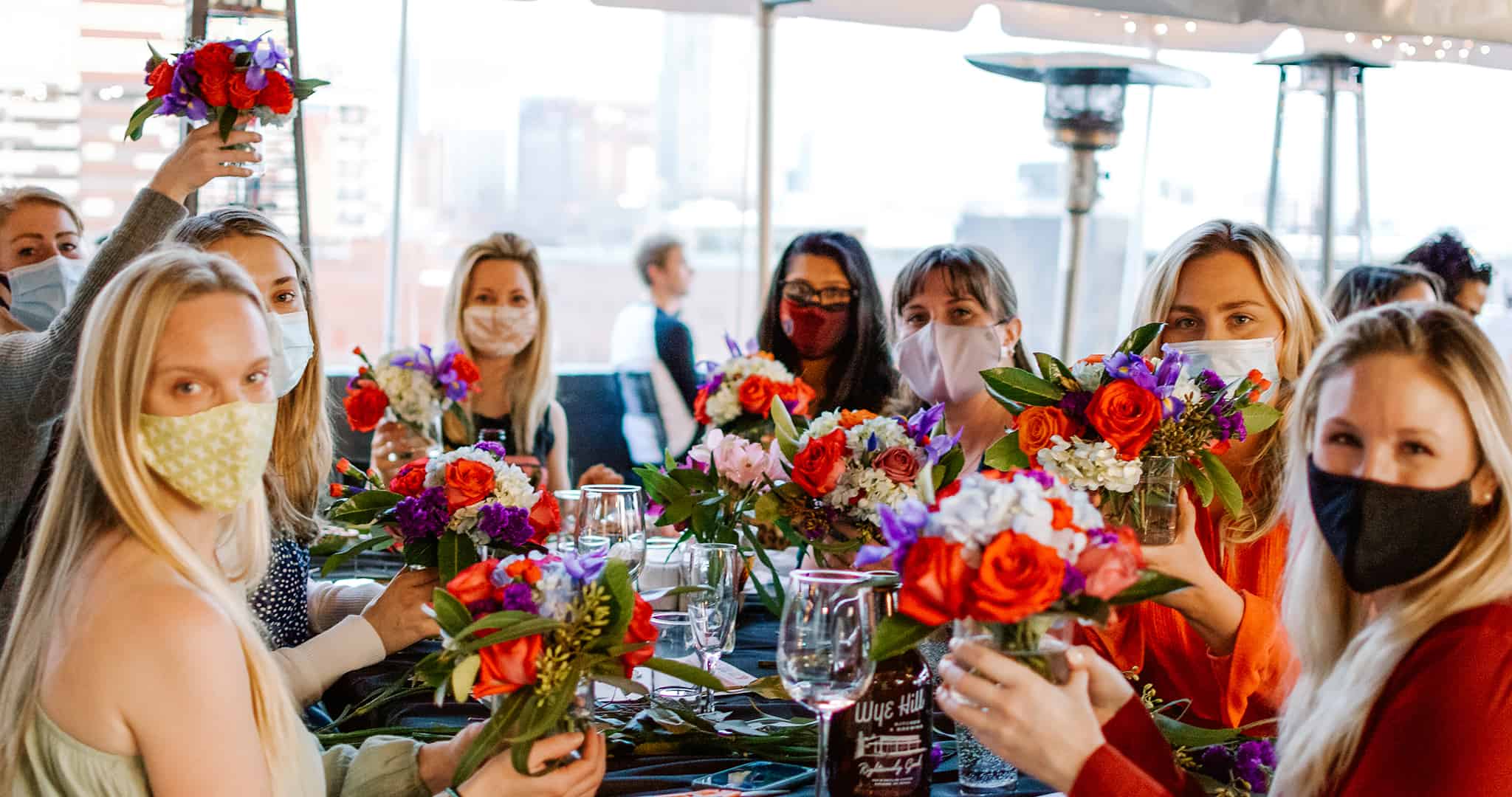
Enter Women’s Social Club, a monthly member-based organization whose main focus is support: support for women, support for local businesses and support for each other. Inspired by the original idea of Dove & Olive, the org holds three socials a month where women from all walks of life—some entrepreneurs, some artists, some tech leaders, etc.—meet to network, grow and collaborate.
“It’s a way for these members to explore their city, make new friends and get plugged into their community,” says Weisberg. “We have people come share about [everything from] imposter syndrome, building a brand, maintaining online presences—things like that.”
Weisberg takes a layered approach to the group, remaining intentional about how she chooses her workshops, venues and partners—always reaching back and putting money in the hands of the women who helped her. One of those venues has been abuzz as of late: Hartwell—a new retail space offering local makers markets, workshops and events—of which Weisberg is the managing partner. For her, helping Hartwell with its name, brand, website, social media presence, community and vendor partnerships was a way to put her business model and passion for helping women into practice.
“The venues we partner with are at least partially women-owned and -run, so we’re putting money back into serving them,” explains Weisberg. “All of our speakers and workshop partners are local female business owners, makers or artisans, so then we’re putting money back into supporting their business…. Adding: “One of our partners made $5,000 a month on member sign-ups for her business. That’s life-changing. That impact is massive for women in communities everywhere.”
And if seeing is believing, there’s no doubt Weisberg has made a significant impact on the female population here in Raleigh (and beyond—WSC’s NYC Chapter launches in October 2022 with pop-up socials beginning in February), and she’s just one of the many women who are setting the stage for female empowerment across the country. From sports fields and stages to board rooms and labs to the White House to small businesses (!), women are creating community. Women are playing. Women are speaking. Women are being seen. Women are being heard. And women are inspiring both on and off the field. #GirlPower thewomenssocialclub.co
Creating elevated spaces to bring back the “aged-out”
“How sad are we?” bemoaned Ross …. “We’re not sad, we’re just not 21 anymore, y’know?” defends Chandler. “I’m 29 years old, dammit! And I want to sit in a comfortable chair… !” … “Yeah!” adds Joey. “And I like to hang out in a quiet place where I can talk to my friends!”
No doubt many o’ upper-20-somethings (and beyond) can relate to the famed Friends epiphany—the bar scene often feeling like a space specifically carved out for the coming-of-age set.
But times, they are a changing. As more and more bars enter the scene in Raleigh, they are increasingly focused on creating elevated spaces to attract patrons beyond the sub-25 crowd.
Photograph by Felicia Perry Trujillo
While the 30+ set may feel awkward going to bars that typically attract a younger crowd (Teets, Cornerstone, Tin Roof), some Raleigh business owners are seeking to make their establishments more inclusive spaces, welcoming patrons of all ages who want to chill with friends or a date for a drink without that feeling of being “too old” or out of place.
Tyler Helikson, owner of the highly anticipated full-service restaurant Madre in Smoky Hollow, knows how important it is to create an elevated space where people of all ages can feel comfortable going out Downtown. “Younger generations have really occupied new bars and restaurants,” he says. “It’s nice to see that energy and youth, but it’s made an older generation feel like it’s not for them. It’s going to take a different design approach—from the interior of the space to the experience and hospitality—to make Downtown not just for young people.”
“Would you like to drink with your 21-year-old self?” —Jason Howard
Helikson plans to do just that by fashioning Madre as a space that is intentional, thoughtful and with an emphasis on design. “No detail is too small to make people feel comfortable and cozy,” he says. “We’re designing for someone who wants a night out that can either start with a meal at 5pm or an after-dinner cocktail at 9. Ultimately, the goal is to create a good mix of upscale restaurant and high-energy bar.”
We see this playing out in other spaces across Glenwood, which are—without at all alienating the younger crowd—catering to older patrons in a way that makes them feel seen and welcome… spaces like the recently bowed Botanical Lounge and Highgarden rooftop, and The Avenue on Glenwood South, adjacent to brand-new and highly anticipated AC Hotel Raleigh Downtown.
In fact, on a recent Friday night at The Avenue, a patron was overheard gleefully saying, “This is like Cornerstone—but for older people.”
And when it comes to positioning establishments, perhaps no one knows this better than Raleigh bar owner (and arguably father to the concept locally) Jason Howard. After all, Howard first opened Brooklyn Heights in 2008 (RIP 2015) on a partying stretch of Glenwood Avenue as a feel-good Cheers-like everybody-knows-your-name neighborhood bar that was accessible only to 25+ patrons—a decision that was relatively new and highly disregarded at the time, but Howard was steadfast.
For Howard, the decision was a no-brainer. He says that almost every bar he has opened has used the 25-and-up model. “I got some pushback because a lot of people didn’t understand it, but once you explain…‘Would you like to drink with your 21-year-old self?’ a lot of people appreciated it,” says Howard. “We didn’t budge on it. It’s pretty much what we do. It worked well for us.”
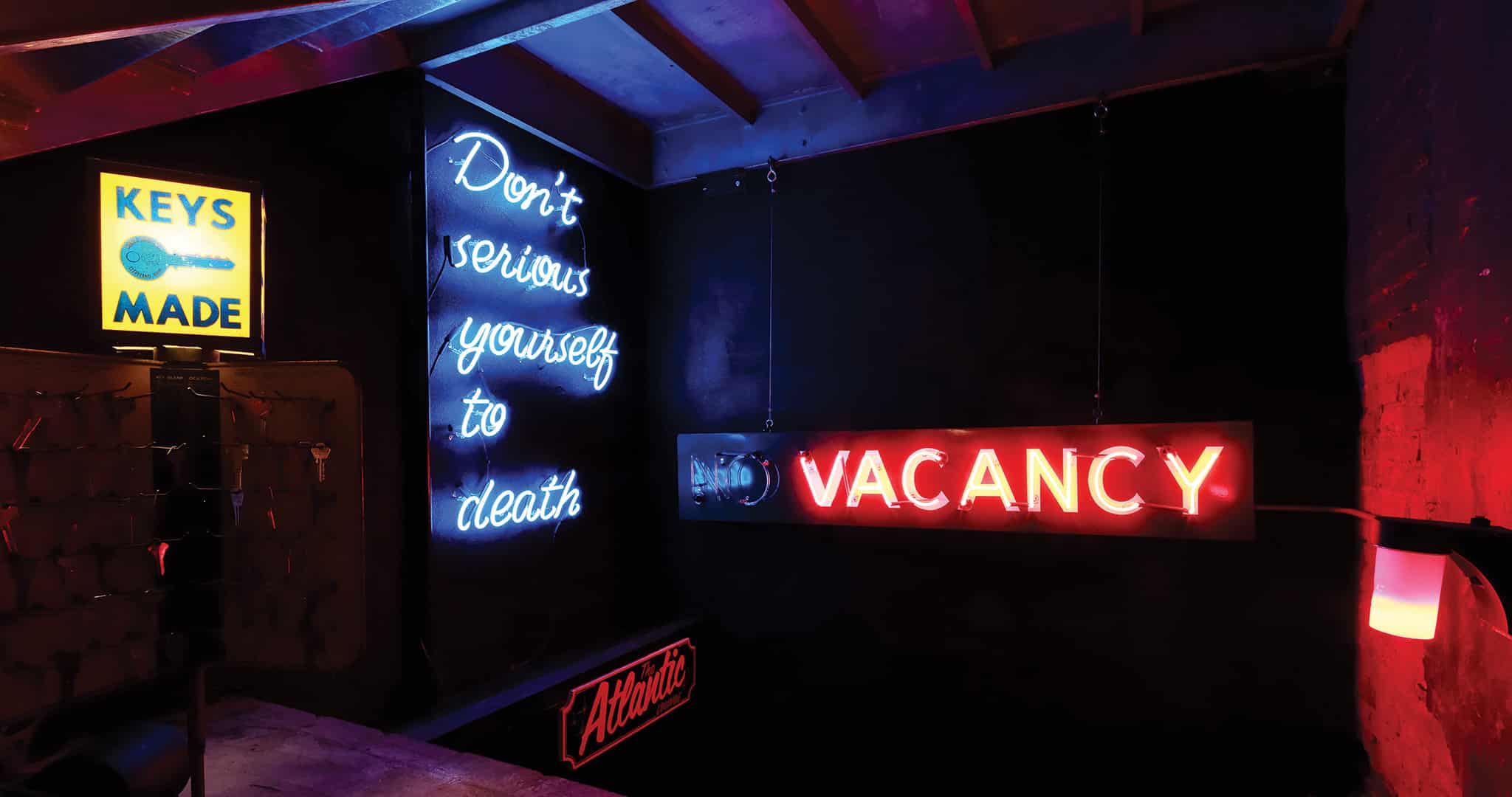
Ergo The Atlantic Lounge, his sought-after 25+ speakeasy key club (you need a key and a referral from a member), which opened in 2019.
“We could’ve made a lot more money, but we couldn’t keep our integrity,” says Howard. “But that’s the tradeoff: Is it always about making as much money as possible or creating a culture more conducive to adults? For me, it’s about keeping my integrity while making money.”
Local Jackie Sanders, 28, appreciates it, saying she tends to stay away from DTR bars now that she is out of college, but found herself longing for a place she could still go out and have fun.
“The idea of a 25+ bar sounds amazing now that I’m in my late 20s,” she says. “I’m really looking to make friends in the area—especially since I don’t go out as often. It’d be great knowing I would have a more relaxed experience with fellow professionals.”
For Helikson, it’s not at all about restricting the age limit, but creating a vibe that feels mature, elevated. “I want you to feel like you’re in a major metropolitan area where they really take the design seriously,” he says. Clearly now, thanks to visionaries like Helikson, it’s what we’ll see here, from our comfy chair, cocktail in hand.
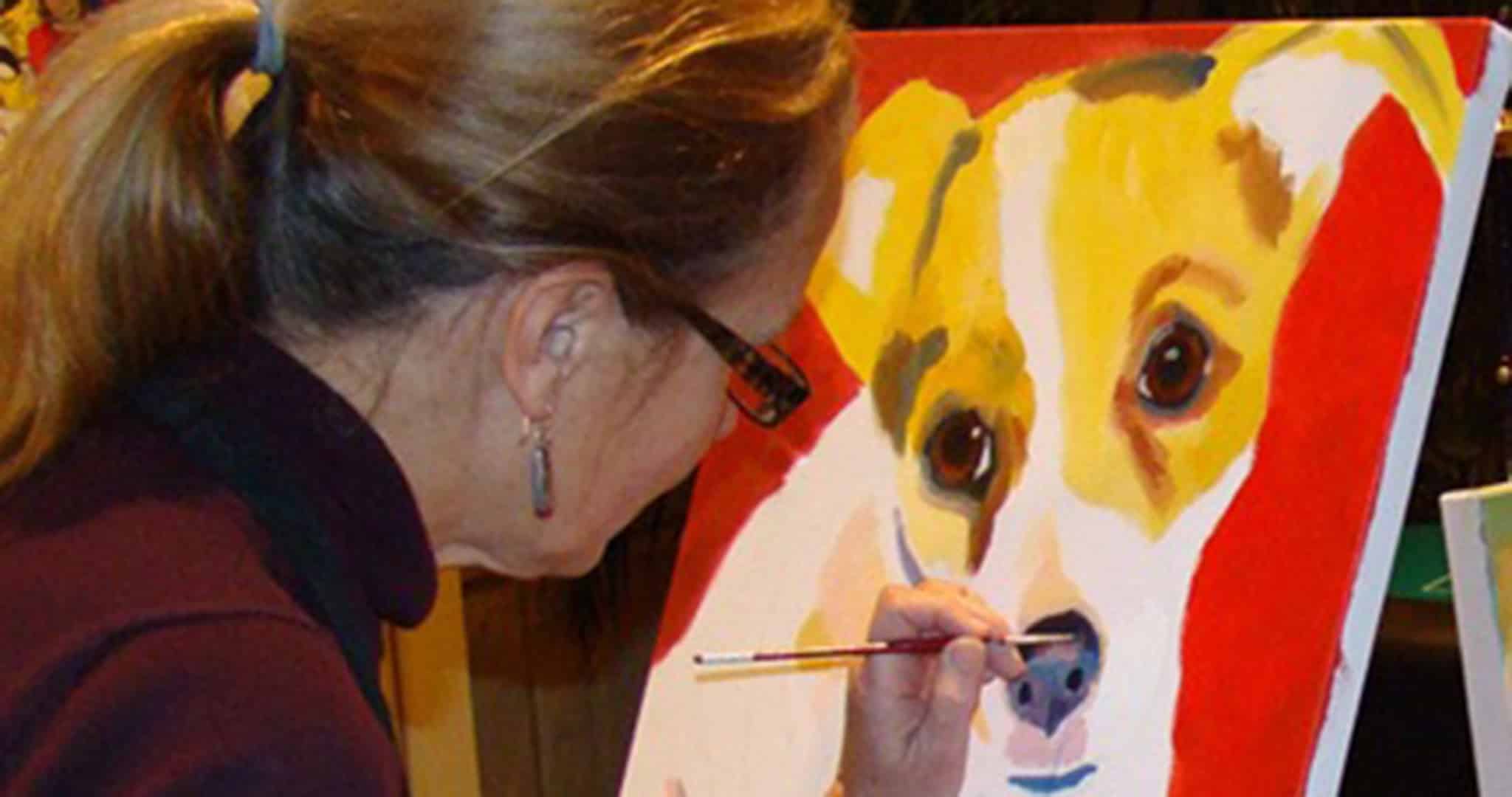
Picture this: a live commissioned in-studio portrait of your fave fur child. (Name a better holiday gift—we’ll wait.) Well, festive or not, tell Fido his “Mona Lisa” moment has arrived.
But before we get to the brushstrokes, better still is the tangled yarn that weaves us to this moment. You may know Raleigh native and lifelong artist Corneille Little as a Poe Elementary art teacher. What you may not know is Little’s long-held aspiration of having a private studio where she is able to focus solely on pet portraits and lessons… a dream now realized, but only after a daunting pursuit—and a dream long derailed.
After growing up in Raleigh, Little had married and moved to Florida for a time, where she wore myriad hats… boat captain, scuba instructor, dive shop owner, art teacher. Then, along the way, she found her passion in painting pooches when she first laid eyes on George the chocolate Lab. “I was looking at George just sitting on the couch, and after I took the photo, I said, ‘Oh, I need to paint that,’” says Little. So became the plan.
But as it were, she found her marriage holding her back from that purpose. Ultimately, she says, “I walked away from a bad marriage with two nickels to rub together and that was about it. And my mom said, ‘Well, what’re you gonna do, Corneille?’ and I said, ‘I’m gonna teach art, and I’m gonna create a website, and I’m gonna sell pet portraits, and I’m gonna open a studio,’” Little recalls. “She thought I was crazy.”
Crazy inspired, it turns out. She moved back to Raleigh in late 2010 returning to teaching art—and really starting to concentrate on her pet portraits. “Sometimes,” she says, “you have to throw [an idea] out into the universe and say, ‘Help me out a little bit.’”
Now, after nearly 20 years of teaching, Little plans to retire from Wake County Public Schools at the end of the year and work solely from her home studio, where she can “finally devote my career and lifetime on this planet to painting pets and teaching classes on my own terms. … Anyone can do anything if they believe they can do it,” she says—all it takes is drive and a little bit of elbow grease (er—paint!). “It’s such a passion,” she adds. “I feel lost if I’m not doing it—and I feel like I’m living my purpose again.”
To get to those brushstrokes, for the portraits, she uses mostly oil-based mediums on canvas or cradled birch wood panels to try to capture not just what the pet looks like, but rather the feeling the pet gives her, starting with its eyes—her way of connecting with her subject.
Now, between Google, her website, word-of-mouth and social media, Little is grateful to be able to always keep a canvas on her easel at the ready for that next pet portrait. “Everybody that has a pet should have a pet portrait,” says Little. … We couldn’t agree more. And looks like, “pursuit of happyness” found. petportraitsbycorneille.com
Proposed DTR protected bike lane threatens local business owners’ livelihood.
At 12:20 on a Friday afternoon, the patio at The Cardinal is already full. This is not unusual—in fact, it’s typically busier. This anchor-tenant West Street unassuming dive bar attracts locals and tourists alike for a damn good hot dog on the daily.
Its status, simply put, is legendary. And it’s how owner Jason Howard makes his money. “If I don’t have my lunch business,” says Howard, “I’m in the red every single month. That’s a battle I don’t want to fight.”
But the battle he will fight is for his businesses—and for his patrons’ and employees’ ability to continue to park on the streetfront they’ve long been able to. You wouldn’t think a spot we just dubbed as legendary would be worried about such a battle. But parking is at a premium and herein lies the problem.
That problem? Bicycle advocacy nonprofit Oaks & Spokes is partnering with the City of Raleigh to build a two-lane protected bike lane on the north side of West Street, across the street from The Cardinal and neighboring local businesses who rely on those parking spots for access.
Oaks & Spokes Interim Executive Director Mary Sell says this bike lane is a part of the Downtown North-South Greenway Connector Project that will connect the greenways together.
“Harrington and West streets will effectively become an ‘urban greenway’ connecting two future proposed greenways, providing improved pedestrian and cyclist connectivity from the Five Points neighborhood all the way to Dorothea Dix Park when fully implemented,” says Sell.
As such, Sell suggests the transition will incentivize new customers. “It will only impact parking on one side of [West] Street, maintaining on-street parking for area businesses while providing the opportunity to attract new customers who may prefer riding and feel safer in a separated lane,” she says.
But business owners on this street have expressed serious concerns about parking. For starters, that two-lane bike lane will be protected by hard permanent plastic barriers. And most of the businesses don’t have full parking lots and rely heavily on street parking for their employees and customers.
And, if you recall, on this block of West Street stretching from Wade to Peace, removing these streetside parking spaces leaves almost nowhere to park. And no access = no consumers—especially when there are so many other nearby lunch spots with easy front-door parking.
Dean Bailey, owner of King’s Auto Service Inc., who has been on West Street for over 20 years, says having parking on only one side of the street is not enough. “I’ve counted these cars every day for the past month,” says Bailey. “There’s 56 parking spaces that would be lost on our street. The math just doesn’t add up.”
Likewise, Layered Croissanterie owner Kawsar Chavez says she, her staff and her customers rely on on-street parking every day. “Our staff is growing, and we [already] didn’t have anywhere to go. So we parked further down the road, but if the bike lanes go in, there really will be nowhere to go.”
This isn’t the first time a protected bike lane has threatened businesses in Raleigh. The City of Raleigh built the same kind of protected bike lane on the other side of West Street in front of Morgan Street Food Hall and Heirloom Brewshop.
For Heirloom owner Chuan Tsay, the bike lane was a painful transition for his business. “No one talked to us about it prior to the bike lane,” he says. “It just kind of showed up during quarantine last year. It took away all our curbside pickup.”
That loss almost devastated his business: “In the first month of COVID, we were down 90%, and the curbside pickup became a really big part of what little business we had. We had to take it away,” he adds. “It was pretty impossible. … Most of our traffic is destination. For people to drive out here, it’s a commitment, then to get there and not have enough parking, it was tough.”
But despite that reality, he understands the other side. “I really appreciate the push for alternative transportation,” says Tsay. “It’s really necessary. In other cities like Chapel Hill, what I’ve seen is a real protected lane that’s not just by pylons. It’s a parking lane, plus bike lanes. That’s a great compromise.”
For their part, West Street tenants Howard, Bailey and Chavez emphasized the need for a compromise or an alternative as well. “I’m pro-bike lane,” says Howard. “I’m not anti-bike lane. I’m all about people riding bikes. But we have to balance that out.”
But without a compromise, West Street business owners fear they will have to question what’s next for their business.
“You’re going to cut off this side of the city,” says Randy Wood, owner of Knuckle Up Boxing Gym. “If customers don’t have anywhere to park, they won’t come here. If they don’t come here, I don’t have a business.”