by Mandy Howard | Mar 1, 2017 | March 2017, Stuff
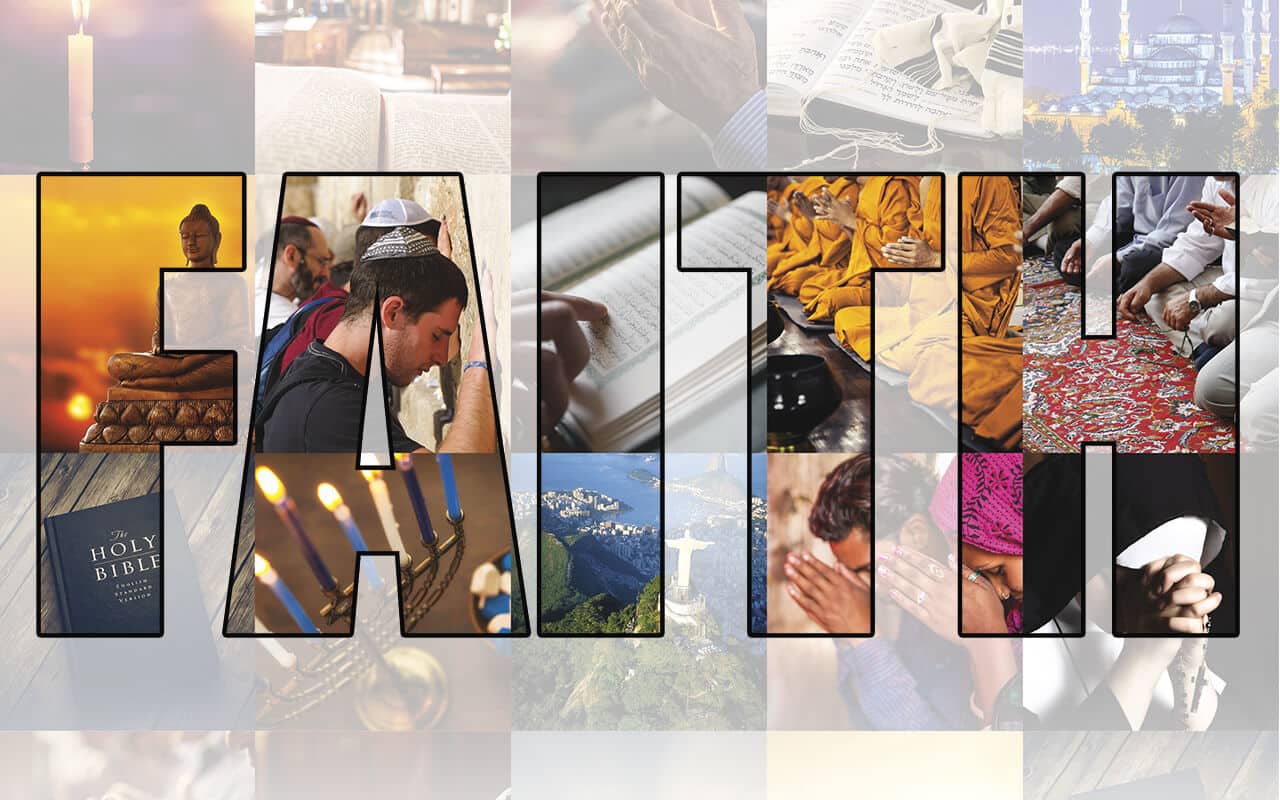
It may be only one word but “faith” embodies a varied and personal set of beliefs.
We explore the wealth of religious diversity that exists in our city.
Raleigh Magazine wanted to write a story about the diversity of religion in the Triangle. It was an ambitious idea, and I jumped at the opportunity. I knew the story would be challenging, but I didn’t realize how deeply it would affect me.
Over the course of researching this article, I grieved with my own congregation at a Catholic funeral, saw the joy of a soccer mom introducing a widely misunderstood faith to her friend, had coffee with a leader of a church whose journey with his transgender daughter informed his ministry, and spoke with a former Sunday School teacher who, after missing the ritual of a religion she no longer believed in, found a different community with whom she could celebrate life.
I began to see that what I thought was an article on religion, was really a piece on relationships: our relationships with one another and with a Creator.
It was while I was in a mosque, where women surrounded me with love and welcome and were so excited about introducing their faith to Raleigh, that I was smacked with the arrogance of my original intent.
There is no way, within the pages of this magazine, within the limitations of words to express the love, beauty and solemnity of the many belief systems within our great city. There is not enough space to explain the complexity and nuances of each, and I don’t claim to possess the grace to convey the idea of faith itself.
So with deep humility, Raleigh Magazine presents these brief vignettes, snapshots of faith (and non-faith) communities in our area.
Finding Common Ground
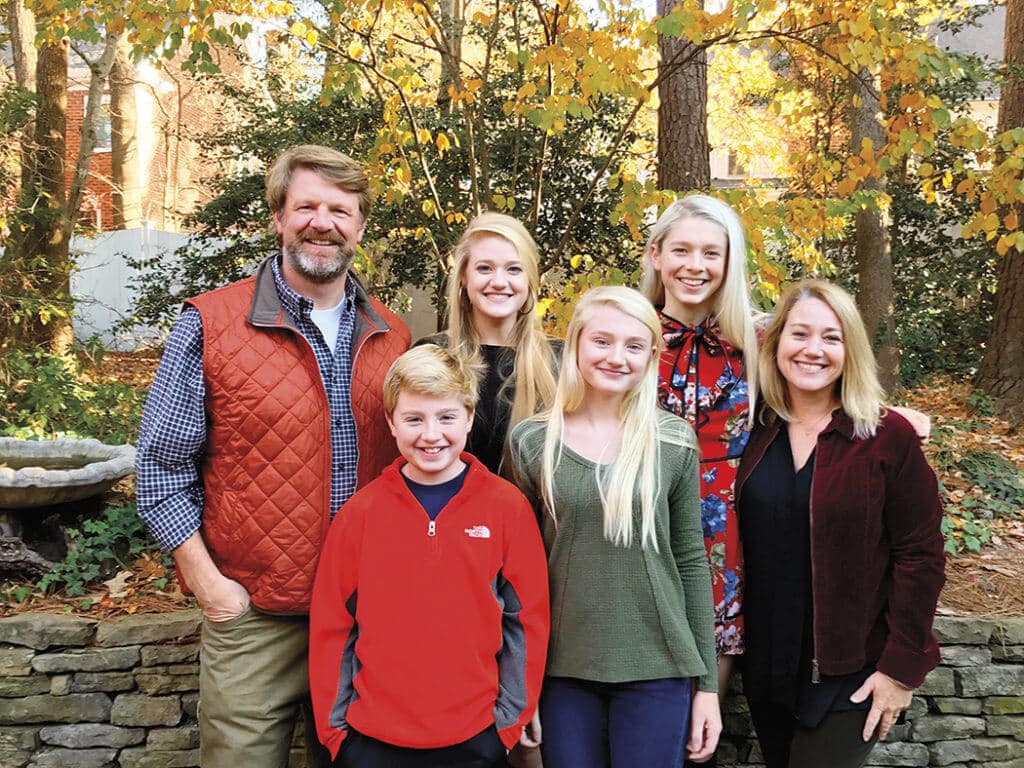
Good Friday, 2016: the sanctuary was draped in black to commemorate the solemn day in Christianity when Jesus died on the cross. Pastor Mac Schafer knelt amid the blackness and asked for God’s help. His mind and spirit were low after a week of news about a House Bill that targeted his transgender daughter, and he wasn’t sure he had the strength to lead: “God, give me the energy to lead this service because I’m down. I’m so upset about HB2.”
“Pastor Mac?” A deacon quietly interrupted his prayers. “The Easter lilies are here.”
The symbol was all he needed. Throughout his journey with his transgender daughter, Hunter, Pastor Mac knew that God was with him, and it was all going to be OK.
Hunter was only in 4th grade when Schafer moved to Raleigh and joined Hudson Memorial Presbyterian Church. Though Schafer suspects Hunter already knew something was different, she didn’t come out to them until much later.
“When Hunter came out to us initially, she was in middle school, being raised as our son, and she told us she was gay,” says Schafer. Already open to that possibility, Schafer and his wife, Katy, reaffirmed their love and acceptance. It was a couple years later that Hunter told them she was transgender.
“There was more adjustment for us at that point,” Schafer admits. “Part of that was our own ignorance in not understanding what somebody being transgender meant, but there is also the inner grief you feel as a parent saying goodbye to what you thought life was going to be like for your child.”
Schafer says there were moments along the way that helped him let go of control and fear for his daughter. One such moment was when she addressed concerns over changing for health class. She scheduled a meeting with the guidance counselor and, though her parents were there, she took charge.
“Hunter sat down and said, ‘I wanted to talk to you about health class. I’m transgender, do you know what that means?’” Schafer laughs recalling the initial look on the counselor’s face, whom he says, composed herself quickly and handled it very well.
It didn’t matter if Hunter was Schafer’s son or daughter; his child was a strong person, and Schafer was a proud dad. “She has the characteristic of knowing who she is and asserting what her needs are,” he says.
Professionally, Pastor Mac didn’t hide his daughter’s journey, but it also wasn’t necessarily public knowledge. One family trip and a social media post changed that.
Schafer was graduating from a doctoral program in Pittsburgh and Hunter asked if she could wear a dress publicly for the first time. Knowing there was family present who didn’t know the full story, Schafer asked her to wait and wear the dress at the National Cathedral in Washington, D.C., where they were going to stop for mass on the way home.
Unbeknownst to the Schafer family, that National Cathedral mass celebrated a group baptism. The priest walked through the congregation with sprigs of holy water, blessing everyone: “For Hunter, I think she was just glad to be wearing her dress, but for my wife and me, it was a very powerful moment of Hunter standing, as a transgender girl, being blessed as a child of God.”
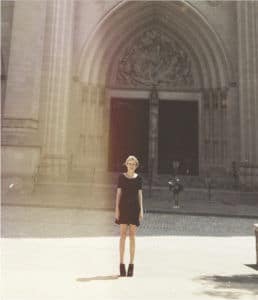 To commemorate the day, the family took a picture in front of the Cathedral. Mac and Katy thought it would be a nice photo for the family; their daughters thought a little bigger.
“We are driving down 95 and I hear Hannah say, ‘I can’t believe you posted it!’ and Hunter says, ‘Isn’t it great? We got 200 likes already!” In very short order, Schafer got a text from an elder at his church that said, “Is everything OK?”
Upon coming home to news and questions, the youth director advised Schafer to tell his story before others told it for him. The Schafer family held two town hall style meetings, first with the youth group and then with the congregation.
“Hunter told her story as a transgender teenager, Hannah told her story as a sibling, and Katy and I told our stories as parents,” says Schafer. “The whole experience was uplifting and powerful for our family and, I think, for the congregation.”
“I had folks in the church who I know struggle with the idea of gay marriage or other LGBT issues, but a lot of them came up to me and said, ‘Look, regardless of my struggles with what I believe, we love you,’ and I think that’s the balance that we’ve been able to strike,” Schafer says.
In each of these conversations, whether supportive or questioning, Schafer puts the relationship first, always looking to find common ground. The bottom line, he says, is “It’s not the end of the discussion, but it’s a great marker to be able to have that discussion, tell that story and everyone respects each other; maybe even loves each other in a new and different way.”
It has transformed the way Schafer approaches both ministry and conversation in a cultural sense. “I don’t think people change by my arguing my views on Scripture or by amping up confrontation,” he says. “I think people are changed when they know people and their stories; it humanizes us.”
Schafer says though he doesn’t use his pulpit to advocate for specific social issues, the journey has also informed his faith. “In the Gospels, whenever religious leaders had a rule they were trying to enforce that inhibited people from experiencing the Kingdom of God, Jesus would bat up against it in the spirit of liberating the oppressed,” Schafer says.
At the core of Schafer’s belief about God is love. He ends almost every service with the following benediction: “Be strong and courageous, stand firm in your faith, let all you do be done in love, may you know God’s smile and that you are loved beyond your wildest imagination.”
And though his family’s fight with HB2 is ongoing, the support of his church community and signs of God’s grace like lilies through darkness, keep Pastor Mac optimistic that love and compassion will win in the end.
Beneath the Dome
A new Catholic cathedral gives a local, growing population a Mother Church
The construction of a new Cathedral is incredibly rare. While many dioceses around the country are consolidating schools and parishes, the Diocese of Raleigh is in the very unique position of having a booming Catholic population where the former Cathedral is not feasible for renovation.
The current Cathedral, Sacred Heart in downtown Raleigh began serving as the Diocese’s central church in 1924 when the Catholic population for all of North Carolina was only 6,000. With limited parking and a seating capacity of 320, the Cathedral held several services on Sundays and even had to rent hotel space nearby to handle overflow masses on holy days.
Currently the Raleigh diocese is home to 500,000 Catholics with projections of reaching 1 million in less than 20 years. The growing population of transplants, along with the Hispanic migrant population, which is primarily Catholic, has made our area one of the top four fastest growing Catholic populations in the country.
It was clear, a new Mother Church was needed. The Cathedral Campaign was announced with a commitment by Bishop Burbidge (the former Bishop of Raleigh, now Bishop of Arlington, VA) to only spend what the people of God would provide. And the great majority of the budget came during the initial campaign from faithful Catholics excited to fulfill the dream of a Cathedral with the ability to host diocesan liturgical events.
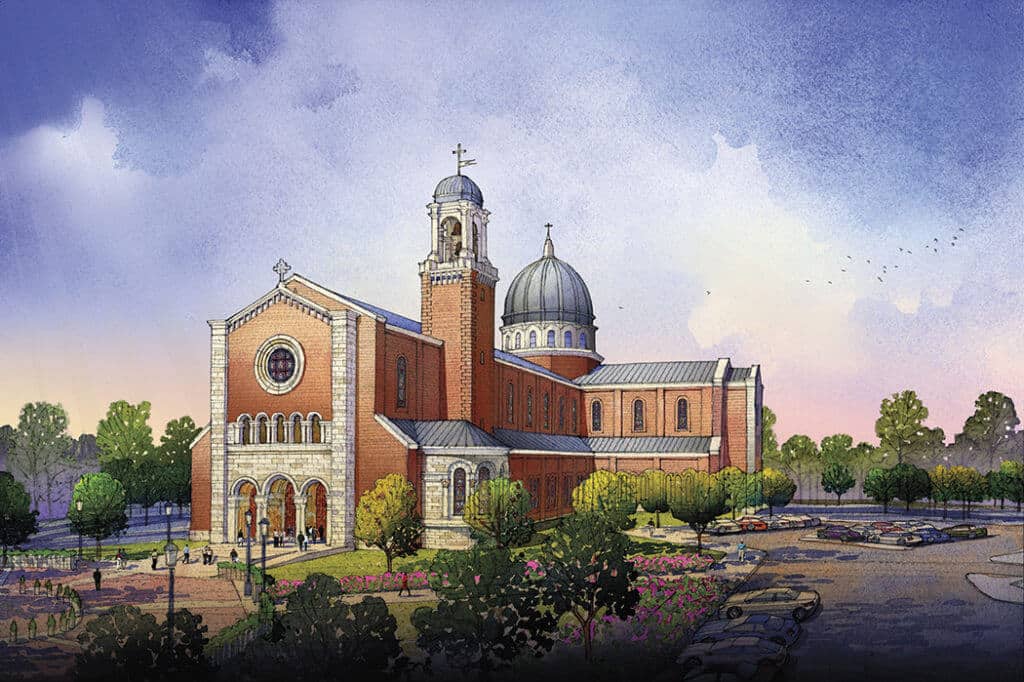
On January 3, 2015, the dream became reality as the Diocese of Raleigh celebrated the Rite of Blessing and Groundbreaking for the Holy Name of Jesus Cathedral. The Cathedral will sit on the Nazareth property off Western Boulevard which used to be home to a Catholic Orphanage (which housed the Holy Name of Jesus chapel) and the old Cardinal Gibbons High School.
Over the last two years, Raleighites have watched the campus transform, most notably when the 162-ton copper-topped dome was lifted atop the structure, an incredible architectural feat that took 31 minutes of active crane movement to lift into place. The dome took 16,000 hours of man hours to build, and 25 tractor-trailers were needed to transport the crane that was required to lift it.
Billy Atwell, Director of Communications for the Diocese of Raleigh, says: “We have received feedback from people all around Raleigh saying that they have seen the dome from the most unlikely of places. It’s becoming a reference point for the downtown area.”
Stained-glass windows that measure up to 17 feet high and Stations of the Cross were rescued from the Ascension Parish in Philadelphia, which closed down. The windows are being restored by Beyer Studio in Philadelphia before being installed. A 50-bell carillon commissioned for the Cathedral will mark hours of worship as well as play songs for special events.
The building is in the shape of a cruciform that “connects our diocesan Cathedral with the many Cathedrals found in Rome and throughout the world that express a similar shape. The cruciform gives our beautiful new Cathedral a timeless appearance that will hold up throughout the ages,” says Atwell.
The Cathedral will open and be dedicated on July 26. Though the Cathedral will, of course, hold special significance for the Catholic population, Atwell invites everyone to come and see this architectural wonder. “We want the community to feel welcome to join us and celebrate this wonderful, sacred site in Raleigh,” he says.
Answering the Call
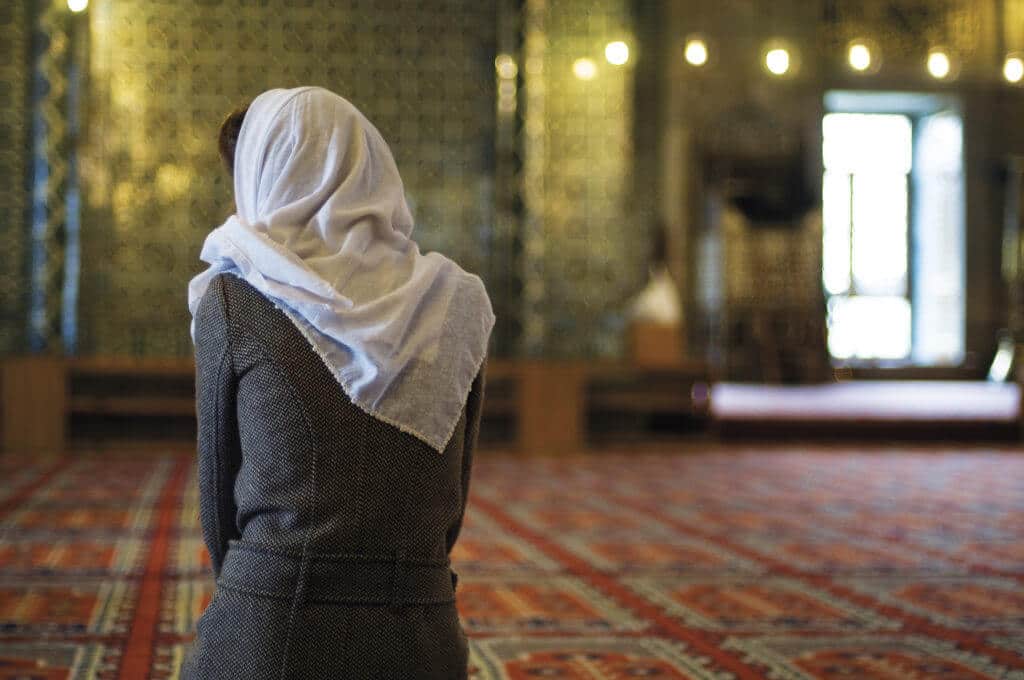
A visit to the Islamic Center of Raleigh during Friday Prayers
I’m not someone who normally picks out outfits ahead of time; but there I was, in my closet, ensuring I had an appropriate outfit for my assignment the next day when my phone chirped: “I just found out a friend of mine goes to the Islamic Center of Raleigh. She said she’d love to come with us.”
The text was from my friend Jeana who, when she heard that I was going to be visiting different places of worship, volunteered to join me.
We were both excited to go to the Islamic Center of Raleigh that Friday, but admittedly, I was a little nervous. I wanted to make sure I was respectful of the dress, the customs and the service. I didn’t want to do or say something to make anyone feel uncomfortable in their place of worship, especially with the amount of negativity and uncertainty in the current political and media climate. When I learned Jeana’s friend Tahani would join us, it was a welcome addition.
Jeana and I picked Tahani up, and immediately I knew this would be an unforgettable afternoon. Dressed traditionally, Tahani greeted us in her driveway with a smile that stretched from hem to hem of her hijab. She was excited to share her faith with us and thanked us for taking the time to learn.
Hugging Jeana and hopping in the car, the two caught up on kids and families. They were friends from CASL soccer and joked that it was an educational team; the parents taught each other how to shout from the sidelines in Arabic, English and Spanish.
For the rest of the ride I peppered Tahani with questions about common phrases like, “Inshallah,” (If Allah wills it, or God willing) and “As-Salaam-Alaikum” (Peace be unto you). I had read that it was polite to greet others at the mosque with the latter phrase, and we spent time attempting to perfect our pronunciation.
After a while, Tahani politely and in good humor insisted it’s ‘totally fine’ to also just say, ‘salaam,’ or even, ‘hi.’
Upon walking in the building, two gentlemen greeted us. “Salaam Sister,” to Tahani and, “Welcome, are you visiting to learn about Islam?” to us. We veered to the right to take the elevator to the 2nd floor where the women’s masjid (mosque) is located. We removed our shoes in the hallway and stepped through the doors. Most women sat on the floor, but there were also folding chairs along the back of the room.
A closed-circuit television hung in the front where women watched the Imam give a lesson from the men’s masjid downstairs. After the lesson (khutba), which usually lasts 20 to 30 minutes, the Imam leads the Salah, the mid-day prayer. Within the Salah, there are usually two to four rakats, or repetitions of prayer. Each rakat incorporates words, sung in Arabic, giving praise to God, and movement, which includes standing and bowing prostrate to God, touching forehead to ground. The prayers lasted five to 10 minutes, after which the women either returned to sitting in thoughtful prayer, or stood to visit with friends.
It was at this time when Jeana and I were welcomed warmly by many women. One approached us and invited us to tea on Sunday, a weekly opportunity to meet Muslim women and learn more about Islam. I thanked her for her invitation, but knowing I was unable to make it, asked her what was one thing she wished people knew about her faith.
“That we are not terrorists,” she said.
The answer came without hesitation and it stunned me, just how openly, how beseechingly she said it. She explained that when she walks through the city with her head covered, people ask her why she is so extreme. She sees their looks of fear.
My heart broke for her. My mind went instantly to the cruciform necklace that was underneath my layers of clothing. I don’t think twice about wearing a symbol of my faith. I tried to imagine what it would feel like to get looks of fear or anger anytime I wore my cross. Would I still have the courage to wear it?
“We cover ourselves so that we are not concerned with our outside. Our concern is with our inside. We want to direct all our thoughts and energy to becoming good on the inside, not only for God but for others,” she explained.
I nodded at a notion I can surely appreciate, especially as my daughter nears the teenage years which can be hard on a girl’s self esteem: equating hair, clothes, complexion and popularity with boys with self-worth. The hijab may seem foreign to me, but her explanation behind it resonated.
Before we walked away from the woman that greeted us, I realized how we might be seen as intruders in this place, the one place they may feel truly at ease dressing in accordance with their faith. So I asked, “Knowing that there is so much misunderstanding, does it make it uncomfortable for outsiders, like me, to be in your place of worship?”
She shook her head: “We like it very much. We want people to know who we really are.”
Unbound Abundance
Sunday Assembly celebrates community without religion
Mandi Kaye Ottaway spent the first 25 years of her life going to church every Sunday. A member of an independent Baptist church, Mandi taught Sunday School, Vacation Bible School and sang in the choir. Over time, however, she felt a shift in how she viewed her faith community.
“I began to feel as if people were less important than doctrine, which I felt went against the teachings of the Bible,” Ottaway says.
She explored other Christian denominations and asked deeper questions, challenging the faith that she had held for most her life: “I realized that I’d spent my life parroting what I’d been told without ever questioning it, and when I started picking at it, everything just fell away.”
When Ottaway decided that religion was no longer part of who she was, she missed the community of a multi-generational weekly gathering. It was a hole in her life that she wasn’t sure how to fill until she discovered Sunday Assembly.
Sunday Assembly is a global movement started in 2013 by Sanderson Jones and Pippa Evans, two comedians from London. They were en route to a job when they discovered they both had the desire to do, ‘something that felt like church but totally secular and inclusive of all—no matter what they believed.’
By their second Assembly, 300 people had joined, and requests poured in from all over the world for permission and guidance to start additional chapters. Today there are over 70 Sunday Assembly chapters in eight different countries. The motto, ‘Live Better, Help Often, Wonder More,’ underscores the mission to be a supportive and accepting community.
It has been called, ‘The Atheist Church,’ but Heather Greer Klein, board vice chair of the Chapel Hill Sunday Assembly, says that moniker is not entirely accurate. “Sunday Assembly aims to create a space for community regardless of belief,” says Greer Klein.
“When Sunday Assembly started, we actually got a lot of pushback from hardcore atheists who thought even our ‘non-religious’ message was too close to church, and they had just been so burned that they didn’t want any part of it,” says Kevin Klein, Heather’s husband and board chair.
Held on the second Sunday of every month at the ArtsCenter in Carrboro, the Assembly structures the hour-long event around a theme with music, speakers and an opportunity for members to share life events.
The Sunday Assembly band is a rotating cast of attendees who range in age from seven to 70 and who lead attendees in uplifting pop songs such as, “Here Comes the Sun,” by the Beatles or “Roar,” by Katy Perry. The speakers are carefully chosen to present 20-minute talks about a wide swath of themes, including goal setting, supporting others through grief and space exploration. Speakers must follow guidelines and policies that highlight the idea that Sunday Assembly is a place of acceptance.
To underscore the importance of this idea, Greer Klein refers to the words of founder Sanderson Jones: “Your religious grandma should be able to come to Sunday Assembly and see nothing that happens that is offensive to her.”
And for Ottaway, she has found a way to celebrate “the one life she knows she has.
Everything I Needed to Know about Visiting a New Place of Faith, I learned from the Kadampa Center
Visiting places of worship outside your tradition can be an incredibly enriching experience. Yet many of us are nervous to ‘do the wrong thing.’ To help, here are some tips, and I learned them all while visiting the Kadampa Center for the Practice of Tibetan Buddhism in Raleigh.
Be honest. Let people know it’s your first time and you are visiting and curious. Greeters at the Kadampa Center gave me a brief tour and incredible welcome.
Follow the Leader. Upon entering the Kadampa Center, I followed a gentleman who seemed to know his way around. He walked past the entrance to a line of turning wheels. “Turn for world peace,” they instructed. I followed his lead and spun the wheels. It is hard to describe, but that outward physical act, to express the intention for peace in my heart was powerful.
Respect your own comfort level. Upon sitting down in the gompa (teaching hall), the woman sitting beside me, Hettie, explained how some will prostrate, not as worship but to combat pride. I wasn’t sure I fully understood the concept, so I remained respectfully seated.
Smile! This I learned directly from the teacher, Gesha Galek during the teaching. When you smile at people, you bring more kindness into your life and you let people know that you are there with peace and love in your heart.
Just be. You are not going to become an expert in a day, so don’t try. Don’t worry if you don’t understand every ritual or if everyone laughs and you missed the joke. At the teaching I went to, Gesha Galek had just returned from India and was sharing stories from the monastery. Many people had also been to India, so there were many references I didn’t necessarily catch, but I was able to soak in the feeling of family this Center shared.
Websites are your friend. The Kadampa Center, like many places of worship, has a page on their website with frequently asked questions and tips on when to come and what to wear.
Say thank you. The community is sharing something that is sacred to them. Thank them for their welcome and kindness. At the end of the teaching, there is a generosity ritual. We lined up to present a token gift to the teacher. If you did not bring one, but wanted to participate, a basket of scarves to borrow is provided. I waited a long time and watched the others before I decided this was something I wanted to do. I pulled a scarf and waited in turn as each person approached Gesha Galek. At my turn, I offered him the scarf and said, “Thank you.” He presented it back to me, draped the scarf across my neck, looked me in the eyes and said, “Thank you.”

by Mandy Howard | Dec 19, 2016 | Buzz, December 2016 / January 2017
Raleigh Magazine foresees the future
We never told anyone, but nearly two years ago, in a dusty discarded box, in the corner of the Raleigh Magazine office attic, we came across a list that made no sense at all. At the very top, it said something about a “President-Elect Trump”. Assuming we’d stumbled across the ravings of a madman, we nearly threw away the document; but, as the past year unfolded, our eyes opened to what we had discovered. We searched the files to see what else these prophetic sheets offered.
Though we are loath to mess up the space-time continuum, we felt we could no longer keep it to ourselves. So, buy some milk and eggs and buckle up, because we’re in for some crazy times…
- After winning the World Series, Cubs fans face the terrifying reality that the “goat curse” was actually a warning. The Cubs victory opened the first seal of the apocalypse leading to locusts, famine, death and, in many people’s minds, the results of the 2016 elections. “Totally worth it,” says every Cubs fan.
- Calls to 911 from children caring for their moms spike after millions of women watch “Bad Moms” on video release and think, “Yes, that is a good idea.”
- Hundreds of NPR, CNN and MSNBC staff members are shocked to realize how much they miss covering the Trump campaign. They become loyal fans of NASCAR, WWE and Monster Truck rallies, but attend the events in complete disguise.
- Frustrated by the growing traffic in the Triangle, an NC State engineering graduate invents the first flying car. However, adding further injury to North Carolina’s economy, Adams learns that there was inexplicably a “no flying cars provision” hidden in HB2.
- Speaking of HB2, after retiring from the White House, Michelle and Barack Obama buy a vacation home in Duck, NC. Frustration mounts quickly as he learns that unless he can produce his birth certificate, he’ll be unable to use any North Carolina bathrooms.
- For the 10th anniversary of providing free local concerts at North Hills Mall, John Kane presents the city with the “Artists who banned North Carolina” series. Originally, the line-up consisted of impersonators of famous artists who cancelled shows to show disdain for a controversial law, but when that law is overturned, Maroon 5, Pearl Jam and Bruce Springsteen reward their fans’ patience by performing the free concerts themselves.
- After the Cubs World Series Victory, hoverboards and Biff being elected president, more parallels to Back to the Future 2 come to light including dehydrated pizza and robot dog walkers. Because of the accuracies, the Back to the Future movie franchise becomes part of standard middle school curriculum.
- Fighting an intense surge in immigration, Canada decides they must build a wall on their Southern border. They make the United States pay for it.
Top 5 Trump Predictions
- During Donald Trump’s Inauguration Speech, Kanye West jumps on stage and grabs the microphone saying, “Hold up, hold up! I’m gonna let you finish, but there’s a woman that should be standing up here right now.” As the cameras flash to a startled Hillary Clinton in the audience, he finishes. “Beyonce! Where you at? I wrote in Beyonce and my vote counts more than any of y’alls!”
- The Washington Monument is covered top to bottom in reflective gold plating. President Trump unveils the completed project at his first State of the Union proclaiming it the “Classiest monument in the world”.
- C-Span enjoys record-breaking ratings as President Trump incorporates an “Apprentice”- like feel to cabinet meetings complete with dramatic music and proclaiming to one member each month, “You’re fired.”
- Eschewing tradition, Donald Trump pardons a cow at Thanksgiving and urges everyone to eat Trump Steaks.
- In an unprecedented marketing move to re-open the White House to the public: Buy three nights at the Trump Hotel on the National Mall, get one free night in the Lincoln Bedroom.

by Mandy Howard | Dec 14, 2016 | Buzz, December 2016 / January 2017
Wayne Williams, Jr., of Fuquay Varina kept a promise and the world took notice. From the Washington Times to USA Today and from ESPN to WRAL, media outlets of every kind shared the story of a man driving from North Carolina to Indiana to listen to a ball game with his dad, who passed away in 1980.
It was a simple thing. Decades ago, Mr. Williams and his dad made a pact that “when, not if,” the Cubs had a chance to win the World Series, they’d be together to see the historic victory. His dad didn’t live to see the day, but that didn’t keep Williams from fulfilling his promise. He sat graveside and played the game for them both, complete with a ‘W’ flag to fly in case things went right.
I read this story every time it popped up in my news feed and I watched reporters of different accents put their individual spin on it. Sure, it was a unique story, and being a Cubs fan myself, I was drawn to every yarn spun around their epic win, but clearly this struck a different kind of chord.
How many promises have I made in my adult life? Promises to others, my kids, my husband, my friends. How many promises have I made to myself? I make lists of New Year’s resolutions that stretch pages in my journals and every year; every new set became another round of promises to myself that, like porcelain figurines carried by a toddler, were all but guaranteed to shatter and break.
It’s OK though, because everyone breaks promises. And it hits me, why this story penetrated my soul—no one would have held him to this promise.
No one would have given Mr. Williams guilt or grief if this was a promise he broke. In fact, I read how he had to essentially convince his kids that this was simply something he had to do. Meanwhile, I often only keep promises to avoid the guilt and disappointment of others. It’s a notion reinforced in our culture. We call it having an “accountability partner”. If you tell people you’re going to run, or eat well, or promise to meet them at the gym, you’re more likely to do it to avoid the guilt factor. Mr. Williams honored something that seems like it’s from a bygone era, the “my word is my bond” idea.
I think about some of the resolutions, the promises, I’ve broken over the years: “I promise I won’t be late;” “I promise to go to sleep at a decent hour;” “I promise to never ever lose my temper at my husband or my kids.”
As I tick off the list of broken promises, just the ones that pop quickly to mind, I realize three things: I promise too much; I promise things that are out of my control; and, worst of all, sometimes I make promises that I never really intend to keep.
Every time I break one of those promises I lose a little faith in myself. So with New Year’s approaching, what do I do? I believe in continuing to hope and work to be the best version of myself I can be. And though there is a long list to work on for sure, I think right now I’m feeling the call to keep my promises, especially the ones I make to myself.
So, my resolution for 2017 is to keep my promises. And I’ll only promise three things. I promise to be honest, in work, in life, in faith and with myself. I promise to try, even when I want to give up. And, in a nod to Mr. Williams I promise that if Notre Dame is in the FBS national Championship, I’ll cheer for the Irish with my dad, no matter what.

by Mandy Howard | Nov 14, 2016 | Do, November 2016
Pop artist Peter Max brings color to Raleigh

He has painted the last seven presidents, Marilyn Monroe and Lady Liberty, and his work has been featured everywhere from government stamps to Boeing jets, but what makes Peter Max truly stand out is his undying love of color and his optimistic portrayal of the world around him. Born to parents who were forced to flee a Nazi Europe, Max traveled all over the world and often credits his time in Paris for fostering his love of art. His family eventually settled in Brooklyn, and Max quickly became a household name. Colorful palettes and psychedelic pop imagery allowed him to interact with some of the most influential artists of all time. His travels and career now bring him to the Mahler Fine Art Gallery this November, and Raleigh Magazine had an opportunity to learn a little more about this colorful icon.
You have been an art icon for over 50 years but your work remains fresh and relevant, how do you keep your art so current?
Well, it is because I paint everyday of my life really. Technically, I spend five days a week at my studio and when I’m not at my studio, I paint and draw. I stay present and aware of everything that is relative and current.
You seem to associate closely with music, from painting Ringo’s piano to recently painting the judges of “The Voice.” How does music influence your art?
Simply put , I’ve fallen in love with music so it inspires me. Especially when I got well known, I got to meet all of these amazing people. I got to meet The Beatles and so many amazing artists personally. They’ve all been to my studio. You cannot imagine how wonderful that has been for me.
Your artwork always feels optimistic and you talk about love often. Is it your goal to promote love and optimism in your work?
It’s just in me. It’s just natural. I am focused inside by my art, on my colors, on the music. I’m focused where it is all lovely.
And you are bringing that art and spirit to the Mahler Fine Art Gallery. How do you choose pieces for a show?
I always select pieces with my assistants. It is a natural procedure we have developed. We always create a nice broad variety.
Do the pieces vary depending on the location? Would the pieces you select for Raleigh be different than, say, Los Angeles?
It could be. It’s always a little bit different. Each piece for each show is always individually picked.
What advice do you have for artists trying to find success today?
I say just draw, paint, do what you like [doing] and follow your feelings; that will always work. I think if you’re a good artist and people enjoy your work then you’re giving a lot to the people and they appreciate it. It becomes a very beautiful circle.
It has been said that your work is the building block for popular apps like Instagram and Photoshop, in which you take an image and bring more to it. How does it feel to help foster art for so many?
 It’s wonderful. There’s so much available now to us in our lifetime. The colors are there, the reproductions are there, the mediums are there, it’s endless.
Your work is momentous, spanning everything from painting the hull of a ship to being the official painter for the Olympics and World Cup; is there any experience that stands out above the others as a favorite?
I think every single day, something new happens. I’m so appreciative that I can do it. That’s what stands out as important, I just appreciate the millions of favorites all the time.
You have also painted the last seven sitting presidents. I know you talk about being spontaneous, but in an election year, are you looking ahead and brainstorming about future portraits?
Sometimes I think about it ahead, but sometimes not. Mostly it is spontaneous and whatever happens new and now.
Do you have any other words for your fans in Raleigh?
I can’t wait to meet them and to be there, for me that’s the big thrill. That’s what I enjoy.
Meet the artist at Mahler Fine Art Gallery
Fri., Nov. 18, 7 p.m.-9 p.m.
Sat., Nov. 19, 2 p.m.-5 p.m.
Sun., Nov. 20, 1 p.m.-4 pm.
RSVP: 919.896.7503 or [email protected]
by Mandy Howard | Nov 1, 2016 | Buzz, November 2016
Growth may be stretching school budgets but it’s also offering more educational approaches
Every single day in Wake County, the equivalent of a kindergarten classroom of kids is born. Add this to the continued influx of newcomers attracted to our vibrant professional, cultural and economic scene, and you have the makings of a thriving city. We’re always proud to see Raleigh at the top of so many lists, including best places to live and best places to raise a family; however, growth brings predicaments like traffic, construction and keeping up with the expanding student population.
Wake County Public School System (WCPSS) is already the largest school district in the state and the 16th largest in the nation. Our student population has grown from 114,000 in 2004 to 155,000 in 2015, a 36 percent increase in ten years.
Can Wake County Public Schools afford this growth?
This flood of new families and students requires WCPSS to grow in a way that is unprecedented. New schools, more teachers, more support staff and supplies, transportation, technology and educational materials will be critical in very short order; all of these things take funding.
Despite the recent political climate, 30-second sound bites and blame games to which we are accustomed, everyone who has ever handled a budget knows that there are complicated realities. When you are combining state, local and federal funds to support one of the largest and fastest growing educational systems in the nation, those complexities turn creating and keeping a budget into a science.
Wake County School Board Member, Christine Kushner highlights the budget constraints under which Wake County currently operates: “In the last 10 to 15 years while our population has grown, our budget is strapped,” she says. She illustrates cuts that WCPSS has had to make by sympathizing with her friend who teaches kindergarten and loses her assistant at 10:30 a.m., just a little over an hour after the day begins. “A classroom of over 20 kids with all different skill levels now has no assistant teacher in the classroom during the day,” Kushner laments.
Cuts have also been felt in transportation, leading to some buses doubling up routes and forcing kids to wait, sometimes hours, before they can get home after school.
Teacher recruitment is another funding issue that requires attention. North Carolina has improved from the 42nd to 41st state in the nation in average teacher pay. With the constant recruitment of new teachers at entry-level salary position and the reality of cost-of-living differences between North Carolina and other states, that statistic may be a hard one to move much further. Low pay and the repetition of that statistic, without any context, will make it difficult to recruit good teachers.
Another statistic that deserves attention is the per-pupil expenditure, or PPE. Currently, North Carolina is 47th in the country in per-pupil spending. “We are at the bottom in the nation for per-pupil spending. The taxpayers are getting a lot of value for their dollars, but the budget is getting strained,” Kushner says.
Currently our PPE is $8,227 per student. This number combines local, state and federal funding. It is, in part, the state and federal funds that drive our average down among North Carolina counties. Wake County is too big and wealthy to qualify for designated funds such as ‘small county’ and ‘low wealth’ state supplemental funding.
Also, according to Dr. Terry Stoops of the John Locke Foundation, “It (PPE) does not take into account capital expenditures and debt service payments made by county commissions on behalf of the school district. In a county such as Wake, these are critical parts of the equation.”
Federal allotments are also affected by our local economic success. Because our average income is higher in Wake County than in other counties, we don’t qualify for many of the need-based funding.
“Federal funding must be used for food service, special needs studentsand low-income students. Wake receives comparatively little funding because it is a relatively affluent county that has a strong tax base and thus a relatively high local contribution,” Stoops says.
In short, the federal and state funding allotments for Wake County are smaller than for our neighboring counties because of our growth and success; this factor, in part, drives down our PPE average.
If funding is tight, how are we affording all these new schools?
With continued growth in mind, Wake County voters approved a $970 million bond in 2006. That bond outlined the plans to construct 17 new schools, provide extensive renovation of 13 existing schools, purchase land for 13 future schools, and provide for upgrades throughout the district.
Also, the state lottery was approved specifically to help fund school facilities. However, Kushner notes, it does not make as big an impact as many people think. “The [lottery] funding goes to the county because our capital dollars come from county dollars. It ranges from $6 to $20 million a year, which is not enough to build one half of an elementary school. So, in Wake County, lottery dollars are typically used to pay down interest on our capital debt,” says Kushner.
Though growth creates obvious funding hurdles, Kushner insists there are positive indicators.
“Growth is a better problem to have than contraction. A lot of our rural communities are facing [contraction of schools] and that’s a far more difficult problem. We’re not built out. There’s still a good amount of land and new developments so we’re going to continue to have growth, and growth makes a community dynamic and does great things for the economy.”
In June, the Wake County Board of Commissioners approved a 1.35-cent property tax increase. Despite the relatively small increase, (the average home value of $268,600 will have a $36 increase) this will generate nearly $18.8 million in new revenue for the county. Seventy Percent of all Wake County citizens do not have students in the public school system so growth will ultimately lead to increased tax revenue and more funds that the County Commission has available to distribute to the operating budget.
For the 2016-2017 fiscal year, the county budget granted $12 million less to the Wake County School Systems than it asked for; however, it did approve a request to fund a $1.98 billion, seven-year plan that includes building new schools and making major renovations. They are moving forward immediately with a plan to use both limited-obligation bonds, which don’t require a ballot vote, and general-obligation bonds which taxpayers will likely see on the May 2018 ballot.
A Product That Benefits Everyone
Whenever a bond is up for a vote, the school board becomes even more keenly aware of that 70 percent that do not have children in public schools. They need to make sure that voters will approve measures to fund schools that they may never directly utilize.
Because of this issue, in addition to the apex goal of providing the best education to Wake County Children, school board officials want to make sure voters know that Wake County Schools are a great investment for everyone.
“We may not be educating your child, but we may be educating your next doctor, nurse, plumber or electrician!” says Kushner.
It is paramount for school officials to show voters that WCPSS is a good product and a good investment. Part of proving a product’s worth is showing that it can beat the competition. Home schools, private schools and, most notably, charter schools are vying to be the school choice for local parents and has created opportunities for WCPSS to grow and challenge itself to be better every year.
Between astronomical growth, funding woes and increased competition, it’s easy to focus on the obstacles that face Wake County Schools; but Christine Kushner wants parents of school-age children to know that this is truly the most exciting time for Wake County Public Schools.
“We are changing the culture, away from standardized testing and toward hands-on projects-based learning. We have a strategic plan and an academic vision that’s working together to bring energy and teacher agency and student agency into the classroom. I believe [assignment and competition complications] will take care of itself if we can have consistently fantastic learning environments where teachers and students are excited about coming to school,” says Kushner.

Growth Promotes Competition
As our population increases, the demand for choices in education increases as well. Enrollment in private schools, home schools and, most notably, charter schools have significantly increased.
Public schools’ most direct competition is the charter school system, which has had a 42 percent increase in enrollment in Wake County over the last two years. “As with any product, competition promotes growth. As the education landscape has changed with the increase in charter schools, magnet schools have also had to add new programming to stay competitive,” says Tamani Anderson Powell, Marketing and Communications Director for the Office of Magnet and Curriculum Enhancement Programs.
The Wake County magnet system recently partnered with Clean Design, a Raleigh branding and advertising agency, to reinvigorate programming and rebrand their product. “They were great at helping us take a look at our own product in a different way,” Powell says.
A large part of that ‘rebranding’ involved rethinking how they communicate the extensive varieties of programs they offer to their target market through their website and media. “Since we target mostly pre-school families, we considered those ‘millennial’ parents who are drawn to our product. We are targeting families who want a diverse setting in preparation for a diverse world,” Powell says.
In addition to magnet and charter choices, Wake County boasts an incredible variety of private schools as well as the largest number of approved home schools in the state.
Private Schools
The private school umbrella, according to the North Carolina Department of Non-Public Education, encompasses anything that in not a public school or a home school.
Wake County has 79 private schools, which educate approximately 16,000 students. Nearly 50 percent of those schools are considered religiously affiliated.
The oldest and most well known private school in Raleigh is Ravenscroft. Originally opened in 1862, Ravenscroft boasts a 125-acre campus in North Raleigh and educates over 1,100 students in grades pre-kindergarten through high school.
The fastest growing private school in Wake is Thales Academy. Founded by Robert Luddy, this independent institution has grown from 30 students in 2007 in an office-style setting to over 2,100 students in six locations around Wake County.
With the increase in Catholics coming to Raleigh from around the country, the Raleigh Diocese Catholic School System educates close to 5,400 students in Wake County and over 9,000 throughout the diocese.
Despite the tuition (on average private schools in Wake County cost $6,000 and $14,000 a year for grade schools and high schools, respectively,) parents continue to find reasons to open their wallets and choose private school. The most common reasons include the desire for religious education and to gain access to more diverse and challenging educational opportunities.
Charter Schools
Though officially public schools that use state and local tax dollars for primary funding, charter schools operate very differently than schools under the WCPSS umbrella. Each charter school must be authorized by the State Board of Education; and they are each governed by an independent non-profit board of directors.
Like public schools, charter schools have open enrollment and cannot discriminate in admissions, associate with any religion or religious group or charge tuition.
There are currently 20 charter schools in Wake County; six of those have been opened in the last three years. The Republican led North Carolina legislature plays a large role in the expansion of the charter school system. In 2011, they lifted the 100 school cap for charter schools, which allowed for new schools to be opened; a trend that can be vexing for traditional public school proponents.
As Dr. Terry Stoops from the John Locke Foundation states: “It’s competition, after all, and the district would like as little of that as possible. While a portion of local and state funding will go to the charter school, rather than the district, the student also goes. Depending on the school and the demographics of their enrollment, it can be a net gain or a net loss for the district [funding-wise.]”
Also, traditional public school advocates point out that though charter schools can’t officially discriminate, they also do not have to accommodate all students the way traditional public school must. For example, they do not need to provide transportation, and may not provide hot lunches, which makes this option not possible for those in the community with greater need.
Advocates for Charter Schools punctuate their support by pointing to the reasons that charter schools were approved in first place: encouraging the use of different and innovative teaching methods, creating new professional opportunities for teachers including the opportunity to be fully responsible for the learning program at the school site and, most importantly, provide parents and students with expanded choices in the types of educational opportunities that are available.
Magnet Schools
The Magnet System objectives are to reduce high concentrations of poverty, promote diverse populations, maximize use of school facilities, and provide innovative and/or expanded educational opportunities.
Magnet Schools help WCPSS fulfill both the utilization and student achievement goals in its four pillars of student achievement (sidebar) by having parents voluntarily move children to schools with concentrated programming, such as creative arts and science, engineering and world languages. Most often, these magnet schools function to draw high performing students to underpopulated schools.
According to Powell, the system has succeeded. “Magnet schools have kept our downtown schools wonderfully diverse and full,” she says.
Parents can attend Magnet School Fairs in the fall or learn about the close to 50 different magnet options in elementary, middle and high school in Wake County on the WCPSS website. If parents find a field such as science and math or foreign languages that appeals to them, they can apply to that magnet choice.
Selection for placement in magnet schools is determined by many factors. Your base school, the demographics and achievement statistics of your base as well as the magnet and how many seats are available. Some magnet schools, such as the leadership academies and early college high schools require additional applications to determine placement.
Unlike charter schools, once you get into a magnet school, that is your school. When they assign your child to the magnet, they simultaneously give that seat at your base school to another child. At the time of a natural school transition, such as from grade school to middle school or middle school to high school, a parent can choose to stay on their magnet path or go back to the base as decided by their address.
Home Schools
You’ll often hear homeschoolers refer to their educational choice as a ‘movement.’ That may be because for so long ‘home school’ was relegated to the outskirts of society, and homeschooled kids were often archetypal tropes in television and movies as weird nerds or religious ‘nuts.’ But despite the stereotypes, this school choice has continued to grow.
According to North Carolinians for Home Education, the rate of growth in the United States is 8 percent a year. In North Carolina, homeschooling has grown at an annual compound rate of 16 percent in the last three decades. In the 2015-2016 school year, North Carolina recognized nearly 7,000 home schools in Wake County, which is the most in the state.
As numbers increase, so do resources. Homeschoolers in Wake County have the choice of nearly 50 recognized groups that they can join to do field trips, share educational materials and promote discussion amongst students.
Though the most commonly cited reason for homeschooling still trends toward religious reasons, parents are finding that they can educate their children more efficiently at home while integrating both family togetherness and more time for extracurricular activities that interest the child.



