Let there be light! Igniting DTR and bringing stakeholder Thomas “Skip” Hill’s vision to “make this the coolest street, certainly in North Carolina, but in the Southeast and beyond” to light—literally—the Fayetteville Street trees are finally set to get lit this summer. Get ready to bask in the glow starting Monday, June 2.
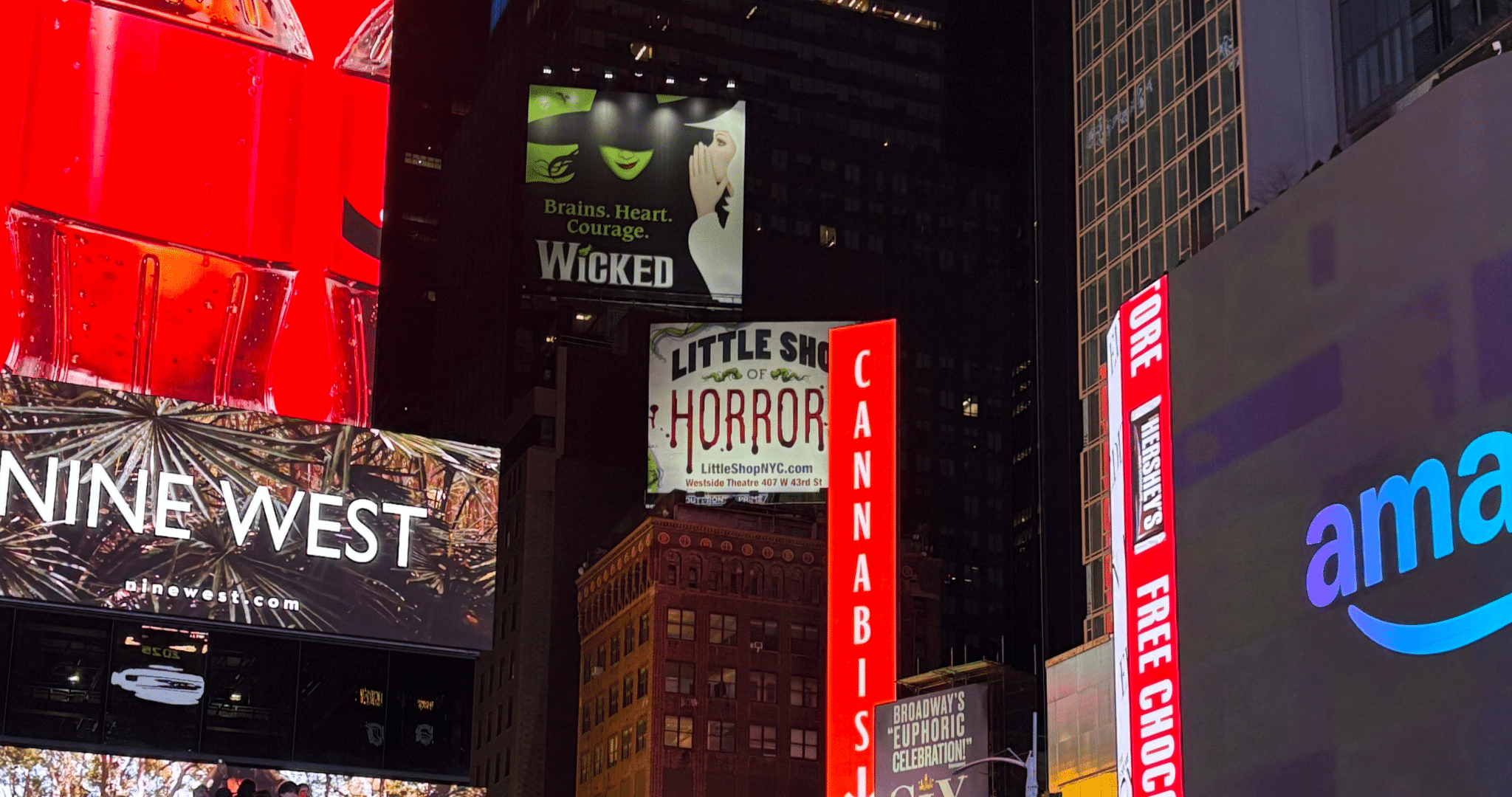
I spent 48 hours (and 48K steps) loafing around NYC for some serious sole searching—where reservations turned into detours, and theater tickets gave way to street scenes. From Broadway lights to Union Square nights (s/o Carrie Bradshaw!), somewhere between a protest and a parade, I realized—this is how you do NYC. And as I peeled off my well-worn shoes and replayed every city-stamped step, I couldn’t help but wonder… can you fall in love with a city the same way you fall in love with a person? (Spoiler: yes—that, and getting lost in this city is the surest way to feel found). Scroll through for some of my fave finds that made the strides worth savoring.
Posh & Prime History and modern day merge with all the necessary creature comforts—and plenty of bougie bonuses to boot—in InterContinental New York Barclay’s posh, ideally located stay, making it just as easy to pop over to the East River, Central Park or Broadway… or just about anywhere your feet will take you. The buzzy Parlour offers a spirited escape just a stumble from your room—or the street—and, pro tip: Unlock the Intercontinental Club privileges—period. Business + social needs, plus unlimited water, wine, beer, breakfast buffet, snacks—it literally pays for itself.
Lore Over Lines A dozen-plus trips to the city later, and—as an SNL and Tonight Show stan—I finally made my way into the Rainbow Room to ogle the lore. Totally worth the effort to sidestep those aimless Rockefeller tourists. But as for the observation deck? Yeah, no… I’m not a “big dumb line” person.
Broadway on Fire This girl is on fire. From grit to glory, Hell’s Kitchen is served as Alicia Keys delivers her Tony-winning truth via this real glimpse into what it means to be raised on the mean New York streets—finding her rhythm to the, ahem, keys to greatness. Among all the star-studded shows I’ve seen—Julia Roberts, Sarah Jessica Parker, Woody Harrelson and Matthew Broderick among them—this one stands out as one of the best, if not the best. Just go. Inside take: You’ll swear Alicia is singing, and mom Jersey (actress Jessica Vosk) steals the show.
Downhome, Dialed Up When they hit me with “y’all” at the door, I knew I’d found the promise land. Every dog has its day, and at this place, with its plated (and pimento) perfection, it’s every day. From homemade Doritos and Ritz crackers (not named that—legal reasons and such) and seriously life-changing pastas, Bird Dog belongs on your must list. Slide in at the OG room (it’s been extended) under the Woof Wall and imagine your own fluffer as a Royal (or don’t imagine and head to The Renaissance Pet for your own fancied frame of Fido). P.S. The bathroom is a neon-drenched dream.
East RiverNew York Public LibraryBlank Street Coffee
Culture Shock Coffee snob mode: activated. Treating the NY streets like a caffeine junkie-fueled scavenger hunt chasing beans across boroughs for the jolt that truly delivered, trust Culture Espresso is where it’s at. WSJ co-signs it—and so do I.
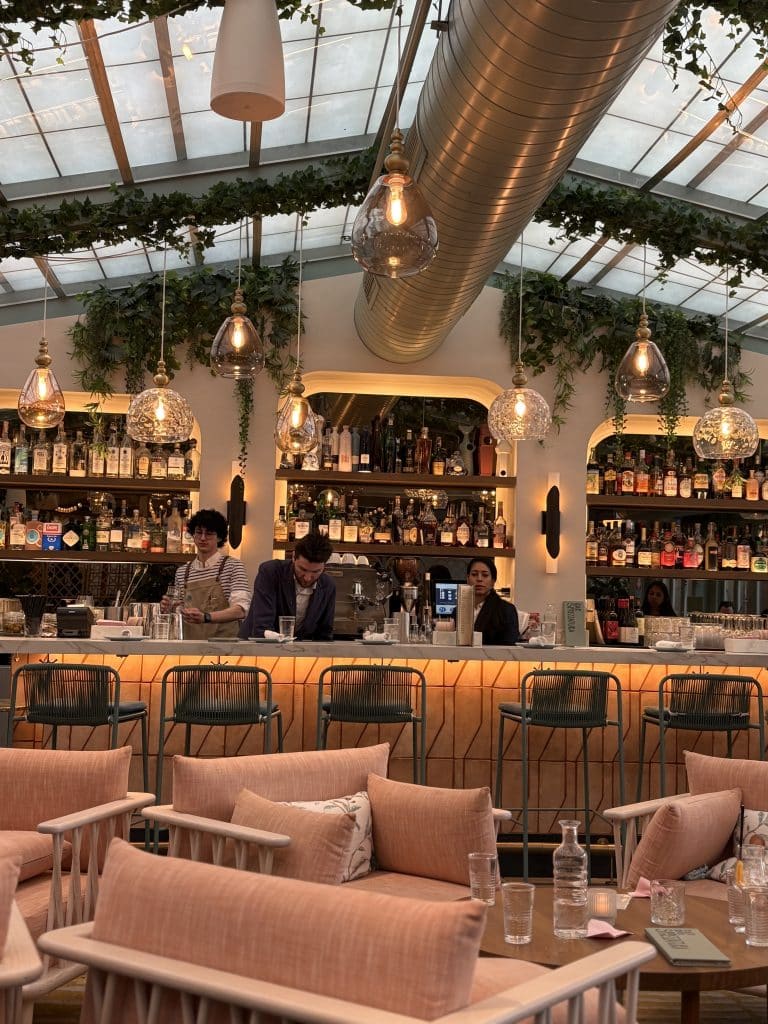
Rooftop Reset Spritz high, snack well, stay golden. Bar Sprezzatura is a mood—and that mood is giving Riviera. Rise above the noise to find a sun-drenched sanctuary with signature sips to elevate your spritz state and a palatable array of cicchetti (aka tapas) to fuel you. As the relative new kid on the block, she’s definitely worth your time, and I’m calling it a keeper.
Words With Weight For an editor, you’d be hard-pressed to top an exhibit celebrating The New Yorker’s literary legacy. But hear me out: New York Public Library is a (Bryant) parkside prose palace carrying words with weight that should absolutely make your bucket list—whether for the exhibit, the history, to get lost in books or marvel at the architecture.
Icon in Green An icon in its own right, Bryant Park is easily one of my faves. Dotted with tables and makers, and tucked beneath the city’s striking skyscrapers, it’s the perfect oasis to meander or sit and stay awhile—whether you’re people-watching, taking in some retail therapy from the rotating markets or sipping some spirits on The Porch at Bryant Park for some peak patio energy.
Tails on Tap Dog days of summer are here, and here for it is Barking Dog NYC. The indoor-outdoor oasis in the heart of Broadway brings major brunch energy—all the bark with the bite (in the best way), whether you find yourself in NYC on the massive patio or at the new vibey North Hills locale this summer. Either way, don’t sleep on the chicken & waffles.
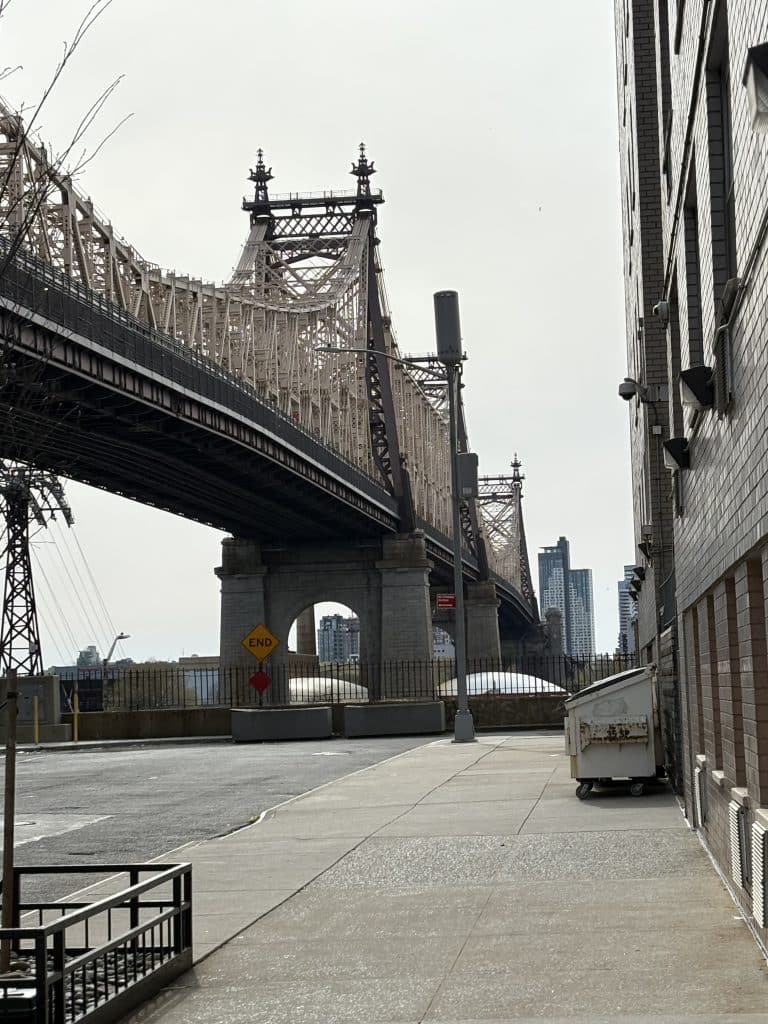
Esplanade Energy East river Esplanade’s been on my NYC bucket list for as long as I can remember—and it didn’t disappoint. A short stroll from Midtown, hit the pedestrian path at 51st and First for a moment of quiet among the chaos—and some serious cinematic views: the water, the skyline and that familiar sliver of freeway frequently splashed across the silver screen. Don’t forget to pause at the benches—those inscriptions carry stories all their own.
Rock the Roof Didn’t make it this time (Broadway ran late, as Broadway does), but I got to visit a few months ago—and my spell at RT60 Rooftop Bar & Lounge on my last visit is still living in my mind rent-free. Think skyline for days, sleek design, plush seating (in winter, they had blankets) and just enough buzz to make it feel like a secret you’re in on. Definitely worth planning ahead—which is precisely what I’m planning for later this year.
Living far beyond the lifespan he was promised, a Raleigh local now faces a different kind of fight—and is using his second chance to help others facing the complex reality of survival and create a life worth living.
If you met 40-year-old Pete Proimos on the street, you’d never guess he was told he wouldn’t make it to 19. Yet here he is. “It’s a huge mindset shift,” he acknowledges. “Going from ‘let me live as long as I can because I’m dying’ to ‘let me live as long as I can because I can—and I want to.’”
It’s hard to hear Proimos recount a life where the simple act of sucking in a breath feels like drowning. Never mind navigating nearly twice as many years as anyone predicted—or planned for. The latter embodies the very significant struggle of the roughly 40K adults, like Proimos, living with cystic fibrosis. But how to live with CF isn’t a blessing—or a problem—any of them expected to have.
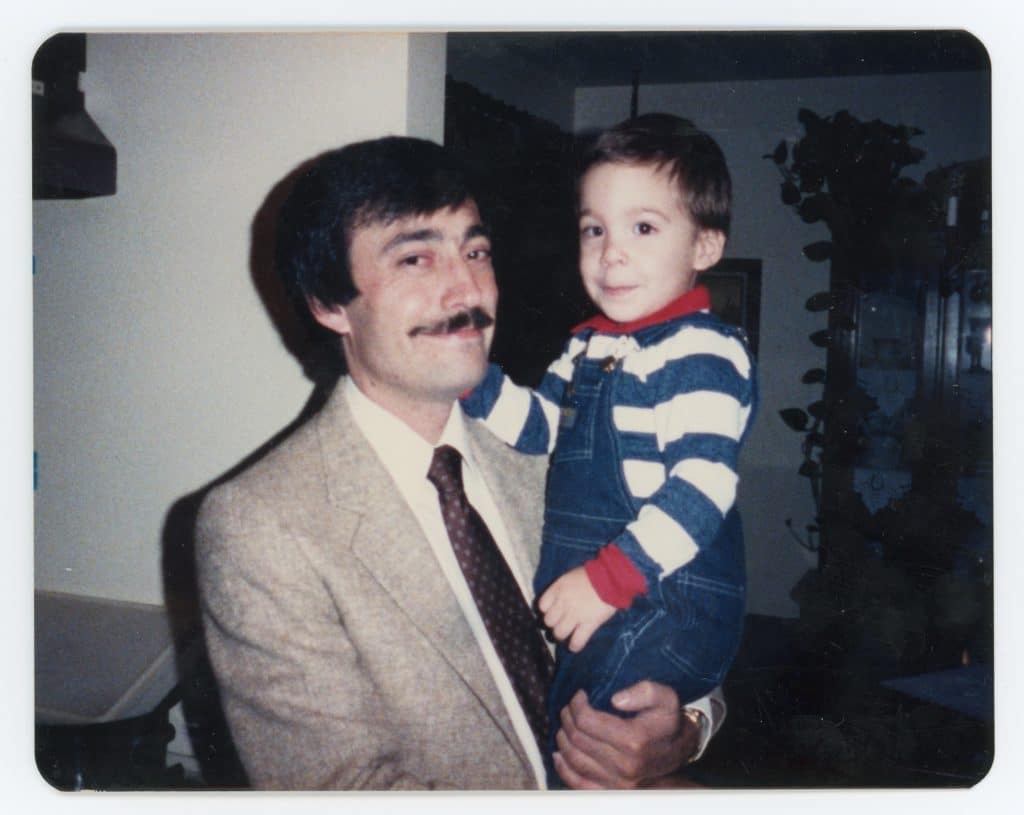
Pete Proimos with his father, courtesy of The Filotimo Foundation
Growing up in Goldsboro as the son of first-generation Greek immigrants, Proimos’ pain wasn’t apparent. Living his CF diagnosis in secret, then dubbed the “child-killing disease,” he didn’t want to be seen as weak or sickly. Raised on grit, his folks navigated meager means, language barriers and a lack of formal education in Gary, Indiana, before relocating here for UNC Health. The poster child for the American dream, his dad would go on to found the biggest manufacturing company in JoCo—and, to passersby, Proimos led a charmed life, but, behind closed doors, every breath was a battle, every day carrying the weight of a ticking clock.
CF affects everything,” he laments. “Besides your mental health, CF attacks your lungs, your pancreas”—any organ with a tube to your throat (read: your stomach, lungs, liver, kidneys)—creating a rampant thick, sticky plug-causing mucus that makes it feel impossible to breathe or effectively get nutrients. Never mind the persistent cough that makes you feel like a walking biohazard exposing everyone to a presumed nasty cold. “It’s really, really hard on the body,” he adds. … “Although we look very healthy on the outside, there’s a war going on inside.”
Now, thanks to modern medicine and advancements to overcome breathing barriers, the projected lifespan of 19 has skyrocketed to 65. But for those, like Proimos, born between 1970 and 1990 who defied expectations to live well into their 30s and 40s, it’s a constant struggle to find purpose and feel whole—to balance gratitude with the realities of financial stability, food and fertility.
The grim reality is those meds come at a premium cost. The very “miracle drug” that fixes defective lung genetics and enables the ability to breathe presents a laundry list of other complications. While, say, 30% lung capacity qualifies for disability, better lung function means that eligibility vanishes. … “How is that?” he insists. “How would that ever be OK?” Add to that any sort of financial independence in a world where you wouldn’t have made plans to go to college or start a family—because presumed dead by 19.
It’s the worst kind of catch-22: struggling to reconcile staying alive when you haven’t been set up to live well. Die without the life-saving medication, or live a life you can’t afford with no sense of purpose. “I never want somebody to think ‘I should get off of medication’ because they need to go back on disability to survive,” he says. “I have to help and support these patients in the middle that are in limbo… in purgatory.”
So he’s made it his personal mission to reach all people born in those two fateful decades to “piss on that,” he asserts. “I don’t care what the program is. I don’t care what the hurdles are. I’ll break it. Every dollar I have personally will go toward fixing this thing that’s broken.” Enter Proimos’ Filotimo Foundation. Embodying the kindness-forward Greek philosophy Filotimo for which it’s named, the organization lives and dies by an MO to do what is right, compassionate and generous, no ego and no strings attached.
Spiritus founders courtesy of Filotimo Foundation
After a pivotal 2022 appointment, Proimos’ doctor introduced him to former CF nonprofit Spiritus, whose founders’ daughter Jessica tragically passed away from CF a decade earlier. Before her passing, Jessica made them promise to care for adults living with CF “because they’re not recognized for the real-life problems they have.” The issue? Lacking the backing it needed to continue, Spiritus was winding down, he recalls. “And I thought, ‘Well, this might be it—this might be why I’m here. I don’t know, but I’m gonna give it a good shot in 2023.’”
On the “healthier side” of CF and with funds to spare, Proimos was—and is—well-positioned to do just that… for now. Except at the jump, no one knew he had CF. “It was tough,” he recalls of how acquaintances or potential foundation partners would react, unaware he was battling a terminal disease since being diagnosed at 5 months old. “‘What the hell? Why is it connected to you?’ And I would say, ‘Oh, I have a family member who has it.’”
Realizing he had hidden for too long, Proimos was 39 when he finally uttered the words aloud. “It was like sparks blew in the person’s eyeballs,” he remembers. “And I was like, ‘Oh, that’s the connection I have to talk about now.’” Now, every time he tells his story, it’s “How can I help?”
Since then, his foundation has flourished, primarily attacking the limbo via two crucial pathways: to financial freedom and to having a family. Already having distributed $400K+ in direct aid—think tuition, rent, mortgage payments, fertility treatments, copays and utility bills—Proimos says hardship assistance and fertility support top the list of needs for the community, accounting for 53% and 47% of every foundation dollar spent, respectively.
Creating a customized pathway to employment and financial independence, ally Wake Tech provides a flexible selection of job training, classes, certifications, licensing and two-year degrees to empower adults living with CF to build a sustainable life at their own pace and in their own community—so they don’t have to remain on disability or sacrifice education and/or health.
And further paving the way to purpose is the foundation’s partnership with Atlantic Reproductive Medicine, tackling CF-related infertility head-on by retrieving sperm otherwise wiped out by congenital bilateral absence of the vas deferens (CBAVD). “That’s the loneliest thing anyone can go through,” bemoans Proimos. “But, with men, the issue of infertility can be 100% fixed with money. The disease can be eliminated just with money.”
Courtesy of Filotimo Foundation
Courtesy of Filotimo Foundation
Courtesy of Filotimo Foundation
Today’s genetic screening takes out the guesswork—if the mother doesn’t carry CF, her child won’t either. If she is a carrier, science steps in—testing sperm and eggs post-retrieval to pick the healthy ones and wipe out CF for good. The groundbreaking approach has already made a tangible impact, as the foundation helped families welcome eight healthy babies last year alone.
Rounding out the promising partnerships is UNC Health—the very place that inspired Proimos’ childhood migration to the Triangle. “The doctors and the social workers have not only kept me alive, they’ve supported me in adulthood in a way that maybe family couldn’t. They’ve really helped me understand my health and who I am as a person on this journey of starting and having a family.”
While Proimos is rightfully proud of the pathways the foundation has paved, he has his sights set much further down the road: “I hope—and I’m manifesting—one day people from around the country will come to partner with us and they’ll need to come to Raleigh, North Carolina, to do so,” he muses of making the Filotimo Foundation the national leader in adult cystic fibrosis support. “Raleigh is the roots and it will always be the roots.”
And he doesn’t need anyone’s money. “My whole background has been in the automotive world,” he explains. “We had two really nice liquidity events that have supported this foundation for the last two years, and we’ll continue to do so. What I need is to get awareness out so we can help those 40,000 patients in the U.S. who are adults with CF as fast and efficiently as possible.” And time is of the essence. While 65 is miles down the road, the clock is ticking for quality of life, giving him roughly six years of viability. It all hinges on sparking conversations and driving partnerships that could wipe out this disease. For too long, CF has been left out of the conversation. That is, until now.
Pete Proimos with his family, courtesy of the Filotimo Foundation
More of your paycheck is about to drip into your morning mug.
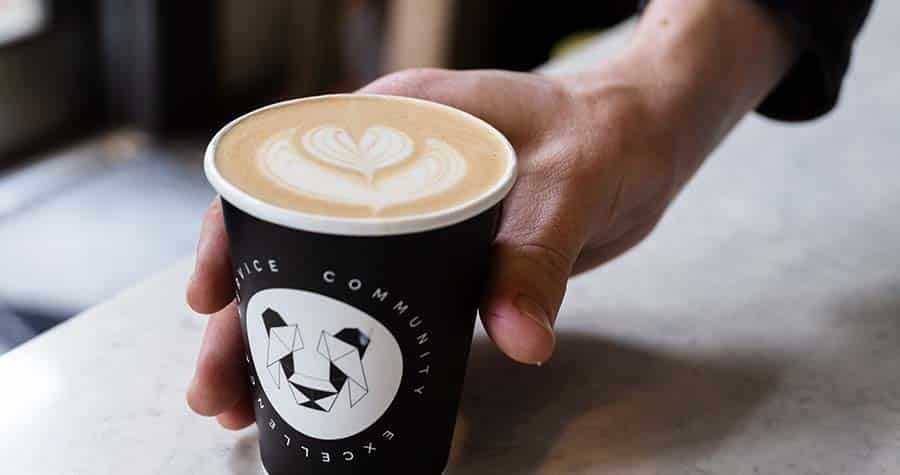
If the best part of waking up is Folgers in your cup, you may now be able to better justify swapping that morning grocery-brand grind for a latte by your local barista. To put it bluntly: Coffee is facing a crisis and the economic grind is real—especially for base-level brands. So, if you’re grabbing a bag off the grocery shelf, the bitter reality is coffee could be the new egg.
It all begins with the market—and, no, this isn’t about tariffs (yet). The C market price—think kind of like the stock market—for commodity coffee (read: Folgers, Dunkin’, Starbucks and the like) has more than doubled, skyrocketing to as high as $4.40 per pound, up from a previous low of ~$1.44 and sitting around $3.62 at press time. While that price hike is more jolting than the quad-shot you order on repeat, it’s the instability in the supply chain that’s fueling the surge.
Thanks to climate change, waning crops and trade issues, says Giorgios Epicurean Market opening Coffee Team Lead Eric Turner, import prices are soaring—and nearly everyone in the coffee supply chain will be feeling the pressure, from roasters to everyday drinkers.
Photo by Jenn Hall Sweatte, courtesy of Black & White Coffee Roasters
“It’s a boiling mess” chimes Black & White Coffee Roasters Director Kyle Ramage, an industry expert in his own right. The mass market is “where it’s really biting people right now,” adds the longtime brewer and a 2017 U.S. Coffee Champion, noting players like Folgers, Maxwell House and Starbucks are seeing astronomical price jumps of 300 to 400%—thus shortening the gap between those brews and premium barista blends.
Despite global pressures, when those big-brand commodity coffees spiked to a historic high, green coffees (coffee that’s imported before it’s roasted) only inched up slightly. “So, the market just kind of compressed,” he says. Adds Jubala Director of Operations Shane Hess, “It’s forcing people like your Folgers, and to some extent Starbucks, who now have a quality problem, to beat our competitive prices—and they can’t compare to what we’re able to do.” Basically, the grocery grinds just jumped to where the local cafe blends have always been.
The difference on which hits your wallet the hardest rests in the fact that premium roasters are better positioned to weather the brewing storm. “Some of the bigger boutique brands have already been raising their prices for the past year or two—I’ve paid $30 for a 4-oz. bag of Monks,” says Turner. Even market heavyweights like Joe Van Gogh and Counter Culture—the latter of which roasts ~4 million pounds per year—have seen price bumps of as much as $1.50 to $3.50 per pound.
The issue comes down to panic buying versus timing for roasters who lock in prices years in advance to avoid market volatility. That said, adding insult to injury, even some producers who have inked contracts are eyeing fivefold profits elsewhere and backing out—and there’s not a lot of recourse if they turn around and sell to someone in, say, Brazil or Colombia with totally different laws from the U.S., explains Ramage, since you can’t really chase them through international courts.
But navigating that market movement, he maintains, is what’s behind the supply and demand shift, “causing a bunch of roasters—meaning the whole market, from Starbucks to us—to not contract forward because the prices were high and, historically, it should come down later. We thought, ‘We’ll just wait.’” And, as you’d have it, he adds, unbeknownst to everyone, everyone waited—making for a super-long supply and, subsequently, super-high demand.
For its part, though, Black & White has been able to remain somewhat insulated by riding the market. “Four dollars is about what we were already paying on average for coffee,” he says, noting they’re still seeing a 75-cent to dollar uptick per pound. “We started noticing prices were creeping up around the middle of last year and already raised our prices by about a dollar, so they shouldn’t change much again.”
When looking at navigating a price increase like this, says Hess, who has also put NC on the world map via the U.S. Barista Championship, it’s a constant problem. “From our vantage point, prices fluctuate all the time,” he notes, nodding to this year’s now-dropping egg prices after what was their fourth go-round with the bird flu. “We don’t want to gouge our customers because we are being gouged by the industry. The hallmark of Jubala is to move very methodically and intentionally.”
For its part, Jubala has been able to pivot by running through contracts inked pre-inflation without any hiccups—and relying on its robust food program. But the fear is green coffee pricing once tariffs hit or climate change continues, laments Hess.
Photo courtesy of GEM
While local latte lovers look to be dodging a bullet—for now—ultimately, no one is truly safe. “When there’s instability, there’s more risk,” sums Ramage. “And when there’s more risk, inherently, there’s going to be more cost. So how is this going to affect a cup of coffee to the normal consumer, right? Whether they’re specialty sippers or Folgers drinkers or whatever, everyone’s prices are gonna go up. They are 100% going to go up.” The question is how much?
As the summer progresses, the pressure will likely intensify—and that budget coffee you’re drinking today may cost twice as much by the end of the year, meaning the cheapest options could, ironically, become a rare luxury. What it boils down to is a pretty bitter sip to swallow: The coffee world is in crisis, and as much as we’d like to hope for a reversal, we’re likely brewing up an expensive storm that’s only going to get worse before it gets better.
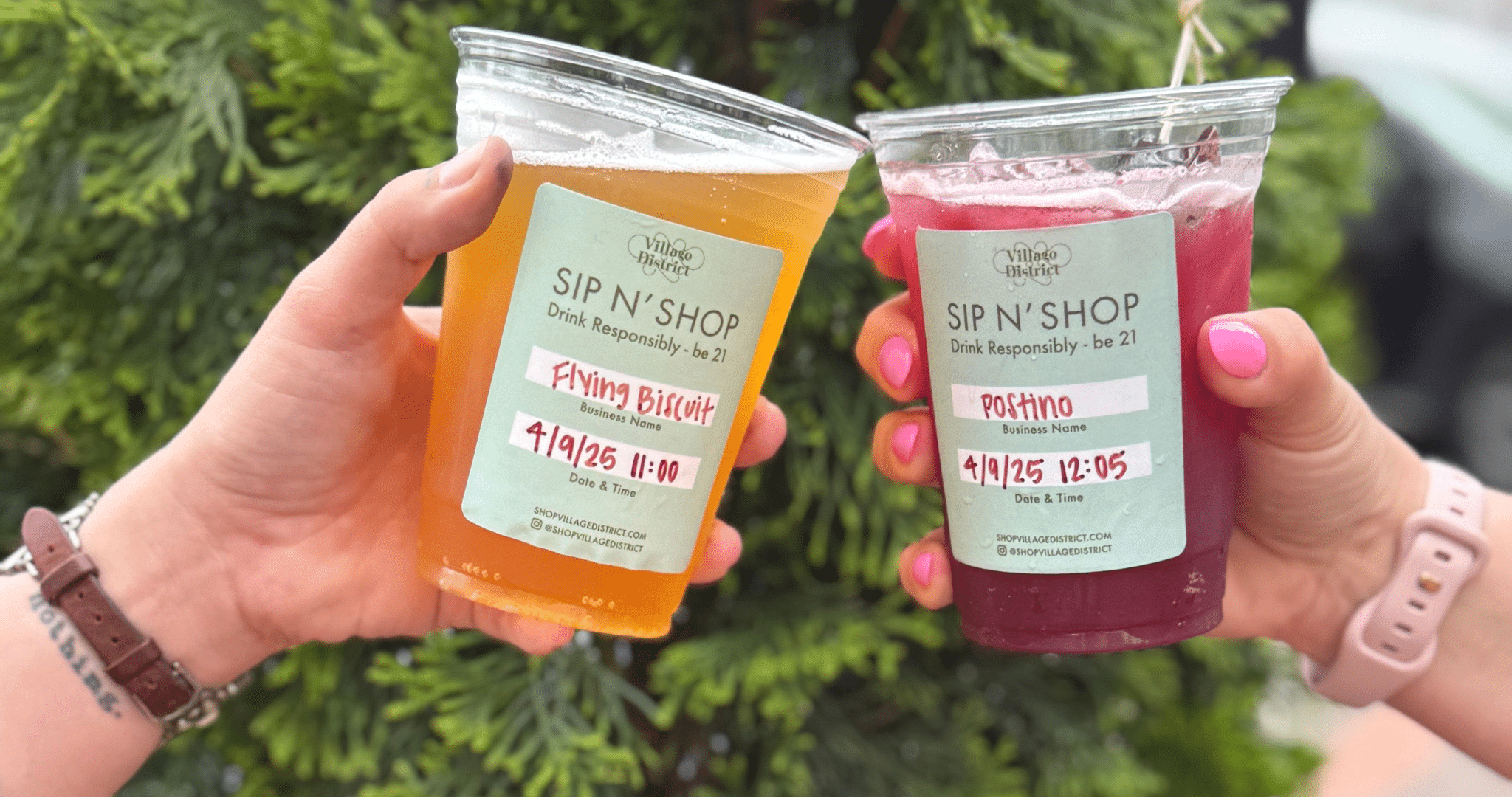
Starting April 9, at noon, you can now sip while you shop! Village District is rolling out its distinct Sip n’ Shop program, made possible through a Common Area Entertainment permit via the ABC Commission—so you can sip on bevs from any of eight participating tenants as you stroll about the designated portion of the District and pop in and out of stores (Note: unlike Raleigh’s Sip ‘n Stroll zones, you can’t cross public streets—so stick to the area anchored by Cantina 18, Sephora, Piccola, etc.). Scroll through the boundaries and guidelines below and stay tuned to our upcoming issue for more.
🍹Must be 21+ to participate 🍹Sip n’ Shop boundaries: Daniels, Clark, Woodburn, Cameron 🍹Hours: 11am–11pm daily 🍹Sip n’ Shop beverages must be consumed before exiting the permitted district 🍹Similar to the DTR program, patrons must drink from cups demarcated with a Sip n’ Shop sticker 🍹Cups will be timestamped for a two-hour time limit per beverage 🍹District tenants will each be marked as “sold here,“ “welcome here” or “not permitted here” 🍹Regency Centers is applying a range of enhancements, including ABC-certified staff training, online educational resources and additional waste and recycling receptacles.
SOLD HERE (Navy Sticker) 🍺 Ajisai 🍺 Cape Fear Seafood Company 🍺 Cantina 18 🍺 The Flying Biscuit Cafe 🍺 Piccola Italia 🍺 Postino 🍺 Shake Shack 🍺 winestore.
WELCOME HERE (Green Sticker) 🛍️ Alton Lane 🛍️ Arrow 🛍️ Ballard Designs 🛍️ Bassett Furniture 🛍️ Copper Penny 🛍️ fab’rik 🛍️ Great Outdoor Provision Co. 🛍️ If It’s Paper 🛍️ Light Years Jewelry 🛍️ Kannon’s Men 🛍️ Madison 🛍️ Nest Interiors 🛍️ Noodles & Company 🛍️ Onward Reserve 🛍️ Opulence of Southern Pines & Duxiana 🛍️ Sephora 🛍️ The Shade Store 🛍️ Steven Shell Living 🛍️ Tiff’s Treats 🛍️ Tin Roof Teas 🛍️ Uniquities 🛍️ Woof Gang Bakery
NOT PERMITTED HERE (Tan Sticker) 🚫 Bailey’s Fine Jewelry 🚫 Barnes & Noble 🚫 Cava 🚫 Cheshire Cat 🚫 Chopt 🚫 Corepower Yoga 🚫 Goodberry’s 🚫 Goodnights Comedy Club 🚫 Kannon’s Women 🚫 Rowan 🚫 Starbucks 🚫 Village Draft House