Who’s running—and what to know before you vote Nov. 3.
Election season is officially upon us—and this time, Raleigh’s ballot carries some serious weight.
The rules are shifting, the terms are changing, and the outcomes will stick. So to cut through the noise of yard signs and campaign mailers flooding your mailbox, inbox and phone, we’re breaking down who’s running, what’s changing and why it actually matters.
On Nov. 3, voters will choose a mayor and City Council members who will help steer a rapidly growing Raleigh through some of its biggest questions: housing and development, public safety, transit, Downtown’s future, and more.
And some of those choices will stick around longer than Raleigh voters are used to: Raleigh is moving to four-year staggered terms for mayor and City Council (see sidebar), with half of the council seats expiring every two years. Also vying for your vote: $203 million in proposed housing and transportation bonds. Voters will weigh two $101.5 million measures—which the city says can be issued without an additional property-tax increase—putting even more of the city’s future directly in voters’ hands.
So, yes, local elections matter—a lot. Before you head to the polls, we’re making the homework easy. Here’s your district-by-district snapshot of who’s running—and everything else you need to know to cast your ballot. See you at the polls, Raleigh.
Election day: Tue., Nov. 3, 6:30am—7:30pm, at your assigned polling place
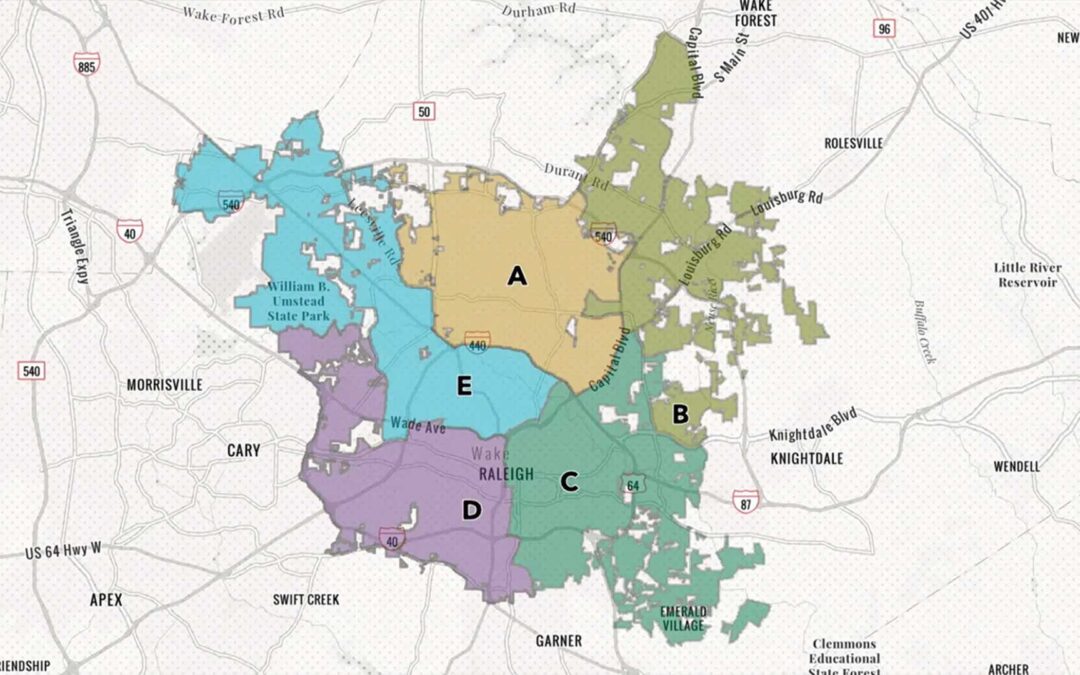
New Ballot, New Terms 4-year terms: Mayor, Districts A & B and the top-finishing at-large candidate
2-year terms: Districts C, D & E and the second-finishing at-large candidate, before moving to four-year terms in 2028
Show Face:
Accepted photo ID: driver’s license, student ID, state ID card, passport, tribal enrollment card or government ID. The address on the ID doesn’t have to match voter registration records.
You can still vote by filling out an ID Exception Form or taking valid photo ID to WCBE by noon on the third business day following Election Day.
Voting by mail? That too—a photocopy + the Absentee Photo ID Exception Form provided with your absentee ballot materials.
Find My District: Not sure which district you live in? We’ve got you covered. Type in your address here, where it says “Find Your Council Member and District.”
Ballot Preview: Want to preview your ballot? Registered voters can enter name/birth year here to search voter details, including jurisdictions, polling place, sample ballot when available, absentee ballot information and voter history. See the sample ballot for District E below.
DTR’s newest neighborhood bar is low on pretense and high on life.
You’ve officially got friends in low places—literally. And that’s exactly the point of DTR’s newest downstairs watering hole, Low Bar.
Opening Oct. 15 in the former IMURJ space beneath Whiskey Kitchen, the “neighborhood bar” from WK co-owners Jeff Mickel and Michael Thor is a throwback to a particular kind of bar—and a particular kind of bar night—that used to define Raleigh: a place you just went.
“Part of me would love to recreate that energy,” Mickel says of his early aughts Flying Saucer days. “You just showed up there. … It almost didn’t matter if your friends were there.”
And Low Bar is, in a lot of ways, a throwback to that experience—not the era. There’s no ’90s cosplay here. It’s nostalgic, not vintage—a direct nod to a time and a way of going out Mickel actually lived.
Even the term “neighborhood bar” isn’t random. It’s not a speakeasy. It’s not a dive. It’s not a sports bar. You don’t need a password, a reservation or a key. You don’t need trivia or theme nights—or even much of a reason—to go. You just go. And chances are, someone you know—or someone you’re about to—is already there.
“We wanted a basic bar,” Mickel says. “You’re not going because you have to see the game. … You’re coming to meet people and connect with people”—the kind of place where, as Mickel puts it, “the Downtown construction worker and the lawyer from across the street” can sit shoulder to shoulder.
And the bar’s vibe is a manifestation of those accidental friendships. Case in point: Low Bar designer and collaborator Antoine Ponton—whose portfolio includes the OG High Horse—forged a fateful friendship with Mickel after sidling up to his bar 20 years ago. The origin story is almost too on the nose: Newly moved to DTR, Ponton wandered into Saucer, took a seat at Mickel’s bar—and, well, you get it.
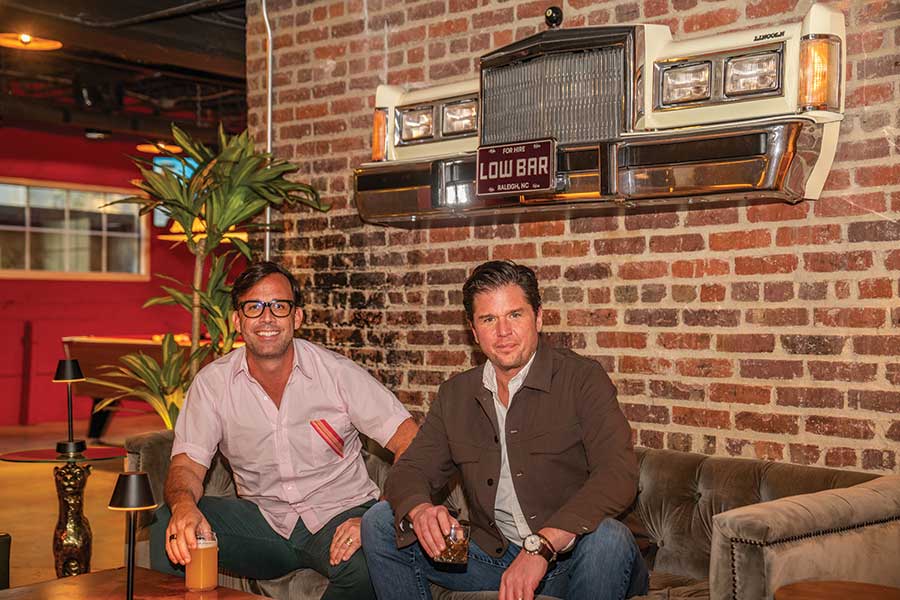
LOW DOWN: Serving the nostalgia of your uncle’s basement—but make it basement-chic—designer and collaborator Antoine Ponton (left) and Whiskey Kitchen co-owners Jeff Mickel (right) and Michael Thor channel Raleigh’s OG bar culture via exposed brick, mismatched furniture and an ’80s Lincoln limo. Photo by Sean Junqueira
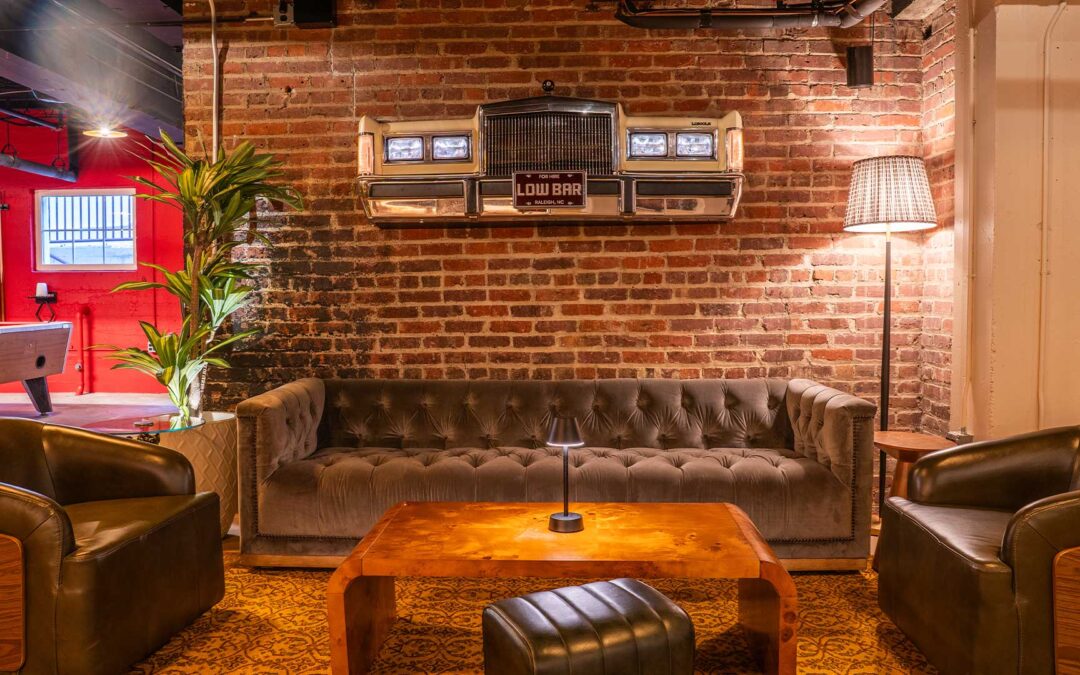
That lived-in ease carries across mismatched furniture, exposed brick, mirrors, tufted banquettes and a free old-school push-quarter pool table—all channeling your fun uncle’s basement, says Ponton. Think if the OG Father & Sons on Hargett was a Cheers-esque bar—but make it basement chic.
Even the furniture has an agenda: “That’s why we chose to do all bar-height stuff,” says Mickel, “so people can walk around and talk to each other at eye level.”
Then there’s the front end of an ’80s Lincoln limo mounted to the wall—a nod to the limo company that once operated out of the building. And, setting the vibe, it’s not just any limo: While Cadillacs were for “important things like funerals and dignitaries,” says Mickel, “Lincolns were for partying.”
Naturally, because it’s a bar—there will be booze. Expect well-made, ~spirited~ ’tails with a slight Tiki lean (just no umbrellas and shrunken-head mugs), plus a bigger focus on THC bevs. But like its sibling upstairs, Low Bar won’t take itself too seriously—if anything, it’ll be seriously unserious, if you will. Just as WK can stock rare whiskies and still be a place you roll into on a Tuesday. Same DNA, totally different bar.
And it’s bucking trends in the best way. “There are a lot of stories about another restaurant or another bar closing,” says Ponton. “It’s just wonderful to see a fantastic business that’s not only celebrating a decade Downtown and being part of the community—but also doubling down, expanding and growing.”
Which is the ultimate throwback: the belief that the bar itself can still be the draw. No gimmick, no agenda, just come as you are. And who knows—you might just make a friend in a low place. It’s core Raleigh in Raleigh’s core.
When we first dropped our story on kratom five years ago, it broke the internet. Beyond going viral, the story elicited a mixed bag of divisive reactions—from those who had witnessed kratom abuse firsthand to advocates and users who claimed the substance had literally saved their lives.
Now “herbal heroin” is back in the headlines—in the worst fashion—news of particular interest locally as neon “kratom” signs dot vape shop windows the city over.
Last week, authorities in Oxford, Mississippi, issued a public warning after packaged kratom was found during separate investigations into the deaths of two Ole Miss students. To be clear: Officials have not determined kratom—or any substance—contributed to either death, and toxicology results remain pending.
Days later, authorities raided an Oxford smoke shop and seized more than 500 units of kratom, along with THC products and other suspected narcotics. The kicker? Kratom is already illegal within Oxford city limits.
The warning lands amid a much bigger shift.
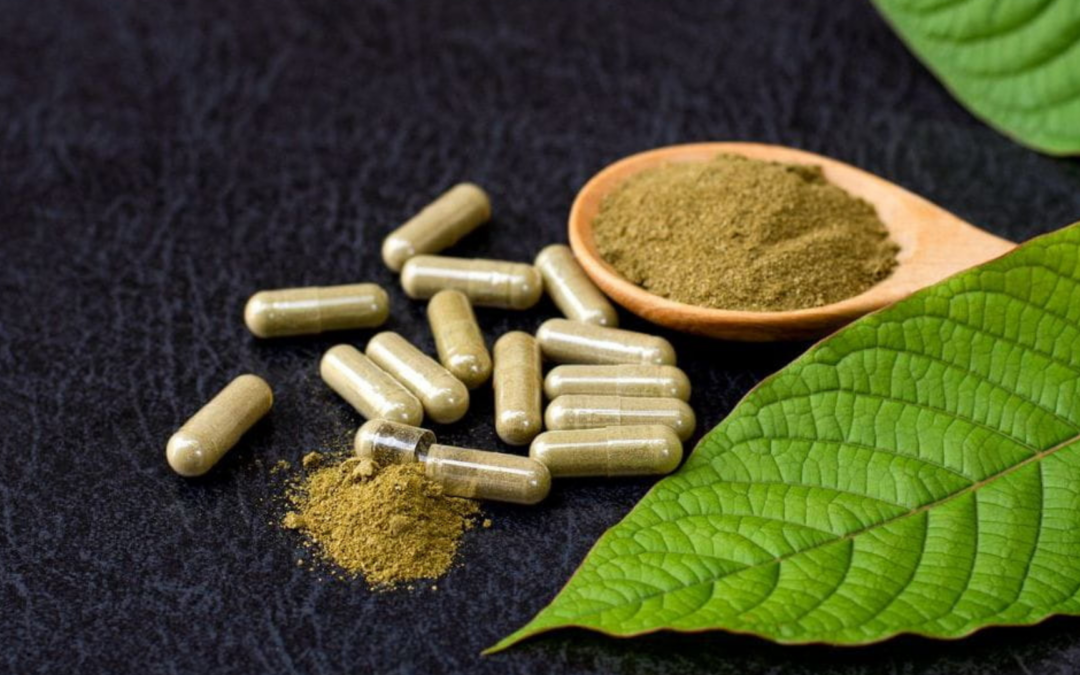
For a quick refresh: Kratom comes from the leaves of a Southeast Asian tree and contains psychoactive compounds that interact with opioid receptors (hence, “herbal heroin”). For years, people have used it recreationally, for pain and as an alternative to opioids—including to ease opioid withdrawal.
And therein lies the rub. When we first reported on kratom, Duke University addiction psychiatrist Dr. Paolo Mannelli told RM he had seen kratom use evolve into abuse—and had treated patients for kratom dependence with buprenorphine, the same medication commonly used to treat opioid-use disorder.
“So kratom is, I’d say, a reasonable drug to avoid because it doesn’t give you any safer alternative for treatment than any opioid,” Mannelli told us.
Five years later, the numbers aren’t exactly trending in the right direction. Kratom-related reports to U.S. poison centers reached a record 3,434 in 2025—up roughly 1,200% from just 258 in 2015. Hospitalizations associated with single-substance kratom exposures likewise jumped from 43 in 2015 to 538 in 2025.
But there’s an important caveat: Kratom doesn’t always act alone. Of 233 kratom-associated deaths reported to poison centers between 2015 and 2025, 79% involved multiple substances. Among those fatalities, opioids were involved in 62%, followed by benzodiazepines and stimulants at 20% each and alcohol at 19%.
And there’s another, separate major wrinkle that barely existed when we first sounded the alarm: 7-OH. Short for 7-hydroxymitragynine, 7-OH is one of kratom’s naturally occurring compounds—and one we actually told you about back in 2021. What’s changed is what’s on shelves. While 7-OH occurs naturally only in trace amounts in kratom leaves, highly concentrated or enhanced versions are now being sold in tablets, gummies, shots and drink mixes online and at smoke shops and gas stations.
The FDA is increasingly drawing a distinction between those products and traditional kratom leaf, warning consumers to avoid concentrated 7-OH products, which it describes as potent opioid products that have not been proven safe or effective for any use.
And federal regulators are coming for them. In July, the DEA began the process of temporarily placing concentrated 7-OH above a specified threshold—along with three related synthetic substances—into Schedule I. By Aug. 26, those three synthetics had officially been placed temporarily into Schedule I; the proposed action on 7-OH itself remains pending and would target concentrations above a specified threshold—not natural kratom leaf containing trace amounts of the compound.
Here in NC, meanwhile, kratom remains legal—and lawmakers are still wrestling with how to regulate it. A bill currently sitting in the House Rules Committee would prohibit the sale or possession of kratom products by anyone under 21, alongside similar restrictions for hemp-derived consumables.
So, five years, thousands of poison-center calls and a new generation of concentrated products later, the debate that blew up our inbox in 2021 isn’t exactly settled.
But one thing is clear: This isn’t quite the same kratom story we told five years ago.
KRATOM BY THE NUMBERS
14,449 Kratom-related exposure reports to U.S. poison centers from 2015–2025.
3,434 Reports in 2025 alone—a record high and roughly 1,200% jump from 2015.
1,087 Hospitalizations involving kratom exposures in 2025—538 single-substance and 549 involving multiple substances.
233 Kratom-associated deaths reported to poison centers from 2015–2025.
79% Of those deaths involved multiple substances.
62% Of kratom-associated fatalities involved opioids.
If summer is burnout’s (ironic) cooldown, September is the main event. Work ramps up; school is back in session; football weekends return. Rinse, wash, repeat. And lurking in the not so distant future, here comes Santa Claus, right down Santa Claus lane… dragging a sleigh full of holiday happenings and year-end deadlines behind him.
artm.creator/shutterstock.com
The result? Calendars packed with obligations, opportunities and just enough social guilt to make saying “no” feel like a war crime (looking at you, “quick call?”). While most productivity hacks focus on how AI can optimize your life—doing more, faster—increasingly, people are using those tools for the opposite reason. Read: Work smarter, not harder.
Think of AI less as a personal assistant and more as a neutral third party—one that can look at your week and tell you what your friends, coworkers and inner overachiever (*raises hand*) simply won’t: Something has to give. And it shouldn’t be your sanity.
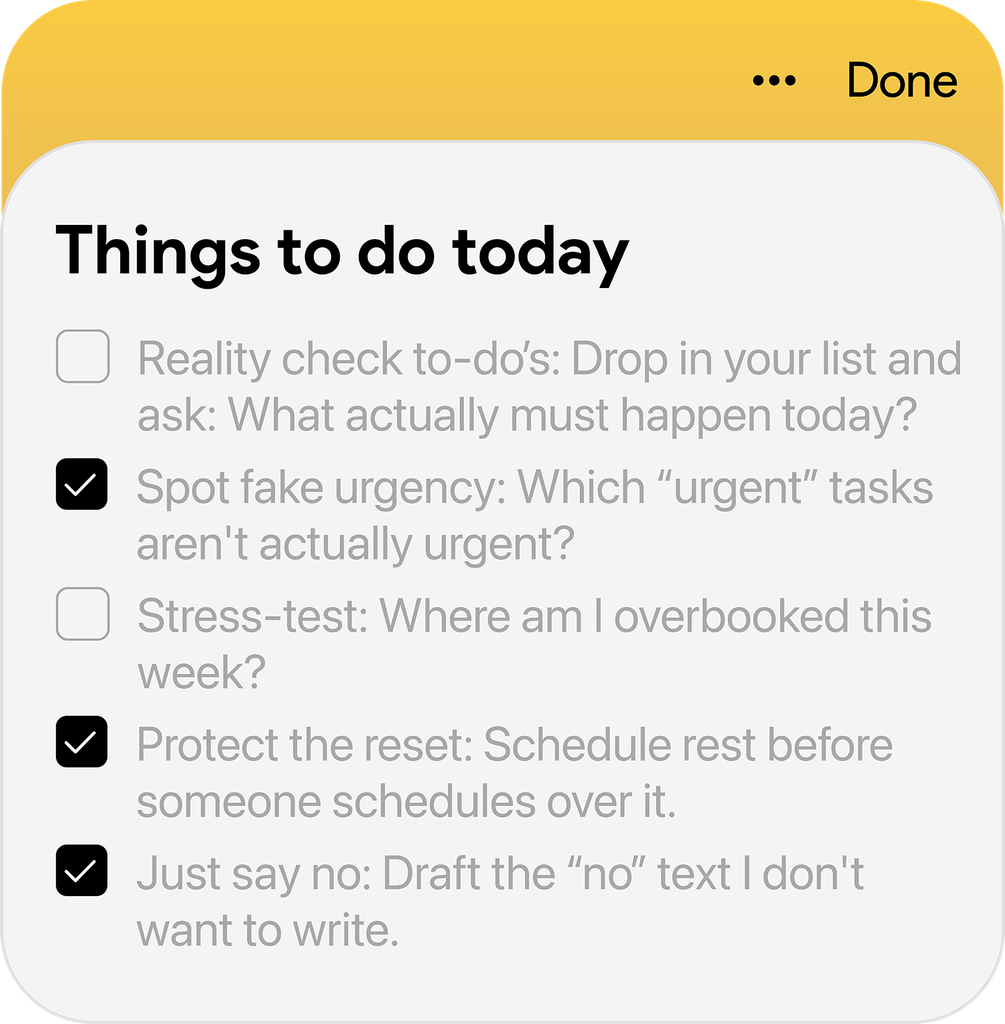
Translation: Dump your week’s calendar chaos and to-do lists into ChatGPT and ask, “What am I realistically getting done here?” Then watch it prioritize tasks, flag overload points and/or build a more realistic schedule.
In other words, it’s the ultimate boundary tool, helping you figure out what actually has to happen today, rebalancing a chaotic week, creating a realistic weekend reset or even helping you figure out when to throw down a “no” without guilt.
The irony? The most useful thing AI may do isn’t helping you squeeze more efficiency into a packed cal—it’s helping you realize your calendar was full enough already. Think of it as a permission slip, second only to that sacred Hall Pass with your SO. Here, how leaning on AI can help you reclaim a little breathing room before pumpkin-spice season comes for us all.
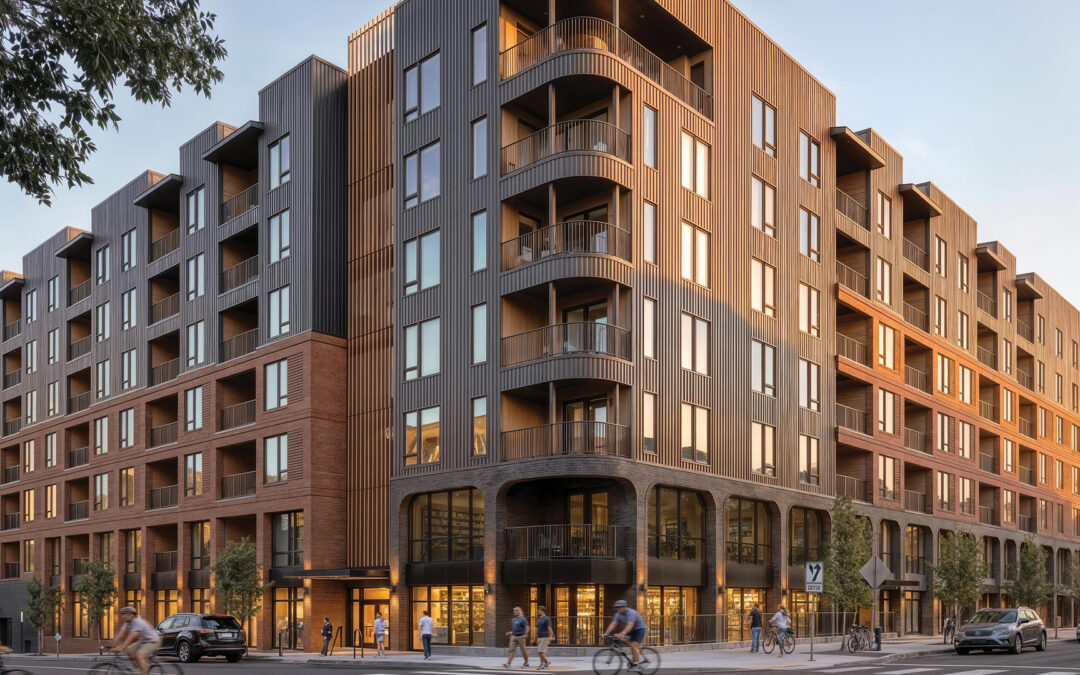
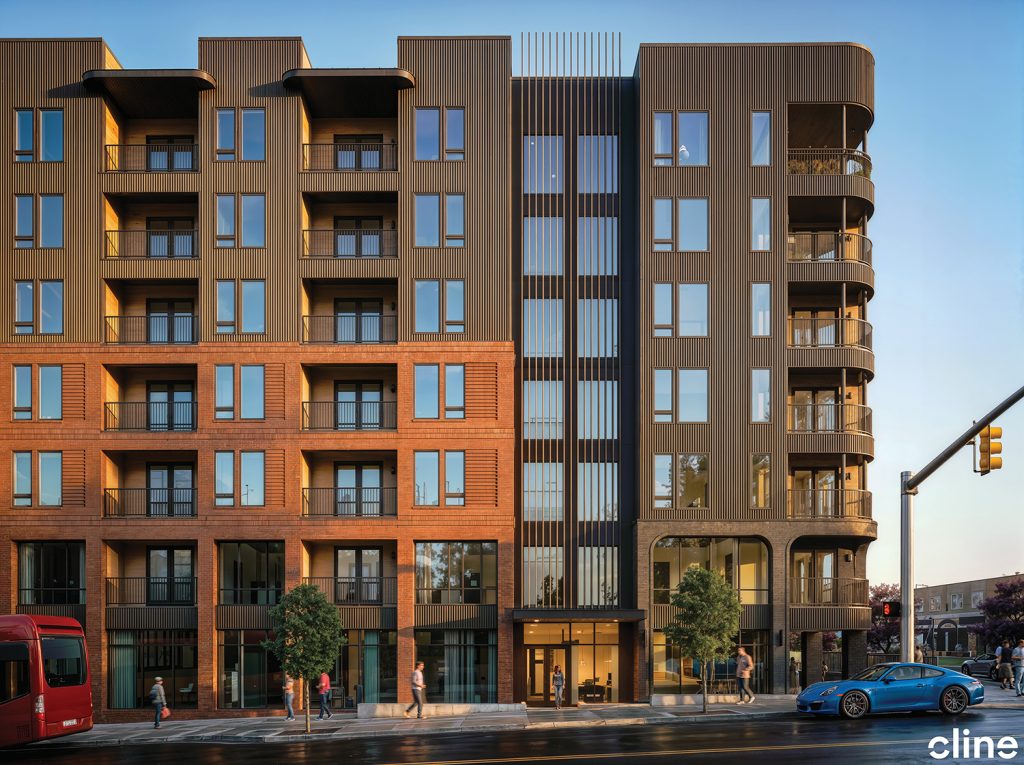
Boylan Heights is getting a luxury upgrade. Enter Rosewood, a mixed-use lifestyle community by Blue Heron and NC-based Cline that broke ground this summer between the historic neighborhood and Dix Park. Spanning two buildings, the high-end project will pair 269 rental residences with retail, a central public plaza and resort-style amenities—from a rooftop terrace to a sauna and cold plunge suite and even a concealed speakeasy tucked within. But Rosewood isn’t just bringing the luxe life to one of Raleigh’s fastest-growing pockets. Once complete, the project will help stitch together Downtown, Dix Park and the city’s ever-expanding greenway network—putting residents within steps of some of Raleigh’s biggest draws.