Maya Freelon’s Grounded exhibit brings generations of art, architecture and music together at the Gregg Museum—inside a building her father helped shape.
The Gregg Museum of Art & Design is going full Freelon—showcasing a family that runs deep with artistic, architectural and musical talent.
At the center is Grounded, artist-in-residence Maya Freelon’s newly opened retrospective, featuring immersive installations and works spanning more than two decades of her career, while pieces by her father and great-grandfather stretch the story across generations—with some elements even spilling beyond the galleries.
The setting could hardly be more fitting. Maya’s father, the late architect Phil Freelon—who also served as principal architect for the Smithsonian’s National Museum of African American History and Culture—led the team behind the Gregg’s 2017 renovation and expansion. In other words, Grounded is unfolding inside a space her father literally helped create.
“I just feel really great about being in a space and transforming the space,” says Maya, who grew up in Durham and later taught at NC State’s College of Design. The transformation starts with the material most associated with her work: tissue paper.
While in graduate school, Maya found a stack of tissue paper in her grandmother’s basement that had been stained by a water leak. Her grandmother had saved it for her. “When I found it, she said she was saving it for me,” recalls Maya. “How did she know to do that?”
Since then, that delicate material has become the foundation for vibrant, layered works that have carried Maya through exhibitions across the country. Grounded brings those pieces together with photography, paintings and new installations, tracing a practice shaped by family, memory, loss, healing and transformation.
One of the earliest works is a small painting Maya made for her grandmother when she was around 8 or 9, which will be displayed alongside photography, paintings, and vibrant larger-than-life layered tissue paper sculptures. Other pieces in the exhibit by her father Phil and great-grandfather Allan Freelon Sr. widen that personal history, while Maya’s newest installations bring it squarely into the present.
At the Gregg, the family timeline has an unusually resonant backdrop. While designing the building, Phil looked to the museum’s textile and weaving collection for inspiration, architect Kenneth Luker later told Museum Director Sara Segerlin—including for the banding that wraps its exterior.
For an exhibition built around Maya’s billowing layers of tissue paper, the connection feels almost uncanny.
For her part, Segerlin first began envisioning what would become Grounded at the Gregg—a season of four exhibitions anchored by Maya’s retrospective—nearly two years ago while talking with students, faculty and Raleigh community members about what they wanted from the museum. Meeting Maya—and learning more about a practice rooted in family, grief, healing and connection—gave that idea its center.
“That’s really where I recognized the Gregg Museum can be a place that grounds people,” maintains Segerlin.
For Curatorial Assistant Meredith Osborne, the hope is that Raleigh visitors see something familiar in those stories. “I wanted the community to see themselves or someone they knew, or just learn something about the area they’re immersed in,” she says.
The museum extends the opportunity to participate too. Visitors can add to a tissue-paper quilt that will grow in the gallery over time. Maya leads a guided tour and meditation Oct. 29, while NC State’s Panoramic Dance Project brings new choreography into the museum for the Nov. 7 opening celebration.
For one season, the Gregg becomes something of a Freelon family portrait in motion: Phil’s architecture surrounding Maya’s work, Allan Sr.’s paintings hanging in the galleries, and Nnenna and Pierce filling the space with music.
“The whole family, coming together and sharing their talents—it’s really a dream come true,” Maya says. And for Raleigh, it gives one of Hillsborough Street’s most distinctive spaces good reason for another look.
DWR’s Rick Grogan on five modern icons worth knowing
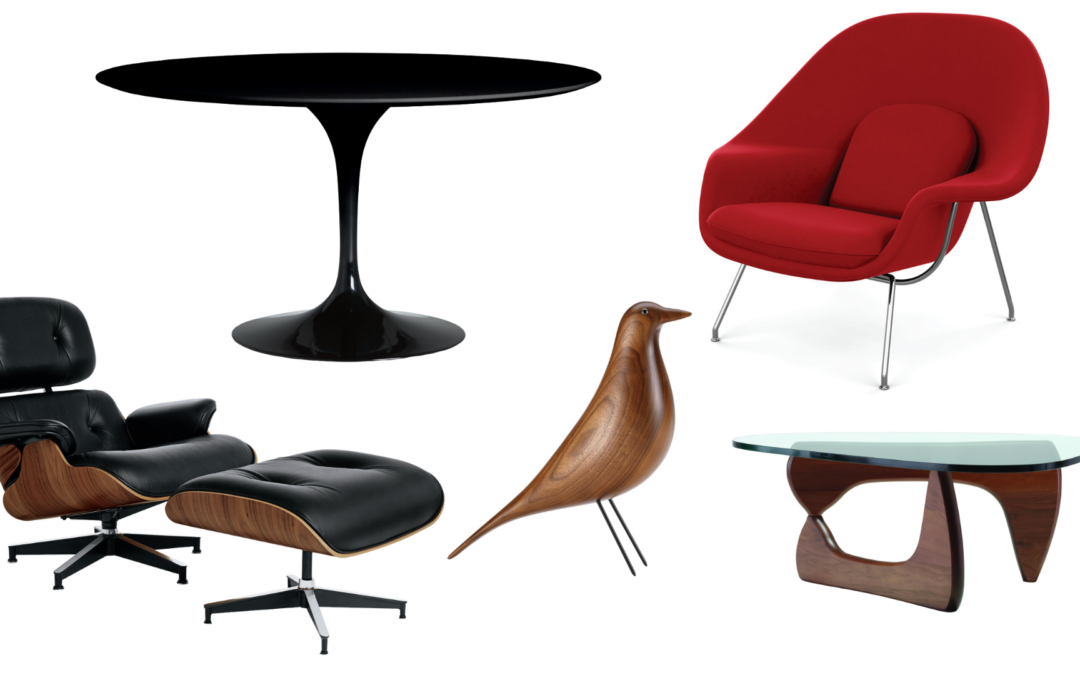
One of modern furniture’s biggest names has officially put down roots in Raleigh. Design Within Reach opened its North Hills location in August, delivering its first Triangle studio—and only its second NC outpost—with a showroom packed with design heavy-hitters like Herman Miller, Knoll and beyond. At the helm is studio manager Rick Grogan, a 28-year furniture industry vet who spent 14 years running his own logistics company before moving into retail and leading DWR’s Charlotte team for the past six years. For Grogan, great modern design comes down to a mix of legacy, personality and livability—pieces made not just to admire, but to actually live with. “I’m not the expert,” he jokes, “but I’m definitely a library.” And his preference? Pieces he calls “past, present and future heirlooms”—designs that shaped modernism yet still feel right at home today. Here, five modern icons Grogan thinks every design lover should know.
Eames Lounge Chair + Ottoman If modern furniture had a hall of fame, this one would be first on the ballot. Charles and Ray Eames introduced the Lounge Chair and Ottoman in 1956, pairing molded wood with sink-in comfort in a design that’s remained in continuous production ever since. The set is also part of MoMA’s collection—proof that the best design can be both beautifully livable and museumworthy.
Saarinen Dining Table Consider the table-leg tangle solved. Eero Saarinen’s 1957 Pedestal Collection trades the usual four-legged base for one sculptural stem, clearing visual clutter and giving diners more room to move. The result is sleek, instantly recognizable and still remarkably fresh nearly seven decades later. “They succeeded,” Grogan says simply.
Womb Chair + Ottoman Modern doesn’t have to mean austere. Saarinen’s 1946 Womb Chair was built around comfort, with a generous shell made for settling in rather than sitting stiffly. By 1958, it had crossed fully into pop culture, appearing in a Coca-Cola campaign. Grogan’s favorite detail? Santa Claus himself took a seat in the holiday ad—an appropriately cozy co-sign.
Noguchi Table Part coffee table, part sculpture—all icon. Isamu Noguchi designed his glass-topped table for Herman Miller in 1942, balancing an organic surface atop two interlocking wood supports. It’s so legendary, even those who don’t speak fluent modernism tend to know it when they see it. “It gives a wonderful, warm architectural element to a space,” emphasizes Grogan.
Eames House Bird This one’s personal. The folk-art bird famously lived in Charles and Ray Eames’ own home, and it’s now a favorite of Grogan’s to include in client renderings he creates. It’s his signature— and a reminder that good design should feel personal, not precious. Better yet, clients have actually called him back with his hoped-for line: “A little birdie told me to call Rick.”
NC State Fairgrounds’ highly anticipated food hall set to make its debut this fall.
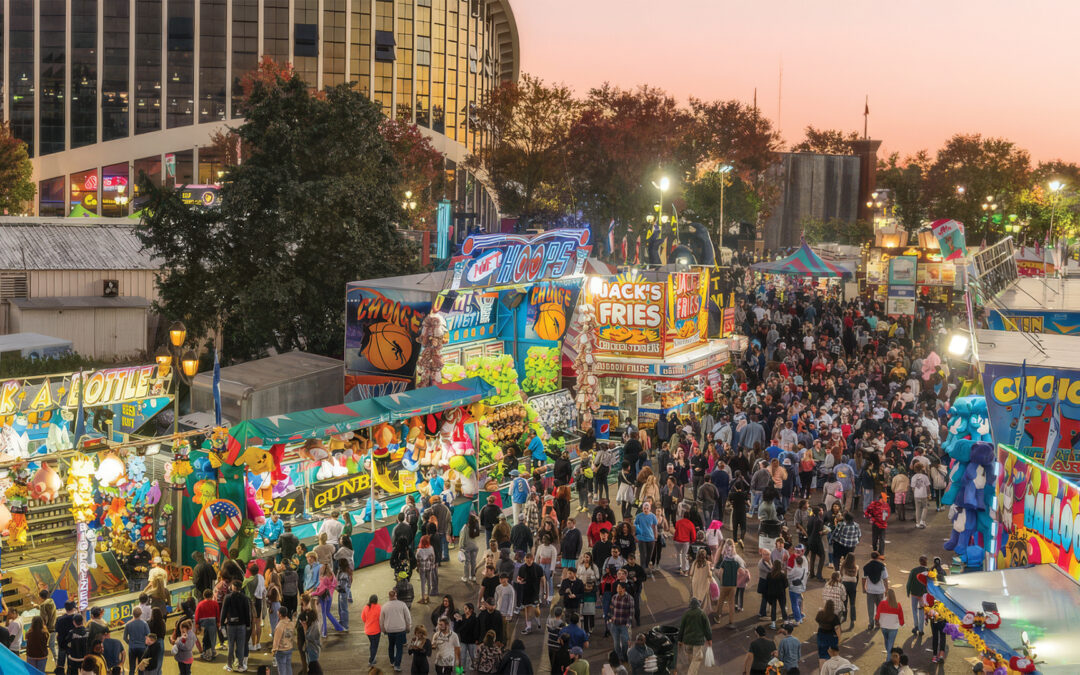
Step right up—the NC State Fairgrounds’ game-changing new food hall is ready for its debut. First announced last year, the Midway Event Center is gearing up to welcome fairgoers inside during the NC State Fair Oct. 15–25.
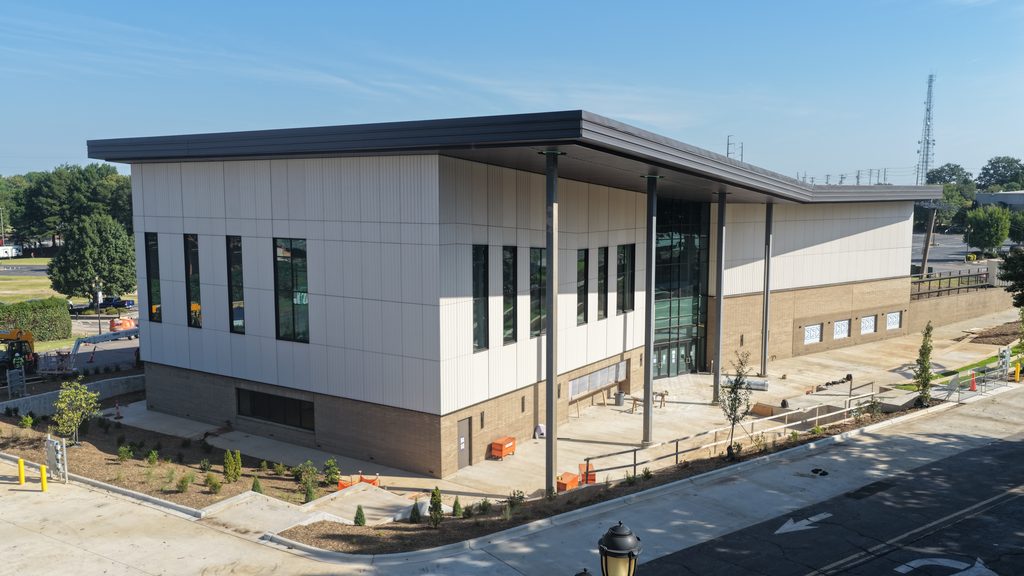
Located adjacent to the iconic Dorton Arena, the two-story, 30K-square-foot building is “going to be something different than the State Fairgrounds has ever had,” says NC State Fair Director Kent Yelverton.
But the real treat? Getting a first look inside.
“When people come in, they’re going to be wowed and blown away by the beauty of this space,” says Kristen Hess, CEO of Raleigh-based HH Architecture, the firm behind the project. “It’s very upscale.”
Think less utilitarian concession hall, more funky fair nostalgia meets serious design. The first floor spills out onto a sunken, terraced outdoor dining area filled with seating and landscaping, while inside, booths, banquettes and tables are layered among playful finishes. Look closely and you’ll spot hot dog wallpaper, ice cream motifs, State Fair Flyer-inspired decor and other cheeky details. “There’s some Easter eggs in the building,” teases Hess.
A monumental staircase leads upstairs, where another bar, additional dining areas and an outdoor terrace overlook the midway. The icing on top? The State Fair Flyer chairlift passes right by, setting up an only-at-the-fair vantage point over all that fried food-fueled action below.
“It’s going to be a super cool experience for people to come in, move up through the space, explore, and then go out on the terrace and look out over the midway,” explains Hess.
And the second floor isn’t all about the view—it also delivers something the Fairgrounds has long needed: dedicated event space. A large room seating about 150 for a banquet can host meetings, gatherings and private events. During the Fair, expect programming in the space—but when nothing’s on the calendar, it’ll be open to the public, says Yelverton.
As for what’s actually on the menu this October: While the eight permanent food vendors are still being identified and contracted—and will not be fully operational for this year’s fair—the building itself will be very much a part of the action. But officials do anticipate up to four temporary vendors serving from dedicated stalls along the south terrace, complete with exterior walk-up windows and counters.
And then there’s the food hall’s rather famous next-door neighbor. Designing a contemporary gathering place beside Dorton Arena—one of Raleigh’s most recognizable modernist landmarks—meant designing something new without trying to upstage the icon next door.
“We were never wanting to compete—we were wanting to complement,” says Hess. The new building’s roofline rises toward Dorton in a subtle architectural nod, while walls of glass and expansive terraces keep the Fairgrounds action in view.
Beyond the State Fair, once the permanent kitchens come online, the eight food vendors, two bars, dining areas and event spaces are intended to operate year-round—giving Raleighites a reason to hit the Fairgrounds without a flea market, trade show or corn dog calling their name.
So, sure, come October for the Ferris wheels and fried everything. But next year, don’t be surprised if one of the fairgrounds’ buzziest new attractions doesn’t move at all.
Two local Halloween pop-up bars to get you in the ~spirits~
Spooky season is creeping into Raleigh early—and this year, it’s bringing better (boo)ze than the average cauldron punch. Two local cocktail haunts are going all in for the haunted holiday, from an apothecary dripping in herbs and candlelight to a nostalgia-fueled takeover straight out of the Halloween aisles of your childhood. Prepare to eat, drink and fall under the spell.
The Haunting
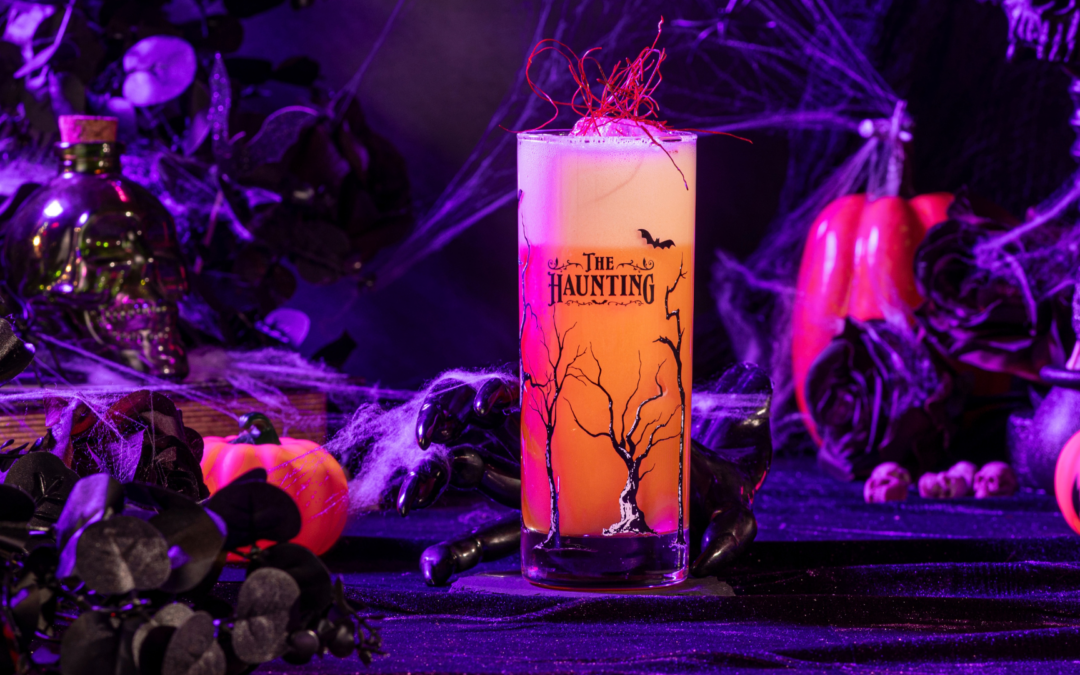
Call it a “Nightmare on North West Street”—the good kind. Killjoy is leaning all the way into over-the-top vintage decor, glowing jack-o’-lanterns and haunted-house nostalgia this Halloween as it becomes Raleigh’s only outpost for The Haunting, the inaugural Halloween pop-up from the team behind the beloved Miracle Christmas brand. Like an eerie ghost story or your favorite scary movie, the wonderfully strange environment immerses guests in a twisted realm of oddities, playful mischief and creepy secrets. The cocktails are also bewitchingly inventive: Scream-sicle mixes tequila, spiced vanilla, carrot-orange cordial and habanero, while Poison Apple layers Calvados and rye whiskey with bitter apple, sherry and miso. And for anyone who likes their booze with a little souvenir, the Pumpkin Payback shot comes with a collectible Haunting glass. Oct. 1–31, Killjoy, Glenwood South, killjoycocktail.com
Courtesy of Wye Hill
Witch, Please!
Something wicked this way comes as Wye Hill swaps its usual brewery scene for something far more spellbinding. The buzzy Boylan brewery’s first-ever Halloween pop-up, Witch, Please!, fills the taproom with flickering candles, dangling herbs, weathered spell books and ancient-apothecary energy. Behind the bar, ~spirited~ potions and elixirs get the full treatment—smoke, scorched herbs and dramatic flair included. So basically—witchy theater meets cocktail hour. Try the Wise Woman, a tequila-and-Strega concoction with cucumber, mint, lime and absinthe, or go darker with the rye whiskey- and pomegranate-laced Better Half of Hades. Even the glassware gets in costume, with specialty vessels adding to the theatrical pours, while seasonal bites complete the spell. Through Nov. 1, Wye Hill, Warehouse District, wyehill.com
Forget the flight to Napa—NC has a wine country all its own. Yadkin Valley, the state’s first federally recognized American Viticultural Area, rolls out grand estates, mountain vineyards, historic farms and even a working college winery—all just a few hours from Raleigh. Consider these six stops your excuse to head west, drink your way through the foothills and get a taste of what’s growing in our own backyard.
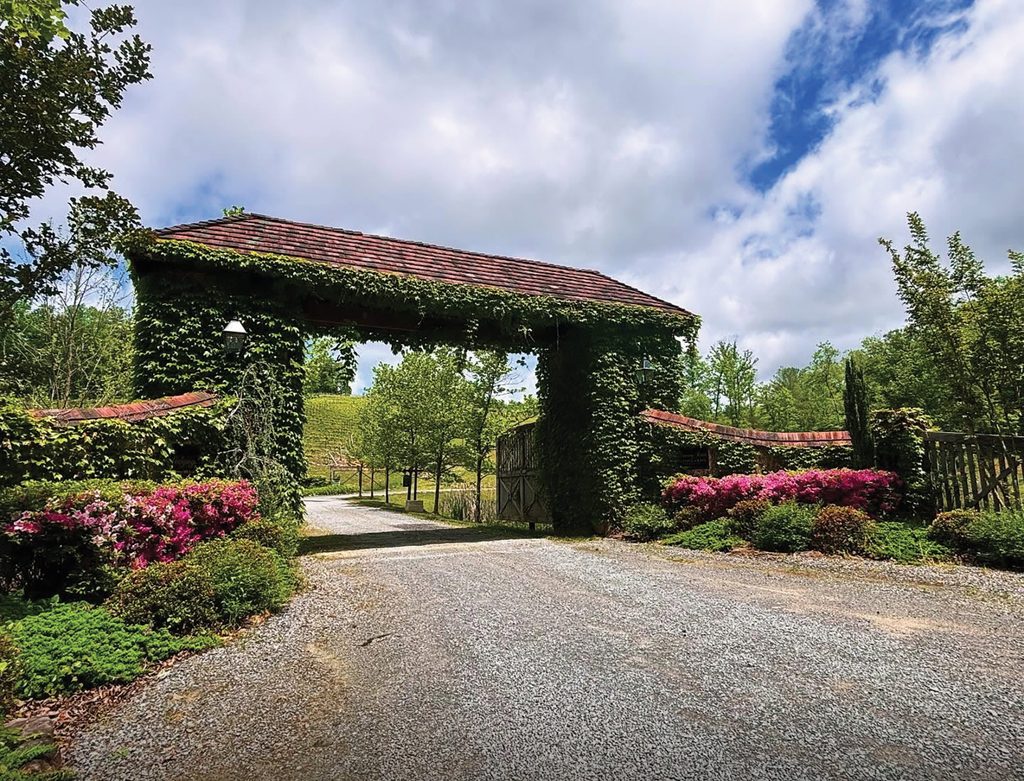
Shadow Springs Vineyard | Hamptonville Wine, spirits and a little field trip energy—Shadow Springs does all three. Its reservation-only Grand Tasting Experience hops between Shadow Springs, sister winery Windsor Run Cellars and Windsor Run Distillery for curated pours, a behind-the-scenes look at the winemaking and distilling operations, and locally sourced charcuterie. Not bad for a family-run vineyard that got its start with 4 acres of grapes on former tobacco land. shadowspringsvineyard.com
Shadow Springs
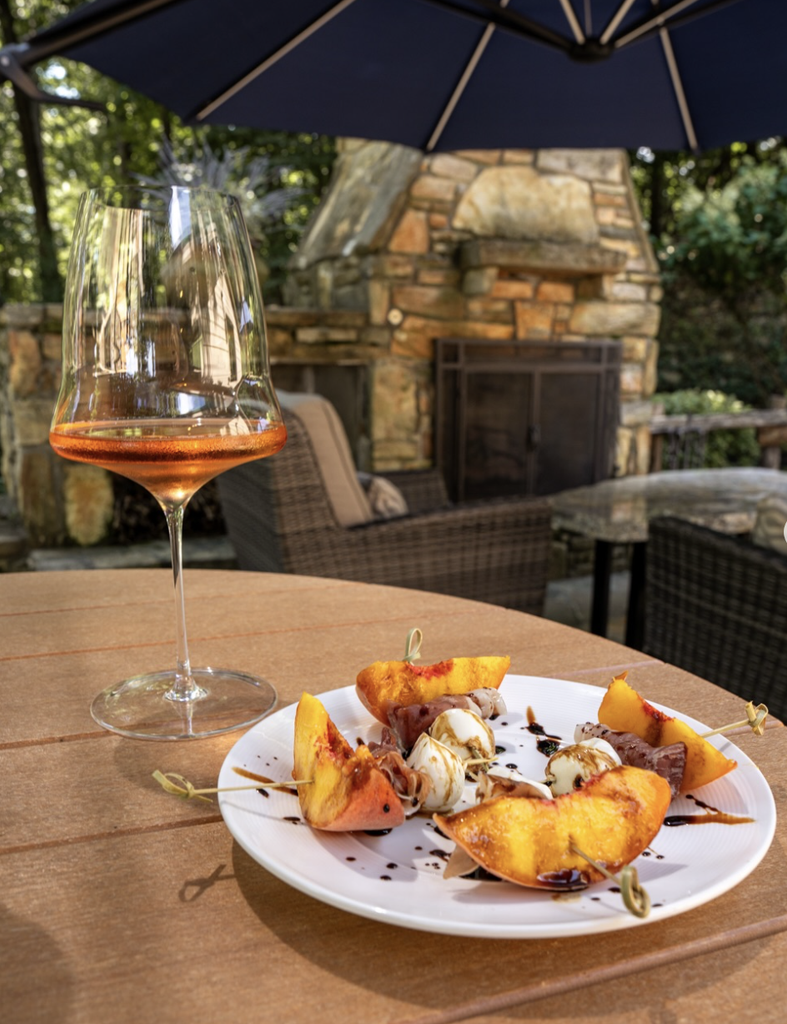
Raffaldini Vineyards and Winery | Ronda Raffaldini commits to the Italian bit—and we’re here for it. The 102-acre estate grows Sangiovese, Montepulciano, Sagrantino, Vermentino and other Italian varietals beneath a striking villa, with Blue Ridge views doing their part in the background. Even the winemaking stays on theme: Raffaldini uses appassimento, the old-school practice of drying grapes before fermentation. Go all in with the tour and tasting, or post up on the piazza or balcony with a glass and pretend Ronda is somewhere much farther east. raffaldini.com
Raffaldini Vineyards and Winery
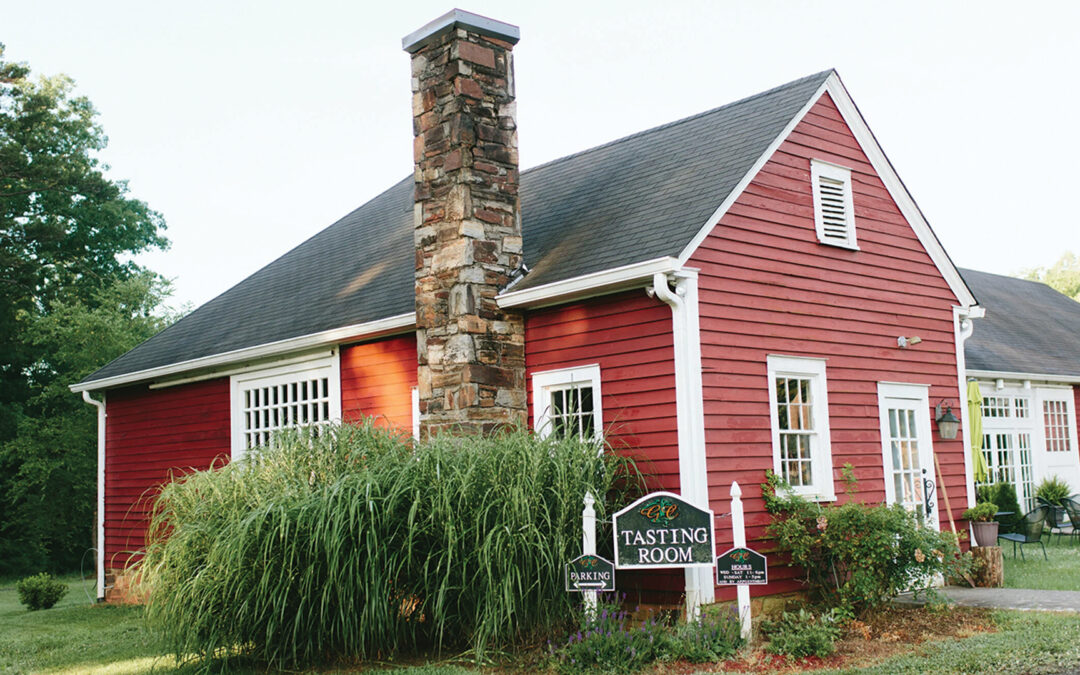
Grassy Creek Vineyard & Winery | State Road A horse stable, a dairy barn and a hiking trail walk into a winery… That’s more or less the scene at Grassy Creek, set on the former Klondike Farm, where historic outbuildings have found second lives as a tasting room and winery. Beyond the vines, trails lead toward Carter Falls and the Mountains-to-Sea Trail—including NC’s first Forest Bathing Trail—while neighboring Klondike Cabins make staying the night awfully tempting. grassycreekvineyard.com
Grassy Creek Vineyard & Winery | Photo by Bailey Batten Photography
Dynamis Estate Wines | Jonesville A 2025 Wine Enthusiast American Winery of the Year nom sets the tone at Dynamis, where handpicked estate grapes, Greek-inspired wine names, French oak and concrete egg fermenters fuel a seriously dialed-in operation. The whole experience leans luxe—read: reservations required—without losing the winemaking cred, from the 90-minute Estate Tasting to bottle service paired with fondue, smoked trout, charcuterie or even caviar. dynamisestatewines.com
Dynamis Estate Wines
Surry Cellars | Dobson Meet the coolest winery on campus. Inside Surry Community College’s $5 million Shelton-Badget NC Center for Viticulture and Enology, students get hands-on with the whole process—from growing and harvesting grapes to bottling, label design and marketing. Tours run by appointment Tuesday through Friday, giving visitors a firsthand look at where NC’s next crop of winemakers get their start. ncviticulturecenter.surry.edu
Surry Cellars
Roaring River Vineyard | Straphill Roaring River has the kind of setup that makes a packed tasting itinerary feel like a breeze. Set along the East Prong Roaring River, the vineyard pours French-inspired wines alongside German-style fare at its Tasting Haus and seasonal Biergarten, with tables spilling toward the water. And with vacation rentals and a small RV campground on-site, settling in overnight is very much on the table—so drink up. roaringrivervineyards.com