
by Paige Luck | Mar 6, 2017 | Eat, March 2017
Duck has always been a popular menu item, but you were more likely to find it featured on a table with linen rather than paper napkins. Recently more casual dining restaurants have been offering duck on their menus with regularity. Most home cooks aren’t willing to tackle this tricky, expensive meat. The lack of familiarity and expense of duck has made it less popular on casual dining menus in the past. In the Raleigh area, the trend is changing with duck making more appearances on moderately priced menus.
Finding sources of duck also has gotten easier for chefs. Mike Badger, the Director of the American Pastured Poultry Producers Association (APPPA) has said: “What I see is anything duck increasing in demand.” The trend has proven true in the Triangle area, including local farms like Joyce Farms. Most local farms offer specific breeds of duck, such as Peking, the most commonly consumed duck in the United States.
“The popularity of duck on restaurant menus correlates with the rise of the caliber of talent working in this region,” says Royale chef Jeff Seizer, who often features a duck confit special on his lunch menu. You’ll find duck tacos on the menu of Cantina 18, a casual Mexican fusion restaurant in Cameron Village by Chef Jason Smith of 18 Restaurant Group. Both chefs spent time honing their culinary skills in New York at Danny Meyer’s Union Square Café, among other notable restaurants.
Sporting a more intense poultry flavor than chicken, the deeply red meat of duck is rich with fat. Because ducks are waterfowl, they have a thick insulating layer of fat. This fat becomes a flavorful source of juiciness when duck is roasted or confitted.
Duck confit is most often used in casual dining. This preparation slowly simmers duck legs and thighs in duck fat for hours producing a highly flavorful, tender, rich meat. Duck is showcased with waffles or as spicy duck enchiladas at Brier Creek Beer Garden and as a pulled duck sandwich at the Oak and Dagger. These dishes allow the flavor of duck to soar in the form of shredded or chopped meat.

by Paige Luck | Dec 14, 2016 | December 2016 / January 2017, Eat
Arriving at the market before pumpkins, butternut squash signals the fall and winter. Butternut squash is a member of the winter squash family with a long shelf life; they can sit on your counter for up to four months. No rush here! So tasty, they won’t last that long. Nutty, sweet flavor can easily straddle the sweet and savory fence.
Pick squash that are heavy for their size. Skin should be blemish-free, with the exception of some scratches from harvest and the trip to the market. To make peeling winter squash a bit easier, poke holes in the skin with a fork, and microwave the butternut squash for five minutes. Allow to cool then peel with a vegetable peeler, and slice off the top and bottom. Half the peeled squash, scoop out the seeds and chop. Chopped squash lasts up to a week in the fridge. Of course, you could skip all the work, and pick up some chopped butternut in the produce section.
 Butternut Squash and Kale Strata
This recipe is great for potluck events or to feed a crowd for breakfast, lunch or dinner.
Servings 8-10 Prep time: 30 min Cook time: 45 min
• 2 tsp olive oil
• 1 med. onion, chopped
• 1 lb butternut squash, peeled, seeded and cubed
• 1 c kale, torn into rough pieces
• 12 eggs
• 1 ½ c milk
• ½ c light cream
• 1 ½ tsp kosher salt
• ¼ tsp nutmeg
• 1, 1 lb loaf Italian bread, cubed*
• 8 oz Swiss cheese, grated
- Preheat oven to 350 F.
- Place a skillet over medium heat. Coat pan with oil and add butternut squash and onion. Cook until softened, stirring often, approximately 10 min.
- Add kale and stir to combine. Remove from heat.
- To make the custard, whisk together the eggs, milk, cream, salt and nutmeg.
- In a greased 9” x 13” glass baking pan, sprinkle ⅓ c. cheese. Place half the bread cubes over the cheese.
- Evenly place the squash mixture over the bread. Sprinkle with half of the remaining cheese, spread the remaining bread over the squash and top with the remaining cheese.
- Pour the egg mixture over the casserole. Press the bread into the egg mixture until all of the bread has absorbed the custard.
- Bake for 45 min. Allow to sit 10 min before serving.
*Stale, three-day-old bread works great here. Feel free to use any plain bread you may have. It doesn’t have to be an Italian loaf.

by Paige Luck | Nov 7, 2016 | Eat, November 2016
Second Act Artisan Cheese teaches you how to make it at home

France is a paradise for cheese lovers. Every small village has its own specialty cheese it seems. When Richard Nathan, owner and instructor of Second Act Artisan Cheese, sat in a small French village bistro eating a salad topped with regional goat cheese, his love for fromage went to new heights. He wanted to create cheese.
A year ago, in pursuit of a warmer clime, Nathan and his wife relocated to Raleigh from Rochester, NY. By that time, Nathan had taken two, one-day courses and a week long short course on the intricacies of cheese making. During the remodel of their new home in Raleigh, instead of a man cave, Nathan requested a cheese cave, a temperature controlled cellar where cheese can ripen.
Second Act Artisan Cheese was started four months ago in the basement of Nathan’s elegant Cape Cod style home. After a career as an investment manager, he wanted to change directions and pursue his new interest. Nathan’s wife suggested that he might enjoy teaching cheese-making classes, sharing his knowledge with others. Along with the cheese cave, the remodel included a small cheese making area with enough space to comfortably house six people. The classroom is furnished with an industrial sink, stainless steel tables, hot plates, pans and cheese presses; the door to the cheese cave is visible in the background.
Although the business is relatively new, he has been well received in Raleigh. “We have mostly had foodies signing up for courses,” says Nathan. “People want an alternative to dinner and a movie.”
Attendees have been enthusiastic about the classes and the cheeses they get to take home. After a three-hour introduction course, participants leave with the knowledge of how to make ready-to-eat cheese in an hour and ricotta and fromage facile to enjoy at home.
According to Nathan, the most important things about making cheese are starting with an easy recipe, being attentive to the process details and patience. Nathan’s understanding of cheese is both scientific and artisanal. The foodies who have taken the workshops are the same type that have sought instruction in beer and wine making, and Nathan’s hope is who others will find the same enthusiasm for cheese making under his instruction.
Visit makecheesenc.com

by Paige Luck | Oct 3, 2016 | Do, October 2016
If you grew up in the country, then you know someone who claims to have the best pickles or peach preserves. Recently, canning hasn’t been limited to those with Victory Gardens. Canning has become trendy. Competition for a blue ribbon at the NC State Fair Preserved Foods is increasing and, with a whopping $10 cash prize, it’s all about bragging rights.
For many years I, along with a team of others, have judged canned foods at the NC State Fair. A food taster is a coveted job, but it comes with risk. In the past eight years, 30 percent of botulism cases in the U.S. were caused by improperly canned home goods, according to the Center for Disease Control. That’s one reason why there are rules. One of the quickest ways to be disqualified from competition is by not following the processing times and methods found in the three books of standards. When a set of judges is looking at 40 jars of dill pickles, inadequate processing is a great way to narrow the field of candidates.
Recently, recipe submission was mandated. This rule caused quite a stir among home canners. Many take their recipes to the grave! There were even some threats of physical harm to our organizers. Nothing came of it, but don’t doubt the allure of a blue ribbon. This is serious business!
In the end, it comes down to appearance, flavor and texture. Following a set of rules can be complicated, but to make a dill pickle that stands out from the rest takes an understanding of the interplay of ingredients, the variability of the harvest and a sense of elegant flavor balance. Anticipation builds, the jars start appearing out of the glass front cabinets, emerging from the fluorescent glow, and placed before the judges. With plates and spoons at ready, samples are portioned out and tasted. In the most popular categories, there are 40 plus jars to taste. Think about that, 40 pickles or salsas to taste in 30 minutes and then on to the next category. Judges taste on average more than 200 different jars of acidic beauties. Some judges do spit out all that they taste in an act of humble self-preservation.
Beauty is not missing from this competition. From dilly green beans, hand selected to be the exact same length as the height of the jar, to a garlic jelly with perfect miniature cubes of garlic suspended in a clear champagne colored jelly, the art of canning is still alive. But there are some doozies too! Sometimes just the smell emitted as the jar is opened will tell you just as much as tasting. When sampling tomato ketchups one year, the lid was opened and a whiff of charcoal escaped. That ketchup had been burned onto the bottom of the pot and the burnt flakes scraped into the mix. Definitely not blue ribbon material!
The most common offense is use of spices that should have been thrown out in the 1970’s. A musty, ill-defined flavor does not enhance a jar of chutney. Secondarily, imbalanced basic tastes—sour, sweet, salty and bitter—can ruin a good jar of pickled anything. A pickle that tastes overwhelming of vinegar, eliciting a choked cough from a taster, is definitely not ribbon worthy.
Judging preserved foods at the NC State Fair is something I look forward to every year—delights and atrocities to be found. This year when you are wandering the fairgrounds with your turkey leg and funnel cake in hand, be sure to stop by the Commercial and Education building to check out the talents of your fellow crafty North Carolinians.
by Paige Luck | Jul 25, 2016 | Eat, July 2016 / August 2016
Sometimes you crave something out of the ordinary, a unique experience or an unusual flavor. You don’t have to travel around the world to find exotic culinary experiences. They exist in Raleigh. We’ve unearthed five uniquely delicious and adventurous eats for you.
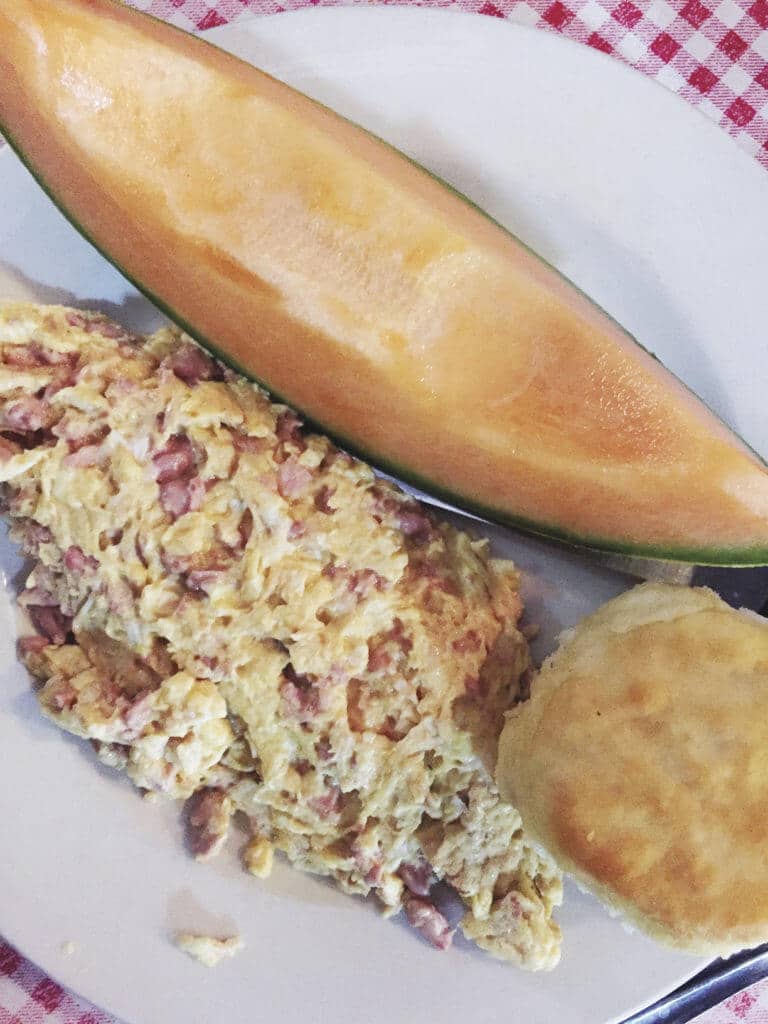
Two eggs scrambled with rose pork brains
Big Ed’s Restaurant
220 Wolfe Street
Big Ed’s is a traditional, country-cooking establishment located in City Market since 1989. Red checkered plastic tablecloths, farm implements on the wall and dried herbs hanging from the ceiling remind you of the rural lifestyle that originated this food. Brains and eggs are a Southern tradition. When cooked, brains have a texture similar to scrambled eggs with a flavor akin to a Vienna sausage. The strong pork flavor of the dish won’t let you forget its source though!
Adventure rating: • • • •

Beef tongue, tripe and beef head tacos
Taqueria el Toro
3601 Junction Boulevard
With a walk-up counter and clean, casual atmosphere, Taqueria el Torro serves up Mexican dishes overseen by two bullheads on the walls. Stop at the condiment bar and load up on salsas, pickled vegetables, jalapenos and cilantro. Cubed tender bits of tongue are smacking with beef flavor. Tripe, beef stomach, is chewy and crispy when fried up. Beef head, primarily cheek meat, falls apart in a taco, with milder beef flavor than tongue.
Adventure rating: • • • • •

Sea Urchin Nigiri
Sono
319 Fayetteville Street
Modern dark elegance greets you in Chef Mike Lee’s Sono where he brings you first class, fresh ingredients. Sono serves up sea urchin regularly, as well as geoduck, monkfish liver and other delicacies when in season. A spiny sea creature, the reproductive organs are the delicacy of the sea urchin. Perched on top of a bit of rice and surrounded by cucumber, the sea urchin has a delicately briny astringency that melts in your mouth.
Adventure rating: • • • •

Braised and Grilled Tempeh Sandwich
The Fiction Kitchen 428 South Dawson Street
A farm to fork vegetarian/vegan restaurant, Fiction Kitchen’s lime green building stands out. Chef Caroline Morrison’s passionate menu surprises carnivores with vegetarian dishes so delicious they won’t miss meat. Forming mold-fermented whole soybeans into blocks creates tempeh. Braised in balsamic vinegar and topped with onions, charred tomatoes and molasses, this sandwich gives a meaty bite with acidic sweetness, providing loads of texture and flavor intrigue!
Adventure rating: • • •

Goat Balti
Kabab and Curry
2418 Hillsborough Street
The Upendre family from Nepal has been serving Nepalese food for two years. Dark ceilings accentuate cream walls featuring brightly colored art when you walk into this warm, curry-scented restaurant. Balti, a type of curry, is served in a copper-clad hammered cup. Goat meat, which is slightly stringy, is surrounded by a stew of peppers and onions flavored with garam masala. Navigate carefully as you dine because part of the depth of flavor comes from the goat’s bones, which makes an appearance in the curry.
Adventure rating: • • • •



