Everyday home care just got an easy upgrade via the one point-of-contact service Exhale.
Matt Sheehan admits that he isn’t very handy (who else can relate?!), so when his downstairs bathroom got a leaky faucet in 2011, he knew he’d have to prepare himself for the hassle he’d have to go through to get it fixed.
A former executive at Redbox and then Primo Water Corporation, Sheehan had his hands full with his career, wife and three kids. A leaky faucet would mean having to spend time finding someone to fix it, most likely being overcharged for a simple fix, plus a day or two of lost time dealing with it all.
Sheehan knew there had to be a better, more-curated and proactive solution for home maintenance. Enter Exhale, a membership-based, all-in-one home maintenance and repair company that combines all of the services a homeowner would need under one point of contact.
Co-founded by Sheehand and Sanay Patel in 2020, Exhale is able to build a relational tie to its consumers—not only responding very quickly when things happen in the home, but more often than not proactively getting ahead of customers’ needs. Plus, issues that creep up over time and possibly devalue a home can be addressed earlier.
“It is drastically different having a program like that with one point of contact rather than, on average, 20 different services that you need to manage,” says Sheehan of services like pool maintenance, house cleaning, electrical, pressure washing and much more.
Sheehan, who is also a member of his company, feels homeowners in the Triangle are ready for the service he is offering. While Exhale took on its first set of clients in February and has been keeping membership small with less than 15 customers, Sheehan feels that now is the time to lean into growth.
“We wanted to make sure the idea we have for a very high level of service, great customer service, great attention to our members—that we could pull that off,” says Sheehan. “We didn’t doubt it, but we wanted to prove it.”
Exhale is also continuing to hire and build relationships with trade partners in the Triangle, allowing for deep capabilities and capacities for new members. And the company is interviewing home managers, handymen and salespeople to have service ready and ahead of member demands.
“We are relational, not transactional,” says Sheehan. “Most services are built as a service model. We are a consumer model. We put an average of seven hours of diligence into a home before we even give you a proposal. We get to know you, get to know your home, get to know your needs, and then we curate a plan that’s built just for you.”
By handling household maintenance, Sheehan hopes to ease the minds of homeowners and give them time back to do other things without worrying about plumbing issues or broken sprinklers.
“At the end of the day, our purpose is to turn homes into havens, to create an inspiring place to work and to serve our community,” Sheehan says. One number to call for any problem that arises in your home? Now that’s a good reason to exhale. exhaleathome.com
Don’t be fooled by the rocks that I got… Olde Raleigh Distillery’s Brandon McCraney is growing the Triangle’s whiskey footprint through small-batch blended bourbons and one-off limited releases
Raleigh’s whiskey scene is on the up-and-up, thanks in part to self-described whiskey nerd Brandon McCraney and his family-owned Olde Raleigh Distillery situated in the heart of downtown Zebulon.
Since opening Olde Raleigh Distillery in January, proprietor, master blender and distiller McCraney has already introduced the greater Raleigh area to two batches of artisanal blended bourbon whiskeys—and he’s just getting started, with limited releases slated to occur every other month beginning this fall.
The first batch of Olde Raleigh Whiskey Society was released in April and sold out at the distillery with no need for outside distribution (so it’s apparent that Triangle residents are eager to get their hands on a bottle), while the second batch was released on June 5; and the third, in August.
Now, McCraney has a 21-year rye whiskey, 17-year single barrel bourbon, double-oaked blend, and barrel-finished honey cask limited release that includes a collaboration with Zebulon beekeeper Baxter’s Bees in the works, with the honey cask release slated for fall. And vodka lovers can get in the spirit with a smooth, crisp small-batch vodka that’s on the horizon for fall as well.
By focusing on small-batch blended bourbons and one-off limited releases, McCraney feels he can introduce the greater Raleigh area to both unique and rare spirits that may not be readily accessible. He can also take the time to hone his craft.
“A 17-year-old bourbon is in our blended small batch,” says McCraney. “We could have created a young, less complex blend, but that is not the standard we are aiming for.”
Ultimately, McCraney’s goal is to continuously produce solid spirits and offer unique products and experiences at the distillery. “What I’d like to see in the future of craft spirits is that North Carolina and maybe the greater Raleigh area are known for a vibrant distillation scene,” he says. “Or maybe when you think of Raleigh, it becomes synonymous with our brand over time.
McCraney stumbled upon Old Raleigh Distillery’s current 10,000-square-foot building on Zebulon’s main street and has been a leading part of the downtown revitalization effort. While he originally intended the distillery to reside in Raleigh, the real estate market, size of the distillery equipment and mass barrel storage needs pushed the business into buildings confined in cold industrial parks—something McCraney did not want.
“We wanted to be around a community and help grow an area, and also be around a lot of foot traffic,” says McCraney. “Unfortunately, it just didn’t work out around the Raleigh area, so I started looking around the suburbs.”
Uniquely, when you walk into the distillery, you are not just meeting the owner, but also the person who is hands-on in creating the spirits and crafting what you are consuming. And McCraney’s love and craftsmanship can be seen throughout the distillery—from the bottles to the blend. He samples each barrel about once every two months to check on its development, and each limited-release cask-finished about every two to three days.
“The first thing I tell folks is that I fell in love with bourbon before I fell in love with distilling and whiskey-blending,” says McCraney. “I truly love blending and creating unique expressions.”He also loves sharing the handcrafted bourbon love… so whether you’re a newbie or an aficionado, you can join the distillery’s Old Raleigh Whiskey Society membership program for behind-the-scenes experiences into how the bourbon is produced—think barrel sampling, hands-on batching of bourbon, hand-bottling, cocktail workshops and whiskey education classes.
“When we set up the brand and our signature bourbon and our blended line, it sounded like something you could join,” says McCraney. “When we go to dump our barrels, we’ll invite some of our members to do things they’ve never done before or seen before.
”As of right now, McCraney is hyperfocused on making the Zebulon operation a success and hopes to continue to develop the Olde Raleigh Distillery brand, create new blends and help the Triangle become a destination for best-in-class locally owned and operated distilleries.
“I’d love to create a destination brand where we’re known for making high-quality premium small-batch bourbon and whiskey,” says McCraney. “We’re family-owned and -operated—and that was on purpose. We want to enjoy what we’re doing and create a special brand in the heart of North Carolina.”
Ultimately, McCraney wants to be part of a community, experience foot traffic and build a client base, as well as have a destination people want to visit. He has no real desire for growth or expansion, except to continue to develop his brand, and create new and unique blends. He would like Raleigh to be known for a vibrant distillation scene in the future—his brand obviously an integral part of that. olderaleighdistillery.com
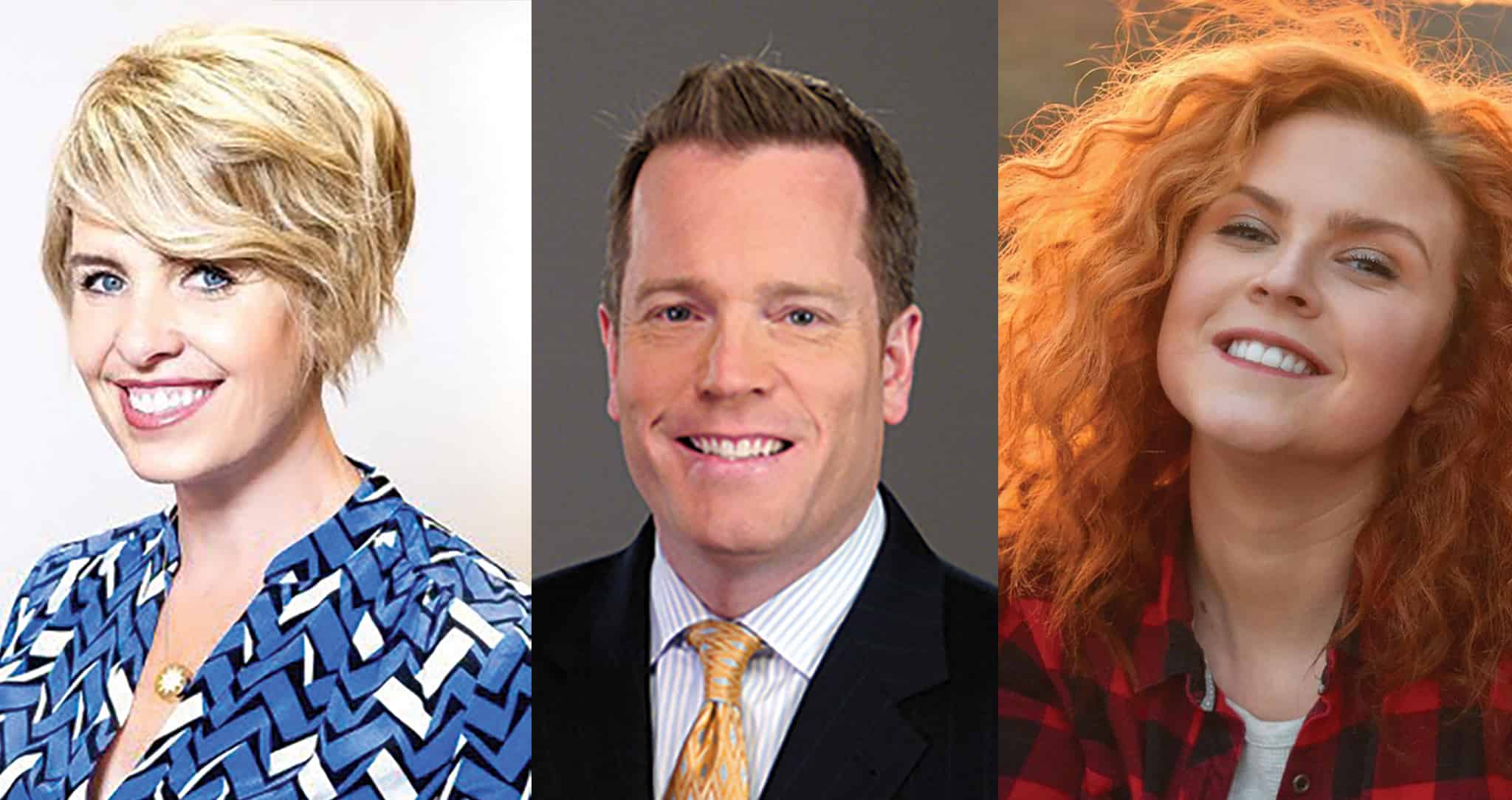
Local media heavyweights have been making a mass exodus of late, and we wondered… what’s next? From shifting gears to launching their own businesses to plugging their storytelling skills into new platforms, here’s how a trio of local media legends are transcending their own stories.
Sloane Heffernan | Storymore Sloane Heffernan believes in the power of storytelling. A two-time Emmy Award-winning journalist and 25-year news veteran—15 at WRAL— Heffernan has honed her ability to catch and retain attention by taking something complex and making it easy to digest in under a minute and 20 seconds. Now, she is transferring her valuable skill set into helping businesses tell their unique stories through her video marketing company, Storymore.
“I love asking questions, and I love telling stories,” says Heffernan. “Even though my love affair with the news started to wane, I had a desire to do more with storytelling.”
Storymore grew from webinars Heffernan gave through the Small Business Center at Wake Tech, teaching small business owners and nonprofits the power of crafting a narrative to connect with their audiences on a deeper level. Through a challenging year-and-a-half in the news business, Heffernan decided to listen to the “whisper in her soul” that it was time to make a career change and turn something she loved doing into a business.
“What really makes a business unique is their own individual story,” says Heffernan. “I think that stories allow us to really share our perspective in a way that we can have a heart-to-heart connection and build relationships and loyalty.” facebook.com/pg/storymorecontentcreators
Mark Armstrong | Wow 1 Day Painting Mark Armstrong is trading in sportscasting for a painting business—and he couldn’t be happier. With almost 23 years in sports broadcasting under his belt, Armstrong feels that now is the time to pivot his career from ABC11 to launch Wow 1 Day Painting in the Triangle.
“It’s obviously a huge left turn from being a sportscaster my whole life,” says Armstrong. “But anything would have been a big left turn from being a sportscaster.”
Armstrong got the idea of owning the franchise from a childhood friend in Toronto who also owned a franchise through the Vancouver-based company. By buying into a franchise, Armstrong feels like the fear of stepping off the ledge and walking away from a salary and benefits isn’t as intense because of the training and coaching that comes along with it. His skills in broadcasting will also help build customer rapport.
“I’m totally at peace turning the page now,” says Armstrong. “I could have stayed until the end of my contract in October, but once I made up my mind what I was doing next, I was just like, let’s go! All of my brain is wired now toward this next thing, and I’m putting that broadcasting career in the rearview and have total peace of mind.” wow1day.com
Julie Wilson | Average Adventures While working from home last year, ABC11’s Julie Wilson felt productivity increase. She was able to do more interviews and tell more stories, and, overall, tap back into her personal creativity.
“I hadn’t realized how much I’d been missing out on that,” says Wilson, who started putting up funny videos on her Instagram account (@andjuliewilson) last April. After seeing direct feedback from people who enjoyed these positive videos (even if just for 40 seconds or a minute), it occurred to her that maybe she could do more with it.
“That fueled the idea of, hey, maybe I can tell stories that are positive in a situation outside of news,” says Wilson. “I’ve always really enjoyed telling stories that make people pause and go ‘Huh, I didn’t know that. Very cool.’”
And, so, Wilson’s YouTube channel, Average Adventures With Julie Wilson, was born last summer, which led her to start exploring and documenting areas in North Carolina and Virginia, visiting historical sites like Jamestown, and meandering through 18- to 20-foot busts of our first 43 presidents, as well as swimming with manatees and alligators for a recent weekly “Explore Florida” series—all in an attempt to bring joy to viewers.
“I want to spread some love and some light and some positivity,” she says.youtube.com
See an empty table and not getting seated? Here’s why.
In 16 years, Marcus Hall has never put up a “now hiring” sign. Until now. With staffing levels over 20% below normal at more than 50% of restaurants throughout the country, according to the National Restaurant Association, Hall is not alone.
“It’s been 15 months of total beatdown and a brutal battle,” says Hall, owner of The Cowfish Sushi Burger Bar in North Hills. “Survive and advance. Keep on fighting, keep on swinging and keep on hiring. You can’t run the business without people. They are our most valued resource and always have been.”
Hall is trudging through an unheard-of glitch in hiring, where he may interview 20 candidates and only one will show up for orientation. The bodies are just not there, and scheduling is nearly impossible.
“You get up, look at your schedule and hope you have enough people that day,” says Hall. “We’re trying to create a fun work environment just like we always have, but it’s taxing when you have this mentality that creeps in, wondering if this employee is going to show back up tomorrow.”
A lack of staff makes service difficult. Patrons often go to restaurants and see open tables and don’t understand why they can’t sit down. It’s not because the owners don’t want the business—it’s because they don’t have the staff to take care of a full house.
“The restaurant operator doesn’t want to turn away business,” says Hall. “The last thing I want is a guest to come in, sit down and overwhelm the restaurant—and then have a bad experience. This is the time where if people really want to help local businesses survive, come out and support, but also come out and understand.”
So where did all of the workers go? That question is plaguing restaurant owners and there doesn’t seem to be a solid answer.
“I think the issue with hiring is, all of the sudden, this entire industry reopened, and we all went to hire people at the same time,” says so•ca and kō•än owner Sean Degnan, who says about 30% of his staff are new hires after shutting his doors twice since last March.
This basically makes the restaurant business a job-seeker’s market because positions are plentiful. Those who were not in it for the long haul may not be willing to go back through the up-and-down yo-yo that the business has been experiencing. Some restaurants, like so•ca and kō•än, are changing their model to entice workers back.
“We came back and we had a little staff retreat about how to reopen in a pandemic, and we talked about all of the things that would require,” says Degnan. “The first was paid time off if you were feeling ill. The next is that we need to start paying a living wage to everybody.”
Degnan has joined other local restaurants in working a living wage into his business model. By paying nontipped staff $15 per hour and changing the tipped base rate to a minimum of $7.25 per hour (versus the industry standard of $2.13 per hour), workers have more of an incentive to stay.
For Phoebe (name changed for anonymity), who works at a tip-sharing restaurant, it’s the tips at her high-volume location that keep her there. As a 26YO who is no longer eligible for her parents’ health insurance, part-time restaurant work does not offer her a safety net.
“For most people, the restaurant industry isn’t the end goal,” says Phoebe, who’s been in the business since she was 16. “I would love to get out of the restaurant industry, but it’s the most consistent work right now. I would take any job if it came with [health insurance].”
Recently, Phoebe has been witnessing something a lot of restaurants have been experiencing—a tremendous turnover rate. “We used to never have a problem with turnover, and most of us have been there three to four years, but, lately, it’s new people every week and people quitting every week,” she says. “We keep having people come in to train for a week. I guess everyone’s gotten used to not working as much, so having to do a lot of work seems not really worth it.”
So what are the reasons to leave the business? Some are afraid to go back into the tight space of a kitchen. Some have childcare issues. And some changed their careers altogether, using this time to pivot in a new direction or embrace something they had done only part-time before.
Kevin Callaghan, who owns Acme Food & Beverage Co. and Heyday Brewing in Raleigh—says he’s had a number of people who have worked for him for years who were always half in, half out.
“They were always in the restaurant industry making a living, but they were always working toward another goal,” says Callaghan. “I think a lot of people jumped into other kinds of roles because they needed to make a living. Most of our staff were making a good living, but couldn’t just sit on the sidelines.”
Callaghan, who also pays a living wage, says that the struggle to find new people is partly caused by the lack of stability the restaurant has had recently. People don’t want to be concerned about whether their paycheck will clear, which is a big fear.
“Once restaurants really stabilize, people will move more energetically back to the business,” says Callaghan. “Because we’re paying a higher wage, I think it’s been simpler for us to be able to recruit people who want to work.”
The amount of “green” workers is also an issue, with restaurants forced to take in so many employees with little or no experience. Restaurants can’t flip a switch and go 100 mph in half of a second. Employees need to be trained, and that takes time.
“We’re all, as businesses, struggling with the growing pains of growing the business back to what it was before,” says Callaghan. “It’s the way I imagine a garden in spring. We had an industry that was in full flower—COVID was the wintertime for the industry and now everything is growing back. It’s a growing pain we all really dislike, but it’s very real.”
Olympic BMX freestyle will be making its debut in Tokyo this year, and local athlete Nikita Ducarroz is preparing to take on the challenge.
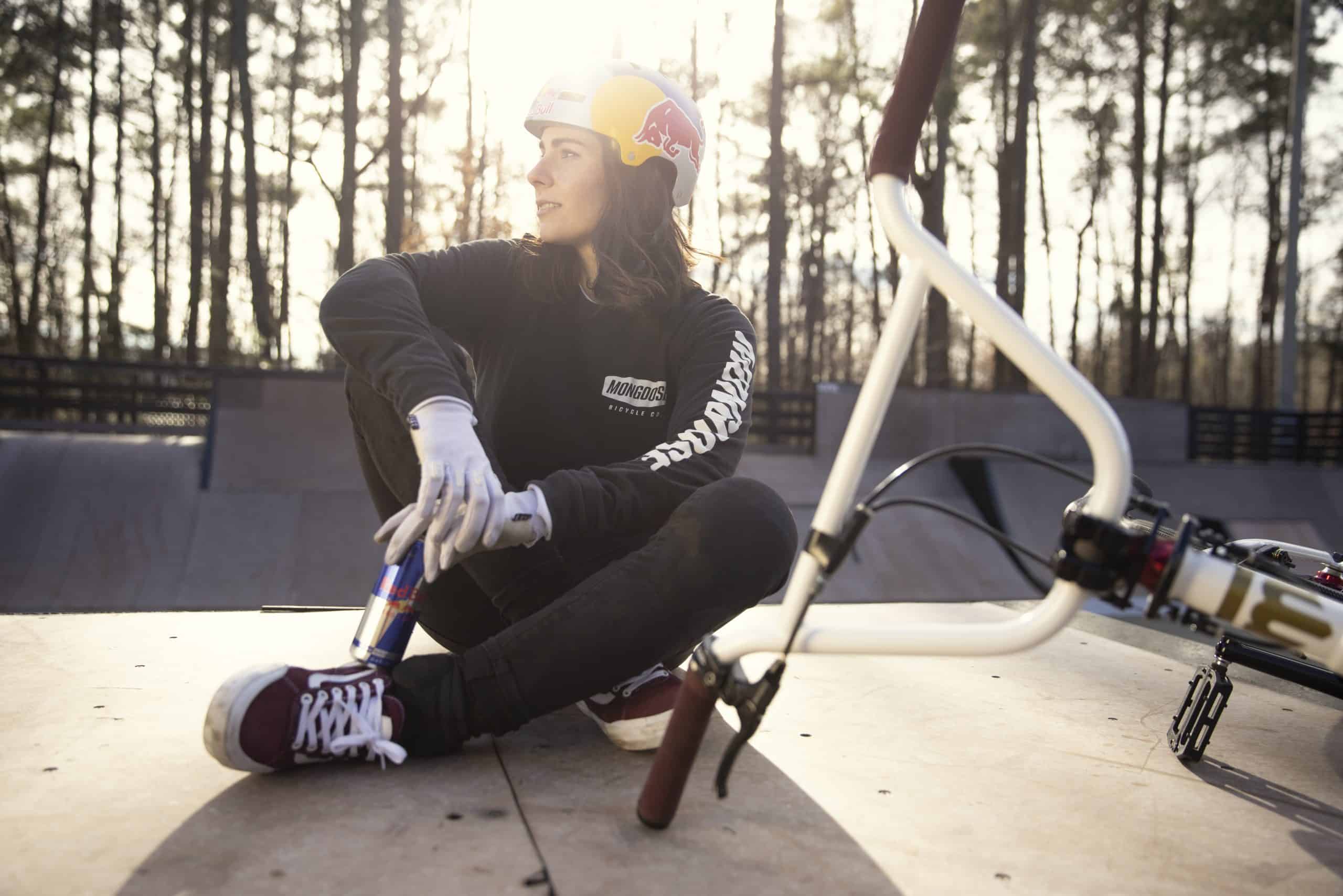
A new Triangle resident, Swiss-American Ducarroz relocated to Holly Springs from San Diego and has been training in her athletic “bubble” since last year. Now, with competitions ramping back up again and the Olympics right around the corner, Ducarroz—who will join the Swiss team—is settling back into the swing of competing.
“This past year was the first time in our careers that we had this uninterrupted time to focus only on training and learning new things without too much fear of getting hurt,” says Ducarroz of her time training at the Daniel Dhers Action Sports Complex in Holly Springs.
Although Olympic BMX racing has been around since Beijing in 2008, the new freestyle event will give athletes 60 seconds to perform tricks and skills, adding some flair to the Ariake Urban Sports Park, also home to BMX racing and skateboarding.
Ducarroz, who received her first BMX bike in the summer of 2010, enjoys the challenge of competitions and is simply trying to stay healthy, stay on her bike, and dial into the last few things she needs to dial into before she fully gets back into competing. And getting back into the sport has not always been easy for her.
“There’s definitely a little bit of an adjustment just being in one place for so long when we’re used to moving, moving, moving all the time,” says Ducarroz of the difference from a normal competition year.
“And, for me, I have a lot of anxiety and panic about traveling and even just going out and doing things outside of my house. To not be in that routine of doing things made it harder once we were able to start going out and traveling again, and set me back a little bit, but, other than that, I’d say it was almost a blessing in disguise.”
Ducarroz has struggled with anxiety, depression and panic attacks throughout most of her life, and has credited BMX riding for pulling her out of it. Through her professional platform, Mind Tricks (@m1ndtricks)—a safe place for both athletes and nonathletes to discuss difficult issues—she shares those struggles with the world in hopes of helping others who may be going through mental health issues as well.
“Anybody can share their stories about mental health, and the goal is basically to encourage them to feel OK about it,” says Ducarroz. “Hopefully other people will read it and see that even professional athletes whom they really look up to—who seem to have a perfect life—struggle with the same things that they struggle with—and that’s OK.”