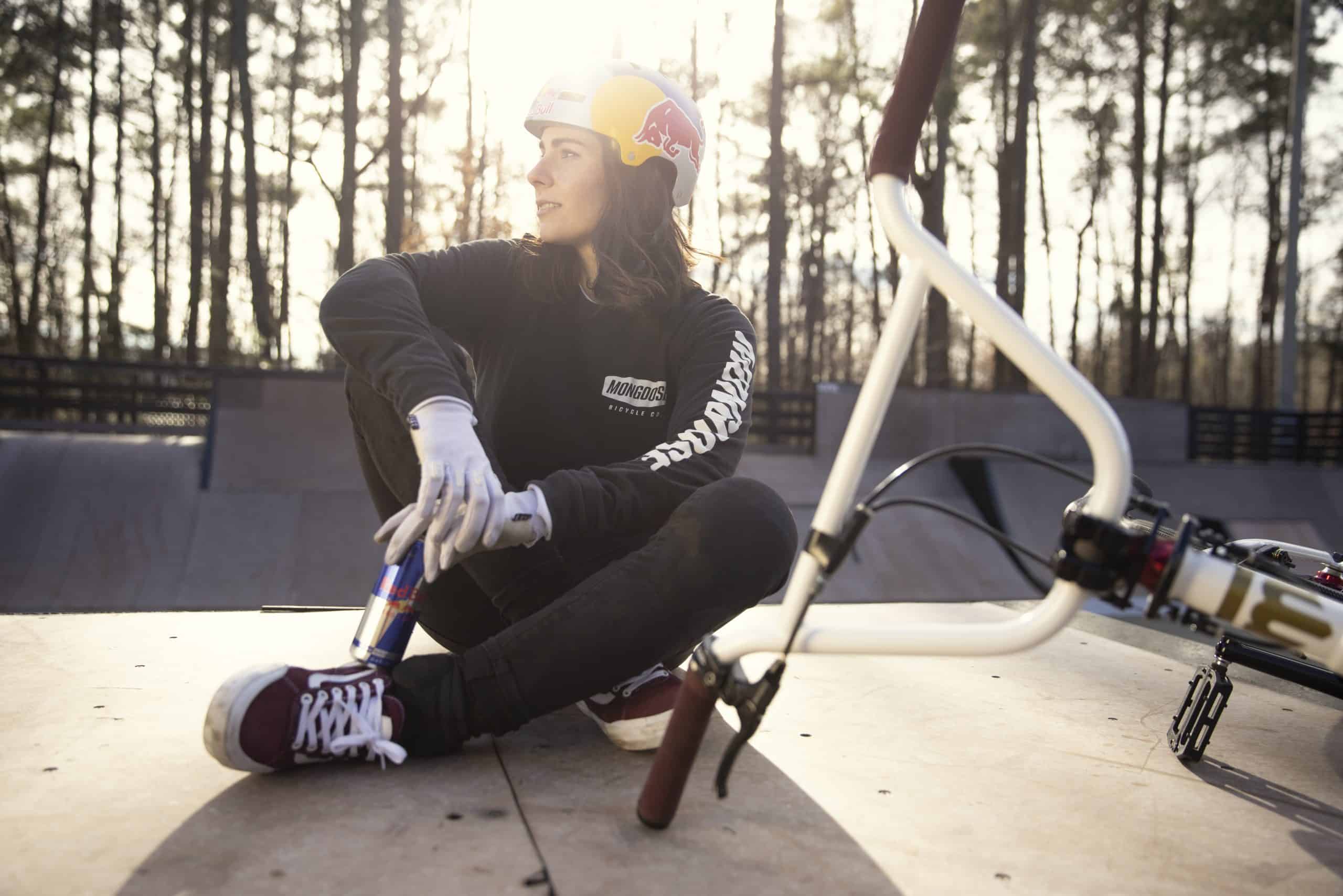
Olympic BMX freestyle will be making its debut in Tokyo this year, and local athlete Nikita Ducarroz is preparing to take on the challenge.
A new Triangle resident, Swiss-American Ducarroz relocated to Holly Springs from San Diego and has been training in her athletic “bubble” since last year. Now, with competitions ramping back up again and the Olympics right around the corner, Ducarroz—who will join the Swiss team—is settling back into the swing of competing.
“This past year was the first time in our careers that we had this uninterrupted time to focus only on training and learning new things without too much fear of getting hurt,” says Ducarroz of her time training at the Daniel Dhers Action Sports Complex in Holly Springs.
Although Olympic BMX racing has been around since Beijing in 2008, the new freestyle event will give athletes 60 seconds to perform tricks and skills, adding some flair to the Ariake Urban Sports Park, also home to BMX racing and skateboarding.
Ducarroz, who received her first BMX bike in the summer of 2010, enjoys the challenge of competitions and is simply trying to stay healthy, stay on her bike, and dial into the last few things she needs to dial into before she fully gets back into competing. And getting back into the sport has not always been easy for her.
“There’s definitely a little bit of an adjustment just being in one place for so long when we’re used to moving, moving, moving all the time,” says Ducarroz of the difference from a normal competition year.
“And, for me, I have a lot of anxiety and panic about traveling and even just going out and doing things outside of my house. To not be in that routine of doing things made it harder once we were able to start going out and traveling again, and set me back a little bit, but, other than that, I’d say it was almost a blessing in disguise.”
Ducarroz has struggled with anxiety, depression and panic attacks throughout most of her life, and has credited BMX riding for pulling her out of it. Through her professional platform, Mind Tricks (@m1ndtricks)—a safe place for both athletes and nonathletes to discuss difficult issues—she shares those struggles with the world in hopes of helping others who may be going through mental health issues as well.
“Anybody can share their stories about mental health, and the goal is basically to encourage them to feel OK about it,” says Ducarroz. “Hopefully other people will read it and see that even professional athletes whom they really look up to—who seem to have a perfect life—struggle with the same things that they struggle with—and that’s OK.”
The Raleigh real estate market is on fire—but where does that leave the buyer?
Remember when buying a house was all about location? (Location, location location!) Well, in today’s local market, price is trumping location—and urban sprawl is taking over.
“I did not know where Middlesex was, but, last year, I sold 48 homes there,” says The Jim Allen Group President Jim Allen, in regards to the need to expand the search for buyers outside the county (think Middlesex, Zebulon, Louisburg). “Once something is not affordable or attainable—everybody’s got a cap—then that person can no longer find what they’re looking for by location alone.”
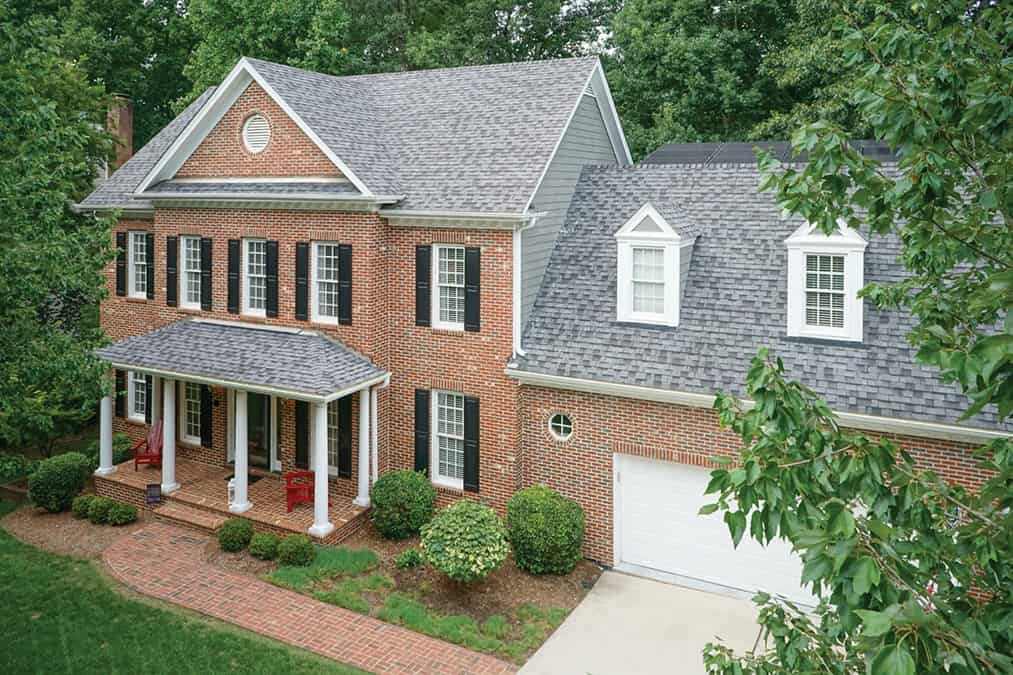
27614 | Listed: $375,000 | Sold: $386,000
And with a population increasing by more than 2% per year, competition is tougher than ever. In fact, as of last month, there were only 1,866 houses on the market in the Triangle, down from nearly 3,000 at the beginning of the year.
“The market is 100% the strongest I’ve ever seen it,” says Allen. “There’s no chance the bubble can explode. Scarcity is what drives these prices up. Inventory is shrinking every single day.”
“Competition” might be the buzzword in today’s hot market. Multiple offers, sight-unseen homes, and a hefty due diligence are the necessary evils of buying a home in the Triangle in 2021.
Some real estate agents have even started including escalation clauses in their contracts with buyers, allowing them to bid up to the buyer’s price cap without having to waste time coming back to the buyer for approval. In competitive negotiations, the agent knows how high they can bid via the escalation clause from the beginning—whether it’s an additional $10,000 or $50,000.
You would think that now would be a good time to dump the middle man—the real estate agent—and save that 6% commission, but you’d be mistaken. While you can throw a “coming soon” sign in your yard or post online that your house in a very desirable neighborhood will be on the market for sale by owner (FSBO), you might not land the purchase price you could have with directed guidance.
Photo: Flyboy Photo and Media 227603 | Listed: $649,000 | Sold: $720,000
“In today’s market, list price is the starting price,” says Allen. “I don’t believe the average seller is confident enough to play that market.” In fact, this market, Allen says, actually leads to less FSBO because, oftentimes, homes sold in that manner attract buyers looking for deals and the seller gets less money than they would have with multiple offers from an MLS listing. In fact, only about 3% of all listings sell FSBO, while 15 to 20% start that way until sellers change their minds and hire a broker.
In a market where home prices are appreciating by approximately 10.9% per year, value is climbing. In many cases, homes are being sold at 20% to 30% above asking price, and in some cases, more. Allen spoke of a Wake Forest home that was listed at $350,000. Fifty-seven offers later, it sold for $465,000 with a $50,000 due diligence.
And due diligence, the bane of a buyer’s existence, has also increased. An easy $10,000 down has now risen to prices as high as $500,000. While a half-million is rare and way above the average range, it shows how eager some are for the property they desire.
So, yes, it’s a seller’s market, but what is the buyer supposed to do? Maybe it’s putting $25,000 due diligence on a $250,000 house (which is scary because sellers who get their property under contract have no risk or obligation to do any requested repairs). Maybe it’s paying the difference between the price of the house and the appraisal value in cash because the value hasn’t caught up with the market yet. Maybe it’s moving to Zebulon, where you can get that townhouse you want at a price you can afford. Or, maybe, your retirement wish of a ranch home on an acre lot is now more realistically the bottom floor unit of a duplex.
“If you’re looking at it from the Realtor’s side, Realtors have to learn to say no and be very up front, very honest and very transparent,” says Allen. “They have to be able to say, ‘What you are looking for does not exist, but here’s what exists instead.’”
Builders and developers need to be creative and be able to offer various product types to fit everyone’s needs. But builders are facing their own dilemmas with the pandemic highly affecting their supply chain. According to Andrew Ervin, a broker at DeRonja Real Estate, the cost of lumber alone is up 188%, and often not even making it to the lumber yards, but, instead, being sent directly to building sites. Even refrigerators and other appliances are difficult to find. Builders now have to order them at the start of a project instead of the end, hoping they arrive by the time the home is completed.
27612 | Listed: $525,000 | Sold: $550,000
“Production of building material factories slowed and, in some cases, stopped once COVID-19 hit the U.S. and the lockdown was put in place in March of 2020,” says Ervin. “What no one really knew is that the real estate market—specifically new construction—would explode, leaving manufacturers in a high-speed catchup mode. With the steady positive COVID-19 case rate and the need to shut down for a period of time for containment reasons, manufacturers have yet to be able to catch up to demand.”
Lack of materials is also delaying new builds, adding to the shortage of inventory. “Our industry views ‘supply’ as months of inventory available for sale. A balanced market for sellers and buyers is six months—currently, our supply of homes is about a half a month,” says Ervin. “So, if there were no new listings to hit the market, our supply would last just 15 days. The Wall Street Journal is calling this a ‘super-sellers’ market.”
And further upping the competition, out-of-state buyers from California, DC, New York and Illinois are vying with local residents, getting a bigger bang for their buck while being more comfortable buying a house without physically seeing it first. Currently, 70% of the market is selling sight-unseen and in the “coming soon” mode before even going active.
For Allen, it’s all about being forthcoming right out of the gate, telling buyers what they need to hear in order to keep their expectations realistic. “You have to educate your buyer that you have to trust the pictures; you have to trust the video if it’s available. And, the truth is, if you don’t, you’re going to be shut out by the marketplace—especially here locally,” says Allen. “We’re about 6,800 units a year short of supplying the current need.”
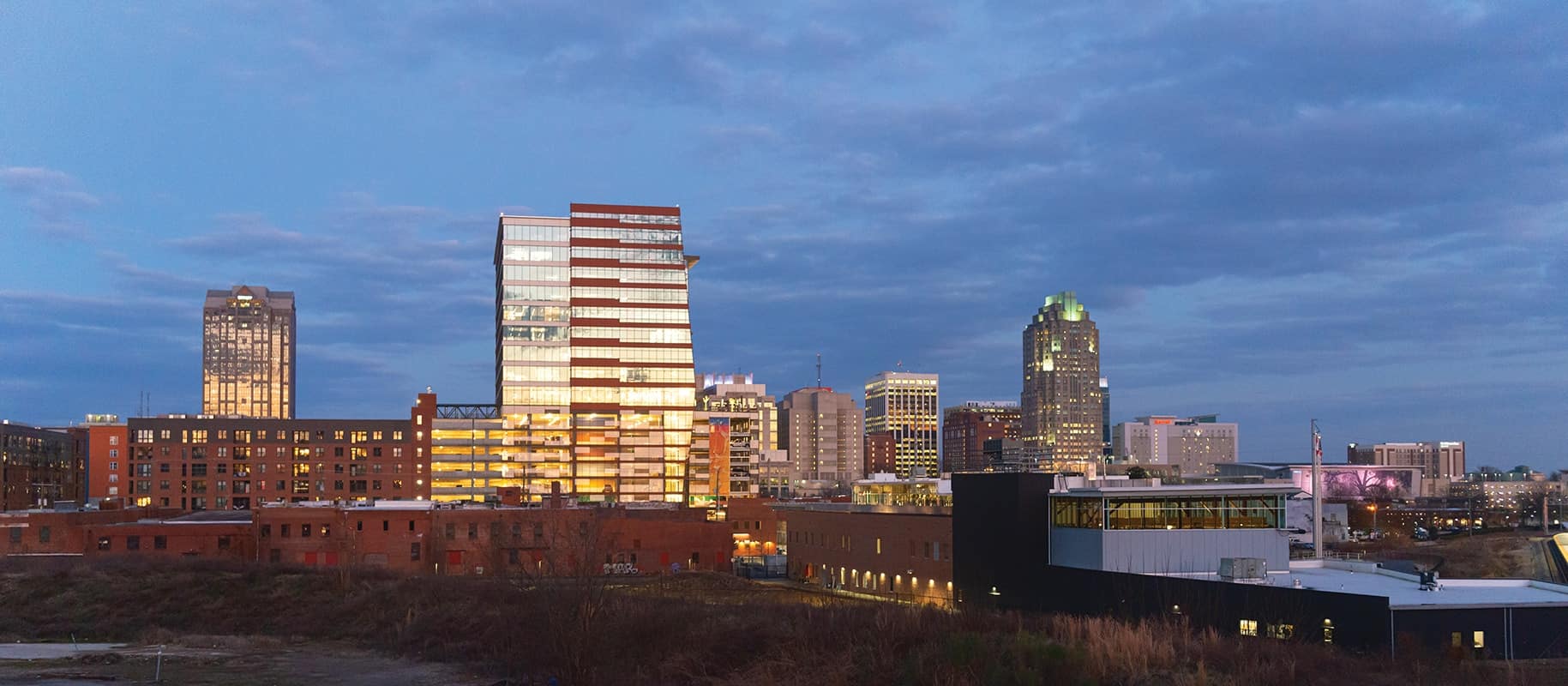
With Raleigh ranked as one of the best real estate markets in which to buy, along with ranking as one of the top cities for quality of life, people are not going to stop migrating any time soon. The real estate market is thriving, and while it may be frustrating for some, it’s possible to navigate with the right guide. “If you’re a purchaser, it’s more difficult, but if you’re realistic, it’s not that hard,” Allen says.
WRAL’s Amanda Lamb adds insight into the murder of James Jordan with her new podcast.
WRAL reporter Amanda Lamb has always relied on pictures to help tell the story. But with her new podcast, Follow the Truth (slated to release in the coming weeks), she is switching mediums and inviting listeners on a journey through the murder, trial and convictions associated with the death of James Jordan almost 30 years ago.
“I think when you’re telling a story and trying to build an arc, the beauty of the podcast medium is that you can breathe,” says Lamb. “You can allow the listener to maybe go down a few rabbit holes, a few tangents that aren’t critical to the main story, but give them some extra context that you’re just not going to get in a visual medium.”
Follow the Truth follows the premise of the recently released and locally produced docuseries, Moment of Truth, which covers the 1993 murder of NBA star Michael Jordan’s father in Lumberton, NC. Lamb, who appears in the docuseries, was able to access WRAL’s archives to build her story through the podcast.
“If you were doing this from the ground up, you would have to somehow get access to all of these archives to the news footage, to the trial and what happened during the trial,” says Lamb. “That’s been pretty amazing that I have that access to all of this archival footage and stories that were done by WRAL reporters for many, many years.”
For those unfamiliar with the trial, Larry Demery and Daniel Green were charged with Jordan’s murder in Robeson County. Demery accused Green of being the trigger man. Because of the laws at the time, the state could not guarantee Demery a reduced sentence, but they told the jury he cooperated to save him from the death penalty (which also got him a deal on some other robbery charges).
Demery is set to be released on parole in 2023, while Green is serving a life sentence, but has always maintained his innocence in not pulling the trigger. Covering the case since 2009, Lamb has built up a relationship with Green, exchanging letters and phone calls over the years.
“I had a very personal perspective to bring to the podcast that is unique,” Lamb says. “We had done a couple of stories over the years, but really it turned into more of a friendship where I became a sounding board for him, just listening to his concerns about the case—but also just about life and about being incarcerated.”
The podcast is similar to the docuseries in that it delves into the background of the Jordan family and goes through the details of the trial, but it also takes its own approach to topics like the history of Robeson County. Lamb interviewed a Native American historian to discuss racial divide in the area, why things were the way they were, and how many generations it took to undo some of the problems that existed and still exist today.
Lamb says her favorite episode of the podcast was her interview with Green’s mother and sister. “Having covered so many cases over the years from both the perspective of the defendant’s family and also the victim’s family, you realize how a murder has a ripple effect that goes out in concentric circles,” says Lamb. “It doesn’t just affect the person who is accused or the person who is killed, but it affects all of their family members.”
Other people who make an appearance on the podcast include Green’s godmother and Christine Mumma (Green’s attorney who is very well-known in North Carolina for her work on innocence cases). Several people from WRAL who worked during the trial make an appearance as well, including Debra Morgan, who experienced Demery’s father firing shots in the air during an interview attempt.
“We talked to some journalists who covered the case and who were there,” Lamb says. “They give you real insight into the circus atmosphere around it, but then also underlying concerns about the potential corruption and racism in the county at the time.”
Ultimately, that insight from people directly involved provides more understanding on why and how things happened—and gives the podcast a more personal feel. “I wanted my project to be a companion project, but also be unique,” says Lamb. “People who enjoyed the docuseries will get a more in-depth insight into some of these characters and these moments that you can do in a podcast.”
Raleigh residents are swapping empty nests for a simpler life.
When WRAL-TV reporter Amanda Lamb’s husband, Reginald “Grif” Griffin, suggested buying a house in Cary 26 years ago, she thought he was crazy. They were in their early 30s; Raleigh was still coming along; and she felt like the lifeblood of the area was in the city.
Now, facing retirement, the couple is looking to condo life—having decided that downsizing to more compact living Downtown better fits their evolving needs.
“In 2018, I remember being at a neighborhood party and my husband saying this isn’t the last stop,” says Lamb. “We just want a simpler life; we don’t want the maintenance of a home. When you’re less fettered by the responsibility of a residence, it makes it easier to just go. We’re not looking at it as a forever home—we’re looking at it as the next chapter.”
Now, Lamb and her husband are in the process of trading their spacious lifestyle—think neighbors, screened-in porch, workout rooms, offices (playrooms transformed once their children left the nest) and land (including a pond they built in their backyard)—for a three-bedroom condo Downtown.
“I’ve always worked in Downtown Raleigh, and I know it; I love it; and I love the energy, the excitement and all of the development,” says Lamb. “I think it’s a great city.”
A frequent traveler who likes the idea of being able to walk out the door, go exercise or meet up with friends for a glass of wine, Lamb says this transition will give her time, space and money for experiences, not things. “At this point in life, there’s nothing tangible you could give me that I would want,” says Lamb. “What I do want is experience. That’s all that you can hope for, and I want to figure out the best way to make that happen. We’re nervous, but we’re also excited. We have so many incredible memories in that house.”
Lamb and her husband are not alone in their desire to downsize. More and more, empty nesters are fleeing the nest for a simpler life, with 12% of home buyers between the ages of 45 and 64 trading in larger homes for smaller living space (according to statistics tracked by the National Association of Realtors).
And real estate agents are seeing these homeowners want to downsize—yet still live independently.
“The issue is that there aren’t enough housing options for them, especially when most want a ranch-style home or, minimally, a first-floor master bedroom,” says local real estate agent Mary Ann Meagher of M&M Team Realty. “There just isn’t anywhere for them to go, so a lot are forced to stay put. Some that are not ready for retirement are trying to downsize into townhouses that allow them to have a lock-and-leave home—enabling them to travel and vacation more.”
If someone is ready to downsize, says Meagher, they should determine what that looks like for them. Is it a small condo in a walkable area with a shared common space? Is it a townhouse that has a small yard? Or is it simply a smaller house that would still leave room for family to come visit or extra space for whatever needs they have at the time?
For Raleighite Joanne Rohde, that meant downsizing to a smaller family home. With her kids largely out of the house, the managing partner at Cambridge Woods Partners found herself in that gray area of not needing a large family home, but also not being in her retirement years. So, she and her husband sold their rather large home and rented for a year to contemplate their needs. And what they found was that they needed office space—especially during a pandemic.
A couple of years ago, Rohde started looking around the city and realized there was not a market for what she was looking for. She found herself in a phase where she still cared about having a really nice kitchen and living area, but not all of the square footage. And she felt a gap in a market where builders build for price per square foot.
“I was looking for a floor plan with a different kind of footprint,” says Rohde. “It was just this realization that there is an empty-nester phase before retirement that has very different needs.”
Now, she says, “We’re quite happy with this arrangement,” having moved into her new residence in May. “We had the realization that the kids are still going to come home and we needed a sort of guest space. Then with COVID, we needed something with home offices. I would suspect this is not where we end up forever, as one day we’ll want something a bit smaller.”
The Rohde’s new home
Once she found her dream house—with an appropriate floor plan inside the Beltline—she was ultimately happy with the downsize.
“It’s given me a lot more freedom,” says Rohde. “It’s the first step in reducing your overhead. The smaller the house, the less expensive and less upkeep, and that, in itself, is liberating.”
Tips for downsizing in 2021
via Mary Ann Meagher, M&M Team Realty
Owning a home, at any age, is a fantastic investment. With appreciation every year, the equity in the house increases.
Find a seasoned real estate agent that can help navigate the waters to find that ideal next home.
For those that still like the walkable community idea, look at Downtown Raleigh, the North Hills area and the Village District (formerly known as Cameron Village)—and anything walkable to downtown Cary has become a very hot market.
It is a seller’s market right now, which means inventory is very low. Houses are selling over list price and oftentimes with multiple offers. If you can find a place you’d like to downsize to, then it’s a great time to sell.
If the lack of inventory you’re trying to downsize into is too stressful and you’re in good health, consider staying in your house and riding up the appreciation for another 10 years. You can always hire out the yard work and housecleaning to help maintain the larger home and yard.
Going small, south or holding out—couples make tough decisions while navigating wedding planning in a pandemic.
The pandemic may have put a pause on almost everything—but not wedding engagements. In fact, while event venue numbers are down, ring sales are up. “Business has actually been good during COVID,” says Alan Horwitz of Reliable Jewelry & Loan. “Some customers who had to cancel travel plans took that money and got something pretty instead. I’m not certain if more people than normal got engaged, but definitely just as many. I think there are sentiments of not wasting time because life seems even more precious.” So, first comes the ring; then comes… the wedding. Skurttt. For almost a year now, NC couples have had to make tough decisions under state restrictions about whether to scale down, head out of town or postpone. Here, three local brides give their accounts on navigating “I do” in a pandemic.
Philip & Whitney Moore | Photo by f8 Photo Studios
An Intimate Backyard Affair Whitney (Sorrell) Moore never considered herself a backyard wedding kind of person. Extroverted and gregarious, a small elopement with just her immediate family and her childhood minister wouldn’t have been her plan. Then a pandemic arrived and plans changed. “It’s funny because, for the longest time, we were convinced that COVID would be over and gone by the time our wedding came around,” says Moore. “We went on planning, but, by midsummer, it became evident that it was not going to be possible to do the big wedding.”
Moore’s original ceremony was supposed to be at The Historic Wakefield Barn on Dec. 5, 2020. After becoming engaged on Christmas Day 2019, a December wedding seemed like the right fit. When it became clear that plans needed to pivot, Moore opted to move their big celebration to July 2021, but to “elope” in their backyard for the actual wedding ceremony. “We still just really wanted to marry each other—as far as we were concerned, that was the part that mattered,” says Moore. “It was very intimate.”
Just after sunset, family members lit sparklers as Moore and husband Philip had their first dance to Chris Stapleton’s “Tennessee Whiskey,” a song the couple always loved and that felt appropriate for their backyard wedding. She jokes that she’ll probably choose something classier like Frank Sinatra for their large wedding.
Even though plans changed into something she’d never expected, Moore is happy with the way things turned out. After the ceremony, she was even able to surprise her husband with a small Oreo ice cream cake (his favorite), something he’d originally wanted but would have been logistically difficult at a big wedding.
Moore says, in a way, this situation has given them the best of both worlds. “It was intimate and not distracted,” says Moore. “It’s not how we thought it would look or how we planned it, but we thought it was better. In big weddings, you look back on the day and don’t remember the details because it was such a production. This way, you get the big celebration and the special and intimate side of it.”
Regardless of already “eloping,” Moore feels the big ceremony is still important. “The plan for July will be a renewal ceremony and then a reception,” says Moore. “We have several attendants, and we want them to be able to stand there with us. It is important to us to say our vows to each other with all of the people who mean the most to us—in front of God and everybody—and have everybody share in that.”
Moore’s wedding photographer, f8 Photo Studio owner Cara Grace Powell, who provided the “elopement” package as an add-on to her services, says she sees a change in wedding ideology.
“Just from listening to a lot of people, it sounds like this trend of the whole boho cottagey wedding vibe is going to stick around for a bit,” says Powell, who enjoyed shooting the backyard event. “Of course, you’re always going to have the 100- to 250-person wedding, but anytime you have this type of friction, it creates opportunities for great creativity and forces people to think outside the box and offer new options.”
Powell says, in the beginning of the pandemic, many vendors and couples were assuming this would go away in three to four months. The frantic feeling of people scrambling for dates geared clients to take what was available before taking a moment to really think about it. Many got pushed to July, an unpopular wedding month because of the heat, and then had to reschedule or scale down. Those who do not want to change the larger-scale concept and reschedule multiple times, however, can cause a problem in the industry.
“Clients are having 2021 weddings booked at 2019 prices, and it’s hurting the industry,” says Powell. “The loss of revenue is really decimating the industry. I’ve tried to be a really strong advocate for the vendors because you constantly hear these stories about the poor couples. You’ve got to have an industry to come back to. The story of the vendors is not being told.”
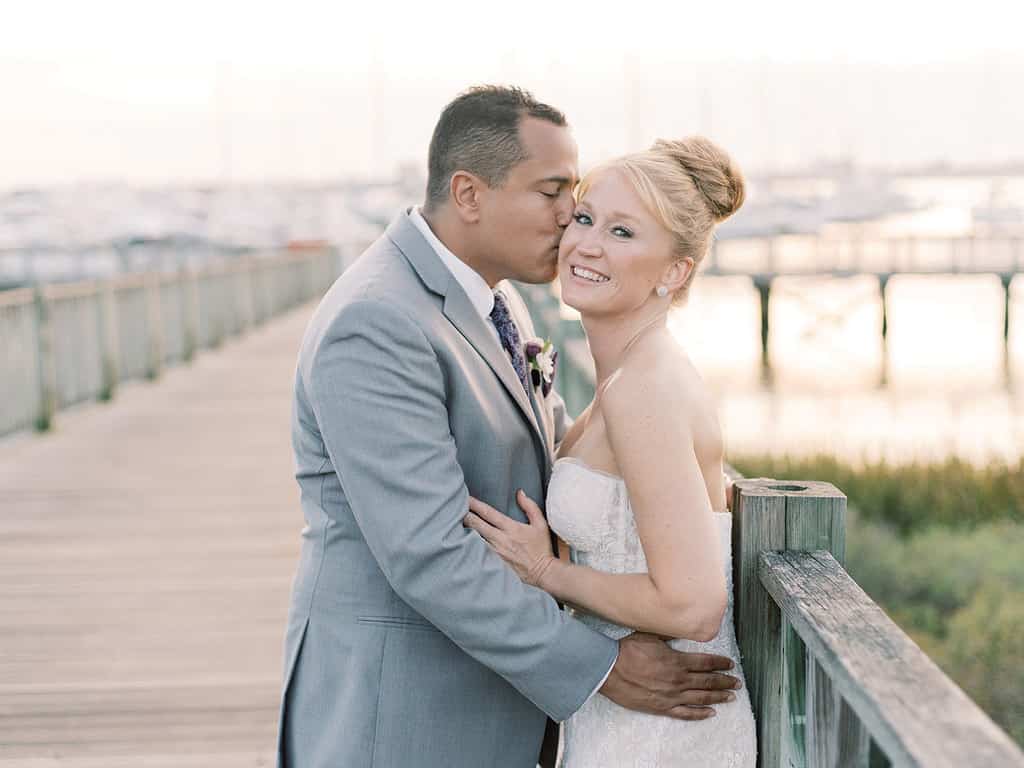
Jared & Angel Sabnani | Photo by Live View Studios
Charleston Nuptials Bride Angel (Sams) Sabnani was able to keep her October date and even the majority of her local vendors in a trimmed-down version of her wedding—but there was a snag. The couple had to go out of state.
Wanting to move forward with her next chapter in life, 39-year-old Sabnani didn’t want to postpone their wedding—and hoped to find a way to safely include family and close friends. Engaged in May 2020, at the time, they thought an October wedding was far enough out that their ceremony would be able to happen locally as planned. Unfortunately, as local restrictions lingered, they had to make a decision. Would they postpone the wedding or move it out of state? They chose the latter.
“We started getting a little worried this summer when restrictions were still in place,” says Sabnani. “In Phase II, we actually heard of people using the restaurant capacity to rent out restaurants and move their weddings indoors to avoid canceling. But we only felt comfortable with an outdoor wedding, and the restrictions didn’t allow for that.”
By August, restrictions on outdoor events varied across states, so the couple began weighing options with their wedding planner, Carrington Buck, lead designer and event producer at McLean Events. When moving their nuptials to South Carolina first came up, “it wasn’t an option for me,” says Sabnani, “but, a couple days later, we started thinking that Charleston is beautiful, and we started looking at venues.”
Sabnani found a large venue that was available on their planned date for a completely outdoor ceremony and reception. Although the space could fit 500 people, the guest list was much smaller, which also allowed for social distancing. Many attendees pre-tested for COVID-19, and those feeling ill or who had encountered anyone feeling ill did not attend. All of her original vendors—except for her cake designer—were able to travel for the ceremony, giving much-needed business to a decimated Raleigh industry. “It’s been so hard on the wedding industry because everyone is postponing and canceling,” says Sabnani. “The photographer and florist lost so much business this year, so we were so happy to still be able to support our local vendors.”
Although only half of the originally invited guests attended, and aspects of the wedding seemed different—like masks, etc.—Sabnani feels lucky she still was able to have her special day. And no one contracted COVID—thanks to the precautions taken.
“Leading up to it, I don’t think I got quite as excited as I would have in a normal year,” says Sabnani. “But once we were actually there and it actually happened, it was amazing. It was awesome having that moment.” Sabnani’s wedding planner, Buck, says that, in an unpredictable climate, it’s important for brides to readjust their mindset and determine what changes they are willing to make to achieve their dream wedding amid a pandemic. “I’ve had several clients who have changed plans entirely, eloped, and called it a day, and they are OK with that,” says Buck. “Some brides really want that big 250-person wedding, and they’re OK with waiting a year, or they’re OK getting married in their parents’ backyard and having their reception later.”
Buck says it’s important to sit down with your fiance and review your guest list, making sure you’re comfortable considering a smaller number if you’re getting married in 2021. If not, she says, maybe start looking into 2022 or 2023. Also, talk to your vendors about their COVID-19 clause and what the date-change process is so you have a good backup plan in place. For some brides, that may mean rethinking what your “ideal” wedding looks like. “I think the best thing for brides is to try to reimagine that dream,” says Buck. “It doesn’t have to be a bad thing—it’s just the hurdle of adjusting mentally. For many brides, they’ve been thinking about this day for many years. And, for some, it meant a full dance floor, having 250 of your family and friends there, and lots of happy hugs. For many of my clients, once they start to realign their plans to adjust or move their event, then they’re able to get excited all over again. My job is to make sure that even with the ‘detour,’ it’s still a really happy process and they don’t feel like they’re settling.” Buck adds authentically, “We don’t want their event to feel thrown together—it’s still their wedding day!”
Rachel Simon & Kurt Beyer
We’ll Just Wait Rachel Simon knows what she would like her wedding to look like and is willing to wait for it. Simon, who moved to Raleigh from New York a few months ago, has so far only booked the venue and photographer. Everything else, she says, can come at its own pace.
“If not for a pandemic, we’d be moving faster,” says Simon. “We know we want to take things slowly and see how the world moves over the next several months.”
Although Simon’s wedding date is not until April 2022, she says the one nuance she’s really noticed in pandemic wedding planning is making sure contracts allow for rescheduling without penalty, something she admits would not have been a big deal before a time when everything might need to be canceled or rescheduled.
“The biggest thing in terms of talking to our vendors is that everything in our contracts has wording on rescheduling and that they allow for that,” says Simon. “Vendors have been really great about recognizing this too. I know of many friends and family that haven’t been as lucky and had to have a lot of hard discussions with their vendors.”
COVID-19 clauses were obviously not part of the contract a year ago, and vendors—as well as clients—need to be protected against changing plans.
An Industry Holding Out Hope For Coleen Speaks, owner of Whitaker & Atlantic event space near downtown Raleigh, cancellations have been all too common this year. Although she offered to anyone who was booked a chance to do whatever was allowed on their date with the opportunity to come back once the pandemic is over and restrictions are lifted at no charge, not a single person took her up on that. And she is at a 95% cancellation rate since the pandemic for all events—not just weddings.
Speaks, who also owns PoshNosh Catering and Hummingbird, says simple things like menu planning have become difficult. The virus has ruled out buffets, and the safest option is a plated dinner or individual food item. Even when the pandemic dissipates, senses are going to be heightened to germs and how events are planned and hors d’oeuvres are passed.
“One side of me is really ready, and the other side of me is nervous,” Speaks says of events starting back up again. “I do think it’s going to be like the Roaring ’20s when Prohibition was lifted and everyone went crazy.” Although Hummingbird is doing well with its outside patio space, Speaks’ event space has only had one event since March, she says, “because we are strictly sticking to the governor’s orders.” She does have an upcoming April date booked, however.
“The couple doesn’t care and is going to move forward with whatever numbers are allowed,” says Speaks. “I like that approach because, at the end of the day, it is ultimately about that couple and their love and commitment. I think we’ve all realized through this that our priorities have changed—less is best; we can do with less; and quality versus quantity. It’s been eye-opening and humbling.”