If hanging upside down from the ceiling in an inverted yoga pose doesn’t sound like fun to you, you’re missing out.
Let me start off by saying that yoga has never been my thing. I’m not flexible, I’m clumsy, and I can’t even touch my toes with my legs extended. But I do like to try new things, so, of course, I signed up for an aerial yoga class this month.
It was comical, to say the least.
For those unfamiliar, aerial yoga is a variation of traditional yoga with a giant piece of cloth suspended from the ceiling like a swing. My class took place at Cirque de Vol downtown, in a room full of other newbies. Thankfully, this studio requires that you take the beginner’s class first if you, like me, have no experience. There was comfort in knowing that everyone else was as clueless, and possibly as intimidated, as I was.
We started by picking out our aerial fabric and ensuring it was adjusted to rest just below our hips. Positioning is key once you start lifting your legs off the ground, to prevent injury. Once I was situated next to my golden fabric, the class started easy. There was a little stretching, a lot of deep breathing and some traditional yoga poses like happy baby.
Then, things changed.
Photo courtesy of Tracy Jones
We placed a foot in the silk behind us and stretched in various poses. I must say that because running is my primary exercise, my hips tend to get tight. These single-foot exercises stretched me out in a way I never thought possible and I feel more flexible today, so bonus!
Now, here comes the painful part: standing in the fabric. I was surprised that it hurt my feet as much as it did, because it’s cloth, but the tightness was intense for me. The instructor said it gets better over time, so maybe with a few more classes I wouldn’t notice as much.
I wasn’t great at focusing on my core, so I was swinging all over the place, but I did complete every pose while standing. I was proud of myself for that, even if I was spinning out of control.
The fear factor came with our first inversion. With a few careful wrapping motions of the arms and feet, we were supposed to flip ourselves upside down and relax. There was nothing between me and the wooden floor, other than a thin yoga mat, so to say I was nervous is an understatement. I waited until most of the room flipped without disaster, then tried it myself—and nailed it! Inversion one, complete.
Feeling braver, I was willing to conquer the traditional downward dog pose with the silk at my hips. I immediately felt like I was going to slingshot onto my head, but our instructor urged us to relax into it and trust it. I was told to lift my legs high off of the ground, into a high “V” position. Say what?! I did it, but the fabric hurt my hips so I came down earlier than the rest of the class. Looking around, I wasn’t the only one who hesitated.
The class finished with a soothing moment in the comfortable cocoon that the fabric becomes when it’s all pulled out. We were like a room full of caterpillars waiting for metamorphosis.
The bottom line: Aerial yoga was a ton of fun to try. If you’re looking for a low-impact workout that taps into your physical awareness and helps stretch you out, give it a go. If you like it, there are more advanced classes you can take.
Cirque de Vol is located at 300 W. Hargett Street, #40 and offers aerial yoga, trapeze, aerial fabrics, fitness and dance classes.
This month, I tried rowing a fictional boat in a class full of eager crew members. Row House, Raleigh’s newest rowing facility in Midtown East, teaches the technique, style and stamina that’s needed to keep pace.
Row House officially opened last August and this is the first of six locations coming to the Raleigh area over the next several years.
“We have seen an overwhelmingly favorable response from the local community,” says co-owner Rob Wagner. “Many members and prospects appreciate the high intensity, low impact aspects of the workouts, especially those with previous injuries and joint issues who have limited workout options to acquire a full body, high intensity cardio workout.”
I was especially looking forward to this class because, like those members and prospects mentioned above, I am dealing with my own injury—shoulder tendinopathy as a result of carrying a toddler continuously on one side of my body. My physical therapist, Will, says that rowing would be a great activity for me as long as I keep my posture intact.
When I arrived at Row House, I was greeted enthusiastically, given the rundown of the facility and shown to my rowing machine. My coach, Michelle, made sure my feet fit into the machine and gave me a full tutorial on how to row properly utilizing my legs and my core.
Wagner explains that Row House coaches go through a training program that focuses on proper rowing form so that they can instruct members on how to achieve the most effective workout. Coaches spend the first portion of each class instructing participants, who may vary from beginners to experienced rowers, on proper form. Coaches then lead the class through the workout while actually performing it themselves for about 70 percent of the class. Depending on the type of class, the 45-minute workout concentrates most of the class time on the row machine (or erg, short for ergometer, that’s used to measure energy or work), rowing at different stroke rates mixed with intervals of of body weight and dumbbell exercises off of the row machine.
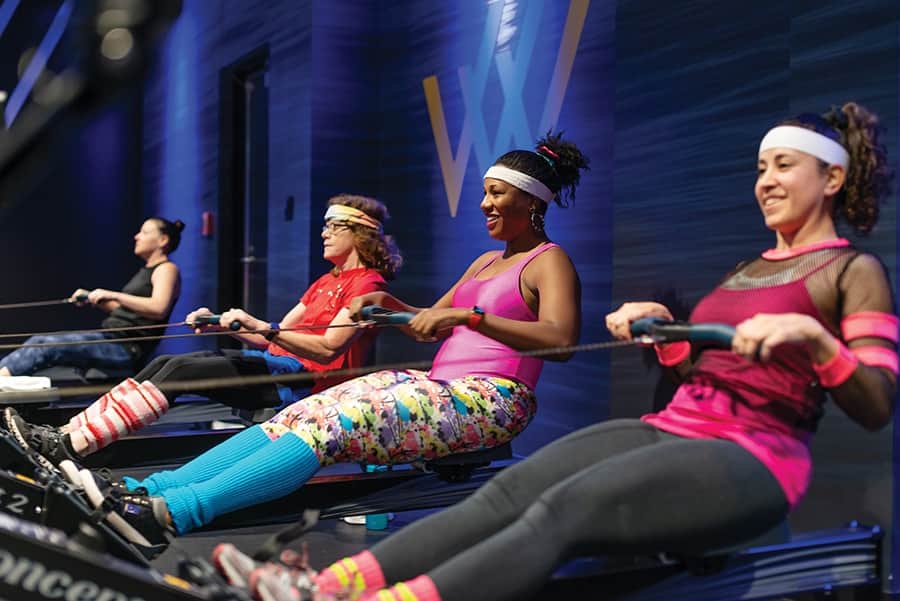
Writer Tracy Jones at Row House | Photo by Jennifer Robertson
Luckily for me, my particular class was ‘80s themed. I felt a bit out of place in that I failed to dress for the occasion but as I looked around in a sea of neon and scrunchies, I knew that no matter what was to come, I would have fun and listen to some great music.
House classes, like the one I took, switch between rowing on the erg and performing movements off of the erg. The first break mostly involved different forms of squats, which are actually a favorite of mine. The second break was a lot more upper body. With my shoulder issue, Michelle assured me that I could do any other exercises that made me feel comfortable, or simply stay on the erg. Since the erg was wearing me out, I opted for ab work.
Because Row House stays true to the sport of rowing, the class participants row together at the same cadence as if we are all in the same boat, with the stroke rate dictated by the coach who acts as the boat’s coxswain. The performance of the class as a whole is displayed on two large monitors in the front of the room. My stats were kept private and displayed on my personal monitor (which I appreciated because I was a little behind the group). I was assured it would take a few classes to get the hang of it.
All in all, this class was nothing like I’ve ever experienced because I honestly never felt tired during it. My arms burned and I was ready to stop, but it wasn’t the same level of cardio exhaustion that I’m used to. When I woke up the next morning, however, I felt the gain throughout my core and knew that I done real work. Members will typically burn between 400-800 calories per 45-minute class based on their effort. Since the workout is effort-based, I controlled the intensity of my own workout.
If you’re looking for a low-impact, high-energy workout, rowing is probably for you and you can do it as many times as you choose throughout the week. Row House offers a free trial class to anyone who wants to give it a try.
No matter if you’re a teetotaler or you like a tipple, Killjoy will offer a totally unique drinking experience.
There’s never been a better time to be a consumer: whether we’re talking build-your-own burrito bowls or luxury cars, custom-designed sneakers or vacation packages, these days, we’re placing a premium on purchasing exactly what we want.
So, why should our cocktails be any different?
This spring, Zack Thomas and Josh Gagne, longtime fixtures in Raleigh’s bar and hospitality scene, will open Killjoy, a bar designed to custom tailor a cocktail experience for each individual guest who walks through the door. Located in the building at 116 North West Street across from Clouds Brewing—a space seasoned Raleighites will remember as the erstwhile Blue Martini—Thomas and Gagne say the concept, for the Raleigh market, is one of a kind.
“We will initiate a conversation with each guest to figure out their particular tastes and guide them through our drink building process,” Thomas explains. If a guest can’t speak with a bartender directly, he says, they can fill out an order pad with options for spirit, style and complexity. “This will ensure that the guest receives the same amount of attention on a busy Saturday night as they would on a slow Tuesday afternoon.”
Another selling point? Guests who don’t want to imbibe have the option to buy a delicious drink that’s completely spirit-free.
Zack Thomas | RDP3 Photography
For Thomas, that point is personal. Though he’s worked behind bars all over downtown Raleigh, and with Chapel Hill’s Crunkleton and as a brand ambassador for Durham Distillery, Thomas has been practicing sobriety for two years. Thomas says his path to sobriety wasn’t easy, given his past and choice of career, but that it was a decision he had to make for his health and to achieve balance in his life.
“If you want to be completely dedicated, recognize what’s working for you and what’s not working for you,” Thomas says. “It’s intimidating.”
A Raleigh native, Thomas grew up on Hillsborough Street, in and out of bars including Pantana Bob’s, Players Retreat, Crowley’s and East Village where his dad worked as a bartender.
“My daycare as a kid would be going to bars, helping him set up, and my mom would pick me up after working at NC State,” Thomas says. “I have a unique perspective.”
It’s a perspective that served him well as he decided to enter the family business, landing at Foundation where he honed his craft building creative cocktails using only American spirits and, later, as the bar manager at Crawford and Son. But when Thomas’s son was born four years ago, Thomas says he started to think about making some changes.
RDP3 Photography
“I felt the only answer to being a good father was to get a 9 to 5 job,” Thomas says. So he took a position at the City of Raleigh Museum and enrolled in school full-time. “That only lasted a semester because I missed being behind a bar so much.”
Eventually, Thomas decided to give sobriety a try. He joined Ben’s Friends, a food and beverage industry support group for professionals struggling with substance abuse and addiction. Thomas got to know Scott Crawford, the co-founder of Ben’s Friends and founder of the Raleigh chapter, and he connected with others in the local industry facing similar daily struggles.
“I was pretty alone in being a bartender,” Thomas says. “What do you do if someone offers you a shot?”
But he persisted, taking the view that, for him, alcohol functioned as a food allergy.
“I felt I had some anxiety associated with my job and alcohol was getting in the way of being able to address it,” Thomas says, “Also, I’ve lost 50 pounds. I have so much more money now and I have mental clarity.”
Guarav “G.” Patel, the owner of Eschelon Hospitality and another longtime fixture in Raleigh’s bar and hospitality scene, says he’s seen a rising interest in practicing sobriety among young people. Patel, who himself has been practicing sobriety for nine months now, has served as a consultant to Thomas and Gagne on the Killjoy concept.
“It’s about a balance,” Patel says. “It’s about having the right balance, practicing wellness and having the option. That’s really it, not just having to say, ‘I’ll have a soda water with cranberry juice on the side.’”
RDP3 Photography
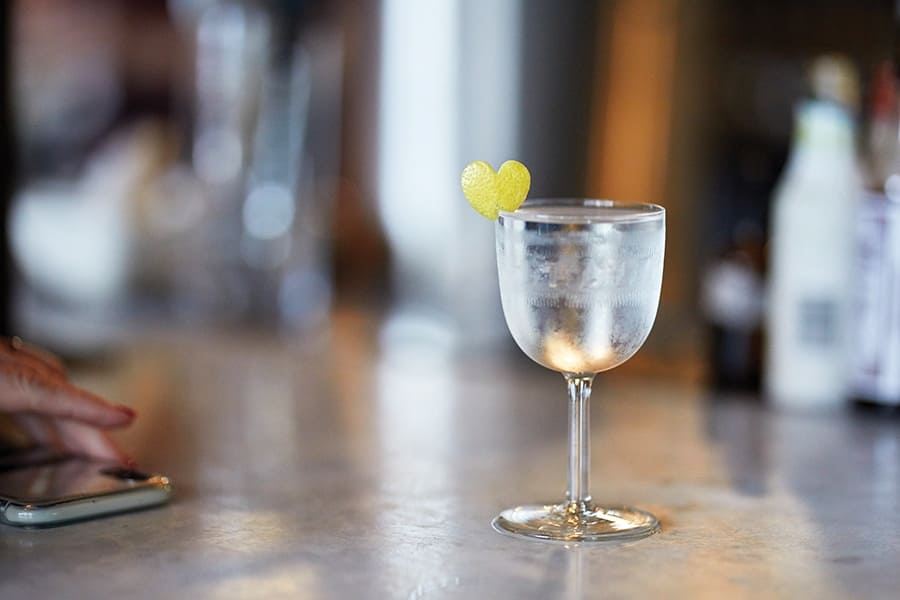
Along with design-your-own cocktails and spirit-free drinks, Killjoy will offer a selection of traditionally prepared, frozen, draft and bottled original cocktails featuring in house specialty ingredients. A list of quick classics will be posted up behind the bar for convenience and the owners will maintain a database to help bartenders decide how to create drinks based on customers’ stated preferences, “allowing them the freedom of creative expression,” in Thomas’ words.
Patel compares the Killjoy experience to dining in a high-end restaurant where you can describe exactly what kind of dish you’d like and the chef will prepare it for you according to your tastes.
“It is very much a new concept for Raleigh, for North Carolina,” Patel says. “This is about being hospitable to anybody, and everybody, filling a void we believe is here in the market and enhancing Raleigh.”
For non-drinkers like Thomas, Killjoy will be a welcome addition to the city’s bar scene.
“I don’t hate alcohol whatsoever,” Thomas says. “Sobriety doesn’t have much to do with being a bartender, it isn’t as hairy as people make it out to be. It all boils down to whether you trust yourself or you don’t. There are the same problems I had when I was drinking. But now, I don’t have the ability to drink them away and forget about them.”
The much loved club celebrates two decades in downtown Raleigh.
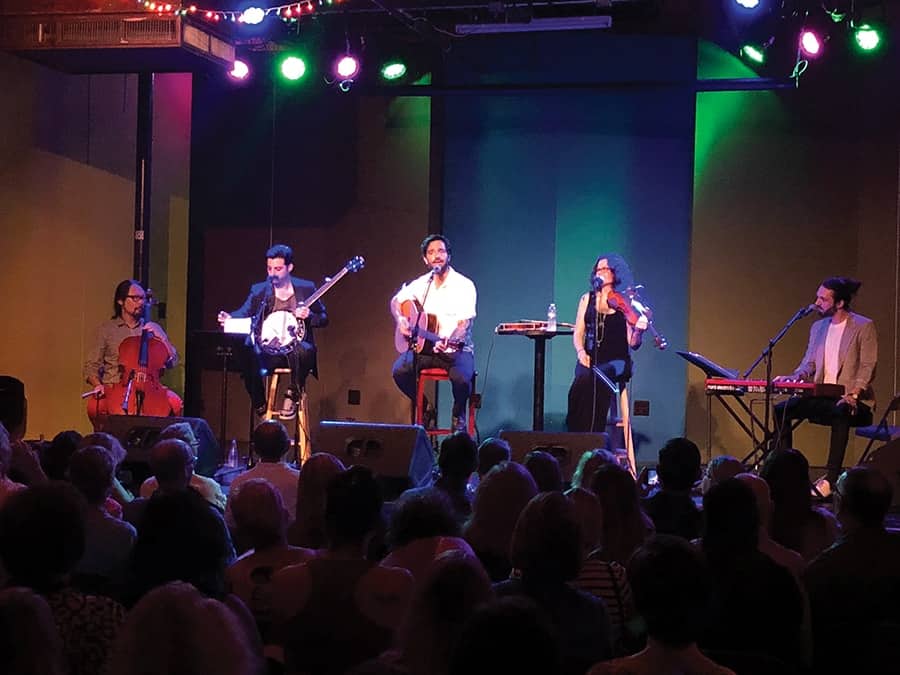
When Paul Siler and Cheetie Kumar toured with their band, The Cherry Valence, two decades ago, the couple was unhappy with the selection of places to play in Raleigh. Siler’s solution was to open Kings, a music venue run by musicians, that’s become beloved by artists and their fans alike. It’s also one that, through investment and innovation, is still going strong after 20 years on the scene.
“We were touring a lot and it was frustrating not having a venue that felt like a ‘home base,’” says Siler, who married Kumar four years after the original Kings opened. “A place that we’d want out-of-town bands to come and play and a place that we’d feel comfortable in ourselves.”
Siler wasn’t the only one that felt that way. So he, along with Steve Popson and Ben Barwick, touring musicians in the bands Polvo and Ashley Stove, started looking for a space. They soon found one, a small room on South McDowell Street.
From the outset, Kings was unique.
“Steve had previously owned an ’80s arcade game business on Hillsborough Street called the Blue Bassoon,” Siler explains. “The deal was, part of the building would have old arcades and a pool table and the back part would have a venue area.”
By July of 1999, Kings was open seven days a week.
More like a bar with shows than a concert hall, Siler and his partners began to realize that there were too many nights for bands to be able to fill. They had to get creative. They began to see Kings as a warehouse with proper permits—a de facto community event space.
“Variety definitely kept us open,” Siler says. “There are only so many bands that people will come and see. So we had game shows like the Hollywood Squares, The Gong Show, Family Feud. We had comedy nights, techno parties, dog shows, drag shows, occasional political events and fundraisers.”
Cheetie Kumar and Paul Siler at Kings | Photo by RDP3 Photography
In 2007, the space Kings called home was torn down to build a Wake County parking deck just steps from the Raleigh Convention Center. The venue needed to relocate. It took nearly three years, but Siler and Kumar signed a lease in 2010 for the space at 14 West Martin Street, which was a five and dime store from the late 1960s through the 1990s. The space had also formerly served as a bar, retail, and then a pizza shop, with bars called Lizzie’s, and then Alibi, occupying the basement.
“The space that we really wanted is the one that we ended up in,” Siler says. “There was room for a venue, room for a bar and a restaurant space. [Cheetie] felt like she could run a restaurant and put a menu together that would be interesting.”
Kumar thought she could offer an interesting food concept that would work in downtown Raleigh based on her talents for cooking and her background growing up in India, and then in New York City, and then relocating to the South. All of that, combined with the touring she and Siler had done, gave Kumar insights into how to make a restaurant different than others in Raleigh. She called the restaurant Garland.
Garland has evolved over the years, morphing from offering strictly street food—it originally opened selling elevated snacks out of a take-out window—to casual fine dining, with Kumar racking up multiple James Beard Award nominations.
Now, 20 years on, Kings sits above Garland, with dance-friendly dive bar Neptunes nestled below. As a smaller space, Neptunes has been able to fill a void for events that might draw fewer people than Kings. Neptunes, too, is going in a new direction, with interior renovations and an expanded drinks list.
“We’d always had DJs, but we started having other things there occasionally: jazz nights, comedy, rock shows, that were more intimate,” Siler says. “We hope that people will enjoy it as a cozy spot after work, before dinner, or an after dinner spot with excellent cocktails, a good beer list, great music playing and lovely snacks.”
Neptunes
Soon, Neptunes will open at 5 p.m., with a snack menu from Kumar featuring masala popcorn, chile peanuts, soft cheeses, pickles and jerky.
While Kings, Neptunes and Garland are all very much their own spaces, they feed off of each other and help each other prosper, Siler says.
“Often, people come to Garland and then find out about the other two and go the same night, or they come back,” Siler says. Two years ago, he and Kumar bought out their other partners.
“Neptunes is often used as a waiting spot for Garland, which is a great way for people to find out about it,” Siler continues. “Each has a very separate identity, but you don’t have to go far at all to get to the next place.”
Like Kings, downtown Raleigh’s identity will grow and change in the coming years and getting to the next place quickly will be key. As for the storied club/restaurant/dive bar complex—here’s to another 20 years.
When most of us think of fitness, we focus on the body. But the wellness of our minds and the strength of our relationships to our communities play a big role in our overall health. Nathan Williams and Brit Guerin will integrate all three components in Current Wellness, a center for physical and mental health in southeast Raleigh that’s set to open early next year.
“There is a lot of fitness that is concentrated on your body and there is a lot of pressure put on people to be fit,” Guerin says. “It’s also important to treat ourselves well mentally as well as physically.”
Current Wellness will offer a movement studio, a teaching kitchen for food education and a co-working space for counselors as well as other wellness practitioners.
“We’re calling it a movement studio intentionally,” Guerin says. “We don’t want to be like some of the things that mainstream fitness promotes. We won’t apply pressure to body image and body size. We’re not going to have mirrors. It’s about healing and being supportive to our bodies. It’s more similar to a yoga studio, but we’ll also offer functional fitness.”
Williams co-owns the company with his wife Brit, who has a background in fitness and mental health counseling. Together, they hope to establish a place for the community to come together and simply feel good.
“We live in southeast Raleigh and we really love the community, from newcomers to people who have lived in southeast Raleigh their whole lives,” Williams says. “We’re trying to make a business that’s inclusive for all of those people in that part of town, which is underserved for wellness services. Wellness is something that everybody needs and creates a connection between newcomers.”
Uplifting with Upfit
Brit and Nathan were able to bring their business to southeast Raleigh with the help of the city’s Building Upfit Grant, created to help small businesses and commercial property owners with improvements, renovations or additions to the interior of their commercial property. The program’s goal is to support a thriving and equitable economy through a strong small business ecosystem and investment in economic development priority areas.
Rafael Baptista, a strategic planning analyst for the city of Raleigh, says the grant is an important part of the city’s strategy for achieving long term, equitable economic development.
“Some of the desired outcomes of the grant include activating vacant properties in Raleigh, helping small businesses grow and expand and fostering small business investment in our economic development areas,” Baptista says. “The city is constantly assessing its small business support program to ensure that we are providing the appropriate incentives to small businesses.”
To date, 49 Raleigh businesses have received the Building Upfit Grant since its inception in 2016, representing a diverse set of industries and areas in the city.
Growing Community
For Williams and Guerin, they aren’t just opening a business—they’re joining a community.
“This is a vibrant community with really rich cultural history that has, at times, been overlooked,” Williams says. “Until recently, people haven’t treated southeast Raleigh as a destination. There have been people living here for years that know how great it is.”
While the brick and mortar component to Current Wellness isn’t yet complete, Brit and Nathan are already active nearby with pop-ups at Transfer Co. Food Hall, Dorothea Dix Park and Moore Square. They’ve held everything from a yoga and strength training class to demonstrations on how to cook healthy, local seafood from the Carolina coast.
“We want to engage with the community and collaborate with our neighbors,” Williams says. “We want to let people know what we’re about. From a bird’s eye view, people might not understand what we are, but we feel like we’re very different. As part of growth in an area that’s being gentrified, we’re being very conscious and we don’t want to be another business that pushes people out.”