Raleigh’s Boulted Bread makes the cut in 30 Breads to Bake Before You Die
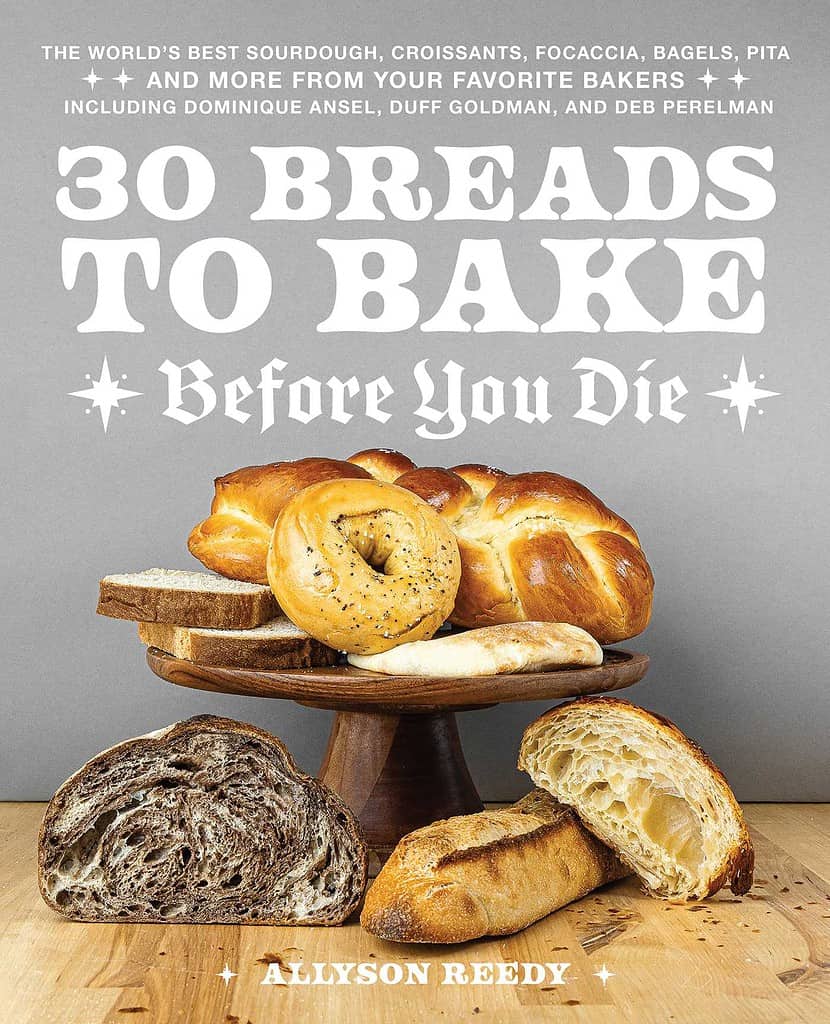
Attention, Raleigh bread enthusiasts! If you’ve never met a carb you didn’t like, then the new book 30 Breads to Bake Before You Die by Colorado-based writer Allyson Reedy (releasing Aug. 20) is a must-knead (get it?). And this isn’t just any old bread book—but a flour-dusted dream come true for anyone who’s ever locked eyes longingly with a baguette and wondered how to conjure up one at home.
Loaded with recipes from bakers who’ve spent countless hours kneading dough into life, this book transforms the intimidating art of bread-making into something as easy as, well, pie.
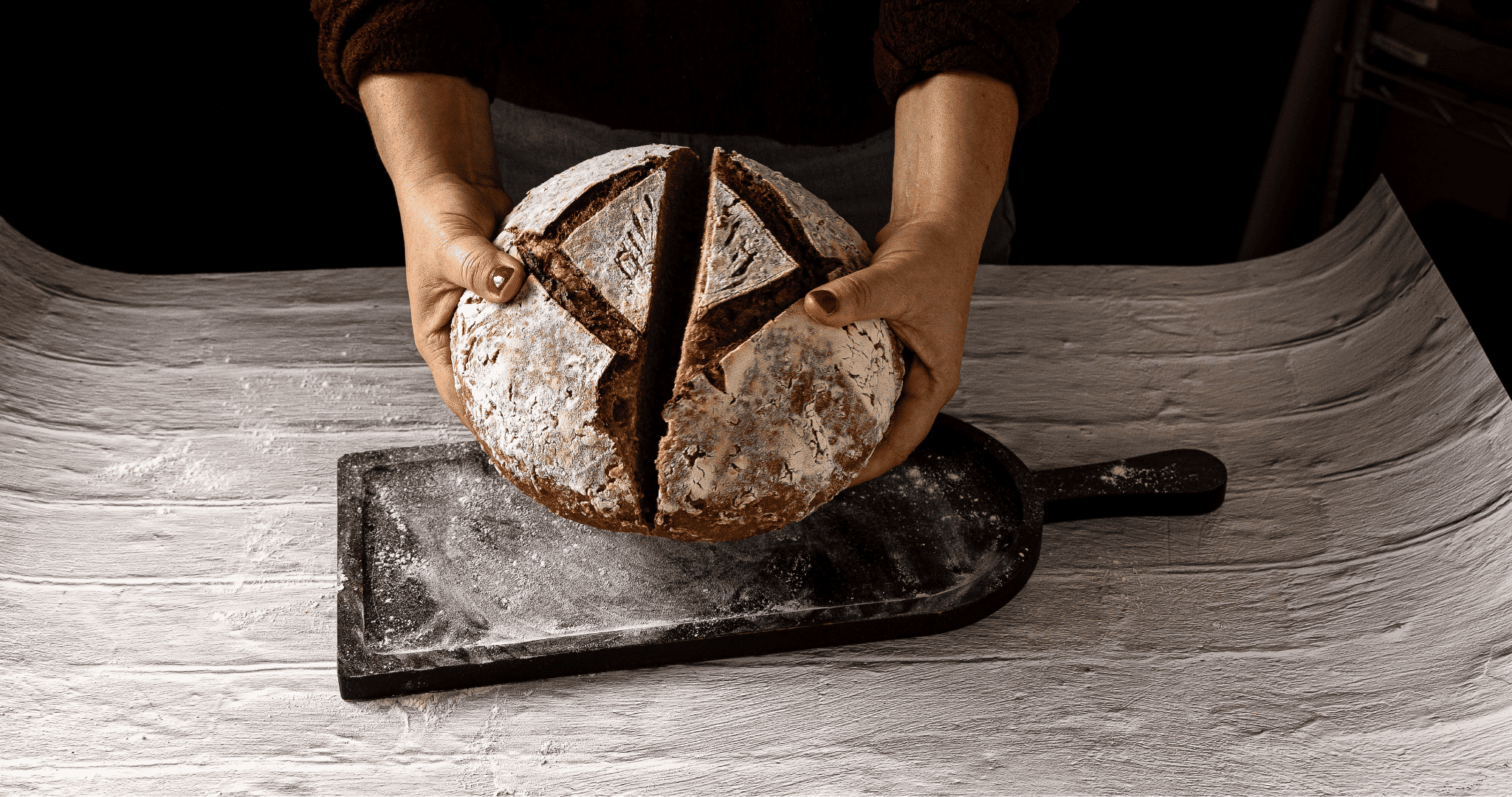
To add to the excitement, the City of Oaks’ very own Boulted Bread’s Smoked Oat Sourdough recipe is featured, which bakery co-owner Joshua Bellamy says plays well with several different flavor combinations.
“From way out here in Colorado I’d heard that Boulted’s bread was amazing, and I knew I had to include one of its recipes in the book,” says Reedy, who also notes that Bellamy’s passion was clear, and he wanted the recipe to reflect the bakery’s craft. “So, if you make the Smoked Oat Sourdough from the cookbook, you’re making his bread. It’s super hearty with the oats mixed into it, which means this bread almost acts as a meal—which is the best kind of meal I can think of.”
Bellamy adds that the loaf is “an exercise in adding flavor without adding ingredients,” ensuring your carb wits will be put to the test. “By smoking the oat porridge, the loaf takes on a completely distinct identity… you get the round mouthfeel of the oats with a slight campfire vibe,” he adds.
Bellamy also recommends toasting the slices to help “wake up” the smokiness of the oats. And, of course, he emphasizes investing in a digital scale for precision—because baking is all about precise measurements (and you don’t want to learn that the hard way).
So whether you’re a bread newbie or a seasoned baker, 30 Breads to Bake Before You Die guides you step-by-step to making all the carbs your heart desires—and we’re so (b)ready for it.
If you’ve never met a carb you didn’t like, this one’s for you.
Nothing in the world compares to the smell of freshly baked bread (prove us wrong—we’ll wait). And it was La Farm Bakery that first began spoiling the Triangle with the scent—and impeccable taste—of fresh loaves when it bowed in 1999. But it wasn’t until 2013 that other breadmakers began to build on the toastiness of a true classic bakery—aka where you can scoop artisan homemade loaves hot from the oven, in addition to other baked goods, pastries and cafe items.
Yellow Dog Bread Co. initially filled the void, with Boulted Bread following closely behind in 2014. After another short gap, Andrew Ullom, former executive pastry chef under Ashley Christensen, stepped on the scene with pop-up-turned-brick-and-mortar Union Special to much fanfare. And so, now, we raise a toast to these four authentic bread bolsters fueling the area with delectable carbs. Here, where to break—and buy and eat!—bread throughout Raleigh.
Boulted Bread West End
Run, don’t walk, to DTR’s recently relocated loaf haven. Even if you’ve never been to Boulted’s OG location or its new one just a few blocks away, you’ve likely enjoyed a slice or two before at a local restaurant (it’s a staple fixture of many eateries). Crafted with a three-step process—“our mill, our hands, our oven”—each batch of bread starts with in-house stone-milled flour using organic and heirloom grains that are then mixed with water and salt, and left to ferment overnight until the baking process begins the next morning. And the results are, well, immaculate—hence its nod as the best bread in NC by Food & Wine last year (!). Hey, it’s a no-grainer. boultedbread.com
Union Special Gateway Plaza, Fayetteville Street District
With “special” in its name, you know Andrew Ullom’s beloved bakery is going to deliver some exceptional carbs. And, boy, does it. Come for the fresh loaves made from a blend of sifted and whole-grain flours from Lindley Mills—and boasting the perfect balance of crusty yet soft and airy—and stay for the breakfast, lunch and brunch dishes. Think sandwiches (naturally), salads, biscuits and gravy, and more… but especially keep your eye on the ’Gram to see what specials the team is whipping up each week at both locations. Oh, and always save room for one of the signature cookies. unionspecialbread.com
La Farm Bakery Cary, Fuquay-Varina
About as close to an authentic French boulangerie as you can get in the Triangle, master baker Lionel Vatinet’s traditional bakery honors centuries-old baking traditions and techniques he acquired while training at France’s prestigious artisans’ guild, Les Compagnons du Devoir—elevated by locally grown fresh ingredients. Now boasting five locations—including one at the airport—La Farm produces 15 different types of breads, plus an additional 20 seasonal varieties throughout the year, using a European-style hearth oven. Now that’s anything but crumby. lafarmbakery.com
Yellow Dog Bread Co. Seaboard & Person Street District
Who let the dogs—er, carb lovers—out?! Despite its name (an ode to founders Tanya and Matt Andrews’ yellow lab, Ellie), this quaint bakery is all about treats for humans. On any given day, the shelves lining the wall behind the counter are stocked with fresh breads of myriad shapes, sizes, textures and flavors, all of which are made from local ingredients, like flour from Lindley Mills in Graham, NC. Yellow Dog’s rotating and seasonal sweet and savory bakery case is also not to be ignored—tempting with the likes of homemade cookies, croissants, scones, pop tarts and more. Good luck choosing just one. yellowdogbread.com
The freezer ain’t just for food. … What’s the “weirdest” thing you keep in there?
The freezer is no doubt the unsung hero of the kitchen. In a recent pod and subsequent article, Bon Appetitunpacked the freezer’s many virtues—and got down to the real cool deets on what random things their editors keep in there. So that got us thinking—and asking—what’s the wildest thing you keep in your freezer? Here, our team spills the (frozen) tea—because we feel like we can really “open up” to you (had to).
“My will and vodka” —Gina Stephens, Publisher, @ginasdawgs
“Vodka—not only does it make the drink colder, but gives it a texture you just can’t not love. Clearly I’m part Russian.” —Melissa Howsam, Editor-in-Chief, @mahowsam
“Gua sha massage tool for facial massage or peanut butter cups (they taste better frozen)” —Liz Comella, Creative Director, @liz.comella.design
“Eye mask—not for depuffing my eyes, but for putting on my forehead when I have a hangover headache.” —Lauren Kruchten, Associate Editor, @laurenn_nicol
“I freeze my grapes—they taste better that way! And plastic bottles of water for my plantar fasciitis. 😂 —Anna Beth Adcock, Editorial Assistant, @_annabethadcock
“Tequila and gin—even more delicious from the freezer!” —Debby Serena, Account Executive
“This is more geek than freak, but we have a whiskey ice mold with Darth Vader’s face.” —Susan Holt, Contributing Photographer, Susan Holt Photography, @susanholtphoto
“Vodka—I did live in Moscow for 3 years and it has to be served cold.” —Tina Dahir, Account Executive, @tinalovesraleigh
“My freezer nails the whole ‘Tell me you have kids without telling me you have kids’ challenge.’ Just picture a small muffin tin stuffed with washcloths for teething, a few leftover bags of breast milk (even though my son weaned months ago) and enough of those multicolored freeze pops to feed a small summer camp. Essentially, chaos.” —Kelsie Barton, Contributing Writer, @kelsie_barton
“Chicken trimmings. I save them in my freezer until I’m ready to throw them out so I don’t stink up my garbage.” —Sean Junqueira, Contributing Photographer, @seanjunqueira
“Does a bag of grapes count? I’m a firm believer in enjoying them as a frozen snack! 😂” —Eric Ginsburg, Contributing Writer, @eric_ginsburg
“I don’t keep anything crazy in there—sometimes people think it’s weird I put bread in there. 😂” —Cameron Rhinehardt, Marketing Intern, @camrht
Seven years ago, Hannah Page received a Dutch oven as a wedding gift; she didn’t know then that the present would become the medium for one of her greatest passions.
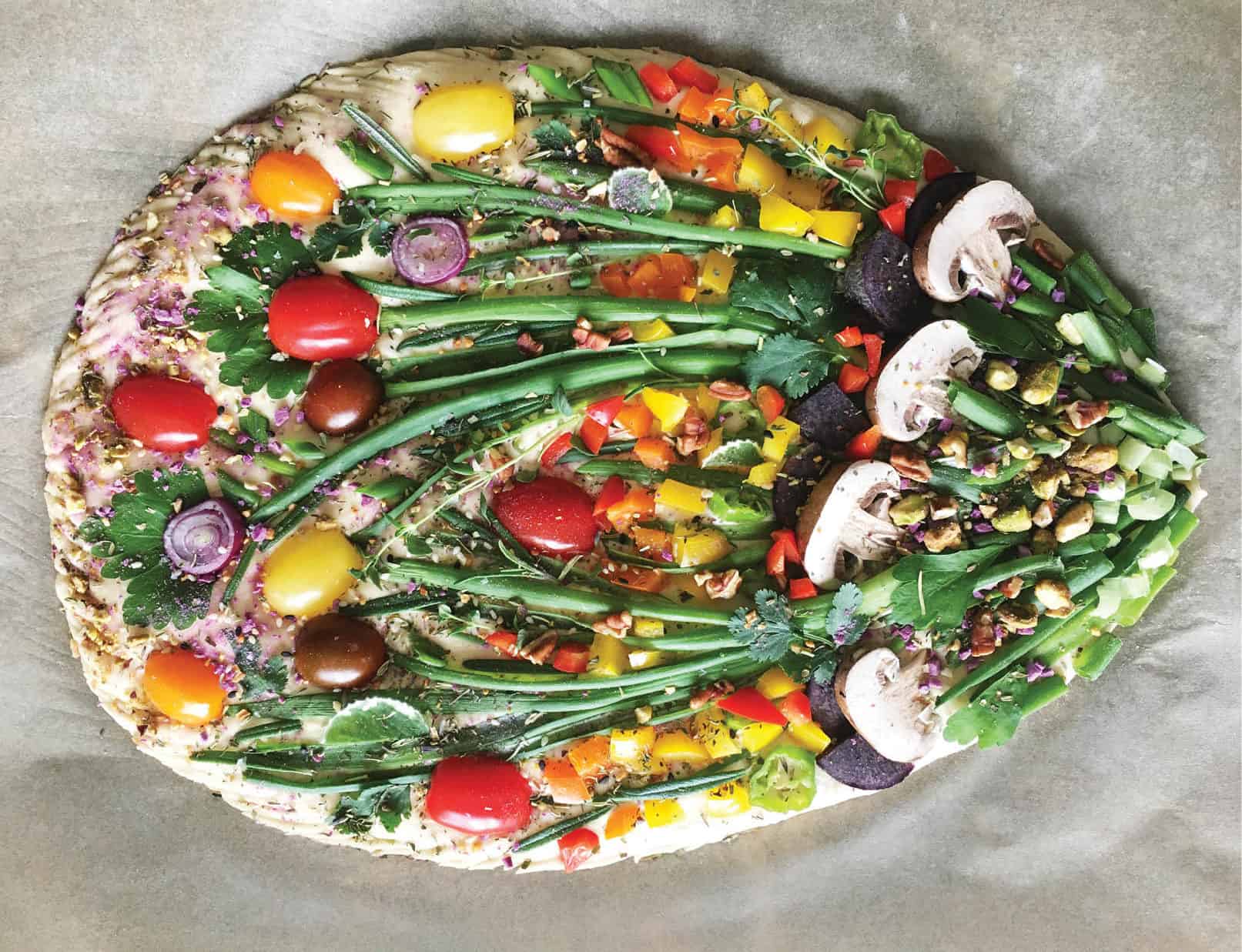
By day a history teacher at Raleigh Charter, Page runs the Instagram account @blondieandrye, devoted to her sourdough baking creations. Her posts feature colorful bread loaves decorated with zoodles, tomatoes, onions and spinach, to classic loaves with intricate carvings, all created in Page’s home kitchen in Raleigh. With 188,000 followers on the platform, Page’s page reaches quite the audience.
Hannah Page
A year after she received the oven, Page tested out a handwritten recipe for a no-knead bread that came with the gift. She never looked back.
“It happened by chance,” Page says of her hobby.
At first, Page created two sourdough starters: blondie, made with white flour, and rye, made with rye flour. Her best friend, Mary, prompted Page to start an Instagram account documenting her journey and @blondieandrye was born.
Page says she finds baking meditative as well as creative, a way for her to decompress after a long day of teaching. She says she has fun playing around with scoring loaves with a lame—a sharp tool for crafting designs on bread—and that she’ll sometimes practice scoring motions in a notebook, doodling whatever comes to mind.
But typically, she says, she designs as she goes along.
“There was some latent artistic sensibility within me, but until I discovered sourdough, I hadn’t found the right medium to express it,” Page says. She compares baking to a creative outlet she enjoyed growing up: acting.
“I see baking as theatrical,” Page says. “The loaf is something you produce and enjoy for a few hours or days and then it’s gone forever, just like a play that’s been performed. But there’s always another play and there’s always another loaf.”
While Page has had plenty of success stories as her Instagram shows, not every creation turns out as she hopes. She recalls a time when she placed a tub of dough in the oven to ferment it more quickly.
“I do this often,” she says, “but the key is to turn the oven off once it’s warmed. I didn’t do that this time.”
Page was in the middle of teaching her class when she realized there was a plastic tub at home in the oven, cooking.
“I raced home and, amazingly, it didn’t even smell that bad,” she says. “I definitely ruined my baking stone, though.”
For Page, it’s the combination of art and science between starter and sourdough that most intrigues her.
“While [baking] can be frustrating, I love the mystery and challenge of coming up with new designs and seeing where each creation takes me,” she says. “Baking bread is fundamentally nourishing.”
WEB EXCLUSIVE Homemade bread is trending. If you’ve been on Instagram or Facebook in the last couple months, you’ll have seen a lot of people are baking bread with their extra free time in quarantine. And if you haven’t, you might’ve realized that flour and other baking supplies are scarce on grocery store shelves.
Some breads are harder to bake than others. Banana bread is an easier project that anyone can master with cheap, over-ripened bananas. Focaccia is also fairly easy and can be decorated with leftover produce in your fridge or herbs from your garden. Sourdough bread, on the other hand, is trickier, as it requires a sourdough starter that takes time and patience to develop.
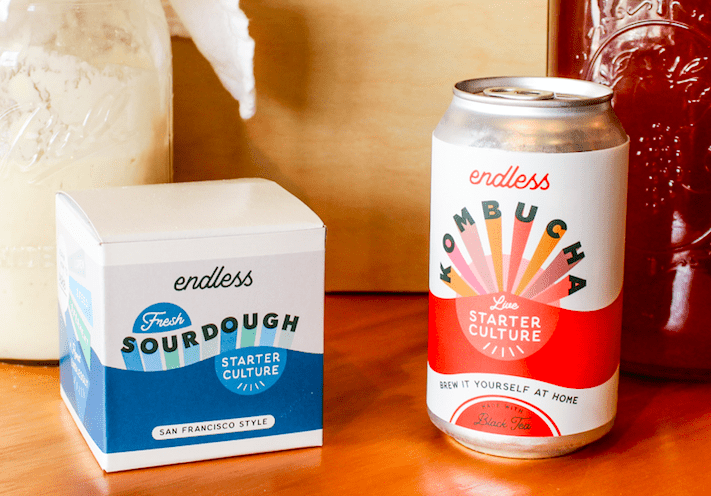
The recently launched company specializes in sourdough starter culture, as well as kombucha starter culture, that kick starts the process of baking sourdough bread for you. The starter contains a mixture of flour and water combined with wild yeast and healthy bacteria. To get the sourdough process started, simply add fresh flour and water to the starter and let it ferment for a few days before baking.
Endless Ferments Sourdough Starter
Although Endless Ferments launched just in time for the current bread craze, co-founder Patrick Hill of e-commerce agency Backpack Partners and his team have been working on the product for a few months now. Hill got into making sourdough through his brother, and since he’s been staying at home, has taken up baking as a personal hobby. He says it’s a great way to avoid going to the grocery store and ultimately saves him money as he’s not buying bread from the store.
“[Baking bread] is something that we think everyone should do,” Hill says. “Endless Ferments are all alive, active and ready to go so can start instantly and continue indefinitely.”
Carroll’s Kitchen, a nonprofit social enterprise restaurant in downtown Raleigh, is currently growing Endless Ferments starters. The restaurant was looking for more work, as right now it’s only able to offer takeout, so the partnership came about naturally. “We needed help growing the sourdough and they needed help providing for their employees, so it really worked out,” says Hill. For every sourdough starter sold, 10 percent of the sale goes to Carroll’s.
The kombucha starter, on the other hand, is made out of Endless Ferments’ facility on Ebenezer Church Road. Endless Ferments’ kombucha cans contain live starter culture to grow your own SCOBY (symbiotic colony of bacteria and yeast)—the “mother” of kombucha. To get started, just open the can, add black tea and ferment for about seven to 14 days. Once it has fermented, you can bottle the kombucha with fruit, herbs, extracts or other ingredients like ginger to create any flavor you desire.
Endless Ferments Kombucha Starter Culture
Hill says that there are benefits of brewing your own kombucha at home, too. For starters, it’s way more cost-effective than buying an average five dollar bottle of kombucha at the grocery store. Many store-bought kombuchas are also pasteurized and don’t have as many probiotics as if they had been brewed at home. Kombucha is said to be great for gut health and skin.
Once you purchase the kombucha and sourdough starters you can use them over and over again, as long as you continue to feed and ferment them. “The hope is that Endless Ferments makes it easier for everyone to make [sourdough and kombucha] at home,” Hill says. Hill and his team are using the kombucha and sourdough starters for the initial launch of their company; later, they hope to expand into other products as well.
Purchase Endless Ferments kombucha and sourdough starters at endlessferments.com.