Seven local nonprofits. One shared mission: putting your dollars to work before a setback becomes homelessness.
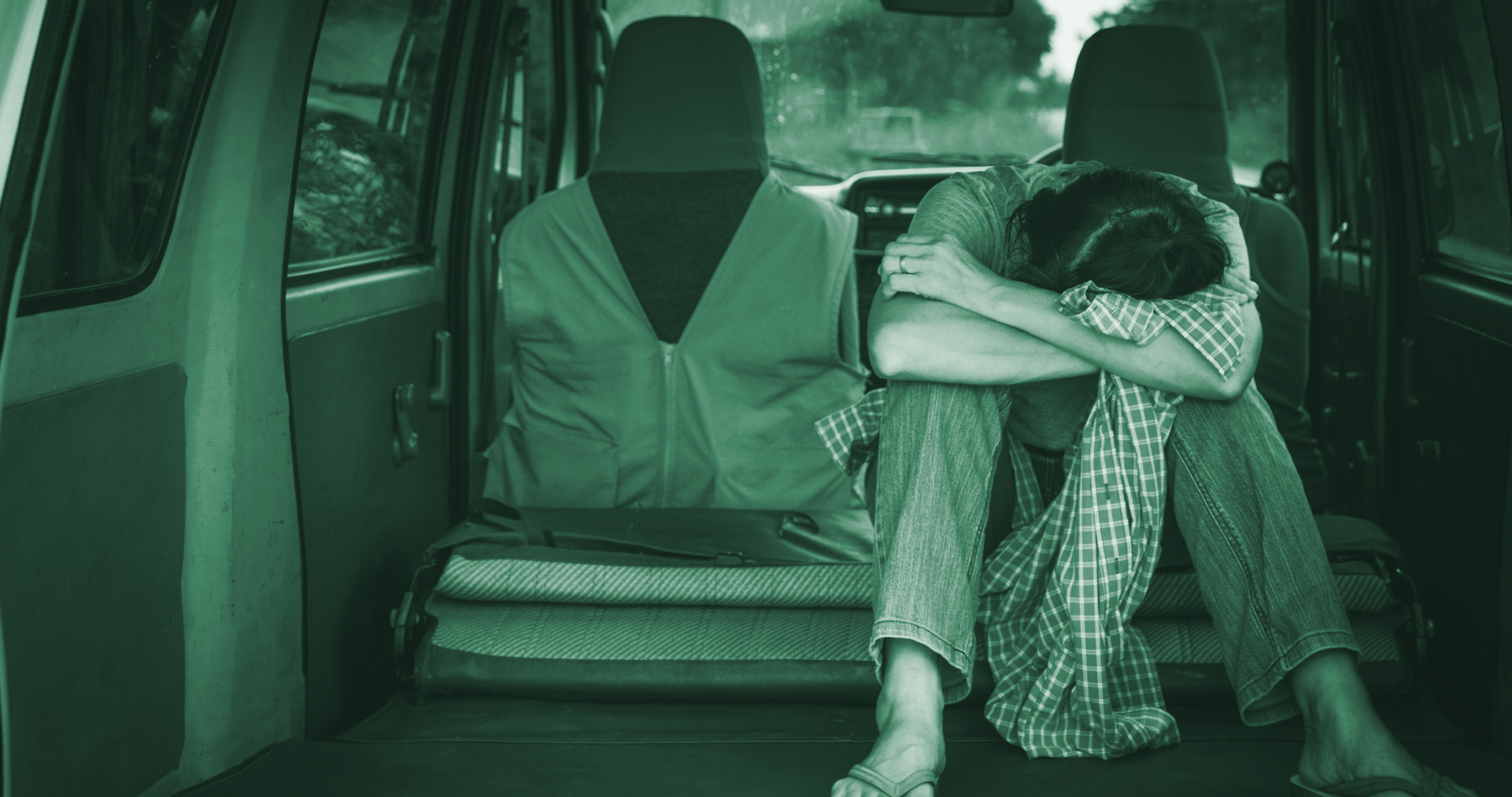
A parked car was never supposed to be home. But that’s exactly where one local mother and her two children found themselves after a divorce upended their lives. Bouncing between their car, emergency shelters and, when she could afford it, hotel rooms, she kept working—and saving—determined to secure a permanent home for her family.
And she almost did. The apartment was within reach. The monthly rent was manageable. But the thousands of dollars required upfront to actually move in weren’t. After everything she’d done right, $3,000 stood between her children sleeping in a car and sleeping in beds of their own.
Her story is far from unusual. So many of Wake County’s housing-insecure neighbors aren’t who you might imagine. They’re working parents, professionals and families who were making it—until suddenly they weren’t. An illness. An injury. A divorce. An unexpected death in the family. One ordinary setback that becomes another, and in a flash, the stability they spent years building begins to unravel.
That’s precisely what RM’s Give Raleigh, in partnership with Pinnacle Financial Partners, was designed to interrupt. The annual 40-day giving campaign raises funds for Cooper Charitable Foundation, which puts those dollars to work through seven local nonprofits helping neighbors stay—or become—safely housed.
For this single mother, that nonprofit was Oak City Cares. A $3,000 Cooper Charitable Foundation grant covered the move-in costs, finally allowing her family to trade nights in parking lots for a permanent home. Today, her children have a safe place to sleep, study and grow—and their mother can focus on raising them instead of wondering where they’ll spend the night.
Ten bucks didn’t pay that $3,000. Neither did $20 or $100. But your $10 was never meant to do it alone. Add it to ours. And your neighbor’s. Your mom’s. Your dad’s. Then add Pinnacle Financial Partners’ dollar-for-dollar match of the first $10,000 raised. That’s what Give Raleigh does. That’s how $10 becomes something much bigger.
Last year, those gifts became $118K+ through Give Raleigh—money Cooper Charitable Foundation put into the hands of those seven local nonprofits that know exactly where a few dollars at exactly the right moment can change the trajectory of someone’s life.
A deposit gets paid. A bed gets delivered. A car gets repaired. A student stays in school. A mother stays housed. That’s the $10 difference. That’s what happens when Raleigh gives together.
Meet the Mission
Seven ways your gift can help keep a Wake County neighbor moving forward.
Family Promise of the Triangle | 1993 Home is more than an address. Family Promise helps families move from cars, motels and borrowed couches into permanent housing through prevention, emergency shelter, rapid rehousing and ongoing support.
The Green Chair Project | 2010 Four walls don’t make a home—a bed, table and chair do. The Green Chair Project transforms empty apartments into homes by providing furniture and essentials for families rebuilding after homelessness, crisis or disaster.
Oak City Cares | 2019 Finding support shouldn’t be harder than asking for it. Oak City Cares connects neighbors with housing, employment, health care, meals and other essential services through Wake County’s one-stop hub for homelessness resources.
Wake Tech Fostering Bright Futures | 2009 You can’t put a price on education—until you can. FBF removes financial barriers through tuition assistance, stipends and wraparound support, helping former foster youth stay in school, earn degrees and build independent futures.
Healing Transitions | 2001 Recovery isn’t a straight line. Healing Transitions provides free peer-based recovery services—from emergency shelter and detox to long-term support—giving people as many chances as it takes to rebuild their lives.
The Carying Place | 1993 Sometimes preventing homelessness is as simple as helping a family through one difficult season. The Carying Place combines short-term housing, financial education and personalized support to help hardworking families achieve lasting stability.
The Women’s Center of Wake County | 1977 Everyone deserves a safe place to begin again. Wake County’s only day shelter for single women provides meals, showers, housing support, case management and life-skills programming to help women move from crisis to stability.
How a missed paycheck, a broken car or one unexpected bill can lead to homelessness—and how Give Raleigh is working to interrupt that story.
She clocks out at 4pm—which means she’s already too late. Too late for the only emergency shelter in Wake County where mothers can stay with their children. So instead, she pulls up in a parking lot for another night at “home” in her car.
But she doesn’t have the life you probably imagine. She has a job. Her child has daycare. She did everything she was told to—and still, it wasn’t enough.
It sounds like an anomaly—but in Raleigh, it’s anything but. Across Wake County, more than 1,000 people are sleeping outdoors or staying in emergency shelters—and the daily waiting list for a bed alone is 120 deep. Behind those numbers are stories—not of people who gave up, but of people who have run out of options: a parent paying $90/night for a motel, a family sleeping in their car, someone choosing between fixing a transmission or paying rent, a domestic violence survivor starting over, a professional who just got wiped out by unexpected hospital bills.
The often-overlooked reality is, most people don’t become homeless because of one catastrophic event. They get there one ordinary setback at a time. The crisis isn’t always losing a home—it’s having no one to solve a small problem before it becomes a devastating one.
That’s where RM’s fourth-annual Give Raleigh comes in. Returning focus to housing insecurity this year, the 40-day giving campaign rallies support for boots-on-the-ground organizations working to keep small setbacks from becoming permanent ones. Kicking off Sept. 1, Raleigh Magazine, in partnership with Pinnacle Financial Partners—which will match the first $10,000—will raise funds for Cooper Charitable Foundation, supporting seven local nonprofits helping keep Wake County families housed, safe and stable.
If you’ve ever moved, you already understand the barrier. Making rent often isn’t the biggest hurdle—it’s coming up with the security and utility deposits, first month’s rent, application fees, and furnishings—all at once. For families already living paycheck to paycheck, those upfront costs can be impossible. Give Raleigh exists to bridge that gap, through locals giving as little as $10 to make a difference.
Efforts like Wake County’s Wake at Home initiative are making meaningful progress moving people from encampments into permanent housing. But local nonprofits say preventing homelessness before it begins remains one of the greatest unmet needs.
Last year, Give Raleighraised $118,180 to help these seven local nonprofits intervene before temporary setbacks became permanent—creating substantial impact in the fight against homelessness. This year, we’re doubling down. Because Give Raleigh isn’t about charity. It’s about intervention. It’s the difference between “I lost my apartment” and “I’m sleeping in my car.”
Meet the Mission
Homelessness is less about who someone is, and more about what happened to them. Last year’s $118K+ raised through Give Raleigh enabled Cooper Charitable Foundation to support seven local nonprofits helping neighbors move from housing insecurity to stability. Meet the missions—and just four of the many families whose stories changed because someone chose to give.
Family Promise of the Triangle | 1993 Home is more than an address. Family Promise helps families move from cars, motels and borrowed couches into permanent housing through prevention, emergency shelter, rapid rehousing and ongoing support.
The Green Chair Project | 2010 Four walls don’t make a home—a bed, table and chair do. The Green Chair Project transforms empty apartments into homes by providing furniture and essentials for families rebuilding after homelessness, crisis or disaster.
Oak City Cares | 2019 Finding support shouldn’t be harder than asking for it. Oak City Cares connects neighbors with housing, employment, health care, meals and other essential services through Wake County’s one-stop hub for homelessness resources.
Wake Tech Fostering Bright Futures | 2009 You can’t put a price on education—until you can. FBF removes financial barriers through tuition assistance, stipends and wraparound support, helping former foster youth stay in school, earn degrees and build independent futures.
Healing Transitions | 2001 Recovery isn’t a straight line. Healing Transitions provides free peer-based recovery services—from emergency shelter and detox to long-term support—giving people as many chances as it takes to rebuild their lives.
The Carying Place | 1993 Sometimes preventing homelessness is as simple as helping a family through one difficult season. The Carying Place combines short-term housing, financial education and personalized support to help hardworking families achieve lasting stability.
The Women’s Center of Wake County | 1977 Everyone deserves a safe place to begin again. Wake County’s only day shelter for single women provides meals, showers, housing support, case management and life-skills programming to help women move from crisis to stability.
Real People, Real Impact
Where Every Dollar Goes
The Green Chair Project $20K granted 136 people supported 72 beds/cribs provided for children 47 households received Essential Home Furnishings Package
If it can happen to Tristan, it can happen to anyone. Earning $85K+ a year with a job, apartment, car and beloved pup Lacy by her side, it was a sudden migraine on an otherwise ordinary workday that brought it all crashing down. After leaving work sick, Tristan blacked out behind the wheel and crashed into a median—and in the aftermath, lost her job, car, apartment and even her dog. “I never knew from one day to the next if I was going to live or die,” she recalls. But with help from The Women’s Center, including Cooper Charitable Foundation funding for her first month’s rent, application fee and security deposit, Tristan found her footing—and a new apartment. Then The Green Chair Project stepped in to turn those four walls into a home, furnishing the space where she was finally reunited with Lacy. Today, she’s not just back on her feet—she’s engaged to her childhood sweetheart and volunteers twice a week at The Women’s Center, helping other women find their way forward. “None of this would’ve happened if it wasn’t for all of you,” she says.
Oak City Cares ~$43.4K granted 35 households helped 35 deposits and move-in costs covered for families moving into stable housing
A parked car was never supposed to be home. But that’s exactly where a local mother and her two children found themselves after a divorce upended their lives. Bouncing between their car, emergency shelters and, when they could afford it, hotel-hopping, she worked tirelessly to save enough for a place of their own. Even then, the upfront move-in costs remained out of reach. Until a $3K Give Raleigh grant through Cooper Charitable Foundation and Oak City Cares changed that—finally unlocking the front door to a permanent home. Today, her children have the stability every child deserves: a safe place to sleep, study and grow. And one mother can finally spend her energy raising her children instead of wondering where they’ll sleep—all because someone chose to give.
The Carying Place ~$7.5K granted 3 families supported Paid emergency funds for transportation issues
For a local preschool teacher and single mother of three, an unexpected car repair to the tune of several thousand dollars threatened to undo years of hard-won financial stability. A 2021 graduate of The Carying Place, she had a stable home, full-time employment and even an emergency fund—until the unexpected expense far exceeded that safety net. Rather than forcing her to choose between reliable transportation and wiping out her savings, support through Give Raleigh and Cooper Charitable Foundation helped cover the necessary repairs. But the impact went far beyond fixing a car: She could still get to work, and support her children and keep her family moving forward—all while protecting the progress she’d worked so hard to achieve.
Family Promise of the Triangle $20K granted 12 people (5 families) helped 4 rental arrears that kept families from being evicted 1 family received security deposit and first month’s rent for permanent housing
Finding a home was only half the battle. After successfully transitioning into permanent housing, a local mother of two thought the hardest days were behind her. Then complications from Stage 5 kidney disease forced her to take a leave of absence from work, leaving her unable to keep up with rent. Just when everything she’d rebuilt was at risk of slipping away, Family Promise—through Give Raleigh and Cooper Charitable Foundation—helped keep her family safely housed. Today, she’s back at work, receiving in-home dialysis and can spend her energy focusing on her health and her family instead of fear and instability.
”New season, new life—same goal.” In a year that could deliver not one, but two shots at greatness—read: a Stanley Cup + Olympic gold—Jaccob Slavin remains as humble and chill as ever.
While skating toward literal history is no small feat, the Canes’ quiet cornerstone remains dialed in on what drives him—both on and off the ice. Now littering almost every awards watch list with a near-lock Olympic slot and a chance to finally push a franchise that’s long been flirting with the Cup, “Slavo” is just as likely to bend your ear about philanthropy, faith and family as he is about hockey.
This very well could be the year of Slavo—but either way, for the principled father of two, it’s just another chance to serve: with his game, his community and the people who drive him. We sat down with the defenseman in front of what is primed to be his biggest season yet to get to know the man off the ice—and bend his ear for some bold predictions.
What made Raleigh stick? The area, the people—just so many cool opportunities and situations God’s placed in our life over the 10 years, like our work with Raleigh Rescue Mission, Raleigh Dream Center, Refugee Hope Partners and a golf tournament I help co-host. It’s home.
Courtesy of Canes
Let’s talk family: How’d you end up adopting your daughter? My wife always had adoption on her heart. … After an event with a story about a 6-year-old boy who was adopted, on the way home, she said, ‘I want to adopt.’ It’s been so fun.
Game. Birth. Game. Walk us through it. That was 2019. We played Game 1 in Washington on Thursday—first time we made it back to the playoffs. She was born Friday in NC. Then we had Game 2 in Washington Saturday. I was there for all of it.
Memorable moments? For Canes, the Stadium series… but, personally, representing Team USA at the Four Nations last year was so cool—that game in Canada was unbelievable. And playoffs: Game 1 against Washington in 2019… I don’t think I’d ever heard the rink that loud. I was like, ‘Playoff hockey is awesome. And Raleigh is awesome.’
ESPN dubbed you the Team USA “Quiet Hero”—do you buy it? I don’t. I think that just comes with how I play the game and not being super flashy. I try to do my job as a defenseman and stop the best players.
Humility vs. confidence—how do you juggle it? It goes back to my faith. I’m only out there to glorify God, not to impress me or anyone else. Big picture, it doesn’t affect who I am as a sinner in need of grace. I can’t get prideful because I still need someone to come from Heaven and save me.
With the Olympics and playoffs, is this your biggest year yet? I try to go into each game and season with the same mindset: ‘What is my purpose here?’ We want to win the Cup. That’s everyone’s goal. First and foremost my allegiance is to my NHL team, but anytime you get to represent your country, you do it with pride and give it your all.
Last year’s playoffs lessons? We shot ourselves in the foot last year. Going down 3-0 in a series makes it hard to crawl back. Some goals we gave up were on mistakes—mismanaging the puck, penalties. We can’t be giving teams of that caliber those opportunities. In Game 4, we managed the puck well, played our game—and we won. Florida’s gone to the Cup the past three years because they stick to their game plan and execute it well.
The Eastern Conference Finals hump—what’s it gonna take? I don’t think it’s a head game… it’s more how guys are going to step up when that big moment comes. We need everyone to be playing their best hockey at that time.
People say you’re underrated—does that fire you up? I don’t feel disrespected. There are so many other good defensemen out there. I know I’m good at what I do, but I know the offensive guys are really good at what they do.
Bold prediction? Nikishin wins the Calder.
Is this the year? It definitely could be. We got better this offseason. We just have to get there and do it.
If not hockey? I gravitate to sports. Baseball was my other main sport, but I’d probably want to be a pro golfer—though I don’t have the skill for it.
Raleigh go-tos? Prime Barbecue—great food. My wife and I like Brewery Bhavana. We go to Marbles with the kids, and we like Blue Jay Point.
Current binge? Alaskan Bush People with my wife
In your earbuds? I love Christian hip-hop—KB, Lecrae, Andy Mineo. Forrest Frank is getting up there too.
Pastime off the ice? I enjoy cooking. I recently got into trying to learn how to smoke meats.
When we launched Raleigh Mag a decade ago, there was no blueprint—just a belief that this city deserved a publication that actually got it. One that didn’t play it safe. One that celebrated Raleigh’s growth while questioning the growing pains. One that gave a damn.
From our first print-run jitters to becoming Raleigh’s most trusted and talked-about source, it’s been one hell of a ride. So, as we hit year 10, Publisher/owner Gina Stephens looks back at 10 defining snapshots that shaped who we are—and, more importantly, give insight to where we’re headed next.
Raleigh Mag’s very first issue (!) splashed on the scene, quickly becoming Raleighites’ and visitors’ go-to resource.
At a time when in-real-life socializing is surging, longtime City Club Raleigh has made the tough decision to shutter for good after 45 years as a beacon of community and connection in the Cap City at the conclusion of its current lease Dec. 31, with a Farewell Holiday Party and a final NYE Early Dinner scheduled for Dec. 20 and Dec. 31, respectively.
Positioned proudly on the penthouse levels of 150 Fayetteville (aka the former Wells Fargo Capitol Center) for more than a decade, CCR has made an indelible impact—not to mention created infinite memories via meals, events, unions, receptions, celebrations, gatherings and beyond.
Now, the Triangle’s largest law firm and longtime 150 Fayetteville tenant Smith Anderson has doubled down on Downtown by reupping its five-floor lease (save a half-floor they are relinquishing) while garnering the two top floors and signage rights of the iconic 30-story tower.
“We want to help Downtown continue to revitalize post-pandemic,” says Smith Anderson Managing Partner Byron Kirkland, “and as one of the largest private employers in the Downtown area, we are excited that we can play a significant role in doing that.”
About far more than office space, the lease extension is a boost for the city core via a block of Main Street—and a tower—that are already big talkers of late with openings of 150 Fayetteville ground-floor Birdie’s Barroom and Kitchen, as well as adjacent Diced, and soon bowing Insomnia Cookies and PrimoHoagies.
“Keeping Smith Anderson is a massive win for Downtown’s continued upward trajectory,” says Downtown Raleigh Alliance President and CEO Bill King, “as we add a flurry of new storefront businesses and build momentum for North Carolina’s Main Street. Not only are we keeping a major employer in the heart of Downtown, but we are keeping a company that consistently has participated and led in efforts to elevate Downtown Raleigh.”
“Smith Anderson’s reinvestment in downtown Raleigh shows the confidence one of our city’s long-standing business leaders has in keeping our urban core thriving,” Raleigh MayorJanet Cowell said. “Downtown’s success depends on everyone working together – the city, businesses, institutions and the community.”
Having called Fayetteville Street home for over a century, Smith Anderson will begin renovations to all seven of its floors this March, with a completion slated for mid-2026. Expect the reno to significantly modernize the space, establishing a striking two-story window topping the tower in the firm’s lobby and serving stunning skyline views, as well as huddle rooms, hoteling/flex offices, wellness areas on each floor, elevated tech, expanded conference room areas and a leveled-up firm cafe.
“We were deliberate in making the move ourselves Downtown in 2022 to 150 Fayetteville Street,” says Ted Klinck, president and CEO of Highwoods Properties, which owns 150 Fayetteville. … “We believe Fayetteville Street is North Carolina’s Main Street, and we very much appreciate the opportunity to serve as Smith Anderson’s workplace partner. In partnership with the city and the Downtown Raleigh Alliance, we’re committed to making Downtown the most commuteworthy Best Business District we can.”
Having already received recognition for its business savvy, “North Carolina is one of the best states to do business in the country,” acknowledges Kirkland. “Raleigh is one of the best places to do business in North Carolina, and Raleigh deserves a resilient and lively Downtown. We’re thrilled to be part of that vision.”
And that commitment, says King, “is a critical step in bringing Downtown back.”