With the coronavirus here to stay for the foreseeable future, we break down mask etiquette that will help keep us all safe.
Raleigh teenagers Dylan and Connor Clark have gotten ahead of the curve in terms of one of the biggest changes we all can expect in our daily lives in the coming months: wearing masks.
The brothers, both students at Cardinal Gibbons High School, launched CopperSAFE, a mask company that consists of copper-infused specialty fabric that are lightweight, breathable, reusable and worn around the neck. Copper is a naturally occurring antimicrobial, self-sanitizing element and the masks comport with CDC guidelines advising people to wear cloth face coverings in public settings where social distancing is difficult to maintain.
“When out in public, we recognize the lack of proper facial coverings available to most people,” says Dylan, 14, CopperSAFE’s chief executive officer. “We were seeing people agitated with the masks they were wearing and wanted to come up with something easier, smarter and more comfortable.”
Connor, 16, the company’s chief marketing officer, says CopperSAFE wants to offer a variety of mask sizes to fit wearers of all ages.
“When we first launched our website, we had 13 and under and adult,” Connor says. “We recently got an email from a grandmother who has a heart valve problem saying the mask was too small and too tight for her, so we made a mask for bigger people. We hope to help as many people as possible and our goal is to put a CopperSAFE mask around the neck of every American.”
CopperSAFE masks now come in three sizes and are made exclusively in North Carolina; they have already shipped to half of the 50 states.
To Mask or Not to Mask
There are differing opinions about mask wearing but medical professionals by and large side with the CDC. With myths and misinformation floating around, the dos and don’ts of wearing a mask can get confusing.
“This is an era of constant access to ‘news,’ where articles are debunked rather quickly and there is a lot of misinformation out there,” says Jessica Dixon, an infection prevention specialist at WakeMed. “The CDC guidance is what we should follow. If they say wear a mask when you’re close to people, then wear a mask when you’re close to people. This is not an airborne disease, but a disease spread by droplets. I have to get my secretions from my eyes, nose or mouth into your eyes, nose or mouth.”
Basically, if you are in an outdoor setting where you can’t social distance from people, then you should wear a mask. If you are walking down the street in your neighborhood, then no.
“You need to use some common sense,” says Dixon. “Walking by somebody isn’t significantly dangerous, but if you’re hanging out with somebody, like in the pre-COVID world of concerts, then it might make sense to wear a mask. It’s not necessary when walking your dog.”
Dixon also highlights that the mask is there not to protect you from anyone else but to protect people from you.
“It’s what the CDC calls source control,” says Dixon. “If the droplets from your mouth and nose can’t come out and get on anything, you can’t get anybody sick. If I keep something between my nose and mouth and your nose and mouth, that is containing secretions.”
As to wearing a mask habitually, Dixon says there are certain protocols to follow. First and foremost, wash your hands before putting it on and after taking it off. Hold the mask by its ear loops if it has them, or ties. If you have a surgical mask, place the white side in with the colored side out. The white side absorbs liquid while the colored side repels it. Also, make sure the mask covers both your nose and mouth. If your mask gets wet, you need to change it because it’s not going to be as efficient of a barrier anymore.
“As much as we’ve been telling to people to wear masks, I don’t think we’ve done enough of telling people about hand hygiene and how to handle them,” says Dixon. “Masks are the best thing we have combined with social distancing to prevent transmission at the moment, but they don’t help if you don’t do it right. I cannot overemphasize the importance of hand hygiene. All of the masks in the world won’t do anything if you don’t keep your hands clean.”
Picking Your Mask
N95 masks are the most effective for keeping out particles but the CDC doesn’t recommend them for use by the general public; instead, N95 masks should be reserved for health care workers and medical first responders, as they continue to be in short supply.
Surgical masks are lightweight and disposable. They are not very effective in keeping particles out but help block large droplets from the wearer when they cough or sneeze. Each mask should be discarded after every use and should not be re-worn.
There are different degrees of surgical masks and what you can order online may not be the same quality that you would find in the hospital.
“Anything that you purchase that doesn’t have ASTM (American Society for Testing and Materials) levels on it, I would treat just like a cloth face covering,” says Dixon. “These have multiple layers, but they can’t make any claims about protection, about filtration and fluid prevention. It’s impossible to judge the quality.”
Cloth face coverings don’t hold the same protection as surgical masks, but can still be effective as long as they are continuously laundered.
Making Your Own Mask
Even if you don’t know how to sew, you can make your own mask. Just check out YouTube and there are instructions of how to make masks using sheets, shirts and bandanas. If you can sew, there are more patterns and options available, with and without elastic since elastic is difficult to come by right now. Here’s how to make a mask using pillow cases:
No-Sew Pillowcase Masks
Materials: pillowcase, scissors, four hair ties.
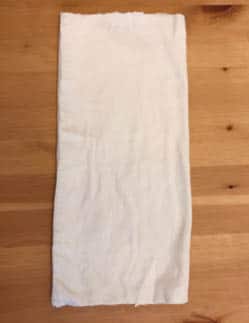
Step One: Cut through each fold and up the center to make four pieces.
Step Two: Fold the bottom third up and the top third down. If you are using a patterned pillowcase, the pattern should be on the outside.
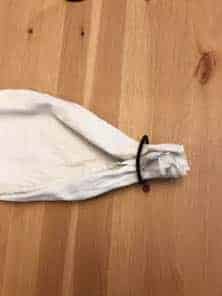
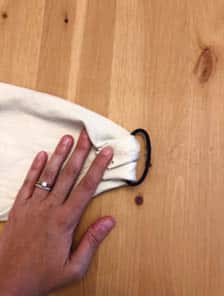
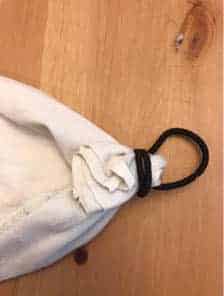
Step Three: Pinch the end and add one hair tie, fold the fabric over it and secure with a second hair tie. Repeat on the other side.
Do this with the three other pieces and you’ll have four masks.
Buying a Mask
Of course, if you aren’t the type of person to DIY, or if you just want a product better than what you could craft, there are many options for purchasing a cloth mask. From locals making masks from their homes to fashion designers adding some flair, there are different avenues you can explore.
2020 has not been the year Raleigh’s City Council had planned for.
It’s a hell of a year to be in charge of running the City of Raleigh.
In the wake of the coronavirus pandemic, the city’s normally bustling streets have been quiet, with festivals, concerts and conventions cancelled, park facilities closed and many beloved small businesses struggling to survive. A planned-for parks bond, Raleigh’s moonshot in mayor Mary-Ann Baldwin’s words, has been postponed and, as if out of nowhere, heavily armed masked visitors are patrolling downtown streets and Subway sandwich shops. In recent weeks, our once-vibrant Southern capital city has felt borderline dystopian.
This month, as the council prepares the city’s budget for the next fiscal year, Raleigh could be looking at a $25 to $30 million shortfall, Baldwin says. While the city has committed to retaining workers, it has frozen new hiring and will be looking to save money by deferring non-essential contracts and cancelling conventions, travel and gatherings like the the Fourth of July celebration. Each city department will look at where it can make cuts, and we can expect fee increases for some services such as recycling. There is also likely to be a controversial proposal to raise the city’s property tax rate to pay for more police officers and firefighters.
“This is not the year we envisioned, dreamed about or planned for,” Baldwin says. “Who could have imagined this?”
Since COVID-19 emerged in March and Gov. Roy Cooper issued a stay at home order that closed restaurants, retailers and other commercial businesses, city leaders have scrambled to address a burgeoning crisis, quickly shifting gears from their earlier work to push forward with ambitious policy goals.
The council allocated $100,000 to nonprofits to assist homeless families and established a $1 million fund for small businesses to apply for economic relief; it is working to match that investment with corporate donations. The city also suspended water service disconnections for nonpayment and relaxed fees for increased use. And council members are looking at innovative ways to capitalize on reduced traffic, such as opening city streets and shopping centers to bikers and pedestrians and restauranteurs who can use the extra space to comply with social distancing. Baldwin is working with the Raleigh Chamber of Commerce to assemble a group of community leaders “who can look at our future and help guide us on where we want to go and how we can get there with big ideas and big thinking,” she says.
“There is a great sense of wanting to emerge from COVID stronger and better,” says Jonathan Melton, an at-large council member serving in his first term. “This has brought some attention to some areas we can tweak and improve. COVID has changed the way we are looking at how the city is structured, how our services are provided and how we engage with each other.”
Jonathan Melton | Photo by Jennifer Robertson
On the topic of engagement, the council recently voted to hire consultant Mickey Fearn who, over the next 10 months, will explore new ways to get the public interested in city initiatives and get a new structure in place for public outreach. The move comes following a controversial council vote to disband the city’s Citizen Advisory Councils.
“The prior system of community engagement had been in place for 50 years and it’s a good idea to retool and refresh systems periodically, as times have certainly changed,” Melton says. “The way we send, receive and share information has changed from 50 years ago and our system of government should respond accordingly.”
Proponents of CACs say the community meetings were a good outlet for residents to engage with city staff from various departments, as well as with developers proposing new projects. Residents could vote on controversial rezoning proposals for their neighborhoods and the CAC votes would go to the council for potential consideration before council members voted on the project.
But, rather than ceding control of input from residents to developers as CAC fans have argued, Baldwin says the council has actually broadened opportunities for input from residents. Neighbors within an expanded geographical area are now notified of proposed projects. They now have two meetings with developers and city staff that they have opportunities to attend and the city’s outreach about such meetings now extends to renters, not just homeowners.
Additionally, the council has established a new advisory board for Hispanic and immigrant affairs and is working to create a police advisory board to inform the council on potential policy changes it could make to improve relationships between residents and the police.
“It’s opening the doors of communication, trying to figure out ways we can build trust with the community,” Baldwin says of the police board, which is still seeking applications.
In the months and perhaps years to come, transit will be another challenge the council will need to address. With the first phase of the design for Raleigh’s piece in the Wake County transit plan—the New Bern Avenue corridor—complete, city and county leaders will still have to find ways to convert car dependent residents into choice users of the new Bus Rapid Transit system, a challenge in the best of times, much more so during a global pandemic. Work on micro-mobility issues—think scooters—has been temporarily stalled, but Melton says it should resume soon. He believes the city can lead on the issue, including expanding micro-mobility options in Raleigh.
So what about that mini militia that keeps turning up in and around the State Capitol?
Well, it’s complicated. North Carolina is an open carry state, First and Second Amendment rights are in play and Baldwin says city officials are working with the district attorney to get some guidance about how to address it.
“Because of state law, we are pretty powerless to do anything about it and that is frustrating,” she says. “When I talk to small business owners and explain what we’re up against, their mouths are hanging open. No one has ever seen anything like this.”
All told, Baldwin and Melton say they feel the council has accomplished much of what it set out to address this year. A majority of members worked quickly to allow short-term rentals and accessory dwelling units by right, and there is more to come on missing middle housing in the affordable housing bond referendum that will appear on ballots this fall.
Expected to be valued at around $80 million, the council will likely vote to approve the bond referendum early this month. The bond, which will cost the average homeowner around $20-$25 a year, could cover gap funding for purchasing affordable housing units, buying land on transit corridors to be used for affordable housing, money for public-private partnerships, for first-time home buyers and for people who want to stay in their homes but need to do repairs.
“The consensus seems to be that this is exactly what we need to be doing right now, helping those most in need,” Baldwin says.
As for opening city streets to bikers, pedestrians and restaurants, it’s something Raleigh is very likely to see in the next 30 days.
“As we start to slowly reopen, more people are going to be leaving their homes but it’s still important to be mindful of social distancing requirements,” Melton says. “Whatever we can do to allow people to frequent small businesses, restaurants, to get out and exercise, to give them space to do that in a safe way, I’m in favor of.”
Mayor Mary Ann Baldwin requested city staff bring planning proposals for ADUs (backyard cottages) and cottage courts before the council on June 2.
The council voted 7-1 to hire consultant Mickey Fearn, a professor at NC State’s College of Natural Resources, to study ways to engage local communities in place of CACs at a cost of $72,000 from council’s contingency funds.
The council received a report on the city’s COVID-19 response. City staff is working to ensure PPE is available for city workers and implementing wellness checks at downtown facilities and for some employees.
At its evening meeting, the council voted unanimously to allocate $1.8 million in federal CARES Act funds to provide rent, utility and mortgage assistance, and $1 million in federal emergency solutions grants to assist with homelessness and eviction prevention, to low income households.
May 19 Meeting:
Under its Shared Streets for Social Distancing Accommodations initiative, the council voted unanimously to authorize city staff to start identifying streets across town that could close to car traffic to make more space for bicyclists and pedestrians to use. Council also voted to allow staff to look at ways for restaurants and bars to expand seating options for diners as they begin to reopen at limited capacity.
Council voted 7-1 to accept new terms governing a partnership between the City and the Dorothea Dix Park Conservancy, the nonprofit tasked with raising private funds for creating the park. The new Memorandum of Agreement governs appointments to the Conservancy board and term lengths, among other considerations.
The council received a report on the city’s COVID-19 response. The city has aligned its reopening efforts with the state’s three reopening phases and is taking measures to ensure safety of city workers.
The city manager introduced a $1.01 billion proposed budget for the 2021 fiscal year. The city will hold a public hearing on the budget, and will consider adding an $80 million affordable housing bond to the November ballot, on June 2. The council appointed 15 members to its newly established Commission on Hispanic and Immigrant Affairs.
WEB EXCLUSIVE North Carolina will move into a modest phase two reopening on Friday at 5 p.m., Gov. Cooper announced this week.
Under the new executive order, people may leave their homes for whatever reason, but public officials are still strongly advising North Carolinians to “stay safe at home.” People should continue to work remotely if they can, Cooper said during a press conference on Wednesday, and if they do go out, they’re advised to follow “the three Ws:”
Wear a face covering to protect others
Wait six feet apart in public
Wash your hands often
Allowed to open under the order are restaurants, tattoo parlors and personal care businesses (salons, spas, barber shops, nail salons) at 50 percent capacity, with social distancing and mask wearing for workers and rigorous cleaning methods in place. Day care centers may reopen to all children, swimming pools may open at 50 percent capacity and overnight and day camps may reopen, too.
Bars and night clubs, gyms and fitness centers (including dance studios, basketball courts, rock climbing facilities, etc.), movie theaters, public playgrounds, bowling alleys, skating rinks, museums, concert venues and other indoor entertainment venues must remain closed, likely for five more weeks.
Under the order, indoor gatherings will be allowed but limited to no more than 10 people, including at event venues and conference centers. No more than 25 people are allowed to gather together outdoors at beaches, public parks, sports arenas and stadiums and outdoor amphitheaters. Weddings and funerals can be held without the mass gathering caps but receptions following the ceremonies are not allowed.
“We think this phase two is a good boost to the economy but at the same time, it’s working to keep people safe,” Cooper said.
The phase two, which officials say will last for four to six weeks, is stricter than many business owners had anticipated. Originally, public officials had planned to lift the stay at home order and encourage only vulnerable populations to continue staying at home. Bars and many other businesses would have been allowed to reopen following phase one, but the increasing number of laboratory confirmed COVID-19 cases in the state has warranted a more cautious approach, officials said.
NC DHHS Secretary Dr. Mandy Cohen said the phase two order is based on a steady or declining percentage of positive COVID cases. While the number of laboratory confirmed cases is increasing, so too are the numbers of tests being administered, between 8,000-12,000 daily. Along with increased testing, front line workers are receiving more PPE, the trajectory of hospitalizations is slowing and the Carolina Community Tracing Collaborative has added 150 staffers for ramped up contact tracing.
“The state’s trends are stable but we still need to be cautious,” Cohen said.
Under phase two, worship services are allowed to take place indoors without having to adhere to the 10-person maximum but Cooper urged worship leaders to plan carefully and use social distancing.
“I hope pastors and church leaders throughout North Carolina will think twice about what they’re doing and look at recommendations and follow them for the health and safety of their members,” Cooper said. “I believe most will.”
Local restauranteurs grapple with whether to stay open or close completely during the coronavirus outbreak.
When Gov. Roy Cooper ordered North Carolina’s restaurants to close their dining rooms and patios in mid-March, local responses about how to go forward were mixed.
Some of the bigger names in Raleigh’s culinary industry, such as Garland owner Cheetie Kumar, shut down all operations right away. Some restauranteurs, including Bida Manda and Brewery Bhavana owner Van Nolintha and AC Restaurants’ Ashley Christensen, experimented with offering curbside pickup and delivery services, but ultimately decided to close their doors as well.
But the majority of Raleigh’s independent chefs and restaurant owners decided to continue operating, tweaking or paring their menus for curbside pickup and/or delivery and pivoting to new service models such as grocery markets.
While none kid themselves that they’ll turn a profit during the shutdown due to a number of factors, restaurant owners and chefs say their reasons for deciding to continue operating hinge on hopes of being able to save at least some of their employees’ jobs and being able to continue to serve, nourish and care for the community.
Jennifer Noble Kelly of JNK Public Relations
“Closing restaurants, whether to do takeout only or closing completely, is the hardest thing any of these professionals have had to do,” says Jennifer Noble Kelly, founder of JNK Public Relations, who works with restaurateurs and businesses across the Triangle. “This is an industry of survivors already adapted to existing on the smallest margins and literally working their fingers and feet to the bone. What impresses me is how seriously I see them all take each decision they have had to make, from high end restaurants down to food trucks. No one is doing anything flippantly.”
Messages from Industry Leaders
While the CDC has determined that coronavirus is not food-borne and restaurants can continue to operate safely as long they observe health and safety guidelines and practice social distancing, many industry leaders, local and nationally, say they just don’t feel that is the reality.
“I sat in an office and had conversations for over five hours straight with the dozens of managers and more than 200 hourly employees to tell them I could no longer offer them employment,” wrote Ashley Christensen, a Raleigh luminary and the reigning James Beard award winner for Outstanding Chef, in an editorial in the News and Observer on April 15.
Ashley Christensen
“And I’d do it again in order to prioritize public health,” Christensen continued. “I’d do it again to keep my team safe from harm … to prevent even one person from contracting coronavirus in one of my restaurants. But just because it was the right thing to do didn’t make it any less traumatic or any less devastating … didn’t make the consequences any less severe or real for the employees out of work, or the farmers without clients.”
“The right thing to do.”
Christensen doesn’t mince words. She doesn’t say it was the right thing to do for her organization or the right thing to do at this stage of the pandemic. She says it was the right thing to do, full-stop, and it’s a message that has been consistent for her in public forums and on social media channels since she closed Beasley’s, Poole’s Diner and Poole’side Pies, along with Death and Taxes and Chuck’s, at the end of March.
So what does that mean for other chefs and business owners when someone like Christensen takes such a strong stance right off the bat?
Tom Mukoyama of Kanki and Tonbo Ramen
“We have felt pressure,” says Tom Mukoyama, the corporate general manager for the Triangle’s three Kanki locations and their sister restaurant, Tonbo, located in downtown Raleigh. Kanki locations at Crabtree Valley Mall, in north Raleigh and in Durham are still offering curbside pickup. Tonbo has stopped operating completely during the shutdown.
“I talk with my team every week and we try to evaluate what’s the best goal,” Mukoyama continues. “As far as feeling pressure to close, some of that is more internal. More and more people have come to me saying, ‘I want to cut back my hours, I am getting more afraid because I have elderly relatives living with me and people who are susceptible.’ We are providing masks and gloves for everybody and putting sanitizers by the door. So we are trying to balance our cash flow with the staff we have because we don’t know how long this will last. We took that into consideration.”
Closing Not an Option
For chef Teddy Diggs, who owns Coronato, a Roman-style pizza restaurant in Carrboro, closing completely, he says, was never an option.
“The reason we are in this industry is to be able to provide comfort and joy for people, no matter what is going on in the world,” Diggs says. Coronato is offering both curbside pickup and limited delivery and Diggs says he is pleased with how well that strategy has been working in terms of sales volume.
Teddy Diggs of Coronato Pizza in Carrboro | Photo by Carolina Stamey
“We want to keep people happy and healthy, so when we were faced with this challenge, it was never an option for us to say we are not going to do this, because that is our whole mission of being a restaurant. We have an opportunity here to make an impact and do what we want to do that gives us joy.”
Diggs says he looks at other chefs’ decisions to close as a matter of personal opinion, to be taken in the context of where they’re operating—in the Triangle versus New York City, for instance—or how large their businesses are.
“There are mixed messages from the industry,” Diggs says. “There are industry leaders saying it is not responsible for us to open and serve food and there are industry leaders who say that it is our responsibility to be as safe as possible and be a sense of normalcy and joy right now, when people need it most. I tend to agree with the latter. I believe mental health connects with the physical health and whatever we can do to uplift spirits will, in turn, strengthen the immune system.”
New Business Models
Drew Smith, the executive chef at the 6 month-old kō•än in Cary, shares Diggs’ commitment to continuing to serve the community in a practical way during the shutdown. Smith says following a trip to the grocery store in the early days of the coronavirus outbreak, he was shocked to find the shelves bare—sold out of mealtime staples such as chicken, pork, beef and bread. Around the same time, in a conversation with one of his restaurant’s distributors, Smith learned that the supplier was sitting on $36 million in inventory that would spoil within two weeks.
Drew Smith of kō•än in Cary | Photo by Carolina Stamey
“I woke up like from a dream at 4 o’clock in the morning realizing there were all these people who have tons of food and all these people who can’t find food,” Smith says. “We needed to be the connection, the link that is broken.”
So kō•än launched an online grocery market stocked with products from local and national purveyors as well as specialty items made in the restaurant and household essentials such as toilet paper. People can order items online, as well as meals from a limited restaurant menu, and pick up their goods or have them delivered to their front doors.
The community response, especially to the online market, according to Smith, has been overwhelming.
“It just seemed like an obvious solution,” Smith says. “I messaged pretty much everyone I know at the top of the food world in Raleigh, like ‘Guys, this could really save jobs, it could save restaurants and food purveyors.’ But they seemed kind of to brush it off.”
Elsewhere in the country, it’s an idea that’s gaining traction. In some areas, people can go to a website to search pop-up markets for the items they need and because that food is coming from a different supply chain, it relieves some of the burden on grocery stores, provides another option for those who don’t want to go to the store and creates opportunities to diversify revenues from food sales.
Adjusting in an Outbreak
The country (and the world) have never experienced anything like the COVID-19 outbreak in modern times and most of us are left scrambling for the best information on how we should respond in our own everyday lives. While there is mixed messaging, pressure, and, occasionally, judgement, coming from our peers and contemporaries about how we should be behaving, most of us are just trying make the best decisions we can with the information we have—including businesses.
Scott Crawford of Crawford and Son | Photo by Jessica Crawford
“Most people have said this is a very personal decision, a decision that everyone needs to make for themselves and ask that hard question [of whether to close],” says chef Scott Crawford, owner of downtown restaurants Crawford & Son and Jolie. Crawford and four other members of his team are operating curbside pickup services with a repurposed menu offering comforting dishes.
“I definitely have not felt pressure [to close] but I can see why people are making that decision,” Crawford says. “I have certainly considered that option.”
“I think most people are just staying in their own lanes right now,” says Kristen Baughman Taber, the founder of Tabletop Media Group, who also works extensively with local chefs and culinary businesses. “For restaurants staying open, health and safety is really important to them, for their staff and customers, and, of course, they are following CDC and local health departments’ guidelines and taking huge precautions.”
Kristen Baughman Taber of Tabletop Media Group | Photo by Stacey Sprenz
Kelly of JNK Public Relations adds that, for those who aren’t staying open, they are finding other ways to serve and care for their communities.
Christensen, for instance, has been advocating tirelessly for restaurant workers across the board. She launched the Triangle Restaurant Workers Relief Fund in partnership with the Frankie Lemmon Foundation and convened the Independent Restaurant Coalition to lobby politicians to provide substantial assistance to restaurant workers in the federal CARES bill and to create a $100 billion stabilization fund for restaurants—the vast majority of which are independently owned—that generate $1 trillion annually to the U.S. economy. Other restaurant owners that have decided to close their doors are preparing meals for their employees and helping them out with their rent, healthcare and other needs while they’re out of work.
“The way I see it is, everyone is trying to figure out, ‘What role do I play in this, how do I do it in a way that resonates with me and my business and how I can make a difference?’” Kelly says. “Everybody has had to find a way to use their energy towards contributing to this devastating situation.”