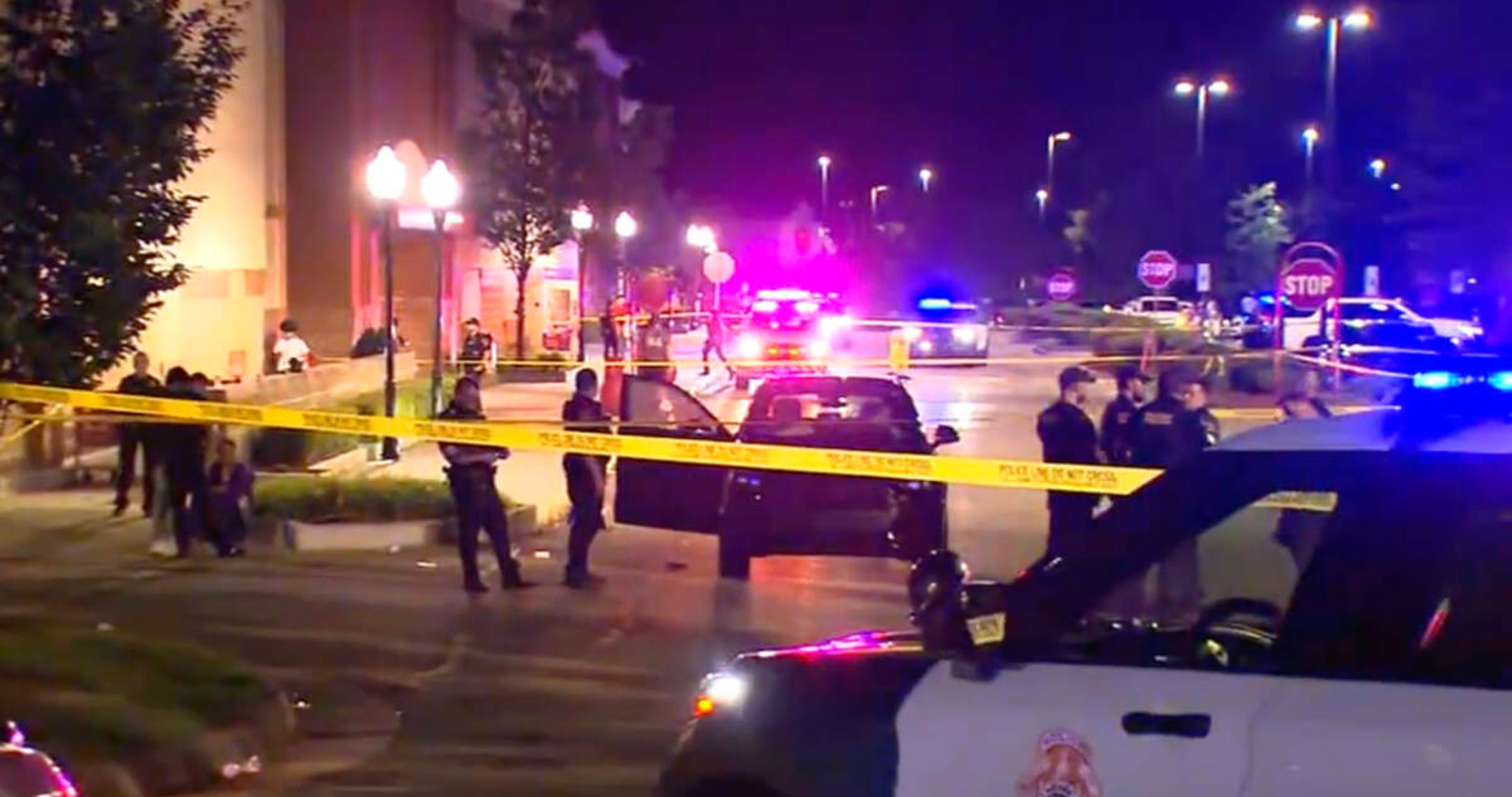
After a Fourth of July weekend marked by multiple Teen Takeovers and marred by violence, city leaders are moving quickly toward what could become the first youth curfew instituted in Raleigh’s history.
At Tuesday’s City Council meeting, RPD Chief Rico Boyce outlined how other cities have responded to the growing national trend—and why Raleigh should follow suit. “We are a major city,” said Boyce. “Safety is a shared responsibility—RPD is going to do our part.” Here are the biggest takeaways.
Youth Curfew
A youth curfew could arrive as early as August, applying citywide to youth 17-and-under (pending ordinance language).
City Council unanimously directed City Manager Marchell Adams-David to take the lead on an ordinance to bring back at City Council’s next meeting Aug. 18.
The ordinance would still require public input, two hearings and council approval.
Curfew times were discussed but not finalized.
Emergency curfews could still be enacted sooner if intelligence warrants.
Not Just a Raleigh Problem
Many of the teens involved in the Takeovers came from outside Raleigh.
Boyce emphasized Raleigh is now a major city facing challenges similar to other metros.
Other cities have already implemented such youth curfews and other strategies, including Greensboro, Greenville, Winston-Salem and Charlotte.
Moore Square Tells Another Story
Despite the violence elsewhere, Boyce described a separate July 4 Teen Takeover in Moore Square as “a nonevent.”
RPD had intel on that Takeover in advance.
As teens gathered, they quickly dispersed with RPD’s presence.
The Conversation Went Beyond Curfews
Public Safety
Boyce suggested pairing the youth curfew with a backpack restriction.
Patton also emphasized the safe storage program, noting 12-year-olds can’t walk into a gun shop and buy guns, so education around secure storage could help keep firearms out of young hands.
Councilmember Jane Harrison encouraged further discussion around gun control legislation.
Boyce acknowledged RPD plans to strengthen communication with local businesses, specifically in the Entertainment District.
Prevention
Raleigh Parks, Recreation and Cultural Resources Director Stephen Bentley and Community Engagement Director Tiesha Mosley discussed expanding “third places” for teens, along with such city resources as sports, gaming, and leadership and after-school programs—particuarly in ZIP Codes 27601 and 27604.
Mosley also discussed opportunities to expand the Raleigh Youth Council.
Accountability
Councilmember Corey Branch highlighted the significance of school accountability, suggesting the city leverage existing attendance policies that hold parents accountable when students accumulate excessive absences.
Mayor Janet Cowell directed staff to work with the District Attorney’s Office and Wake County Public Schools to identify immediate needs while asking Chief Boyce to return with a report on broader issues and longer-term recommendcations.
Harrison also called for further investigation into how Teen Takeovers are organized on social media, including where messages originate and how they’re spread.
What’s Next
Directed the city manager to draft an ordinance.
Requested input from the DA.
Requested school input.
Asked Boyce to return with long-term recommendations.
The More You Know
Police estimate closer to 8,000 teens gathered on Glenwood South Saturday night.
Boyce noted that NC’s “Raise the Age” law changed juvenile jurisdiction in 2019. Prior, 16- and 17-year-olds were automatically treated as adults. Today, most fall under the juvenile justice system.
Councilmember Christina Jones also indicated that repeated problems at annual events—such as Brier Creek’s Fourth of July celebration—could influence future permitting decisions.
Anyone around in the ’80s may remember a rumpled-trench-coated dog whose business it was to remind us that crime is everyone’s business—and that police can’t fight crime alone. Now, with the marked decline in Downtown crime as the result of a vast community effort, McGruff’s message is more prescient than ever.
In November, we reported DTR crime had increased 60% over the previous eight months as compared to the year prior. Now, incidents running the gamut from aggravated assault to lesser (albeit annoying) evils like harassing phone calls, are improving across many categories. From September to February, drug violations—which accounted for a whopping 30% of all crimes reported—saw a steady decline, ultimately down 55% over the six-month span.
Thanks to extensive unified community efforts, weapons violations also declined a mammoth 73%. And, ultimately, total February crime incidents were almost half of those in September Downtown—including in the “disorderly” dubbed Glenwood South District, where RPD has been focusing much of its enforcement and prevention efforts.
While RPD’s response has been swift and effective, the department credits business and residential partners with whom they work closely for the cooling crime. “Our numbers continue to trend in the right direction thanks to the partnerships made with Downtown Raleigh Alliance and others,” maintains RPD Public Information Officer Lt. Jason Borneo.
For its part, DRA worked to provide private security services, as well as advocate for increased RPD presence and for the City to hire private security in the transit center, says DRA President and CEO Bill King. “All of these efforts have had a meaningful impact as evidenced by the crime data,” he adds. “Having said that, we cannot take our foot off the gas or let the City do so, as there is still a lot of work to be done to fortify these improvements in safety and make even more.”
RPD also worked with local businesses to roll out the CONNECTRALEIGH public safety program in an effort to enable Raleighites to help protect the community by increasing real-time data for guided emergency responses via fususCORE cameras.
Ultimately, Downtown safety is the most vital element to keep businesses progressing—which is why many local owners are happy to be involved in the conversation and efforts, including owner Matt Coleman of popular Blount Street bar The Davie.
“RPD has made tremendous efforts to help solve the growing issue of crime in the Fayetteville Street/Moore Square District after hearing our concerns last September,” says Coleman. “The numbers definitely show a decrease in crime, and we are seeing an increased police presence since then. My only hope is [RPD] continues to apply pressure, as crime tends to escalate during warmer weather, and summer is rapidly approaching.”
Borneo agrees, but ensures RPD is ready. “As the warmer months approach, we anticipate changes in crime trends,” he says. “RPD is always prepared to respond regardless of season—and we are prepared to respond accordingly to those trends. … We rely on our community to actively contribute to public safety, and we are fortunate that so many people have embraced the ‘it takes a village’ approach.”
Fortune no doubt favors the brave—and these efforts are no doubt valiant—but we can’t rest on our laurels. There is still work to be done, and we have to remain diligent and keep our communal foot on the gas. We’ll circle back after the thaw with what we hope is more good news for DTR.
Downtown Raleigh is really proving her resilience. Despite the recent rise in crime, business owners are buying in and continuing to establish roots—and doubling down on Downtown. It’s a welcome harbinger of hope, given that metropolitan downtowns (think San Francisco) typically experience a mass exodus in the face of “unsafe conditions.”
Instead, local entrepreneurs remain invested in Downtown—literally. One such business owner is Caitlin Cary, who is reopening her The Pocket Gallery in City Market in January. “I think the crime reflects some hard times we all can’t deny,” says the owner/founder. “I feel a lot of sympathy, and I also feel I’m a part of a business that is all about building community—I hope that good energy can help overcome.”
Pocket Art Gallery photo by Caitlin Cary
Building on that good energy, Cary—a working artist who specializes in fabric collage and recognizes the economic challenges of the city—plans to move her gallery from its former Oakwood digs into the City Market Artist Collective (CMAC), where she’ll join a community of 12 artists. There, she’ll continue to display her work along with the work of 30 artists on her roster.
And, not leaving the Oakwood space vacant, Cheryl Fraser, owner and founder of Galatea Boutique—which some may remember from Seaboard—jumped on the opportunity and will move into the vacant space in the new year after spending the last year-and-a-half operating out of a mobile boutique.
While the new business blood bodes well for DTR, having retailers committed to staying Downtown is also critical. Popular DTR home for houseplants Copperline Plant Co. owner Anna Grace FitzGerald is one such local who dug into City Market in 2022—and remains committed to the space she’s cultivated.
“When I was looking for a place to lay roots, I knew I wanted to be Downtown,” she says, “and in a place with character and history—because it aligns with the feeling we try to evoke in the shop: a feeling of a stable homebase for folks.”
Over the summer, a window was broken in at her business, but despite the incident, she remains unfazed. Nothing was stolen and no one was hurt, FitzGerald emphasized, and this is what mattered the most. “This is a product of more and more people moving to the Triangle… growing pains,” she adds.
FitzGerald welcomes the ebb and flow of new businesses moving into City Market and the Downtown area, viewing it as a healthy progression of the city. Despite recent challenges, the attractive and charming street—and our city core as a whole—continues to thrive with more businesses, opportunities and activities that not only attract Raleigh residents, but tourists as well. So, seeds of change now cultivating, if you will.
As Downtown Raleigh looks to squash crime and disarray, we press local leaders, business owners and stakeholders for their solutions.
No matter how you spin it, Downtown Raleigh has fallen on hard times. Reported crimes have increased by 60% in the last eight months, compared to the same timespan last year. That rapid rise is starting to deter both Raleighites and visitors from venturing to the area, thus affecting businesses and our economy—and it could affect our status as one of the top five places to live in the country.
Serious crimes—shootings, stabbings, robbings, assaults, harassment, vandalism, drug deals and the like, not to mention loitering and panhandling—combined with the city’s growing homelessness problem, substance abuse and fewer police on the streets, has created the perfect storm. In terms of the police presence, Raleigh Police Department is redistributing officers Downtown from all over the city, but it’s not sustainable—especially given there’s only 700 or so officers on the force right now (think ~80 vacancies). Though RPD Chief Estella Patterson acknowledges a city of this size should have closer to 1,100 officers, and hopes to ultimately get us there.
While Glenwood South has gotten much recent attention for disorder, crime has pervaded portions of Fayetteville and Davie streets and around the GoRaleigh bus station as well. “St. Roch is in a unique position, as we share an entrance with the transit center, so we are in the middle of the action and truly see it all,” says chef/owner Sunny Gerhart. “We have certainly felt the blowback of the unsavory activity Downtown for the last few months. Our business has seen a 17% reduction in sales over the last two months compared to the same time period last year.”
Nevertheless, Gerhart and fellow business owners, along with City Council members, Mayor Mary-Ann Baldwin, RPD and Downtown Raleigh Alliance, are committed to navigating and overcoming these challenges and working toward both short- and long-term solutions.
Already, RPD has increased its presence Downtown via bike and foot patrols, utility vehicles, and special motorbikes that can weave in and out of parking decks to look for drug deals and other crimes; while DRA has increased its ambassador and social worker presence for those who need further assistance.
“In the last four weeks we have had 500 enforcement actions [arrests and citations] Downtown,” said Captain Jon Wood, Downtown District Commander of the Field Operations Division, during the Downtown Rundown Oct. 17. DRA also hired a private security firm to patrol areas of DTR from 10am to 10pm seven days a week, starting Oct. 31 and continuing through June 30, 2024.
For its part, the City recently purchased a new security camera cloud network dubbed Fusus (also utilized in Atlanta) that knits together various public and private DTR cameras to help identify issues and collect evidence faster. It will also allow RPD to create a real-time crime center. The same camera system will be implemented in Glenwood South as well.
“I feel these efforts and our increased police presence are making a difference,” says Mayor Mary-Ann Baldwin. But, “we can’t arrest our way out of this problem,” maintains Patterson. And it’s going to take many proponents and tactics to overcome this situation. To dig into what that may look like, we tapped local leaders and stakeholders for their solutions.
Panhandling/Loitering Laws
Nowhere is Raleigh’s homelessness problem more apparent than Downtown. Aggressive loitering and panhandling have increased, especially near the GoRaleigh station. While panhandling is unlawful by the city municipal code without a permit (violation results in a misdemeanor), it’s rarely enforced.
Loitering is not currently against the law, with the exception of ordinances in specific locations, but many of the individuals we tapped believe that could help resolve DTR’s ongoing issues. However, “some of the challenges are between the city and state roads on how those laws are enforced,” says Council member Corey Branch, who represents District C, which includes parts of Downtown.
In the short-term, RPD is establishing measures to prevent loitering and trespassing after hours at the GoRaleigh bus station. “Our officers are strategically deployed during times when loitering is problematic,” maintains RPD Public Information Officer Lt. Jason Borneo. “This includes highly visible patrols throughout those areas after hours and enforcing city and state ordinances when applicable.”
Reduced Bus Fare
“While the bus station’s location has caused issues for nearby businesses lately, this wasn’t the case before the pandemic,” says The Davie owner Matt Coleman. GoRaleigh has been fare-free since March 2020, and in June, City Council voted to extend the policy through June 30, 2024. But some business owners and stakeholders believe the suspended fares have unintentionally resulted in the bus station becoming unsafe (case in point: RPD recently implemented a “zero tolerance approach” around the GoRaleigh bus station, which resulted in 274 charges in its first two weeks for crimes like trespassing, disorderly conduct, and illegal firearm and drug/drug paraphernalia possession)—and have proposed rolling back free fare.
“This is a really tough one because I was one of the champions of fare-free transit,” says stakeholder and DRA Economic Development Strategy committee member David Meeker, also the co-owner of Young Hearts Distilling on South Wilmington Street. “It’s painful because it feels like a couple hundred folks have ruined it for all the other riders who were really benefiting from free fare, but the system only works if it’s safe and it’s not always safe right now.”
Coleman agrees, but notes it’s important to recognize the transit system affects many parts of our city and nearby towns. “By offering a lower fare, we can discourage those who misuse the bus system and harm the community while still providing a useful service to those who are struggling financially,” he says. Patterson also recommends putting a system in place in which individuals would have to use an email address to access the Wi-Fi at the transit center, in hopes it would deter people from hanging around in the area.
City Council member Jane Harrison—who represents District D, which includes parts of Glenwood South—expects City Council to address the bus fare issue this month. But bringing back fares won’t solve everything. RPD is also working to expand the transit unit by assigning additional officers, as long as sufficient staffing in other areas of the city allows. In the meantime, increased private security around the transit center is a short-term fix.
Mental Health Services
In some cases, the root of these ongoing issues is poor mental health and a lack of immediate resources. According to Harrison, City Council has requested development of an independent crisis unit for nonviolent incidents, which will connect social workers with those in need. “I ask residents to stay tuned as this program will be discussed in a November Council meeting, and we will need significant community engagement to ensure its success,” she says.
Harrison also advocates for partnerships between Wake County and state government to strengthen social and public health services, including community violence intervention programs, substance use disorder support, increased shelter capacity and permanent housing for homeless individuals. “The first step is offering [programs] for those who truly need assistance,” echoes Branch.
City Council member-at-large Jonathan Melton has also asked the city manager about implementing a similar initiative to one in Wilmington in which signs are posted throughout Downtown encouraging folks to contribute money via QR codes to nonprofit providers who offer assistance to people experiencing homelessness, rather than giving money to panhandlers directly.
Moore Square Development
A longer-term solution to assist with the Downtown disarray includes the proposed development between the City of Raleigh and real estate developer Loden Properties on city-owned land to the south and east of Moore Square.
The project includes two new hotels, an apartment building with ~160 units designated for affordable housing, a grocery store, art studios, co-working space and more—as well as the rebuilding of homeless shelter Raleigh Rescue Mission near Moore Square on Hargett Street. Upon approval, Melton called it a “win-win-win for the city.”
In October, City Council voted to include three smaller parcels into the project, and in the next few months, Loden will begin negotiating with the city to buy the land before breaking ground.