Downtown Raleigh’s iconic round Holiday Inn’s future has been resurrected. Once sentenced to demolition with a sleek Kimpton on deck to replace it, the circa-1969 era-defining pillar is now closed to prep for a late 2026-slated Hotel Indigo revamp at the hands of NYC-based Tidal Real Estate Partners.
With construction set to start soon, the renovation will see a rebirth of what is arguably the most polarizing landmark in Raleigh’s lore. But love it or loathe it, it is inarguably one that, when set for demolition, saw more public outcry than any structure’s controversial fate in recent history.
Now fenced and preparing for new life, the revered retreat’s OG furniture and interiors have been hauled out. And with a rendering still in progress, Raleighites wait with bated breath to see what this modern moment will hold for the famed “hair curler”—think plans for a renovated ground-floor lounge, top-floor bar and event space with primo city views, and an updated guest experience blending Raleigh’s signature creative energy and Southern charm.
Just its third NC outpost—joining Asheville and Winston-Salem—IHG’s swanky Hotel Indigo brand blends boutique vibes with intentional design and experiences inspired by the local scene. And round hotels are nothing new to the hotelier, who counts among its portfolio such curved hospitality heavyweights as Hotel Indigo Taipei North in Taiwan and the UK’s Hotel Indigo Manchester. Similar to Raleigh’s scenario, the latter laid-back boho boutique rescued a historic Victorian building from ruin while adding on an adjoining modern 14-story rotunda tower, blending the old and new in a one-of-a-kind design that preserved the neighborhood’s history while breathing in new life.
Tidal President Ken Copeland frames the vision for DTR’s own 204-room Hotel Indigo as both bold and nostalgic, saying they’re “excited to bring Downtown Raleigh the true lifestyle boutique hotel it deserves… by restoring an iconic Raleigh landmark into the modern era.”
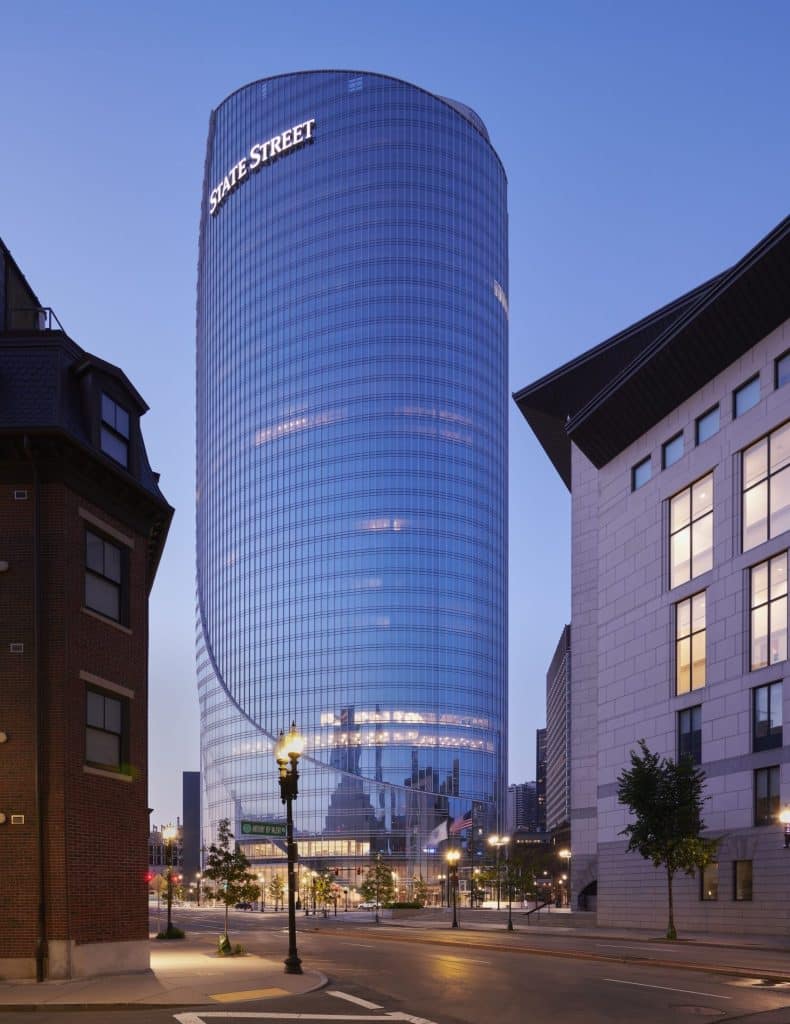
One Congress & State Street | Photo courtesy of John Moriarty & AssociatesHotel Indigo Manchester | Photo courtesy of Bowmer + Kirkland
Also known for its upscale developments, Tidal’s esteemed roster boasts such standouts as Nashville’s posh soaring residential and retail high-rise 1111 Church and Savannah’s dramatic and distinctive Perry Lane Hotel. On the local front, the real estate developer scooped up 1.3 prime acres of land in the Warehouse District in 2022 for just shy of $21 mill, at the time zoned for up to 40 stories—though no further plans have since been released.
Teaming up to lead the charge is local general contractor John Moriarty & Associates—no stranger to circular constructs, having helmed Charlotte’s glass-wrapped Ascent Uptown, a 33-story ellipse that similarly made a bold architectural statement on the city’s skyline. The Moriarty team is joined by Nashville-based architecture firm ESa—who also partnered on Music City tower 1111 Church, with a résumé that includes 2024-debuted Tempo by Hilton Nashville Downtown and Virginia’s award-winning The Bristol Hotel, to name but a few. Now, let the Raleigh fixture’s long-awaited glow-up begin.
There’s no doubt Raleigh is a growing city, with new developments popping up seemingly on the daily. While many worry our “boring” city (incorporated 1792) is losing her identity, legacy lives on everywhere you look—from carefully preserved buildings dating back to the American Revolution to districts honoring historic namesakes. Think you know the Cap City’s character? Let’s trip back in time and find out. No Googling!
1. Red Hat Amphitheater was almost named for what adult beverage brand, before the NC Alcoholic Beverage Control Commission denied the request to opt for a more PG namesake? a. Coors Light b. Bud Light c. Pabst Blue Ribbon d. Sierra Nevada
2. Which (allegedly haunted) Raleigh building was initially meant to be a tomb for the wife of former Gov. Montfort Stokes, but was repurposed after it was constructed at the wrong scale? a. Mordecai House b. NC Legislative Building c. The Capitol Building d. NC Museum of Art
3. Welcome to the gun show. After the OG Raleigh Iron Works went bankrupt, it was acquired by Peden Steel Company and moved to Atlantic Avenue. The business went on to build what product for the U.S. military during World War II? a. Shell casings b. Barges c. Aircraft parts d. Bunkers
4. In 1914, Clyde Alvin Dillon Sr. founded Dillon Supply Co. on West Martin Street. While Junior devoted his whole career working at the family biz, what was his side hustle?West Martin Street a. Announcing for NC State’s basketball and football teams b. Teaching at Broughton c. Preaching at Edenton Street United Methodist Church d. Bartending in the Village District
5. Alexa, queue “I’m Still Standing” by Elton John. Which Raleigh bar has been “a Raleigh tradition since 1951,” making it the oldest bar in the City of Oaks? a. Mitch’s Tavern b. The Cardinal c. The Raleigh Times d. Players Retreat
6. The almost-150-year-old Victorian-era house that serves as home to Second Empire Restaurant and Tavern is named after which NC confederate officer and which former Raleigh mayor? a. Braxton Bragg and William H. Harrison b. D.H. Hill and Basil C. Manly c. John Wetmore Hinsdale and William H. Dodd d. Dorsey Pender and William White
7. Bottoms up! Before settling in at its current Glenwood Avenue location, cocktail bar Dram & Draught got its start in a stand-alone Hillsborough Street building that formerly housed what? a. A Dillon Supply Co. shop b. Piggly Wiggly c. The NC Legislative Building d. TAO Auto Shop
8. The DTR Holiday Inn—known for its unique cylinder shape—won the title of Raleigh’s tallest building when it was built in 1969. Which DTR tower stole the title in 1977? (Hint: It’s currently Raleigh’s sixth tallest tower.) a. One Hanover Square b. Wake County Public Safety Center c. One Progress Plaza d. 333 Fayetteville Street
9. Erected in 1769, the Joel Lane House is the oldest house in Wake County. Which governing body did owner and “Father of Raleigh” Joel Lane not participate in? a. Continental Congress b. General Assembly c. State Senate d. Fayetteville Constitutional Convention