


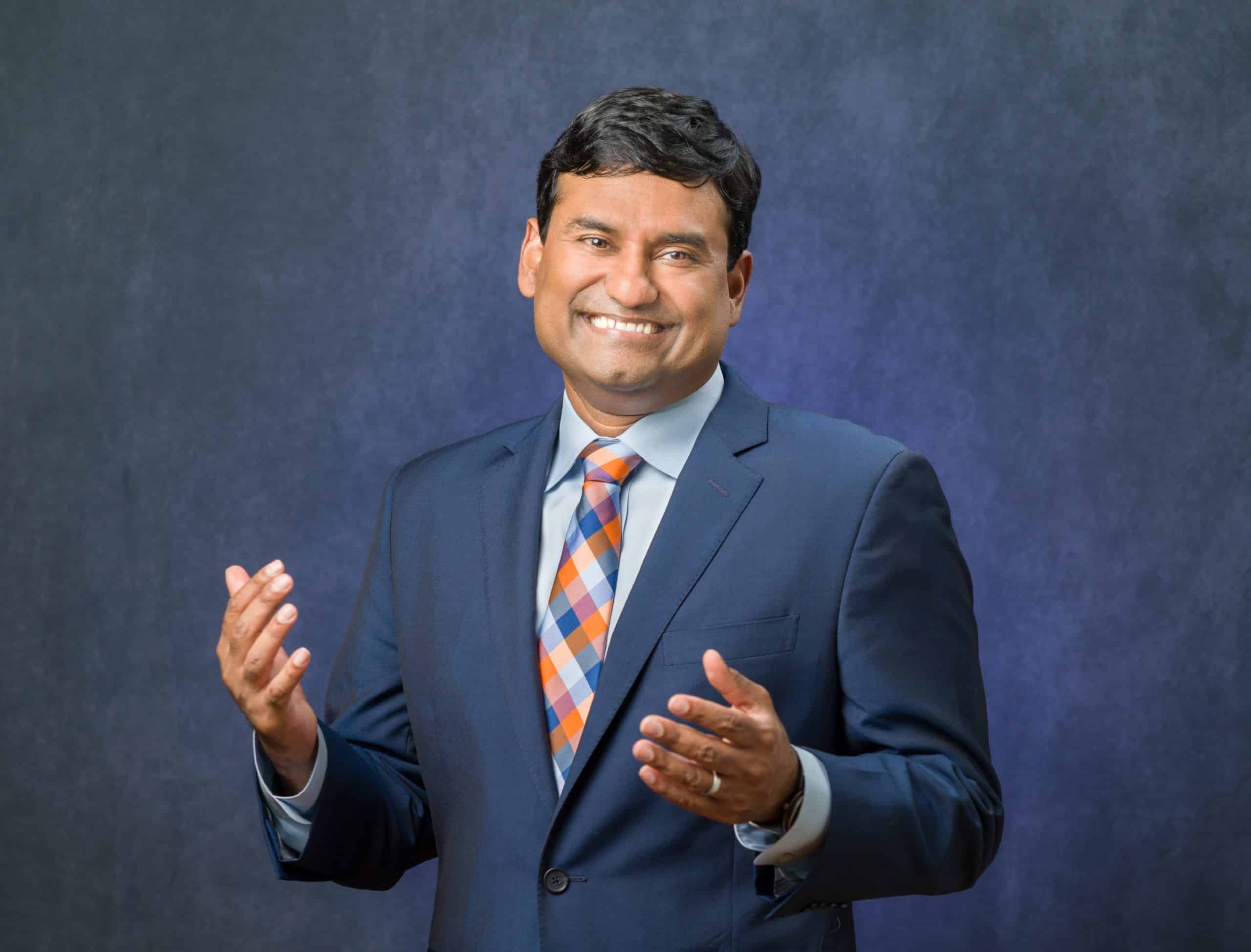
From Impaired to Empowered
Ablr CEO and co-founder John Samuel chats about his new memoir, finding his way back home to the Triangle and the power of acceptance.
After being diagnosed with a degenerative eye disease while in college, John Samuel’s life as he knew it—and the future he had always imagined for himself—quite literally began to vanish. Faced with mounting obstacles and limited opportunities here in the Triangle, the Cary native felt his only choice was to move away. What followed was a 12-year journey around the world that forced him to slowly confront his new reality and, ultimately, embrace life with a disability in order to achieve his dreams.
Fast-forward to today and Samuel is back in his hometown with a mission to help others who are on the same difficult path. As the co-founder and CEO of Ablr, Samuel focuses on helping companies remove barriers for all people with disabilities, fostering a culture of empathy and inclusivity. “I can’t be more grateful to be able to come back home to the best place in the world to live and raise my kids and build a company like Ablr, which is helping to make sure that no one else feels like they don’t belong here,” he shares. “And I can’t be more happy that Raleigh and the Triangle have embraced me with open arms!”
Now, Samuel is sharing more about his powerful story in his new book, Don’t Ask the Blind Guy for Directions: A 30,000-Mile Journey for Love, Confidence and a Sense of Belonging. We spoke with the influential business leader about what motivated him to write a memoir, the moments that propelled him to a place of acceptance, and the one thing he hopes readers will take away from his experience.

Why did you feel you had to move away from the Triangle area?
After graduating from NC State, my sight had deteriorated to the point it wasn’t safe for me to drive anymore—and I didn’t think anyone who was blind could live here—so I ended up leaving the Triangle for roughly 12 years. I eventually found my way home in 2017, and I couldn’t be happier to be back and raise my kids near their grandparents in the same place I grew up!
What compelled you to write this memoir?
Ever since I got back home to the Triangle and started working in disability inclusion and accessibility work, I’ve had the honor of being invited to share my story on various podcasts and speaking engagements. Through this, I realized the power of storytelling and how, by being vulnerable and sharing my own experiences of losing my sight, I was able to break down stigmas and humanize what disability means. And, for me, I personally enjoy reading memoirs and thought that sharing my story this way could reach a whole new audience.
How would you describe your experience writing the book?
It was much more involved than I ever thought! I used to write lots of blogs for my company and guest articles for different publications so I thought it would be similar, but I found it much more difficult. I had to shift my writing style from ‘telling’ to ‘showing.’
How did you make the book more accessible to others?
In addition to releasing the book in a physical format, I offer it as an audiobook as well. I reached out to my friend Jason Gillikin, who founded a local podcast production company called Earfluence, to help bring this to life. And when it came to the reading of the book—I knew it would be nearly impossible for me to do it myself because I can no longer read written text—I reached out to my friend Sean Maroney for his assistance. Sean was previously a news anchor and often emcees events around town, so I thought he would be great to lend his voice for my story. He didn’t disappoint—he rocked it!
Along your journey you have overcome seemingly insurmountable obstacles to ultimately embrace your circumstance and help others do the same. What was the pivotal moment that changed your outlook and paved the way for you to find happiness, love and success?
It’s hard to single out one moment, but rather I think it’s a combination of moments. The first one came while I was climbing Mount Kilimanjaro. The guides who were taking my friend Stephen Jeffress and me up didn’t think I was going to be able to do it with my limited sight. However, over the next several days we spent together, we built a new level of understanding and figured out how best to work together to achieve our joint goal of summiting the mountain. This is an example of what I call ‘proximity builds empathy,’ the belief that the more we spend time and listen to people with different experiences ultimately leads to greater understanding and empathy.
That moment was soon followed by my meeting Dr. Liesl Riddle, [then] the associate dean at George Washington School of Business, who encouraged me to be open about my failing sight. For years I had kept my visual impairment a secret from others because I was ashamed and embarrassed. Once I did start talking about it in my personal life, I was finally able to be my authentic self and was able to open up my heart and find love.
In retrospect it’s these two moments, which took place in a matter of a few months, that showed me the power of being vulnerable and sharing my story, and how that could break down barriers both in my personal life and also professionally.
What about your story do you think will resonate most with readers, both sighted and nonsighted?
What comes to mind is resilience. My journey shows a life that includes failure and challenges, which I think everyone can resonate with, and I hope that people take away how important it is to be resilient in these moments. In my case, that was continuing my education even after I failed college. Being open to moving halfway around the globe when my hometown wasn’t accessible for me. And teaching myself to be blind when my sight started to fail me.
Not everyone will be able to resonate with losing their sight, but they might be going through some other loss in their life, which is altering the way they move forward. That’s why I believe my journey might be unique, but my story isn’t—and that’s what people will be able to resonate with. And with resilience, we can find love, confidence and a sense of belonging, which are things everyone wants, no matter if you have a disability or not.
If readers take away one lesson from reading your book, what do you hope it will be?
We all go through stuff in our life, sighted or not. For me it might seem my visual impairment was that challenge, but rather I believe it was the acceptance of it. I did everything in my power to resist my diagnosis and hide the fact I was losing my sight. Eventually, keeping this bottled up inside wore me out. And when I finally embraced my disability, I experienced greater success and happiness than I could have ever imagined! I hope people take away the power of acceptance and what is possible when you stop resisting and embrace life’s challenges.
Available at Amazon, Barnes & Noble, and 321 Coffee locations around the Triangle; audiobook available on Spotify and Audible.


