


Increase Your Closet’s Lifespan—and Still Look Stylish
Don’t ditch it—fix it.
Not-so-fun fact: Fashion has a waste problem. Beyond contributing ~10% of global carbon emissions, the industry dumps 92 million tons of discarded clothing in landfills each year. And if current production cycles continue, those emissions are only expected to rise.
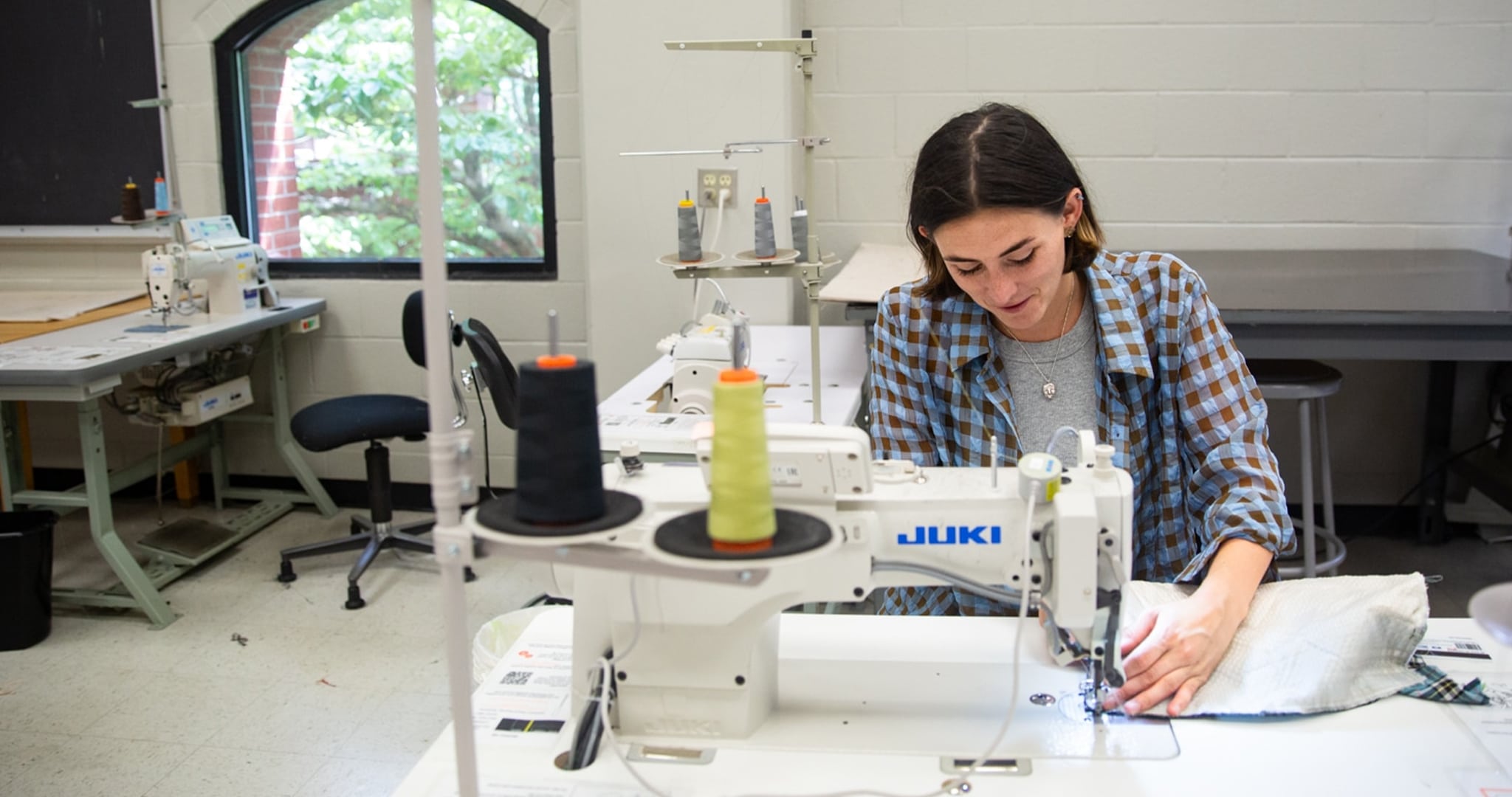
But don’t panic yet. There are ways to cut down on waste while still looking style-savvy—and give Mother Nature a boost in the process. We chatted up local seamstress Madeleine Lyon—founder of Raleigh repair-and-renew shop Mend Mother—about her mending mission, the easiest DIY repairs and the perks of fixing it, not ditching it.
Inspo behind your mending mission? There are two primary motivators. First, I love working with my hands. Second, I’ve worked in fashion and textiles since 2015 and became frustrated with the planned obsolescence within the industry. We aren’t designing and making clothes to last.
Fave technique to hide wear & tear? While I love loud, visible, decorative repairs, some of the most satisfying projects are when I can fix something discreetly. My favorite right now is repairing a hole in a garment by secretly stealing fabric from elsewhere on the silhouette to have a nearly invisible repair.
Fashion-forward tips to dress sustainably? I’ve given up fast fashion and shop mostly secondhand—shopping with intention on sites like Depop, Poshmark and The RealReal. I’m also trying to purchase clothes made of natural fibers like cotton, linen, wool, and some regenerated cellulose fabrics like viscose or bamboo. If I’m shopping new, it’s something high quality or from a small brand with strong ethical values and transparency.
Easiest alteration to DIY? Hemming! Everyone can hem their own pants—even without a sewing machine. The easiest way to get started is by undoing the hem so you can see how it was constructed. Deconstructing a thrifted garment or something you don’t care about can give context.
Let’s talk clothing swaps. Many swaps I attend are just heaps of clothes and not super-organized. As much as I love the hunt, piles of clothes aren’t always the most appealing way to refresh your wardrobe. With this in mind, for my first clothing swap event in LA, I picked up clothes from people’s homes, sorted them and priced them, then rented tables, racks and hangers to merchandise everything so it felt more like a market than a grab-bin situation.
It’s a different take on what a ‘swap’ can look like. Fifty to 80% of garments donated to large nonprofits never make it on the shop floor and are often exported to the Global South. Experimenting with ways to directly recirculate garments within my own community is a worthy effort.
*Responses have been lightly edited for length and clarity.
